


Exodus 36:27
Bible text: King James Version (1769 Blayney text) · Public domain
Bible text: Berean Standard Bible · Public domain
Bible text: American Standard Version (1901) · Public domain
Bible text: World English Bible, Messianic edition · Public domain
Bible text: Geneva Bible (1599) · Public domain
Bible text: Young's Literal Translation · Public domain
- וּלְיַרְכְּתֵיu·le·yar·ke·Teiand for [the] innermost parts ofH3411Conj-w ¦ Prep-l ¦ N-fdcNoun Dual Feminine Constructוּandלְforיַרְכְּתֵי[the] innermost parts of
- הַמִּשְׁכָּןha·mish·Kanthe tabernacleH4908Art ¦ N-msNoun Singular Masculine Absoluteהַtheמִּשְׁכָּןtabernacle
- יָמָּהYa·mahwest -wardH3220N-ms ¦ SfxNoun Singular Masculine Absoluteיָמָּwestה-ward
- עָשָׂה'a·Sahhe madeH6213V-Qal-Perf-3msVerb Qal Perfect 3rd Singular Masculine
- שִׁשָּׁהshi·ShahsixH8337Adj-csAdjective Numerical Singular common gender Absolute
- קְרָשִׁיםke·ra·ShimframesH7175N-mpNoun Plural Masculine Absolute
English is a literal word-by-word gloss of the Hebrew, not the KJV's wording. Why?
This is the original text the KJV's translators worked from — each Hebrew word with its own literal English meaning in this verse, prepared by scholars at Tyndale House, Cambridge. The KJV translates whole sentences, not word by word, so its wording differs: one Hebrew word can become several English words, and the KJV may choose “the LORD” where the gloss reads “Yahweh”. Both are faithful — they answer different questions. For the KJV's own rendering, switch to the KJV text.
Details
See on the biblical-era maps

Study this verse
Public-domain commentary
Matthew Henry
From his Commentary on the Whole Bible. Henry comments on passages, not single verses — this entry covers Exodus 36:14–34.
Here, 1. The shelter and special protection that the church is under are signified by the curtains of hair-cloth, which were spread over the tabernacle, and the covering of rams' skins and badgers' skins over them, Exo 36:14-19. God has provided for his people a shadow from the heat, and a covert from storm and rain, Isa 4:6. They are armed against all weathers; the sun and the moon shall not smite them: and they are protected from the storms of divine wrath, that hail which will sweep away the refuge of lies, Isa 28:17. Those that dwell in God's house shall find, be the tempest ever so violent, or the dropping ever so continual, it does not rain in. 2. The strength and stability of the church, though it is but a tabernacle, are signified by the boards and bars with which the curtains were borne up, Exo 36:20-34. The boards were coupled together and joined by the bars which shot through them; for the union of the church, and the hearty agreement of those that are its stays and supporters, contribute abundantly to its strength and establishment.
Historical interpretation
Historical reception
1 surviving comment on this verse from the historical church.
And since the reprobate perish in eternity while the righteous are reigning with the Lord, rightly is it said further on that this side of the tabernacle looks to the sea. Now this signifies the Red Sea, in which Pharaoh with his host was drowned and from which Israel, having been saved by the Lord, went up to Mt. Sinai where they made the tabernacle. Therefore the western side of the tabernacle looks back to the sea when after the perfection of good works the holy church is crowned in Christ and gazes freely upon the failings or the punishments of the impious, which [Christ] has decreed by his own command.
Continue studying Exodus 36:27 across the web’s major study libraries — every link below opens this exact verse, chapter, or book on the destination site.
Read & Compare
 BibleGatewayThis verse in more than 200 translations and 70 languages.
 Bible.comThe YouVersion reader — hundreds of translations, reading plans, and highlights.
 ESV.orgCrossway's official English Standard Version reader.
 NET BibleThe NET translation with 60,000+ translators' notes on every rendering decision.
 STEP BibleTyndale House's free study tool — original text, vocabulary, and scholarly resources.
 BibliaLogos Bible Software's free web reader.
 USCCBThe New American Bible (Revised Edition) with the U.S. bishops' study notes.
Commentaries
 BibleHub CommentariesDozens of classic commentaries on this verse, gathered on one page.
 StudyLightMore than 100 commentary sets — the largest collection on the web.
 BibleRefPlain-English commentary on what this verse means, verse by verse.
 Enduring WordDavid Guzik's free commentary on this chapter, widely used by Bible teachers.
 Bible Study ToolsVerse commentary alongside Greek and Hebrew study aids.
Original Language & Research
- BibleHub InterlinearThe verse word by word — original language, transliteration, and English.
- BibleHub LexiconEvery word's original-language definition and Strong's entry.
 Blue Letter BibleDeep-study tools — Strong's numbers, concordance, and word studies.
 SefariaThe Hebrew text with Rashi and centuries of Jewish commentary.
Sermons, Hymns & Audio


TrulyRandomVerse is not affiliated with these sites and doesn’t control their content. They’re linked because they’re genuinely useful.
Summary
Exodus 36:27 precisely details the construction of the Tabernacle's western, or rear, wall, specifying that six boards were meticulously crafted for this section. This seemingly minor architectural instruction underscores the divine blueprint's unparalleled meticulousness and the artisans' faithful, obedient execution in bringing God's portable sanctuary to life. It highlights the foundational structural integrity necessary for the dwelling place of God's manifest presence among His people during their wilderness journey, reflecting a profound commitment to divine order, sacred space, and precision in worship.
Context
ShowHideLiterary Context
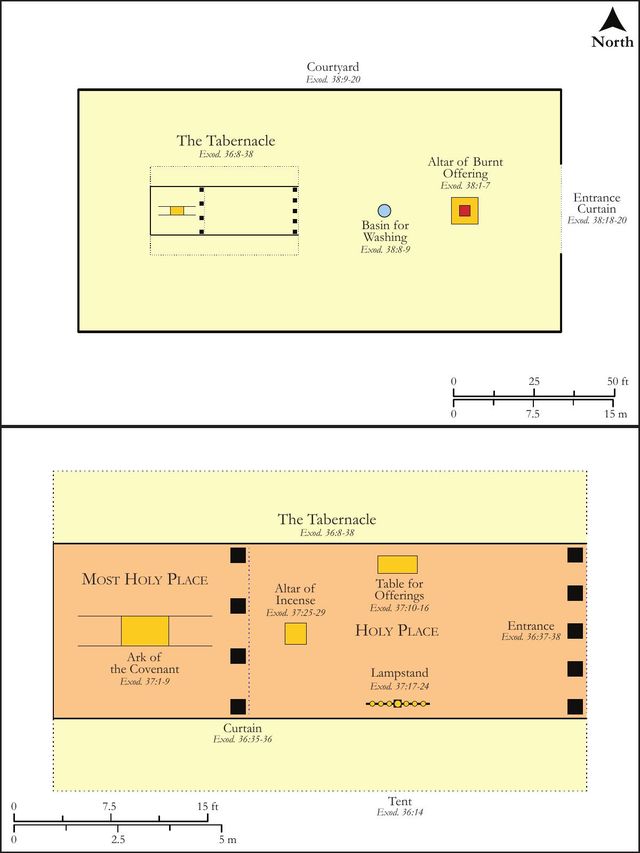
Exodus 36:27 is situated within a comprehensive narrative block (Exodus 35-40) that meticulously chronicles the actual construction of the Tabernacle and its intricate furnishings. This section serves as the fulfillment of the divine instructions given to Moses on Mount Sinai in earlier chapters (Exodus 25-31). Chapter 36 specifically details the fabrication of the Tabernacle's core structural components, including its various curtains, protective coverings, and the robust wooden framework that formed its walls. Consequently, this verse represents the diligent and precise execution of God's architectural plans for the sacred dwelling, marking the transition from a divine blueprint to a tangible, sacred reality. It powerfully demonstrates the Israelites' obedient response to the divine mandate to "make for me a sanctuary, that I may dwell in their midst," as commanded in Exodus 25:8. The skilled craftsmen, notably Bezalel and Oholiab, are portrayed as individuals divinely gifted and empowered by the Spirit of God to fulfill every intricate detail of this sacred structure.
Historical & Cultural Context
The Tabernacle was designed to be the central place of worship and the tangible symbol of God's covenant presence among the nomadic Israelites throughout their forty-year wilderness journey. Unlike the later, fixed Temple in Jerusalem, the Tabernacle's portability was paramount, allowing God to accompany His people wherever they traveled. The "boards" mentioned in this verse were not flimsy panels but robust planks, likely fashioned from acacia wood (a durable timber available in the desert environment) and then overlaid with pure gold. This combination signified both immense strength and profound sacred value. The precise measurements and specific number of these boards for each side of the structure were absolutely crucial for its stability, integrity, and sacred geometry, reflecting Scripture's understanding of sacred spaces as divinely ordered, distinct, and set apart from the mundane. This meticulous construction process was a monumental communal effort, requiring the willing contributions of precious materials and the skilled labor of many, thereby fostering a deep sense of shared ownership, reverence, and participation in the establishment of the dwelling place of their God, as extensively detailed in Exodus 35.
Key Themes
ShowHideExodus 36:27 contributes to several overarching themes present in the Tabernacle narrative and the book of Exodus. Foremost is the theme of Divine Presence, as the Tabernacle was the physical manifestation of God's desire to dwell among His people, a concept central to the covenant relationship. The meticulous detail, including the specific number of boards for the western side, underscores the theme of Divine Order and Holiness, emphasizing that God's presence demands a sacred space built with absolute precision and according to His exact specifications. This, in turn, highlights the theme of Human Obedience and Faithfulness, as the Israelites, through their skilled artisans like Bezalel and Oholiab, faithfully execute every command without deviation, demonstrating their reverence for God's revealed will. The communal effort involved, as described in Exodus 35:20-29, also points to the theme of Corporate Worship and Community, where every individual contribution, no matter how seemingly small, is vital to the whole. Finally, the Tabernacle itself serves as a Type or Shadow, foreshadowing a greater reality, as later explored in Hebrews 9.
Exposition and Analysis
ShowHideKey Word Analysis
ShowHideFrom the root meaning "flank," this term refers figuratively to the rear or recess, indicating the border or quarter. In this context, it specifically denotes the structural walls or framework that define the perimeter of the Tabernacle. The use of "sides" in the plural, even for a single wall, suggests the comprehensive nature of the construction, encompassing the full breadth and structural integrity of that particular section.
Literally meaning "sea" (referring to the Mediterranean, which was west of Israel), this term is used locally to denote the west. Its inclusion here specifies the precise orientation and location of these six boards: they formed the rear wall of the Tabernacle, opposite the eastern entrance. This directional precision underscores the meticulousness of the divine architectural plan, ensuring every part of the sanctuary was accounted for and properly aligned within its sacred geometry.
A primitive root meaning "to do or make" in its broadest sense and widest application. Here, it signifies the act of crafting, constructing, and bringing into existence the physical components of the Tabernacle. This verb highlights the active participation of the skilled artisans, particularly Bezalel and Oholiab, in faithfully executing God's detailed instructions, transforming raw materials into sacred structure. The verb emphasizes purposeful, diligent work.
From an unused root meaning "to split off," this word refers to a slab or plank. These were not mere thin panels but substantial, sturdy wooden planks that formed the vertical walls of the Tabernacle. Likely made of acacia wood and overlaid with gold, their robust nature was critical for the stability and integrity of the entire sacred structure. Their solid construction, rather than just curtains, emphasized the Tabernacle's permanence as God's dwelling, even in its portable form, and its distinction as a consecrated space.
Verse Breakdown
ShowHide"And for the sides of the tabernacle westward"
This phrase precisely establishes the specific location and orientation of the construction. It points to the rear wall of the sacred tent, emphasizing that every dimension and direction of God's dwelling was divinely ordained and meticulously followed. The explicit mention of "westward" highlights the comprehensive and directional precision of the divine architectural plan, ensuring every part of the sanctuary was accounted for and properly aligned. The "sides" (plural) suggest the full breadth of this particular wall, indicating a complete and comprehensive construction.
"he made six boards"
This clause details the specific action taken ("he made," referring collectively to Bezalel and the divinely gifted craftsmen) and the exact quantity of the structural components. The number six, distinct from the twenty boards used for the longer north and south sides (Exodus 26:18, 20), underscores the precise engineering and adherence to the divine blueprint. Each board was a critical, foundational element, contributing to the overall stability, sacred geometry, and structural integrity of the Tabernacle, ensuring it could withstand the rigors of the wilderness journey.
Literary Devices
ShowHideExodus 36:27, like much of the Tabernacle narrative, employs Precision and Detailing as primary literary devices, emphasizing the meticulous nature of God's instructions and the exactitude required in their execution. The specific mention of "six boards" for the "westward" side is a prime example of this. The verse is a microcosm of the larger narrative's focus on Repetition and Emphasis, as the divine commands (Exodus 25-31) are systematically reiterated through their fulfillment (Exodus 35-40). This serves to underscore the unswerving obedience of the craftsmen and the non-negotiable nature of God's revealed will. Furthermore, the "boards" themselves function as Symbolism, representing the foundational elements not just of a physical structure but of the divine order, stability, and holiness that God desired to establish among His people. The careful construction of each part, including the "six boards for the western side," contributes to the overarching Typology of the Tabernacle as a foreshadowing of God's ultimate dwelling with humanity and the perfect, unblemished nature of the Messiah.
Theological and Thematic Connections
ShowHideExodus 36:27, though seemingly a technical detail, profoundly illustrates God's character as a God of order, precision, and holiness, who desires to dwell among His people in a manner that reflects His glory and absolute perfection. The meticulous instructions for the Tabernacle's construction, down to the exact number and precise placement of boards for a specific side, reveal that no detail is too small or insignificant in God's economy, especially concerning His presence and the sacred act of worship. This divine precision demands and elicits human obedience, highlighting that faithful service involves diligently following God's revealed will, not just in grand gestures but in every minute specification. The structural integrity provided by these boards also speaks to the stability, security, and enduring nature of God's covenant relationship with Israel, where His presence was the very foundation of their identity, protection, and purpose.
Reflection and Application
ShowHideThe detailed account of the Tabernacle's construction, including the specific mention of six boards for its western side, serves as a powerful reminder that God values precision, faithfulness, and diligent execution in every aspect of our lives and service to Him. Just as each board, no matter its location or visibility, was absolutely essential for the Tabernacle's structural integrity and its ultimate function as God's dwelling place, so too are our individual contributions—even those that seem small, hidden, or mundane—vitally important to the overall health, stability, and effectiveness of God's kingdom today. This passage challenges us to consider whether we approach our spiritual disciplines, our service within the church community, or our daily tasks with the same meticulous care, intentionality, and obedience that the ancient craftsmen demonstrated. It encourages us to trust that God's plans are often intricate and far-reaching, and our faithfulness involves diligently following His revealed will, knowing that He has a divine purpose for every instruction and that even the "back walls" or less visible areas of our lives are seen, valued, and essential in His sight. Our attention to detail in obedience reflects our profound reverence for God and our understanding that He is worthy of our very best, most precise, and most dedicated efforts.
Questions for Reflection
ShowHideFAQ
ShowHideWhy was the western side of the Tabernacle specifically mentioned with six boards?
ShowHideThe western side was the rear wall of the Tabernacle, positioned opposite the entrance which consistently faced east. The specific mention of six boards for this side, in contrast to the twenty boards used for the longer north and south sides (as detailed in Exodus 26:18-20), highlights the precise and distinct architectural requirements for each section of the sacred dwelling. This extraordinary level of detail underscores the divine blueprint's meticulousness and ensures the structural stability, sacred geometry, and perfect balance of the entire Tabernacle. It demonstrates that every part, even the less visible rear, was designed with specific purpose and divine precision.
What were these "boards" made of, and what was their significance?
ShowHideThe "boards" (Hebrew: qerashim) were made of acacia wood, a durable and readily available timber in the wilderness environment, and were then overlaid with pure gold (as described in Exodus 26:29). Their significance was multifaceted: structurally, they formed the solid, foundational walls of the Tabernacle, providing essential stability and clearly defining the sacred space. Theologically, the precious gold overlay profoundly symbolized the holiness, divine glory, and immense value of God's dwelling place, while the durable acacia wood represented the steadfastness, enduring nature, and unshakeable presence of God among His people throughout their journey.
Christ-Centered Fulfillment
ShowHideThe meticulous construction of the Tabernacle, down to the precise number of six boards for its western side, finds its ultimate and perfect fulfillment in Jesus Christ. The Tabernacle served as God's temporary dwelling place among His people, a physical structure where His manifest presence resided and where atonement for sin was symbolically made. However, John 1:14 profoundly proclaims that "the Word became flesh and tabernacled among us," signifying that Jesus Himself is the ultimate and perfect dwelling place of God with humanity. All the precision, detail, and sacredness inherent in the Tabernacle's design, including its foundational boards, pointed forward to the perfect, unblemished nature of Christ, in whom "the whole fullness of deity dwells bodily" (Colossians 2:9). He is the true and greater Tabernacle, not made with human hands, through whom we now have direct access to God and His holy presence (Hebrews 9:11-12). Furthermore, just as the boards provided structural integrity to the earthly sanctuary, Christ is revealed as the foundational cornerstone upon whom the spiritual temple, the Church, is built, with believers themselves being "living stones" built together into a dwelling place for God by the Spirit (Ephesians 2:20-22).