


Esther 2:13
Bible text: King James Version (1769 Blayney text) · Public domain
Bible text: Berean Standard Bible · Public domain
Bible text: American Standard Version (1901) · Public domain
Bible text: World English Bible, Messianic edition · Public domain
Bible text: Geneva Bible (1599) · Public domain
Bible text: Young's Literal Translation · Public domain
- וּבָזֶהu·va·Zehand in this [way]H2088Conj-w ¦ Prep-b ¦ PrtParticle Demonstrativeוּandבָinזֶהthis [way]
- הַנַּעֲרָהha·na·'a·Rahthe young womanH5291Art ¦ N-fsNoun Singular Feminine Absoluteהַtheנַּעֲרָהyoung woman
- בָּאָהba·'Ah[was] goingH935V-Qal-Prtcpl-fsVerb Qal Participle Singular Feminine Absolute
- אֶל'elintoH413PrepPreposition
- הַמֶּלֶךְha·Me·lekhthe kingH4428Art ¦ N-msNoun Singular Masculine Absoluteהַtheמֶּלֶךְking
- אֵת'et<obj.>H853DirObjMParticle Object Indicator
- כָּלkolallH3605N-msNoun Singular Masculine Absolute
- אֲשֶׁר'a·SherthatH834RelParticle Relative
- תֹּאמַרto·Marshe saidH559V-Qal-Imperf-3fsVerb Qal Imperfect 3rd Singular Feminine
- יִנָּתֵןyi·Na·tenit was givenH5414V-Niphal-Imperf-3msVerb Niphal Imperfect 3rd Singular Masculine
- לָהּlahto <the> herPrep-l ¦ 3fsSuffix Personal 3rd Singular Feminineלָto <the>הּher
- לָבוֹאla·Vo'to goH935Prep-l ¦ V-Qal-InfVerb Qal Infinitive Constructלָtoבוֹאgo
- עִמָּהּ'i·Mahwith herH5973Prep ¦ 3fsPreposition Definiteעִמָּwithהּher
- מִבֵּיתmi·Beitfrom [the] house ofH1004Prep-m ¦ N-mscNoun Singular Masculine Constructמִfromבֵּית[the] house of
- הַנָּשִׁיםha·na·Shimthe womenH802Art ¦ N-mpNoun Plural Masculine Absoluteהַtheנָּשִׁיםwomen
- עַד'adtoH5704PrepPreposition
- בֵּיתbeit[the] house ofH1004N-mscNoun Singular Masculine Construct
- הַמֶּלֶךְha·Me·lekhthe kingH4428Art ¦ N-msNoun Singular Masculine Absoluteהַtheמֶּלֶךְking
English is a literal word-by-word gloss of the Hebrew, not the KJV's wording. Why?
This is the original text the KJV's translators worked from — each Hebrew word with its own literal English meaning in this verse, prepared by scholars at Tyndale House, Cambridge. The KJV translates whole sentences, not word by word, so its wording differs: one Hebrew word can become several English words, and the KJV may choose “the LORD” where the gloss reads “Yahweh”. Both are faithful — they answer different questions. For the KJV's own rendering, switch to the KJV text.
Details
See on the biblical-era maps
Study this verse
Public-domain commentary
Matthew Henry
From his Commentary on the Whole Bible. Henry comments on passages, not single verses — this entry covers Esther 2:1–20. His four-level outline is real structure in the source text, so it is rendered as structure.
How God put down one that was high and mighty from her seat we read in the chapter before, and are now to be told how he exalted one of low degree, as the virgin Mary observes in her song (Luk 1:52) and Hannah before her, Sa1 2:4-8. Vashti being humbled for her height, Esther is advanced for her humility. Observe,
I.The extravagant course that was taken to please the king with another wife instead of Vashti.
Josephus says that when his anger was over he was exceedingly grieved that the matter was carried so far, and would have been reconciled to Vashti but that, by the constitution of the government, the judgment was irrevocable - that therefore, to make him forget her, they contrived how to entertain him first with a great variety of concubines, and then to fix him to the most agreeable of them all for a wife instead of Vashti. The marriages of princes are commonly made by policy and interest, for the enlarging of their dominions and the strengthening of their alliances; but this must be made partly by the agreeableness of the person to the king's fancy, whether she was rich or poor, noble or ignoble. What pains were taken to humour the king! As if his power and wealth were given him for no other end than that he might have all the delights of the sense wound up to the height of pleasurableness, and exquisitely refined, though at the best they are but dross and dregs in comparison with divine and spiritual pleasures.
1.All the provinces of his kingdom must be searched for fair young virgins, and officers appointed to choose them, Est 2:3.
2.A house (a seraglio) was prepared on purpose for them, and a person appointed to have the charge of them, to see that they were well provided for.
3.No less than twelve months was allowed them for their purification, some of them at least who were brought out of the country, that they might be very clean, and perfumed, Est 2:12. Even those who were the masterpieces of nature must yet have all this help from art to recommend them to a vain and carnal mind.
4.After the king had once taken them to his bed, they were made recluses ever after, except the king pleased at any time to send for them (Est 2:14); they were looked upon as secondary wives, were maintained by the king accordingly, and might not marry. We may see, by this instance, to what absurd practices those came who were destitute of divine revelation, and who, as a punishment for their idolatry, were given up to vile affections. Having broken through that law of creation which resulted from God's making man, they broke through another law, which was founded upon his making one man and one woman. See what need there was of the gospel of Christ to purify men from the lusts of the flesh and to reduce them to the original institution. Those that have learned Christ will think it a shame even to speak of such things as these which were done of them, not only in secret, but avowedly, Eph 5:12.
II.The overruling providence of God thus brining Esther to be queen.
Had she been recommended to Ahasuerus for a wife, he would have rejected the motion with disdain; but when she came in her turn, after several others, and it was found that though many of them were ingenious and discreet, graceful and agreeable, yet Esther excelled them all, way was made for her, even by her rivals, into the king's affections and the honours consequent thereupon. It is certain, as bishop Patrick says, that those who suggest that she committed a great sin to come at this dignity do not consider the custom of those times and countries. Every one that the king took to his bed was married to him, and was his wife of a lower rank, as Hagar was Abraham's; so that, if Esther had not been made queen, the sons of Jacob need not say that he dealt with their sister as with a harlot. Concerning Esther we must observe,
1.Her original and character.
(1.)She was one of the children of the captivity, a Jewess and a sharer with her people in their bondage. Daniel and his fellows were advanced in the land where they were captives; for they were of those whom God sent thither for their good, Jer 24:5.
(2.)She was an orphan; her father and mother were both dead (Est 2:7), but, when they had forsaken here, then the Lord took her up, Psa 27:10. When those whose unhappiness it is to be thus deprived of their parents in their childhood yet afterwards come to be eminently pious and prosperous, we ought to take notice of it to the glory of that God, and his grace and providence, who has taken it among the titles of his honour to be a Father of the fatherless.
(3.)She was a beauty, fair of form, good of countenance; so it is in the margin, Est 2:7. Her wisdom and virtue were her greatest beauty, but it is an advantage to be a diamond to be well set.
(4.)Mordecai, her cousin-german, was her guardian, brought her up, and took her for his own daughter. The Septuagint says that he designed to make her his wife; if that were so, he was to be praised that he opposed not her better preferment. let God be acknowledged in raising up friends for the fatherless and motherless; let it be an encouragement to that pious instance of charity that many who have taken care of the education of orphans have lived to see the good fruit of their care and pains, abundantly to their comfort. Dr. Lightfoot thinks that this Mordecai is the same with that mentioned in Ezr 2:2, who went up to Jerusalem with the first, and helped forward the settlement of his people until the building of the temple was stopped, and then went back to the Persian court, to see what service he could do them there. Mordecai being Esther's guardian or pro-parent, we are told,
[1.]How tender he was of her, as if she had been his own child (Est 2:11): he walked before her door every day, to know how she did, and what interest she had. Let those whose relations are thus cast upon them by divine Providence be thus kindly affectioned to them and solicitous for them.
[2.]How respectful she was to him. Though in relation she was his equal, yet, being in age and dependence his inferior, she honoured him as her father - did his commandment, Est 2:20. This is an example to orphans; if they fall into the hands of those who love them and take care of them, let them make suitable returns of duty and affection. The less obliged their guardians were in duty to provide for them the more obliged they are in gratitude to honour and obey their guardians. Here is an instance of Esther's obsequiousness t Mordecai, that she did not show her people of her kindred, because Mordecai had charged her that she should not, Est 2:10. he did not bid her deny her country, nor tell a lie to conceal her parentage; if he had told her to do so, she must not have done it. But he only told her not to proclaim her country. All truths are not to be spoken at all times, though an untruth is not to be spoken at any time. She being born in Shushan, and her parents being dead, all took her to be of Persian extraction, and she was not bound to undeceive them.
2.Her preferment. Who would have thought that a Jewess, a captive, and orphan, was born to be a queen, an empress! Yet so it proved. Providence sometimes raiseth up the poor out of the dust, to set them among princes, Sa1 2:8.
(1.)The king's chamberlain honoured her (Est 2:9), and was ready to serve her. Wisdom and virtue will gain respect. Those that make sure of God's favour shall find favour with man too as far as it is good for them. All that looked upon Esther admired her (Est 2:15) and concluded that she was the lady that would win the prize, and she did win it.
(2.)The king himself fell in love with her. She was not solicitous, as the rest of the maidens were, to set herself off with artificial beauty; she required nothing but just what was appointed for her (Est 2:15) and yet she was most acceptable. The more natural beauty is the more agreeable. The king loved Esther above all the women, v. 17. Now he needed not to make any further trials, or take time to deliberate; he is soon determined to set the royal crown upon her head, and make her queen, v. 17. This was done in his seventh year (v. 16) and Vashti was divorced in his third year (Est 1:3); so that he was four years without a queen. Notice is taken,
[1.]Of the honours the king put upon Esther. He graced the solemnity of her coronation with a royal feast (Est 2:18), at which perhaps Esther, in compliance with the king, made a public appearance, which Vashti had refused to do, that she might have the praise of obedience in the same instance in which the other incurred the blot of disobedience. He also granted a release to the provinces, either a remittance of the taxes in arrear or an act of grace for criminals; as Pilate, at the feast, released a prisoner. This was to add t the joy.
[2.]Of the deference Esther continued to pay to her former guardian. She still did the commandment of Mordecai, as when she was brought up with him, Est 2:20. Mordecai say in the king's gate; that was the height of his preferment: he was one of the porters or door-keepers of the court. Whether he had this place before, or whether Esther obtained it for him, we are not told; but there he sat contentedly, and aimed no higher; and yet Esther who was advanced to the throne was observant of him. This was an evidence of a humble and grateful disposition, that she had a sense of his former kindnesses and his continued wisdom. It is a great ornament to those that are advanced, and much to their praise, to remember their benefactors, to retain the impressions of their good education, to be diffident of themselves, willing to take advice, and thankful for it.
Historical interpretation
Historical reception
1 surviving comment on this verse from the historical church.
For any soul that strives to hurry to the bed of the heavenly Groom receives from its teachers the adornment that is appropriate to it, and with which it shows itself more devoted to the understanding of the faith and the knowledge of virtue, so that—by the intact faith of the holy Trinity and full confession—it may go forth from among the postulants to receive the sole baptism and anointment with the holy oil, when it is genuinely united with the heavenly Groom.
Continue studying Esther 2:13 across the web’s major study libraries — every link below opens this exact verse, chapter, or book on the destination site.
Read & Compare
 BibleGatewayThis verse in more than 200 translations and 70 languages.
 Bible.comThe YouVersion reader — hundreds of translations, reading plans, and highlights.
 ESV.orgCrossway's official English Standard Version reader.
 NET BibleThe NET translation with 60,000+ translators' notes on every rendering decision.
 STEP BibleTyndale House's free study tool — original text, vocabulary, and scholarly resources.
 BibliaLogos Bible Software's free web reader.
 USCCBThe New American Bible (Revised Edition) with the U.S. bishops' study notes.
Commentaries
 BibleHub CommentariesDozens of classic commentaries on this verse, gathered on one page.
 StudyLightMore than 100 commentary sets — the largest collection on the web.
 BibleRefPlain-English commentary on what this verse means, verse by verse.
 Enduring WordDavid Guzik's free commentary on this chapter, widely used by Bible teachers.
 Bible Study ToolsVerse commentary alongside Greek and Hebrew study aids.
Original Language & Research
- BibleHub InterlinearThe verse word by word — original language, transliteration, and English.
- BibleHub LexiconEvery word's original-language definition and Strong's entry.
 Blue Letter BibleDeep-study tools — Strong's numbers, concordance, and word studies.
 SefariaThe Hebrew text with Rashi and centuries of Jewish commentary.
Sermons, Hymns & Audio


TrulyRandomVerse is not affiliated with these sites and doesn’t control their content. They’re linked because they’re genuinely useful.
Summary
Esther 2:13 vividly portrays the individualized and extravagant preparations afforded to each maiden before her presentation to King Ahasuerus. This verse highlights the immense resources and absolute authority of the Persian monarch, granting each woman complete autonomy to select any items or attendants she desired for her appearance, underscoring the unparalleled opulence of the royal court in its quest for a new queen.
Context
ShowHideLiterary Context
This verse is strategically placed within the narrative detailing King Ahasuerus's search for a new queen, a necessity arising from the dramatic deposition of Queen Vashti for her defiance, as recorded in Esther 1. The preceding verses (Esther 2:1-12) establish the context by describing the empire-wide gathering of beautiful young virgins, their placement under the meticulous care of Hegai (the king's eunuch in charge of the harem), and a mandatory twelve-month purification regimen involving specialized oils and perfumes. Esther 2:13 thus marks the culmination of this extensive preparatory period, detailing the specific, highly personalized provisions made for each maiden on the very day she was to be presented individually to the king, signifying her transition from the communal "house of the women" (the harem) to the king's private chambers for a singular, high-stakes encounter.
Historical & Cultural Context
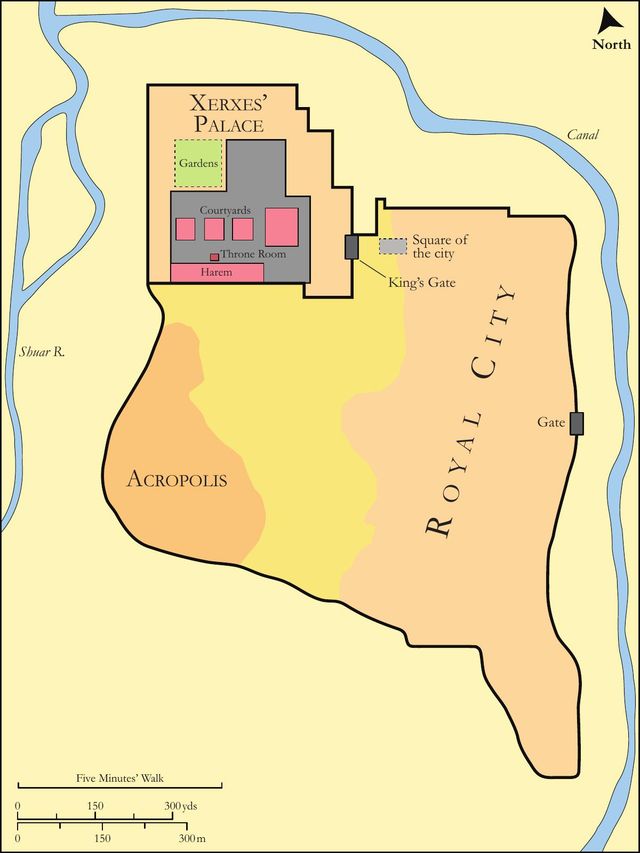
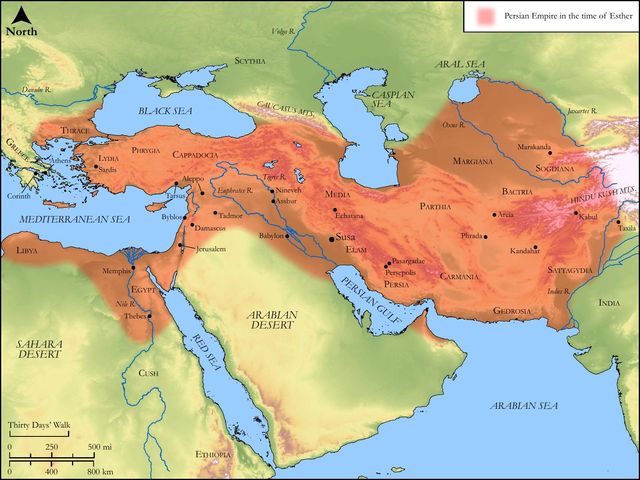
The book of Esther is set in the vast Persian Empire during the reign of Ahasuerus, widely identified with Xerxes I (486-465 BC). This empire was renowned for its immense wealth, elaborate court protocols, and the absolute power vested in its monarch. The maintenance of a royal harem was a common and significant practice in the courts of the kings of that day, serving not only as a symbol of the king's virility and power but also as a source of potential consorts and political alliances. Eunuchs, like Hegai, held positions of considerable trust and authority within these royal households, ensuring the security and management of the women. The meticulous and extravagant preparation described in Esther 2:13 reflects the cultural emphasis on physical beauty, elaborate adornment, and the highly ritualized nature of royal presentations, where every detail contributed to the king's pleasure and the conspicuous display of his grandeur.
Key Themes
ShowHideEsther 2:13 contributes significantly to several overarching themes within the book. Firstly, it powerfully illustrates the Royal Extravagance and Absolute Power of King Ahasuerus, whose resources appeared boundless in his quest for a new queen. The phrase "whatsoever she desired was given her" profoundly emphasizes this limitless authority and wealth. Secondly, the verse highlights the theme of Meticulous Preparation and Presentation, showcasing the immense cultural value placed on outward appearance and the extraordinary lengths to which individuals would go to impress the king in such a high-stakes competition. Thirdly, while granting a superficial degree of agency, the entire process inherently underscores the Objectification and Vulnerability of Women in this Persian court, where their worth was primarily determined by their physical attractiveness and ability to please the king, a stark contrast to the biblical emphasis on inner character and spiritual beauty found in passages like 1 Peter 3:3-4. Lastly, beneath the surface of human ambition and worldly display, this verse subtly sets the stage for the overarching theme of Divine Providence, demonstrating how God can work through seemingly secular and self-serving human actions to accomplish His sovereign purposes, as hinted at in Proverbs 21:1.
Exposition and Analysis
ShowHideKey Word Analysis
ShowHideThe Hebrew word נַעֲרָה (transliterated naʻărâh'), derived from the feminine form of "youth," refers to a young girl or maiden, typically from infancy to adolescence. In this context, it specifically denotes the beautiful young virgins gathered from across the Persian Empire to be candidates for queen. The term emphasizes their youth and purity, which were prerequisites for entry into the king's harem and consideration for the royal consort. Their status as "maidens" highlights their vulnerability and dependence within the elaborate royal selection process.
The Hebrew root אָמַר (transliterated ʼâmar'), from which the verb "she desired" (תֹּאמַר, tō'mar') is derived, primarily means "to say," "to speak," or "to command." In the context of "whatsoever she desired was given her," it implies that whatever a maiden uttered or requested was immediately fulfilled. This underscores the absolute freedom and boundless provision granted to each woman for her personal adornment, emphasizing the king's immense wealth and his determination to ensure each candidate presented herself in the most captivating manner possible.
The Hebrew word בַּיִת (transliterated bayith'), meaning "house," is used twice in this verse to denote distinct parts of the palace complex. "House of the women" (בֵּית הַנָּשִׁים, bêt ha-nāšîm') refers to the royal harem, a secluded and communal space where the virgins underwent their purification and preparation. "King's house" (בֵּית הַמֶּלֶךְ, bêt ham-meleḵ') refers to the king's private residence or inner chambers, where the intimate and decisive encounter with Ahasuerus would take place. The movement from one "house" to the other signifies the critical transition from communal preparation to individual presentation and judgment.
Verse Breakdown
ShowHide"Then thus came [every] maiden unto the king;"
This initial clause establishes the individual and sequential nature of the presentations. After a year of extensive preparation, each young woman was brought forward, one by one, for her singular audience with King Ahasuerus. This highlights the culmination of the elaborate selection process, emphasizing the direct and personal encounter each maiden would have with the monarch.
"whatsoever she desired was given her"
This phrase powerfully underscores the king's immense wealth, absolute authority, and boundless generosity. It signifies that each maiden had carte blanche to request any items—be it attire, jewelry, cosmetics, or even additional attendants—that she believed would enhance her appearance and presentation before the king. This provision was not limited; every wish was granted, reflecting the seemingly limitless resources of the Persian Empire and the king's desire for the most captivating consort.
"to go with her out of the house of the women unto the king's house."
This final clause specifies both the purpose and the destination of the desired provisions. The chosen items and personnel accompanied the maiden as she transitioned from the communal quarters where she had been prepared (the "house of the women") to the king's private residence (the "king's house"), where the pivotal encounter would take place. It highlights the journey from a state of general preparation to a moment of individualized, high-stakes presentation.
Literary Devices
ShowHideEsther 2:13 subtly employs several literary devices to enhance its meaning and impact. Hyperbole is evident in the phrase "whatsoever she desired was given her," suggesting an almost limitless provision that powerfully underscores the king's immense wealth and absolute power. This exaggeration serves to emphasize the unparalleled opulence of the Persian court and the extraordinary nature of the queen selection process. There is also an implicit Contrast between the maidens' initial anonymity and communal living within the "house of the women" and their grand, individualized procession to the "king's house," highlighting the dramatic shift in their status and the high stakes of their personal encounter. Furthermore, the meticulous detail given to these external preparations subtly serves as Foreshadowing for Esther's unique approach in the very next verse (Esther 2:15), where her lack of desire for such extravagant adornments sets her apart and ultimately highlights her inner character, which would prove more pleasing to the king than outward display.
Theological and Thematic Connections
ShowHideEsther 2:13, despite its focus on worldly extravagance and human vanity, profoundly illustrates the overarching theme of God's sovereign providence. Even in a context seemingly far removed from spiritual concerns—a pagan king's beauty pageant—God's unseen hand is meticulously at work, orchestrating events and positioning individuals for His ultimate purposes. The king's absolute power and seemingly arbitrary choices are, in fact, subject to a higher divine will, demonstrating that human desires and actions, however grand or self-serving, can be woven into God's intricate tapestry of redemption. This verse reminds us that God is not limited by human circumstances or even by the ungodly nature of a situation; He can use any means to accomplish His perfect plan, often working behind the scenes to prepare the way for His chosen instruments, ensuring His will prevails.
Reflection and Application
ShowHideEsther 2:13 presents a fascinating juxtaposition of human opulence and divine sovereignty. In a world often obsessed with external appearances and material possessions, this verse showcases the extreme lengths to which a powerful king would go to satisfy his desires. For us today, it serves as a powerful reminder that while the world frequently prioritizes outward beauty, wealth, and status, God's kingdom operates on a profoundly different set of values. The meticulous preparation of these maidens, focused entirely on external adornment, stands in stark contrast to the biblical emphasis on cultivating inner beauty, a gentle and quiet spirit, and a character shaped by righteousness. Yet, even within this worldly context, we can discern the subtle hand of God, preparing the way for Esther, a woman who would ultimately rely not on outward display but on divine favor and courage. This encourages us to look beyond the superficialities of our own lives and circumstances, trusting that God is at work even in the mundane, the chaotic, or the seemingly unspiritual, orchestrating events for His glory and our good.
Questions for Reflection
ShowHideFAQ
ShowHideWhy was such an elaborate process necessary for choosing a queen?
ShowHideThe elaborate process for choosing a queen, culminating in the provisions of Esther 2:13, was necessary for several reasons rooted in the cultural and political realities of the Persian Empire. Firstly, the king's queen was not merely a consort but a figure of immense political and social significance, representing the king's power and the stability of the throne. After Queen Vashti's public defiance and deposition (Esther 1), King Ahasuerus needed a queen who would be utterly submissive and pleasing, reinforcing his absolute authority. Secondly, the sheer scale of the Persian Empire meant that the selection process was a grand display of the king's wealth and power, drawing the most beautiful women from across his vast dominion. The year-long purification and the unlimited provisions for presentation ensured that the king would be presented with the most exquisite candidates, reflecting the empire's opulence. Finally, such a rigorous and public selection process legitimized the chosen queen in the eyes of the court and the populace, ensuring her acceptance and preventing future challenges to her position.
Does this verse condone the objectification of women?
ShowHideWhile Esther 2:13 describes a process that, by modern standards, can be seen as objectifying women—treating them primarily as commodities to be judged for their physical attractiveness and ability to please the king—the biblical narrative itself does not necessarily condone this practice. The Bible often describes cultural realities and historical events as they happened, without explicitly endorsing or condemning every aspect. The book of Esther, in particular, functions as a historical narrative that portrays the often harsh and ungodly realities of a pagan court. It highlights the vulnerability of women in such a system, where their value was tied to their physical appearance and obedience. However, the broader biblical witness consistently elevates the dignity of all human beings, created in God's image (Genesis 1:27), and emphasizes inner character and spiritual beauty over mere external adornment (1 Peter 3:3-4; Proverbs 31:30). The story of Esther, while set within this context, ultimately showcases how God can work through imperfect human systems to accomplish His redemptive purposes.
Christ-Centered Fulfillment
ShowHideEsther 2:13, with its depiction of an earthly king's lavish provision for his prospective bride, offers a profound, albeit indirect, foreshadowing of Christ's relationship with His Church. Just as Ahasuerus desired a perfectly adorned queen, lavishing "whatsoever she desired" upon each maiden, so too does Christ, the true King, prepare and adorn His bride, the Church, not with earthly finery but with His own righteousness and grace. While the maidens sought external beauty to please a temporal king, believers are called to be clothed in the righteousness of Christ, a spiritual beauty that is eternal and truly pleasing to God (Galatians 3:27; Philippians 3:9). The "desire" of the maidens was for temporary adornment; the "desire" of all nations, the ultimate fulfillment of all longing, is Christ Himself (Haggai 2:7). He has not merely given us what we desired, but infinitely more—He has given us Himself, sanctifying and cleansing His Church "that He might present her to Himself a glorious church, not having spot or wrinkle or any such thing, but that she should be holy and without blemish" (Ephesians 5:25-27). Thus, Esther 2:13, in its worldly splendor, points to the infinitely greater, spiritual splendor of Christ's transforming work, making us beautiful not for a fleeting moment, but for eternity.