


Deuteronomy 2:32
Bible text: King James Version (1769 Blayney text) · Public domain
Bible text: Berean Standard Bible · Public domain
Bible text: American Standard Version (1901) · Public domain
Bible text: World English Bible, Messianic edition · Public domain
Bible text: Geneva Bible (1599) · Public domain
Bible text: Young's Literal Translation · Public domain
- וַיֵּצֵאvai·ye·Tze'and he came forthH3318Conj-w ¦ V-Qal-ConsecImperf-3msVerb Qal Consecutive Imperfect 3rd Singular Masculineוַandיֵּצֵאhe came forth
- סִיחֹןsi·ChonSihonH5511N-proper-mNoun Proper Masculine
- לִקְרָאתֵנוּlik·ra·Te·nuto meet usH7122Prep-l ¦ V-Qal-Inf ¦ 1cpVerb Qal Infinitive Constructלִtoקְרָאתֵmeetנוּus
- הוּאhu'heH1931Pro-3msPronoun Personal 3rd Singular Masculine
- וְכָלve·kholand allH3605Conj-w ¦ N-mscNoun Singular Masculine Constructוְandכָלall
- עַמּוֹa·Mohis peopleH5971N-msc ¦ 3msNoun Singular Masculine Constructעַמּpeopleוֹhis
- לַמִּלְחָמָהla·mil·cha·Mahfor <the> battleH4421Prep-l ¦ N-fsNoun Singular Feminine Absoluteלַfor <the>מִּלְחָמָהbattle
- יָהְצָהYa·he·tzahJahaz towardsH3096N-proper ¦ SfxNoun Proper LocationיָהְצָJahazהtowards
English is a literal word-by-word gloss of the Hebrew, not the KJV's wording. Why?
This is the original text the KJV's translators worked from — each Hebrew word with its own literal English meaning in this verse, prepared by scholars at Tyndale House, Cambridge. The KJV translates whole sentences, not word by word, so its wording differs: one Hebrew word can become several English words, and the KJV may choose “the LORD” where the gloss reads “Yahweh”. Both are faithful — they answer different questions. For the KJV's own rendering, switch to the KJV text.
Details
See on the biblical-era maps
Study this verse
Public-domain commentary
Matthew Henry
From his Commentary on the Whole Bible. Henry comments on passages, not single verses — this entry covers Deuteronomy 2:24–37. His two-level outline is real structure in the source text, so it is rendered as structure.
God having tried the self-denial of his people in forbidding them to meddle with the Moabites and Ammonites, and they having quietly passed by those rich countries, and, though superior in number, not made any attack upon them, here he recompenses them for their obedience by giving them possession of the country of Sihon king of the Amorites. If we forbear what God forbids, we shall receive what he promises, and shall be no losers at last by our obedience, though it may seem for the present to be to our loss. Wrong not others, and God shall right thee.
I.God gives them commission to seize upon the country of Sihon king of Heshbon, Deu 2:24, Deu 2:25.
This was then God's way of disposing of kingdoms, but such particular grants are not now either to be expected or pretended. In this commission observe,
1.Though God assured them that the land should be their own, yet they must bestir themselves, and contend in battle with the enemy. What God gives we must endeavour to get.
2.God promises that when they fight he will fight for them. Do you begin to possess it, and I will begin to put the dread of you upon them. God would dispirit the enemy and so destroy them, would magnify Israel and so terrify all those against whom they were commissioned. See Exo 15:14.
II.Moses sends to Sihon a message of peace, and only begs a passage through his land, with a promise to give his country no disturbance, but the advantage of trading for ready money with so great a body, Deu 2:26-29. Moses herein did neither disobey God, who bade him contend with Sihon, nor dissemble with Sihon; but doubtless it was by divine direction that he did it, that Sihon might be left inexcusable, though God hardened his heart. This may illustrate the method of God's dealing with those to whom he gives his gospel, but does not give grace to believe it.
III.Sihon began the war (Deu 2:32), God having made his heart obstinate, and hidden from his eyes the thing that belonged to his peace (Deu 2:30), that he might deliver him into the hand of Israel. Those that meddle with the people of God meddle to their own hurt; and God sometimes ruins his enemies by their own resolves. See Mic 4:11-13; Rev 16:14.
IV.Israel was victorious.
1.They put all the Amorites to the sword, men, women, and children (Deu 2:33, Deu 2:34); this they did as the executioners of God's wrath; now the measure of the Amorites' iniquity was full (Gen 15:16), and the longer it was in the filling the sorer was the reckoning at last. This was one of the devoted nations. They died, not as Israel's enemies, but as sacrifices to divine justice, in the offering of which sacrifices Israel was employed, as a kingdom of priests. The case being therefore extraordinary, it ought not to be drawn into a precedent for military executions, which make no distinction and give no quarter: those will have judgment without mercy that show no mercy.
2.They took possession of all they had; their cities (Deu 2:34), their goods (Deu 2:35), and their land, Deu 2:36. The wealth of the sinner is laid up for the just. What a new world did Israel now come into! Most of them were born, and had lived all their days, in a vast howling wilderness, where they knew not what either fields or cities were, had no houses to dwell in, and neither sowed nor reaped; and now of a sudden to become masters of a country so well built, so well husbanded, this made them amends for their long waiting, and yet it was but the earnest of a great deal more. Much more joyful will the change be which holy souls will experience when they remove out of the wilderness of this world to the better country, that is, the heavenly, to the city that has foundations.
Continue studying Deuteronomy 2:32 across the web’s major study libraries — every link below opens this exact verse, chapter, or book on the destination site.
Read & Compare
 BibleGatewayThis verse in more than 200 translations and 70 languages.
 Bible.comThe YouVersion reader — hundreds of translations, reading plans, and highlights.
 ESV.orgCrossway's official English Standard Version reader.
 NET BibleThe NET translation with 60,000+ translators' notes on every rendering decision.
 STEP BibleTyndale House's free study tool — original text, vocabulary, and scholarly resources.
 BibliaLogos Bible Software's free web reader.
 USCCBThe New American Bible (Revised Edition) with the U.S. bishops' study notes.
Commentaries
 BibleHub CommentariesDozens of classic commentaries on this verse, gathered on one page.
 StudyLightMore than 100 commentary sets — the largest collection on the web.
 BibleRefPlain-English commentary on what this verse means, verse by verse.
 Enduring WordDavid Guzik's free commentary on this chapter, widely used by Bible teachers.
 Bible Study ToolsVerse commentary alongside Greek and Hebrew study aids.
Original Language & Research
- BibleHub InterlinearThe verse word by word — original language, transliteration, and English.
- BibleHub LexiconEvery word's original-language definition and Strong's entry.
 Blue Letter BibleDeep-study tools — Strong's numbers, concordance, and word studies.
 SefariaThe Hebrew text with Rashi and centuries of Jewish commentary.
Sermons, Hymns & Audio


TrulyRandomVerse is not affiliated with these sites and doesn’t control their content. They’re linked because they’re genuinely useful.
Summary
Deuteronomy 2:32 chronicles the decisive moment when Sihon, the Amorite king of Heshbon, actively initiated military conflict against the Israelites at Jahaz. This verse marks a critical juncture in Israel's wilderness journey, serving as the prelude to their first significant conquest east of the Jordan River. It profoundly illustrates God's sovereign orchestration of events, even through the hostile actions of an adversary, to fulfill His divine purpose of delivering the promised land into the possession of His chosen people.
Context
ShowHideLiterary Context
Deuteronomy 2:32 is situated within Moses' comprehensive historical review, delivered to the new generation of Israelites on the precipice of entering the Promised Land. Chapters 1-3 serve as a powerful retrospective, designed to instill confidence in God's faithfulness by recounting past experiences. Specifically, chapter 2 meticulously details Israel's journey from Kadesh Barnea, highlighting their divinely mandated peaceful passage through the territories of Edom, Moab, and Ammon—nations God explicitly forbade Israel from provoking or dispossessing. The narrative then shifts dramatically to the Amorite kingdom of Sihon, whose land God intended for Israel's inheritance. Crucially, Deuteronomy 2:30 explicitly states that God "hardened his spirit and made his heart obstinate" so that Sihon would engage Israel in battle, thereby providing the divine justification and means for Israel to conquer his territory. Verse 32, therefore, describes the direct and inevitable consequence of God's sovereign intervention in Sihon's heart, leading directly into the detailed account of Israel's decisive victory in the subsequent verses of Deuteronomy 2.
Historical & Cultural Context
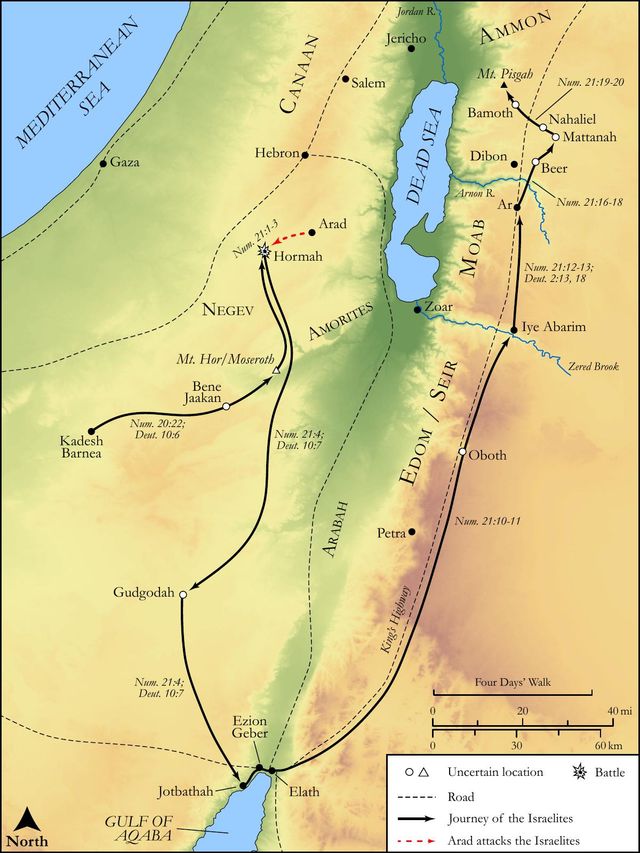
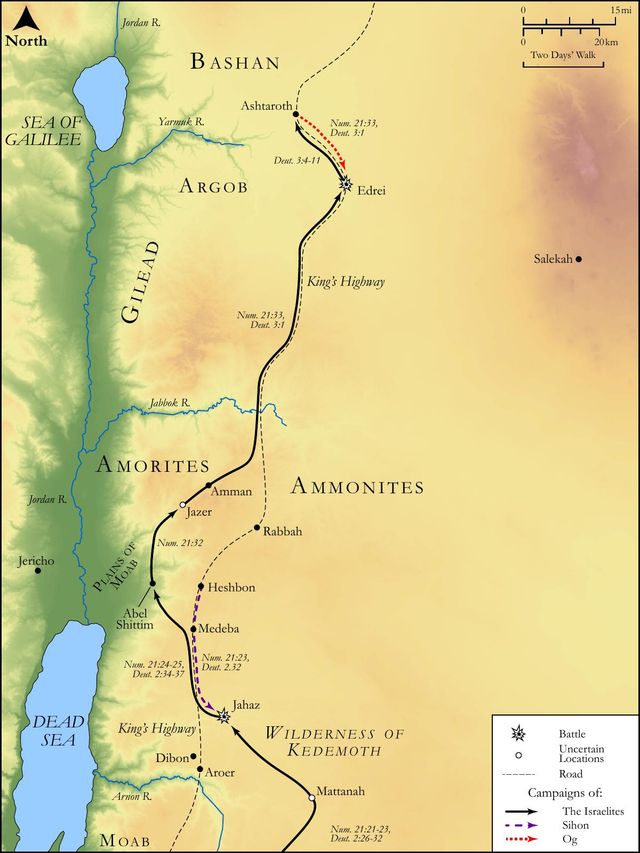
The events described in Deuteronomy 2 transpired towards the culmination of Israel's forty-year wilderness sojourn, as they strategically approached the land of Canaan from its eastern flank. The Amorites were a formidable Semitic people group who had established powerful kingdoms in the Transjordan region, including Sihon's kingdom, with its strategically vital capital at Heshbon. This area commanded control over crucial ancient trade routes. The cultural norms of the era frequently saw kings personally leading their armies into battle, a practice exemplified by Sihon's direct involvement here. Jahaz, the specified battle location, was a site of considerable strategic importance, later referenced as a Levitical city and the setting for other historical conflicts. Israel's confrontation with Sihon was not an act of unprovoked aggression; they had initially sought peaceful passage. However, Sihon's refusal and subsequent military action were divinely orchestrated to facilitate Israel's initial territorial acquisition east of the Jordan, a foundational step in the fulfillment of God's promise of the land, as detailed in Numbers 21:21-26.
Key Themes
ShowHideThis verse powerfully contributes to several overarching themes central to Deuteronomy and the broader Pentateuch. Firstly, it underscores Divine Sovereignty, vividly demonstrating God's absolute control over nations and their leaders. Even Sihon's aggression was an integral part of God's larger plan to deliver his land into Israel's hands, fulfilling His covenant promise to provide them with territory, as emphatically stated in Deuteronomy 2:24-25. Secondly, it highlights the theme of Conquest as Divine Provision. The battle with Sihon was not merely a military engagement but a divinely ordained step in Israel's journey to possess the land God promised them, illustrating that God actively fights for His people, a truth powerfully declared in Deuteronomy 1:30. Lastly, it reinforces the paramount importance of Obedience and Trust. Israel had faithfully adhered to God's instructions regarding the Edomites, Moabites, and Ammonites. Now, facing a direct military challenge, their continued obedience and unwavering trust in God's leading were essential for their success in this and subsequent battles for the Promised Land.
Exposition and Analysis
ShowHideKey Word Analysis
ShowHideThis refers to the Amorite king of Heshbon, a formidable ruler whose territory was strategically located east of the Jordan. The name itself, derived from a root meaning "tempestuous," aptly describes his defiant and aggressive character in confronting Israel. His appearance here signifies the direct opposition Israel faced and the specific individual through whom God would initiate the conquest of the Transjordan.
This verb denotes a deliberate and active movement, particularly in a military context, often implying an aggressive or confrontational intent. In this verse, it emphasizes that Sihon was not merely defending his borders but actively initiating hostilities, marching his forces to meet Israel in open battle. This "coming out" was a direct challenge to Israel's passage and an act of defiance against God's unfolding plan.
This noun explicitly means "battle" or "war." Its use here leaves no ambiguity about Sihon's objective: a full-scale military engagement aimed at repelling or destroying the Israelites. This highlights the gravity of the confrontation and the existential threat it posed, underscoring the necessity of divine intervention for Israel's survival and success.
This is a specific geographical location, later identified as a Levitical city (Joshua 21:36) and a site of other significant battles (e.g., Jeremiah 48:21). Its mention provides a precise and verifiable setting for the battle, grounding the narrative in historical and geographical reality. It was likely a strategically important point, perhaps a border town or a suitable plain for large-scale military engagement, confirming the significance of the impending conflict.
Verse Breakdown
ShowHide"Then Sihon came out against us"
This clause immediately establishes the antagonist and the initiation of the conflict. "Sihon" is identified as the Amorite king, whose spirit God had previously hardened (as stated in Deuteronomy 2:30), ensuring this confrontation. His "coming out against us" signifies an aggressive, offensive maneuver, not a defensive posture, confirming his hostile and predetermined intent to engage Israel.
"he and all his people"
This phrase emphasizes the totality and formidable nature of Sihon's military force. It indicates that this was not a minor skirmish or a small contingent, but the full might of his kingdom mobilized for a decisive battle. This detail magnifies the scale of the challenge Israel faced, further highlighting the magnitude of their eventual, divinely-enabled victory.
"to fight at Jahaz"
This specifies both the explicit purpose and the precise location of the confrontation. The phrase "to fight" leaves no ambiguity about Sihon's hostile objective. "Jahaz" serves as the designated battlefield, a historically and strategically significant site where God's plan for Israel's initial conquest of the Transjordan region would dramatically unfold.
Literary Devices
ShowHideDeuteronomy 2:32 masterfully employs several potent literary devices. Foreshadowing is prominently evident, as Sihon's aggressive "coming out" immediately signals the impending battle and Israel's subsequent conquest of his territory—a victory that would represent the crucial first major step in possessing the Promised Land. There is also a powerful element of Divine Irony at play: Sihon's defiant act of aggression, which he intended to thwart Israel's advance, is precisely the means by which God fulfills His sovereign purpose of delivering Sihon's land directly into Israel's hands. This highlights God's unparalleled ability to use even the resistance of adversaries to achieve His ultimate will. Furthermore, the Geographical Specificity of "Jahaz" grounds the narrative in a tangible, historical reality, lending significant credibility and weight to Moses' account for the new generation of Israelites.
Theological and Thematic Connections
ShowHideDeuteronomy 2:32 profoundly illustrates God's active and sovereign involvement in the affairs of nations, coupled with His unwavering commitment to His covenant promises. The hardening of Sihon's heart and his subsequent aggressive action were not random occurrences but divinely orchestrated steps designed to clear the path for Israel's inheritance. This demonstrates that even when faced with formidable opposition, God remains utterly sovereign over all circumstances, capable of turning the plans and intentions of adversaries to serve His own righteous purposes. This timeless principle extends beyond ancient Israel, serving as a powerful reminder to believers across generations that God can strategically use challenges, conflicts, and even the resistance of others to advance His kingdom and strengthen His people. The battle at Jahaz was not merely a military engagement; it was a profound test of Israel's faith and a spectacular opportunity for God to display His power, proving unequivocally that He fights for His people and enables them to overcome seemingly insurmountable obstacles.
Reflection and Application
ShowHideThe account of Sihon's confrontation with Israel at Jahaz offers profound and enduring lessons for contemporary believers. Just as Sihon defiantly "came out" against Israel, we too will inevitably encounter opposition when striving to walk in God's will, pursue His purposes, or advance His kingdom. This verse serves as a powerful reminder that such resistance is often not coincidental or merely unfortunate, but can be an integral part of God's sovereign plan. He may allow, or even orchestrate, challenges and conflicts to test our faith, refine our character, deepen our dependence on Him, and ultimately, to open doors for greater blessings, spiritual growth, and breakthroughs. We are called not to fear or retreat in the face of adversity, but to stand firm, trusting implicitly that God is in complete control and will actively fight for us. Our battles, whether spiritual, relational, professional, or circumstantial, are not merely obstacles but divinely appointed opportunities for God to powerfully demonstrate His faithfulness and omnipotence, leading us to victory and enabling us to possess the "territory"—be it spiritual maturity, ministry opportunities, or personal breakthroughs—He has promised.
Questions for Reflection
ShowHideFAQ
ShowHideWhy did Sihon come out to fight Israel, especially since Israel had peaceful intentions towards other nations?
ShowHideSihon's decision to "come out against us" was not a result of Israel's provocation or a misunderstanding, but rather a direct consequence of God's divine will and active intervention. Deuteronomy 2:30 explicitly states, "But Sihon king of Heshbon would not let us pass by him, for the Lord your God hardened his spirit and made his heart obstinate, that He might deliver him into your hand, as it is this day." While Israel had successfully negotiated peaceful passage or avoided conflict with Edom, Moab, and Ammon, God had a distinct and different plan for the Amorites. He intended to deliver Sihon's land into Israel's possession as part of their promised inheritance. Therefore, God actively intervened in Sihon's heart, causing him to refuse Israel's peaceful request and initiate a battle, thereby creating the necessary and legitimate conditions for Israel to conquer his territory. This powerfully demonstrates God's sovereign control over human decisions and historical events, orchestrating them precisely to fulfill His covenant promises to His people.
Christ-Centered Fulfillment
ShowHideThe confrontation with Sihon at Jahaz, divinely orchestrated to secure Israel's initial inheritance, serves as a profound and multifaceted foreshadowing of the ultimate victory achieved by Jesus Christ. Just as Sihon, a powerful earthly king, "came out" in defiant opposition to God's people and their journey to the promised land, humanity's ultimate spiritual enemies—sin, death, and the devil—have stood in relentless and seemingly insurmountable opposition to God's redemptive plan. However, Christ, the true Warrior and King, decisively "came out" against these spiritual adversaries, not with an earthly army, but through His perfect obedience, sacrificial death on the cross, and glorious resurrection. His victory utterly disarmed the spiritual powers and authorities, triumphing over them publicly (as powerfully declared in Colossians 2:15). The conquest of Sihon's territory provided ancient Israel with a tangible, physical inheritance—a foretaste of the far greater and eternal spiritual inheritance believers receive in Christ. Through His finished work, Jesus has conquered all that opposes God's kingdom, opening the way for His people to enter into their true "rest" and eternal inheritance, which is not merely a physical land, but a spiritual kingdom, an unbreakable covenant, and intimate fellowship with God Himself (as beautifully described in Hebrews 4:9-11). Thus, Sihon's defeat at Jahaz stands as a historical type, pointing with prophetic clarity to Christ's ultimate, complete, and eternal victory over every spiritual foe, securing for all who believe an eternal dwelling and a promised future that infinitely surpasses any earthly possession.