


Deuteronomy 2:1
Bible text: King James Version (1769 Blayney text) · Public domain
Bible text: King James Version with Strong's numbers · Public domain
Bible text: Berean Standard Bible · Public domain
Bible text: American Standard Version (1901) · Public domain
Bible text: World English Bible, Messianic edition · Public domain
Bible text: Geneva Bible (1599) · Public domain
Bible text: Young's Literal Translation · Public domain
- וַנֵּפֶןva·Ne·fenand we turnedH6437Conj-w ¦ V-Qal-ConsecImperf-1cpVerb Qal Consecutive Imperfect 1st Plural common genderוַandנֵּפֶןwe turned
- וַנִּסַּעva·ni·Sa'and we set outH5265Conj-w ¦ V-Qal-ConsecImperf-1cpVerb Qal Consecutive Imperfect 1st Plural common genderוַandנִּסַּעwe set out
- הַמִּדְבָּרָהha·mid·Ba·rahthe wilderness towardsH4057Art ¦ N-ms ¦ SfxNoun Singular Masculine Absoluteהַtheמִּדְבָּרָwildernessהtowards
- דֶּרֶךְDe·rekh[the] way ofH1870N-cscNoun Singular common gender Construct
- יַםyam[the] sea ofH3220N-mscNoun Singular Masculine Construct
- סוּףSufreed[s]H5488N-msNoun Title Singular Masculine Absolute
- כַּאֲשֶׁרka·'a·Sherjust asH834Prep-k ¦ RelParticle Relativeכַּjustאֲשֶׁרas
- דִּבֶּרdi·Berhe had spokenH1696V-Piel-Perf-3msVerb Piel Perfect 3rd Singular Masculine
- יְהוָהYah·wehYahwehH3068N-properNoun Proper Title
- אֵלָי'e·Laito meH413Prep ¦ 1csPrepositionאֵלָtoיme
- וַנָּסָבva·Na·sovand we went aroundH5437Conj-w ¦ V-Qal-ConsecImperf-1cpVerb Qal Consecutive Imperfect 1st Plural common genderוַandנָּסָבwe went around
- אֶת'et<obj.>H853DirObjMParticle Object Indicator
- הַרhar[the] hill country ofH2022N-mscNoun Singular Masculine Construct
- שֵׂעִירse·'IrSeirH8165N-properNoun Proper Location
- יָמִיםya·MimdaysH3117N-mpNoun Plural Masculine Absolute
- רַבִּיםra·BimmanyH7227Adj-mpAdjective Plural Masculine Absolute
English is a literal word-by-word gloss of the Hebrew, not the KJV's wording. Why?
This is the original text the KJV's translators worked from — each Hebrew word with its own literal English meaning in this verse, prepared by scholars at Tyndale House, Cambridge. The KJV translates whole sentences, not word by word, so its wording differs: one Hebrew word can become several English words, and the KJV may choose “the LORD” where the gloss reads “Yahweh”. Both are faithful — they answer different questions. For the KJV's own rendering, switch to the KJV text.
Details
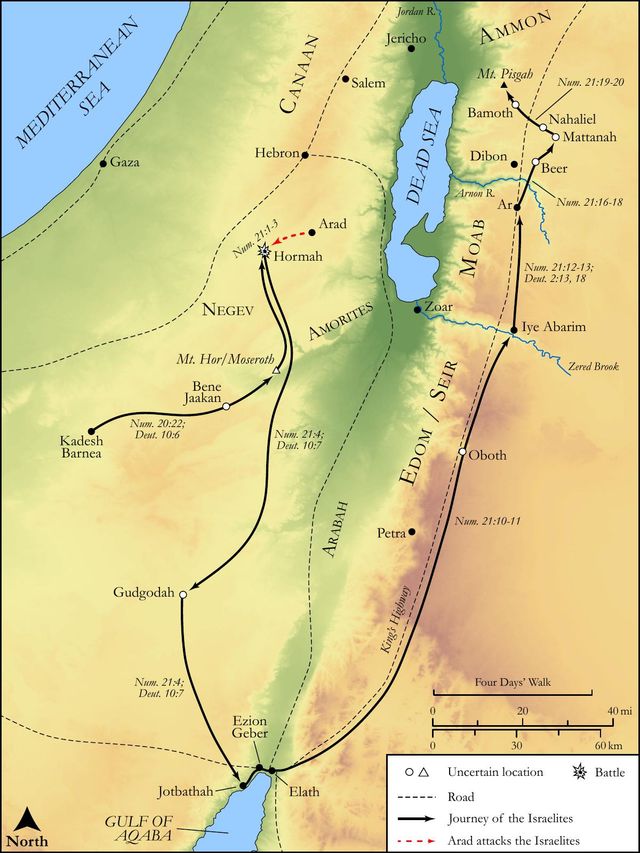
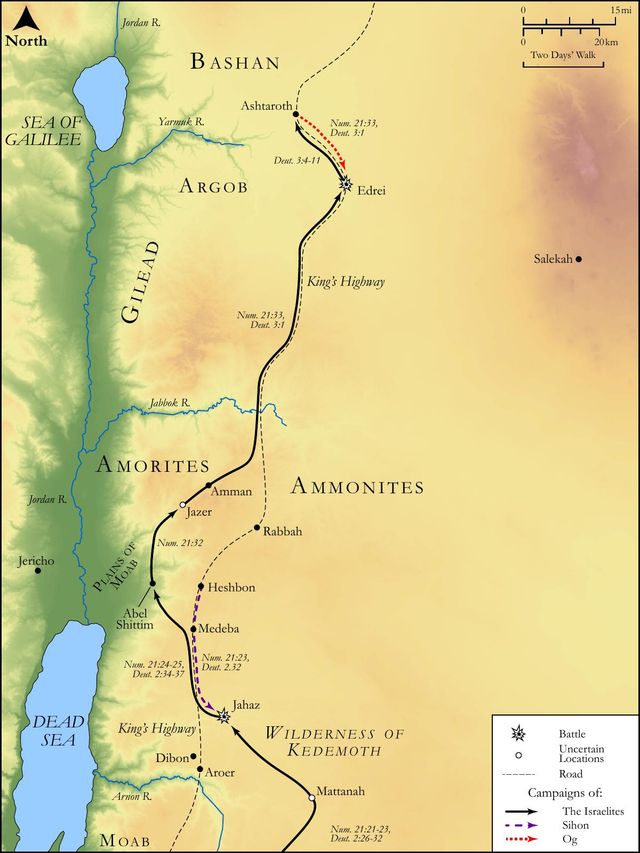
See on the biblical-era maps
Study this verse
Public-domain commentary
Matthew Henry
From his Commentary on the Whole Bible. Henry comments on passages, not single verses — this entry covers Deuteronomy 2:1–7. His three-level outline is real structure in the source text, so it is rendered as structure.
Here is, I. A short account of the long stay of Israel in the wilderness: We compassed Mount Seir many days, Deu 2:1. Nearly thirty-eight years they wandered in the deserts of Seir; probably in some of their rests they staid several years, and never stirred; God by this not only chastised them for their murmuring and unbelief, but, 1. Prepared them for Canaan, by humbling them for sin, teaching them to mortify their lusts, to follow God, and to comfort themselves in him. It is a work of time to make souls meet for heaven, and it must be done by a long train of exercises. 2. He prepared the Canaanites for destruction. All this time the measure of their iniquity was filling up; and, though it might have been improved by them as a space to repent in, it was abused by them to the hardening of their hearts. Now that the host of Israel was once repulsed, and after that was so long entangled and seemingly lost in the wilderness, they were secure, and thought the danger was over from that quarter, which would make the next attempt of Israel upon them the more dreadful.
II.Orders given them to turn towards Canaan.
Though God contend long, he will not contend for ever. Though Israel may be long kept waiting for deliverance or enlargement, it will come at last: The vision is for an appointed time, and at the end it shall speak, and not lie.
III.A charge given them not to annoy the Edomites.
1.They must not offer any hostility to them as enemies: Meddle not with them, Deu 2:4, Deu 2:5.
(1.)They must not improve the advantage they had against them, by the fright they would be put into upon Israel's approach: "They shall be afraid of you, knowing your strength and numbers, and the power of God engaged for you; but think not that, because their fears make them an easy prey, you may therefore prey upon them; no, take heed to yourselves." There is need of great caution and a strict government of our own spirits, to keep ourselves from injuring those against whom we have an advantage. Or this caution is given to the princes; they must not only not meddle with the Edomites themselves, but not permit any of the soldiers to meddle with them.
(2.)They must not avenge upon the Edomites the affront they gave them in refusing them passage through their country, Num 20:21. Thus, before God brought Israel to destroy their enemies in Canaan, he taught them to forgive their enemies in Edom.
(3.)They must not expect to have any part of their land given them for a possession: Mount Seir was already settled upon the Edomites, and they must not, under pretence of God's covenant and conduct, think to seize for themselves all they could lay hands on. Dominion is not founded in grace. God's Israel shall be well placed, but must not expect to be placed alone in the midst of the earth, Isa 5:8.
2.They must trade with them as neighbours, buy meat and water of them, and pay for what they bought, Deu 2:6. Religion must never be made a cloak for injustice. The reason given (Deu 2:7), is, "God hath blessed thee, and hitherto thou hast lacked nothing; and therefore," (1.) "Thou needest not beg; scorn to be beholden to Edomites, when thou hast a God all-sufficient to depend upon. Thou hast wherewithal to pay for what thou callest for (thanks to the divine blessing!); use therefore what thou hast, use it cheerfully, and do not sponge upon the Edomites." (2.) "Therefore thou must not steal. Thou hast experienced the care of the divine providence concerning thee, in confidence of which for the future, and in a firm belief of its sufficiency, never use any indirect methods for thy supply. Live by the faith and not by thy sword."
Continue studying Deuteronomy 2:1 across the web’s major study libraries — every link below opens this exact verse, chapter, or book on the destination site.
Read & Compare
 BibleGatewayThis verse in more than 200 translations and 70 languages.
 Bible.comThe YouVersion reader — hundreds of translations, reading plans, and highlights.
 ESV.orgCrossway's official English Standard Version reader.
 NET BibleThe NET translation with 60,000+ translators' notes on every rendering decision.
 STEP BibleTyndale House's free study tool — original text, vocabulary, and scholarly resources.
 BibliaLogos Bible Software's free web reader.
 USCCBThe New American Bible (Revised Edition) with the U.S. bishops' study notes.
Commentaries
 BibleHub CommentariesDozens of classic commentaries on this verse, gathered on one page.
 StudyLightMore than 100 commentary sets — the largest collection on the web.
 BibleRefPlain-English commentary on what this verse means, verse by verse.
 Enduring WordDavid Guzik's free commentary on this chapter, widely used by Bible teachers.
 Bible Study ToolsVerse commentary alongside Greek and Hebrew study aids.
Original Language & Research
- BibleHub InterlinearThe verse word by word — original language, transliteration, and English.
- BibleHub LexiconEvery word's original-language definition and Strong's entry.
 Blue Letter BibleDeep-study tools — Strong's numbers, concordance, and word studies.
 SefariaThe Hebrew text with Rashi and centuries of Jewish commentary.
Sermons, Hymns & Audio


TrulyRandomVerse is not affiliated with these sites and doesn’t control their content. They’re linked because they’re genuinely useful.
Summary
Deuteronomy 2:1 marks a pivotal moment in Israel's wilderness journey, initiating the final 38 years of their protracted 40-year sojourn. Recounted by Moses to a new generation poised to enter the Promised Land, this verse signifies a divinely mandated redirection from the direct path to Canaan, a direct consequence of the previous generation's profound rebellion and unbelief at Kadesh-Barnea. It highlights Israel's prolonged period of wandering in the southern wilderness, specifically around the mountainous region of Mount Seir, underscoring God's unwavering sovereign control and disciplinary judgment even amidst His patient preparation of a people for the fulfillment of His promises.
Context
ShowHideLiterary Context
Deuteronomy 2:1 inaugurates the historical recounting within Moses' second major discourse (Deuteronomy 1:6-4:43), which serves as a comprehensive retrospective of Israel's journey from Mount Horeb (Sinai) to the plains of Moab. Following Moses' initial review of God's covenant faithfulness and Israel's past failures, particularly their disobedience at Kadesh-Barnea, this verse transitions to the specific details of the 38-year period of wandering that ensued. It directly sets the stage for Moses to recount the events leading up to the conquest of Transjordan, emphasizing God's continued guidance and provision even during a time of judgment. The narrative here picks up directly from God's command in Numbers 14:25 to turn back into the wilderness, thereby preparing the new generation for their imminent entry into the Promised Land.
Historical & Cultural Context
The historical backdrop for Deuteronomy 2:1 is the immediate aftermath of Israel's catastrophic act of unbelief at Kadesh-Barnea, where they refused to enter the Promised Land despite God's explicit command and promises, as vividly detailed in Numbers 13 and Numbers 14. As a direct consequence, God decreed that the entire generation of fighting men who had departed from Egypt, with the notable exceptions of Caleb and Joshua, would perish in the wilderness. The phrase "the way of the Red sea" refers to the route leading south towards the Gulf of Aqaba (also known as the Sea of Reeds), a less direct and more arduous path than the intended route to Canaan. "Mount Seir" designates the rugged mountainous region historically inhabited by the Edomites, who were descendants of Esau. Israel was explicitly commanded not to engage in conflict with or seize territory from the Edomites, as articulated later in Deuteronomy 2:5. This prolonged period of "compassing" or circling around Edomite territory vividly illustrates the forced detour and the extensive, disciplinary waiting period required before the new generation would be prepared to advance into the Promised Land.
Key Themes
ShowHideThis verse powerfully contributes to several overarching themes foundational to Deuteronomy and the Pentateuch. Firstly, it profoundly underscores Divine Sovereignty and Guidance, demonstrating that even within a period of judgment and wandering, God's hand precisely directed Israel's path ("as the LORD spake unto me"). Their journey was not a random occurrence but meticulously controlled by God's overarching plan. Secondly, it vividly illustrates the severe Consequences of Disobedience and Unbelief. The "many days" spent "compassing mount Seir" serve as a stark, tangible reminder of the high cost of rebellion against God's word, directly fulfilling the prophecy that the unbelieving generation would perish in the wilderness (compare with Numbers 14:33-35). Thirdly, it speaks to God's Patience and Preparatory Discipline. The prolonged period of wandering functioned not merely as punishment but also as a crucible for refining the new generation, teaching them absolute dependence on God and preparing them both militarily and spiritually for the formidable challenges of conquering Canaan. This essential waiting period allowed the old, rebellious spirit to die out and fostered the emergence of a new, obedient generation ready to inherit God's promises.
Exposition and Analysis
ShowHideKey Word Analysis
ShowHideThis verb, H6437, signifies a change of direction, to face or direct oneself towards something or, as in this context, away from something. It denotes a significant and deliberate shift in Israel's journey, a turning away from the direct route to the Promised Land and a redirection deep into the wilderness. This "turning" was not arbitrary but a divinely commanded pivot, indicating a new, disciplinary phase of their journey dictated by God's judgment and sovereign plan.
This verb, H1696, emphasizes the divine origin and authoritative nature of the command. The entire journey, including its circuitous and disciplinary aspects, was not a random or accidental occurrence but a direct fulfillment of God's explicit word to Moses. It profoundly underscores that God remained actively involved in leading Israel, even in judgment, thereby demonstrating His unwavering faithfulness to His declared purposes, whether those be in promise or in consequence.
Meaning "to revolve, surround, or border," this word, H5437, powerfully conveys the circuitous and prolonged nature of Israel's journey around Mount Seir. It emphasizes that they were not progressing directly towards their ultimate goal but were moving in circles, a direct and unavoidable consequence of their previous failures and God's disciplinary decree. The repetition implied by "many days" spent "compassing" highlights both the extended duration and the profound disciplinary intent of this period of wandering.
Verse Breakdown
ShowHide"Then we turned, and took our journey into the wilderness by the way of the Red sea"
This initial clause describes the immediate and decisive action taken by Israel. The "turning" signifies a departure from the previously attempted route towards Canaan and a deliberate redirection into the southern wilderness. The phrase "by the way of the Red sea" indicates the specific geographical path taken, leading towards the Gulf of Aqaba, a less direct and more isolated route, reinforcing the idea of a prolonged, disciplinary journey away from the immediate goal of the Promised Land.
"as the LORD spake unto me"
This crucial phrase establishes the divine mandate and ultimate authority behind this redirection. It explicitly links the Israelites' journey to God's direct command given to Moses, particularly after the rebellion at Kadesh-Barnea (compare with Numbers 14:25). It underscores God's absolute sovereignty over their movements, even when those movements are a direct consequence of their sin. The journey was not aimless wandering but a divinely orchestrated path of discipline and preparation.
"and we compassed mount Seir many days"
This final clause details the specific nature and extended duration of their wandering. "Compassed" (meaning to circle or go around) vividly portrays the lack of direct progress towards the Promised Land. Mount Seir, the territory of Edom, serves as a significant geographical marker for this prolonged period. The phrase "many days" emphatically highlights the extended duration of this disciplinary phase, underscoring the patience required and the full working out of God's judgment upon the rebellious generation.
Literary Devices
ShowHideDeuteronomy 2:1 employs several potent literary devices to convey its profound message. The Narrative Framing of Moses recounting these past events to a new generation serves a crucial pedagogical and admonitory purpose, drawing vital lessons from the nation's history of both divine faithfulness and human failure. The Repetition of the themes of "turning" and "compassing" throughout this period of Israel's history underscores the cyclical nature of their disobedience and God's persistent, yet redemptive, discipline. There is a discernible element of Irony in God's continued guidance even in judgment; though Israel was severely punished for their unbelief, God did not abandon them but continued to lead them, albeit through a circuitous and disciplinary path. The "wilderness" itself functions as a powerful Symbolism of a place of intense testing, profound purification, and miraculous divine provision, where absolute dependence on God is paramount. Furthermore, the verse contains a subtle yet significant Foreshadowing, as the eventual completion of this wandering period signals the imminent entry of the new generation into the Promised Land, thereby hinting at future divine intervention and the ultimate fulfillment of God's promises.
Theological and Thematic Connections
ShowHideDeuteronomy 2:1 deeply embeds itself within the broader biblical narrative, illustrating profound theological truths about God's immutable character and His dynamic relationship with humanity. It reveals God's unwavering sovereignty, demonstrating that His plans unfold precisely as He ordains, even when human sin necessitates a detour or a prolonged period of discipline. This verse underscores the immense gravity of unbelief and disobedience, showing that God's word, whether expressed in promise or in warning, is utterly reliable and will be fulfilled. Yet, even within the context of judgment, His enduring faithfulness shines through, as He meticulously preserves a remnant and patiently prepares a new generation for the fulfillment of His grand purposes. The "compassing" of Mount Seir highlights the redemptive nature of divine discipline—it is not merely punitive but purposefully designed to refine, teach, and prepare His people for greater obedience and ultimate blessing. This long and arduous journey serves as a powerful metaphor for the spiritual life, where periods of waiting, testing, and consequence are integral to profound growth and the eventual arrival at God's intended destination.
Reflection and Application
ShowHideDeuteronomy 2:1 offers profound and enduring lessons for believers today, serving as a powerful reminder that our spiritual journey is intricately guided by God's sovereign hand, even through seasons of difficulty, delay, and apparent unproductive "circling." Just as Israel's prolonged wandering was a direct and unavoidable consequence of their unbelief and disobedience, our own choices and level of obedience significantly impact the trajectory and experience of our walk with God. This verse challenges us to honestly examine areas of our lives where we might be resisting God's clear commands or failing to trust His promises, for such resistance can indeed lead to unnecessary detours or prolonged periods of divine discipline. However, it also offers immense comfort and hope: God's discipline is never without a profound and redemptive purpose. The "many days" of "compassing" served to refine Israel, to allow the old, rebellious ways to die out, and to meticulously prepare a new generation for the formidable challenges and abundant blessings that lay ahead. Similarly, when we find ourselves in seasons of waiting, testing, or seemingly unproductive "circling," this verse encourages patient endurance, unwavering trust that God is actively working, preparing us for His next appointed step, and teaching us deeper dependence on His unfailing provision and perfect guidance. Our detours, though often painful and perplexing, can become crucibles for profound spiritual growth and a deeper, more intimate understanding of God's unwavering faithfulness.
Questions for Reflection
ShowHideFAQ
ShowHideWhy did God make them wander for "many days" around Mount Seir, rather than allowing them to enter the Promised Land directly?
ShowHideThe prolonged wandering, specifically "compassing mount Seir many days," was a direct consequence and a precise fulfillment of God's judgment against the generation that rebelled at Kadesh-Barnea. After hearing the negative report from the spies and subsequently refusing to enter the Promised Land, that generation displayed a profound lack of faith and outright disobedience (see Numbers 14:1-35). As a result, God decreed that all the adult males who had come out of Egypt, with the notable exceptions of Caleb and Joshua, would perish in the wilderness. Their children, the new generation, would then wander for 40 years, one year for each day the spies explored the land. This extensive period of wandering served multiple crucial purposes: it was a just punishment for their deep-seated unbelief, it allowed the rebellious generation to die off, and it provided a crucible for the new generation to be refined, prepared, and thoroughly taught obedience and absolute dependence on God before they could inherit the land. The circling around Mount Seir specifically highlights this disciplinary delay and the patience required as God meticulously worked out His sovereign purposes.
Christ-Centered Fulfillment
ShowHideDeuteronomy 2:1, though detailing a period of judgment and wandering, finds profound Christ-centered fulfillment in several significant ways. The Old Testament wilderness journey, marked by Israel's persistent disobedience and God's disciplinary leading, ultimately points to Jesus Christ as the true Israel, perfectly obedient where the nation tragically failed. While Israel wandered for 40 years due to their unbelief and rebellion, Jesus, the Son of God, endured 40 days of intense temptation in the wilderness, perfectly resisting every lure of the adversary, thereby fulfilling the obedience that Israel so desperately lacked (compare with Matthew 4:1-11). He is the faithful leader who does not lead His people into a cyclical path of judgment but through the path of grace to the ultimate promised rest. The "way of the Red Sea" and the "compassing Mount Seir" symbolize the circuitous, arduous, and ultimately insufficient path of the Law, which could not bring true rest or direct entry into God's presence due to the pervasive reality of human sin. Christ, however, by His once-for-all, perfect sacrifice on the cross, has opened a new and living way, leading us directly into the heavenly sanctuary, into the very presence of God (compare with Hebrews 10:19-20). He is our true Joshua, who leads us not merely to an earthly inheritance but into the eternal rest of God, a rest that is entered not by works of the Law or by enduring disciplinary wanderings, but solely by faith in Him (compare with Hebrews 4:1-11). Thus, the long, disciplinary journey of Deuteronomy 2:1 foreshadows the ultimate journey of redemption accomplished by Christ, who delivers us from the wilderness of sin and brings us into His glorious and eternal kingdom.