


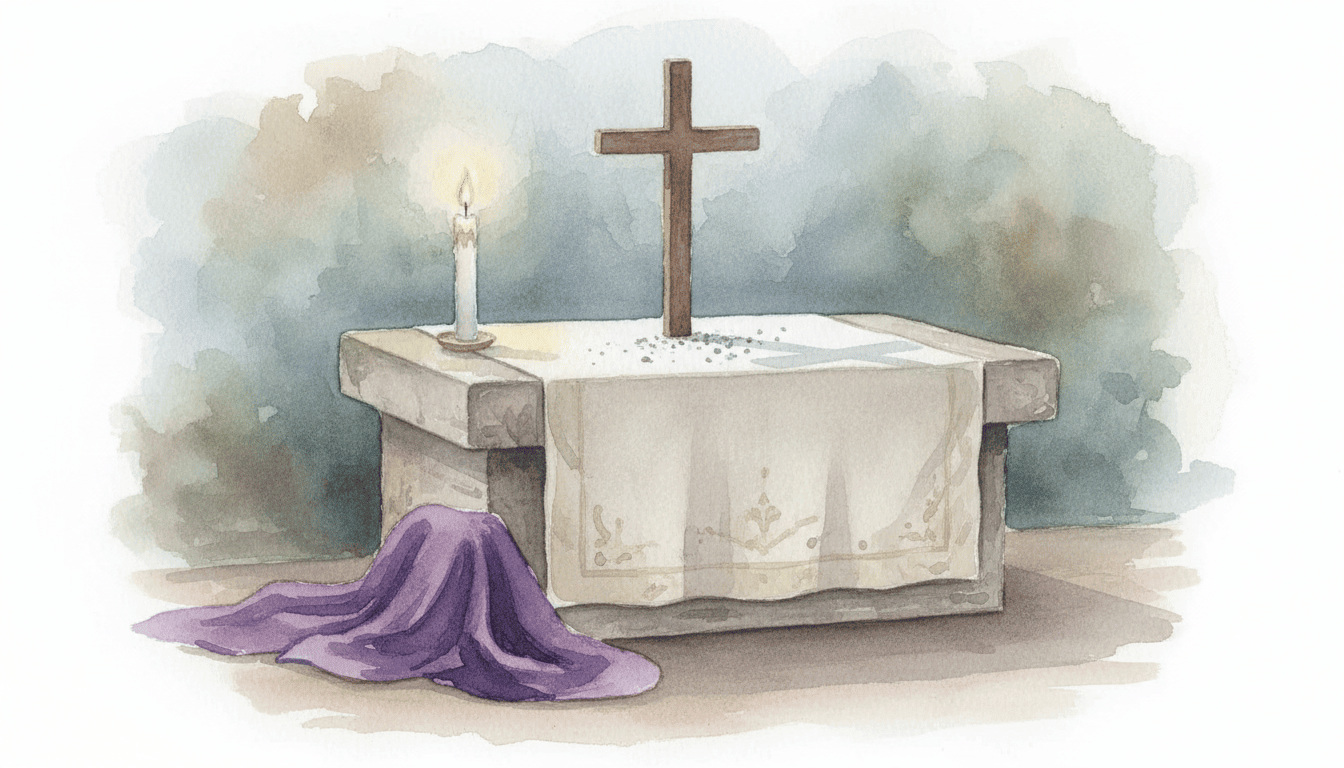
Ash WednesdayRepentance and Renewal
Introduction
Ash Wednesday marks the beginning of Lent, a forty-day period of preparation leading to Easter. The ashes placed on foreheads remind believers of their mortality and need for repentance. "Remember that you are dust, and to dust you shall return"—these solemn words confront us with the reality of human frailty and the consequences of sin. Yet Ash Wednesday is not ultimately about despair but about hope. It calls us to genuine repentance, to turn from sin and return to God with all our hearts. This day begins a journey of spiritual renewal, fasting, and preparation for celebrating Christ's resurrection.
The Biblical Call to Repentance
The prophet Joel issued a call to repentance that captures the spirit of Ash Wednesday. He summoned God's people to return to the Lord with fasting, weeping, and mourning. But he emphasized that God desires not external displays but internal transformation: "Rend your heart, and not your garments." True repentance involves a deep, heartfelt turning from sin, not merely outward religious performances.
Therefore also now, saith the LORD, turn ye even to me with all your heart, and with fasting, and with weeping, and with mourning: And rend your heart, and not your garments, and turn unto the LORD your God: for he is gracious and merciful, slow to anger, and of great kindness, and repenteth him of the evil.
Joel 2:12-13
KJV
Joel's call came in the context of coming judgment—the day of the Lord was near. Yet even in judgment, God's character shines through: He is gracious and merciful, slow to anger and abounding in steadfast love. He relents from sending disaster. This is the God to whom we return—not a harsh tyrant waiting to punish, but a loving Father eager to forgive and restore.
John the Baptist appeared in the wilderness proclaiming a baptism of repentance for the forgiveness of sins. He warned of coming wrath but also pointed to the One who would baptize with the Holy Spirit and fire. John's ministry prepared the way for Jesus by calling people to acknowledge their sin and turn to God in faith.
John did baptize in the wilderness, and preach the baptism of repentance for the remission of sins. And there went out unto him all the land of Judaea, and they of Jerusalem, and were all baptized of him in the river of Jordan, confessing their sins.
Mark 1:4-5
KJV
Jesus himself began his public ministry with a call to repentance: "The time is fulfilled, and the kingdom of God is at hand: repent ye, and believe the gospel." Repentance is not optional for those who would enter God's kingdom. It is the first response to the good news that salvation has arrived in Christ.
And saying, The time is fulfilled, and the kingdom of God is at hand: repent ye, and believe the gospel.
Mark 1:15
KJV
The Meaning of Biblical Repentance
Biblical repentance (metanoia in Greek) means a complete change of mind that results in a change of direction. It involves acknowledging sin, experiencing godly sorrow over it, and turning away from it toward God. Paul distinguishes between worldly grief, which produces death, and godly grief, which produces repentance leading to salvation without regret.
For godly sorrow worketh repentance to salvation not to be repented of: but the sorrow of the world worketh death.
True repentance bears fruit. John the Baptist demanded that those claiming repentance demonstrate it through changed behavior: "Bring forth fruits meet for repentance." He condemned empty religious profession unaccompanied by transformed lives. Repentance is evidenced not by words alone but by actions that flow from a changed heart.
Bring forth therefore fruits meet for repentance:
Matthew 3:8
KJV
Jesus taught that repentance is necessary for all people. Unless we repent, we will all likewise perish. No one is exempt from this requirement. Every human being has sinned and needs to turn from sin to God through faith in Christ. Repentance is not a one-time event but an ongoing posture of humility and dependence on God's grace.
I tell you, Nay: but, except ye repent, ye shall all likewise perish.
Luke 13:3
KJV
Fasting as Spiritual Discipline
Fasting—abstaining from food for spiritual purposes—has always accompanied repentance in Scripture. When the people of Nineveh heard Jonah's warning, they proclaimed a fast and put on sackcloth, from the greatest to the least. Even the king covered himself with sackcloth and sat in ashes. God saw their works, that they turned from their evil way, and he relented from the disaster he had planned.
So the people of Nineveh believed God, and proclaimed a fast, and put on sackcloth, from the greatest of them even to the least of them. For word came unto the king of Nineveh, and he arose from his throne, and he laid his robe from him, and covered him with sackcloth, and sat in ashes. And he caused it to be proclaimed and published through Nineveh by the decree of the king and his nobles, saying, Let neither man nor beast, herd nor flock, taste any thing: let them not feed, nor drink water: But let man and beast be covered with sackcloth, and cry mightily unto God: yea, let them turn every one from his evil way, and from the violence that is in their hands. Who can tell if God will turn and repent, and turn away from his fierce anger, that we perish not? And God saw their works, that they turned from their evil way; and God repented of the evil, that he had said that he would do unto them; and he did it not.
Jonah 3:5-10
KJV
Jesus taught his disciples how to fast properly. Fasting should not be done for public display but in secret, for the Father who sees in secret. Hypocrites disfigure their faces to show others they are fasting, but this perverts the purpose of fasting. True fasting is between the individual and God, not a performance for human applause.
Moreover when ye fast, be not, as the hypocrites, of a sad countenance: for they disfigure their faces, that they may appear unto men to fast. Verily I say unto you, They have their reward. But thou, when thou fastest, anoint thine head, and wash thy face; That thou appear not unto men to fast, but unto thy Father which is in secret: and thy Father, which seeth in secret, shall reward thee openly.
Matthew 6:16-18
KJV
Fasting serves multiple purposes: it demonstrates earnestness in prayer, humbles the soul, helps break the power of fleshly appetites, and increases spiritual focus. Isaiah warned against fasting that served selfish purposes while ignoring justice and mercy. God desires fasting that loosens the bonds of wickedness, frees the oppressed, and shares bread with the hungry. Authentic spiritual discipline produces compassion and justice, not merely personal piety.
Is it such a fast that I have chosen? a day for a man to afflict his soul? is it to bow down his head as a bulrush, and to spread sackcloth and ashes under him? wilt thou call this a fast, and an acceptable day to the LORD? Is not this the fast that I have chosen? to loose the bands of wickedness, to undo the heavy burdens, and to let the oppressed go free, and that ye break every yoke? Is it not to deal thy bread to the hungry, and that thou bring the poor that are cast out to thy house? when thou seest the naked, that thou cover him; and that thou hide not thyself from thine own flesh?
Isaiah 58:5-7
KJV
Mortality and the Reality of Dust
The ashes of Ash Wednesday recall God's words to Adam after the fall: "In the sweat of thy face shalt thou eat bread, till thou return unto the ground; for out of it wast thou taken: for dust thou art, and unto dust shalt thou return." Sin brought death into the world. Every human being is mortal, subject to decay and death. The ashes remind us of this sobering reality.
In the sweat of thy face shalt thou eat bread, till thou return unto the ground; for out of it wast thou taken: for dust thou art, and unto dust shalt thou return.
Genesis 3:19
KJV
Yet in Christ, death is not the final word. Jesus himself became subject to death, humbling himself and becoming obedient to the point of death, even death on a cross. Because he died and rose again, those who trust in him have the promise of resurrection. We who are dust will one day be raised imperishable, clothed with immortality.
And being found in fashion as a man, he humbled himself, and became obedient unto death, even the death of the cross.
Philippians 2:8
KJV
In a moment, in the twinkling of an eye, at the last trump: for the trumpet shall sound, and the dead shall be raised incorruptible, and we shall be changed. For this corruptible must put on incorruption, and this mortal must put on immortality. So when this corruptible shall have put on incorruption, and this mortal shall have put on immortality, then shall be brought to pass the saying that is written, Death is swallowed up in victory.
The psalmist reflects on human frailty: "As for man, his days are as grass: as a flower of the field, so he flourisheth. For the wind passeth over it, and it is gone; and the place thereof shall know it no more." Yet in the midst of this transience, God's steadfast love endures forever for those who fear him. Our lives are brief, but God's covenant faithfulness is eternal.
As for man, his days are as grass: as a flower of the field, so he flourisheth. For the wind passeth over it, and it is gone; and the place thereof shall know it no more. But the mercy of the LORD is from everlasting to everlasting upon them that fear him, and his righteousness unto children's children;
Psalms 103:15-17
KJV
Lent: Forty Days of Preparation
The forty days of Lent (not counting Sundays) mirror significant biblical periods of forty days or years. Moses was on Mount Sinai forty days receiving the Law. Elijah traveled forty days to Mount Horeb. The Israelites wandered forty years in the wilderness. Most significantly, Jesus fasted forty days in the wilderness before beginning his public ministry.
Then was Jesus led up of the Spirit into the wilderness to be tempted of the devil. And when he had fasted forty days and forty nights, he was afterward an hungred.
Matthew 4:1-2
KJV
During these forty days, Jesus was tempted by the devil. He faced hunger, the lure of worldly power, and the temptation to test God. Yet he resisted every temptation, quoting Scripture and relying on the Father. Jesus succeeded where Israel failed in the wilderness, demonstrating perfect obedience to God. Lent invites believers to follow Christ's example—denying fleshly appetites, resisting temptation, and depending wholly on God.
Returning to God With All Your Heart
Joel's prophecy emphasizes the urgency and totality of true repentance: "Turn ye even to me with all your heart." Half-hearted repentance is no repentance at all. God demands complete devotion, undivided loyalty, wholehearted love. This is not a legalistic requirement but the natural response of those who have tasted God's goodness and mercy.
David's psalm of repentance after his sin with Bathsheba provides a model for confession. He acknowledged his sin, took responsibility without excuses, and pleaded for God's mercy based on God's steadfast love. He understood that God desires truth in the inward being, a broken and contrite heart. External sacrifices mean nothing without internal transformation.
Create in me a clean heart, O God; and renew a right spirit within me. Cast me not away from thy presence; and take not thy holy spirit from me. Restore unto me the joy of thy salvation; and uphold me with thy free spirit.
Psalms 51:10-12
KJV
For thou desirest not sacrifice; else would I give it: thou delightest not in burnt offering. The sacrifices of God are a broken spirit: a broken and a contrite heart, O God, thou wilt not despise.
Psalms 51:16-17
KJV
God promises that those who seek him with all their heart will find him. When we turn to God in genuine repentance, he does not reject us but welcomes us. The parable of the prodigal son illustrates this beautifully: the father saw his son while he was still far off, had compassion, ran to meet him, and celebrated his return. This is the God we serve—eager to forgive, quick to restore, joyful over every sinner who repents.
And ye shall seek me, and find me, when ye shall search for me with all your heart.
Jeremiah 29:13
KJV
Conclusion: A Season of Grace
Ash Wednesday begins a sacred season of self-examination, confession, and renewed commitment to Christ. The ashes remind us that we are mortal, sinful, and utterly dependent on God's grace. Yet they also point us to the cross, where Jesus bore our sins in his body and opened the way for forgiveness and new life. Lent is not about earning God's favor through religious effort but about preparing our hearts to fully appreciate the magnitude of Christ's sacrifice and the glory of his resurrection. As we fast, pray, and repent during these forty days, we position ourselves to experience God's transforming grace, dying to sin and rising to new life in Christ.