


2 Samuel 23:15
Bible text: King James Version (1769 Blayney text) · Public domain
Bible text: Berean Standard Bible · Public domain
Bible text: American Standard Version (1901) · Public domain
Bible text: World English Bible, Messianic edition · Public domain
Bible text: Geneva Bible (1599) · Public domain
Bible text: Young's Literal Translation · Public domain
- וַיִּתְאַוֶּהvai·yit·'a·Vehand he desiredH183Conj-w ¦ V-Hithpael-ConsecImperf-3msVerb Hithpael Consecutive Imperfect 3rd Singular Masculineוַandיִּתְאַוֶּהhe desired
- דָוִדda·VidDavidH1732N-proper-mNoun Proper Masculine
- וַיֹּאמַרvai·yo·Marand he saidH559Conj-w ¦ V-Qal-ConsecImperf-3msVerb Qal Consecutive Imperfect 3rd Singular Masculineוַandיֹּאמַרhe said
- מִיmiwho?H4310InterrogPronoun Interrogative
- יַשְׁקֵנִיyash·Ke·niwill he give to drink meH8248V-Hiphil-Imperf-3ms ¦ 1csVerb Hiphil Imperfect 3rd Singular Masculineיַשְׁקֵwill he give to drinkנִיme
- מַיִםMa·yimwaterH4325N-mpNoun Plural Masculine Absolute
- מִבֹּארmi·Borfrom [the] well ofH877Prep-m ¦ N-mscNoun Singular Masculine Constructמִfromבֹּאר[the] well of
- בֵּיתbeitBeth-H1035N-properNoun Proper Location
- לֶחֶםLe·chem-lehemH1035N-properNoun Proper Location
- אֲשֶׁר'a·SherwhichH834RelParticle Relative
- בַּשָּׁעַרba·Sha·'ar[is] at the gateH8179Prep-b ¦ N-msNoun Singular Masculine Absoluteבַּ[is] at theשָּׁעַרgate
English is a literal word-by-word gloss of the Hebrew, not the KJV's wording. Why?
This is the original text the KJV's translators worked from — each Hebrew word with its own literal English meaning in this verse, prepared by scholars at Tyndale House, Cambridge. The KJV translates whole sentences, not word by word, so its wording differs: one Hebrew word can become several English words, and the KJV may choose “the LORD” where the gloss reads “Yahweh”. Both are faithful — they answer different questions. For the KJV's own rendering, switch to the KJV text.
Details
See on the biblical-era maps
Study this verse
Historical interpretation
Two Centuries of Reception
5 surviving comments on this verse. Each one is dated, so this reads as a timeline rather than a list.
Select a marker to jump to its quote. Markers stagger vertically where authors wrote within a few decades of each other.
Finally, whom among men shall we consider better and stronger than the holy David, who could not take for himself the water he desired from the Bethlehem lake, which was cut off by the enemy army, but could he mitigate it? For we cannot find that it was lacking for others. That is, with so great a number of soldiers, when he certainly could have had much less water shortage than the king from other sources; having endured a certain irrational desire, he desired that water which was surrounded by the enemy's fortification, from which it could not easily be brought without great danger. Therefore he said, 'Who will give me a drink from the well that is in Bethlehem at the gate?' And when the three men were found who had cut through the enemy's camp and brought the water that he had desired so eagerly, knowing that the same water had been obtained at the risk of others' lives, he poured it out to the Lord, so that it would not seem that he was drinking the blood of those who had brought it. This incident shows that desire indeed comes before reason, but reason resists desire. Therefore, David underwent suffering so that he might desire irrationally. But that is praiseworthy, which he wisely thwarted with a rational remedy. While I praise men who blushed at the desire for their king and preferred to bring an end to their own modesty or the danger to their own safety, I praise him even more who blushed at his own desire and purchased the blood of a dubious fate with a worthy price, as if he poured out water to the Lord with his victorious desire restrained, so as to show that he could restrain his desire with the comforting word.
And certainly when we are disturbed at this very anger because it has stolen upon us against our brother, and we angrily cast out its deadly suggestions and do not permit it to maintain its noxious lair in the recesses of our heart. To be angry in this latter way is also taught us by that prophet who so eradicated this from his mind that he did not even want to take revenge on his own enemies, who had in fact been handed over to him by God, when he said, “Be angry and do not sin.” For when he wanted water from a well in Bethlehem and had been brought it by strong men from the midst of enemy troops, he at once poured it out on the ground and, angrily extinguishing his wanton and passionate desire in this way, he offered it as a libation to the Lord, rejecting his yearning and desire with the words “May the Lord be gracious to me, lest I do this. Shall I drink the blood of those men who went out and the danger of their souls?”
A fish is caught by being enticed with a hook. A bird falls into a net while trying to get food. Animals that are tough by nature’s endowment fall into a pit from desire to eat, and what nature does not soften, food deceives. Therefore, learn temperance and parsimony from the prayer and the examples of ancients: from prayer, because the Lord says, “Lest your hearts be overburdened with self-indulgence and drunkenness”; from examples, because David was unwilling to drink the water he wanted, since he recognized the danger of being responsible for another’s blood; and because Daniel scorned the feasts of kings and lived on vegetables. What you possess in common with your companions should be acceptable to you and you should not cause others to be intemperate; also, do not become a cause for scandal to those to whom you wish to set an example by encouragement and by proof of a good life.
What I say is excessive, unless I confirm these things from testimonies of sacred Scripture. The Law of the Old Testament certainly forbids coveting another's wife, but it does not punish a king for commanding brave deeds of soldiers, or for desiring water. And we all know that David, pierced by the sword of concupiscence, both coveted and took away another man's wife. Fitting scourges followed his fault, and he corrected the evil he had perpetrated through the lamentations of penance. When long afterward he sat against the battle lines of enemies, he wished from desire to drink water from the cistern of Bethlehem. His chosen soldiers, breaking through the midst of the opposing forces, brought back unharmed the water the king had desired. But the man instructed by scourges immediately reproached himself for having desired water at the peril of his soldiers, and pouring it out, he offered it to the Lord, as it is written there: He poured it out to the Lord. For the water poured out was turned into a sacrifice to the Lord, because he slew the fault of concupiscence through the penance of his self-reproach. He therefore who once did not at all fear to covet another's wife, afterward was even afraid because he had coveted water. For since he remembered having perpetrated unlawful things, now stern against himself, he abstained even from lawful things. Thus, thus do we do penance, if we perfectly bewail what we have committed.
Much later, David was sitting opposite the enemy lines and desired longingly to drink from the cistern. Chosen soldiers of his broke through the enemy troops and returned unharmed with the water the king had desired. But the man who had been taught by his chastisements immediately reproached himself for having endangered his soldiers by his desire for water. He poured it out, making a libation to the Lord, as it is written there: “He poured it out to the Lord.” The water he poured out was changed into a sacrifice to the Lord, because he slaughtered his sin of eager desire by the penance of self-censure. The man who had once been unafraid to lust after another man’s wife was later terrified at having desired water. Since he remembered he had committed something forbidden, he was strict with himself and refrained even from what was allowed.
Continue studying 2 Samuel 23:15 across the web’s major study libraries — every link below opens this exact verse, chapter, or book on the destination site.
Read & Compare
 BibleGatewayThis verse in more than 200 translations and 70 languages.
 Bible.comThe YouVersion reader — hundreds of translations, reading plans, and highlights.
 ESV.orgCrossway's official English Standard Version reader.
 NET BibleThe NET translation with 60,000+ translators' notes on every rendering decision.
 STEP BibleTyndale House's free study tool — original text, vocabulary, and scholarly resources.
 BibliaLogos Bible Software's free web reader.
 USCCBThe New American Bible (Revised Edition) with the U.S. bishops' study notes.
Commentaries
 BibleHub CommentariesDozens of classic commentaries on this verse, gathered on one page.
 StudyLightMore than 100 commentary sets — the largest collection on the web.
 BibleRefPlain-English commentary on what this verse means, verse by verse.
 Enduring WordDavid Guzik's free commentary on this chapter, widely used by Bible teachers.
 Bible Study ToolsVerse commentary alongside Greek and Hebrew study aids.
Original Language & Research
- BibleHub InterlinearThe verse word by word — original language, transliteration, and English.
- BibleHub LexiconEvery word's original-language definition and Strong's entry.
 Blue Letter BibleDeep-study tools — Strong's numbers, concordance, and word studies.
 SefariaThe Hebrew text with Rashi and centuries of Jewish commentary.
Sermons, Hymns & Audio


TrulyRandomVerse is not affiliated with these sites and doesn’t control their content. They’re linked because they’re genuinely useful.
Summary
Second Samuel 23:15 captures a profoundly human and poignant moment in the life of King David, revealing his deep, almost wistful longing for a simple comfort amidst the harsh realities of war and Philistine occupation. While entrenched in a stronghold with his loyal mighty men, David expresses a heartfelt desire for water from the well of Bethlehem, his ancestral home. This seemingly innocuous wish, born perhaps of weariness, nostalgia, or a deep connection to his heritage, unexpectedly catalyzes an extraordinary act of selfless devotion from his most elite warriors, setting the stage for one of the most powerful displays of loyalty and sacrifice in the biblical narrative.
Context
ShowHideLiterary Context
This verse is strategically positioned within the concluding chapters of 2 Samuel, specifically within the "Last Words of David" (2 Samuel 23:1-7) and immediately preceding the detailed enumeration of David's "mighty men" and their heroic exploits (2 Samuel 23:8-39). The narrative flow first establishes David's spiritual and prophetic legacy, then transitions to highlight the remarkable individuals who formed the backbone of his military success and personal protection. Verse 15 serves as a powerful, concrete illustration of the deep, almost familial bond between David and his elite soldiers, providing a vivid example of the radical loyalty that characterized these men, before elaborating on their individual feats of strength and courage. It is not merely a biographical anecdote but a foundational story that underscores the character and devotion of David's inner circle, setting the stage for understanding their unparalleled commitment.
Historical & Cultural Context
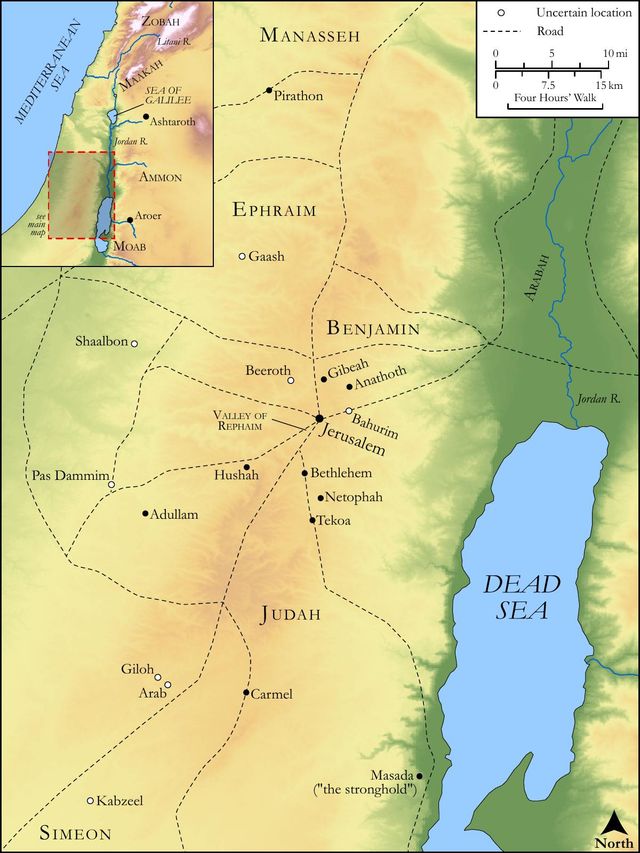
The historical setting for this event is a period of intense and persistent conflict between Israel and the Philistines, likely during David's early reign when he was consolidating his kingdom. Bethlehem, David's hometown and the site of his anointing (see 1 Samuel 16), was under Philistine control, indicated by their garrison there (see 2 Samuel 23:14). David and his men were likely holed up in a fortified position, often identified by scholars as the cave of Adullam or a similar defensive stronghold. In ancient warfare and daily life, access to reliable water sources was paramount, often determining strategic advantage and the viability of a siege. Wells, especially those located outside city gates, were communal and vital, making the water from Bethlehem's well not just a source of hydration but a potent symbol of home, heritage, and perhaps a yearning for a time of peace before the constant conflict and displacement.
Key Themes
ShowHideThe longing expressed by David in 2 Samuel 23:15 introduces several profound themes that resonate throughout the biblical narrative. Firstly, it powerfully illustrates the Humanity of David. Despite his status as king, warrior, and "man after God's own heart," he is portrayed as vulnerable, susceptible to nostalgia, and capable of a simple, personal yearning. This contrasts with his public persona and highlights his relatable human experience, reminding us that even the greatest leaders have personal needs and desires. Secondly, it lays the groundwork for the theme of Extraordinary Loyalty and Selfless Devotion. David's unspoken desire immediately prompts an incredible act of courage and self-sacrifice from his mighty men, who risk their lives to fulfill his wish, demonstrating the profound respect and bond they shared. This act of loyalty is further elaborated upon in 2 Samuel 23:16. Finally, the passage subtly introduces the theme of the Value of the Seemingly Small. What appears to be a trivial request for water becomes a catalyst for a heroic deed, elevating the significance of simple desires when met with profound love and dedication, underscoring how God can use ordinary circumstances to reveal extraordinary character.
Exposition and Analysis
ShowHideKey Word Analysis
ShowHideThe Hebrew verb אֲוָה (ʼâvâh), translated as "longed" or "sighed," conveys a deep, earnest desire, a strong craving, or a yearning. It suggests an emotional, heartfelt wish rather than a simple want or a strategic command. This word emphasizes David's internal state—a wistful, almost melancholic yearning for something familiar and comforting, perhaps born of weariness from battle or nostalgia for his childhood home. It is not a demand but an expression of profound personal desire, highlighting David's vulnerability and humanity.
The Hebrew noun בּוֹר (bôwr) refers to a pit-hole, specifically one used as a cistern or a well. In this context, it signifies a vital source of water, often dug deep into the ground to collect rainwater or access an underground spring. The specific mention of "the well" implies a known, perhaps iconic, water source in Bethlehem, adding to its personal significance for David beyond mere utility.
The Hebrew name בֵּית לֶחֶם (Bêyth Lechem), meaning "house of bread," identifies David's hometown. This geographical detail is crucial, as it imbues the water with symbolic value, representing not just hydration but a deep connection to David's personal history, heritage, and the place of his humble origins before becoming king. The longing for water from this specific well is intrinsically linked to his identity and past.
Verse Breakdown
ShowHide"And David longed, and said"
This opening phrase immediately establishes David's emotional state before his words are even uttered. The "longing" is an internal, deep-seated desire, a profound yearning that compels him to speak. It is not a casual thought but a powerful emotional impulse that finds verbal expression, setting the tone for the subsequent action.
"Oh that one would give me drink"
This is an exclamation of wish, not a command. The phrasing "Oh that one would give me" (מִי יַשְׁקֵנִי, mi yashqeni) expresses a strong, almost desperate desire for someone to fulfill this wish, without explicitly directing it to anyone. It underscores the personal, vulnerable nature of his yearning, rather than a royal decree or an order to his men.
"of the water of the well of Bethlehem"
The specific object of David's longing is not just any water, but water from a particular, cherished source. The "well of Bethlehem" carries immense personal significance for David, being his hometown and the place of his anointing (see 1 Samuel 16:1-13). This detail imbues the water with symbolic value, representing comfort, home, heritage, and perhaps even a sense of peace or security from a bygone era.
"which [is] by the gate!"
This further specifies the well's location, making it even more precise and familiar to David. The gate of a city was a prominent and often strategic location, frequently outside the city walls. The fact that this well was "by the gate" implies it was easily accessible under normal circumstances but made access perilous during a time of Philistine occupation, thus heightening the danger and the seemingly impossible nature of David's wistful wish.
Literary Devices
ShowHideThe passage masterfully employs several literary devices to convey its profound meaning and emotional depth. Pathos is immediately evident, as David's longing evokes sympathy and understanding from the reader, revealing the mighty king's vulnerability and human desire for simple comforts amidst the rigors of war. The "water of the well of Bethlehem" functions as powerful Symbolism, representing not merely hydration but a deep connection to home, heritage, and perhaps a lost sense of peace or normalcy. It becomes a tangible embodiment of nostalgia and a yearning for a past that is currently inaccessible. The narrative also uses Foreshadowing, as David's expressed desire, seemingly a mere sigh, immediately sets the stage for the extraordinary act of courage and loyalty by his mighty men in the subsequent verses (see 2 Samuel 23:16-17), building anticipation for their heroic deeds. There is also a subtle Irony in the situation: the king, surrounded by his most formidable warriors, expresses a longing for something as basic as water, yet its attainment requires an act of immense bravery due to the enemy's presence, highlighting the perilous circumstances of David's reign and the cost of even simple desires in wartime.
Theological and Thematic Connections
ShowHideDavid's longing for the water of Bethlehem, and the subsequent heroic act of his mighty men, serves as a poignant illustration of the human condition under duress and the extraordinary power of loyal devotion. Theologically, it underscores God's providential care even in seemingly mundane desires, as He often works through the sacrificial love and courageous actions of others within a community. It also highlights the value of empathy and responsiveness, where the unspoken needs of a leader or friend are met with courageous action, demonstrating a profound spiritual bond. This narrative resonates with the biblical theme of selfless service and the profound impact of actions motivated by love rather than obligation. The water itself, a symbol of life and comfort, foreshadows deeper spiritual truths about ultimate satisfaction and the "living water" that truly quenches the soul's deepest thirst.
Reflection and Application
ShowHideDavid's yearning for the water of Bethlehem is a powerful reminder that even leaders, heroes, and those in positions of great strength are profoundly human, experiencing weariness, nostalgia, and simple desires. This passage encourages us to cultivate empathy, to be attuned to the quiet longings and unexpressed needs of those around us, especially those who bear heavy burdens or are in positions of leadership. The mighty men's response teaches us about radical loyalty and selfless service—not waiting for a direct command, but acting on perceived need, even at great personal risk. It challenges us to consider what "water" we might be able to bring to others who are weary or longing, whether it be a word of encouragement, a practical act of service, a listening ear, or a tangible expression of support. It also invites us to reflect on our own "Bethlehem wells"—the sources of comfort, peace, and spiritual refreshment that we long for, and to trust that God can meet those deep needs, often through the unexpected generosity and sacrifice of others, or by directing us to the ultimate source of living water.
Questions for Reflection
ShowHideFAQ
ShowHideWhy was David's longing for water so significant, given his status as king?
ShowHideDavid's longing for water from the well of Bethlehem was significant precisely because of his status and the perilous circumstances. As king, he could command nearly anything, yet this was not a command but a deeply personal, almost wistful expression of desire. It revealed his profound humanity and vulnerability, contrasting with his public image as a mighty warrior and leader. The significance was heightened by the fact that Bethlehem, his ancestral home, was under Philistine occupation, making access to the well perilous. His desire was for a simple comfort, a taste of home, in a hostile environment. This seemingly small longing became significant because it prompted an extraordinary, self-sacrificial act of loyalty from his mighty men, who risked their lives to fulfill his unstated wish, demonstrating the deep bond and respect between them (see 2 Samuel 23:16-17). It transformed a personal sigh into a powerful testament of devotion.
Christ-Centered Fulfillment
ShowHideDavid's longing for the water of Bethlehem, and the subsequent selfless act of his mighty men, finds profound Christ-centered fulfillment in several ways. David's human vulnerability and deep yearning for physical refreshment from a specific, cherished source foreshadow humanity's ultimate, spiritual thirst for satisfaction, a thirst that only Jesus Christ can quench. Just as David longed for physical water from his ancestral home, so humanity longs for the "living water" that Jesus offers to all who believe (see John 4:10-14). He declared, "If anyone thirsts, let him come to me and drink" (see John 7:37), presenting Himself as the ultimate source of eternal life and spiritual refreshment. Furthermore, the extraordinary, self-sacrificial loyalty of David's mighty men, who risked their lives for a mere wish, powerfully prefigures the infinitely greater sacrifice of Christ. While David's men brought him physical water at great personal cost, Jesus, the ultimate "Lamb of God who takes away the sin of the world" (see John 1:29), laid down His life to provide eternal spiritual life and quench the deepest thirst of humanity's soul. His love was not a response to a king's longing but a proactive, unmerited act of divine grace, demonstrating the greatest love of all: "Greater love has no one than this, that someone lay down his life for his friends" (see John 15:13). Thus, the Bethlehem well, a source of temporary refreshment, points to Christ, the true source of everlasting life and ultimate fulfillment, whose sacrifice provides a wellspring of grace that never runs dry.