


2 Samuel 11:20
Bible text: King James Version (1769 Blayney text) · Public domain
Bible text: King James Version with Strong's numbers · Public domain
Bible text: Berean Standard Bible · Public domain
Bible text: American Standard Version (1901) · Public domain
Bible text: World English Bible, Messianic edition · Public domain
Bible text: Geneva Bible (1599) · Public domain
Bible text: Young's Literal Translation · Public domain
- וְהָיָהve·ha·Yahand it will beH1961Conj-w ¦ V-Qal-ConsecPerf-3msVerb Qal Consecutive Perfect 3rd Singular Masculineוְandהָיָהit will be
- אִם'imifH518PrtParticle Conditional
- תַּעֲלֶהta·'a·Lehit will riseH5927V-Qal-Imperf-3fsVerb Qal Imperfect 3rd Singular Feminine
- חֲמַתcha·Mat[the] anger ofH2534N-fscNoun Singular Feminine Construct
- הַמֶּלֶךְha·Me·lekhthe kingH4428Art ¦ N-msNoun Singular Masculine Absoluteהַtheמֶּלֶךְking
- וְאָמַרve·'a·Marand he will sayH559Conj-w ¦ V-Qal-ConsecPerf-3msVerb Qal Consecutive Perfect 3rd Singular Masculineוְandאָמַרhe will say
- לְךָle·Khato <the> youPrep-l ¦ 2msSuffix Personal 2nd Singular Masculineלְto <the>ךָyou
- מַדּוּעַma·Du·a'why?H4069InterrogParticle Interrogative
- נִגַּשְׁתֶּםni·gash·Temdid you draw nearH5066V-Niphal-Perf-2mpVerb Niphal Perfect 2nd Plural Masculine
- אֶל'eltoH413PrepPreposition
- הָעִירha·'Irthe cityH5892Art ¦ N-fsNoun Singular Feminine Absoluteהָtheעִירcity
- לְהִלָּחֵםle·hi·la·Chemto fightH3898Prep-l ¦ V-Niphal-InfVerb Niphal Infinitive Constructלְtoהִלָּחֵםfight
- הֲלוֹאha·Lo'¿ notH3808Interrog ¦ NegParticle Negativeהֲ¿לוֹאnot
- יְדַעְתֶּםye·da'·Temdid you knowH3045V-Qal-Perf-2mpVerb Qal Perfect 2nd Plural Masculine
- אֵת'et<obj.>H853DirObjMParticle Object Indicator
- אֲשֶׁר'a·SherthisH834RelParticle Relative
- יֹרוּyo·Ruthey will shootH3384V-Hiphil-Imperf-3mpVerb Hiphil Imperfect 3rd Plural Masculine
- מֵעַלme·'Alfrom onH5921Prep-m ¦ PrepPrepositionמֵfromעַלon
- הַחוֹמָהha·cho·Mahthe wallH2346Art ¦ N-fsNoun Singular Feminine Absoluteהַtheחוֹמָהwall
English is a literal word-by-word gloss of the Hebrew, not the KJV's wording. Why?
This is the original text the KJV's translators worked from — each Hebrew word with its own literal English meaning in this verse, prepared by scholars at Tyndale House, Cambridge. The KJV translates whole sentences, not word by word, so its wording differs: one Hebrew word can become several English words, and the KJV may choose “the LORD” where the gloss reads “Yahweh”. Both are faithful — they answer different questions. For the KJV's own rendering, switch to the KJV text.
Details
See on the biblical-era maps
Study this verse
Public-domain commentary
Matthew Henry
From his Commentary on the Whole Bible. Henry comments on passages, not single verses — this entry covers 2 Samuel 11:14–27. His two-level outline is real structure in the source text, so it is rendered as structure.
When David's project of fathering the child upon Uriah himself failed, so that, in process of time, Uriah would certainly know the wrong that had been done him, to prevent the fruits of his revenge, the devil put it into David's heart to take him off, and then neither he nor Bath-sheba would be in any danger (what prosecution could there be when there was no prosecutor?), suggesting further that, when Uriah was out of the way, Bath-sheba might, if he pleased, be his own for ever. Adulteries have often occasioned murders, and one wickedness must be covered and secured with another. The beginnings of sin are therefore to be dreaded; for who knows where they will end? It is resolved in David's breast (which one would think could never possibly have harboured so vile a thought) that Uriah must die. That innocent, valiant, gallant man, who was ready to die for his prince's honour, must die by his prince's hand. David has sinned, and Bath-sheba has sinned, and both against him, and therefore he must die; David determines he must. Is this the man whose heart smote him because he had cut off Saul's skirt? Quantum mutatus ab illo! - But ah, how changed! Is this he that executed judgment and justice to all his people? How can he now do so unjust a thing? See how fleshly lusts war against the soul, and what devastations they make in that war; how they blink the eyes, harden the heart, sear the conscience, and deprive men of all sense of honour and justice. Whoso committeth adultery with a woman lacketh understanding and quite loses it; he that doth it destroys his own soul, Pro 6:32. But, as the eye of the adulterer, so the hand of the murderer seeks concealment, Job 24:14, Job 24:15. Works of darkness hate the light. When David bravely slew Goliath it was done publicly, and he gloried in it; but, when he basely slew Uriah, it must be done clandestinely, for he is ashamed of it, and well he may. Who would do a thing that he dare not own? The devil, having as a poisonous serpent, put it into David's heart to murder Uriah, as a subtle serpent he puts it into his head how to do it. Not as Absalom slew Amnon, by commanding his servants to assassinate him, nor as Ahab slew Naboth by suborning witnesses to accuse him, but by exposing him to the enemy, a way of doing it which, perhaps, would not seem so odious to conscience and the world, because soldiers expose themselves of course. If Uriah had not been in that dangerous post, another must; he has (as we say) a chance for his life; if he fight stoutly, he may perhaps come off; and, if he die, it is in the field of honour, where a soldier would choose to die; and yet all this will not save it from being a wilful murder, of malice prepense.
I.Orders are sent to Joab to set Uriah in the front of the hottest battle, and then to desert him, and abandon him to the enemy, Sa2 11:14, Sa2 11:15. This was David's project to take off Uriah, and it succeeded, as he designed. Many were the aggravations of this murder.
1.It was deliberate. He took time to consider of it; and though he had time to consider of it, for he wrote a letter about it, and though he had time to have countermanded the order afterwards before it could be put in execution, yet he persisted in it.
2.He sent the letter by Uriah himself, than which nothing could be more base and barbarous, to make him accessory to his own death. And what a paradox was it that he could bear such a malice against him in whom yet he could repose such a confidence as that he would carry letters which he must not know the purport of.
3.Advantage must be taken of Uriah's own courage and zeal for his king and country, which deserve the greatest praise and recompence, to betray him the more easily to his fate. If he had not been forward to expose himself, perhaps he was a man of such importance that Joab could not have exposed him; and that this noble fire should be designedly turned upon himself was a most detestable instance of ingratitude.
4.Many must be involved in the guilt. Joab, the general, to whom the blood of his soldiers, especially the worthies, ought to be precious, must do it; he, and all that retire from Uriah when they ought in conscience to support and second him, become guilty of his death.
5.Uriah cannot thus die alone: the party he commands is in danger of being cut off with him; and it proved so: some of the people, even the servants of David (so they are called, to aggravate David's sin in being so prodigal of their lives), fell with him, Sa2 11:17. Nay, this wilful misconduct by which Uriah must be betrayed might be of fatal consequence to the whole army, and might oblige them to raise the siege.
6.It will be the triumph and joy of the Ammonites, the sworn enemies of God and Israel; it will gratify them exceedingly. David prayed for himself, that he might not fall into the hands of man, nor flee from his enemies (Sa2 24:13, Sa2 24:14); yet he sells his servant Uriah to the Ammonites, and not for any iniquity in his hand.
II.Joab executes these orders.
In the next assault that is made upon the city Uriah has the most dangerous post assigned him, is encouraged to hope that if he be repulsed by the besieged he shall be relieved by Joab, in dependence on which he marches on with resolution, but, succours not coming on, the service proves too hot, and he is slain in it, Sa2 11:16, Sa2 11:17. It was strange that Joab would do such a thing merely upon a letter, without knowing the reason. But,
1.Perhaps he supposed Uriah had been guilty of some great crime, to enquire into which David had sent for him, and that, because he would not punish him openly, he took this course with him to put him to death.
2.Joab had been guilty of blood, and we may suppose it pleased him very well to see David himself falling into the same guilt, and he was willing enough to serve him in it, that he might continue to be favourable to him. It is common for those who have done ill themselves to desire to be countenanced therein by others doing ill likewise, especially by the sins of those that are eminent in the profession of religion. Or, perhaps, David knew that Joab had a pique against Uriah, and would gladly be avenged on him; otherwise Joab, when he saw cause, knew how to dispute the king's orders, as Sa2 19:5; Sa2 24:3.
III.He sends an account of it to David.
An express is despatched away immediately with a report of this last disgrace and loss which they had sustained, Sa2 11:18. And, to disguise the affair,
1.He supposes that David would appear to be angry at his bad conduct, would ask why they came so near the wall (Sa2 11:20), did they not know that Abimelech lost his life by doing do? Sa2 11:21. We had the story (Jdg 9:53), which book, it is likely, was published as a part of the sacred history in Samuel's time; and (be it noted to their praise, and for imitation) even the soldiers were conversant with their bibles, and could readily quote the scripture-story, and make use of it for admonition to themselves not to run upon the same attempts which they found had been fatal.
2.He slyly orders the messenger to soothe it with telling him that Uriah the Hittite was dead also, which gave too broad an intimation to the messenger, and by him to others, that David would be secretly pleased to hear that; for murder will out. And, when men do such base things, they must expect to be bantered and upbraided with them, even by their inferiors. The messenger delivered his message agreeably to orders, Sa2 11:22-24. He makes the besieged to sally out first upon the besiegers (they came out unto us into the field), represents the besiegers as doing their part with great bravery (we were upon them even to the entering of the gate - we forced them to retire into the city with precipitation), and so concludes with a slight mention of the slaughter made among them by some shot from the wall: Some of the king's servants are dead, and particularly Uriah the Hittite, an officer of note, stood first in the list of the slain.
IV.David receives the account with a secret satisfaction, Sa2 11:25.
Let not Joab be displeased, for David is not. He blames not his conduct, nor thinks they did wrong in approaching so near the wall; all is well now that Uriah is put out of the way. This point being gained, he can make light of the loss, and turn it off easily with an excuse: The sword devours one as well as another; it was a chance of war, nothing more common. He orders Joab to make the battle more strong next time, while he, by his sin, was weakening it, and provoking God to blast the undertaking.
V.He marries the widow in a little time.
She submitted to the ceremony of mourning for her husband as short a time as custom would admit (Sa2 11:26), and then David took her to his house as his wife, and she bore him a son. Uriah's revenge was prevented by his death, but the birth of the child so soon after the marriage published the crime. Sin will have shame. Yet that was not the worst of it: The thing that David had done displeased the Lord. The whole matter of Uriah (as it is called, Kg1 15:5), the adultery, falsehood, murder, and this marriage at last, it was all displeasing to the Lord. He had pleased himself, but displeased God. Note, God sees and hates sin in his own people. Nay, the nearer any are to God in profession the more displeasing to him their sins are; for in them there is more ingratitude, treachery, and reproach, than in the sins of others. Let none therefore encourage themselves in sin by the example of David; for those that sin as he did will fall under the displeasure of God as he did. Let us therefore stand in awe and sin not, not sin after the similitude of his transgression.
Historical interpretation
Historical reception
1 surviving comment on this verse from the historical church.
We have taken up the task of writing an apology for the present style of the prophet David, not because he needs this gift, who has excelled in such great merits and flourished in virtues, but because many people, reading the sequence of his deeds without considering the power of the Scriptures or the hidden mysteries, wonder how such a great prophet did not avoid the contagion of adultery first and then of murder.
Therefore, it was our desire to review the history itself, which seems to have been exposed to sin. For in the second book of Kings (2 Samuel 11:2-27), we read that while David was walking in his royal palace, he saw a woman bathing (her name was Bathsheba), of remarkable beauty and grace, with a very attractive face, and he was overcome by the desire to possess her. However, the woman was married to a man named Uriah, and the scene of his death was arranged by royal command. For although it had no effect on his desire, yet it was considered to greatly impede his sense of shame for adultery.
Therefore, let us begin with the most obvious, whom God justified, so that you may not judge. 'For it is of little concern to me,' says Paul, 'that I should be judged by you or by any human court; indeed, I do not even judge myself' (1 Corinthians 4:3). Even though he was still in the body and subject to temptation, he did not judge himself because a spiritual person is not judged by anyone but God alone. Finally, he added, 'The one who judges me is the Lord' (1 Corinthians 4:4). Therefore, do not judge anything before the appointed time (ibid., 4 and 5). But David has already fulfilled his time and has earned grace, and he is justified by Christ; since David himself rejoiced in being called the son of the Lord, and those who confessed him in this way were enlightened. Why do you call a man of God from a reward to judgment? The Lord has already judged him, of whom he said to Solomon: If you walk before me as your father David walked in the holiness of heart and righteousness, in order to do everything I commanded him (3 Kings 9:4). Is he worthy of judgment or reward, who has done everything according to heavenly commands, walking in holiness and righteousness of heart? Where the vices and sins of others are hidden, there David receives divine testimony of his virtue and glory. And we discuss his sin in vain, for it is through his merit and grace that the sins of others have been revealed. For when Solomon sinned by not keeping the Lord's commands and God intended to divide his kingdom into many parts, He said to him: However, I will not do this in your days because of your father David. I will take it from the hand of your son. However, I will not take the whole kingdom; I will give him one scepter because of my servant David (3 Kings 11:12-13). Therefore, since the Lord justifies, who is there to condemn? What God has cleansed, you must not call common (Acts 10:15).
Nevertheless, with due regard to heavenly judgment, in which you honor the prophet even more, enter into his actions and behaviors. Do not marvel at the man, and do not judge him to be equal to the angels, because he has spent most of his life, even from childhood, dwelling in riches, honors, and positions of power, and has been subjected to many temptations. He has only once given in to error, and it is through this error that even the angels of heaven, as Scripture recounts (Genesis 6:2), were cast down from their virtue and grace. Indeed, another error of his is mentioned, that he caused the people to be counted.
Continue studying 2 Samuel 11:20 across the web’s major study libraries — every link below opens this exact verse, chapter, or book on the destination site.
Read & Compare
 BibleGatewayThis verse in more than 200 translations and 70 languages.
 Bible.comThe YouVersion reader — hundreds of translations, reading plans, and highlights.
 ESV.orgCrossway's official English Standard Version reader.
 NET BibleThe NET translation with 60,000+ translators' notes on every rendering decision.
 STEP BibleTyndale House's free study tool — original text, vocabulary, and scholarly resources.
 BibliaLogos Bible Software's free web reader.
 USCCBThe New American Bible (Revised Edition) with the U.S. bishops' study notes.
Commentaries
 BibleHub CommentariesDozens of classic commentaries on this verse, gathered on one page.
 StudyLightMore than 100 commentary sets — the largest collection on the web.
 BibleRefPlain-English commentary on what this verse means, verse by verse.
 Enduring WordDavid Guzik's free commentary on this chapter, widely used by Bible teachers.
 Bible Study ToolsVerse commentary alongside Greek and Hebrew study aids.
Original Language & Research
- BibleHub InterlinearThe verse word by word — original language, transliteration, and English.
- BibleHub LexiconEvery word's original-language definition and Strong's entry.
 Blue Letter BibleDeep-study tools — Strong's numbers, concordance, and word studies.
 SefariaThe Hebrew text with Rashi and centuries of Jewish commentary.
Sermons, Hymns & Audio


TrulyRandomVerse is not affiliated with these sites and doesn’t control their content. They’re linked because they’re genuinely useful.
Summary
This verse captures Joab's shrewd foresight and manipulative strategy as he instructs his messenger on how to report the battle's casualties, particularly Uriah's death, to King David. Joab anticipates David's intense wrath over perceived military blunders—specifically, approaching too close to the city walls—and meticulously prepares a narrative designed to deflect suspicion from the true, sinister reason for Uriah's demise: David's deliberate command to have him killed. It reveals the deep entanglement of sin, deceit, and complicity that permeates David's court in the wake of his adultery with Bathsheba and the subsequent murder of her husband.
Context
ShowHideLiterary Context
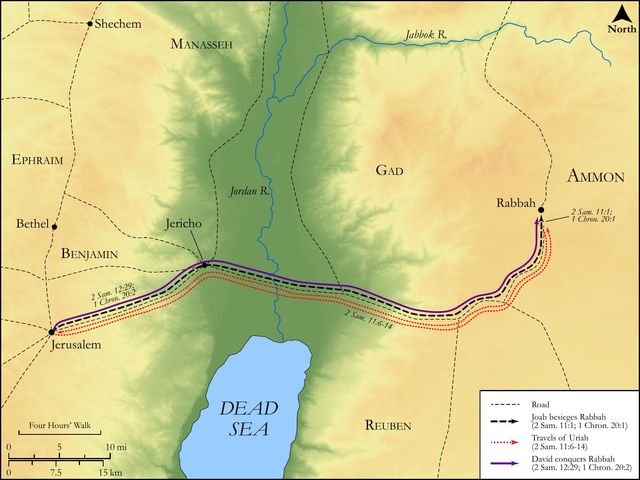
2 Samuel 11:20 is situated at a critical juncture within one of the most tragic narratives in the Old Testament, detailing King David's egregious sins. The chapter begins by establishing David's dereliction of duty, remaining in Jerusalem while his army, led by Joab, was engaged in battle against the Ammonites at Rabbah, a detail highlighted in 2 Samuel 11:1. This idleness leads directly to his fateful encounter with Bathsheba, culminating in adultery and her subsequent pregnancy, as recounted in 2 Samuel 11:2-5. David's desperate attempts to cover up his sin, first by trying to trick Uriah into returning home to his wife (2 Samuel 11:6-11), and then, failing that, by orchestrating Uriah's death in battle, form the dark backdrop. Joab, as David's loyal but morally compromised military commander, receives David's chilling written command to "set ye Uriah in the forefront of the hottest battle, and retire ye from him, that he may be smitten, and die" (2 Samuel 11:15). Verse 20, therefore, is Joab's calculated preparation for the inevitable royal inquiry, crafting a plausible military explanation for Uriah's death to conceal the king's murderous intent and protect him from direct culpability for the tactical "blunder."
Historical & Cultural Context
Ancient warfare, particularly siege warfare, involved significant risks and established tactical norms. Attacking a fortified city often meant approaching its walls, which were typically defended by archers, slingers, and those who could drop heavy objects from above. Commanders were expected to minimize casualties while achieving military objectives, making close approaches to fortified walls a highly dangerous and often costly maneuver. Joab's anticipation of David's anger over this specific tactic is deeply rooted in this military reality; it's a legitimate concern that a king, especially one with David's extensive military background, would raise. Messengers (or "runners") played a crucial role in ancient communication, often needing to deliver sensitive news and anticipate the recipient's reaction, as the bearer of bad news could face severe consequences. Joab's detailed instructions to the messenger highlight the political and military etiquette of the time, where the delivery of news required careful management to avoid royal displeasure. This context underscores Joab's strategic brilliance and his understanding of court dynamics, even as it is applied to a morally reprehensible act.
Key Themes
ShowHideThis verse contributes significantly to several overarching themes within 2 Samuel 11 and the broader narrative of David's reign. Firstly, it exemplifies Calculated Deception, as Joab meticulously crafts a narrative to manage information and deflect blame, concealing the premeditated murder of Uriah. Secondly, it starkly illustrates the Lack of Leadership Accountability in David, who, despite expecting his commanders to account for military strategy, is himself deeply unaccountable for his own grave sins. The king's anticipated "wrath" over a tactical error serves as an ironic contrast to his own profound moral failings. Thirdly, the verse subtly highlights Military Strategy and Risk, using a legitimate concern about approaching city walls as a smokescreen for the engineered death. Finally, it is deeply embedded in the theme of the Consequences of Sin. Joab's complicity in the cover-up foreshadows the turmoil and divine judgment that would later fall upon David's house, as prophesied by Nathan, where the sword would never depart from his house because he despised the Lord's command and took Uriah's wife, a judgment clearly articulated in 2 Samuel 12:9-10. The intricate web of deceit spun here sets the stage for the unfolding tragedies of David's later life.
Exposition and Analysis
ShowHideKey Word Analysis
ShowHideThis noun signifies "heat" or, figuratively, "anger," "fury," or "indignation." Joab's use of this term indicates his deep understanding of David's temperament and his anticipation of a fiery, intense reaction. It suggests not mere displeasure but a passionate outburst he expects, which he plans to redirect away from the true cause of Uriah's death.
This verb means "to be or come near," "to approach," or "to draw close." The specific mention of approaching "so nigh unto the city" highlights the deliberate and dangerous proximity to the fortified walls, which was the engineered setting for Uriah's death. Joab uses this legitimate military vulnerability as the plausible, yet false, cover story for the murder.
This verb means "to flow as water," but transitively, "to lay or throw (especially an arrow, i.e., to shoot)." It refers to the projectiles (arrows, stones, javelins) that defenders would launch from the city walls. Joab's rhetorical question, "knew ye not that they would shoot from the wall?", emphasizes the obvious danger and thus provides a seemingly logical explanation for the casualties, including Uriah's, while concealing the king's true murderous intent.
Verse Breakdown
ShowHide"And if so be that the king's wrath arise"
This opening phrase immediately establishes Joab's strategic foresight and his attempt to control the narrative. He is not merely reporting; he is preparing for a specific, anticipated emotional response from David, indicating his deep familiarity with the king's character and his own manipulative intent to preempt and manage royal anger.
"and he say unto thee, Wherefore approached ye so nigh unto the city when ye did fight?"
Joab precisely predicts the king's line of questioning. David, a seasoned military commander himself, would naturally inquire about the tactical decisions that led to casualties, particularly the high-risk maneuver of fighting too close to fortified walls. This question serves as the perfect misdirection, shifting focus from the king's moral culpability to a military miscalculation.
"knew ye not that they would shoot from the wall?"
This rhetorical question underscores the obvious danger of such a maneuver in ancient siege warfare. Joab is providing the messenger with the very question David is likely to ask, along with the implied answer (that it was a known and obvious risk), thereby setting up the "official" explanation for the losses, which conveniently includes Uriah's death, without revealing the king's direct involvement in Uriah's demise.
Literary Devices
ShowHideThe verse is rich in Irony, particularly Dramatic Irony, as the audience is fully aware of the true, sinister reason behind Uriah's death (David's direct command to Joab), while David is expected to focus on a mere military blunder. This creates a stark contrast between appearance and reality, highlighting the king's hypocrisy and Joab's complicity. Joab's instructions also demonstrate Foreshadowing, as his active involvement in David's sin and the subsequent cover-up hints at the future turmoil and divine judgment that will inevitably befall David's house. The entire exchange functions as a Red Herring, deliberately diverting attention from the king's moral culpability to a tactical error. Furthermore, Joab's detailed preparation of the messenger exemplifies Calculated Deception, a pervasive theme in this chapter, where truth is twisted and manipulated to serve sinful ends. The rhetorical question "knew ye not...?" is a form of Rhetorical Question, designed not to elicit an answer but to emphasize the obviousness of the danger, thereby reinforcing the fabricated narrative.
Theological and Thematic Connections
ShowHideThis verse, seemingly about military reporting, is deeply embedded in the theological narrative of sin's pervasive nature and its corrupting influence on leadership and relationships. It illustrates how one sin (David's adultery) leads to another (murder), which then necessitates elaborate schemes of cover-up and deception, drawing others like Joab into complicity. The anticipated "wrath" of the king over a tactical error stands in stark contrast to David's own profound moral failure, highlighting the hypocrisy that can accompany unconfessed sin. The passage underscores the biblical principle that sin always seeks to hide itself, creating a web of lies and manipulation, but ultimately, it cannot remain concealed from God. Joab's pragmatic approach to managing the king's anger, even at the cost of truth and justice, reflects a fallen world where power often overrides righteousness, and the consequences of sin ripple outward, affecting many.
Reflection and Application
ShowHideThis passage serves as a stark and sobering reminder of the insidious nature of sin and its far-reaching consequences. David's initial sin of adultery, compounded by murder, spirals into a complex web of deceit involving his most trusted commander. We see how the desire to cover up one transgression leads to further moral compromises and the manipulation of truth. This should prompt us to consider the entanglement of our own sins: how easily one small compromise can lead to a cascade of larger ones, drawing others into our moral failures. The narrative challenges us to examine our own integrity, especially in positions of leadership, and to recognize the importance of transparency and accountability. True leadership requires the courage to confess mistakes and sins, rather than attempting to hide them or shift blame. Furthermore, Joab's complicity serves as a warning about the peril of enabling or participating in the wrongdoing of those in authority, reminding us that our ultimate allegiance must be to God's righteousness, not to human power or convenience. This passage calls us to a deeper commitment to truth, even when it is costly, and to trust in God's grace for forgiveness rather than resorting to deceit.
Questions for Reflection
ShowHideFAQ
ShowHideWhy was Joab so sure David would be angry about approaching the wall?
ShowHideJoab was David's seasoned military commander and intimately understood both ancient siege warfare tactics and David's temperament. Approaching "nigh unto the city" walls during a siege was a well-known, high-risk maneuver that almost guaranteed heavy casualties from defenders shooting projectiles from above. Any competent military leader, especially one as experienced as David, would naturally question such a costly tactic if it seemed avoidable. Joab anticipated David's anger over this perceived military blunder, knowing it would serve as a plausible and convenient explanation for the casualties, thereby diverting attention from the true, sinister reason for Uriah's death, which was orchestrated by David himself, as revealed in 2 Samuel 11:15.
What does this verse reveal about Joab's character?
ShowHideThis verse reveals Joab as a highly shrewd, pragmatic, and utterly loyal (albeit morally compromised) military commander. He possesses keen foresight, anticipating David's reaction and meticulously crafting a narrative to manage the flow of information. His willingness to execute David's morally reprehensible command to engineer Uriah's death (2 Samuel 11:15) and then actively participate in the cover-up demonstrates a character that prioritizes the king's will and political expediency over ethical considerations. He is a man of action and strategy, even when those actions are deeply sinful, highlighting the complex and often dark nature of power and loyalty in the courts of that day. Joab's actions here underscore his role as a facilitator of David's sin, rather than a moral check.
Christ-Centered Fulfillment
ShowHideThe dark narrative of 2 Samuel 11:20, steeped in David's sin, Joab's complicity, and the elaborate cover-up, powerfully foreshadows the desperate human need for a perfect King and a true atonement. David, the "man after God's own heart," falls spectacularly, attempting to hide his sin through deceit and murder, requiring Joab to concoct a plausible military explanation for Uriah's death. This stands in stark contrast to Jesus Christ, the ultimate King, who is without sin (Hebrews 4:15) and has no need for cover-ups or manipulative schemes. While David's kingdom is tainted by the hidden sin that Joab helps conceal, Christ's kingdom is built on truth, righteousness, and perfect justice. The "wrath" David anticipates from his commander over a military blunder pales in comparison to the divine wrath against sin that Jesus willingly bore on the cross (Romans 5:9). Unlike David, who orchestrated the death of an innocent man to hide his own guilt, Christ, the true Lamb of God who takes away the sin of the world, willingly offered Himself as the innocent sacrifice to atone for the sins of humanity, including those of kings like David. In Christ, there is no need to hide sin, for it has been fully exposed and perfectly dealt with through His perfect life, atoning death, and glorious resurrection, offering true cleansing and forgiveness that David's machinations could never achieve (1 John 1:9). He is the King who brings light to darkness, exposing sin not to condemn those who repent, but to offer them genuine freedom and reconciliation with God (John 3:19-21).