


2 Kings 19:8
Bible text: King James Version (1769 Blayney text) · Public domain
Bible text: Berean Standard Bible · Public domain
Bible text: American Standard Version (1901) · Public domain
Bible text: World English Bible, Messianic edition · Public domain
Bible text: Geneva Bible (1599) · Public domain
Bible text: Young's Literal Translation · Public domain
- וַיָּשָׁבvai·Ya·shovand he returnedH7725Conj-w ¦ V-Qal-ConsecImperf-3msVerb Qal Consecutive Imperfect 3rd Singular Masculineוַandיָּשָׁבhe returned
- רַבrav[the] chiefH7262N-msNoun Title Singular Masculine Absolute
- שָׁקֵהsha·KehcommanderH7262N-msNoun Title Singular Masculine Absolute
- וַיִּמְצָאvai·yim·Tza'and he foundH4672Conj-w ¦ V-Qal-ConsecImperf-3msVerb Qal Consecutive Imperfect 3rd Singular Masculineוַandיִּמְצָאhe found
- אֶת'et<obj.>H853DirObjMParticle Object Indicator
- מֶלֶךְMe·lekh[the] king ofH4428N-mscNoun Singular Masculine Construct
- אַשּׁוּר'a·ShurAssyriaH804N-properNoun Proper Location
- נִלְחָםnil·ChamfightingH3898V-Niphal-Prtcpl-msVerb Niphal Participle Singular Masculine Absolute
- עַל'alonH5921PrepPreposition
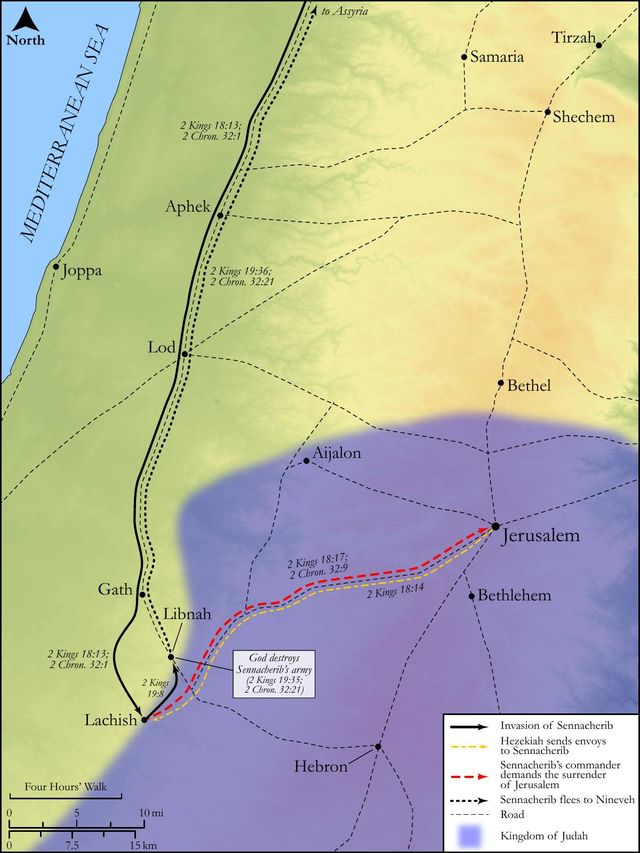
- לִבְנָהliv·NahLibnahH3841N-properNoun Proper Location
- כִּיkiifH3588PrtParticle Conditional
- שָׁמַעsha·Ma'he had heardH8085V-Qal-Perf-3msVerb Qal Perfect 3rd Singular Masculine
- כִּיkithatH3588PrtParticle Conditional
- נָסַעna·Sa'he had departedH5265V-Qal-Perf-3msVerb Qal Perfect 3rd Singular Masculine
- מִלָּכִישׁmi·la·Khishfrom LachishH3923Prep-m ¦ N-properNoun Proper LocationמִfromלָּכִישׁLachish
English is a literal word-by-word gloss of the Hebrew, not the KJV's wording. Why?
This is the original text the KJV's translators worked from — each Hebrew word with its own literal English meaning in this verse, prepared by scholars at Tyndale House, Cambridge. The KJV translates whole sentences, not word by word, so its wording differs: one Hebrew word can become several English words, and the KJV may choose “the LORD” where the gloss reads “Yahweh”. Both are faithful — they answer different questions. For the KJV's own rendering, switch to the KJV text.
Details
See on the biblical-era map
Study this verse
Public-domain commentary
Matthew Henry
From his Commentary on the Whole Bible. Henry comments on passages, not single verses — this entry covers 2 Kings 19:8–19. His two-level outline is real structure in the source text, so it is rendered as structure.
Rabshakeh, having delivered his message and received no answer (whether he took this silence for a consent or a slight does not appear), left his army before Jerusalem, under the command of the other generals, and went himself to attend the king his master for further orders. He found him besieging Libnah, a city that had revolted from Judah, Kg2 8:22. Whether he had taken Lachish or no is not certain; some think he departed from it because he found the taking of it impracticable, Kg2 19:8. However, he was now alarmed with the rumour that the king of the Cushites, who bordered upon the Arabians, was coming out against him with a great army, Kg2 19:9. This made him very desirous to gain Jerusalem with all speed. To take it by force would cost him more time and men than he could well spare, and therefore he renewed his attack upon Hezekiah to persuade him tamely to surrender it. Having found him an easy man once (Kg2 18:14), when he said, That which thou puttest on me I will bear, he hoped again to frighten him into a submission, but in vain. Here,
I.Sennacherib sent a letter to Hezekiah, a railing letter, a blaspheming letter, to persuade him to surrender Jerusalem, because it would be to no purpose for him to think of standing it out. His letter is to the same purport with Rabshakeh's speech; there is nothing new offered in it. Rabshakeh had said to the people, Let not Hezekiah deceive you, Kg2 18:29. Sennacherib writes to Hezekiah, Let not thy God deceive thee, Kg2 18:10. Those that have the God of Jacob for their help, and whose hope is in the Lord their God, need not fear being deceived by him, as the heathen were by their gods. To terrify Hezekiah, and drive him from his anchor, he magnifies himself and his own achievements. See how proudly he boasts,
1.Of the lands he had conquered (Kg2 18:11): All lands, and destroyed utterly! How are the mole-hills of his victories swelled to mountains! So far was he from destroying all lands that at this time the land of Cush, and Tirhakah its king, were a terror to him. What vast hyperboles may one expect in proud men's praises of themselves!
2.Of the gods he had conquered, Kg2 18:12. "Each vanquished nation and its gods, which were so far from being able to deliver them that they fell with them: and shall thy God deliver thee?" 3. Of the kings he had conquered (Kg2 18:13), the king of Hamath and the king of Arpad. Whether he means the prince or the idol, he means to make himself appear greater than either, and therefore very formidable, and the terror of the mighty in the land of the living.
II.Hezekiah encloses this in another letter, a praying letter, a believing letter, and sends it to the King of kings, who judges among the gods. Hezekiah was not so haughty as not to receive the letter, though we may suppose the superscription did not give him his due titles; when he had received it he was not so careless as not to read it; when he had read it he was not in such a passion as to write an answer to it in the same provoking language; but he immediately went up to the temple, presented himself, and then spread the letter before the Lord (Kg2 18:14), not as if God needed to have the letter shown to him (he knew what was in it before Hezekiah did), but hereby he signified that he acknowledged God in all his ways, - that he desired not to aggravate the injuries his enemies did him nor to make them appear worse than they were, but desired they might be set in a true light, - and that he referred himself to God, and his righteous judgment, upon the whole matter. Hereby likewise he would affect himself in the prayer he came to the temple to make; and we have need of all possible helps to quicken us in that duty. In the prayer which Hezekiah prayed over this letter, 1. He adores the God whom Sennacherib had blasphemed (Kg2 18:15), calls him the God of Israel, because Israel was his peculiar people, and the God that dwelt between the cherubim, because there was the peculiar residence of his glory upon earth; but he gives glory to him as the God of the whole earth, and not, as Sennacherib fancied him to be, the God of Israel only, and confined to the temple. "Let them say what they will, thou art sovereign Lord, for thou art the God, the God of gods, sole Lord, even thou alone, universal Lord of all the kingdoms of the earth, and rightful Lord, for thou hast made heaven and earth. Being Creator of all, by an incontestable title thou art owner and ruler of all." 2. He appeals to God concerning the insolence and profaneness of Sennacherib (Kg2 18:16): "Lord, hear; Lord, see. Here it is under his own hand; here it is in black and white." Had Hezekiah only been abused, he would have passed it by; but it is God, the living God, that is reproached, the jealous God. Lord, what wilt thou do for thy great name? 3. He owns Sennacherib's triumphs over the gods of the heathen, but distinguishes between them and the God of Israel (Kg2 18:17, Kg2 18:18): He has indeed cast their gods into the fire; for they were no gods, unable to help either themselves or their worshipers, and therefore no wonder that he has destroyed them; and, in destroying them, though he knew it not, he really served the justice and jealousy of the God of Israel, who has determined to extirpate all the gods of the heathen. But those are deceived who think they can therefore be too hard for him. He is none of the gods whom men's hands have made, but he has himself made all things, Psa 115:3, Psa 115:4. 4. He prays that God will now glorify himself in the defeat of Sennacherib and the deliverance of Jerusalem out of his hands (Kg2 19:19): "Now therefore save us; for if we be conquered, as other lands are, they will say that thou art conquered, as the gods of those lands were: but, Lord, distinguish thyself, by distinguishing us, and let all the world know, and be made to confess, that thou art the Lord God, the self-existent sovereign God, even thou only, and that all pretenders are vanity and a lie." Note, The best pleas in prayer are those which are taken from God's honour; and therefore the Lord's prayer begins with Hallowed be thy name, and concludes with Thine is the glory.
Continue studying 2 Kings 19:8 across the web’s major study libraries — every link below opens this exact verse, chapter, or book on the destination site.
Read & Compare
 BibleGatewayThis verse in more than 200 translations and 70 languages.
 Bible.comThe YouVersion reader — hundreds of translations, reading plans, and highlights.
 ESV.orgCrossway's official English Standard Version reader.
 NET BibleThe NET translation with 60,000+ translators' notes on every rendering decision.
 STEP BibleTyndale House's free study tool — original text, vocabulary, and scholarly resources.
 BibliaLogos Bible Software's free web reader.
 USCCBThe New American Bible (Revised Edition) with the U.S. bishops' study notes.
Commentaries
 BibleHub CommentariesDozens of classic commentaries on this verse, gathered on one page.
 StudyLightMore than 100 commentary sets — the largest collection on the web.
 BibleRefPlain-English commentary on what this verse means, verse by verse.
 Enduring WordDavid Guzik's free commentary on this chapter, widely used by Bible teachers.
 Bible Study ToolsVerse commentary alongside Greek and Hebrew study aids.
Original Language & Research
- BibleHub InterlinearThe verse word by word — original language, transliteration, and English.
- BibleHub LexiconEvery word's original-language definition and Strong's entry.
 Blue Letter BibleDeep-study tools — Strong's numbers, concordance, and word studies.
 SefariaThe Hebrew text with Rashi and centuries of Jewish commentary.
Sermons, Hymns & Audio


TrulyRandomVerse is not affiliated with these sites and doesn’t control their content. They’re linked because they’re genuinely useful.
Summary
Second Kings 19:8 provides a crucial update on the Assyrian military campaign against Judah, noting the return of Rabshakeh, King Sennacherib's chief envoy, to the Assyrian king. This verse reveals Sennacherib's new location, actively engaged in warfare against the Judean city of Libnah, having previously departed from Lachish. This seemingly logistical detail is pivotal, setting the stage for the dramatic divine intervention that will soon unfold, demonstrating God's sovereign control over the movements and plans of even the most formidable earthly empires.
Context
ShowHideLiterary Context
This verse immediately follows a moment of intense diplomatic and spiritual confrontation. Rabshakeh, acting as Sennacherib's representative, had just delivered a series of blasphemous and intimidating messages to King Hezekiah and the people of Jerusalem, urging their surrender and mocking their trust in Yahweh. This exchange is vividly recounted in 2 Kings 18:17-37. In response, Hezekiah, in a profound act of faith and humility, tore his clothes, put on sackcloth, and sought the Lord through the prophet Isaiah, laying Sennacherib's threatening letter before God in earnest prayer, as detailed in 2 Kings 19:1-7 and 2 Kings 19:14-19. Rabshakeh's return to his king in 2 Kings 19:8 signals a temporary cessation of direct negotiations or siege activities against Jerusalem, creating a narrative pause that heightens the anticipation for God's promised deliverance, which Isaiah had just prophesied in 2 Kings 19:6-7.
Historical & Cultural Context
The late 8th century BCE was dominated by the Neo-Assyrian Empire, a formidable military power known for its brutal siege tactics, forced deportations, and psychological warfare. King Sennacherib's campaign against Judah in 701 BCE is well-documented, not only in the biblical account but also in Assyrian annals and archaeological findings, such as the famous Lachish reliefs in the British Museum, which vividly depict the Assyrian conquest of Lachish. Lachish was a strategically vital fortified city, second only to Jerusalem in Judah, and its fall would have been a devastating blow. Libnah, another significant Judean city, lay further north, indicating the continued advance of the Assyrian army deeper into Judahite territory. Rabshakeh, as a high-ranking official, would have been skilled in Akkadian, Aramaic, and Hebrew, enabling him to communicate directly with the Judeans and convey the Assyrian king's demands and threats. His return to Sennacherib signifies the reporting back of intelligence and the continuation of the military campaign.
Key Themes
ShowHideThis verse contributes to several overarching themes within 2 Kings and the broader narrative of God's interaction with His people. Firstly, it underscores the overwhelming threat of the Assyrian Empire and its relentless military might. Sennacherib's army is portrayed as a juggernaut, systematically conquering Judah's fortified cities, emphasizing the dire straits in which Hezekiah and Jerusalem found themselves. Secondly, it highlights the strategic fluidity of ancient warfare, as kings and armies moved between key locations like Lachish and Libnah to maintain their offensive. This movement, however, is not random but ultimately serves a divine purpose. Thirdly, and most significantly, the verse subtly sets the stage for divine intervention and the vindication of God's sovereignty. While Rabshakeh reports back to a king actively engaged in battle elsewhere, it creates a narrative space for God to act decisively and miraculously, demonstrating that the movements of powerful earthly rulers are ultimately subject to the will of the Lord, who hears the prayers of His faithful servants like Hezekiah, as powerfully demonstrated in 2 Kings 19:35-36.
Exposition and Analysis
ShowHideKey Word Analysis
ShowHideThis is a title, not a personal name, meaning "chief butler" or "chief officer." In the Assyrian context, the Rabshâqêh was a high-ranking official, often serving as a military commander, diplomat, and intelligence officer. His role was to represent the king's authority, convey his demands, and engage in psychological warfare, as evidenced by his speeches in 2 Kings 18. His return to Sennacherib indicates the completion of his diplomatic mission to Jerusalem and the reporting of its outcome.
A major fortified city in the Shephelah (lowlands) of Judah, strategically located on a trade route. Its importance is underscored by archaeological evidence and its prominent depiction in Sennacherib's palace reliefs at Nineveh, which boast of its capture. By the time Rabshakeh returns, Sennacherib had already departed from Lachish, signifying a significant victory for the Assyrians and a major loss for Judah. The mention of his departure implies that the main Assyrian force had moved on after securing this key stronghold.
Another fortified city in the Shephelah, located northwest of Lachish. The fact that Sennacherib is now "warring against Libnah" indicates the continued, relentless advance of the Assyrian army deeper into Judean territory. Its capture would further weaken Judah's defenses and control over its western flank, making Jerusalem's isolation even more pronounced. The shift from Lachish to Libnah demonstrates the Assyrian strategy of systematically reducing Judean strongholds before focusing on the capital.
Verse Breakdown
ShowHide"¶ So Rabshakeh returned,"
This phrase marks the conclusion of Rabshakeh's embassy to Jerusalem, where he had delivered Sennacherib's taunts and demands for surrender. His return signifies that the direct verbal confrontation with Hezekiah and the people of Jerusalem has ended, and he is now rejoining the main Assyrian military force to report on the Judean king's defiant response and the state of affairs in Jerusalem. It implies a pause in the immediate siege operations against the capital, diverting the narrative's focus to Sennacherib's current activities.
"and found the king of Assyria warring against Libnah:"
This reveals Sennacherib's current location and activity. Instead of being at Lachish or directly besieging Jerusalem, the Assyrian king is actively engaged in a new military operation against Libnah, another significant Judean city. This detail underscores the ongoing nature of the Assyrian invasion, demonstrating Sennacherib's strategic focus on systematically conquering Judah's strongholds. It also highlights the immense military power of Assyria, capable of sustaining multiple campaigns simultaneously.
"for he had heard that he was departed from Lachish."
This clause explains why Rabshakeh knew to find Sennacherib at Libnah and not Lachish. The intelligence that Sennacherib had "departed from Lachish" indicates that the Assyrian king had successfully captured or secured Lachish and moved his forces to the next strategic target. This movement signifies the progression of the Assyrian campaign and the continued pressure on Judah, as the invaders systematically reduced the kingdom's defenses. It also implies a well-organized military command structure where information about the king's movements was disseminated.
Literary Devices
ShowHideThe verse employs several subtle but effective literary devices. Foreshadowing is present as the temporary diversion of Sennacherib's attention from Jerusalem to Libnah creates a narrative window for God's promised intervention, building anticipation for the miraculous deliverance that follows. This momentary shift in focus from Jerusalem to another city allows for the unfolding of divine action without the immediate pressure of the Assyrian army at the capital's gates. There is also an element of Dramatic Irony, as the Assyrian king, confident in his military might and seemingly unstoppable, is unknowingly moving towards a confrontation with the divine power of Yahweh, whose intervention will soon shatter his plans. The mention of specific geographical Setting (Lachish and Libnah) grounds the narrative in historical reality, lending credibility to the account while simultaneously highlighting the strategic importance of these locations in the Assyrian campaign against Judah.
Theological and Thematic Connections
ShowHideThis seemingly simple verse, detailing military movements, carries profound theological weight. It subtly underscores God's sovereign control over human affairs, even the seemingly independent actions of powerful earthly rulers. While Sennacherib, in his hubris, believed he was dictating the course of history through his military might, his movements and strategic decisions were ultimately within the scope of God's divine plan. The shift from Lachish to Libnah, and the temporary absence of the main Assyrian force from Jerusalem's immediate vicinity, provided the necessary space and time for Hezekiah's prayer to be heard and for God's miraculous deliverance to unfold. This demonstrates that God is not merely a reactive deity but one who orchestrates events, often through unseen means and seemingly mundane details, to bring about His purposes and protect His people. It reinforces the theme that true security lies not in military strength or political maneuvering, but in faithful reliance on the Lord, who can turn the tide against overwhelming odds.
Reflection and Application
ShowHideIn a world often dominated by powerful forces and overwhelming challenges, 2 Kings 19:8 offers a quiet but profound reassurance. It reminds us that even when the "enemy" seems to be advancing relentlessly, moving from one victory to the next, God is sovereignly at work behind the scenes. The movements of kings and armies, the ebb and flow of global events, are not outside His purview. For believers, this means that even in our most dire circumstances, when threats loom large and solutions seem impossible, we can trust that God is orchestrating events, often in ways we cannot perceive. Hezekiah's response to the Assyrian threat was to turn to God in prayer, and this verse shows God's subtle maneuvering of the "pieces on the board" in response. It encourages us to maintain faith and prayer, knowing that our security is ultimately found not in human strength or strategic advantage, but in the faithfulness and power of God, who can deliver us from seemingly insurmountable odds.
Questions for Reflection
ShowHideFAQ
ShowHideWhat was the significance of Lachish and Libnah in the Assyrian campaign?
ShowHideLachish and Libnah were two of the most important fortified cities in the ancient kingdom of Judah, second only to Jerusalem in strategic importance. Lachish, in particular, was a major stronghold whose capture by Sennacherib is well-documented in both the biblical narrative and Assyrian archaeological reliefs. These cities were vital for Judah's defense and economy. Sennacherib's systematic conquest of these cities, moving from Lachish to Libnah, demonstrated the relentless and overwhelming nature of the Assyrian invasion, aiming to cripple Judah's defenses before a final assault on Jerusalem. Their capture would have severely isolated Jerusalem and sent a clear message of Assyrian dominance.
Why did Rabshakeh return to Sennacherib, and what was the king doing?
ShowHideRabshakeh returned to Sennacherib to report on the outcome of his diplomatic mission to Jerusalem. He had delivered Sennacherib's demands for surrender and blasphemous taunts against Yahweh, which King Hezekiah had defiantly rejected. Upon his return, Rabshakeh found King Sennacherib actively "warring against Libnah." This indicates that while Rabshakeh was engaged in psychological warfare at Jerusalem, the main Assyrian army under Sennacherib was continuing its military campaign, systematically conquering other Judean cities. The king's departure from Lachish, which he had already taken, to besiege Libnah, shows the progression of his invasion and his strategic focus on reducing all Judean strongholds before turning his full attention back to Jerusalem.
Christ-Centered Fulfillment
ShowHideWhile 2 Kings 19:8 primarily describes a historical military movement, it participates in the broader biblical narrative of God's sovereign control over earthly powers and His ultimate deliverance of His people, a theme that finds its ultimate fulfillment in Christ. Sennacherib, the seemingly unstoppable earthly king, represents the overwhelming forces of sin, death, and the devil that hold humanity captive. Just as God subtly orchestrated the movements of the Assyrian army, diverting their immediate attention from Jerusalem to Libnah, so too did God orchestrate history, allowing evil to seemingly triumph for a time, only to ultimately defeat it through the unexpected means of the cross. Christ, the true King, faced the ultimate enemy, not through military might, but through self-sacrifice. His death and resurrection are the definitive divine intervention, securing victory over the powers of darkness (Colossians 2:15) and delivering His people from spiritual bondage. The temporary reprieve granted to Jerusalem foreshadows the ultimate and eternal deliverance offered through the Lamb of God, who takes away the sin of the world!, a victory that assures us that no earthly or spiritual foe can ultimately stand against God's purposes for His redeemed people (Romans 8:37-39).