


2 Chronicles 5:9
- וַיַּאֲרִיכוּvai·ya·'a·ri·Khuand they were longH748Conj-w ¦ V-Hiphil-ConsecImperf-3mpVerb Hiphil Consecutive Imperfect 3rd Plural Masculineוַandיַּאֲרִיכוּthey were long
- הַבַּדִּיםha·ba·Dimthe polesH905Art ¦ N-mpNoun Plural Masculine Absoluteהַtheבַּדִּיםpoles
- וַיֵּרָאוּvai·ye·ra·'Uand they were visibleH7200Conj-w ¦ V-Niphal-ConsecImperf-3mpVerb Niphal Consecutive Imperfect 3rd Plural Masculineוַandיֵּרָאוּthey were visible
- רָאשֵׁיra·Shei[the] heads ofH7218N-mpcNoun Plural Masculine Construct
- הַבַּדִּיםha·ba·Dimthe polesH905Art ¦ N-mpNoun Plural Masculine Absoluteהַtheבַּדִּיםpoles
- מִןminfromH4480PrepPreposition
- הָאָרוֹןha·'a·rOnthe arkH727Art ¦ N-msNoun Singular Masculine Absoluteהָtheאָרוֹןark
- עַל'alonH5921PrepPreposition
- פְּנֵיpe·Nei[the] face ofH6440N-mpcNoun Plural Masculine Construct
- הַדְּבִירha·de·Virthe innermost roomH1687Art ¦ N-msNoun Singular Masculine Absoluteהַtheדְּבִירinnermost room
- וְלֹאve·Lo'and notH3808Conj-w ¦ NegParticle Negativeוְandלֹאnot
- יֵרָאוּye·ra·'Uthey were visibleH7200V-Niphal-Imperf-3mpVerb Niphal Imperfect 3rd Plural Masculine
- הַחוּצָהha·Chu·tzahthe outside towardsH2351Art ¦ N-ms ¦ SfxNoun Singular Masculine Absoluteהַtheחוּצָoutsideהtowards
- וַיְהִיvay·hiand it wasH1961Conj-w ¦ V-Qal-ConsecImperf-3msVerb Qal Consecutive Imperfect 3rd Singular Masculineוַandיְהִיit was
- שָׁםShamthereH8033AdvAdverb
- עַד'aduntilH5704PrepPreposition
- הַיּוֹםhai·Yomthe dayH3117Art ¦ N-msNoun Singular Masculine Absoluteהַtheיּוֹםday
- הַזֶּהha·Zeh<the> thisH2088Art ¦ PrtParticle Demonstrativeהַ<the>זֶּהthis
English is a literal word-by-word gloss of the Hebrew, not the KJV's wording. Why?
This is the original text the KJV's translators worked from — each Hebrew word with its own literal English meaning in this verse, prepared by scholars at Tyndale House, Cambridge. The KJV translates whole sentences, not word by word, so its wording differs: one Hebrew word can become several English words, and the KJV may choose “the LORD” where the gloss reads “Yahweh”. Both are faithful — they answer different questions. For the KJV's own rendering, switch to the KJV text.
Details
See on the biblical-era map
Study this verse
Public-domain commentary
Matthew Henry
From his Commentary on the Whole Bible. Henry comments on passages, not single verses — this entry covers 2 Chronicles 5:1–10.
This agrees with what we had Kg1 8:2, etc., where an account was given of the solemn introduction of the ark into the new-erected temple. 1. There needed no great solemnity for the bringing in of the dedicated things, Ch2 5:1. They added to the wealth, and perhaps were so disposed as to add to the beauty of it; but they could not add to the holiness, for it was the temple that sanctified the gold, Mat 23:17. See how just Solomon was both to God and to his father. Whatever David had dedicated to God, however much he might have liked it himself, he would by no means alienate it, but put it among the treasures of the temple. Those children that would inherit their godly parents' blessing must religiously pursue their pious intentions and not defeat them. When Solomon had made all the vessels of the temple in abundance (Ch2 4:18), many of the materials were left, which he would not convert to any other use, but laid up in the treasury for a time of need. Dedicated things must not be alienated. It is sacrilege to do it. 2. But it was fit that the ark should be brought in with great solemnity; and so it was. All the other vessels were made new, and larger, in proportion to the house, than they had been in the tabernacle. But the ark, with the mercy-seat and the cherubim, was the same; for the presence and the grace of God are the same in little assemblies that they are in large ones, in the poor condition of the church that they are in its prosperous estate. Wherever two or three are gathered together in Christ's name there is he as truly present with them as if there were 2000 or 3000. The ark was brought in attended by a very great assembly of the elders of Israel, who came to grace and solemnity; and a very sumptuous appearance no doubt they made, Ch2 5:2-4. It was carried by the priests (Ch2 5:7), brought into the most holy place, and put under the wings of the great cherubim which Solomon had set up there, Ch2 5:7, Ch2 5:8. There they are unto this day (Ch2 5:9), not the day when this book was written after the captivity, but when that was written out of which this story was transcribed. Or they were there (so it might be read) unto this day, the day of Jerusalem's desolations, that fatal day, Psa 137:7. The ark was a type of Christ, and, as such, a token of the presence of God. That gracious promise, Lo, I am with you always, even unto the end of the world, does in effect bring the ark into our religious assemblies if we by faith and prayer put that promise in suit; and this we should be most solicitous and earnest for. Lord, if thy presence go not up with us, wherefore should we go up? The temple itself, if Christ leave it, is a desolate place, Mat 23:38. 3. With the ark they brought up the tabernacle and all the holy vessels that were in the tabernacle, Ch2 5:5. Those were not alienated, because they had been dedicated to God, were not altered or melted down for the new work, though there was no need of them; but they were carefully laid up as monuments of antiquity, and probably as many of the vessels as were fit for use were still used. 4. This was done with great joy. They kept a holy feast upon the occasion (Ch2 5:3), and sacrificed sheep and oxen without number, Ch2 5:6. Note, (1.) The establishment of the public worship of God according to his institution, and with the tokens of his presence, is, and ought to be, matter of great joy to any people. (2.) When Christ is formed in a soul, the law written in the heart, the ark of the covenant settled there, so that it becomes the temple of the Holy Ghost, there is true satisfaction in that soul. (3.) Whatever we have the comfort of we must, by the sacrifice of praise, give God the glory of, and not be straitened therein; for with such sacrifices God is well pleased. If God favour us with his presence, we must honour him with our services, the best we have.
Continue studying 2 Chronicles 5:9 across the web’s major study libraries — every link below opens this exact verse, chapter, or book on the destination site.
Read & Compare
 BibleGatewayThis verse in more than 200 translations and 70 languages.
 Bible.comThe YouVersion reader — hundreds of translations, reading plans, and highlights.
 ESV.orgCrossway's official English Standard Version reader.
 NET BibleThe NET translation with 60,000+ translators' notes on every rendering decision.
 STEP BibleTyndale House's free study tool — original text, vocabulary, and scholarly resources.
 BibliaLogos Bible Software's free web reader.
 USCCBThe New American Bible (Revised Edition) with the U.S. bishops' study notes.
Commentaries
 BibleHub CommentariesDozens of classic commentaries on this verse, gathered on one page.
 StudyLightMore than 100 commentary sets — the largest collection on the web.
 BibleRefPlain-English commentary on what this verse means, verse by verse.
 Enduring WordDavid Guzik's free commentary on this chapter, widely used by Bible teachers.
 Bible Study ToolsVerse commentary alongside Greek and Hebrew study aids.
Original Language & Research
- BibleHub InterlinearThe verse word by word — original language, transliteration, and English.
- BibleHub LexiconEvery word's original-language definition and Strong's entry.
 Blue Letter BibleDeep-study tools — Strong's numbers, concordance, and word studies.
 SefariaThe Hebrew text with Rashi and centuries of Jewish commentary.
Sermons, Hymns & Audio


TrulyRandomVerse is not affiliated with these sites and doesn’t control their content. They’re linked because they’re genuinely useful.
Summary
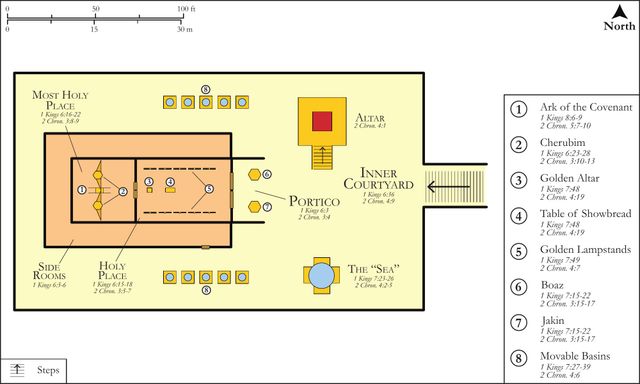
2 Chronicles 5:9 meticulously describes the climactic placement of the Ark of the Covenant within the Most Holy Place of Solomon's newly dedicated Temple. This verse underscores the profound reverence surrounding the Ark, noting that its carrying staves, though drawn out, remained visible from within the inner sanctuary but were completely hidden from those outside. This precise detail emphasizes the Ark's supreme sanctity, the exclusivity of God's dwelling place, and serves as a historical affirmation of its fixed position in the Temple at the time of the Chronicler's writing, marking a pivotal moment in Israel's worship life.
Context
ShowHideLiterary Context
This verse is deeply embedded within the grand narrative of the dedication of Solomon's Temple, marking the culmination of its construction and preparation. The preceding verses (2 Chronicles 5:2-8) detail the solemn procession of Israel's leaders and the Levites bringing the Ark of the Covenant from the City of David (Zion) into the Temple. The precise installation of the Ark into its designated place in the Holy of Holies, as described in 2 Chronicles 5:9, is the immediate precursor to the glorious manifestation of God's presence, where the cloud of the Lord's glory fills the Temple, preventing the priests from ministering (2 Chronicles 5:13-14). This account closely parallels the narrative found in 1 Kings 8, particularly 1 Kings 8:6-9.
Historical & Cultural Context
The Ark of the Covenant was the most sacred object in ancient Israel, symbolizing God's covenant presence among His people since the Exodus (Exodus 25:10-22). For centuries, it had resided in the portable Tabernacle, moving with Israel through the wilderness and into the Promised Land. Solomon's Temple represented a monumental shift: the establishment of a permanent, central sanctuary in Jerusalem, signifying a new era of stability for God's dwelling among His people. The meticulous protocol surrounding the Ark's placement—its staves, used for carrying, being drawn out but still visible only from within the innermost sanctum—underscored its transition from a mobile dwelling to a fixed, permanent residence. This detail also highlights the profound cultural reverence for sacred objects and spaces, where proximity to the divine required strict adherence to prescribed rituals and boundaries, emphasizing the awe and separation associated with God's holiness.
Key Themes
ShowHide2 Chronicles 5:9 contributes significantly to several overarching themes within the book of Chronicles. Foremost is the sacredness and centrality of the Ark of the Covenant as the preeminent symbol of God's covenant presence and the focal point of Israelite worship. The precise description of the staves' visibility emphasizes the sanctity and exclusivity of the Most Holy Place, the inner sanctuary where God's presence was believed to dwell most intensely. This restricted visibility maintained an aura of mystery and awe, ensuring that God's immediate dwelling place was protected from casual or unauthorized viewing, a principle also noted in 1 Kings 8:8. Furthermore, the verse underscores the theme of divine dwelling and presence, as the permanent placement of the Ark signified God's willingness to inhabit the Temple and dwell among His people, fulfilling His promises. Finally, the Chronicler's concluding remark, "And there it is unto this day," serves as a crucial historical affirmation, providing continuity and assurance to the original readers about the Ark's fixed location within the Temple, thereby lending authority and verisimilitude to the sacred narrative.
Exposition and Analysis
ShowHideKey Word Analysis
ShowHideThese were the poles used to carry the Ark of the Covenant, explicitly commanded to remain in the rings of the Ark even when not being carried (Exodus 25:14-15). The action of "drawing out" (from H748, ʼârak, meaning "to lengthen" or "prolong") the staves indicates they were extended as far as possible, perhaps touching the inner walls of the Most Holy Place. This act symbolically marked the Ark's transition from a portable, nomadic shrine to a fixed, permanent dwelling place in the Temple, signifying the end of its journey and the establishment of God's settled presence.
This specific Hebrew term refers to the innermost sanctuary of the Temple, known as the Most Holy Place or Holy of Holies. It was the most sacred area, separated by a veil and accessible only to the High Priest, and then only once a year on the Day of Atonement (Leviticus 16). The Ark's placement "before the oracle" means it was positioned in the very heart of this sacred space, directly beneath the cherubim whose wings overshadowed the mercy seat, emphasizing its role as the focal point of God's immediate presence.
Used in the phrase "unto this day," this word functions as a temporal marker, indicating a specific point in time. In the Chronicler's concluding remark, "And there it is unto this day," it serves as a historical affirmation, assuring the original readers that the Ark remained in its designated place within the Temple at the time the book was written. This phrase grounds the sacred history in the contemporary reality of the Chronicler's audience, providing continuity and validating the enduring significance of the Ark's installation.
Verse Breakdown
ShowHide"And they drew out the staves [of the ark],"
This initial clause describes the specific action taken by the priests regarding the Ark's carrying poles. The verb "drew out" (Hebrew: wayya'ariku, from ʼârak) implies an extension or lengthening. This action signifies the Ark's transition from a mobile object to a permanently installed fixture, marking the end of its nomadic history and its establishment in a fixed sanctuary.
"that the ends of the staves were seen from the ark before the oracle;"
This highly precise detail indicates the exact positioning of the Ark within the Most Holy Place. The staves were extended to such a degree that their ends were visible from a certain vantage point within the Most Holy Place itself, specifically "before the oracle" (i.e., from the area immediately in front of where the Ark sat). This limited visibility, accessible only to the High Priest, served as a tangible reminder of the Ark's presence and its historical significance, even within the most restricted sacred space.
"but they were not seen without."
This crucial qualification underscores the profound sanctity and exclusivity of the Most Holy Place. While the staves were visible to the High Priest who could legitimately enter the inner sanctuary, they were entirely hidden from anyone outside, even those in the Holy Place. This ensured that the Ark, and thus God's immediate dwelling, remained shrouded in mystery and protected from common sight, reinforcing the awe and reverence due to God's transcendent presence.
"And there it is unto this day."
This concluding phrase is a characteristic Chronicler's note, serving as a powerful historical affirmation. It assures the readers that the Ark remained in its designated place within the Temple at the time the book was written, providing continuity and validating the historical account for subsequent generations. It implies the Ark's continued presence and the enduring significance of its installation as a central element of Israel's worship.
Literary Devices
ShowHideThe Chronicler masterfully employs several Literary Devices in 2 Chronicles 5:9 to underscore the Ark's profound significance and the sanctity of the Temple. The highly specific Narrative Detail regarding the staves' visibility and invisibility serves to highlight the meticulous care taken in establishing God's dwelling place. This detail functions as powerful Symbolism, where the hiddenness of the Ark's staves from outside the Most Holy Place symbolizes the profound holiness, transcendence, and inaccessibility of God's immediate presence. Only the High Priest, acting as mediator for the nation, could approach this sacred space, reinforcing the concept of divine separation and the necessity of proper mediation. Furthermore, the concluding phrase, "And there it is unto this day," acts as a crucial Historical Note or Affirmation, grounding the sacred narrative in the contemporary reality of the Chronicler's audience and lending credibility and enduring relevance to the account of the Ark's permanent installation.
Theological and Thematic Connections
ShowHideThe careful placement of the Ark and the specific details surrounding its staves in 2 Chronicles 5:9 speak volumes about God's desire to dwell among His people, yet on His own terms of holiness and accessibility. The Ark, as the earthly throne of God and the repository of the covenant, represented the very heart of Israel's relationship with Yahweh. Its permanent installation in the Temple signified a new era of stable divine presence, moving beyond the transient nature of the Tabernacle. This act solidified Jerusalem as the spiritual center and the Temple as the focal point of worship, where God's glory would manifest. The restricted visibility of the staves served as a constant reminder of God's transcendence and the profound reverence required to approach His holy presence, underscoring the gap between human sinfulness and divine perfection, a gap bridged only by divine provision and strict adherence to sacred protocols. This verse powerfully illustrates the balance between God's immanence (His dwelling among His people) and His transcendence (His absolute holiness and otherness).
Reflection and Application
ShowHideWhile the physical Ark and Temple no longer stand, the profound theological principles embedded in 2 Chronicles 5:9 remain profoundly relevant for believers today. This verse calls us to cultivate a deep sense of reverence and awe for God's presence. Just as the Ark's hiddenness underscored the sanctity and exclusivity of God's dwelling, we are reminded that God is holy and is to be approached with humility, respect, and a recognition of His majesty, not casually or presumptuously. For those in Christ, the physical Temple has been superseded by the spiritual reality that God's Spirit now indwells believers individually and corporately (1 Corinthians 6:19 and Ephesians 2:21-22). This means that our lives, our bodies, and our gatherings are sacred spaces where God's presence resides. Therefore, our worship, our conduct, and our interactions should reflect the profound holiness of the One who dwells within us. This verse challenges us to consider how we honor God's presence in our daily lives and in our communal worship, ensuring that our approach is marked by genuine reverence, a pursuit of purity, and a profound recognition of His supreme majesty.
Questions for Reflection
ShowHideFAQ
ShowHideWhy were the staves of the Ark drawn out but still visible from within the oracle?
ShowHideThe act of drawing out the staves (poles) signified that the Ark had reached its permanent resting place in the Most Holy Place of Solomon's Temple, no longer needing to be carried. The fact that their ends were still visible from within the "oracle" (the Most Holy Place) but "not seen without" (from the Holy Place or beyond) served multiple purposes. First, it maintained a connection to the Ark's historical journey and its original design, which included the staves for transport (Exodus 25:14-15). Second, and more importantly, it emphasized the extreme sanctity and exclusivity of the Most Holy Place; only the High Priest, on the Day of Atonement, would have been able to discern this detail, reinforcing the awe and mystery surrounding God's immediate presence. It visually communicated that while the Ark was settled, it remained a distinct and sacred object, not to be casually approached or viewed by unauthorized persons.
What happened to the Ark of the Covenant after this period, as it is not present in later accounts of the Second Temple?
ShowHideThe Bible does not explicitly record the ultimate fate of the Ark of the Covenant. After its placement in Solomon's Temple as described in 2 Chronicles 5:9, it is mentioned intermittently, notably during King Josiah's reforms (2 Chronicles 35:3). However, it is conspicuously absent from accounts of the Second Temple (built after the Babylonian exile), and there is no mention of it being carried into exile or returned. Theories abound, suggesting it might have been hidden before the destruction of Jerusalem by the Babylonians in 586 BC, destroyed by the Babylonians, or even taken to another location. The Ark's disappearance, however, ultimately points to a greater theological truth: with the coming of Christ, the need for a physical symbol of God's presence diminished, as God's presence is now found in a new and living way (Jeremiah 3:16).
What is the significance of the phrase "And there it is unto this day"?
ShowHideThis phrase is a common literary device used by ancient chroniclers and historians to affirm the continued existence or status of something at the time of their writing. In 2 Chronicles 5:9, it serves as a historical note, assuring the original readers that the Ark of the Covenant remained in its designated place within the Temple. This adds a layer of authenticity and reliability to the narrative, confirming that the events described were not merely ancient legends but had enduring, tangible consequences visible to the Chronicler's audience. It grounds the sacred history in the contemporary reality of the people of Israel, providing a sense of continuity and divine faithfulness through generations.
Christ-Centered Fulfillment
ShowHideThe meticulous placement of the Ark of the Covenant in the Most Holy Place, as described in 2 Chronicles 5:9, powerfully foreshadows the ultimate dwelling of God among humanity in the person of Jesus Christ. The Ark, with its hidden staves and restricted access, symbolized God's holy presence, veiled from common sight and approachable only through prescribed means and a mediating high priest. This earthly sanctuary, however, was but a shadow of the true and perfect tabernacle (Hebrews 9:11). Jesus Christ is the fulfillment of all that the Ark and Temple represented: He is "Immanuel," God with us, the Word made flesh who "dwelt among us" (John 1:14). His very body became the new Temple, as He declared, "Destroy this temple, and in three days I will raise it up" (John 2:19-21). Through His sacrificial death on the cross, Jesus, our great High Priest, entered the true heavenly sanctuary, not with the blood of animals, but with His own blood, securing eternal redemption and opening a new and living way for us to boldly approach God's presence (Hebrews 10:19-22). Thus, the hiddenness of the Ark's staves gives way to the unveiled glory of God in Christ, making God's presence not only accessible but indwelling through the Holy Spirit, transforming believers into a holy temple for the Lord (Ephesians 2:19-22).