


2 Chronicles 27:6
- וַיִּתְחַזֵּקvai·yit·cha·Zekand he strengthened himselfH2388Conj-w ¦ V-Hithpael-ConsecImperf-3msVerb Hithpael Consecutive Imperfect 3rd Singular Masculineוַandיִּתְחַזֵּקhe strengthened himself
- יוֹתָםyo·TamJothamH3147N-proper-mNoun Proper Masculine
- כִּיkiforH3588PrtParticle Conditional
- הֵכִיןhe·Khinhe had directedH3559V-Hiphil-Perf-3msVerb Hiphil Perfect 3rd Singular Masculine
- דְּרָכָיוde·ra·Khavhis waysH1870N-mpc ¦ 3msNoun Plural Masculine Constructדְּרָכָיwaysוhis
- לִפְנֵיlif·Nei<to> beforeH6440Prep-l ¦ N-mpcNoun Plural Masculine Constructלִ<to>פְנֵיbefore
- יְהוָהYah·wehYahwehH3068N-properNoun Proper Title
- אֱלֹהָיו'e·lo·Havhis GodH430N-mpc ¦ 3msNoun Plural Masculine ConstructאֱלֹהָיGodוhis
English is a literal word-by-word gloss of the Hebrew, not the KJV's wording. Why?
This is the original text the KJV's translators worked from — each Hebrew word with its own literal English meaning in this verse, prepared by scholars at Tyndale House, Cambridge. The KJV translates whole sentences, not word by word, so its wording differs: one Hebrew word can become several English words, and the KJV may choose “the LORD” where the gloss reads “Yahweh”. Both are faithful — they answer different questions. For the KJV's own rendering, switch to the KJV text.
Details
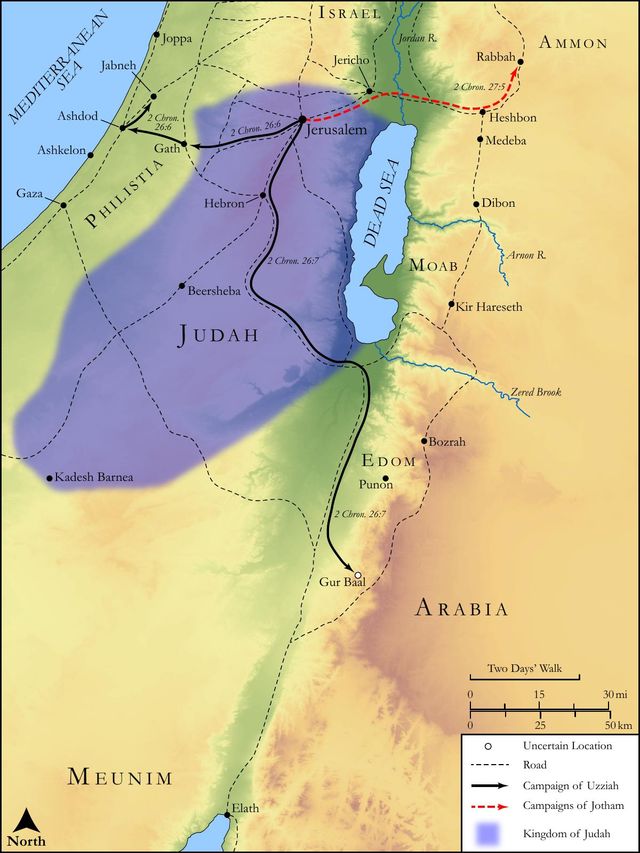
See on the biblical-era map
Study this verse
Public-domain commentary
Matthew Henry
From his Commentary on the Whole Bible. Henry comments on passages, not single verses — this entry covers 2 Chronicles 27:1–9. His two-level outline is real structure in the source text, so it is rendered as structure.
There is not much more related here concerning Jotham than we had before, Kg2 15:32, etc.
I.He reigned well.
He did that which was right in the sight of the Lord; the course of his reign was good, and pleasing to God, whose favour he made his end, and his word his rule, and (which shows that he acted from a good principle) he prepared his ways before the Lord his God (Ch2 27:6), that is, he walked circumspectly and with much caution, contrived how to shun that which was evil and compass that which was good. He looked before him, and cast his affairs into such a posture and method as made the regular management of them the more easy. Or he established or fixed his ways before the Lord, that is, he walked steadily and constantly in the way of his duty, was uniform and resolute in it: not like some of those that went before him, who, though they had some good in them, lost their credit by their inconstancy and inconsistency with themselves. They had run well, but something hindered them. It was not so with Jotham. Two things are observed here in his character: - 1. What was amiss in his father he amended in himself (Ch2 27:2): He did according to all that his father did well and wisely; howbeit he would not imitate him in which he did amiss; for he entered not into the temple of the Lord to burn incense as his father did, but took warning by his fate not to dare so presumptuous a thing. Note, We must not imitate the best men, and those we have the greatest veneration for, any further than they did well; but, on the contrary, their falls, and the injurious consequences of them, must be warnings to us to walk the more circumspectly, that we stumble not at the same stone that they stumbled at. 2. What was amiss in his people he could not prevail to amend: The people did yet corruptly. Perhaps it reflects some blame upon him, that he was wanting in his part towards the reformation of the land. Men may be very good themselves, and yet not have courage and zeal to do what they might do towards the reforming of others. however it certainly reflects a great deal of blame upon the people, that they did not do what they might have done to improve the advantages of so good a reign: they had good instructions given them and a good example set before them, but they would not be reformed; so that even in the reign of their good kings, as well as in that of the bad ones, they were treasuring up wrath against the day of wrath; for they still did corruptly, and the founder melted in vain.
II.He prospered, and became truly reputable.
1.He built. He began with the gate of the house of the Lord, which he repaired, beautified, and raised. He then fortified the wall of Ophel, and built cities in the mountains of Judah (Ch2 27:3, Ch2 27:4), took all possible care for the fortifying of his country and the replenishing of it.
2.He conquered. He prevailed against the Ammonites, who had invaded Judah in Jehoshaphat's time, Ch2 20:1. He triumphed over them, and exacted great contributions from them, Ch2 27:5. He became mighty (Ch2 27:6) in wealth and power, and influence upon the neighbouring nations, who courted his friendship and feared his displeasure; and this he got by preparing his ways before the Lord his God. The more stedfast we are in religion the more mighty we are both for the resistance of that which is evil and for the performance of that which is good.
III.He finished his course too soon, but finished it with honour.
He had the unhappiness to die in the midst of his days; but, to balance that, the happiness not to out-live his reputation, as the last three of his predecessors did. He died when he was but forty-one years of age (Ch2 27:8); but his wars and his ways, his wars abroad and his ways at home, were so glorious that they were recorded in the book of the kings of Israel, as well as of the kings of Judah, Ch2 27:7. The last words of the chapter are the most melancholy, as they inform us that Ahaz his son, whose character, in all respects, was the reverse of his, reigned in his stead. When the wealth and power with which wise men have done good devolve upon fools, that will do hurt with them, it is a lamentation, and shall be for a lamentation.
Continue studying 2 Chronicles 27:6 across the web’s major study libraries — every link below opens this exact verse, chapter, or book on the destination site.
Read & Compare
 BibleGatewayThis verse in more than 200 translations and 70 languages.
 Bible.comThe YouVersion reader — hundreds of translations, reading plans, and highlights.
 ESV.orgCrossway's official English Standard Version reader.
 NET BibleThe NET translation with 60,000+ translators' notes on every rendering decision.
 STEP BibleTyndale House's free study tool — original text, vocabulary, and scholarly resources.
 BibliaLogos Bible Software's free web reader.
 USCCBThe New American Bible (Revised Edition) with the U.S. bishops' study notes.
Commentaries
 BibleHub CommentariesDozens of classic commentaries on this verse, gathered on one page.
 StudyLightMore than 100 commentary sets — the largest collection on the web.
 BibleRefPlain-English commentary on what this verse means, verse by verse.
 Enduring WordDavid Guzik's free commentary on this chapter, widely used by Bible teachers.
 Bible Study ToolsVerse commentary alongside Greek and Hebrew study aids.
Original Language & Research
- BibleHub InterlinearThe verse word by word — original language, transliteration, and English.
- BibleHub LexiconEvery word's original-language definition and Strong's entry.
 Blue Letter BibleDeep-study tools — Strong's numbers, concordance, and word studies.
 SefariaThe Hebrew text with Rashi and centuries of Jewish commentary.
Sermons, Hymns & Audio


TrulyRandomVerse is not affiliated with these sites and doesn’t control their content. They’re linked because they’re genuinely useful.
Summary
King Jotham's reign, as depicted in 2 Chronicles 27:6, serves as a powerful biblical illustration of the profound connection between a leader's spiritual diligence and the resulting divine empowerment and success. This verse concisely attributes Jotham's remarkable might and prosperity to his conscious and consistent commitment to aligning his life and governance with the will of the LORD his God, thereby establishing a fundamental principle regarding the blessings that flow from devoted and intentional obedience.
Context
ShowHideLiterary Context
2 Chronicles 27:6 is strategically placed within the Chronicler's theological history of Judah's kings, specifically following the detailed account of Jotham's father, King Uzziah. Chapter 26 meticulously records Uzziah's initial period of prosperity and divine assistance, which tragically ended in his prideful transgression of presumptuously entering the temple to burn incense, leading to his affliction with leprosy and subsequent isolation until his death, as described in 2 Chronicles 26:16-21. Jotham's relatively brief reign is presented as a deliberate and positive contrast to Uzziah's ultimate spiritual failure. The Chronicler emphasizes Jotham's righteous conduct and its beneficial outcomes, setting a theological precedent before transitioning to the largely negative reign of his son Ahaz in 2 Chronicles 28. Thus, this verse highlights a period of faithful leadership, reinforcing the Chronicler's overarching theological principle that a king's spiritual state directly influences the nation's well-being and prosperity.
Historical & Cultural Context
Jotham reigned in Judah for 16 years, approximately from 750-735 BC, initially serving as co-regent with his leprous father, Uzziah. This era was marked by significant geopolitical instability, with the burgeoning power of the Assyrian Empire beginning to exert its influence over the smaller nations of the Levant. Despite these external pressures, Jotham's reign is portrayed as stable and prosperous. He undertook notable building projects, including strengthening the temple and constructing cities (2 Chronicles 27:3-4), and successfully subdued the Ammonites, who subsequently paid him tribute (2 Chronicles 27:5). Culturally, the concept of a king's "ways" or conduct before God was paramount in ancient Israelite thought, deeply rooted in the covenant relationship between Yahweh and His chosen people. A king's adherence to the Mosaic Law and his personal piety were considered foundational to the nation's security, divine favor, and overall success, making Jotham's deliberate righteousness a commendable model for leadership.
Key Themes
ShowHideThis verse encapsulates several pivotal themes central to the Chronicler's theology and broader biblical teaching. A dominant motif is the Retribution Principle, which posits that obedience to God leads to blessing and prosperity, while disobedience results in judgment and decline. Jotham's "might" is presented as a direct consequence of his spiritual diligence, powerfully reinforcing this principle. Another significant theme is Intentional Righteousness. The phrase "prepared his ways" underscores that Jotham's godliness was not accidental or passive, but rather a conscious, deliberate, and sustained effort to align his actions, decisions, and entire life with God's revealed will. This stands in stark contrast to kings whose "heart was not wholly true to the LORD" (1 Kings 11:4) or who "did what was evil in the sight of the LORD" (2 Chronicles 28:1-2). Finally, the verse highlights Accountability Before God. Jotham's preparation was "before the LORD his God," signifying that his conduct was not merely for human approval or political expediency, but was deeply rooted in a profound reverence and fear of God, acknowledging His omnipresence, ultimate authority, and the divine standard by which all human actions are judged.
Exposition and Analysis
ShowHideKey Word Analysis
ShowHideThis Hebrew root conveys the sense "to fasten upon; hence, to seize, be strong (figuratively, courageous, causatively strengthen, cure, help, repair, fortify)." In the context of Jotham, it signifies not only military prowess and physical strength but also a comprehensive sense of stability, enduring success, and divine empowerment throughout his reign. His might encompassed his ability to undertake significant building projects, achieve military victories, and maintain order, all attributed to God's favor and enablement.
This primitive root properly means "to be erect (i.e., stand perpendicular); hence (causatively) to set up, in a great variety of applications, whether literal (establish, fix, prepare, apply), or figurative (appoint, render sure, proper or prosperous)." It implies a deliberate, intentional, and steadfast orientation. Jotham did not stumble into righteousness; rather, he actively and consciously directed, established, and made ready his life, his policies, and his decisions to conform to God's standards. This suggests a proactive and purposeful spiritual posture.
Derived from a root meaning "to tread," this noun refers to "a road (as trodden); figuratively, a course of life or mode of action." It encompasses the totality of Jotham's actions, decisions, character, and overall lifestyle. Thus, "prepared his ways" means he carefully, intentionally, and consistently directed his entire life's course, his conduct, and his manner of living in accordance with what was right and pleasing in God's eyes.
Verse Breakdown
ShowHide"So Jotham became mighty"
This opening clause presents the direct and divinely ordained consequence of Jotham's actions. The term "mighty" (חָזַק, châzaq') here denotes his strength, stability, and remarkable success as king, which was evident in his extensive building projects and his military victories over adversaries like the Ammonites. The introductory "So" (וַיֶּחֱזַק, vayyeḥĕzaq) clearly establishes a cause-and-effect relationship, emphasizing that Jotham's power and prosperity were not merely human achievements but were directly sourced from divine favor.
"because he prepared his ways"
This is the crucial causal clause, providing the theological explanation for Jotham's might. The phrase "prepared his ways" (כּוּן דֶּרֶךְ, _kûwn derek'_) signifies a deliberate, conscious, and consistent effort on Jotham's part to live righteously. It was not accidental godliness but a focused, proactive commitment to align his actions, decisions, character, and overall conduct with God's will and commands. This implies intentional spiritual discipline, unwavering moral integrity, and a diligent pursuit of what is pleasing to God in every aspect of his life and reign.
"before the LORD his God"
This critical phrase defines both the standard and the audience of Jotham's "prepared ways." His conduct was not merely for human approval, political expediency, or personal gain, but was rooted in a profound reverence and fear of God. It signifies that his actions were performed in the conscious awareness of God's omnipresence, under His divine scrutiny, and in submission to His ultimate authority. This underscores the deep theological and devotional nature of his obedience, making it an act of worship and profound personal commitment to the covenant God of Israel.
Literary Devices
ShowHideThe verse primarily employs Cause and Effect, clearly articulating that Jotham's might and success were a direct result ("because") of his spiritual diligence and intentional obedience to God. This didactic structure is a hallmark of the Chronicler's theological agenda, which consistently links the fortunes of Judah and its kings to their faithfulness or unfaithfulness to God. There is also an implicit Contrast at play; Jotham's sustained righteousness and its positive outcomes stand in stark opposition to the eventual pride and failure of his father Uzziah, who, despite initial success, presumptuously overstepped his divinely appointed bounds. This contrast serves to emphasize the vital importance of sustained humility and consistent faithfulness. Furthermore, the verse functions as a powerful Didacticism, serving as a moral and theological lesson for the reader, illustrating the enduring biblical principle that true strength, lasting success, and divine favor are ultimately rooted in a right relationship with God and intentional, obedient submission to His commands.
Theological and Thematic Connections
ShowHideThe profound principle articulated in 2 Chronicles 27:6, that Jotham's might was a direct consequence of his intentional walk with God, resonates deeply throughout the entire biblical narrative. It powerfully underscores the covenantal framework of the Old Testament, where God's blessings and the flourishing of His people were often directly contingent upon the obedience of individuals and their leaders. This verse vividly illustrates that genuine strength and lasting prosperity are not merely products of human strategy, political acumen, or military might, but are ultimately derived from divine favor, which is graciously bestowed upon those who diligently seek and obey God. It highlights God's unwavering faithfulness to His promises of blessing for obedience and serves as a profound reminder that spiritual integrity, intentional righteousness, and a humble posture before God are foundational to all forms of true and lasting success, whether personal, communal, or national.
Reflection and Application
ShowHideJotham's narrative in 2 Chronicles 27:6 offers a timeless and profoundly practical lesson for believers in every generation. The call to "prepare one's ways before the LORD" is not a passive or accidental state of being, but rather an active, deliberate, and ongoing commitment to align every facet of our lives—our thoughts, words, actions, decisions, and motivations—with God's revealed will. This involves cultivating intentional spiritual disciplines such as consistent and fervent prayer, diligent and meditative study of God's Word, and a conscious, unwavering effort to obey His commands, even when doing so is challenging, unpopular, or requires significant sacrifice. It means fostering a heart that is keenly sensitive to the Holy Spirit's leading and consistently choosing righteousness and integrity over convenience, worldly gain, or fleeting desires. Just as Jotham wisely learned from his father's tragic mistakes and chose a path of humility and unwavering devotion, we too are called to learn from biblical examples and to walk circumspectly, recognizing that our true strength, resilience, and lasting impact come not from our own limited abilities or human efforts, but from our intimate, obedient, and dependent relationship with the Almighty God. Our diligence in seeking, honoring, and submitting to God directly influences our effectiveness, our character development, and the spiritual fruitfulness we experience in every sphere of life.
Questions for Reflection
ShowHideFAQ
ShowHideWhat does "prepared his ways" truly mean in this context?
ShowHide"Prepared his ways" (Hebrew: כּוּן דֶּרֶךְ, _kûwn derek'_) signifies a deliberate, conscious, and steadfast effort on Jotham's part to align his entire life—including his decisions, actions, character, and overall conduct—with God's will and commands. It implies a proactive pursuit of righteousness, not a passive or accidental godliness. Jotham intentionally directed his path to be in accordance with God's standards, demonstrating a deep reverence and accountability to the LORD. This consistent and intentional commitment was the foundational reason for his "might" and success as king.
How did Jotham's reign differ from his father Uzziah's, particularly in light of this verse?
ShowHideWhile King Uzziah began his reign with great success and was "marvelously helped" by God as long as he sought the LORD (2 Chronicles 26:5), his later years were tragically marked by pride and a presumptuous act of entering the temple to burn incense, a sacred duty reserved exclusively for priests (2 Chronicles 26:16-21). This act of disobedience led to him being afflicted with leprosy and living in isolation until his death. Jotham, in stark contrast, seems to have learned profoundly from his father's tragic error. The text highlights that Jotham "prepared his ways before the LORD his God," indicating a consistent, humble, and intentional devotion that steadfastly avoided the pitfalls of pride and presumption. His "might" was sustained precisely because his obedience was consistent and purposeful, unlike Uzziah's initial faithfulness which ultimately faltered due to pride.
Christ-Centered Fulfillment
ShowHideWhile Jotham's righteous reign serves as a commendable and instructive example of human obedience leading to divine blessing and earthly might, his "prepared ways" ultimately find their perfect and ultimate fulfillment in the person and work of Jesus Christ. Jotham's strength was a temporal, earthly might, limited by human fallibility, but Christ's might is eternal, redemptive, and all-encompassing. Jesus perfectly embodied the principle of preparing His ways before the LORD, for He consistently and perfectly did the Father's will, declaring, "I always do what is pleasing to him" (John 8:29). His entire life was a path of flawless obedience, culminating in His sacrificial death on the cross and His glorious resurrection, through which He secured eternal might, victory over sin and death, and salvation for all who believe. Where Jotham's preparation was a human effort, albeit divinely enabled and blessed, Christ's preparation was the flawless, divine-human obedience that fulfilled all righteousness, as He Himself stated, "Let it be so now, for thus it is fitting for us to fulfill all righteousness" (Matthew 3:15). Believers, through their spiritual union with Christ, are now empowered by His indwelling Spirit to "walk in a manner worthy of the Lord, fully pleasing to him" (Colossians 1:10), to "prepare their ways" not in their own strength or by their own merit, but by drawing from His infinite might and perfect obedience. Our spiritual "might," fruitfulness, and ability to live righteously are not earned by our perfect preparation, but are a gracious gift received through the One who perfectly prepared a new and living way for us to God, "through the curtain, that is, through his flesh" (Hebrews 10:19-20).