


1 Samuel 10:18
Bible text: King James Version (1769 Blayney text) · Public domain
Bible text: King James Version with Strong's numbers · Public domain
Bible text: Berean Standard Bible · Public domain
Bible text: American Standard Version (1901) · Public domain
Bible text: World English Bible, Messianic edition · Public domain
Bible text: Geneva Bible (1599) · Public domain
Bible text: Young's Literal Translation · Public domain
- וַיֹּאמֶרvai·Yo·merand he saidH559Conj-w ¦ V-Qal-ConsecImperf-3msVerb Qal Consecutive Imperfect 3rd Singular Masculineוַandיֹּאמֶרhe said
- אֶל'eltoH413PrepPreposition
- בְּנֵיbe·Nei[the] people ofH1121N-mpcNoun Plural Masculine Construct
- יִשְׂרָאֵלYis·ra·'ElIsraelH3478N-properNoun Proper Location
- כֹּהkohthusH3541AdvAdverb
- אָמַר'a·Marhe saysH559V-Qal-Perf-3msVerb Qal Perfect 3rd Singular Masculine
- יְהוָהYah·wehYahwehH3068N-properNoun Proper Title
- אֱלֹהֵי'e·lo·Hei[the] God ofH430N-mpcNoun Plural Masculine Construct
- יִשְׂרָאֵלYis·ra·'ElIsraelH3478N-properNoun Proper Location
- אָנֹכִי'a·no·KhiIH595Pro-1csPronoun Personal 1st Singular common gender
- הֶעֱלֵיתִיhe·'e·Lei·tiI brought upH5927V-Hiphil-Perf-1csVerb Hiphil Perfect 1st Singular common gender
- אֶת'et<obj.>H853DirObjMParticle Object Indicator
- יִשְׂרָאֵלYis·ra·'ElIsraelH3478N-properNoun Proper Location
- מִמִּצְרָיִםmi·mitz·Ra·yimfrom EgyptH4714Prep-m ¦ N-properNoun Proper LocationמִfromמִּצְרָיִםEgypt
- וָאַצִּילva·'a·Tziland I deliveredH5337Conj-w ¦ V-Hiphil-ConsecImperf-1csVerb Hiphil Consecutive Imperfect 1st Singular common genderוָandאַצִּילI delivered
- אֶתְכֶם'et·Khem<obj.> youH853DirObjM ¦ 2mpParticle Object Indicatorאֶתְ<obj.>כֶםyou
- מִיַּדmi·Yadfrom [the] hand ofH3027Prep-m ¦ N-cscNoun Singular common gender Constructמִfromיַּד[the] hand of
- מִצְרַיִםmitz·Ra·yimEgyptH4714N-properNoun Proper Location
- וּמִיַּדu·mi·Yadand from [the] hand ofH3027Conj-w ¦ Prep-m ¦ N-cscNoun Singular common gender Constructוּandמִfromיַּד[the] hand of
- כָּלkolallH3605N-mscNoun Singular Masculine Construct
- הַמַּמְלָכוֹתha·mam·la·Khotthe kingdomsH4467Art ¦ N-fpNoun Plural Feminine Absoluteהַtheמַּמְלָכוֹתkingdoms
- הַלֹּחֲצִיםha·lo·cha·Tzimthat were oppressingH3905Art ¦ V-Qal-Prtcpl-mpVerb Qal Participle Plural Masculine Absoluteהַthatלֹּחֲצִיםwere oppressing
- אֶתְכֶם'et·Khem<obj.> youH853DirObjM ¦ 2mpParticle Object Indicatorאֶתְ<obj.>כֶםyou
English is a literal word-by-word gloss of the Hebrew, not the KJV's wording. Why?
This is the original text the KJV's translators worked from — each Hebrew word with its own literal English meaning in this verse, prepared by scholars at Tyndale House, Cambridge. The KJV translates whole sentences, not word by word, so its wording differs: one Hebrew word can become several English words, and the KJV may choose “the LORD” where the gloss reads “Yahweh”. Both are faithful — they answer different questions. For the KJV's own rendering, switch to the KJV text.
Details
See on the biblical-era map
Study this verse
Public-domain commentary
Matthew Henry
From his Commentary on the Whole Bible. Henry comments on passages, not single verses — this entry covers 1 Samuel 10:17–27. His three-level outline is real structure in the source text, so it is rendered as structure.
Saul's nomination to the throne is here made public, in a general assembly of the elders of Israel, the representatives of their respective tribes at Mizpeh. It is probable that this convention of the states was called as soon as conveniently it might, after Saul was anointed, for, if there must be a change in their government, the sooner the better: it might be of bad consequence to be long in the doing. The people having met in a solemn assembly, in which God was in a peculiar manner present (and therefore it is said they were called together unto the Lord, Sa1 10:17), Samuel acts for God among them.
I.He reproves them for casting off the government of a prophet, and desiring that of a captain.
1.He shows them (Sa1 10:18) how happy they had been under the divine government; when God ruled them, he delivered them out of the hand of those that oppressed them, and what would they desire more? Could the mightiest man of valour do that for them which the Almighty God had done?
2.He likewise shows them (Sa1 10:19) what an affront they had put upon God (who had himself saved them out of all their tribulations, by his own power, and by such as he had immediately called and qualified) in desiring a king to save them. He tells them in plain terms, "You have this day rejected your God; you have in effect done it: so he construes it, and he might justly, for your so doing, reject you." Those that can live better by sense than by faith, that stay themselves upon an arm of flesh rather than upon the almighty arm, forsake a fountain of living waters for broken cisterns. And some make their obstinacy in this matter to be a presage of their rejecting Christ, in casting off whom they cast off God, that he should not reign over them.
II.He puts them upon choosing their king by lot.
He knew whom God had chosen, and had already anointed him, but he knew also the peevishness of that people, and that there were those among them who would not acquiesce in the choice if it depended upon his single testimony; and therefore, that every tribe and every family of the chosen tribe might please themselves with having a chance for it, he calls them to the lot, Sa1 10:19. Benjamin is taken out of all the tribes (Sa1 10:20), and out of that tribe Saul the son of Kish, Sa1 10:21. By this method it would appear to the people, as it already appeared to Samuel, that Saul was appointed of God to be king; for the disposal of the lot is of the Lord. It would also prevent all disputes and exceptions; for the lot causeth contentions to cease, and parteth between the mighty. When the tribe of Benjamin was taken, they might easily foresee that they were setting up a family that would soon be put down again; for dying Jacob had, by the spirit of prophecy, entailed the dominion upon Judah. Judah is the tribe that must rule as a lion; Benjamin shall only ravin as a wolf, Gen 49:10, Gen 49:27. Those therefore that knew the scriptures could not be very fond of the doing of that which they foresaw must, ere long, be undone again.
III.It is with much ado, and not without further enquiries of the Lord, that Saul is at length produced.
When the lot fell upon him, every one expected he should answer to his name at the first call, but, instead of that, none of his friends could find him (Sa1 10:21), he had hidden himself among the stuff (Sa1 10:22), so little fond was he now of that power which yet, when he was in possession of, he could not without the utmost indignation think of parting with.
1.He withdrew, in hopes that, upon his not appearing, they would proceed to another choice, or thus to express his modesty; for, by what had already passed, he knew he must be the man. We may suppose he was at this time really averse to take upon him the government,
(1.)Because he was conscious to himself of unfitness for so great a trust. He had not been bred up to books, or arms, or courts, and feared he should be guilty of some fatal blunder.
(2.)Because it would expose him to the envy of his neighbours that were ill-affected towards him.
(3.)Because he understood, by what Samuel had said, that the people sinned in asking a king, and it was in anger that God granted their request.
(4.)Because the affairs of Israel were at this time in a bad posture; the Philistines were strong, the Ammonites threatening: and he must be bold indeed that will set sail in a storm.
2.But the congregation, believing that choice well made which God himself made, would leave no way untried to find him out on whom the lot fell. They enquired of the Lord, either by the high priest, and his breast-plate of judgment, or by Samuel, and his spirit of prophecy; and the Lord directed them where they should find him, hidden among the carriages, and thence they fetched him, Sa1 10:23. Note, None will be losers at last by their humility and modesty. Honour, like the shadow, follows those that flee from it, but flees from those that pursue it.
IV.Samuel presents him to the people, and they accept him.
He needed not to mount the bench, or scaffold, to be seen; when he stood upon even ground with the rest he was seen above them all, for he was taller than any of them by head and shoulders, Sa1 10:23. "Look you," said Samuel, "what a king God has chosen for you, just such a one as you wished for; there is none like him among all the people, that has so much majesty in his countenance and such a graceful stateliness in his mien; he is in the crowd like a cedar among the shrubs. Let your own eyes be judges, is he not a brave and gallant man?" The people hereupon signified their approbation of the choice, and their acceptance of him; they shouted and said, Let the king live, that is, "Let him long reign over us in health and prosperity." Subjects were wont to testify their affection and allegiance to their prince by their good wishes, and those turned (as our translation does this) into addresses to God. Psa 72:15, Prayer shall be made for him continually. See Psa 20:1. Samuel had told them they would soon be weary of their king, but, in the mind they are now in, they will never be so: Let the king live.
V.Samuel settles the original contract between them, and leaves it upon record, Sa1 10:25.
He had before told them the manner of the king (Sa1 8:11), how he would abuse his power; now he tells them the manner of the kingdom, or rather the law, or judgment, or constitution, of it, what power the prince might challenge and the utmost of the property the subject might claim. He fixed the land-marks between them, that neither might encroach upon the other. Let them rightly understand one another at first, and let the agreement remain in black and white, which will tend to preserve a good understanding between them ever after. The learned bishop Patrick thinks he now repeated and registered what he had told them (Sa1 8:11) of the arbitrary power their kings would assume, that it might hereafter be a witness against them that they had drawn the calamity upon themselves, for they were warned what it would come to and yet they would have a king.
VI.The convention was dissolved when the solemnity was over:
Samuel sent every man to his house. Here were no votes passed, nor, for aught that appears, so much as a motion made, for the raising of money to support the dignity of their new-elected king; if therefore he afterwards thinks fit to take what they do not think fit to give (which yet it was necessary that he should have), they must thank themselves. They went every man to his house, pleased with the name of a king over them, and Saul also went home to Gibeah, to his father's house, not puffed up with the name of a kingdom under him. At Gibeah he had no palace, no throne, no court, yet thither he goes. If he must be a king, as one mindful of the rock out of which he was hewn, he will make his own city the royal city, nor will he be ashamed (as too many are when they are preferred) of his mean relations. Such a humble spirit as this puts a beauty and lustre upon great advancements. The condition rising, and the mind not rising with it, behold how good and pleasant it is! But,
1.How did the people stand affected to their new king? The generality of them, it should seem, did not show themselves much concerned: They went every man to his own house. Their own domestic affairs lay nearer their hearts than any interests of the public; this was the general temper. But,
(1.)There were some so faithful as to attend him: A band of men whose hearts God had touched, Sa1 10:26. Not the body of the people, but a small company, who because they were fond of their own choice of a king, or because they had so much more sense than their neighbours as to conclude that if he was a king he ought to be respected accordingly, went with him to Gibeah, as his life-guard. They were those whose hearts God had touched, in this instance, to do their duty. Note, Whatever good there is in us, or is done by us, at any time, it must be ascribed to the grace of God. If the heart bend at any time the right way, it is because he has touched it. One touch is enough, when it is divine.
(2.)There were others so spiteful as to affront him; children of Belial, men that would endure no yoke, that would be pleased with nothing that either God or Samuel did; they despised him (Sa1 10:27) for the meanness of his tribe and family, the smallness of his estate, and the privacy of his education; and they said, How shall this man save us? Yet they did not propose any man more likely; nor, whomsoever they had, must their salvation come from the man, but from God. They would not join with their neighbours in testifying an affection to him and his government, by bringing him presents, or addressing him upon his accession to the crown. Perhaps those discontented spirits were most earnest for a king, and yet, now that they had one, they quarrelled with him, because he was not altogether such a one as themselves. It was reason enough for them not to like him because others did. Thus differently are men affected to our exalted Redeemer. God hath set him king upon the holy hill of Sion. There is a remnant that submit to him, rejoice in him, bring him presents, and follow him wherever he goes; and they are those whose hearts God has touched, whom he has made willing in the day of his power. But there are others who despise him, who ask, How shall this man save us? They are offended in him, stumble at his external meanness, and they will be broken by it.
2.How did Saul resent the bad conduct of those that were disaffected to his government? He held his peace. Margin, He was as though he had been deaf. He was so far from resenting it that he seemed not to take notice of it, which was an evidence of his humility and modesty, and the mercifulness of his disposition, and also that he was well satisfied with his title to the crown; for those are commonly most jealous of their honour, and most revengeful of affronts, that gain their power by improper means. Christ held his peace when he was affronted, for it was the day of his patience; but there is a day of recompence coming.
Continue studying 1 Samuel 10:18 across the web’s major study libraries — every link below opens this exact verse, chapter, or book on the destination site.
Read & Compare
 BibleGatewayThis verse in more than 200 translations and 70 languages.
 Bible.comThe YouVersion reader — hundreds of translations, reading plans, and highlights.
 ESV.orgCrossway's official English Standard Version reader.
 NET BibleThe NET translation with 60,000+ translators' notes on every rendering decision.
 STEP BibleTyndale House's free study tool — original text, vocabulary, and scholarly resources.
 BibliaLogos Bible Software's free web reader.
 USCCBThe New American Bible (Revised Edition) with the U.S. bishops' study notes.
Commentaries
 BibleHub CommentariesDozens of classic commentaries on this verse, gathered on one page.
 StudyLightMore than 100 commentary sets — the largest collection on the web.
 BibleRefPlain-English commentary on what this verse means, verse by verse.
 Enduring WordDavid Guzik's free commentary on this chapter, widely used by Bible teachers.
 Bible Study ToolsVerse commentary alongside Greek and Hebrew study aids.
Original Language & Research
- BibleHub InterlinearThe verse word by word — original language, transliteration, and English.
- BibleHub LexiconEvery word's original-language definition and Strong's entry.
 Blue Letter BibleDeep-study tools — Strong's numbers, concordance, and word studies.
 SefariaThe Hebrew text with Rashi and centuries of Jewish commentary.
Sermons, Hymns & Audio


TrulyRandomVerse is not affiliated with these sites and doesn’t control their content. They’re linked because they’re genuinely useful.
Summary
1 Samuel 10:18 records a pivotal divine pronouncement through Samuel, reminding the Israelites of God's consistent and powerful acts of deliverance, particularly their foundational rescue from Egypt and subsequent liberation from various oppressors. This declaration serves as a solemn counterpoint to their current desire for a human king, highlighting God's unwavering faithfulness as their true deliverer and implicitly rebuking their lack of trust in His ongoing provision and sovereignty.
Context
ShowHideLiterary Context
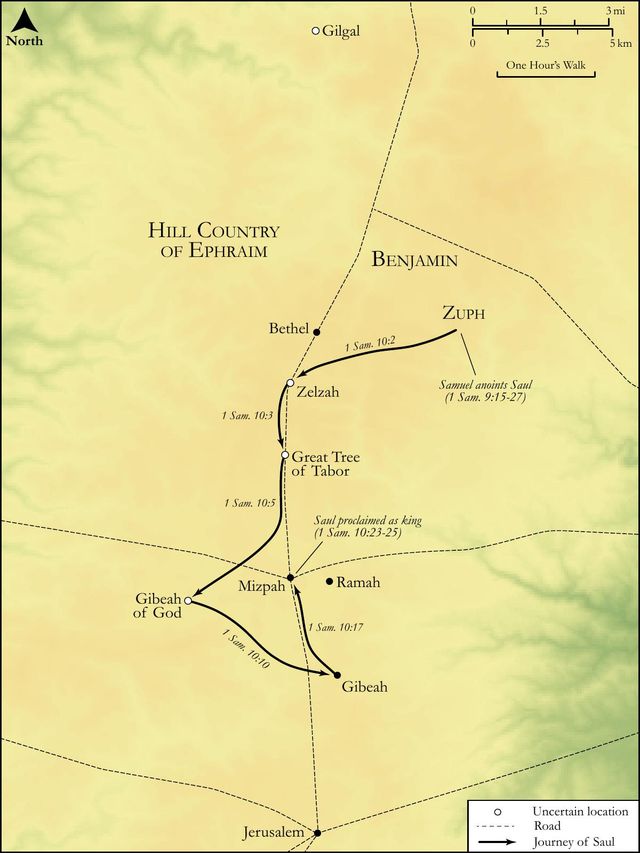
This verse is embedded within Samuel's address to the assembled tribes of Israel at Mizpah, a crucial moment immediately preceding the public presentation and selection of Saul as their first king. Having previously detailed the people's persistent demand for a king "like all the nations" (1 Samuel 8:5), a request God permitted as a concession to their rejection of His direct rule (1 Samuel 8:7), Samuel now reiterates God's historical faithfulness. He has already privately anointed Saul (1 Samuel 10:1), and this public gathering is intended to confirm the divine choice. Samuel's speech, therefore, functions as a powerful theological prologue to the monarchy, underscoring God's past grace and subtly rebuking Israel's spiritual amnesia, thereby setting the stage for the complex transition from a theocracy led by judges to a monarchy.
Historical & Cultural Context
The period preceding the establishment of the monarchy was characterized by significant instability and external threats. The era of the Judges, marked by a cyclical pattern of apostasy, oppression, repentance, and divine deliverance, had left Israel without a unified, centralized leadership. The Philistines posed a constant and formidable military threat, as evidenced by their victory at Aphek and the capture of the Ark of the Covenant (1 Samuel 4). Observing the stability and military prowess of surrounding nations governed by kings, such as the Ammonites (1 Samuel 12:12), Israel desired to emulate this political structure for perceived security and prestige. However, this desire was rooted in a deeper spiritual failure: a rejection of the LORD as their true sovereign. The assembly at Mizpah was a traditional site for national gatherings, covenant renewals, and judicial proceedings, lending immense gravity and solemnity to Samuel's divine pronouncement and the subsequent selection of the king.
Key Themes
ShowHideThe overarching theme in 1 Samuel 10:18 is God's unwavering deliverance and covenant faithfulness. Despite Israel's repeated cycles of disobedience and their ultimate rejection of His direct rule, God consistently acted as their rescuer. The verse explicitly recalls the foundational act of the Exodus from Egypt, which established Israel's identity as God's redeemed people and the cornerstone of their covenant relationship (Exodus 19:4-6). It also broadens this theme to include subsequent deliverances from "all kingdoms, and of them that oppressed you," encompassing the numerous enemies and oppressors encountered throughout the period of the Judges and earlier (Judges 2:16). This serves as a powerful reminder of God's sovereignty over history and His enduring covenant loyalty. Another crucial theme is Israel's corporate memory and responsibility. Samuel's address implicitly calls the people to remember God's past works as a basis for present trust and a deterrent against self-reliance, even as they embark on a new political structure.
Exposition and Analysis
ShowHideKey Word Analysis
ShowHideThis is God's personal, covenant name, Yahweh, emphasizing His self-existent, eternal, and unchanging nature. In this context, it highlights the authoritative source of Samuel's message: the relational, covenant-keeping God who has uniquely bound Himself to Israel and consistently acted on their behalf. It underscores His intimate involvement in their history.
This verb literally means "to ascend" or "to cause to go up." In the context of the Exodus, it powerfully evokes God's active, initiating, and powerful intervention in physically leading Israel out of the bondage of Egypt. It signifies a movement from a state of oppression and lowliness to freedom and elevation, emphasizing God's sovereign hand in establishing Israel as a free nation.
This word means "to snatch away," "to rescue," or "to tear away." It conveys the idea of a forceful, decisive act of liberation from danger, oppression, or the grasp of an enemy. The use of this term emphasizes the completeness and efficacy of God's saving acts, not merely from Egypt but from all subsequent adversaries, underscoring His consistent and comprehensive nature as Israel's rescuer.
Verse Breakdown
ShowHide"And said unto the children of Israel, Thus saith the LORD God of Israel,"
This opening phrase functions as a solemn, authoritative declaration, establishing the divine origin and unassailable truthfulness of the message. Samuel is merely the prophet, but the words are a direct pronouncement from Yahweh, the sovereign, covenant-keeping God who chose and uniquely relates to the nation of Israel. This formal introduction elevates the gravity of the historical recounting that follows.
"I brought up Israel out of Egypt,"
This clause refers to the foundational event of Israel's national identity—the Exodus. It highlights God's singular initiative and immense power in liberating His people from centuries of slavery. This act was not achieved by Israel's might or strategy, but solely by God's mighty hand, an event that defined their relationship with Him and served as the cornerstone of their covenant.
"and delivered you out of the hand of the Egyptians,"
This reiterates and specifies the nature of the Exodus, emphasizing the complete rescue from the power, control, and dominion of their oppressors. The idiomatic phrase "out of the hand of" signifies total liberation from the grasp and authority of another, underscoring the thoroughness and completeness of God's salvation from their initial captors.
"and out of the hand of all kingdoms, [and] of them that oppressed you:"
This expands the scope of God's deliverance beyond the initial Exodus. It encompasses the numerous times God rescued Israel from various foreign powers and internal oppressors throughout their subsequent history, particularly during the turbulent period of the Judges. This demonstrates God's consistent faithfulness and enduring power to save, regardless of the enemy or the circumstances, reinforcing the idea that His saving hand was always active and comprehensive.
Literary Devices
ShowHideThe passage employs several potent literary devices to convey its profound message. Divine Speech is paramount, immediately signaled by the authoritative "Thus saith the LORD God of Israel." This phrase imbues the subsequent words with ultimate authority and truth, indicating that Samuel is speaking not his own thoughts but the very word of God. The use of Historical Allusion is central, specifically referencing the foundational event of the Exodus and the subsequent deliverances throughout Israel's history. This serves as a powerful reminder of God's past faithfulness and establishes a consistent pattern of divine intervention. The repetition of the phrase "out of the hand of" constitutes a form of Anaphora (or parallelism), emphasizing the consistent and comprehensive nature of God's acts of deliverance from various oppressors. This rhetorical device underscores the completeness of God's past salvations, making the people's current desire for a human king appear even more misguided in light of God's proven track record.
Theological and Thematic Connections
ShowHide1 Samuel 10:18 powerfully articulates the core theological truth of God's active and unwavering faithfulness to His covenant people, even when they demonstrate a profound lack of faith. It reminds Israel, and by extension all believers, that their security, identity, and ultimate well-being are rooted not in human strength, political structures, or worldly emulation, but in the sovereign, delivering power of the LORD. This historical recounting serves as both a testament to God's unchanging character and a gentle, yet firm, rebuke, highlighting that their current desire for a king stems from a forgetfulness of His past mercies and an insufficient trust in His ongoing ability to save. The verse implicitly calls for a renewed remembrance of God's mighty acts, fostering a foundation of trust that transcends present anxieties and perceived needs, anchoring faith in His proven track record.
Reflection and Application
ShowHideThis verse serves as a profound anchor for faith, reminding us that God's character as a deliverer is immutable and eternally consistent. Just as He faithfully rescued ancient Israel from physical bondage and oppressive regimes, He continues to be our deliverer in every challenge, whether spiritual, emotional, relational, or circumstantial. In moments of anxiety, fear, or uncertainty, when we are tempted to rely on our own strength, human systems, or worldly solutions, 1 Samuel 10:18 calls us to pause and remember God's proven track record of faithfulness. Our personal experiences of His grace and intervention, no less than Israel's corporate history, should build a robust foundation of trust for the present and future. This remembrance is not mere nostalgia but an active spiritual discipline that reorients our perspective, strengthens our resolve, and deepens our reliance on the One who has always been, and always will be, our ultimate rescuer and source of security.
Questions for Reflection
ShowHideFAQ
ShowHideWhy does God remind Israel of His past deliverance at the very moment they are about to appoint a king?
ShowHideGod reminds Israel of His past deliverance at this critical juncture to expose the fundamental spiritual flaw behind their desire for a king: a profound lack of trust in Him. By recounting His consistent acts of salvation, from the miraculous Exodus to their liberation from various oppressors throughout the period of the Judges, God highlights that their need for a human king was not due to His inability to save, but rather their own spiritual forgetfulness and a desire to be "like all the nations" (1 Samuel 8:5). This reminder serves as a gentle rebuke and a final opportunity for them to remember their true Deliverer, setting the theological stage for the challenges of the monarchy and reminding them that true security and blessing would always lie in their covenant relationship with the LORD, not in human leadership.
What does "all kingdoms, and of them that oppressed you" refer to specifically?
ShowHideThis comprehensive phrase refers broadly to the numerous enemies and oppressive powers from which God delivered Israel throughout their early history, particularly during the turbulent period of the Judges. Beyond the initial, foundational deliverance from Egypt, Israel faced recurrent threats from various groups like the Canaanites, Philistines, Moabites, Ammonites, and Midianites. The book of Judges is replete with accounts of God raising up judges (deliverers) to rescue Israel from these "kingdoms" or "oppressors" when they cried out to Him in their distress (Judges 2:16). This comprehensive statement emphasizes that God's saving hand was not a one-time event but a continuous, consistent pattern of intervention and rescue on behalf of His covenant people, underscoring His enduring faithfulness despite their cyclical rebellion.
Christ-Centered Fulfillment
ShowHideWhile 1 Samuel 10:18 speaks of God's historical deliverance of Israel from physical bondage and earthly oppressors, it profoundly foreshadows the ultimate and spiritual deliverance accomplished through Jesus Christ. The "bringing up" out of Egypt and the "delivering" from the hands of kingdoms point to God's unchanging character as the Great Rescuer. In the New Testament, Jesus is presented as the one who enacts a "new Exodus," not from physical slavery, but from the far more profound bondage of sin and death (Colossians 1:13-14). He is the true "Lamb of God" whose sacrificial death secures liberation from the ultimate oppressor, Satan, and the power of sin (John 1:29). God's faithfulness to ancient Israel in the Old Testament, despite their rebellion and misguided desire for human kings, finds its ultimate expression in His sending His Son—the true King—to establish an everlasting kingdom. Just as God delivered Israel from external foes, Christ delivers humanity from internal corruption, offering a complete and eternal salvation that far surpasses any earthly rescue (Hebrews 9:11-12).