


1 Kings 4:23
Bible text: King James Version (1769 Blayney text) · Public domain
Bible text: Berean Standard Bible · Public domain
Bible text: American Standard Version (1901) · Public domain
Bible text: World English Bible, Messianic edition · Public domain
Bible text: Geneva Bible (1599) · Public domain
Bible text: Young's Literal Translation · Public domain
- עֲשָׂרָה'a·sa·RahtenH6235N-fsNoun Singular Feminine Absolute
- בָקָרva·KarcattleH1241N-csNoun Singular common gender Absolute
- בְּרִאִיםbe·ri·'ImfatH1277Adj-mpAdjective Plural Masculine Absolute
- וְעֶשְׂרִיםve·'es·Rimand twentyH6242Conj-w ¦ N-mpNoun Plural Masculine Absoluteוְandעֶשְׂרִיםtwenty
- בָּקָרba·KarcattleH1241N-csNoun Singular common gender Absolute
- רְעִיre·'IpastureH7471N-msNoun Singular Masculine Absolute
- וּמֵאָהu·Me·'ahand one hundredH3967Conj-w ¦ N-fsNoun Singular Feminine Absoluteוּandמֵאָהone hundred
- צֹאןTzonsheepH6629N-csNoun Singular common gender Absolute
- לְבַדLe·vad<to> apartH905Prep-l ¦ N-mscNoun Singular Masculine Constructלְ<to>בַדapart
- מֵאַיָּלme·'ai·Yalfrom deerH354Prep-m ¦ N-msNoun Singular Masculine Absoluteמֵfromאַיָּלdeer
- וּצְבִיu·tze·Viand gazelleH6643Conj-w ¦ N-msNoun Singular Masculine Absoluteוּandצְבִיgazelle
- וְיַחְמוּרve·yach·Murand roe-deerH3180Conj-w ¦ N-msNoun Singular Masculine Absoluteוְandיַחְמוּרroe-deer
- וּבַרְבֻּרִיםu·var·bu·Rimand birdsH1257Conj-w ¦ N-mpNoun Plural Masculine Absoluteוּandבַרְבֻּרִיםbirds
- אֲבוּסִים'a·vu·SimfattenedH75V-Qal-PassPrtcpl-mpVerb Qal Participle Passive Plural Masculine Absolute
English is a literal word-by-word gloss of the Hebrew, not the KJV's wording. Why?
This is the original text the KJV's translators worked from — each Hebrew word with its own literal English meaning in this verse, prepared by scholars at Tyndale House, Cambridge. The KJV translates whole sentences, not word by word, so its wording differs: one Hebrew word can become several English words, and the KJV may choose “the LORD” where the gloss reads “Yahweh”. Both are faithful — they answer different questions. For the KJV's own rendering, switch to the KJV text.
Details
See on the biblical-era maps

Study this verse
Public-domain commentary
Matthew Henry
From his Commentary on the Whole Bible. Henry comments on passages, not single verses — this entry covers 1 Kings 4:20–28. His three-level outline is real structure in the source text, so it is rendered as structure.
Such a kingdom, and such a court, surely never any prince had, as Solomon's are here described to be.
I.Such a kingdom.
Never did the crown of Israel shine so brightly as it did when Solomon wore it, never in his father's days, never in the days of any of his successors; nor was that kingdom ever so glorious a type of the kingdom of the Messiah as it was then. The account here given of it is such as fully answers the prophecies which we have concerning it in Ps. 72, which is a psalm for Solomon, but with reference to Christ.
1.The territories of his kingdom were large and its tributaries many; so it was foretold that he should have dominion from sea to sea, Psa 72:8-11. Solomon reigned not only over all Israel, who were his subjects by choice, but over all the neighbouring kingdoms, who were his subjects by constraint. All the princes from the river Euphrates, north-east to the border of Egypt south-west, not only added to his honour by doing him homage and holding their crowns from him, but added to his wealth by serving him, and bringing him presents, Kg1 4:21. David, by his successful wars, compelled them to this subjection, and Solomon, by his admirable wisdom, made it easy and reasonable; for it is fit that the fool should be servant to the wise in heart. If they gave him presents, he gave them instructions, and still taught the people knowledge, not only his own people, but those of other nations: and wisdom is better than gold. He had peace on all sides, Kg1 4:24. None of all the nations that were subject to him offered to shake off his yoke, or to give him any disturbance, but rather thought themselves happy in their dependence upon him. Herein his kingdom typified the Messiah's; for to him it is promised that he shall have the heathen for his inheritance and that princes shall worship him, Isa 49:6, Isa 49:7; Isa 53:12.
2.The subjects of his kingdom and its inhabitants, were many and cheerful.
(1.)They were numerous and country was exceedingly populous (Kg1 4:20): Judah and Israel were many, and that good land was sufficient to maintain them all. They were as the sand of the sea in multitude. Now was fulfilled the promise made to Abraham concerning the increase of his seed (Gen 22:17), as well as that concerning the extent of their dominion, Gen 15:18. This was their strength and beauty, the honour of their prince, the terror of their enemies, and an advancement of the wealth of the nation. If they grew so numerous that the place was any where too strait for them, they might remove with advantage into the countries that were subject to them. God's spiritual Israel are many, at least they will be so when they come all together, Rev 7:9.
(2.)They were easy, they dwelt safely, or with confidence and assurance (Kg1 4:25), not jealous of their king or of his officers, not disaffected either to him or one to another, nor under any apprehension or danger from enemies foreign or domestic. They were happy and knew it, safe and willing to think themselves so. They dwelt every man under his vine and fig-tree. Solomon invaded no man's property, took not to himself their vineyards and olive-yards, as sometimes was the manner of the king (Sa1 8:14), but what they had they could call their own: he protected every man in the possession and enjoyment of his property. Those that had vines and fig-trees ate the fruit of them themselves; and so great was the peace of the country that they might, if they pleased, dwell as safely under the shadow of them as within the walls of a city. Or, because it was usual to have vines by the sides of their houses (Psa 128:3), they are said to dwell under their vines.
(3.)They were cheerful in the use of their plenty, eating and drinking, and making merry, Kg1 4:20. Solomon did not only keep a good table himself, but enabled all his subjects, according to their rank, to do so too, and taught them that God gave them their abundance that they might use it soberly and pleasantly, not that they might hoard it up. There is nothing better than for a man to eat the labour of his hands (Ecc 2:24), and that with a merry heart, Ecc 9:7. His father, in the Psalms, had led his people into the comforts of communion with God, and now he led them into the comfortable use of the good things of this life. This pleasant posture of Israel's affairs extended, in place, from Dan to Beer-sheba - no part of the country was exposed nor upon any account uneasy; and it continued a long time, all the days of Solomon, without any material interruption. Go where you would, you might see all the marks of plenty, peace, and satisfaction. The spiritual peace, and joy, and holy security, of all the faithful subjects of the Lord Jesus were typified by this. The kingdom of God is not, as Solomon's was, meat and drink, but, what is infinitely better, righteousness, and peace, and joy in the Holy Ghost.
II.Such a court Solomon kept as can scarcely be paralleled.
We may guess at the vast number of his attendants, and the great resort there was to him, by the provision that was made daily for his table. Of bread there were so many measures of flour and meal as, it is computed, would richly serve 3000 men (Carellus computes above 4800 men), and the provision of flesh (Kg1 4:23) was rather more in proportion. What vast quantities were here of beef, mutton, and venison, and the choicest of all fatted things, as some read that which we translate fatted fowl! Ahasuerus, once in his reign, made a great feast, to show the riches of his kingdom, Est 1:3, Est 1:4. But it was much more the honour of Solomon that he kept a constant table and a very noble one, not of dainties or deceitful meats (he himself witnessed against them, Pro 23:3), but substantial food, for the entertainment of those who came to hear his wisdom. Thus Christ fed those whom he taught, 5000 at a time, more than ever Solomon's table would entertain at once: and all believers have in him a continual feast. Herein he far outdoes Solomon, that he feeds all his subjects, not with the bread that perishes, but with that which endures to eternal life. It added much both to the strength and glory of Solomon's kingdom that he had such abundance of horses, 40,000 for chariots and 12,000 for his troops, 1000 horse, perhaps, in every tribe, for the preserving of the public peace, Kg1 4:26. God had commanded that their king should not multiply horses (Deu 17:16), nor, according to the account here given, considering the extent and wealth of Solomon's kingdom, did he multiply horses in proportion to his neighbours; for we find even the Philistines bringing into the field 30,000 chariots (Sa1 13:5) and the Syrians at least 40,000 horse, Sa2 10:18. The same officers that provided for his house provided also for his stable, Kg1 4:27, Kg1 4:28. Every one knew his place, and work, and time; and so this great court was kept without confusion. Solomon, that had vast incomes, lived at a vast expense, and perhaps wrote that with application to himself, Ecc 5:11. When goods increase those are increased that eat them; and what good is there to the owners thereof, saving the beholding of them with their eyes, unless withal they have the satisfaction of doing good with them?
Continue studying 1 Kings 4:23 across the web’s major study libraries — every link below opens this exact verse, chapter, or book on the destination site.
Read & Compare
 BibleGatewayThis verse in more than 200 translations and 70 languages.
 Bible.comThe YouVersion reader — hundreds of translations, reading plans, and highlights.
 ESV.orgCrossway's official English Standard Version reader.
 NET BibleThe NET translation with 60,000+ translators' notes on every rendering decision.
 STEP BibleTyndale House's free study tool — original text, vocabulary, and scholarly resources.
 BibliaLogos Bible Software's free web reader.
 USCCBThe New American Bible (Revised Edition) with the U.S. bishops' study notes.
Commentaries
 BibleHub CommentariesDozens of classic commentaries on this verse, gathered on one page.
 StudyLightMore than 100 commentary sets — the largest collection on the web.
 BibleRefPlain-English commentary on what this verse means, verse by verse.
 Enduring WordDavid Guzik's free commentary on this chapter, widely used by Bible teachers.
 Bible Study ToolsVerse commentary alongside Greek and Hebrew study aids.
Original Language & Research
- BibleHub InterlinearThe verse word by word — original language, transliteration, and English.
- BibleHub LexiconEvery word's original-language definition and Strong's entry.
 Blue Letter BibleDeep-study tools — Strong's numbers, concordance, and word studies.
 SefariaThe Hebrew text with Rashi and centuries of Jewish commentary.
Sermons, Hymns & Audio


TrulyRandomVerse is not affiliated with these sites and doesn’t control their content. They’re linked because they’re genuinely useful.
Summary
1 Kings 4:23 presents a vivid and meticulously detailed inventory of the immense daily provisions required to sustain King Solomon's vast royal household, court, and extensive retinue. This specific enumeration of "ten fat oxen, and twenty oxen out of the pastures, and an hundred sheep, beside harts, and roebucks, and fallowdeer, and fatted fowl" serves as a powerful testament to the unparalleled wealth, administrative capacity, and widespread prosperity that characterized Solomon's reign, marking it as the zenith of Israel's earthly kingdom and a direct manifestation of divine blessing and favor.
Context
ShowHideLiterary Context
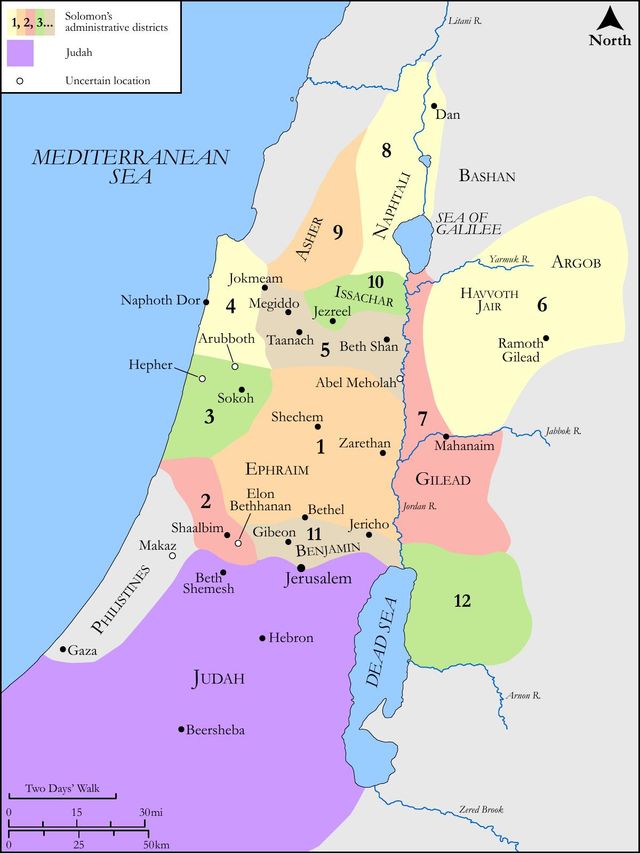
This verse is intricately woven into a broader section of 1 Kings (specifically 1 Kings 4:1-34) that meticulously details the unparalleled glory, wisdom, and administrative prowess of King Solomon's reign. Following the enumeration of his chief officials (1 Kings 4:1-6) and the twelve district governors responsible for providing provisions (1 Kings 4:7-19), verses 22-23 specifically itemize the staggering daily food requirements for the royal court. This detailed listing serves to underscore the sheer scale of the kingdom's operations and the abundance that flowed from Solomon's wise and divinely blessed rule. It transitions from the administrative structure to the tangible benefits and daily realities of such a grand kingdom, setting the stage for the subsequent descriptions of his vast dominion, peace, and wisdom that attracted visitors from afar (1 Kings 4:24-34).
Historical & Cultural Context
Solomon's reign (c. 970-931 BC) represents the golden age of the united monarchy in Israel, a period of unprecedented peace, prosperity, and international influence. Geographically, his kingdom stretched from the Euphrates River to the border of Egypt (1 Kings 4:21), controlling vital trade routes and receiving tribute from the kingdoms that served him. Culturally, royal courts of this era were not merely residences but bustling centers of power, administration, diplomacy, and hospitality, requiring massive logistical support. The provisions listed in 1 Kings 4:23 were not solely for Solomon himself but for his numerous wives and concubines, his vast retinue of officials, servants, guards, and the multitude of visitors and ambassadors who came to witness his famed wisdom and grandeur. The inclusion of both domesticated animals and various types of wild game ("harts, roebucks, and fallowdeer") highlights not only the agricultural abundance of the land but also the royal prerogative of hunting and the diverse, luxurious diet enjoyed by the elite. The sheer quantities reflect the immense population supported by the court and the display of opulence expected of a powerful monarch among the nations of that day.
Key Themes
ShowHideThe detailed provisions in this verse contribute significantly to several overarching themes in 1 Kings 4. Firstly, it powerfully illustrates the theme of Unprecedented Abundance and Prosperity, directly fulfilling God's promise to Solomon for "riches, and honour" (as seen in 1 Kings 3:13). The daily consumption figures far exceed what any ordinary household could manage, emphasizing the extraordinary material blessing bestowed upon Israel during this period. Secondly, it highlights Royal Grandeur and Administrative Efficiency. The ability to consistently procure and manage such vast quantities of food speaks volumes about the highly organized and effective administration Solomon established, which was crucial for maintaining the stability and prestige of his kingdom. This abundance was a tangible sign of the peace and security that Judah and Israel enjoyed, where "every man dwelt safely under his vine and under his fig tree" (as described in 1 Kings 4:25). Lastly, it underscores Divine Favor and Fulfillment of Covenant Promises. The prosperity of Solomon's reign, exemplified by these lavish provisions, was understood as a direct result of God's blessing upon a king who sought wisdom and built His temple, reflecting the covenant promises of blessing for obedience found throughout the Pentateuch, particularly in Deuteronomy 28.
Exposition and Analysis
ShowHideKey Word Analysis
ShowHideThis adjective, derived from a root meaning "to be plump" or "to be well-fed," describes the oxen as being stall-fed, prime, and well-nourished. Its inclusion signifies a premium quality of meat, indicating luxury and abundance beyond mere sustenance. It points to a deliberate and systematic process of animal husbandry to ensure the highest grade of provisions for the king's table, reflecting opulence and careful planning.
This collective noun refers to beef cattle or animals of the ox family, encompassing both genders and various ages, typically used for plowing or meat. The distinction between "fat oxen" and "oxen out of the pastures" highlights a tiered system of provision, ensuring both quantity and a range of quality. The sheer number of oxen underscores the massive scale of daily consumption required to sustain Solomon's vast court.
This rare Hebrew word, used only here in the Old Testament, refers to a type of bird, likely a domesticated fowl (such as geese or ducks), specifically fattened for consumption. The KJV's "fatted fowl" (with "fatted" from H75, ʼâbaç) emphasizes that these birds were specially prepared to enhance their flavor and tenderness. This detail further underscores the luxurious and refined nature of the royal diet, moving beyond basic necessity to include culinary delicacies.
Verse Breakdown
ShowHide"Ten fat oxen"
This refers to ten head of prime, stall-fed cattle, indicating the highest quality of beef. This quantity alone is substantial, suggesting that these were reserved for the most esteemed members of the court or for special occasions, highlighting a level of provision that was both abundant and luxurious, signifying the king's elevated status and the wealth of his kingdom.
"and twenty oxen out of the pastures"
These twenty cattle, while still significant in number, were likely pasture-fed, representing the more common, though still plentiful, source of beef. The distinction between "fat oxen" and "oxen out of the pastures" points to a tiered system of provisioning, ensuring both quantity and a range of quality for the diverse needs of the court, from the king's table to the general retinue.
"and an hundred sheep"
This large number of sheep signifies a staple and readily available source of meat, likely consumed daily by the wider court and its many dependents. Sheep were a primary source of protein in ancient Israel, and this quantity underscores the sheer scale of the daily consumption and the logistical capacity to manage such a supply.
"beside harts, and roebucks, and fallowdeer"
This clause lists various types of wild game, indicating that the royal diet was not limited to domesticated animals. The inclusion of these wild species speaks to the abundance of the land's natural resources, the king's access to hunting grounds, and the diverse and luxurious palate of the royal household, adding an element of exoticism and prestige to the daily provisions, a mark of true royal opulence.
"and fatted fowl"
This final item refers to specially fattened birds, likely domesticated fowl prepared for their rich flavor. This detail further emphasizes the opulence and refinement of the royal table, signifying a diet that included delicacies and was not merely about meeting basic caloric needs but indulging in culinary richness, reflecting the peak of material prosperity.
Literary Devices
ShowHideThe primary literary device at play in 1 Kings 4:23 is Cataloging, where a detailed list of items is presented to convey a specific impression. Here, the catalog of "ten fat oxen, and twenty oxen out of the pastures, and an hundred sheep, beside harts, and roebucks, and fallowdeer, and fatted fowl" serves to create a powerful sense of Abundance and, arguably, Hyperbole (or at least extreme Exaggeration for emphasis, even if the numbers were literally true). The sheer volume and variety of provisions are meticulously enumerated to impress upon the reader the unprecedented scale of Solomon's wealth and the logistical marvel of sustaining such a grand court. This detailed Imagery vividly paints a picture of a kingdom overflowing with resources, emphasizing the peak of Israel's material prosperity under Solomon's reign. The cumulative effect of the list is to underscore the divine blessing upon Solomon and the tangible manifestation of his "riches, and honour" promised by God.
Theological and Thematic Connections
ShowHideThe extraordinary daily provisions detailed in 1 Kings 4:23 are not merely an administrative record; they serve as a powerful theological statement about God's faithfulness and the tangible blessings He bestows upon His people. This abundance is a direct fulfillment of God's covenant promises, particularly those related to prosperity and security for a nation that walks in His ways. Solomon's reign, marked by such lavish provision, stands as a historical high point where divine favor was visibly manifested in material blessing, reflecting the principle that God delights in providing for His creation, often beyond mere necessity, to demonstrate His glory and generosity. This verse reminds us that God is the ultimate provider, capable of sustaining His purposes and His people with boundless resources, thereby establishing His kingdom and demonstrating His sovereignty.
Reflection and Application
ShowHideThe detailed account of Solomon's daily provisions in 1 Kings 4:23 invites us to reflect on the nature of divine provision and our response to it. This verse showcases God's capacity for extravagant generosity, demonstrating that His blessings can extend far beyond our basic needs, providing not just sufficiency but abundance and even luxury. It challenges us to consider our own understanding of "enough" and to recognize that all provision, whether meager or overflowing, ultimately flows from the hand of God. Such abundance, however, also carries a profound responsibility. Solomon was entrusted with immense resources, and his later failures remind us that material prosperity, while a gift from God, can also become a snare if not stewarded wisely and with a heart fixed on the Giver rather than the gifts. This passage therefore calls us to cultivate a spirit of profound gratitude for God's provision, to be diligent and faithful stewards of the resources He entrusts to us, and to remember that true and lasting riches are found not in earthly accumulation but in a deep relationship with God and in seeking His kingdom first.
Questions for Reflection
ShowHideFAQ
ShowHideWere these provisions solely for Solomon's personal consumption?
ShowHideNo, the immense quantities listed in 1 Kings 4:23 were not for King Solomon's personal consumption alone. They were the daily provisions required to sustain his entire vast royal household, which included his numerous wives and concubines, his extensive staff of officials, administrators, and servants, his military guard, and the multitude of guests, ambassadors, and petitioners who flocked to Jerusalem to witness his wisdom and grandeur. The text in 1 Kings 4:27-28 further clarifies that the district governors were responsible for providing food for "King Solomon, and for all that came unto King Solomon's table, every man in his month: they lacked nothing. Barley also and straw for the horses and dromedaries brought they unto the place where the officers were, every man according to his charge." This highlights the logistical feat and the sheer scale of the kingdom's operations, demonstrating the unprecedented prosperity and administrative efficiency of Solomon's reign, which was a testament to God's blessing.
Christ-Centered Fulfillment
ShowHideWhile 1 Kings 4:23 vividly portrays the unparalleled earthly abundance of King Solomon's reign, it ultimately points beyond itself to a greater King and a more profound provision. Solomon's kingdom, though glorious, was temporary and ultimately flawed, marked by human limitations and eventual division. Jesus Christ, the true Son of David, fulfills and transcends all the shadows of Solomon's reign. He is the ultimate King whose kingdom is not of this world, yet it is eternal and spiritual, offering an abundance that far surpasses any earthly provision. While Solomon provided physical food for his vast court, Jesus declares Himself to be the "Bread of Life" (as stated in John 6:35), offering spiritual nourishment that satisfies eternally and prevents spiritual hunger. He also promises "living water" (as found in John 4:14), quenching spiritual thirst forever. The lavish provisions of Solomon's table, impressive as they were, foreshadow the spiritual feast and eternal sustenance found in Christ. He is the one who truly provides "all things" for His people, not just physical sustenance, but salvation, righteousness, peace, and eternal life, inviting us to "seek ye first the kingdom of God, and his righteousness; and all these things shall be added unto you" (as promised in Matthew 6:33). Thus, the temporary, material abundance of Solomon's reign serves as a beautiful, albeit incomplete, picture of the boundless, eternal, and spiritual provision available in the kingdom of God through Jesus Christ.