


1 Kings 14:18
Bible text: King James Version (1769 Blayney text) · Public domain
Bible text: Berean Standard Bible · Public domain
Bible text: American Standard Version (1901) · Public domain
Bible text: World English Bible, Messianic edition · Public domain
Bible text: Geneva Bible (1599) · Public domain
Bible text: Young's Literal Translation · Public domain
- וַיִּקְבְּרוּvai·yik·be·Ruand they buriedH6912Conj-w ¦ V-Qal-ConsecImperf-3mpVerb Qal Consecutive Imperfect 3rd Plural Masculineוַandיִּקְבְּרוּthey buried
- אֹתוֹ'o·To<obj.> himH853DirObjM ¦ 3msParticle Object Indicatorאֹת<obj.>וֹhim
- וַיִּסְפְּדוּvai·yis·pe·duand they mournedH5594Conj-w ¦ V-Qal-ConsecImperf-3mpVerb Qal Consecutive Imperfect 3rd Plural Masculineוַandיִּסְפְּדוּthey mourned
- לוֹlofor himPrep-l ¦ 3msSuffix Personal 3rd Singular Masculineלforוֹhim
- כָּלkolallH3605N-mscNoun Singular Masculine Construct
- יִשְׂרָאֵלYis·ra·'ElIsraelH3478N-properNoun Proper Location
- כִּדְבַרkid·Varaccording to [the] word ofH1697Prep-k ¦ N-mscNoun Singular Masculine Constructכִּaccording toדְבַר[the] word of
- יְהוָהYah·wehYahwehH3068N-properNoun Proper Title
- אֲשֶׁר'a·SherwhichH834RelParticle Relative
- דִּבֶּרdi·Berhe spokeH1696V-Piel-Perf-3msVerb Piel Perfect 3rd Singular Masculine
- בְּיַדbe·yadby [the] hand ofH3027Prep-b ¦ N-cscNoun Singular common gender Constructבְּbyיַד[the] hand of
- עַבְדּוֹav·Dohis servantH5650N-msc ¦ 3msNoun Singular Masculine Constructעַבְדּservantוֹhis
- אֲחִיָּהוּ'a·chi·Ya·huAhijahH281N-proper-mNoun Proper Masculine
- הַנָּבִיאha·na·Vi'the prophetH5030Art ¦ N-msNoun Singular Masculine Absoluteהַtheנָּבִיאprophet
English is a literal word-by-word gloss of the Hebrew, not the KJV's wording. Why?
This is the original text the KJV's translators worked from — each Hebrew word with its own literal English meaning in this verse, prepared by scholars at Tyndale House, Cambridge. The KJV translates whole sentences, not word by word, so its wording differs: one Hebrew word can become several English words, and the KJV may choose “the LORD” where the gloss reads “Yahweh”. Both are faithful — they answer different questions. For the KJV's own rendering, switch to the KJV text.
Details
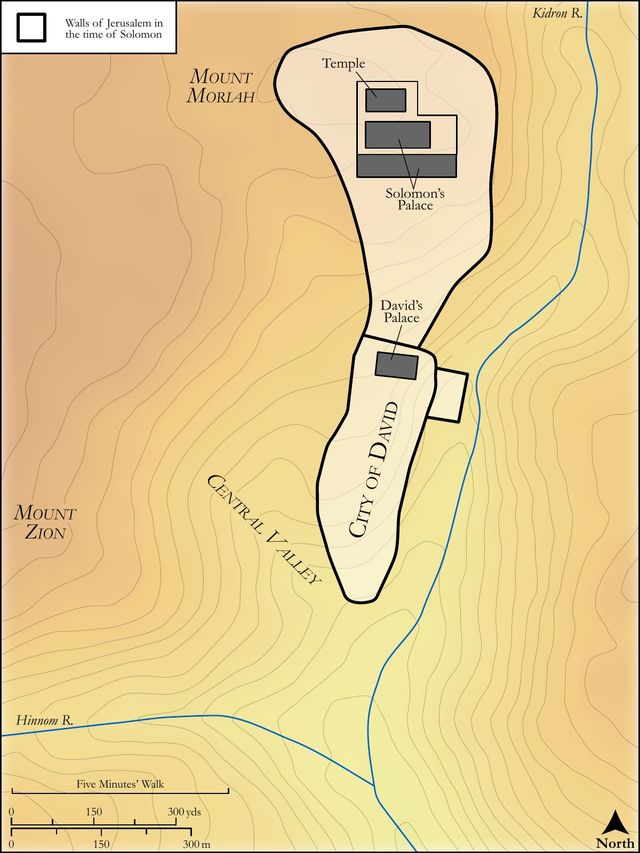
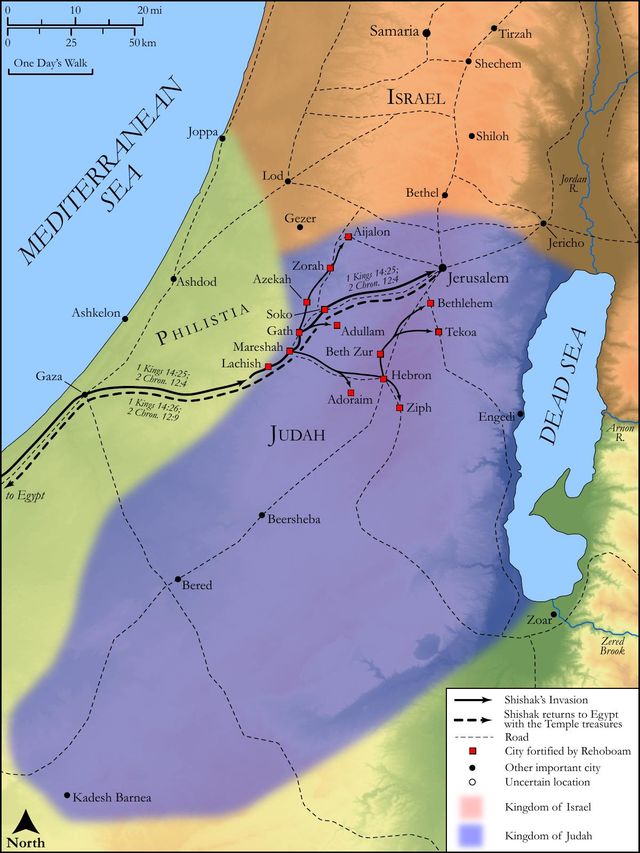
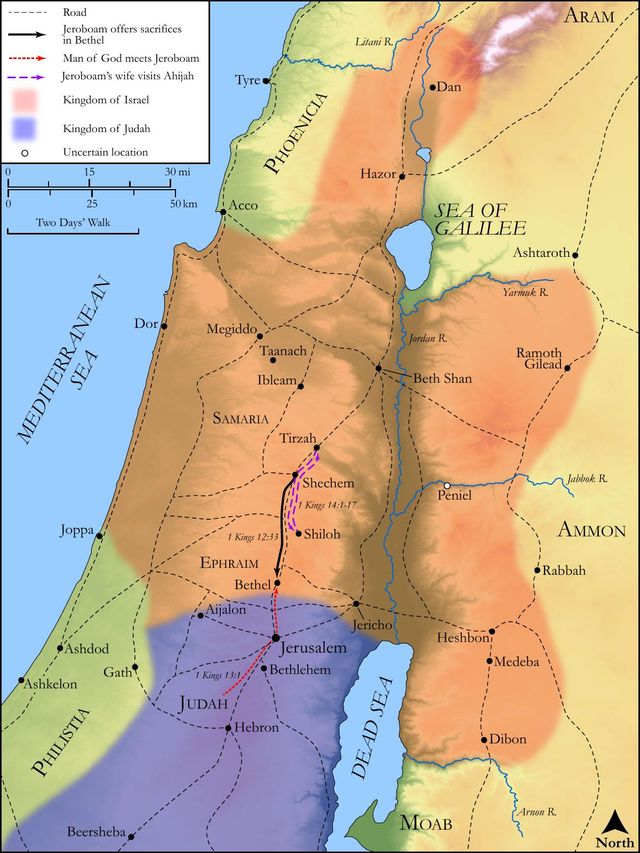
See on the biblical-era maps
Study this verse
Public-domain commentary
Matthew Henry
From his Commentary on the Whole Bible. Henry comments on passages, not single verses — this entry covers 1 Kings 14:7–20. His four-level outline is real structure in the source text, so it is rendered as structure.
When those that set up idols, and keep them up, go to enquire of the Lord, he determines to answer them, not according to the pretensions of their enquiry, but according to the multitude of their idols, Eze 14:4. So Jeroboam is answered here.
I.The prophet anticipates the enquiry concerning the child, and foretels the ruin of Jeroboam's house for the wickedness of it.
No one else durst have carried such a message: a servant would have smothered it, but his own wife cannot be suspected of ill-will to him.
1.God calls himself the Lord God of Israel. Though Israel had forsaken God, God had not cast them off, nor given them a bill of divorce for their whoredoms. He is Israel's God, and therefore will take vengeance on him who did them the greatest mischief he could do them, debauched them and drew them away from God.
2.He upbraids Jeroboam with the great favour he had bestowed upon him, in making him king, exalting him from among the people, the common people, to be prince over God's chosen Israel, and taking the kingdom from the house of David, to bestow it upon him. Whether we keep an account of God's mercies to us or no, he does, and will set even them in order before us, if we be ungrateful, to our greater confusion; otherwise he gives and upbraids not.
3.He charges him with his impiety and apostasy, and his idolatry particularly: Thou hast done evil above all that were before thee, Kg1 14:9. Saul, that was rejected, never worshipped idols; Solomon did it but occasionally, in his dotage, and never made Israel to sin. Jeroboam's calves, though pretended to be set up in honour of the God of Israel, that brought them up out of Egypt, yet are here called other gods, or strange gods, because in them he worshipped God as the heathen worshipped their strange gods, because by them he changed the truth of God into a lie and represented him as altogether different from what he is, and because many of the ignorant worshippers terminated their devotion in the image, and did not at all regard the God of Israel. Though they were calves of gold, the richness of the metal was so far from making them acceptable to God that they provoked him to anger, designedly affronted him, under colour of pleasing him. In doing this,
(1.)He had not set David before him (Kg1 14:8): Thou hast not been as my servant David, who, though he had his faults and some bad ones, yet never forsook the worship of God nor grew loose nor cold to that; his faithful adherence to that gained him this honourable character, that he followed God with all his heart, and herein he was proposed for an example to all his successors. Those did not do well that did not do like David.
(2.)He had not set God before him, but (Kg1 14:9), "Thou hast cast me behind thy back, my law, my fear; thou hast neglected me, forgotten me, and preferred thy policies before my precepts."
4.He foretels the utter ruin of Jeroboam's house, Kg1 14:10, Kg1 14:11. He thought, by his idolatry, to establish his government, and by that he not only lost it, but brought destruction upon his family, the universal destruction of all the males, whether shut up or left, married or unmarried.
(1.)Shameful destruction. They shall be taken away as dung, which is loathsome and which men are glad to be rid of. He worshipped dunghill-deities, and God removed his family as a great dunghill. Noble and royal families, if wicked, are no better in God's account.
(2.)Unusual destruction. Their very dead bodies should be meat for the dogs in the street, or the birds of prey in the field, Kg1 14:11. Thus evil pursues sinners. See this fulfilled, Kg1 15:29.
5.He foretels the immediate death of the sick child, Kg1 14:12, Kg1 14:13.
(1.)In mercy to him, lest, if he live, he be infected with the sin, and so involved in the ruin, of his father's house. Observe the character given of him: In him was found some good thing towards the Lord God of Israel, in the house of Jeroboam. He had an affection for the true worship of God and disliked the worship of the calves. Note,
[1.]Those are good in whom are good things towards the Lord God of Israel, good inclinations, good intentions, good desires, towards him.
[2.]Where there is but some good thing of that kind it will be found: God, who seeks it, sees it be it ever so little and is pleased with it.
[3.]A little grace goes a great way with great people. It is so rare to find princes well affected to religion that, when they are so, they are worthy of double honour.
[4.]Pious dispositions are in a peculiar manner amiable and acceptable when they are found in those that are young. The divine image in miniature has a peculiar beauty and lustre in it.
[5.]Those that are good in bad times and places shine very brightly in the eyes of God. A good child in the house of Jeroboam is a miracle of divine grace: to be there untainted is like being in the fiery furnace unhurt, unsinged. Observe the care taken of him: he only, of all Jeroboam's family, shall die in honour, shall be buried, and shall be lamented as one that lived desired. Note, Those that are distinguished by divine grace shall be distinguished by divine providence. This hopeful child dies first of all the family, for God often takes those soonest whom he loves best. Heaven is the fittest place for them; this earth is not worthy of them.
(2.)In wrath to the family.
[1.]It was a sign the family would be ruined when he was taken by whom it might have been reformed. The righteous are removed from the evil to come in this world, to the good to come in a better world. It is a bad omen to a family when the best in it are buried out of it; when what was valuable is picked out the rest is for the fire.
[2.]It was likewise a present affliction to the family and kingdom, by which both ought to have been bettered; and this aggravated the affliction to the poor mother that she should not reach home time enough to see her son alive: When thy feet enter into the city, just then the child shall die. This was to be a sign to her of the accomplishment of the rest of the threatenings, as Sa1 2:34.
6.He foretels the setting up of another family to rule over Israel, Kg1 14:14. This was fulfilled in Baasha of Issachar, who conspired against Nadab the son of Jeroboam, in the second year of his reign, murdered him and all his family. "But what? Even now. Why do I speak of it as a thing at a distance? It is at the door. It shall be done even now." Sometimes God makes quick work with sinners; he did so with the house of Jeroboam. It was not twenty-four years from his first elevation to the final extirpation of his family.
7.He foretels the judgments which should come upon the people of Israel for conforming to the worship which Jeroboam had established. If the blind lead the blind, both the blind leaders and the blind followers shall fall into the ditch. It is here foretold, Kg1 14:15,
(1.)That they should never be easy, nor rightly settled in their land, but continually shaken like a reed in the water. After they left the house of David, the government never continued long in one family, but one undermined and destroyed another, which must needs occasion great disorders and disturbances among the people.
(2.)That they should, ere long, be totally expelled out of their land, that good land, and given up to ruin, Kg1 14:16. This was fulfilled in the captivity of the ten tribes by the king of Assyria. Families and kingdoms are ruined by sin, ruined by the wickedness of the heads of them. Jeroboam did sin, and made Israel to sin. If great men do wickedly, they involve many others both in the guilt and in the snare; multitudes follow their pernicious ways. They go to hell with a long train, and their condemnation will be the more intolerable, for they must answer, not only for their own sins, but for the sins which others have been drawn into and kept in by their influence.
II.Jeroboam's wife has nothing to say against the word of the Lord, but she goes home with a heavy heart to their house in Tirzah, a sweet delightful place, so the name signifies, famed for its beauty, Sol 6:4. But death, which will stain its beauty and embitter all its delights, cannot be shut out from it. Hither she came, and here we leave her attending the funeral of her son, and expecting the fate of her family.
1.The child died (Kg1 14:17), and justly did all Israel mourn, not only for the loss of so hopeful a prince, whom they were not worthy of, but because his death plucked up the flood-gates, and made a breach, at which an inundation of judgments broke in.
2.Jeroboam himself died soon after, Kg1 14:20. It is said (Ch2 13:20), The Lord struck him with some sore disease, so that he died miserably, when he had reigned twenty-two years, and left his crown to a son who lost it, and his life too, and all the lives of his family, within two years after. For a further account of him the reader is referred to the annals of his reign, drawn up by his own secretaries, or to the public records, like those in the Tower, called here, The Book or register, of the Chronicles of the Kings of Israel, to which recourse might then be had; but, not being divinely inspired, these records are long since lost.
Continue studying 1 Kings 14:18 across the web’s major study libraries — every link below opens this exact verse, chapter, or book on the destination site.
Read & Compare
 BibleGatewayThis verse in more than 200 translations and 70 languages.
 Bible.comThe YouVersion reader — hundreds of translations, reading plans, and highlights.
 ESV.orgCrossway's official English Standard Version reader.
 NET BibleThe NET translation with 60,000+ translators' notes on every rendering decision.
 STEP BibleTyndale House's free study tool — original text, vocabulary, and scholarly resources.
 BibliaLogos Bible Software's free web reader.
 USCCBThe New American Bible (Revised Edition) with the U.S. bishops' study notes.
Commentaries
 BibleHub CommentariesDozens of classic commentaries on this verse, gathered on one page.
 StudyLightMore than 100 commentary sets — the largest collection on the web.
 BibleRefPlain-English commentary on what this verse means, verse by verse.
 Enduring WordDavid Guzik's free commentary on this chapter, widely used by Bible teachers.
 Bible Study ToolsVerse commentary alongside Greek and Hebrew study aids.
Original Language & Research
- BibleHub InterlinearThe verse word by word — original language, transliteration, and English.
- BibleHub LexiconEvery word's original-language definition and Strong's entry.
 Blue Letter BibleDeep-study tools — Strong's numbers, concordance, and word studies.
 SefariaThe Hebrew text with Rashi and centuries of Jewish commentary.
Sermons, Hymns & Audio


TrulyRandomVerse is not affiliated with these sites and doesn’t control their content. They’re linked because they’re genuinely useful.
Summary
1 Kings 14:18 records the precise fulfillment of divine prophecy concerning the death of Abijah, the son of King Jeroboam. Despite his father's widespread idolatry and the severe judgment pronounced upon the entire house of Jeroboam, Abijah alone received a proper burial and public mourning from all Israel. This singular act of grace, foretold by the prophet Ahijah, underscored God's unfailing word, His discerning eye that noted "some good thing" in the young prince amidst a corrupt royal lineage, and served as a stark reminder of divine sovereignty and the inevitable consequences of disobedience.
Context
ShowHideLiterary Context
This verse concludes a pivotal narrative within the broader account of King Jeroboam's reign, which began with the division of the united monarchy after Solomon's death. Jeroboam, the first king of the northern kingdom of Israel, immediately established idolatrous worship centers in Dan and Bethel, deviating from the prescribed worship at Jerusalem. When his son, Abijah, fell gravely ill, Jeroboam sent his wife in disguise to inquire of the prophet Ahijah of Shiloh, the very prophet who had previously foretold Jeroboam's kingship and the division of the kingdom (see 1 Kings 11:29-39). However, the Lord revealed the queen's identity to the blind Ahijah, who then delivered a devastating prophecy: not only would Abijah die as soon as his mother returned home, but Jeroboam's entire dynasty would be utterly cut off due to his grievous sin of leading Israel into widespread idolatry (see 1 Kings 14:7-11). Verse 18, therefore, serves as the immediate confirmation of this specific prophetic word, stating that Abijah's death and the national mourning occurred "according to the word of the LORD, which he spake by the hand of his servant Ahijah the prophet." It marks the initial, tangible consequence of Jeroboam's apostasy, setting the stage for the eventual eradication of his house.
Historical & Cultural Context
The historical backdrop is the early period of the divided monarchy, specifically the reign of Jeroboam I (c. 931-910 BC). Following the schism from Judah, Jeroboam established rival religious centers in Dan and Bethel with golden calves, fearing that his people's return to Jerusalem for worship would lead to a loss of political control. This act was a profound violation of the first two commandments and plunged Israel into widespread idolatry, a sin that would plague the northern kingdom throughout its history. Culturally, death and burial practices in ancient Israel were deeply significant. A proper burial was considered a mark of honor, peace, and integration into the community of one's ancestors, while an unburied corpse or an ignominious death was a severe curse and a sign of divine judgment (e.g., Deuteronomy 28:26). The public mourning by "all Israel" for Abijah, as mentioned in this verse, was a significant gesture, especially in contrast to the prophesied fate of the rest of Jeroboam's descendants, who would die in the field and be consumed by dogs or birds, without burial or mourning (see 1 Kings 14:11). This distinction highlights the unique grace extended to Abijah.
Key Themes
ShowHideThe primary theme underscored by 1 Kings 14:18 is the Divine Sovereignty and Infallibility of God's Word. The repeated phrase "according to the word of the LORD" emphasizes that God's pronouncements are not mere suggestions but absolute decrees that will inevitably come to pass, demonstrating His ultimate control over human affairs and historical events. This serves as a powerful testament to the reliability of prophecy. Another crucial theme is the Consequences of Disobedience and Apostasy. Abijah's death, though seemingly a personal tragedy, was the direct and immediate result of King Jeroboam's profound sin of leading Israel into idolatry. It illustrates that rebellion against God carries severe and far-reaching repercussions, often affecting not only the perpetrator but also their family and nation. Finally, the verse subtly introduces the theme of God's Discerning Grace and Individual Righteousness. Despite the sweeping judgment on Jeroboam's house, Abijah was singled out for a proper burial and public mourning, a stark contrast to the ignominious deaths prophesied for his relatives. This distinction was explicitly due to "some good thing toward the LORD God of Israel" found in him (as stated in 1 Kings 14:13). This demonstrates God's ability to discern individual hearts and extend a measure of grace even within a context of impending judgment, offering a glimmer of hope amidst the darkness of national apostasy.
Exposition and Analysis
ShowHideKey Word Analysis
ShowHideThe Hebrew term דָּבָר (dâbâr), translated here as "word" (H1697), carries significant weight. Derived from a root meaning "to arrange" or "to speak," it refers not just to a spoken utterance but to a divine decree, a pronouncement with inherent power and authority that brings about what it declares. When linked with "the LORD" (יהוה, YHWH, H3068), it signifies the authoritative, self-executing will of God, emphasizing the certainty of its fulfillment as a matter or thing that is spoken of and decreed.
The phrase "by the hand of" (בְּיַד, b'yad), employing the Hebrew word יָד (yâd, H3027) for "hand," is a common biblical idiom. It designates the prophet Ahijah as the instrument or agent through whom God's message was conveyed. The "hand" here indicates the means or power by which the divine message was delivered, strongly asserting that the prophecy originated from God Himself, not from Ahijah's personal wisdom, will, or power, thereby reinforcing the divine authority and infallibility of the message.
The verb סָפַד (çâphad, H5594) denotes a formal, public lamentation. Its primitive root suggests actions like "tearing the hair and beating the breasts" as Orientals do in grief, generally meaning "to lament" or "to wail." That "all Israel mourned for him" signifies a widespread, communal acknowledgment of loss and respect for Abijah, setting his death apart from the prophesied fate of Jeroboam's other descendants who would die unmourned and unburied. This public mourning underscores the unique grace shown to Abijah.
Verse Breakdown
ShowHide"And they buried him;"
This simple statement carries profound significance. In ancient Israel, a proper burial was a crucial act of honor and a sign of peace for the deceased, often implying rest with one's ancestors. For Abijah, it represented a distinct mercy from God, especially when contrasted with the ignominious fate prophesied for the rest of Jeroboam's male descendants, who would die unburied and be consumed by scavengers (see 1 Kings 14:10-11). This clause confirms the first part of the prophecy's fulfillment regarding Abijah's death.
"and all Israel mourned for him,"
This further emphasizes the unique nature of Abijah's passing. The mourning of "all Israel" indicates a widespread, communal lament, suggesting that Abijah was held in some regard by the people, perhaps due to the "good thing" found in him (as noted in 1 Kings 14:13). This public display of grief stands in stark contrast to the lack of mourning prophesied for the rest of Jeroboam's house, highlighting God's specific and discerning grace towards Abijah within the broader context of judgment.
"according to the word of the LORD,"
This is the pivotal phrase of the verse, serving as a fulfillment formula. It explicitly states that Abijah's death and the subsequent mourning were not random occurrences or natural events but the precise and direct consequence of a divine decree. This phrase powerfully affirms God's absolute sovereignty and the unfailing reliability of His prophetic word, demonstrating that His plans and pronouncements are immutable and will inevitably come to pass.
"which he spake by the hand of his servant Ahijah the prophet."
This final clause identifies the specific source and channel of the prophecy. It reiterates that the message originated from the LORD Himself, with Ahijah merely serving as the faithful instrument or messenger through whom God's word was delivered. This reinforces the divine authority behind the prophecy and underscores the prophet's role as a conduit for God's truth, not as the originator of the message. It also links back directly to the preceding narrative where Ahijah delivered the judgment to Jeroboam's wife.
Literary Devices
ShowHideThe passage employs several potent literary devices to convey its theological message. Foremost among them is the Fulfillment Formula, explicitly stated in the phrase "according to the word of the LORD, which he spake by the hand of his servant Ahijah the prophet." This formula is a common feature in biblical narrative, serving to underscore the absolute reliability and divine origin of prophecy, demonstrating God's active involvement in human history and His unwavering faithfulness to His declared word. There is also a strong element of Contrast present: the honorable burial and widespread mourning for Abijah stand in stark opposition to the ignominious, unburied deaths prophesied for the rest of Jeroboam's male descendants. This contrast highlights God's discerning justice and grace, singling out Abijah due to his unique "goodness" amidst a wicked lineage. Furthermore, Irony is evident in Jeroboam's initial intent: he sent his wife to inquire about his son's illness hoping for a cure, but instead received a prophecy of death and dynastic doom. This ironic twist emphasizes the futility of human attempts to circumvent divine judgment and the inescapable nature of God's decrees. The entire narrative also functions as a Divine Judgment Narrative, illustrating the direct and immediate consequences of apostasy and disobedience, particularly for those in positions of leadership who lead others astray.
Theological and Thematic Connections
ShowHide1 Kings 14:18 serves as a powerful testament to the absolute sovereignty and unfailing faithfulness of God. It demonstrates that God's word, once spoken, is not merely a suggestion but a divine decree that will inevitably come to pass, regardless of human actions or desires. This truth underscores the seriousness of both obedience and disobedience, as the consequences of Jeroboam's apostasy ripple through his family, even affecting the relatively innocent Abijah. Yet, within this context of judgment, God's discerning grace is also evident, showing that He sees and honors individual righteousness, even amidst widespread corruption. This nuanced portrayal of divine justice and mercy reminds us that God's character encompasses both unwavering righteousness in judging sin and compassionate discernment in extending grace.
Reflection and Application
ShowHideThis verse offers profound lessons for contemporary believers. First, it powerfully reinforces the absolute reliability of God's word. Just as the prophecy concerning Abijah's death was fulfilled with precise detail, so too will all of God's promises and warnings come to pass. This should cultivate an unwavering trust in Scripture as the infallible revelation of God's will and character, encouraging us to build our lives upon its solid foundation. Second, the narrative serves as a sober reminder of the far-reaching consequences of sin, particularly for those in leadership. Jeroboam's idolatry not only brought judgment upon himself but also upon his innocent son and his entire dynasty. This calls us to a deep sense of responsibility for our actions and their potential impact on others, urging us to live lives of integrity and obedience, recognizing that our choices have ripple effects. Finally, Abijah's story offers a beacon of hope: even in a context of widespread spiritual decline and impending judgment, God sees and honors individual righteousness. His discerning grace means that He recognizes and rewards "some good thing" in those who genuinely seek Him, offering a measure of mercy even when general judgment is due. This encourages us to pursue personal holiness and faithfulness, knowing that our individual walk with God is seen and valued by Him, and that His grace can extend even into the darkest circumstances.
Questions for Reflection
ShowHideFAQ
ShowHideWhy was Abijah the only one of Jeroboam's house to receive a proper burial and public mourning?
ShowHideAbijah was singled out for this unique grace because, as stated in 1 Kings 14:13, "in him there is found some good thing toward the LORD God of Israel." This indicates that despite his father's pervasive idolatry and the national apostasy, Abijah possessed a genuine, albeit perhaps nascent, inclination towards the true God. God, in His discerning justice and mercy, recognized this individual righteousness and granted him an honorable death and burial, distinguishing him from the rest of Jeroboam's house who were prophesied to die ignominious deaths without burial or mourning.
What does the phrase "by the hand of his servant Ahijah the prophet" signify?
ShowHideThis phrase is a common biblical idiom that emphasizes the divine origin and authority of the message. It means that Ahijah was merely the instrument or channel through whom God's message was delivered. The "word of the LORD" did not originate from Ahijah's own wisdom, power, or will, but directly from God Himself. This reinforces the absolute certainty and infallibility of the prophecy, as it was God's own decree conveyed through His chosen messenger. This concept is vital for understanding the nature of biblical prophecy, where the prophet is a mouthpiece, not the source.
How does this event relate to Jeroboam's broader reign and the fate of his dynasty?
ShowHideAbijah's death was the first tangible and immediate fulfillment of the severe judgment pronounced upon Jeroboam's house due to his profound sin of leading Israel into idolatry. The prophet Ahijah had foretold that God would "cut off from Jeroboam every male, both bond and free, in Israel, and will take away the remnant of the house of Jeroboam, as a man takes away dung, till it be all gone" (1 Kings 14:10). Abijah's death served as the initial, tragic sign that this comprehensive judgment had begun, foreshadowing the complete eradication of Jeroboam's dynasty, which indeed occurred shortly after his reign when Baasha conspired against Nadab, Jeroboam's son, and "struck down all the house of Jeroboam" (1 Kings 15:29).
Christ-Centered Fulfillment
ShowHideThe precise fulfillment of Ahijah's prophecy in 1 Kings 14:18 points powerfully to the ultimate reliability of God's word, a truth most perfectly embodied in Jesus Christ. Just as the word spoken through Ahijah came to pass without fail, so too do all of God's promises and prophecies find their "Yes" and "Amen" in Christ (2 Corinthians 1:20). Jesus is the ultimate Prophet, the very Word of God made flesh (John 1:1, John 1:14), whose every utterance is truth and whose life perfectly fulfilled the ancient prophecies concerning the Messiah. While Abijah's death was a consequence of his father's sin, foreshadowing judgment, Christ willingly bore the ultimate consequences of humanity's sin on the cross, becoming a curse for us to redeem us from the curse of the law (Galatians 3:13). Furthermore, Abijah's "good thing" that earned him a proper burial, a glimmer of righteousness in a corrupt lineage, ultimately points to the perfect and imputed righteousness found only in Christ. We, who have no "good thing" of our own sufficient to merit God's favor, are made righteous through faith in Him (Philippians 3:9, Romans 5:19). His death was not a judgment for His own sin, but a substitutionary sacrifice, and His resurrection is the ultimate fulfillment of God's promise of life and victory over death, securing for all who believe an eternal inheritance and a glorious resurrection, far surpassing the honorable burial of Abijah (1 Corinthians 15:20-22).