


Numbers 4:25
- וְנָשְׂאוּve·Na·se·'Uand they will carryH5375Conj-w ¦ V-Qal-ConsecPerf-3cpVerb Qal Consecutive Perfect 3rd Plural common genderוְandנָשְׂאוּthey will carry
- אֶת'et<obj.>H853DirObjMParticle Object Indicator
- יְרִיעֹתye·ri·'Ot[the] curtains ofH3407N-fpcNoun Plural Feminine Construct
- הַמִּשְׁכָּןha·mish·Kanthe tabernacleH4908Art ¦ N-msNoun Singular Masculine Absoluteהַtheמִּשְׁכָּןtabernacle
- וְאֶתve·'Etand <obj.>H853Conj-w ¦ DirObjMParticle Object Indicatorוְandאֶת<obj.>
- אֹהֶל'O·hel[the] tent ofH168N-mscNoun Singular Masculine Construct
- מוֹעֵדmo·'EdmeetingH4150N-msNoun Singular Masculine Absolute
- מִכְסֵהוּmikh·Se·huits coveringH4372N-msc ¦ 3msNoun Singular Masculine Constructמִכְסֵcoveringהוּits
- וּמִכְסֵהu·mikh·Sehand [the] covering ofH4372Conj-w ¦ N-mscNoun Singular Masculine Constructוּandמִכְסֵה[the] covering of
- הַתַּחַשׁha·Ta·chashthe dolphinH8476Art ¦ N-msNoun Singular Masculine Absoluteהַtheתַּחַשׁdolphin
- אֲשֶׁר'a·SherwhichH834RelParticle Relative
- עָלָיו'a·Lav[is] over itH5921Prep ¦ 3msPreposition Definiteעָלָי[is] overוit
- מִלְמָעְלָהmil·Ma·'e·lahfrom to above <towards>H4605Prep-m ¦ Prep-l ¦ Adj-cs ¦ SfxAdjective Numerical Singular common gender Absoluteמִfromלְtoמָעְלָaboveה<towards>
- וְאֶתve·'Etand <obj.>H853Conj-w ¦ DirObjMParticle Object Indicatorוְandאֶת<obj.>
- מָסַךְma·Sakh[the] screen ofH4539N-mscNoun Singular Masculine Construct
- פֶּתַחPe·tach[the] entrance ofH6607N-mscNoun Singular Masculine Construct
- אֹהֶל'O·hel[the] tent ofH168N-mscNoun Singular Masculine Construct
- מוֹעֵדmo·'EdmeetingH4150N-msNoun Singular Masculine Absolute
English is a literal word-by-word gloss of the Hebrew, not the KJV's wording. Why?
This is the original text the KJV's translators worked from — each Hebrew word with its own literal English meaning in this verse, prepared by scholars at Tyndale House, Cambridge. The KJV translates whole sentences, not word by word, so its wording differs: one Hebrew word can become several English words, and the KJV may choose “the LORD” where the gloss reads “Yahweh”. Both are faithful — they answer different questions. For the KJV's own rendering, switch to the KJV text.
Details
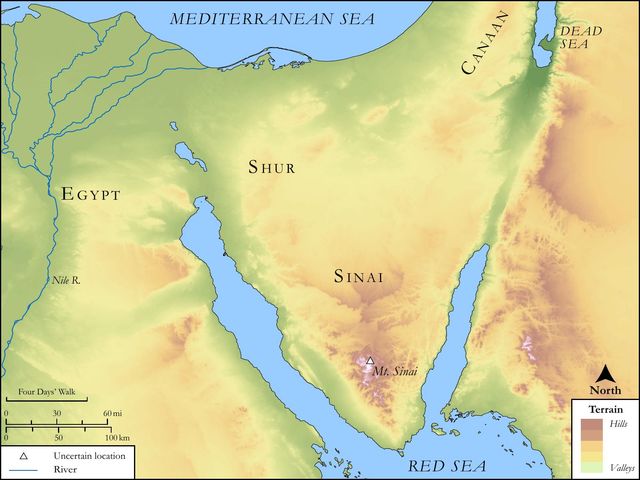
See on the biblical-era map
Study this verse
Public-domain commentary
Matthew Henry
From his Commentary on the Whole Bible. Henry comments on passages, not single verses — this entry covers Numbers 4:21–33.
We have here the charge of the other two families of the Levites, which, though not so honourable as the first, yet was necessary, and was to be done regularly. 1. The Gershonites were charged with all the drapery of the tabernacle, the curtains, and hangings, and the coverings of badgers' skins, Num 4:22-26. These they were to take down when the cloud removed, and the ark and the rest of the holy things were carried away, to pack up and bring with them, and then to set up again, where the cloud rested. Aaron and his sons allotted to them their respective charge: "You shall take care of such a curtain, and you of such a hanging, that every one may know his work, and there may be no confusion," Num 4:27. Ithamar particularly was to take the oversight of them, Num 4:28. 2. The Merarites were charged with the heavy carriage, the boards and bars, the pillars and sockets, the pins and cords, and these were delivered to them by name, Num 4:31, Num 4:32. An inventory was given them of every particular, that it might be forthcoming, and nothing to seek, when the tabernacle was to be set up again. Though these seemed of less importance than the other things pertaining to the sanctuary, yet there was this care taken of them, to teach us with the greatest exactness to preserve pure and entire all divine institutions, and to take care that nothing be lost. It also intimates the care God takes of his church, and every member of it; the good Shepherd calls his own sheep by name, Joh 10:3. Here were thousands of men employed about these services, though a much less number would have served for the bearing of those burdens; but it was requisite that the tabernacle should be taken down, and set up, with great expedition, and many hands would make quick work, especially when every one knew his work. They had tents of their own to take care of, and to take along with them, but the young men under thirty, and the old men above fifty, might serve for them; nor is there any mention of them, for God's house must always be preferred before our own. Their care was preposterous who built and ceiled their own houses while God's house lay waste, Hag 1:4, Hag 1:9. The death of the saints is represented as the taking down of the tabernacle (Co2 5:1), and the putting of it off, Pe2 1:14. The immortal soul, like the most holy things, is first covered and taken away, carried by angels, unseen, under the inspection of the Lord Jesus, our Eleazar. Care is also taken of the body - the skin and flesh, which are as the curtains, the bones and sinews which are as the bars and pillars; none of these shall be lost; commandment is given concerning the bones, a covenant made with the dust; these are in safe custody, and shall all be produced in the great day, when this tabernacle shall be set up again, and these vile bodies made like the glorious body of Jesus Christ.
Continue studying Numbers 4:25 across the web’s major study libraries — every link below opens this exact verse, chapter, or book on the destination site.
Read & Compare
 BibleGatewayThis verse in more than 200 translations and 70 languages.
 Bible.comThe YouVersion reader — hundreds of translations, reading plans, and highlights.
 ESV.orgCrossway's official English Standard Version reader.
 NET BibleThe NET translation with 60,000+ translators' notes on every rendering decision.
 STEP BibleTyndale House's free study tool — original text, vocabulary, and scholarly resources.
 BibliaLogos Bible Software's free web reader.
 USCCBThe New American Bible (Revised Edition) with the U.S. bishops' study notes.
Commentaries
 BibleHub CommentariesDozens of classic commentaries on this verse, gathered on one page.
 StudyLightMore than 100 commentary sets — the largest collection on the web.
 BibleRefPlain-English commentary on what this verse means, verse by verse.
 Enduring WordDavid Guzik's free commentary on this chapter, widely used by Bible teachers.
 Bible Study ToolsVerse commentary alongside Greek and Hebrew study aids.
Original Language & Research
- BibleHub InterlinearThe verse word by word — original language, transliteration, and English.
- BibleHub LexiconEvery word's original-language definition and Strong's entry.
 Blue Letter BibleDeep-study tools — Strong's numbers, concordance, and word studies.
 SefariaThe Hebrew text with Rashi and centuries of Jewish commentary.
Sermons, Hymns & Audio


TrulyRandomVerse is not affiliated with these sites and doesn’t control their content. They’re linked because they’re genuinely useful.
Summary
Numbers 4:25 meticulously details the specific responsibilities of the Gershonite clan within the Levitical priesthood for transporting the Tabernacle during Israel's wilderness wanderings. This verse underscores the divine precision and sacred order required in handling the portable sanctuary's fabric components, including its inner curtains, main coverings, the durable outermost layer, and the entrance hanging, all of which profoundly symbolized God's holy presence among His covenant people.
Context
ShowHideLiterary Context
Numbers 4 is a continuation of God's detailed instructions for the organization and duties of the Levites, who were consecrated to serve the Tabernacle. Following the census of the Levites in Numbers 3, chapter 4 specifically outlines the precise tasks assigned to each of the three main Levitical families: the Kohathites, Gershonites, and Merarites, based on their age and specific roles. While the Kohathites were responsible for the most holy items of the Tabernacle, such as the Ark of the Covenant and the altar, which were not to be touched directly (as seen in Numbers 4:4-15), the Gershonites, as described in this verse and earlier in Numbers 3:21-26, were tasked with carrying the lighter, yet equally vital, fabric-based components. This precise division of labor ensured that the portable sanctuary, a central symbol of God's presence, was handled with utmost reverence, efficiency, and according to divine blueprint during Israel's nomadic journey through the wilderness.
Historical & Cultural Context
The setting for Numbers 4:25 is the wilderness journey of the Israelites after their exodus from Egypt. The Tabernacle, or "tent of meeting," was the focal point of their camp, symbolizing God's immanent presence among His people. In a nomadic society, the ability to transport their central place of worship was crucial. Unlike the permanent, often idolatrous, temples of surrounding pagan cultures, the Tabernacle was designed for mobility, reflecting God's dynamic and personal relationship with Israel as He led them. The meticulous instructions for its dismantling, transport, and reassembly, including the specific assignments to the Levitical clans, highlight God's demand for order and holiness in their worship and daily life. This level of detail also served to protect the people from inadvertently violating the sanctity of God's dwelling, which could have dire consequences, as illustrated by later events like the unauthorized touching of the Ark in 2 Samuel 6:6-7. The Tabernacle was not merely a structure; it was the tangible representation of the covenant relationship, requiring precise adherence to divine commands for its handling and movement.
Key Themes
ShowHideNumbers 4:25 contributes significantly to several overarching themes within the book of Numbers and the Pentateuch. Firstly, it underscores the theme of Divine Order and Holiness, demonstrating that God is a God of precision who demands meticulous adherence to His commands, especially concerning His sacred dwelling. Every detail, down to the specific coverings, was important. Secondly, it highlights the theme of Assigned Responsibility and Stewardship within the community of faith. Each Levitical clan had a distinct, divinely appointed role, emphasizing that all contributions, whether seemingly grand or mundane, were vital for the functioning of God's people and His presence among them. This division of labor ensured efficiency and reverence. Thirdly, the portability of the Tabernacle, facilitated by these transport duties, reinforces the theme of God's Dynamic and Immanent Presence. God was not confined to a fixed location but journeyed with His people, a constant reminder of His faithfulness and guidance throughout their wilderness trials, as also seen in the cloud and fire by night (e.g., Numbers 9:15-23).
Exposition and Analysis
ShowHideKey Word Analysis
ShowHideThis verb (H5375) means "to lift, in a great variety of applications, literal and figurative, absolute and relative." In the context of the Tabernacle service, it emphasizes the physical act of transport, but also implicitly conveys the idea of taking on a responsibility or a charge. The Gershonites were not merely moving objects; they were bearing the sacred components of God's dwelling, a task imbued with spiritual significance and requiring careful stewardship. This word encapsulates the burden and privilege of their sacred duty.
The term (H3407) refers to "a hanging (as tremulous); curtain." These were the large, intricately woven fabric panels that formed the inner walls and ceiling of the Tabernacle, often depicting cherubim and made of fine linen with blue, purple, and scarlet threads (as detailed in Exodus 26:1-6). Their delicate nature and sacred imagery contrasted with the outer coverings, underscoring the need for careful handling by the Gershonites to preserve their beauty and integrity.
The Hebrew word (H8476) is described as "probably of foreign derivation; a (clean) animal with fur, probably a species of antelope." While the KJV translates it as "badgers' skins," scholarly debate exists regarding its precise identification, with other proposals including dugong, dolphin, porpoise, or, more broadly, a type of fine, durable, and often dyed leather or hide. Regardless of the exact animal, the consensus is that it refers to a tough, resilient, and likely waterproof material that formed the outermost protective layer of the Tabernacle (see Exodus 26:14), shielding the more delicate inner components from the harsh desert elements like sun, sand, and rain. This detail highlights God's practical provision for the preservation of His holy dwelling.
Verse Breakdown
ShowHide"And they shall bear the curtains of the tabernacle,"
This initial clause assigns the Gershonites the responsibility for carrying the innermost and most decorative fabric layers of the Tabernacle. These were the ten curtains of fine twined linen, blue, purple, and scarlet material, with cherubim skillfully worked into them, forming the inner sanctuary. Their beauty, sacred imagery, and delicate craftsmanship required meticulous handling during transport, emphasizing the reverence due to God's dwelling.
"and the tabernacle of the congregation, his covering,"
This refers to the primary coverings of the Tabernacle structure itself, specifically the goat hair curtains that formed the next layer over the linen curtains, providing insulation and protection. The phrase "tabernacle of the congregation" (Hebrew: ʼôhel môwʻêd) emphasizes its function as the "tent of meeting" where God would commune with His people, highlighting its central role as the divine-human interface.
"and the covering of the badgers' skins that [is] above upon it,"
This specifies the outermost and most durable layer of the Tabernacle's coverings. As discussed in the key word analysis, this tough, weatherproof hide (Hebrew: mikçeh tachash) served as the ultimate protection against the severe wilderness environment, safeguarding the sacred contents from external damage. Its placement "above upon it" (Hebrew: maʻal) underscores its role as the final, protective shield, ensuring the preservation of God's holy dwelling amidst challenging conditions.
"and the hanging for the door of the tabernacle of the congregation,"
This refers to the elaborate curtain (Hebrew: mâçâk pethach) that served as the entrance to the Holy Place, the first chamber of the Tabernacle. This "hanging" was distinct from the veil separating the Holy Place from the Most Holy Place and was likely made of fine linen with blue, purple, and scarlet embroidery (as described in Exodus 26:36). Its inclusion underscores that even the entryway, which granted access to God's presence, was sacred and required meticulous care in its handling, signifying the holiness of all points of access to the divine.
Literary Devices
ShowHideNumbers 4:25 employs several literary devices to convey its message of divine order and sacred responsibility. The most prominent is Enumeration (or Listing), as the verse systematically itemizes each specific component the Gershonites were to transport: "the curtains of the tabernacle," "the tabernacle of the congregation, his covering," "the covering of the badgers' skins that is above upon it," and "the hanging for the door of the tabernacle of the congregation." This detailed listing emphasizes the meticulousness of God's instructions and the precise nature of the Levites' duties, leaving no room for ambiguity and highlighting the comprehensive scope of their charge. Furthermore, Repetition of phrases like "the tabernacle of the congregation" reinforces the central importance of this sacred dwelling as the locus of God's presence among His people and the focal point of their collective identity. The items themselves function as Symbols; each piece, from the decorative inner curtains to the rugged outer skins, collectively symbolizes the multifaceted holiness of God and the comprehensive care required for His dwelling. The implicit Contrast between the delicate inner "curtains" and the tough "badgers' skins" also subtly highlights the dual nature of God's dwelling: beautiful and holy within, yet robustly protected for the harsh realities of the wilderness journey, reflecting God's aesthetic glory and His practical provision.
Theological and Thematic Connections
ShowHideNumbers 4:25, in its detailed assignment of duties to the Gershonites, powerfully illustrates several core theological truths. It underscores God's nature as a God of order and precision, demonstrating that every aspect of His worship and presence among His people is carefully orchestrated and holds profound significance. The meticulous care required for even the "outer" and "less holy" components of the Tabernacle highlights the pervasive holiness of God and the reverence due to anything associated with Him. This verse also emphasizes the principle of assigned responsibility and stewardship within the community of faith, where each member has a vital, divinely appointed role that contributes to the overall function and mission. The Tabernacle's portability, facilitated by these specific transport duties, further symbolizes God's dynamic and faithful presence, accompanying His people through all their journeys and trials, a tangible sign of His covenant faithfulness.
Reflection and Application
ShowHideThe ancient instructions for the Gershonites in Numbers 4:25, though specific to the Old Testament Tabernacle, offer profound and timeless lessons for believers today. This verse reminds us that in God's economy, there are no "insignificant" tasks or "minor" roles. Just as carrying the Tabernacle's coverings was a vital part of maintaining God's dwelling among His people, so too are all contributions within the contemporary body of Christ. Whether visible or behind the scenes, every act of service, every spiritual gift exercised, and every responsibility undertaken with diligence and reverence contributes to the health, mission, and flourishing of the church. It calls us to cultivate a mindset of meticulous stewardship and profound respect for God's presence, not just in grand acts of worship, but in the seemingly mundane details of our service. Our "carrying" today involves upholding the spiritual integrity of the church, protecting its witness, and ensuring that the gospel message is faithfully preserved and proclaimed as we journey through this world, reflecting the same dedication the Gershonites showed in their sacred duties.
Questions for Reflection
ShowHideFAQ
ShowHideWhat were the primary duties of the Gershonites, as distinct from other Levitical clans?
ShowHideThe Gershonites were one of the three main Levitical clans responsible for the Tabernacle service, each with distinct duties. While the Kohathites handled the most sacred furnishings like the Ark of the Covenant, the table of showbread, the lampstand, and the altars (as detailed in Numbers 4:4-15), and the Merarites were responsible for the heavy structural components like the frames, bars, pillars, and bases (see Numbers 4:31-32), the Gershonites were specifically tasked with the lighter, fabric-based elements. As Numbers 4:25 outlines, their duties included bearing the Tabernacle's inner curtains, its primary coverings, the durable outer "badgers' skins" covering, and the hanging for the door of the Tabernacle of the congregation. Their role was crucial for the careful dismantling, transport, and reassembly of the Tabernacle's textile components during Israel's wilderness journeys, ensuring the sanctuary's integrity.
What is the significance of the "badgers' skins" covering for the Tabernacle?
ShowHideThe "badgers' skins" (Hebrew: tachash) formed the outermost layer of the Tabernacle's coverings. While the exact identification of the animal or material remains debated among scholars, it is widely understood to be a durable, resilient, and likely waterproof hide. Its significance lies primarily in its protective function: it shielded the more delicate and sacred inner coverings and furnishings of the Tabernacle from the harsh elements of the wilderness, such as intense sun, abrasive sandstorms, and heavy rains. This practical detail highlights God's foresight and meticulous provision for the preservation of His holy dwelling, ensuring that the place where His glory resided was adequately protected from external damage, allowing His presence to accompany His people safely and continuously.
Why did God require such detailed instructions for carrying the Tabernacle?
ShowHideGod's meticulous instructions for carrying the Tabernacle, as seen in Numbers 4:25 and throughout the chapter, underscore several profound theological principles. Firstly, they emphasize God's absolute holiness and the profound reverence due to His presence. The Tabernacle was not merely a tent; it was the tangible dwelling place of the Almighty, and every component was sacred, demanding precise handling. Secondly, the detailed assignments demonstrated God's demand for order and precision in worship and service. This divine order prevented chaos, ensured proper reverence, and guaranteed that every aspect of His service was performed according to His divine will, reflecting His own orderly nature. Thirdly, it highlighted the principle of assigned responsibility within the community; each Levitical clan had a specific, vital role, emphasizing that every member's contribution, no matter how seemingly small, was essential for the proper functioning and integrity of God's dwelling among His people. Finally, these instructions ensured the Tabernacle's safe and efficient transport, enabling God's presence to accompany Israel throughout their nomadic journey, reinforcing His faithfulness and immanence as their guide and protector.
Christ-Centered Fulfillment
ShowHideNumbers 4:25, with its focus on the meticulous care and transport of the Tabernacle's coverings, finds its ultimate Christ-centered fulfillment in the person and work of Jesus Christ. The Tabernacle itself was a profound type and shadow of Christ, representing God's dwelling among humanity. Just as the Tabernacle's coverings shielded its sacred contents, so too does Christ serve as our ultimate "covering" and protection, providing spiritual refuge and direct access to God. The Old Testament Tabernacle, a physical structure, pointed forward to the new covenant reality where God no longer dwells in tents made with hands, but in and through Jesus. As the Word made flesh, Jesus "tabernacled" among us (John 1:14), becoming the true meeting place between God and humanity, the embodiment of divine presence. Furthermore, Christ's perfect sacrifice on the cross fulfilled the Tabernacle's sacrificial system, making direct access to God possible not through rituals and physical structures, but through faith in Him, our great High Priest (Hebrews 9:11-14). Today, the church, composed of believers, is called the "temple of the Holy Spirit" (1 Corinthians 6:19), and we are built together into a spiritual dwelling place for God (Ephesians 2:19-22). Thus, the meticulous care once given to the Tabernacle's coverings now finds its spiritual parallel in the church's call to preserve the purity of the gospel, protect the unity of the Spirit, and faithfully bear witness to Christ's presence in the world, ensuring that God's dwelling place continues to move with His people until His glorious return.