


Numbers 19:7
Bible text: King James Version (1769 Blayney text) · Public domain
Bible text: King James Version with Strong's numbers · Public domain
Bible text: Berean Standard Bible · Public domain
Bible text: American Standard Version (1901) · Public domain
Bible text: World English Bible, Messianic edition · Public domain
Bible text: Geneva Bible (1599) · Public domain
Bible text: Young's Literal Translation · Public domain
- וְכִבֶּסve·khi·Besand he will washH3526Conj-w ¦ V-Piel-ConsecPerf-3msVerb Piel Consecutive Perfect 3rd Singular Masculineוְandכִבֶּסhe will wash
- בְּגָדָיוbe·ga·Davhis clothesH899N-mpc ¦ 3msNoun Plural Masculine Constructבְּגָדָיclothesוhis
- הַכֹּהֵןha·ko·Henthe priestH3548Art ¦ N-msNoun Singular Masculine Absoluteהַtheכֹּהֵןpriest
- וְרָחַץve·ra·Chatzand he will washH7364Conj-w ¦ V-Qal-ConsecPerf-3msVerb Qal Consecutive Perfect 3rd Singular Masculineוְandרָחַץhe will wash
- בְּשָׂרוֹbe·sa·Rohis bodyH1320N-msc ¦ 3msNoun Singular Masculine Constructבְּשָׂרbodyוֹhis
- בַּמַּיִםba·Ma·yimwith <the> waterH4325Prep-b ¦ N-mpNoun Plural Masculine Absoluteבַּwith <the>מַּיִםwater
- וְאַחַרve·'a·Charand afterH310Conj-w ¦ Adj-msAdjective Numerical Singular Masculine Absoluteוְandאַחַרafter
- יָבוֹאya·Vo'he will comeH935V-Qal-Imperf-3msVerb Qal Imperfect 3rd Singular Masculine
- אֶל'elintoH413PrepPreposition
- הַמַּחֲנֶהha·ma·cha·Nehthe campH4264Art ¦ N-fsNoun Singular Feminine Absoluteהַtheמַּחֲנֶהcamp
- וְטָמֵאve·ta·Me'and he will be uncleanH2930Conj-w ¦ V-Qal-ConsecPerf-3msVerb Qal Consecutive Perfect 3rd Singular Masculineוְandטָמֵאhe will be unclean
- הַכֹּהֵןha·ko·Henthe priestH3548Art ¦ N-msNoun Singular Masculine Absoluteהַtheכֹּהֵןpriest
- עַד'aduntilH5704PrepPreposition
- הָעָרֶבha·'A·revthe eveningH6153Art ¦ N-msNoun Singular Masculine Absoluteהָtheעָרֶבevening
English is a literal word-by-word gloss of the Hebrew, not the KJV's wording. Why?
This is the original text the KJV's translators worked from — each Hebrew word with its own literal English meaning in this verse, prepared by scholars at Tyndale House, Cambridge. The KJV translates whole sentences, not word by word, so its wording differs: one Hebrew word can become several English words, and the KJV may choose “the LORD” where the gloss reads “Yahweh”. Both are faithful — they answer different questions. For the KJV's own rendering, switch to the KJV text.
Details
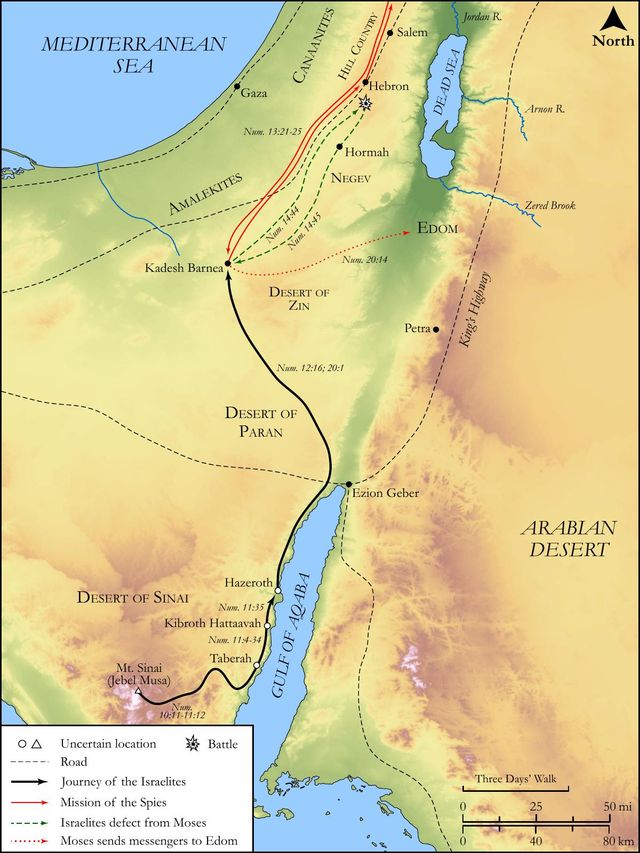
See on the biblical-era map
Study this verse
Public-domain commentary
Matthew Henry
From his Commentary on the Whole Bible. Henry comments on passages, not single verses — this entry covers Numbers 19:1–10. His three-level outline is real structure in the source text, so it is rendered as structure.
We have here the divine appointment concerning the solemn burning of a red heifer to ashes, and the preserving of the ashes, that of them might be made, not a beautifying, but a purifying, water, for that was the utmost the law reached to; it offered not to adorn as the gospel does, but to cleanse only. This burning of the heifer, though it was not properly a sacrifice of expiation, being not performed at the altar, yet was typical of the death and sufferings of Christ, by which he intended, not only to satisfy God's justice, but to purify and pacify our consciences, that we may have peace with God and also peace in our own bosoms, to prepare for which Christ died, not only like the bulls and goats at the altar, but like the heifer without the camp.
I.There was a great deal of care employed in the choice of the heifer that was to be burnt, much more than in the choice of any other offering, Num 19:2. It must not only be without blemish, typifying the spotless purity and sinless perfection of the Lord Jesus, but it must a red heifer, because of the rarity of the colour, that it might be the more remarkable: the Jews say, "If but two hairs were black or white, it was unlawful." Christ, as man, was the Son of Adam, red earth, and we find him red in his apparel, red with his own blood, and red with the blood of his enemies. And it must be one on which never came yoke, which was not insisted on in other sacrifices, but thus was typified the voluntary offer of the Lord Jesus, when he said, Lo, I come, He was bound and held with no other cords than those of his own love. This heifer was to be provided at the expense of the congregation, because they were all to have a joint interest in it; and so all believers have in Christ.
II.There was to be a great deal of ceremony in the burning of it.
The care of doing it was committed to Eleazar, not to Aaron himself, because it was not fit that he should do any thing to render himself ceremonially unclean, no, not so much as till the evening (Num 19:8); yet it being an affair of great concern especially in the significancy of it, it was to be performed by him that was next to Aaron in dignity. The chief priests of that time had the principal hand in the death of Christ. Now,
1.The heifer was to be slain without the camp, as an impure thing, which bespeaks the insufficiency of the methods prescribed by the ceremonial law to take away sin. So far were they from cleansing effectually that they were themselves unclean; as if the pollution that was laid upon them continued to cleave to them. Yet, to answer this type, our Lord Jesus, being made sin and a curse for us, suffered without the gate, Heb 13:12.
2.Eleazar was to sprinkle the blood directly before the door of the tabernacle, and looking steadfastly towards it, Num 19:4. This made it in some sort an expiation; for the sprinkling of the blood before the Lord was the chief solemnity in all the sacrifices of atonement; therefore, though this was not done at the altar, yet, being done towards the sanctuary, it was intimated that the virtue and validity of it depended upon the sanctuary, and were derived from it. This signified the satisfaction that was made to God by the death of Christ, our great high priest, who by the eternal Spirit (and the Spirit is called the finger of God, as Ainsworth observes, Luk 11:20) offered himself without spot unto God; directly before the sanctuary, when he said, Father, into thy hands I commit my spirit. It also signifies how necessary it was to the purifying of our hearts that satisfaction should be made to divine justice. This sprinkling of the blood put virtue into the ashes.
3.The heifer was to be wholly burnt, Num 19:5. This typified the extreme sufferings of our Lord Jesus, both in soul and body, as a sacrifice made by fire. The priest was to cast into the fire, while it was burning, cedarwood, hyssop, and scarlet, which were used in the cleansing of lepers (Lev 14:6, Lev 14:7), that the ashes of these might be mingled with the ashes of the heifer, because they were designed for purification.
4.The ashes of the heifer (separated as well as they could from the ashes of the wood wherewith it was burnt) were to be carefully gathered up by the hand of a clean person, and (as the Jews say) pounded and sifted, and so laid up for the use of the congregation, as there was occasion (Num 19:9), not only for that generation, but for posterity; for the ashes of this one heifer were sufficient to season as many vessels of water as the people of Israel would need for many ages. The Jews say that this one served till the captivity, nearly 1000 years, and that there was never another heifer burnt till Ezra's time, after their return, to which tradition of theirs, grounded (I suppose) only upon the silence of their old records, I see no reason we have to give credit, since in the later times of their church, of which they had more full records, they find eight burnt between Ezra's time and the destruction of the second temple, which was about 500 years, These ashes are said to be laid up here as a purification for sin, because, though they were intended to purify only from ceremonial uncleanness, yet they were a type of that purification for sin which our Lord Jesus made by his death. Ashes mixed with water are used in scouring, but these had their virtue purely from the divine institution, and their accomplishment and perfection in Christ, who is the end of this law for righteousness. Now observe,
(1.)That the water of purification was made so by the ashes of a heifer, whose blood was sprinkled before the sanctuary; so that which cleanses our consciences is the abiding virtue of the death of Christ; it is his blood that cleanses from all sin, Jo1 1:7.
(2.)That the ashes were sufficient for all the people. There needed not to be a fresh heifer slain for every person or family that had occasion to be purified, but this one was enough for all, even for the strangers that sojourned among them (Num 19:10); so there is virtue enough in the blood of Christ for all that repent and believe the gospel, for every Israelite, and not for their sins only, but for the sins of the whole world, Jo1 2:2.
(3.)That these ashes were capable of being preserved without waste to many ages. No bodily substance is so incorruptible as ashes are, which (says bishop Patrick) made these a very fit emblem of the everlasting efficacy of the sacrifice of Christ. He is able to save, and, in order to that, able to cleanse, to the uttermost, both of person and times.
(4.)These ashes were laid up as a stock or treasure, for the constant purification of Israel from their pollutions; so the blood of Christ is laid up for us in the word and sacraments, as an inexhaustible fountain of merit, to which by faith we may have recourse daily for the purging of our consciences; see Zac 13:1.
5.All those that were employed in this service were made ceremonially unclean by it; even Eleazar himself, though he did but sprinkle the blood, Num 19:7. He that burned the heifer was unclean (Num 19:8), and he that gathered up the ashes (Num 19:10); so all that had a hand in putting Christ to death contracted guilt by it: his betrayer, his prosecutors, his judge, his executioner, all did what they did with wicked hands, though it was by the determinate counsel and foreknowledge of God (Act 2:23); yet some of them were, and all might have been cleansed by the virtue of that same blood which they had brought themselves under the guilt of. Some make this to signify the imperfection of the legal services, and their insufficiency to take away sin, inasmuch as those who prepared for the purifying of others were themselves polluted by the preparation. The Jews say, This is a mystery which Solomon himself did not understand, that the same thing should pollute those that were clean and purify those that were unclean. But (says bishop Patrick) it is not strange to those who consider that all the sacrifices which were offered for sin were therefore looked upon as impure, because the sins of men were laid upon them, as all our sins were upon Christ, who therefore is said to be made sin for us, Co2 5:21.
Continue studying Numbers 19:7 across the web’s major study libraries — every link below opens this exact verse, chapter, or book on the destination site.
Read & Compare
 BibleGatewayThis verse in more than 200 translations and 70 languages.
 Bible.comThe YouVersion reader — hundreds of translations, reading plans, and highlights.
 ESV.orgCrossway's official English Standard Version reader.
 NET BibleThe NET translation with 60,000+ translators' notes on every rendering decision.
 STEP BibleTyndale House's free study tool — original text, vocabulary, and scholarly resources.
 BibliaLogos Bible Software's free web reader.
 USCCBThe New American Bible (Revised Edition) with the U.S. bishops' study notes.
Commentaries
 BibleHub CommentariesDozens of classic commentaries on this verse, gathered on one page.
 StudyLightMore than 100 commentary sets — the largest collection on the web.
 BibleRefPlain-English commentary on what this verse means, verse by verse.
 Enduring WordDavid Guzik's free commentary on this chapter, widely used by Bible teachers.
 Bible Study ToolsVerse commentary alongside Greek and Hebrew study aids.
Original Language & Research
- BibleHub InterlinearThe verse word by word — original language, transliteration, and English.
- BibleHub LexiconEvery word's original-language definition and Strong's entry.
 Blue Letter BibleDeep-study tools — Strong's numbers, concordance, and word studies.
 SefariaThe Hebrew text with Rashi and centuries of Jewish commentary.
Sermons, Hymns & Audio


TrulyRandomVerse is not affiliated with these sites and doesn’t control their content. They’re linked because they’re genuinely useful.
Summary
Numbers 19:7 delineates a crucial aspect of the red heifer purification ritual, specifically detailing the temporary defilement of the priest who officiated the sacrifice. This verse powerfully illustrates a profound paradox within the Old Covenant's ceremonial laws: those tasked with facilitating the purification of others from the most severe ritual impurity—contact with death—themselves became ritually unclean for a prescribed period. It underscores the meticulous nature of God's demands for holiness, the pervasive impact of impurity, and the inherent limitations of a system that, even in its provisions for cleansing, could not fully escape the defiling touch of sin and death.
Context
ShowHideLiterary Context
Numbers 19:7 is meticulously placed within the detailed divine instructions for the "ordinance of the red heifer," a unique and indispensable purification ritual in ancient Israel. The chapter commences with God's direct command to Moses and Aaron, setting apart this sacrifice from typical sin or burnt offerings. Verses 1-6 meticulously outline the selection of a flawless red heifer, its sacrifice outside the camp, the sevenfold sprinkling of its blood towards the Tabernacle, and its complete burning. Verse 7 then specifically addresses the high priest who performs the burning, detailing his subsequent ritual impurity. This temporary defilement extends to others involved in the ritual, such as the one who gathers the ashes (Numbers 19:8) and the one who sprinkles the "water of separation" (Numbers 19:9-10). The entire chapter provides a divine provision for cleansing from the most profound form of ritual impurity—contact with a dead body—which rendered an Israelite unable to participate in communal worship. The ritual's intricate nature and the paradoxical defilement of its participants profoundly emphasize the gravity of impurity and the immense cost of cleansing under the Old Covenant.
Historical & Cultural Context
In ancient Israel, ritual purity was not merely a matter of hygiene but a foundational prerequisite for approaching a holy God and participating in the sacred life of the community. Contact with death was considered the highest form of ritual defilement, symbolizing the ultimate consequence of sin (as seen in Romans 6:23). This defilement was a ceremonial state, not a moral failing, but it rendered an individual unfit for sacred space and activities. The Tabernacle, and later the Temple, served as the tangible dwelling place of God among His people, necessitating stringent laws to preserve its sanctity. The red heifer ritual was exceptional because its ashes, mixed with fresh water, created the "water of separation" (Numbers 19:9), a perpetual source for purification from death defilement. Unlike most sacrifices, which involved consumption by priests or worshippers, the red heifer was entirely burned, and its ashes preserved. The paradoxical defilement of the priest and others involved (Numbers 19:7-10) underscored the pervasive nature of impurity and the inherent limitations of the Old Covenant system. Even in the act of facilitating purity for others, the human agents were touched by the very impurity they sought to remove, necessitating their own temporary cleansing.
Key Themes
ShowHideNumbers 19:7 significantly contributes to several profound themes within the book of Numbers and the broader Pentateuch. Firstly, it powerfully illustrates the theme of Ritual Purity and Impurity, demonstrating the meticulous and pervasive nature of God's laws concerning ceremonial cleanliness. Even those performing sacred duties were not exempt from the defiling effects of contact with death, symbolizing the universal reach of sin's consequence. Secondly, the verse highlights The Cost of Cleansing, revealing that the act of preparing for another's purification carried a temporary defilement for the one performing the ritual. This implicitly foreshadows the immense burden and cost associated with true atonement, hinting at the profound sacrifice required to genuinely cleanse humanity. This concept finds its ultimate fulfillment in the New Testament, where Christ, though sinless, "became sin for us" (as described in 2 Corinthians 5:21) to effect our complete cleansing. Thirdly, the strictness of these laws, even for temporary uncleanness, serves as a constant reminder of God's Absolute Holiness and the necessity of separation from anything defiling to approach Him. Finally, the phrase "unclean until the even" (Numbers 19:7) emphasizes the Temporary Nature of Old Covenant Cleansing. This temporary, external purification stands in stark contrast to the permanent and internal cleansing offered through Christ's sacrifice, as powerfully articulated in Hebrews 9:14). The Mosaic Law, in its very limitations and cyclical nature, pointed to a greater, more perfect provision yet to come.
Exposition and Analysis
ShowHideKey Word Analysis
ShowHideThis term (H2930) denotes a state of ritual impurity, distinct from moral sin. In the context of Numbers 19, it refers specifically to the defilement incurred through contact with a dead body or, paradoxically, through participation in the very ritual designed to cleanse such defilement. This state rendered an individual temporarily unfit to enter the Tabernacle or participate in sacred communal life until prescribed purification rituals were completed. It highlights the pervasive and contagious nature of death's defilement in the Israelite worldview, emphasizing that even those facilitating purity could be affected.
This phrase (H6153) specifies the duration of the priest's ritual impurity. It means that the individual remained ritually unclean until sunset, at which point, having completed the prescribed washing, they would be considered clean again. This temporal limitation is a common feature for many forms of ritual impurity in the Mosaic Law, underscoring that these were temporary, external conditions, not permanent spiritual states. It also emphasizes the cyclical nature of Old Covenant purification, requiring repeated application and marking a clear boundary for the state of defilement.
Verse Breakdown
ShowHide"Then the priest shall wash his clothes"
This command indicates a necessary act of external purification. The priest's garments, having been in close proximity to the sacrificed red heifer and its burning, were considered defiled by the ritual process itself. Washing clothes (Hebrew: kâbaç, H3526) was a common requirement for those who had incurred ritual impurity, symbolizing the removal of the defiling agent and a prerequisite for regaining ritual purity.
"and he shall bathe his flesh in water"
In addition to washing his clothes, the priest was required to immerse his entire body (Hebrew: bâsâr, H1320) in water (Hebrew: mayim, H4325). This full bodily immersion (Hebrew: râchats, H7364), often in a mikveh (ritual bath), was a more comprehensive act of purification, signifying a complete cleansing from the ritual defilement incurred during the red heifer's sacrifice. Both washing clothes and bathing the body were standard procedures for regaining ritual purity.
"and afterward he shall come into the camp"
This phrase (Hebrew: ʼachar, H310; bôwʼ, H935; machăneh, H4264) signifies the priest's return to the community and its ordinary activities. Despite his washing and bathing, he was still not fully clean for sacred duties until the prescribed time had passed. His return to the camp indicates a reintegration into daily life, but with a specific, temporary restriction still in place regarding sacred space.
"and the priest shall be unclean until the even"
This is the core paradoxical statement of the verse. Even after performing the washing and bathing, the priest (Hebrew: kôhên, H3548) remained in a state of ritual impurity (Hebrew: ṭâmêʼ, H2930) until sunset (Hebrew: ʻereb, H6153). This highlights that the impurity was not merely external dirt but a divinely ordained ritual status. It underscores that the very act of dealing with extreme impurity (death) and facilitating purification for others rendered the facilitator temporarily defiled, demonstrating the profound and pervasive nature of impurity in the Old Covenant system and its inherent limitations.
Literary Devices
ShowHideNumbers 19:7 employs several powerful literary devices to convey its profound theological message. Paradox is central to the verse, as the priest, performing a ritual designed to make others clean, himself becomes ritually unclean. This counter-intuitive outcome highlights the gravity of ritual impurity and the inherent limitations of the Old Covenant system, where even the agents of purification were affected by the very defilement they sought to address. Symbolism is evident in the repeated actions of washing clothes and bathing in water, which are universal symbols of cleansing, purification, and renewal. The setting of the sun, marked by the phrase "until the even," also functions symbolically, marking a divinely appointed boundary for the state of impurity and signifying a transition from defilement to purity, emphasizing the temporary nature of this ceremonial state. Furthermore, the entire ritual, including this specific verse, functions as Foreshadowing, subtly pointing to a future, more perfect High Priest and sacrifice who could deal with impurity definitively without Himself becoming defiled, thereby offering a permanent and internal cleansing that the Old Covenant could only anticipate.
Theological and Thematic Connections
ShowHideNumbers 19:7 offers profound theological insights into the nature of sin, holiness, and the necessity of divine provision for cleansing. The temporary defilement of the priest, even in the act of facilitating purification for others, underscores the pervasive and contagious nature of impurity under the Old Covenant. It illustrates that human efforts, even those divinely commanded, were insufficient to fully overcome the defiling power of sin and death. The ritual, while effective for external, ceremonial purity, could not remove the deeper, spiritual defilement of sin. This limitation points to the need for a greater, more perfect sacrifice and a High Priest who could truly bear the defilement of sin without becoming defiled Himself, thereby providing a complete and permanent cleansing. The temporary nature of the priest's uncleanness ("until the even") emphasizes the cyclical and incomplete nature of Old Covenant atonement, which required repeated rituals and could only offer external, time-bound purity.
Reflection and Application
ShowHideNumbers 19:7, though describing an ancient ritual, offers timeless spiritual insights for believers today. It serves as a stark reminder of the pervasive nature of sin and its defiling effects, which, like contact with death, renders us unclean before a holy God. The temporary defilement of the priest underscores the profound truth that even our best efforts or religious rituals cannot truly purify us from the root defilement of sin; only a divine act can accomplish this. This verse should deepen our appreciation for the perfect and complete sacrifice of Jesus Christ, who, unlike the Old Testament priest, bore the full weight of our sin and its defilement without Himself becoming tainted. His work on the cross provides a permanent, internal cleansing that the red heifer ritual could only foreshadow. Furthermore, it calls us to humility in our service to God and others. Even as we participate in ministries that bring spiritual cleansing or healing to others, we must remember our own dependence on God's grace for our purity and standing before Him. Our ability to serve is not rooted in our own inherent cleanness but in the imputed righteousness of Christ.
Questions for Reflection
ShowHideFAQ
ShowHideWhy did the priest become unclean if he was performing a holy ritual commanded by God?
ShowHideThe priest's temporary uncleanness was not a result of moral sin or disobedience, but a divinely ordained consequence of handling extreme ritual impurity, specifically that associated with death. In the Israelite worldview, death was the ultimate symbol of sin's consequence, and anything touching it, or even facilitating its cleansing, was considered defiled. This paradox highlighted the pervasive nature of impurity and the inherent limitations of the Old Covenant sacrificial system. It demonstrated that even the human agents of purification could not escape the defiling effects of sin and death, thereby pointing to the need for a perfect High Priest who could bear sin without becoming tainted, a role perfectly fulfilled by Jesus Christ.
What is the significance of "unclean until the even"?
ShowHideThe phrase "unclean until the even" (‘ad hā‘erev) signifies that the state of ritual impurity was temporary, lasting only until sunset. This was a common feature of many Old Testament purification laws (e.g., Leviticus 11:24). It meant that after washing his clothes and bathing, the priest would remain ritually defiled for the remainder of the day, but at sunset, he would be considered clean again and could fully reintegrate into the community and participate in sacred activities. This temporal limitation underscored that these were external, ceremonial purifications, not permanent spiritual transformations, and that they required repeated application. It also subtly pointed to the need for a cleansing that was not time-bound but eternal.
How does this Old Testament ritual relate to New Testament concepts of purity and sin?
ShowHideNumbers 19:7, and the red heifer ritual as a whole, serves as a powerful foreshadowing of the New Testament's message of purification through Jesus Christ. The temporary, external, and costly nature of the Old Covenant cleansing, where even the priest became unclean, contrasts sharply with Christ's perfect and permanent work. In the New Testament, Jesus is presented as the ultimate sacrifice (as seen in Hebrews 9:12), whose blood cleanses us from all sin (as stated in 1 John 1:7). Unlike the Old Testament priest, Jesus, though He "became sin for us" (as in 2 Corinthians 5:21), did not become defiled by it. Instead, He triumphed over sin and death, offering a once-for-all purification that is internal, eternal, and complete. This comparison highlights the superiority of the New Covenant and the sufficiency of Christ's sacrifice to make us truly clean before God.
Christ-Centered Fulfillment
ShowHideThe seemingly paradoxical defilement of the priest in Numbers 19:7, who becomes unclean while facilitating purification for others, finds its profound Christ-centered fulfillment in the New Testament. This Old Covenant ritual, with its temporary and external cleansing, serves as a powerful type and shadow pointing to the singular, perfect, and eternal work of Jesus Christ. Unlike the Levitical priest who was rendered ritually unclean by handling the ashes of the red heifer, Jesus, our great High Priest, bore the full defilement of humanity's sin on the cross without Himself becoming tainted by sin. The Old Testament priest's uncleanness until the evening symbolized the limitations of a system that could only provide a temporary, external covering for sin, requiring continuous repetition. In stark contrast, Christ's sacrifice on Calvary was a once-for-all act, providing a complete and permanent cleansing for all who believe (as detailed in Hebrews 9:12). He did not merely touch impurity; He absorbed it, becoming "sin for us, who knew no sin, so that in him we might become the righteousness of God" (as beautifully articulated in 2 Corinthians 5:21). The red heifer's ashes, mixed with water, provided "water of separation" for ceremonial cleansing; Christ's shed blood, however, cleanses our consciences from dead works to serve the living God (as affirmed in Hebrews 9:14). Therefore, Numbers 19:7, with its poignant illustration of the cost and limitations of Old Covenant cleansing, magnifies the infinite efficacy and glorious perfection of the Lamb of God who takes away the sin of the world, who, by His own suffering outside the camp (as described in Hebrews 13:12), made us eternally clean and holy before God.