


Numbers 19:15
Bible text: King James Version (1769 Blayney text) · Public domain
Bible text: Berean Standard Bible · Public domain
Bible text: American Standard Version (1901) · Public domain
Bible text: World English Bible, Messianic edition · Public domain
Bible text: Geneva Bible (1599) · Public domain
Bible text: Young's Literal Translation · Public domain
- וְכֹלve·Kholand everyH3605Conj-w ¦ N-mscNoun Singular Masculine Constructוְandכֹלevery
- כְּלִיke·LivesselH3627N-msNoun Singular Masculine Absolute
- פָתוּחַfa·Tu·achopenH6605V-Qal-PassPrtcpl-msVerb Qal Participle Passive Singular Masculine Absolute
- אֲשֶׁר'a·SherwhichH834RelParticle Relative
- אֵין'einthere notH369N-mscNoun Singular Masculine Construct
- צָמִידtza·Mid[is] a cover ofH6781N-mscNoun Singular Masculine Construct
- פָּתִילpa·Tila cordH6616N-msNoun Singular Masculine Absolute
- עָלָיו'a·Lavon itH5921Prep ¦ 3msPreposition Definiteעָלָיonוit
- טָמֵאta·Me'[is] uncleanH2931Adj-msAdjective Singular Masculine Absolute
- הוּאHu'itH1931Pro-3msPronoun Personal 3rd Singular Masculine
English is a literal word-by-word gloss of the Hebrew, not the KJV's wording. Why?
This is the original text the KJV's translators worked from — each Hebrew word with its own literal English meaning in this verse, prepared by scholars at Tyndale House, Cambridge. The KJV translates whole sentences, not word by word, so its wording differs: one Hebrew word can become several English words, and the KJV may choose “the LORD” where the gloss reads “Yahweh”. Both are faithful — they answer different questions. For the KJV's own rendering, switch to the KJV text.
Details
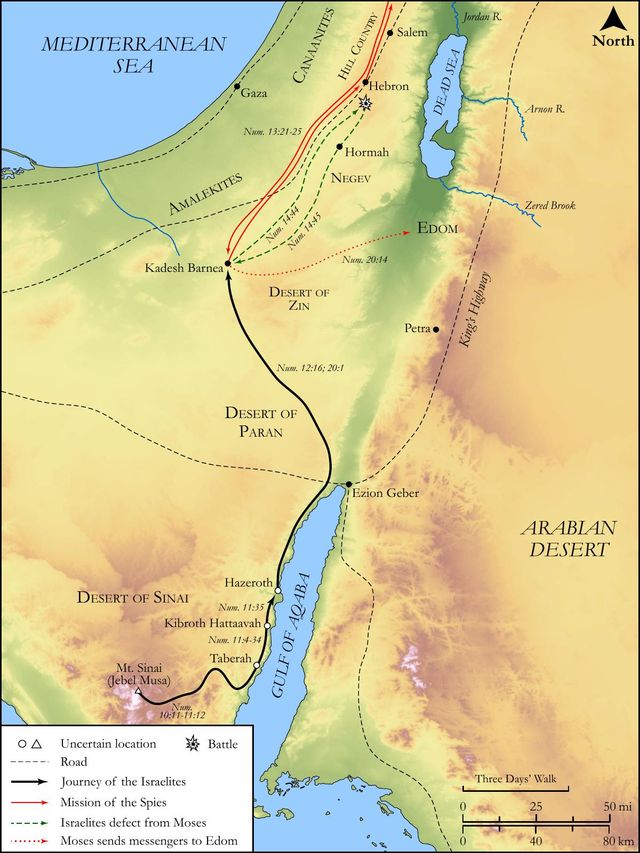
See on the biblical-era map
Study this verse
Public-domain commentary
Matthew Henry
From his Commentary on the Whole Bible. Henry comments on passages, not single verses — this entry covers Numbers 19:11–22. His three-level outline is real structure in the source text, so it is rendered as structure.
Directions are here given concerning the use and application of the ashes which were prepared for purification. they were laid up to be laid out; and therefore, though now one place would serve to keep them in, while all Israel lay so closely encamped, yet it is probable that afterwards, when they came to Canaan, some of these ashes were kept in every town, for there would be daily use for them. Observe,
I.In what cases there needed a purification with these ashes.
No other is mentioned here than the ceremonial uncleanness that was contracted by the touch of a dead body, or of the bone or grave of a dead man, or being in the tent or house where a dead body lay, Num 19:11, Num 19:14-16. This I look upon to have been one of the greatest burdens of the ceremonial law, and one of the most unaccountable. He that touched the carcase of an unclean beast, or any living man under the greatest ceremonial uncleanness, was made unclean by it only till the evening, and needed only common water to purify himself with; but he that came near the dead body of man, woman, or child, much bear the reproach of his uncleanness seven days, must twice be purified with the water of separation, which he could not obtain without trouble and charge, and till he was purified must not come near the sanctuary upon pain of death.
1.This was strange, considering, (1.) that whenever any died (and we are in deaths oft) several persons must unavoidable contract this pollution, the body must be stripped, washed, wound up, carried out, and buried, and this could not be done without many hands, and yet all defiled, which signifies that in our corrupt and fallen state there is none that lives and sins not; we cannot avoid being polluted by the defiling world we pass through, and we offend daily, yet the impossibility of our being sinless does not make sin the less polluting. (2.) that taking care of the dead, to see them decently buried, is not only necessary, but a very good office, and an act of kindness, both to the honour of the dead and the comfort of the living, and yet uncleanness was contracted by it, which intimates that the pollutions of sin mix with and cleave to our best services. There is not a just man upon earth that doeth good and sinneth not; we are apt some way or other to do amiss even in our doing good. (3.) That this pollution was contracted by what was done privately in their own houses, which intimates (as bishop Patrick observes) that God sees what is done in secret, and nothing can be concealed from the divine Majesty. (4.) This pollution might be contracted, and yet a man might never know it, as by the touch of a grave which appeared not, of which our Saviour says, Those that walk over it are not aware of it (Luk 11:44), which intimates the defilement of the conscience by sins of ignorance, and the cause we have to cry out, "Who can understand his errors?" and to pray, "Cleanse us from secret faults, faults which we ourselves do not see ourselves guilty of."
2.But why did the law make a dead corpse such a defiling thing?
(1.)Because death is the wages of sin, entered into the world by it, and reigns by the power of it. Death to mankind is another thing from what it is to other creatures: it is a curse, it is the execution of the law, and therefore the defilement of death signifies the defilement of sin.
(2.)Because the law could not conquer death, nor abolish it and alter the property of it, as the gospel does by bringing life and immortality to light, and so introducing a better hope. Since our Redeemer was dead and buried, death is no more destroying to the Israel of God, and therefore dead bodies are no more defiling; but while the church was under the law, to show that it made not the comers thereunto perfect, the pollution contracted by dead bodies could not but form in their minds melancholy and uncomfortable notions concerning death, while believers now through Christ can triumph over it. O grave! where is thy victory? Where is thy pollution?
II.How the ashes were to be used and applied in these cases.
1.A small quantity of the ashes must be put into a cup of spring water, and mixed with the water, which thereby was made, as it is here called, a water of separation, because it was to be sprinkled on those who were separated or removed from the sanctuary by their uncleanness. As the ashes of the heifer signified the merit of Christ, so the running water signified the power and grace of the blessed Spirit, who is compared to rivers of living water; and it is by his operation that the righteousness of Christ is applied to us for our cleansing. Hence we are said to be washed, that is, sanctified and justified, not only in the name of the Lord Jesus, but by the Spirit of our God, Co1 6:11; Pe1 1:2. Those that promise themselves benefit by the righteousness of Christ, while they submit not to the grace and influence of the Spirit, do but deceive themselves, for we cannot put asunder what God has joined, nor be purified by the ashes otherwise than in the running water.
2.This water must be applied by a bunch of hyssop dipped in it, with which the person or thing to be cleansed must be sprinkled (Num 19:18), in allusion to which David prays, Purge me with hyssop. Faith is the bunch of hyssop wherewith the conscience is sprinkled and the heart purified. Many might be sprinkled at once, and the water with which the ashes were mingled might serve for many sprinklings, till it was all spent; and a very little lighting upon a man served to purify him, if done with that intention. In allusion to this application of the water of separation by sprinkling, the blood of Christ is said to be the blood of sprinkling (Heb 12:24), and with it were are said to be sprinkled from an evil conscience (Heb 10:22), that is, we are freed from the uneasiness that arises from a sense of our guilt. And it is foretold that Christ, by his baptism, shall sprinkle many nations, Isa 52:15.
3.The unclean person must be sprinkled with this water on the third day after his pollution, and on the seventh day, Num 19:12-19. The days were reckoned (we may suppose) from the last time of his touching or coming near the dead body; for he would not begin the days of his cleansing while he was still under a necessity of repeating the pollution; but when the dead body was buried, so that there was no further occasion of meddling with it, then he began to reckon his days. Then, and then only, we may with comfort apply Christ's merit to our souls, when we have forsaken sin, and cease all fellowship with the unfruitful works of death and darkness. The repetition of the sprinkling teaches us often to renew the actings of repentance and faith, wash as Naaman, seven times; we need to do that often which is so necessary to be well done.
4.Though the pollution contracted was only ceremonial, yet the neglect of the purification prescribed would turn into moral guilt: He that shall be unclean and shall not purify himself, that soul shall be cut off, Num 19:20. Note, It is a dangerous thing to contemn divine institutions, though they may seem minute. A slight wound, if neglected, may prove fatal; a sin we call little, if not repented of, will be our ruin, when great sinners that repent shall find mercy. Our uncleanness separates us from God, but it is our being unclean and not purifying ourselves that will separate us for ever from him: it is not the wound that is fatal, so much as the contempt of the remedy.
5.Even he that sprinkled the water of separation, or touched it, or touched the unclean person, must be unclean till the evening, that is, must not come near the sanctuary on that day, Num 19:21, Num 19:22. Thus God would show them the imperfection of those services, and their insufficiency to purify the conscience, that they might look for the Messiah, who in the fulness of time should by the eternal Spirit offer himself without spot unto God, and so purge our consciences from dead works (that is, from sin, which defiles like a dead body, and is therefore called a body of death), that we may have liberty of access to the sanctuary, to serve the living God with living sacrifices.
Historical interpretation
Two Centuries of Reception
2 surviving comments on this verse. Each one is dated, so this reads as a timeline rather than a list.
Select a marker to jump to its quote. Markers stagger vertically where authors wrote within a few decades of each other.
The cover of a vessel, or a seal, is the control of discipline. Discipline keeps a man from being overwhelmed, as if he were an unclean or polluted vessel that is rejected. For a vessel without a cover or a seal is spoiled, like as in the case of one who devotes himself to ostentation and is not covered by any veil of silence. Exposition of the Old and New Testament, Numbers
The cover of a vessel, or a seal, is the control of discipline. Discipline keeps a man from being overwhelmed, as if he were an unclean or polluted vessel that is rejected. For a vessel without a cover or a seal is spoiled, like as in the case of one who devotes himself to ostentation and is not covered by any veil of silence.
Continue studying Numbers 19:15 across the web’s major study libraries — every link below opens this exact verse, chapter, or book on the destination site.
Read & Compare
 BibleGatewayThis verse in more than 200 translations and 70 languages.
 Bible.comThe YouVersion reader — hundreds of translations, reading plans, and highlights.
 ESV.orgCrossway's official English Standard Version reader.
 NET BibleThe NET translation with 60,000+ translators' notes on every rendering decision.
 STEP BibleTyndale House's free study tool — original text, vocabulary, and scholarly resources.
 BibliaLogos Bible Software's free web reader.
 USCCBThe New American Bible (Revised Edition) with the U.S. bishops' study notes.
Commentaries
 BibleHub CommentariesDozens of classic commentaries on this verse, gathered on one page.
 StudyLightMore than 100 commentary sets — the largest collection on the web.
 BibleRefPlain-English commentary on what this verse means, verse by verse.
 Enduring WordDavid Guzik's free commentary on this chapter, widely used by Bible teachers.
 Bible Study ToolsVerse commentary alongside Greek and Hebrew study aids.
Original Language & Research
- BibleHub InterlinearThe verse word by word — original language, transliteration, and English.
- BibleHub LexiconEvery word's original-language definition and Strong's entry.
 Blue Letter BibleDeep-study tools — Strong's numbers, concordance, and word studies.
 SefariaThe Hebrew text with Rashi and centuries of Jewish commentary.
Sermons, Hymns & Audio


TrulyRandomVerse is not affiliated with these sites and doesn’t control their content. They’re linked because they’re genuinely useful.
Summary
Numbers 19:15 is a pivotal regulation within the Mosaic law, specifically addressing the highly contagious and pervasive nature of ritual defilement caused by contact with a dead body. This verse mandates that any open or uncovered vessel situated within a dwelling where a person has died immediately becomes ritually unclean. This stipulation profoundly underscores the far-reaching impact of death, serving as a potent symbol for the defiling power of sin, and highlights the meticulous standards of holiness God required of His covenant people to maintain a consecrated community fit for His divine presence.
Context
ShowHideLiterary Context
Numbers 19 is strategically positioned within the Pentateuch, detailing the unique and profoundly significant ritual of the red heifer, which provided the "water of separation" or "water of purification" essential for cleansing from the impurity of death. This chapter follows narratives of significant rebellion and judgment, such as Korah's rebellion, which underscore the paramount importance of holiness, atonement, and ritual purity for Israel's continued existence as God's people. The regulations outlined in Numbers 19 are comprehensive, extending beyond individuals to encompass objects and dwelling places, thereby demonstrating the pervasive nature of death's defilement. Verse 15, in particular, meticulously details how this impurity spreads within a domestic setting, emphasizing the extreme diligence required to maintain ritual purity in a community where the holy presence of God resided in the Tabernacle.
Historical & Cultural Context
In ancient Israel, death was considered the ultimate source of ritual impurity, rendering individuals and objects unable to participate in tabernacle worship or communal life until a prescribed purification process was completed. This understanding was deeply rooted in the theological contrast between life, which originates from God and is inherently pure, and death, which is the direct consequence of sin and separation from the divine life-giver. The laws presented in Numbers 19 reflect a worldview where the sacred and the profane, the clean and the unclean, were rigorously distinguished and maintained. These meticulous regulations, including those concerning open vessels, were not arbitrary but served as profound pedagogical tools to impress upon the Israelites the absolute holiness of God and the non-negotiable necessity of purity for maintaining their covenant relationship with Him. Furthermore, these laws provided a practical framework for managing public health and communal order within a nomadic society, preventing the spread of disease and maintaining a sense of order.
Key Themes
ShowHideThe overarching theme is Ritual Purity and Impurity, which was foundational to Israelite worship and daily life, illustrating the exacting standards required to approach a holy God. This specific verse powerfully highlights The Pervasiveness of Death's Defilement, demonstrating how the impurity associated with death was considered highly contagious, capable of spreading to even inanimate objects. This physical reality served as a tangible metaphor for the pervasive and insidious nature of sin, which can subtly contaminate all aspects of human existence. The explicit requirement for a "covering bound upon it" also introduces the theme of Protection and Preparedness, emphasizing the constant vigilance necessary to guard against spiritual contamination. Ultimately, these intricate laws collectively point to God's Absolute Holiness, unequivocally demonstrating that His divine presence cannot tolerate defilement and that His people must be set apart, echoing the broader call to holiness found throughout the Pentateuch, as articulated in passages like Leviticus 11:44.
Exposition and Analysis
ShowHideKey Word Analysis
ShowHideThis term (H3627, כְּלִי) is remarkably broad, encompassing "something prepared, i.e. any apparatus (as an implement, utensil, dress, vessel or weapon)." In the context of Numbers 19:15, it refers specifically to household items such as pots, jars, bowls, or other containers. The emphasis is on its function as a receptacle, which, if left open, could "receive" or be permeated by the defilement emanating from a dead body. Its common usage underscores that even mundane, everyday objects were subject to these purity laws, highlighting the pervasive reach of ritual defilement into every aspect of Israelite life.
The word (H6781, צָמִיד) literally denotes "a bracelet or arm-clasp," but in this context, it signifies "generally, a lid" or a tight seal. The presence of a "covering bound upon it" implies an intentional and secure closure, meticulously designed to prevent external elements, including the unseen defiling presence of death, from entering or contaminating the contents or the vessel itself. This term speaks directly to the concept of containment, protection, and the deliberate act of sealing off from impurity.
This word (H2931, טָמֵא) describes a state of ritual impurity, which is distinct from moral sin, yet often serves as a profound symbolic representation of sin's defiling nature. An object or individual declared ṭâmêʼ was temporarily unfit for sacred activities, participation in tabernacle worship, or full communion within the Israelite community. The declarative statement "is unclean" signifies a state of ritual separation that necessitated a prescribed purification process, as detailed elsewhere in Numbers 19, before the vessel could be reintegrated into daily or sacred use.
Verse Breakdown
ShowHide"And every open vessel"
This initial clause precisely identifies the category of items subject to the defilement. The term "open" (from H6605, pâthach, meaning "to open wide") implies a lack of seal, closure, or protective barrier, rendering the vessel susceptible and vulnerable to the unseen, pervasive impurity emanating from a dead body within the same dwelling. It highlights the principle that vulnerability to contamination arises from a lack of proper containment.
"which hath no covering bound upon it"
This phrase further clarifies and specifies the critical condition of the "open vessel." The absence of a secure, tightly fastened lid or seal (from H6781, tsâmîyd, for "covering," and H6616, pâthîyl, for "bound," implying a thread or twine used for fastening) is the decisive factor. It emphasizes that it is not merely the state of being "open" but the lack of a deliberate, protective barrier that allows for the entry of defilement. This underscores the importance of intentional action (or inaction) in maintaining ritual purity.
"[is] unclean"
This declarative statement pronounces the definitive ritual status of such a vessel. It is not merely physically dirty but ritually defiled, rendering it unfit for use in any sacred context, for consumption by those who wish to remain ritually pure, or for general use until purified. This pronouncement necessitates a specific purification ritual, as meticulously outlined in the broader context of Numbers 19, before the vessel can be reintegrated into daily or sacred life.
Literary Devices
ShowHideNumbers 19:15 primarily employs Legal Language, characteristic of the Mosaic Law, presenting a clear, concise, and declarative statement of a specific regulation. The structure is typical of casuistic law, outlining a precise condition ("every open vessel, which hath no covering bound upon it") and its immediate, unavoidable consequence ("is unclean"). Beyond its literal legal function, the verse profoundly utilizes Symbolism and Metaphor. The physical defilement of a vessel by the unseen presence of death serves as a powerful metaphor for the spiritual defilement of sin. Just as death's impurity is pervasive and invisible, capable of spreading even to inanimate objects, so too is the insidious and defiling nature of sin, which can subtly permeate and corrupt all aspects of human life if not diligently guarded against. The "covering" itself functions as a potent symbol of protection, vigilance, and intentional separation from contamination, whether physical or spiritual.
Theological and Thematic Connections
ShowHideNumbers 19:15, with its stringent regulations concerning ritual purity, profoundly underscores two fundamental theological truths: the absolute holiness of God and the pervasive, defiling nature of sin and death. The meticulousness required to guard against the impurity of death served as a tangible, daily lesson for Israel about the invisible, yet potent, defilement of sin. Just as an open vessel readily absorbed impurity through passive exposure, so too are human hearts and lives inherently susceptible to the corrupting influence of a fallen world if left unguarded. These laws were not merely about hygiene or social order but about cultivating a deep reverence for God's sanctity and fostering an acute awareness of the radical separation sin creates between humanity and a holy God. They taught Israel that even passive exposure to defilement rendered one unfit for God's presence, highlighting humanity's inherent need for divine cleansing and atonement.
Reflection and Application
ShowHideThe ancient laws of purity, particularly Numbers 19:15, offer enduring spiritual lessons for believers in every age. While we are no longer bound by the Old Covenant's ritualistic requirements, the underlying principles of holiness, vigilance, and the pervasive nature of defilement remain profoundly relevant for our spiritual lives today. Our lives, much like those ancient vessels, are susceptible to the "impurity" of a fallen world—the defiling influences of sin, harmful ideologies, ungodly desires, and the subtle corruptions of culture. Just as a physical covering protected a vessel from external contamination, we are called to actively guard our hearts, minds, and spirits from spiritual defilement. This requires intentional discernment regarding what we allow to enter our lives through our eyes, ears, and thoughts, and a conscious commitment to filling ourselves with what is pure, true, honorable, and pleasing to God. The verse serves as a powerful reminder that spiritual hygiene is not a passive endeavor; it demands active vigilance, consistent prayer, and a conscious commitment to living in a way that honors God's holiness, recognizing that even subtle exposures can significantly impact our spiritual vitality and communion with Him.
Questions for Reflection
ShowHideFAQ
ShowHideWhy did God establish such seemingly strict and detailed laws about ritual impurity, especially concerning death?
ShowHideGod established these detailed laws to profoundly impress upon the Israelites the reality of His absolute holiness and the pervasive, defiling nature of sin and death. Death, being the ultimate consequence of sin (as clearly articulated in Romans 6:23), was considered the antithesis of life and purity, which flow directly from God. By making contact with death (or even proximity to it, as with open vessels) a source of ritual impurity, God taught His people that even passive exposure to sin's consequences rendered them unfit for His holy presence. These laws were not primarily about moral guilt, but about ritual fitness for worship and participation in the community, serving as a constant, tangible reminder of the separation sin creates and the meticulous cleansing required to draw near to a holy God. Ultimately, these regulations served as a powerful pedagogical tool, foreshadowing humanity's ultimate need for a perfect sacrifice to deal with the root cause of all defilement—sin itself.
Christ-Centered Fulfillment
ShowHideNumbers 19:15, with its vivid depiction of pervasive defilement from death, finds its ultimate fulfillment and resolution in the person and redemptive work of Jesus Christ. The Old Testament rituals, including the water of separation derived from the red heifer's ashes, could only provide a temporary and external purification from ritual impurity. They served as a constant pointer to a greater, more profound need for a cleansing that could address the deep-seated defilement of sin itself, which is the true source of spiritual "death" and separation from God. Jesus, through His perfect, sinless life, His atoning death on the cross, and His glorious resurrection, became the ultimate and eternal "water of separation." His precious blood, unlike the ashes of a mere animal, truly cleanses our consciences from dead works, enabling us to serve the living God (Hebrews 9:14). He did not merely make us ritually clean; He fundamentally transformed us, taking away the sin of the world (John 1:29) and making us spiritually new creations. Through faith in Him, we are no longer "open vessels" susceptible to the pervasive defilement of sin, but rather, we are made holy and blameless before God in love (Ephesians 1:4). His sacrifice provides the perfect and permanent "covering" against sin's defiling power, granting us confident and unhindered access to the Father's holy presence (Hebrews 10:19-22).