


Numbers 15:35
Bible text: King James Version (1769 Blayney text) · Public domain
Bible text: Berean Standard Bible · Public domain
Bible text: American Standard Version (1901) · Public domain
Bible text: World English Bible, Messianic edition · Public domain
Bible text: Geneva Bible (1599) · Public domain
Bible text: Young's Literal Translation · Public domain
- וַיֹּאמֶרvai·Yo·merand he saidH559Conj-w ¦ V-Qal-ConsecImperf-3msVerb Qal Consecutive Imperfect 3rd Singular Masculineוַandיֹּאמֶרhe said
- יְהוָהYah·wehYahwehH3068N-properNoun Proper Title
- אֶל'eltoH413PrepPreposition
- מֹשֶׁהmo·ShehMosesH4872N-proper-mNoun Proper Masculine
- מוֹתMotcertainly <to die>H4191V-Qal-InfAbsVerb Qal Infinitive Absolute
- יוּמַתyu·Mathe will be put to deathH4191V-Hophal-Imperf-3msVerb Hophal Imperfect 3rd Singular Masculine
- הָאִישׁha·'Ishthe manH376Art ¦ N-msNoun Singular Masculine Absoluteהָtheאִישׁman
- רָגוֹםra·Gomit will stoneH7275V-Qal-InfAbsVerb Qal Infinitive Absolute
- אֹתוֹ'o·To<obj.> himH853DirObjM ¦ 3msParticle Object Indicatorאֹת<obj.>וֹhim
- בָאֲבָנִיםva·'a·va·Nimwith <the> stonesH68Prep-b ¦ N-fpNoun Plural Feminine Absoluteבָwith <the>אֲבָנִיםstones
- כָּלkolallH3605N-mscNoun Singular Masculine Construct
- הָעֵדָהha·'e·Dahthe congregationH5712Art ¦ N-fsNoun Singular Feminine Absoluteהָtheעֵדָהcongregation
- מִחוּץmi·Chutzfrom [the] outsideH2351Prep-m ¦ N-mscNoun Singular Masculine Constructמִfromחוּץ[the] outside
- לַמַּחֲנֶהLa·ma·cha·Nehof the campH4264Prep-l ¦ N-fsNoun Singular Feminine Absoluteלַof theמַּחֲנֶהcamp
English is a literal word-by-word gloss of the Hebrew, not the KJV's wording. Why?
This is the original text the KJV's translators worked from — each Hebrew word with its own literal English meaning in this verse, prepared by scholars at Tyndale House, Cambridge. The KJV translates whole sentences, not word by word, so its wording differs: one Hebrew word can become several English words, and the KJV may choose “the LORD” where the gloss reads “Yahweh”. Both are faithful — they answer different questions. For the KJV's own rendering, switch to the KJV text.
Details
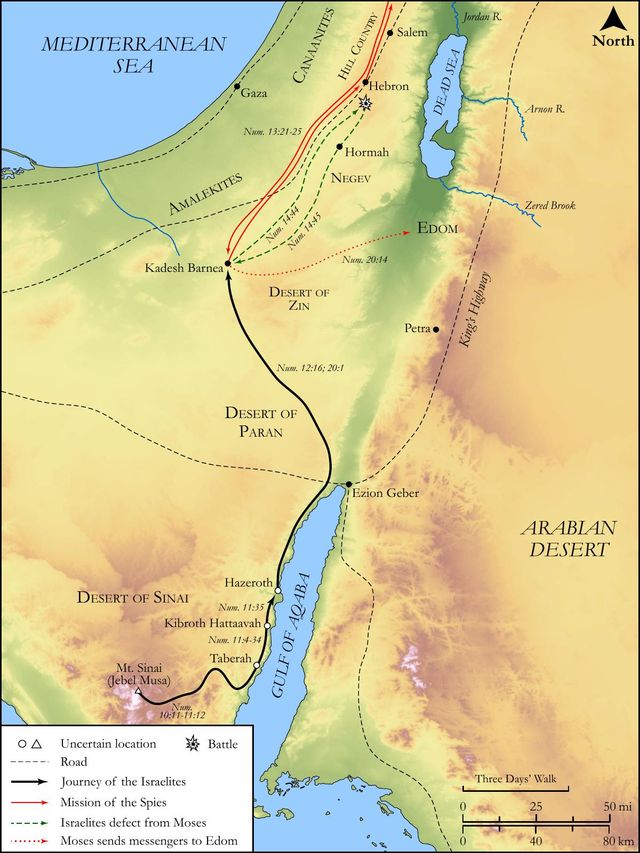
See on the biblical-era map
Study this verse
Public-domain commentary
Matthew Henry
From his Commentary on the Whole Bible. Henry comments on passages, not single verses — this entry covers Numbers 15:30–36. His two-level outline is real structure in the source text, so it is rendered as structure.
Here is, I. The general doom passed upon presumptuous sinners. 1. Those are to be reckoned presumptuous sinners that sin with a high hand, as the original phrase is (Num 15:30), that is, that avowedly confront God's authority, and set up their own lust in competition with it, that sin for sinning-sake, in contradiction to the precept of the law, and in defiance of the penalty, that fight against God, and dare him to do his worst; see Job 15:25. It is not only to sin against knowledge, but to sin designedly against God's will and glory. 2. Sins thus committed are exceedingly sinful. He that thus breaks the commandment, (1.) Reproaches the Lord (Num 15:30); he says the worst he can of him, and most unjustly. The language of presumptuous sin is, "Eternal truth is not fit to be believed, the Lord of all not fit to be obeyed, and almighty power not fit to be either feared or trusted." It imputes folly to Infinite Wisdom, and iniquity to the righteous Judge of heaven and earth; such is the malignity of wilful sin. (2.) He despises the word of the Lord, Num 15:31. There are those who, in many instances, come short of fulfilling the word, and yet have a great value for it, and count the law honourable; but presumptuous sinners despise it, thinking themselves too great, too good, and too wise, to be ruled by it. What is the Almighty that we should serve him? Whatever the sin itself is, it is contumacy that incurs the anathema. It is rebellion added to the sin that is as witch-craft, and stubbornness as idolatry. 3. The sentence passed on such is dreadful. There remains no sacrifice for those sins; the law provided none: That soul shall be cut off from among his people (Num 15:30), utterly cut off (Num 15:31); and that God may be for ever justified, and the sinner for ever confounded, his iniquity shall be upon him, and there needs no more to sink him to the lowest hell. Thus the Jewish doctors understand it, that the iniquity shall cleave to the soul, after it is cut off, and that man shall give an account of his sin at the great day of judgment. Perhaps the kind of offence might be such as did not expose the offender to the censure of the civil magistrate, but, if it was done presumptuously, God himself would take the punishment of it into his own hands, and into them it is a fearful thing to fall. In the New Testament we find the like sentence of exclusion from all benefit by the great sacrifice passed upon the blasphemy against the Holy Ghost, and a total apostasy from Christianity.
II.A particular instance of presumption in the sin of sabbath-breaking.
1.The offence was the gathering of sticks on the sabbath day (Num 15:32), which, it is probable, were designed to make a fire of, whereas they were commanded to bake and seeth what they had occasion for the day before, Exo 16:23. This seemed but a small offence, but it was a violation of the law of the sabbath, and so was a tacit contempt of the Creator, to whose honour the sabbath was dedicated, and an incursion upon the whole law, which the sabbath was intended as a hedge about. And it appears by the context to have been done presumptuously, and in affront both of the law and to the Law-maker.
2.The offender was secured, Num 15:33, Num 15:34. Those that found him gathering sticks, in their zeal for the honour of the sabbath, brought him to Moses and Aaron, and all the congregation, which intimates that being the sabbath day the congregation was at that time gathered to Moses and Aaron, to receive instruction from them, and to join with them in religious worship. It seems, even common Israelites, though there was much amiss among them, yet would not contentedly see the sabbath profaned, which was a good sign that they had not quite forsaken God, nor were utterly forsaken of him.
3.God was consulted, because it was not declared what should be done to him. The law had already made the profanation of the sabbath a capital crime (Exo 31:14, Exo 35:2); but they were in doubt, either concerning the offence (whether this that he had done should be deemed a profanation or no) or concerning the punishment, which death he should die. God was the Judge, and before him they brought this cause.
4.Sentence was passed; the prisoner was adjudged a sabbath-breaker, according to the intent of that law, and as such he must be put to death; and to show how great the crime was, and how displeasing to God, and that others might hear and fear and not do in like manner presumptuously, that death is appointed him which was looked upon as most terrible: He must be stoned with stones, Num 15:35. Note, God is jealous for the honour of his sabbaths, and will not hold those guiltless, whatever men do, that profane them.
5.Execution was done pursuant to the sentence, Num 15:36. He was stoned to death by the congregation. As many as could were employed in the execution, that those, at least, might be afraid of breaking the sabbath, who had thrown a stone at this sabbath-breaker. This intimates that the open profanation of the sabbath is a sin which ought to be punished and restrained by the civil magistrate, who, as far as overt acts go, is keeper of both tables. See Neh 13:17. One would think there could be no great harm in gathering a few sticks, on what day soever it was, but God intended the exemplary punishment of him that did so for a standing warning to us all, to make conscience of keeping holy the sabbath.
Continue studying Numbers 15:35 across the web’s major study libraries — every link below opens this exact verse, chapter, or book on the destination site.
Read & Compare
 BibleGatewayThis verse in more than 200 translations and 70 languages.
 Bible.comThe YouVersion reader — hundreds of translations, reading plans, and highlights.
 ESV.orgCrossway's official English Standard Version reader.
 NET BibleThe NET translation with 60,000+ translators' notes on every rendering decision.
 STEP BibleTyndale House's free study tool — original text, vocabulary, and scholarly resources.
 BibliaLogos Bible Software's free web reader.
 USCCBThe New American Bible (Revised Edition) with the U.S. bishops' study notes.
Commentaries
 BibleHub CommentariesDozens of classic commentaries on this verse, gathered on one page.
 StudyLightMore than 100 commentary sets — the largest collection on the web.
 BibleRefPlain-English commentary on what this verse means, verse by verse.
 Enduring WordDavid Guzik's free commentary on this chapter, widely used by Bible teachers.
 Bible Study ToolsVerse commentary alongside Greek and Hebrew study aids.
Original Language & Research
- BibleHub InterlinearThe verse word by word — original language, transliteration, and English.
- BibleHub LexiconEvery word's original-language definition and Strong's entry.
 Blue Letter BibleDeep-study tools — Strong's numbers, concordance, and word studies.
 SefariaThe Hebrew text with Rashi and centuries of Jewish commentary.
Sermons, Hymns & Audio


TrulyRandomVerse is not affiliated with these sites and doesn’t control their content. They’re linked because they’re genuinely useful.
Summary
Numbers 15:35 records the Lord's unequivocal divine decree for the capital punishment of a man found deliberately violating the Sabbath. This direct command, delivered to Moses, mandated that the entire Israelite congregation participate in stoning the offender outside the camp, thereby underscoring the profound sanctity of the Sabbath, the extreme gravity of intentional disobedience, and the community's corporate responsibility in maintaining the holiness and purity of the covenant people.
Context
ShowHideLiterary Context
This verse provides the divine verdict for the incident described immediately prior in Numbers 15:32-34. A man was discovered gathering wood on the Sabbath, an act that, while seemingly mundane to modern sensibilities, constituted a direct and presumptuous violation of the fourth commandment. The Israelites, lacking a specific legal precedent for this particular offense, brought the man before Moses, Aaron, and the entire congregation, indicating their awareness of the act's seriousness and their need for divine guidance in judgment. This incident is strategically placed within Numbers 15, a chapter that primarily details various laws concerning offerings, unintentional sins, and the importance of tassels as reminders of God's commandments. The stark contrast between the provisions for unintentional sin (e.g., Numbers 15:22-29) and the severe penalty for this deliberate transgression highlights the critical distinction between ignorance or inadvertence and defiant rebellion against God's revealed will.
Historical & Cultural Context
The events of Numbers 15 unfold during Israel's wilderness wanderings, a foundational period for the establishment of their national identity and legal system under God's direct governance. The Sabbath was not merely a day of rest but a foundational sign of the covenant between Yahweh and Israel, signifying His creation work and their unique, sanctified relationship with Him, as seen in Exodus 31:13-17. Its violation was therefore an affront to God's authority and a rejection of the covenant itself, akin to high treason. Stoning was a common form of capital punishment in ancient Israel for offenses considered to be direct sins against God or severe violations of communal purity, such as blasphemy (Leviticus 24:16) or idolatry (Deuteronomy 17:5). The instruction to execute the offender "without the camp" was culturally significant, symbolizing the removal of defilement and sin from the holy community, which was consecrated by God's presence at its center.
Key Themes
ShowHideNumbers 15:35 powerfully reinforces several overarching themes within the Pentateuch. Firstly, the Sanctity of the Sabbath is paramount; its violation, especially a deliberate one, was not a minor infraction but a direct challenge to God's holiness and His covenant with Israel. Secondly, the passage underscores Divine Justice and Authority; the Lord Himself issues the death decree, demonstrating His absolute sovereignty over His laws and the severe consequences for defiant disobedience. This was not a human judgment but a direct divine pronouncement, emphasizing the gravity of sin against a holy God. Thirdly, the command for "all the congregation" to participate emphasizes Communal Responsibility in upholding God's laws and purging evil from their midst, serving as a deterrent for others and reinforcing communal purity, as seen in Deuteronomy 13:11. Finally, the act of execution "without the camp" highlights the theme of Exclusion and Purification, signifying the removal of sin and defilement to maintain the ritual purity and spiritual integrity of the holy community where God's presence resided (Leviticus 16:27).
Exposition and Analysis
ShowHideKey Word Analysis
ShowHideThis refers to the covenant name of God, Yahweh (H3068), emphasizing His self-existent, eternal nature and His unique relationship with Israel. The use of this specific name underscores that the command for capital punishment is not merely a legal statute but a direct, authoritative decree from the sovereign God who has entered into a covenant relationship with His people and is actively involved in their governance and purity.
This term (H376) denotes an individual male person. Its use here highlights that the judgment is directed at a specific individual who, despite being part of the covenant community, chose to presumptuously violate a foundational commandment. It emphasizes personal accountability before God's law.
This phrase employs a grammatical construction known as the infinitive absolute (מוֹת, moth) followed by a finite verb (יוּמָת, yumath). Both derive from the root mûwth (H4191), meaning "to die" or "to kill." This construction serves to intensify the verb, emphasizing the absolute certainty, inevitability, and severity of the death sentence. It leaves no room for doubt, appeal, or leniency; the judgment is final and irrevocable, underscoring the gravity of the transgression in God's eyes.
Verse Breakdown
ShowHide"And the LORD said unto Moses"
This opening clause immediately establishes the divine origin and absolute authority of the command. It is not a human decision or an interpretation of existing law, but a direct, unambiguous revelation from God to His chosen mediator, Moses. This highlights the seriousness with which God views the transgression and His direct involvement in Israel's judicial processes, affirming His sovereignty over His covenant people.
"The man shall be surely put to death"
This is the core of the divine verdict, a definitive pronouncement of capital punishment. The intensified Hebrew phrase (moth yumath) underscores the absolute certainty and severity of the sentence, indicating that the man's deliberate act of Sabbath-breaking was considered a capital offense, a direct affront to God's holiness and covenant. This penalty reflects the principle that willful sin against God's direct command carried the ultimate consequence.
"all the congregation shall stone him with stones without the camp"
This clause details the method and location of execution, as well as the communal responsibility for carrying it out. Stoning was a public and communal act, ensuring that the entire community bore witness to and participated in the enforcement of God's law, thereby internalizing the gravity of the offense and serving as a deterrent. The phrase "without the camp" is highly significant, symbolizing the expulsion of defilement and sin from the holy community, which was consecrated by God's indwelling presence. It was an act of purification, removing the source of spiritual contagion from their midst to maintain the camp's ritual and spiritual purity.
Literary Devices
ShowHideThe passage employs several potent literary and theological devices. The intensified verbal construction moth yumath (surely put to death) serves as a powerful device of Intensification, leaving no ambiguity about the finality and severity of the divine judgment. This grammatical emphasis underscores the absolute nature of God's decree. The act of stoning itself, carried out by the Congregation, functions as a device of Communal Enforcement and Deterrence, ensuring that the entire community participates in upholding God's law and witnessing the consequences of its violation, thereby instilling fear and reverence for divine commands. Furthermore, the instruction to execute the offender "without the camp" is rich in Symbolism, representing the expulsion of sin and defilement from the holy community. This spatial separation signifies the necessity of maintaining the purity of God's consecrated people and the removal of anything that would jeopardize His presence among them. This act of purification underscores the absolute holiness of God and the necessity of separating anything that defiles from His consecrated people.
Theological and Thematic Connections
ShowHideNumbers 15:35, while rooted in the Old Covenant's legal framework, profoundly illuminates God's unchanging character and the enduring principles of His kingdom. It reveals a God who is absolutely holy, just, and utterly serious about His commands, especially those that define His covenant relationship with His people. The severity of the punishment for a seemingly minor act emphasizes that deliberate sin, particularly against a foundational covenant sign like the Sabbath, is not merely a breaking of a rule but a defiant rejection of God's authority and a desecration of His holiness. This passage serves as a stark reminder that sin, in its essence, is a capital offense against a holy God, demanding a response that purges the defilement and upholds divine righteousness. It highlights the principle that God's justice requires a penalty for willful transgression, a truth that points forward to the ultimate solution found in Christ.
Reflection and Application
ShowHideWhile the specific judicial penalties of the Old Covenant are not directly applied in the New Covenant era, Numbers 15:35 offers profound lessons for believers today. It calls us to a deep reverence for God's holiness and a serious consideration of His commands. We are reminded that God is not to be trifled with; deliberate disobedience, even in areas we might deem insignificant, is an affront to His character and authority. This passage challenges us to examine our own hearts for any areas of willful defiance or casual disregard for God's revealed will. It also underscores the importance of the community of faith in upholding righteous standards and, in a spiritual sense, "purging" sin from its midst through accountability, discipline, and restoration, always motivated by love and grace. The ultimate application is to cultivate a heart of sincere obedience, not out of fear of physical punishment, but out of profound love and gratitude for the God who has redeemed us and called us to holiness, recognizing that even minor acts of disobedience can stem from a heart of rebellion.
Questions for Reflection
ShowHideFAQ
ShowHideWhy was the punishment for gathering sticks on the Sabbath so severe?
ShowHideThe severity of the punishment for gathering sticks on the Sabbath, culminating in a death sentence by stoning, stemmed from the profound theological and covenantal significance of the Sabbath in ancient Israel. The Sabbath was not merely a day of rest but a foundational sign of the covenant between God and His people, symbolizing His creation work and their unique, sanctified relationship with Him, as articulated in Exodus 31:13-17. Therefore, a deliberate act of Sabbath-breaking, like gathering sticks, was not viewed as a minor infraction but as a direct and presumptuous act of rebellion against God's authority and a rejection of the covenant itself. It was a defiant act of contempt for God's holiness and His established order, akin to high treason against the divine King. The punishment was intended to uphold God's absolute sovereignty, maintain the purity of the holy community, and serve as a stark deterrent to others from similar acts of willful disobedience, demonstrating that God takes His covenant and His commands with utmost seriousness.
Christ-Centered Fulfillment
ShowHideNumbers 15:35, with its stark decree of death for deliberate sin, powerfully anticipates the ultimate fulfillment found in Jesus Christ. The man's sin, a presumptuous violation of a foundational commandment, highlights humanity's inherent inability to perfectly keep God's holy law and the dire consequences of such failure. The wages of sin, whether intentional or unintentional, is death (Romans 6:23). Yet, Christ, the perfect Lamb of God, entered into this broken reality. He came not to abolish the Law but to fulfill it (Matthew 5:17), perfectly obeying every command and living a life of absolute righteousness. More profoundly, He bore the full penalty for humanity's presumptuous and unintentional sins alike, becoming a curse for us to redeem us from the curse of the Law (Galatians 3:13). Just as the Sabbath-breaker was led "without the camp" to be stoned, signifying his expulsion from the holy community and the purging of defilement, so too was Jesus led "outside the city gate" to suffer and die, bearing our sin and shame, becoming the ultimate sacrifice that purifies us from all unrighteousness (Hebrews 13:12). Through His atoning death, the absolute justice of God, so vividly displayed in Numbers 15:35, is perfectly satisfied, allowing for grace and forgiveness for all who believe in Him, thereby bringing us into a new covenant relationship where His Spirit enables true obedience (Jeremiah 31:33).