


Numbers 15:32
Bible text: King James Version (1769 Blayney text) · Public domain
Bible text: Berean Standard Bible · Public domain
Bible text: American Standard Version (1901) · Public domain
Bible text: World English Bible, Messianic edition · Public domain
Bible text: Geneva Bible (1599) · Public domain
Bible text: Young's Literal Translation · Public domain
- וַיִּהְיוּvai·yih·Yuand they wereH1961Conj-w ¦ V-Qal-ConsecImperf-3mpVerb Qal Consecutive Imperfect 3rd Plural Masculineוַandיִּהְיוּthey were
- בְנֵיve·nei[the] people ofH1121N-mpcNoun Plural Masculine Construct
- יִשְׂרָאֵלYis·ra·'ElIsraelH3478N-properNoun Proper Location
- בַּמִּדְבָּרba·mid·Barin the wildernessH4057Prep-b ¦ N-msNoun Singular Masculine Absoluteבַּin theמִּדְבָּרwilderness
- וַיִּמְצְאוּvai·yim·tze·'Uand they foundH4672Conj-w ¦ V-Qal-ConsecImperf-3mpVerb Qal Consecutive Imperfect 3rd Plural Masculineוַandיִּמְצְאוּthey found
- אִישׁ'isha manH376N-msNoun Singular Masculine Absolute
- מְקֹשֵׁשׁme·ko·SheshgatheringH7197V-Piel-Prtcpl-msVerb Piel Participle Singular Masculine Absolute
- עֵצִים'e·Tzimwood<s>H6086N-mpNoun Plural Masculine Absolute
- בְּיוֹםbe·Yomon [the] day ofH3117Prep-b ¦ N-mscNoun Singular Masculine Constructבְּonיוֹם[the] day of
- הַשַּׁבָּתha·sha·Batthe sabbathH7676Art ¦ N-fsNoun Singular Feminine Absoluteהַtheשַּׁבָּתsabbath
English is a literal word-by-word gloss of the Hebrew, not the KJV's wording. Why?
This is the original text the KJV's translators worked from — each Hebrew word with its own literal English meaning in this verse, prepared by scholars at Tyndale House, Cambridge. The KJV translates whole sentences, not word by word, so its wording differs: one Hebrew word can become several English words, and the KJV may choose “the LORD” where the gloss reads “Yahweh”. Both are faithful — they answer different questions. For the KJV's own rendering, switch to the KJV text.
Details
See on the biblical-era map
Study this verse
Public-domain commentary
Matthew Henry
From his Commentary on the Whole Bible. Henry comments on passages, not single verses — this entry covers Numbers 15:30–36. His two-level outline is real structure in the source text, so it is rendered as structure.
Here is, I. The general doom passed upon presumptuous sinners. 1. Those are to be reckoned presumptuous sinners that sin with a high hand, as the original phrase is (Num 15:30), that is, that avowedly confront God's authority, and set up their own lust in competition with it, that sin for sinning-sake, in contradiction to the precept of the law, and in defiance of the penalty, that fight against God, and dare him to do his worst; see Job 15:25. It is not only to sin against knowledge, but to sin designedly against God's will and glory. 2. Sins thus committed are exceedingly sinful. He that thus breaks the commandment, (1.) Reproaches the Lord (Num 15:30); he says the worst he can of him, and most unjustly. The language of presumptuous sin is, "Eternal truth is not fit to be believed, the Lord of all not fit to be obeyed, and almighty power not fit to be either feared or trusted." It imputes folly to Infinite Wisdom, and iniquity to the righteous Judge of heaven and earth; such is the malignity of wilful sin. (2.) He despises the word of the Lord, Num 15:31. There are those who, in many instances, come short of fulfilling the word, and yet have a great value for it, and count the law honourable; but presumptuous sinners despise it, thinking themselves too great, too good, and too wise, to be ruled by it. What is the Almighty that we should serve him? Whatever the sin itself is, it is contumacy that incurs the anathema. It is rebellion added to the sin that is as witch-craft, and stubbornness as idolatry. 3. The sentence passed on such is dreadful. There remains no sacrifice for those sins; the law provided none: That soul shall be cut off from among his people (Num 15:30), utterly cut off (Num 15:31); and that God may be for ever justified, and the sinner for ever confounded, his iniquity shall be upon him, and there needs no more to sink him to the lowest hell. Thus the Jewish doctors understand it, that the iniquity shall cleave to the soul, after it is cut off, and that man shall give an account of his sin at the great day of judgment. Perhaps the kind of offence might be such as did not expose the offender to the censure of the civil magistrate, but, if it was done presumptuously, God himself would take the punishment of it into his own hands, and into them it is a fearful thing to fall. In the New Testament we find the like sentence of exclusion from all benefit by the great sacrifice passed upon the blasphemy against the Holy Ghost, and a total apostasy from Christianity.
II.A particular instance of presumption in the sin of sabbath-breaking.
1.The offence was the gathering of sticks on the sabbath day (Num 15:32), which, it is probable, were designed to make a fire of, whereas they were commanded to bake and seeth what they had occasion for the day before, Exo 16:23. This seemed but a small offence, but it was a violation of the law of the sabbath, and so was a tacit contempt of the Creator, to whose honour the sabbath was dedicated, and an incursion upon the whole law, which the sabbath was intended as a hedge about. And it appears by the context to have been done presumptuously, and in affront both of the law and to the Law-maker.
2.The offender was secured, Num 15:33, Num 15:34. Those that found him gathering sticks, in their zeal for the honour of the sabbath, brought him to Moses and Aaron, and all the congregation, which intimates that being the sabbath day the congregation was at that time gathered to Moses and Aaron, to receive instruction from them, and to join with them in religious worship. It seems, even common Israelites, though there was much amiss among them, yet would not contentedly see the sabbath profaned, which was a good sign that they had not quite forsaken God, nor were utterly forsaken of him.
3.God was consulted, because it was not declared what should be done to him. The law had already made the profanation of the sabbath a capital crime (Exo 31:14, Exo 35:2); but they were in doubt, either concerning the offence (whether this that he had done should be deemed a profanation or no) or concerning the punishment, which death he should die. God was the Judge, and before him they brought this cause.
4.Sentence was passed; the prisoner was adjudged a sabbath-breaker, according to the intent of that law, and as such he must be put to death; and to show how great the crime was, and how displeasing to God, and that others might hear and fear and not do in like manner presumptuously, that death is appointed him which was looked upon as most terrible: He must be stoned with stones, Num 15:35. Note, God is jealous for the honour of his sabbaths, and will not hold those guiltless, whatever men do, that profane them.
5.Execution was done pursuant to the sentence, Num 15:36. He was stoned to death by the congregation. As many as could were employed in the execution, that those, at least, might be afraid of breaking the sabbath, who had thrown a stone at this sabbath-breaker. This intimates that the open profanation of the sabbath is a sin which ought to be punished and restrained by the civil magistrate, who, as far as overt acts go, is keeper of both tables. See Neh 13:17. One would think there could be no great harm in gathering a few sticks, on what day soever it was, but God intended the exemplary punishment of him that did so for a standing warning to us all, to make conscience of keeping holy the sabbath.
Historical interpretation
Historical reception
5 surviving comments on this verse. Each one is dated, so this reads as a timeline rather than a list.
Select a marker to jump to its quote. Markers stagger vertically where authors wrote within a few decades of each other.
I find, in taking up the Holy Scripture, that in the Old and New Testament stubbornness toward God is clearly condemned not in consideration of the number or heinousness of transgressions but in terms of a single violation of any precept whatsoever, and, further, that the judgment of God covers all forms of disobedience. In the Old Testament, I read of the frightful end of Achar and the account of the man who gathered wood on the sabbath day. Neither of these men was guilty of any other offense against God, nor had they wronged others in any way, small or great. But the one, merely for his first gathering of wood, paid the inescapable penalty and did not have an opportunity to make amends. By the command of God, he was forthwith stoned by all his people.
Why was he punished just for gathering sticks? Because if the laws were obstinately despised even at the beginning, of course they would scarcely be observed afterwards. For indeed the sabbath did at the first confer many and great benefits. It made them gentle toward those of their household and humane. It taught them God’s providence and the creation, as Ezekiel says; it trained them by degrees to abstain from wickedness and disposed them to regard the things of the Spirit.
The law, if it arrests a murderer, puts him to death. The gospel, if it arrests a murderer, enlightens and gives him life. And why do I cite a murderer? The law laid hold on one that gathered sticks on a sabbath day and stoned him. This is the stark import of “the letter kills.”
We have in fact noticed that even for less serious faults some people have suffered the very sentence of death by which those who we said were the authors of sacrilegious prevarication were also punished. This happened in the case of the man who had been collecting wood on the sabbath, as well as in that of Ananias and Sapphira, who by their misguided faithlessness kept back a little bit of their property. It is not that these sins were equally grave but that when these persons had been found committing a new offense, they had to furnish a kind of example to others of the penalty and terror of sinfulness. Thus, from then on, whoever was tempted to do the same thing would know that at the future judgment he would receive the same condemnation as the others, even if in this life his punishment was deferred.
When a man of the Israelite community gathered wood on the sabbath, he was killed, and this by the judgment and order of God, a judge most loving and merciful and who doubtless preferred to spare rather than kill him if the reason for severity had not overcome the reason for mercy. One man who was more unmindful perished, lest many be undone afterwards through lack of caution.
Continue studying Numbers 15:32 across the web’s major study libraries — every link below opens this exact verse, chapter, or book on the destination site.
Read & Compare
 BibleGatewayThis verse in more than 200 translations and 70 languages.
 Bible.comThe YouVersion reader — hundreds of translations, reading plans, and highlights.
 ESV.orgCrossway's official English Standard Version reader.
 NET BibleThe NET translation with 60,000+ translators' notes on every rendering decision.
 STEP BibleTyndale House's free study tool — original text, vocabulary, and scholarly resources.
 BibliaLogos Bible Software's free web reader.
 USCCBThe New American Bible (Revised Edition) with the U.S. bishops' study notes.
Commentaries
 BibleHub CommentariesDozens of classic commentaries on this verse, gathered on one page.
 StudyLightMore than 100 commentary sets — the largest collection on the web.
 BibleRefPlain-English commentary on what this verse means, verse by verse.
 Enduring WordDavid Guzik's free commentary on this chapter, widely used by Bible teachers.
 Bible Study ToolsVerse commentary alongside Greek and Hebrew study aids.
Original Language & Research
- BibleHub InterlinearThe verse word by word — original language, transliteration, and English.
- BibleHub LexiconEvery word's original-language definition and Strong's entry.
 Blue Letter BibleDeep-study tools — Strong's numbers, concordance, and word studies.
 SefariaThe Hebrew text with Rashi and centuries of Jewish commentary.
Sermons, Hymns & Audio


TrulyRandomVerse is not affiliated with these sites and doesn’t control their content. They’re linked because they’re genuinely useful.
Summary
Numbers 15:32 records a stark and pivotal incident during Israel's wilderness journey, detailing the discovery of a man gathering wood on the Sabbath day. This seemingly simple act is presented not as an oversight, but as a profound and deliberate transgression, immediately following God's explicit instructions distinguishing between unintentional and presumptuous sins. The narrative serves as a critical demonstration of divine justice, underscoring the absolute sanctity of the Mosaic Law and the severe consequences of willful disobedience within the covenant community.
Context
ShowHideLiterary Context
This verse functions as a crucial narrative illustration, providing a tangible example that immediately follows a detailed section of laws and ordinances in Numbers 15:1-31. The preceding verses meticulously outline various offerings for unintentional sins committed by individuals or the entire community, highlighting God's gracious provision for atonement. However, a sharp and deliberate contrast is drawn in Numbers 15:30-31, which issues a stern warning against "presumptuous sin"—a sin committed "with an high hand" that demonstrates contempt for the Lord and His law. The discovery of the man gathering sticks on the Sabbath is not a random occurrence but a direct, immediate, and concrete manifestation of such defiant transgression, providing a real-world scenario to underscore the gravity of the preceding legal pronouncements and the severe, non-atonable consequences that follow.
Historical & Cultural Context
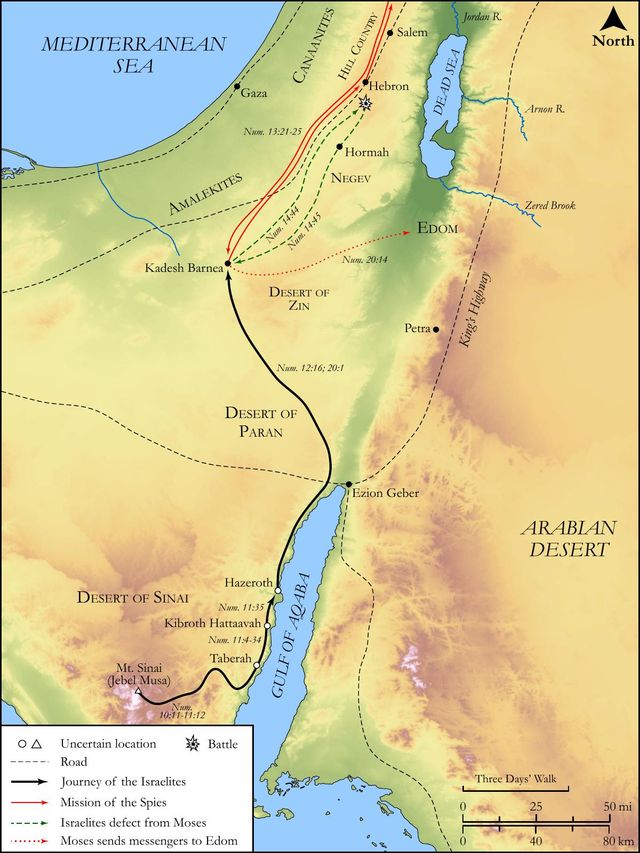
The setting for this incident is the wilderness, a formative period for the nascent nation of Israel after their miraculous exodus from Egypt. During this time, God was actively establishing His covenant with them, transforming a collection of nomadic tribes into a holy nation governed by divine law. The Sabbath commandment, first given at Mount Sinai as part of the Decalogue in Exodus 20:8-11, was a foundational pillar of this covenant. It was more than a mere day of rest; it was a sacred sign, distinguishing Israel as God's chosen people and commemorating both His act of creation and their deliverance from Egyptian bondage. Violating the Sabbath was therefore not merely breaking a rule; it was an act of profound rebellion against the covenant itself, a rejection of God's supreme authority and His unique, redemptive relationship with Israel.
Key Themes
ShowHideThe incident recounted in Numbers 15:32 powerfully reinforces several central themes within the book of Numbers and the broader Pentateuch. Firstly, it highlights the Sanctity of the Sabbath, underscoring its divine origin and its non-negotiable status as a day set apart for the Lord, free from ordinary labor. Secondly, it emphasizes the absolute necessity of Obedience to God's Law, demonstrating that the covenant demands not just ritual adherence but a heart fully submitted to God's every command. Thirdly, it vividly illustrates the Seriousness of Presumptuous Sin, contrasting it sharply with unintentional sin and revealing that willful defiance against God's explicit commands carries severe, non-atonable consequences. Finally, the narrative serves as a potent reminder of Divine Justice and Consequences, setting the stage for the swift and decisive judgment that follows, reinforcing God's unwavering commitment to uphold His holy standards within the community He had redeemed.
Exposition and Analysis
ShowHideKey Word Analysis
ShowHideFrom a root meaning "to drive," this term refers to a desolate, uncultivated, and often dangerous region, primarily used to describe the desert through which Israel journeyed. Spiritually, the wilderness was a crucible—a place of testing, discipline, and profound dependence on divine provision. The man's sin in this context underscores that even in a place of direct divine guidance, miraculous sustenance, and the immediate presence of God's glory, human rebellion could still manifest, highlighting the persistent inclination of the human heart toward disobedience.
A primitive root meaning "to become sapless through drought," used here as a denominative to "forage for straw, stubble, or wood." The verb implies a deliberate, active collection, not an accidental finding. This action, though seemingly mundane in its physical nature, constituted "work" that was explicitly forbidden on the Sabbath. The seemingly minor nature of the act underscores that any violation of a direct divine command, regardless of its perceived scale, was a serious breach of the covenant, demonstrating a disregard for God's authority.
An intensive form of the root meaning "to cease" or "to rest," the Sabbath was the seventh day, consecrated by God as a day of complete cessation from labor. It served as a perpetual sign of the covenant between God and Israel, a reminder of His creation rest and Israel's deliverance from Egyptian bondage. Its violation was not merely a breaking of a rule but an assault on the very identity, purpose, and sanctity of the covenant community, a direct affront to God's holy character and His established order.
Verse Breakdown
ShowHide"And while the children of Israel were in the wilderness"
This opening phrase establishes the specific setting and temporal context of the incident. It reminds the reader of the probationary period of Israel's journey, a time characterized by direct divine leading, miraculous provision, and the continuous unfolding of God's law. This setting underscores that the sin occurred not in ignorance or in a settled land, but during a crucial time of national formation and direct divine instruction, highlighting the man's culpability.
"they found a man that gathered sticks"
This clause describes the discovery of the individual's specific action. The passive voice "they found" suggests that the man's activity was observed by others, implying that his violation was overt and perhaps even defiant, rather than hidden. The act of "gathering sticks" is presented as a clear, undeniable transgression of the Sabbath law, a visible act of work contrary to the divine command for rest.
"upon the sabbath day"
This crucial concluding phrase precisely identifies the specific day on which the transgression occurred, immediately highlighting the gravity of the offense. It directly links the man's action to the explicit divine commandment regarding the Sabbath, setting the stage for the ensuing judgment and underscoring the deliberate nature of his disobedience in the face of clear divine instruction.
Literary Devices
ShowHideThe narrative in Numbers 15:32 employs several significant literary devices to convey its profound theological message. Primarily, it functions as a Narrative Illustration, providing a concrete, real-world example of the "presumptuous sin" that was just described in abstract legal terms in the preceding verses. This immediate application makes the abstract legal principle tangible and impactful for the audience, demonstrating its practical implications. The verse also utilizes Juxtaposition, placing the man's seemingly small act of gathering sticks directly against the backdrop of God's holy and comprehensive Law, particularly the foundational Sabbath commandment. This contrast magnifies the offense, revealing its true gravity as an act of rebellion against divine authority. Furthermore, there is a strong element of Foreshadowing, as the discovery of the man's sin immediately sets in motion the dramatic events of the subsequent verses, hinting at the severe consequences that are about to unfold. The simplicity of the language used to describe the act ("gathered sticks") belies the profound theological implications and the severity of the impending divine judgment, creating a stark and memorable moment in the narrative that underscores the absolute seriousness of willful disobedience.
Theological and Thematic Connections
ShowHideThe incident of the Sabbath-breaker in Numbers 15:32 is a profound theological statement on the nature of God's holiness, the seriousness of sin, and the absolute demand for obedience within the covenant relationship. It teaches that God's laws are not arbitrary suggestions but divine decrees that reflect His immutable character and are essential for the well-being, order, and holiness of His people. Willful disobedience, especially concerning a foundational covenant sign like the Sabbath, was seen as an act of contempt against God Himself, undermining the very basis of their relationship and challenging His supreme authority. This incident serves as a stark reminder that while God is gracious and provides for unintentional sin, He is also perfectly just and will not tolerate open rebellion against His revealed will, particularly when it strikes at the heart of the covenant and threatens the sanctity of the community.
Reflection and Application
ShowHideWhile the specific legal code and its severe penalties for Sabbath-breaking are part of the Old Covenant's unique context for Israel, the underlying principles of Numbers 15:32 remain profoundly relevant for believers today. This account challenges us to consider the seriousness with which we approach God's commands and principles, even those that might seem "minor" or inconvenient in our contemporary lives. It calls us to examine our hearts for any presumptuousness, spiritual apathy, or willful disregard for God's revealed will, reminding us that true faith is demonstrated through humble, consistent, and joyful obedience. The story encourages a posture of deep reverence for God's holiness and His rightful authority over every aspect of our lives, including our time, rest, work, and relationships. It prompts us to reflect on how we honor God with our lives, seeking to live in a way that reflects our devotion and acknowledges His sovereignty, rather than pursuing our own desires in defiance of His wisdom or convenience. Our obedience is not to earn favor, but to express our love and trust in the One who has redeemed us.
Questions for Reflection
ShowHideFAQ
ShowHideWhy was gathering sticks considered such a serious offense, punishable by death?
ShowHideThe severity of the punishment for gathering sticks on the Sabbath was not due to the act itself being inherently heinous, but because it represented a direct, willful, and public defiance of a foundational covenant commandment. The Sabbath was a sacred sign of God's covenant with Israel, symbolizing His creation rest and their deliverance from Egyptian slavery (Exodus 31:13). Breaking it "with an high hand," as discussed in Numbers 15:30-31, was an act of contempt against God's authority and the covenant itself. It was a challenge to the very structure of the theocratic society God was establishing, and left unpunished, it would undermine the entire legal and moral fabric of the community. Therefore, the penalty reflected the gravity of the rebellion against God and His covenant, not merely the physical act.
Does this account imply that Christians today should observe the Sabbath in the same way, with similar penalties for breaking it?
ShowHideNo, the New Testament teaches that believers in Christ are not under the Mosaic Law as a system for salvation or justification (Romans 6:14; Galatians 3:23-25). While the moral principles of the Law, including the call to rest, worship, and honor God with our time, remain eternally relevant, the specific ceremonial and civil laws, like the strict Sabbath regulations and their associated penalties, are fulfilled in Christ. Colossians 2:16-17 states that the Sabbath was a "shadow of the things to come, but the substance belongs to Christ." Christians are called to live by the Spirit (Galatians 5:16) and to honor God with their time and lives, finding their ultimate rest and fulfillment in Christ (Matthew 11:28-30). The account in Numbers 15:32 serves as a timeless reminder of the seriousness of willful sin and the importance of revering God's commands, rather than a prescriptive legal requirement for New Testament believers.
Christ-Centered Fulfillment
ShowHideThe incident of the Sabbath-breaker in Numbers 15:32, with its stark demonstration of the Law's demands and the severe consequences of presumptuous sin, finds its ultimate fulfillment and resolution in Jesus Christ. The Mosaic Law, including the Sabbath commandment, was given not only to reveal God's holy character and establish order for Israel but also to expose humanity's inherent inability to perfectly keep His righteous standards, thus pointing to the desperate need for a Savior (Romans 3:20). Jesus declared Himself to be "Lord even of the Sabbath" (Matthew 12:8), not to abolish it, but to fulfill its true meaning and purpose. He demonstrated that true Sabbath rest is not merely a cessation from physical labor, but a spiritual rest found in Him from the burden of sin, the futile striving to earn righteousness through works of the Law, and the condemnation that the Law brings (Matthew 11:28-30). While the man in Numbers 15:32 faced death for his presumptuous sin, Christ, through His perfect obedience to the Law and His sacrificial death on the cross, bore the full penalty for all sin—even those committed "with an high hand"—for all who believe (Hebrews 10:26-29 contrasts the Old Covenant consequence with the New Covenant provision). He is the Lamb of God who takes away the sin of the world (John 1:29), offering forgiveness, reconciliation, and eternal life that the Mosaic Law could never provide, thereby bringing us into a new covenant of grace where true rest and righteousness are found in Him alone.