


Numbers 13:1
Bible text: King James Version (1769 Blayney text) · Public domain
Bible text: Berean Standard Bible · Public domain
Bible text: American Standard Version (1901) · Public domain
Bible text: World English Bible, Messianic edition · Public domain
Bible text: Geneva Bible (1599) · Public domain
Bible text: Young's Literal Translation · Public domain
- וַיְדַבֵּרvay·da·Berand he spokeH1696Conj-w ¦ V-Piel-ConsecImperf-3msVerb Piel Consecutive Imperfect 3rd Singular Masculineוַandיְדַבֵּרhe spoke
- יְהוָהYah·wehYahwehH3068N-properNoun Proper Title
- אֶל'eltoH413PrepPreposition
- מֹשֶׁהmo·ShehMosesH4872N-proper-mNoun Proper Masculine
- לֵּאמֹרle·Mor<to> sayingH559Prep-l ¦ V-Qal-InfVerb Qal Infinitive Constructלֵּ<to>אמֹרsaying
English is a literal word-by-word gloss of the Hebrew, not the KJV's wording. Why?
This is the original text the KJV's translators worked from — each Hebrew word with its own literal English meaning in this verse, prepared by scholars at Tyndale House, Cambridge. The KJV translates whole sentences, not word by word, so its wording differs: one Hebrew word can become several English words, and the KJV may choose “the LORD” where the gloss reads “Yahweh”. Both are faithful — they answer different questions. For the KJV's own rendering, switch to the KJV text.
Details
See on the biblical-era maps
Study this verse
Public-domain commentary
Matthew Henry
From his Commentary on the Whole Bible. Henry comments on passages, not single verses — this entry covers Numbers 13:1–20. His two-level outline is real structure in the source text, so it is rendered as structure.
Here we have, I. Orders given to send spies to search out the land of Canaan. It is here said, God directed Moses to send them (Num 13:1, Num 13:2), but it appears by the repetition of the story afterwards (Deu 1:22) that the motion came originally from the people; they came to Moses, and said, We will send men before us; and it was the fruit of their unbelief. They would not take God's word that it was a good land, and that he would, without fail, put them in possession of it. They could not trust the pillar of cloud and fire to show them the way to it, but had a better opinion of their own politics than of God's wisdom. How absurd was it for them to send to spy out a land which God himself had spied out for them, to enquire the way into it when God himself had undertaken to show them the way! But thus we ruin ourselves by giving more credit to the reports and representations of sense than to divine revelation; we walk by sight, not by faith; whereas, if we will receive the witness of men, without doubt the witness of God is greater. The people making this motion to Moses, he (perhaps not aware of the unbelief at the bottom of it) consulted God in the case, who bade him gratify the people in this matter, and send spies before them: "Let them walk in their own counsels." Yet God was no way accessory to the sin that followed, for the sending of these spies was so far from being the cause of the sin that if the spies had done their duty, and the people theirs, it might have been the confirmation of their faith, and of good service to them.
II.The persons nominated that were to be employed in this service (Num 13:4, etc.), one of each tribe, that it might appear to be the act of the people in general; and rulers, person of figure in their respective tribes, some of the rulers of thousands or hundreds, to put the greater credit upon their embassy. This was designed for the best, but it proved to have this ill effect that the quality of the persons occasioned the evil report they brought up to be the more credited and the people to be the more influenced by it. Some think that they are all named for the sake of two good ones that were among them, Caleb and Joshua. Notice is taken of the change of Joshua's name upon this occasion, Num 13:16. He was Moses's minister, but had been employed, though of the tribe of Ephraim, as general of the forces that were sent out against Amalek. The name by which he was generally called and known in his own tribe was Oshea, but Moses called him Joshua, in token of his affection to him and power over him; and now, it should seem, he ordered others to call him so, and fixed that to be his name henceforward. Oshea signifies a prayer for salvation, Save thou; Joshua signifies a promise of salvation, He will save, in answer to that prayer: so near is the relation between prayers and promises. Prayers prevail for promises, and promises direct and encourage prayers. Some think that Moses designed, by taking the first syllable of the name Jehovah and prefixing it to his name, which turned Hoshea into Jehoshua, to put an honour upon him, and to encourage him in this and all his future services with the assurances of God's presence. Yet after this he is called Hoshea, Deu 32:44. Jesus is the same name with Joshua, and it is the name of our Lord Christ, of whom Joshua was a type as successor to Moses, Israel's captain, and conqueror of Canaan. There was another of the same name, who was also a type of Christ, Zac 6:11. Joshua was the saviour of God's people from the powers of Canaan, but Christ is their Saviour from the powers of hell.
III.The instructions given to those spies.
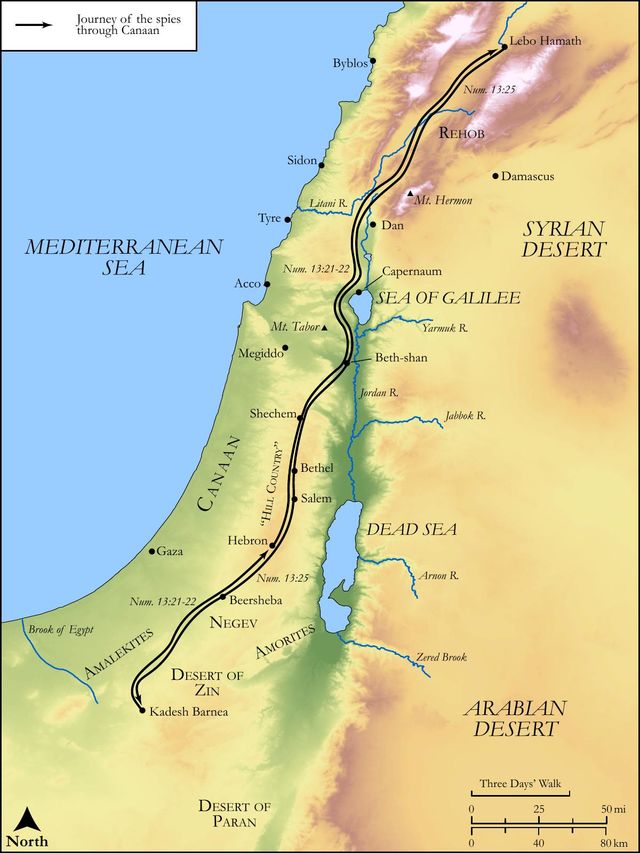
They were sent into the land of Canaan the nearest way, to traverse the country, and to take account of its present state, Num 13:17. Two heads of enquiry were given them in charge,
1.Concerning the land itself: See what that is (Num 13:18, and again, Num 13:19), see whether it be good or bad, and (Num 13:20) whether it be fat or lean. All parts of the earth do not share alike in the blessing of fruitfulness; some countries are blessed with a richer soil than others. Moses himself was well satisfied that Canaan was a very good land, but he sent these spies to bring an account of it for the satisfaction of the people; as John Baptist sent to Jesus, to ask whether he was the Christ, not to inform himself, but to inform those he sent. They must take notice whether the air was healthful or no, what the soil was, and what the productions; and, for the better satisfaction of the people, they must bring with them some of the fruits.
2.Concerning the inhabitants - their number, few or many - their size and stature, whether strong able-bodied men or weak, - their habitations, whether they lived in tents or houses, whether in open villages or in walled towns, - whether the woods were standing as in those countries that are uncultivated, through the unskillfulness and slothfulness of the inhabitants, or whether the woods were cut down, and the country made champaign, for the convenience of tillage. These were the things they were to enquire about. Perhaps there had not been of late years such commerce between Egypt and Canaan as there was in Jacob's time, else they might have informed themselves of these things without sending men on purpose to search. See the advantage we may derive from books and learning, which acquaint those that are curious and inquisitive with the state of foreign countries, at a much greater distance than Canaan was now from Israel, without this trouble and expense.
IV.Moses dismisses the spies with this charge, Be of good courage, intimating, not only that they should be themselves encouraged against the difficulties of this expedition, but that they should bring an encouraging account to the people and make the best of every thing. It was not only a great undertaking they were put upon, which required good management and resolution, but it was a great trust that was reposed in them, which required that they should be faithful.
Continue studying Numbers 13:1 across the web’s major study libraries — every link below opens this exact verse, chapter, or book on the destination site.
Read & Compare
 BibleGatewayThis verse in more than 200 translations and 70 languages.
 Bible.comThe YouVersion reader — hundreds of translations, reading plans, and highlights.
 ESV.orgCrossway's official English Standard Version reader.
 NET BibleThe NET translation with 60,000+ translators' notes on every rendering decision.
 STEP BibleTyndale House's free study tool — original text, vocabulary, and scholarly resources.
 BibliaLogos Bible Software's free web reader.
 USCCBThe New American Bible (Revised Edition) with the U.S. bishops' study notes.
Commentaries
 BibleHub CommentariesDozens of classic commentaries on this verse, gathered on one page.
 StudyLightMore than 100 commentary sets — the largest collection on the web.
 BibleRefPlain-English commentary on what this verse means, verse by verse.
 Enduring WordDavid Guzik's free commentary on this chapter, widely used by Bible teachers.
 Bible Study ToolsVerse commentary alongside Greek and Hebrew study aids.
Original Language & Research
- BibleHub InterlinearThe verse word by word — original language, transliteration, and English.
- BibleHub LexiconEvery word's original-language definition and Strong's entry.
 Blue Letter BibleDeep-study tools — Strong's numbers, concordance, and word studies.
 SefariaThe Hebrew text with Rashi and centuries of Jewish commentary.
Sermons, Hymns & Audio


TrulyRandomVerse is not affiliated with these sites and doesn’t control their content. They’re linked because they’re genuinely useful.
Summary
Numbers 13:1 serves as a concise yet profoundly significant introductory statement, marking the divine initiation of a pivotal narrative in the book of Numbers. It immediately establishes the ultimate source of the forthcoming instructions, emphasizing God's direct, authoritative communication with Moses, His chosen leader and mediator. This verse sets the stage for the critical decision to send spies into the land of Canaan, a moment that would test Israel's faith and determine the immediate trajectory of their wilderness journey and their destiny as a nation.
Context
ShowHideLiterary Context
Numbers 13:1 signals a crucial transition in the narrative of the Israelites' wilderness journey. The preceding chapters (Numbers 1-10) meticulously detail the organization of the camp, the census of the tribes, and the establishment of various laws and rituals at Mount Sinai, preparing Israel for their journey. Numbers 10 describes their departure from Sinai, a significant milestone after receiving the Law. Chapters 11 and 12, however, recount instances of murmuring, rebellion against the LORD, and challenges to Moses' leadership from within the camp, highlighting the Israelites' persistent unbelief and spiritual immaturity. Numbers 13:1, with its direct divine address, marks a decisive shift from these internal struggles to a new, external challenge: the command to reconnoiter the Promised Land, which will ultimately expose the depth of their faithlessness and lead to severe, generation-defining consequences.
Historical & Cultural Context
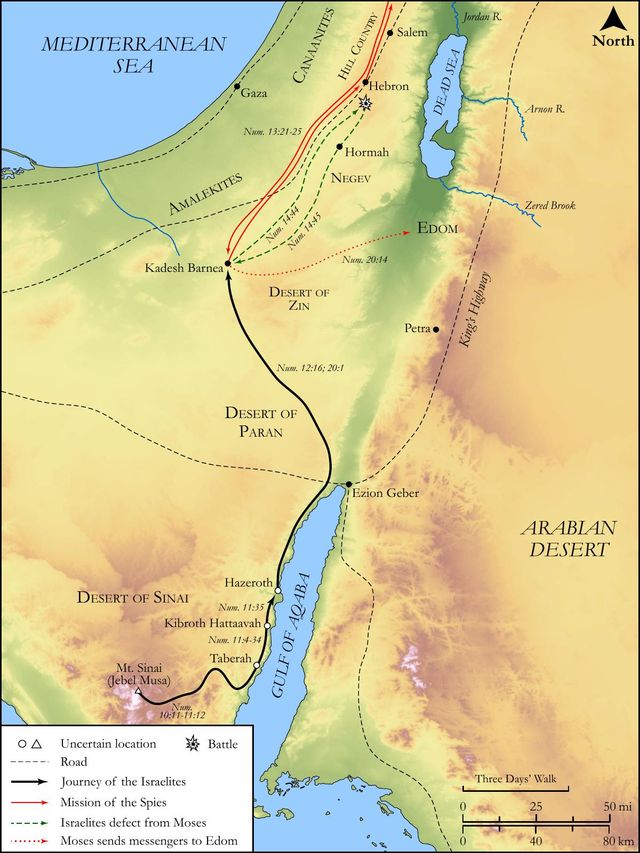
At the time of this command, the Israelites had journeyed from Mount Sinai and were encamped at Kadesh-barnea, located in the wilderness of Paran, which lay on the southern border of Canaan. This geographical position was highly strategic, serving as the very threshold to the land God had promised to Abraham, Isaac, and Jacob centuries earlier. Culturally, sending out spies (reconnaissance) was a common military and exploratory practice among the nations of that day, used to assess the strength of inhabitants, the fertility of the land, and strategic entry points for invasion. However, in this instance, the command originates directly from the LORD, imbuing it with divine authority and purpose, fundamentally distinct from a purely human military strategy. The nation, recently freed from Egyptian bondage, stood on the precipice of fulfilling a multi-generational promise, making the upcoming mission intensely significant for their national identity and destiny.
Key Themes
ShowHideNumbers 13:1 encapsulates several overarching themes central to the book of Numbers and the Pentateuch as a whole. Foremost is the theme of Divine Initiative and Sovereignty, as the verse unequivocally states that "the LORD spake," underscoring God's active involvement and meticulous planning for His people's journey and destiny. This is not a human proposal or a strategic suggestion, but a divine directive. Secondly, it highlights Moses' Role as Mediator, reaffirming his unique position as the primary recipient of God's commands for the nation, a role established from the burning bush encounter in Exodus 3 onwards. He is the divinely appointed conduit through whom God's will is revealed to the Israelites, emphasizing the importance of faithful leadership in God's redemptive plan. Finally, this introductory statement sets the stage for the crucial theme of Obedience and Disobedience, as the command to send spies will ultimately become a profound test of Israel's faith and willingness to trust God's promises, leading to the tragic consequences detailed in Numbers 14, where their lack of faith results in forty years of wilderness wandering.
Exposition and Analysis
ShowHideKey Word Analysis
ShowHideThis is the sacred, covenantal name of God, often transliterated as "Yahweh," emphasizing His self-existent, eternal, and unchanging nature. Its use here signifies that the command comes from the faithful God who made a covenant with Abraham and powerfully delivered Israel from Egyptian bondage. It underscores the ultimate authority and unwavering reliability of the divine speaker, who is intimately involved in the affairs and destiny of His people.
The verb dâbar (דָּבַר) is a strong and significant term for speaking in Hebrew. It implies more than casual conversation; it denotes a definitive, authoritative, and purposeful declaration or command. When the LORD dâbar, it carries the full weight of a divine decree, a binding instruction, or a profound revelation, requiring a response of immediate and complete obedience. This emphasizes the gravity of the message Moses is about to receive and convey, indicating that what follows is a direct, weighty divine imperative.
The inclusion of Moses' name highlights his unique and indispensable role as the divinely appointed leader and mediator between God and the nation of Israel. As "the Israelite lawgiver," he is God's chosen vessel for conveying divine will, a position of immense responsibility and unparalleled privilege. The phrase "unto Moses" reinforces his central and singular place in the unfolding narrative of God's dealings with His covenant people.
Verse Breakdown
ShowHide"And the LORD"
This opening phrase immediately identifies the divine speaker, emphasizing His supreme authority and His covenant relationship with Israel. The focus is entirely on the divine initiative, establishing that the subsequent events are not humanly conceived but divinely ordained.
"spake unto Moses"
This clause precisely specifies the recipient of the divine communication, highlighting Moses' unique and privileged role as the chosen mediator of God's word to His people. It underscores the directness, specificity, and personal nature of God's revelation to His chosen servant, affirming his unparalleled authority among the Israelites.
"saying,"
This simple yet crucial word functions as an introductory formula, signaling that what follows is the direct, verbatim content of God's authoritative command or instruction. It prepares the reader for the subsequent divine directive regarding the sending of the spies, emphasizing that the words that follow are God's own.
Literary Devices
ShowHideNumbers 13:1 employs several subtle yet profoundly effective literary devices. It functions as a Formulaic Opening, a common literary and theological device in biblical narratives, particularly in prophetic and legal contexts (e.g., "Thus says the LORD," or "The word of the LORD came to..."). This formula immediately establishes divine authority and sets the tone for the subsequent narrative as divinely ordained and absolutely binding. The Repetition of this or similar phrases ("And the LORD spake unto Moses") throughout the Pentateuch, and especially in the book of Numbers, powerfully reinforces the consistent pattern of God's direct and personal communication with His chosen leader, underscoring Moses' unique mediatorial role and the ongoing nature of divine guidance for His people. Furthermore, the brevity and directness of the statement create a powerful instance of Foreshadowing, hinting at the monumental events that are about to unfold. It generates a sense of anticipation, signaling that a significant divine directive is imminent, one that will profoundly impact the destiny of the Israelite nation and serve as a crucial test of their faith.
Theological and Thematic Connections
ShowHideNumbers 13:1 profoundly underscores the biblical truth that God is the primary actor in redemptive history. His initiative in speaking to Moses before Israel undertakes a crucial mission highlights His sovereign involvement in the lives of His people and His meticulous care for their journey. This divine communication is not merely informative; it is authoritative, purposeful, and designed to guide Israel towards the fulfillment of His promises. It establishes a consistent pattern of divine revelation that permeates the Old Testament, where God consistently speaks to His chosen servants to reveal His will, guide their steps, and call them to obedience. This foundational principle reminds us that all true spiritual endeavor begins with hearing and responding to God's authoritative word, recognizing Him as the ultimate source of wisdom, direction, and the very impetus for our lives and ministries.
Reflection and Application
ShowHideNumbers 13:1, though brief in its phrasing, offers profound insights for contemporary believers. It reminds us that our spiritual journey, much like Israel's wilderness trek, is fundamentally shaped by divine initiative. Just as God actively spoke to Moses to guide His people, so too does He speak to us today through His inspired Word, the indwelling Holy Spirit, and the wise counsel of His community. Cultivating a posture of attentive listening to God's authoritative voice is paramount before embarking on significant decisions or missions in our lives. This verse challenges us to move beyond human strategies, anxieties, or self-reliance, rooting our plans and actions firmly in divine guidance and revelation. It also highlights the immense responsibility of those who hear God's word, whether as leaders or individual believers, to faithfully receive, understand, and convey it. Our effectiveness in serving God's purposes is directly tied to our willingness to hear and obey His authoritative "saying" in every aspect of our lives.
Questions for Reflection
ShowHideFAQ
ShowHideWhy is this simple verse, "And the LORD spake unto Moses, saying," so important?
ShowHideThis seemingly simple verse is crucial for several profound reasons. First, it immediately establishes the divine authority behind the entire narrative of the spy mission that follows. It's not Moses' idea, a human strategic decision, or a response to Israel's demand, but a direct command from God Himself. This highlights God's active involvement, sovereignty, and meticulous planning over Israel's journey and destiny. Second, it powerfully reaffirms Moses' unique mediatorial role, emphasizing that he is God's chosen channel for communicating His will to the nation. This reinforces the covenant relationship between God and Israel, which is consistently mediated through Moses throughout the Pentateuch. Finally, it serves as a formulaic opening that sets the stage for a pivotal moment in Israel's history—a profound test of faith that will have immediate and lasting consequences, leading directly to the events of Numbers 14 and the subsequent forty years of wilderness wandering.
How does the Hebrew word for "spake" (dâbar) in this verse differ from other ways of speaking?
ShowHideThe Hebrew word dâbar (דָּבַר) used here for "spake" is highly significant because it implies far more than just casual conversation or mere utterance. It denotes a weighty, authoritative, and purposeful declaration. When the LORD dâbar, it signifies a definitive pronouncement, often carrying the full force of a command, a decree, or a revelation that demands a response and carries binding implications. Unlike other Hebrew words for talking or conversing, dâbar emphasizes the intentionality, gravity, and binding nature of God's communication. It conveys that what follows is not merely advice or suggestion but a divine imperative, underscoring the seriousness and paramount importance of the message Moses is about to receive and convey to the Israelites.
Christ-Centered Fulfillment
ShowHideNumbers 13:1, with its emphasis on God's direct and authoritative communication to Moses, finds its ultimate fulfillment and deepest meaning in the person and work of Jesus Christ. While God spoke "at various times and in various ways" through prophets like Moses in the Old Testament, Hebrews 1:1-2 powerfully declares that in these last days, He has spoken to us "by His Son." Jesus is the ultimate "Word" of God (John 1:1), the perfect, embodied revelation of the Father's will and character. He is the greater Moses, the prophet whom God promised to raise up from among His people (Deuteronomy 18:18), through whom God speaks directly, definitively, and savingly to humanity. Just as Israel was called to listen to Moses, so too are believers called to listen to Christ's voice, for He is the one who perfectly mediates God's truth, perfectly reveals God's heart, and perfectly leads His people into their true spiritual inheritance. The wilderness journey of Israel, initiated by God's authoritative word to Moses, foreshadows the Christian's journey of faith, where Christ Himself is our divine guide, the one who fulfills all God's promises and leads us into the heavenly Canaan, the eternal rest promised to the people of God (Hebrews 4:9).