


Numbers 10:23
Bible text: King James Version (1769 Blayney text) · Public domain
Bible text: Berean Standard Bible · Public domain
Bible text: American Standard Version (1901) · Public domain
Bible text: World English Bible, Messianic edition · Public domain
Bible text: Geneva Bible (1599) · Public domain
Bible text: Young's Literal Translation · Public domain
- וְעַלve·'Aland [was] overH5921Conj-w ¦ PrepPrepositionוְandעַל[was] over
- צְבָאtze·Va'[the] military group ofH6635N-mscNoun Singular Masculine Construct
- מַטֵּהma·Teh[the] tribe ofH4294N-mscNoun Singular Masculine Construct
- בְּנֵיbe·Nei[the] descendants ofH1121N-mpcNoun Plural Masculine Construct
- מְנַשֶּׁהme·na·ShehManassehH4519N-proper-mNoun Proper Masculine
- גַּמְלִיאֵלgam·li·'ElGamalielH1583N-proper-mNoun Proper Masculine
- בֶּןben[the] son ofH1121N-mscNoun Singular Masculine Construct
- פְּדָהpe·dahPedah-H6301N-proper-mNoun Proper Masculine
- צוּרtzur-zurH6301N-proper-mNoun Proper Masculine
English is a literal word-by-word gloss of the Hebrew, not the KJV's wording. Why?
This is the original text the KJV's translators worked from — each Hebrew word with its own literal English meaning in this verse, prepared by scholars at Tyndale House, Cambridge. The KJV translates whole sentences, not word by word, so its wording differs: one Hebrew word can become several English words, and the KJV may choose “the LORD” where the gloss reads “Yahweh”. Both are faithful — they answer different questions. For the KJV's own rendering, switch to the KJV text.
Details
See on the biblical-era map
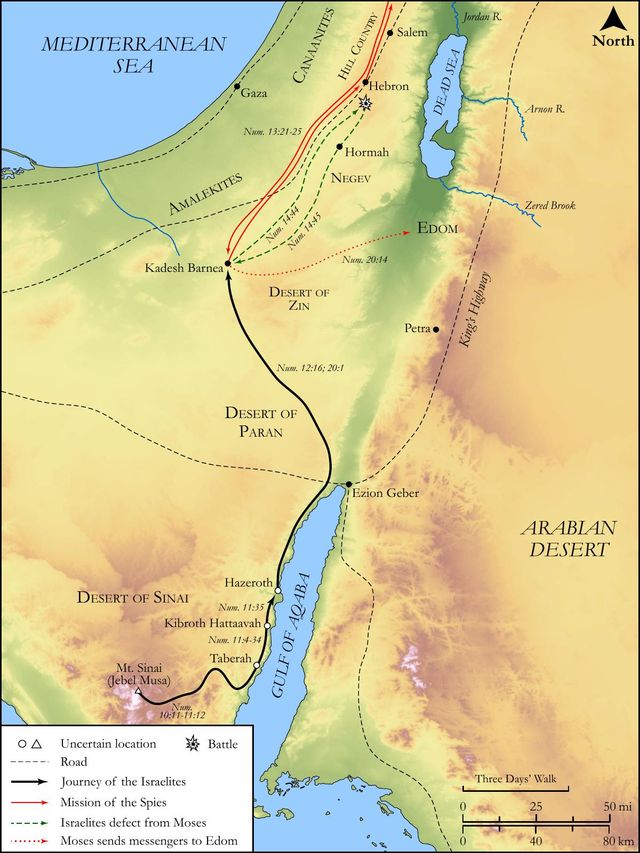
Study this verse
Public-domain commentary
Matthew Henry
From his Commentary on the Whole Bible. Henry comments on passages, not single verses — this entry covers Numbers 10:11–28. His two-level outline is real structure in the source text, so it is rendered as structure.
Here is, I. A general account of the removal of the camp of Israel from mount Sinai, before which mountain it had lain now about a year, in which time and place a great deal of memorable business was done. Of this removal, it should seem, God gave them notice some time before (Deu 1:6, Deu 1:7): You have dwelt long enough in this mountain, turn you and take your journey towards the land of promise. The apostle tells us that mount Sinai genders to bondage (Gal 4:24), and signifies the law there given, which is of use indeed as a schoolmaster to bring us to Christ, yet we must not rest in it, but advance towards the joys and liberties of the children of God, for our happiness is conferred not by the law, but by promise. Observe, 1. The signal given (Num 10:11): The cloud was taken up, and we may suppose it stood for some time, till they were ready to march; and a great deal of work it was to take down all those tents, and pack up all those goods that they had there; but every family being employed about its own, and all at the same time, many hands made quick work of it. 2. The march began: They took their journey according to the commandment of the Lord, and just as the cloud led them, Num 10:13. Some think that mention is thus frequently made in this and the foregoing chapter of the commandment of the Lord, guiding and governing them in all their travels, to obviate the calumny and reproach which were afterwards thrown upon Israel, that they tarried so long in the wilderness, because they had lost themselves there, and could not find the way out. No, the matter was not so; in every stage, in every step, they were under divine direction; and, if they knew not where they were, yet he that led them knew. Note, Those that have given up themselves to the direction of God's word and Spirit steer a steady course, even when they seem to be bewildered. While they are sure they cannot lose their God and guide, they need not fear losing their way. 3. The place they rested in, after three days' march: They went out of the wilderness of Sinai, and rested in the wilderness of Paran. Note, All our removals in this world are but from one wilderness to another. The changes which we think will be for the better do not always prove so; while we carry about with us, wherever we go, the common infirmities of human nature, we must expect, wherever we go, to meet with its common calamities; we shall never be at rest, never at home, till we come to heaven, and all will be well there.
II.A particular draught of the order of their march, according to the late model.
1.Judah's squadron marched first, Num 10:14-16. The leading standard, now lodged with that tribe, was an earnest of the sceptre which in David's time should be committed to it, and looked further to the captain of our salvation, of whom it was likewise foretold that unto him should the gathering of the people be.
2.Then came those two families of the Levites which were entrusted to carry the tabernacle. As soon as ever the cloud was taken up, the tabernacle was taken down, and packed up for removing, Num 10:17. And here the six wagons came laden with the more bulky part of the tabernacle. This frequent removing of the tabernacle in all their journeys signified the movableness of that ceremonial dispensation. That which was so often shifted would at length vanish away, Heb 8:13.
3.Reuben's squadron marched forward next, taking place after Judah, according to the commandment of the Lord, Num 10:18-20.
4.Then the Kohathites followed with their charge, the sacred furniture of the tabernacle, in the midst of the camp, the safest and most honourable place, Num 10:21. And they (that is, says the margin, the Gershonites and Merarites) did set up the tabernacle against they came; and perhaps it is expressed thus generally because, if there was occasion, not those Levites only, but the other Israelites that were in the first squadron, lent a hand to the tabernacle to hasten the rearing of it up, even before they set up their own tents.
5.Ephraim's squadron followed next after the ark (Num 10:22-24), to which some think the psalmist alludes when he prays (Psa 80:2), Before Ephraim, Benjamin, and Manasseh, the three tribes that composed this squadron, stir up thy strength (and the ark is called his strength, Psa 78:61), and come and save us.
6.Dan's squadron followed last, Num 10:25-27. It is called the rearward, or gathering host, of all the camps, because it gathered up all that were left behind; not the women and children (these we may suppose were taken care of by the heads of their families in their respective tribes), but all the unclean, the mixed multitude, and all that were weak and feeble, and cast behind in their march. Note, He that leadeth Joseph like a flock has a tender regard to the hindmost (Eze 34:16), that cannot keep pace with the rest, and of all that are given him he will lose none, Joh 17:11.
Continue studying Numbers 10:23 across the web’s major study libraries — every link below opens this exact verse, chapter, or book on the destination site.
Read & Compare
 BibleGatewayThis verse in more than 200 translations and 70 languages.
 Bible.comThe YouVersion reader — hundreds of translations, reading plans, and highlights.
 ESV.orgCrossway's official English Standard Version reader.
 NET BibleThe NET translation with 60,000+ translators' notes on every rendering decision.
 STEP BibleTyndale House's free study tool — original text, vocabulary, and scholarly resources.
 BibliaLogos Bible Software's free web reader.
 USCCBThe New American Bible (Revised Edition) with the U.S. bishops' study notes.
Commentaries
 BibleHub CommentariesDozens of classic commentaries on this verse, gathered on one page.
 StudyLightMore than 100 commentary sets — the largest collection on the web.
 BibleRefPlain-English commentary on what this verse means, verse by verse.
 Enduring WordDavid Guzik's free commentary on this chapter, widely used by Bible teachers.
 Bible Study ToolsVerse commentary alongside Greek and Hebrew study aids.
Original Language & Research
- BibleHub InterlinearThe verse word by word — original language, transliteration, and English.
- BibleHub LexiconEvery word's original-language definition and Strong's entry.
 Blue Letter BibleDeep-study tools — Strong's numbers, concordance, and word studies.
 SefariaThe Hebrew text with Rashi and centuries of Jewish commentary.
Sermons, Hymns & Audio


TrulyRandomVerse is not affiliated with these sites and doesn’t control their content. They’re linked because they’re genuinely useful.
Summary
Numbers 10:23 precisely identifies Gamaliel, the son of Pedahzur, as the divinely appointed leader over the military contingent, or "host," of the tribe of Manasseh. This verse is an integral part of a larger, meticulous enumeration of tribal leaders and their designated positions within the Israelite camp's marching order, as they prepared for their inaugural journey from Mount Sinai. It powerfully underscores God's profound emphasis on order, structure, and the critical role of delegated authority, all essential for the immense and challenging undertaking of the wilderness pilgrimage.
Context
ShowHideLiterary Context
Numbers 10:23 is situated within a pivotal chapter that marks the transition from Israel's encampment at Mount Sinai to their active journey towards the Promised Land. The preceding chapters (Numbers 1-9) meticulously detail the organization of the camp, the census of the fighting men, the consecration of the Levites, and various laws and offerings, establishing a divinely ordered community. Chapter 10 begins with instructions for the silver trumpets, instruments designed to signal assembly, movement, and war, thereby setting the stage for departure. Verses 11-28 then systematically list the precise marching order of each tribal division. Numbers 10:23 specifically places Gamaliel and the tribe of Manasseh within the "Standard of the camp of Ephraim," which was the third major division to set out, following the Tabernacle and its sacred furnishings. This detailed placement highlights the divine blueprint for a disciplined and orderly pilgrimage, where every unit had a designated place and leader.
Historical & Cultural Context
The historical backdrop for Numbers 10:23 is the momentous exodus of the Israelites from Egyptian bondage and their subsequent encampment at Mount Sinai, where they received the Mosaic Law and established the Tabernacle as the center of their worship. The task of moving an estimated two million people, along with their extensive livestock and the sacred Tabernacle, through the harsh and unforgiving wilderness was an unprecedented logistical challenge. Such an undertaking necessitated an extraordinary level of organization, discipline, and leadership. In Israel, tribal identity was paramount, but here, each distinct tribe was integrated into a larger, unified military and social structure under divine command. Leaders such as Gamaliel were not mere figureheads; they bore immense responsibility for the logistical management, internal discipline, and spiritual well-being of their respective tribal "hosts" or military contingents, ensuring the cohesion and survival of the entire nation on its arduous journey.
Key Themes
ShowHideNumbers 10:23, though a single verse, contributes significantly to several overarching theological and narrative themes prevalent throughout the book of Numbers and the Pentateuch. Foremost among these is the theme of Divine Order and Organization, vividly demonstrating God's meticulousness in establishing a structured society for His people. This principle reflects God's character as a God of order, not chaos, a truth echoed in the New Testament (e.g., 1 Corinthians 14:33). The verse also underscores the Importance of Leadership, as God directly appointed specific individuals like Gamaliel to guide, manage, and be accountable for the vast Israelite population. Furthermore, it reinforces the themes of Tribal Identity and Unity, where each tribe, while maintaining its distinct lineage and banner, contributed to the collective strength and purpose of the entire nation under God's overarching plan, as detailed in the camp's formation (e.g., Numbers 2). Finally, the detailed preparation and the naming of leaders emphasize the theme of Preparation for Journey, highlighting that the arduous trek through the wilderness towards the Promised Land required both divine foresight and human obedience to established structures.
Exposition and Analysis
ShowHideKey Word Analysis
ShowHideThis term (H6635) refers to a "mass of persons (or figuratively, things), especially regularly organized for war (an army); by implication, a campaign, literally or figuratively (specifically, hardship, worship)." In the context of Numbers 10:23, tsâbâʼ' denotes the organized, disciplined military contingent of the tribe of Manasseh. It emphasizes that the Israelite tribes were not merely a collection of families but a divinely ordered force, prepared for movement, defense, and fulfilling God's purposes, highlighting the quasi-military organization of the camp.
This word (H4294) primarily means "a branch (as extending)" and figuratively, "a tribe." It also refers to a rod or staff. Here, maṭṭeh' signifies one of the twelve distinct tribal divisions of Israel, each with its own identity, leader, and designated place within the larger national structure. The use of "tribe" underscores the genealogical and social organization that formed the backbone of Israelite society and military formation.
This personal name (H1583) is derived from two Hebrew roots meaning "reward of God." It signifies that Gamaliel's existence and, by extension, his leadership role, were seen as a divine gift or recompense. While this Gamaliel, son of Pedahzur, is a leader during the wilderness wanderings, he is distinct from the renowned Pharisee teacher Gamaliel mentioned in the New Testament who taught the Apostle Paul (e.g., Acts 5:34). The theological meaning embedded in the name, however, reflects a consistent theme of divine provision and blessing.
This personal name (H6301) means "a rock (i.e. God) has ransomed" or "Redeemed by the Rock." It is a powerful theological statement, pointing to God as the ultimate source of redemption, deliverance, and steadfast strength, often metaphorically referred to as a "Rock" in biblical literature (e.g., Deuteronomy 32:4). The lineage of Gamaliel, through his father Pedahzur, thus carries a profound message of God's redemptive work and unwavering faithfulness.
Verse Breakdown
ShowHide"And over the host of the tribe of the children of Manasseh"
This opening clause precisely identifies the specific group over which Gamaliel held authority. The term "host" (צָבָא, tsâbâʼ') denotes the organized, military-ready contingent of the tribe, emphasizing its disciplined nature. "The tribe of the children of Manasseh" specifies Manasseh as one of the twelve distinct tribes of Israel, highlighting its unique identity and its integral place within the larger national and tribal structure. This detailed designation underscores the meticulous organization God commanded for each segment of His people, ensuring no part was overlooked.
"[was] Gamaliel the son of Pedahzur"
This concluding clause identifies the individual leader by his personal name and paternal lineage. In ancient Israelite society, naming the father (Pedahzur) was crucial for establishing identity, authority, and tribal affiliation, providing a clear record of lineage and legitimacy. Gamaliel's appointment as leader was not arbitrary but part of a divinely established system of delegated authority, reflecting God's overarching order and the critical importance of responsible, accountable leadership within the community. The names themselves, "Reward of God" and "Redeemed by the Rock," imbue the verse with deeper theological meaning, pointing to God's active involvement in the lives and leadership of His people.
Literary Devices
ShowHideNumbers 10:23, like many verses in the early chapters of Numbers, prominently employs Enumeration and Repetition. The systematic listing of tribal leaders and their specific affiliations throughout Numbers 10 is a clear instance of enumeration, providing a comprehensive and precise record of the divinely ordained structure. This enumeration is not merely a dry administrative list but serves to emphasize the completeness, precision, and divine origin of God's organizational plan for His people. The Repetition of the formula "X the son of Y" for each tribal leader reinforces the established pattern of leadership and lineage, lending authority, legitimacy, and historical accuracy to each appointment. Furthermore, the meticulous detail in identifying each leader and their specific "host" can be seen as a form of Emphasis, highlighting the profound importance of every component within God's grand design for His people's journey, demonstrating His care for both the individual and the collective.
Theological and Thematic Connections
ShowHideNumbers 10:23, though seemingly a minor detail in a list, profoundly illustrates God's character as a God of order, precision, and delegated authority. It reveals that God is not a God of chaos, but one who meticulously plans and organizes His people for their journey of faith and purpose. The appointment of specific leaders like Gamaliel for each tribal "host" demonstrates the divine principle that effective, accountable leadership is crucial for the spiritual, social, and practical well-being of a community. This ancient organizational structure foreshadows the New Testament emphasis on order within the church and the importance of gifted leaders for equipping the saints and guiding the body of Christ. The detailed nature of this command also speaks to God's comprehensive care for every aspect of His people's lives, from the grand spiritual covenant to the practical logistics of their daily existence and movement.
Reflection and Application
ShowHideThe meticulous detail found in Numbers 10:23 serves as a powerful reminder that God is deeply invested in the order and structure of His people, both ancient Israel and the church today. Just as He meticulously organized the tribes for their wilderness journey, He continues to provide structure, guidance, and leadership for His followers in every generation. This verse encourages us to appreciate the vital importance of godly leadership, recognizing that those in authority within the church and even in society are often divinely appointed to guide, protect, and equip the community for its mission. It also calls us to understand our own unique and indispensable place within God's larger "host" – the body of Christ. Every believer has a divinely ordained role, and our collective journey of faith requires unity, discipline, and humble submission to the divine order established by God. This passage challenges us to consider how we personally contribute to the order and mission of our spiritual community and how we actively support and pray for those God has placed in leadership.
Questions for Reflection
ShowHideFAQ
ShowHideWho was Gamaliel the son of Pedahzur, and why is he mentioned in the Bible?
ShowHideGamaliel the son of Pedahzur was the divinely appointed leader over the "host," or military contingent, of the tribe of Manasseh during the Israelites' wilderness journey. He is first introduced as a tribal leader in the census recorded in Numbers 1:10. His mention, along with other tribal leaders in Numbers 10, is crucial for several reasons. It highlights God's meticulousness in organizing His people for their arduous journey, emphasizing divine order and structure. It also underscores the importance of delegated authority and responsible leadership within the community. Each leader was vital for the effective management, discipline, and spiritual guidance of their respective tribes, ensuring the cohesion and success of the entire nation as they moved towards the Promised Land. It is important to note that this Gamaliel is distinct from the famous Pharisee teacher of the same name mentioned in the New Testament who taught the Apostle Paul (Acts 5:34).
Why is such a specific detail as a tribal leader mentioned in the Bible, especially in a book like Numbers?
ShowHideThe inclusion of such specific details, like the naming of Gamaliel the son of Pedahzur, serves multiple profound theological and practical purposes within the biblical narrative, particularly in the book of Numbers. Firstly, it demonstrates God's absolute sovereignty and meticulous care over every aspect of His people's lives, from grand spiritual covenants to the practicalities of their daily movements. God is a God of order, not chaos, and this is vividly displayed in the highly organized structure of the Israelite camp and marching order (1 Corinthians 14:33). Secondly, it underscores the importance of leadership and accountability within God's community. These leaders were divinely appointed and responsible for the well-being, discipline, and conduct of their tribes. Thirdly, it authenticates the historical accuracy and divine inspiration of the text, providing verifiable details that would have been significant to the original audience and continue to ground the narrative in reality. Finally, it reinforces the theme of tribal identity and unity, showing how each distinct part contributed to the whole, working together under God's divine plan for their pilgrimage to the Promised Land.
Christ-Centered Fulfillment
ShowHideThe meticulous organization of Israel's journey, with its divinely appointed leaders and precise marching orders, finds its ultimate fulfillment and spiritual significance in the person and work of Jesus Christ. While Gamaliel led a physical "host" through a literal wilderness, Jesus Christ is the supreme Leader, the Captain of our salvation, and the Good Shepherd of God's spiritual host, the Church. He guides us through the wilderness of this fallen world towards the heavenly Promised Land. The Old Testament's emphasis on divine order and delegated authority foreshadows the New Covenant reality where Christ is the glorious head of His body, the Church (Ephesians 1:22-23), and He sovereignly gifts leaders to equip and build up His people for ministry (Ephesians 4:11-12). Just as each tribe had its unique place and purpose in Israel's camp, every believer is a vital member of the spiritual body of Christ, working together under His direction and for His glory (1 Corinthians 12:12-27). The wilderness journey of Israel, with its challenges, trials, and God's faithful provision, serves as a profound type for the Christian life—a pilgrimage of faith where we are called to follow our Captain, Jesus, who has already overcome the world and secured our victory (John 16:33). The divine care for every detail of Israel's physical journey points to God's even greater, meticulous plan of redemption and sanctification for His people through the finished work of Christ on the cross and His ongoing intercession.