


Nehemiah 12:8
Bible text: King James Version (1769 Blayney text) · Public domain
Bible text: Berean Standard Bible · Public domain
Bible text: American Standard Version (1901) · Public domain
Bible text: World English Bible, Messianic edition · Public domain
Bible text: Geneva Bible (1599) · Public domain
Bible text: Young's Literal Translation · Public domain
- וְהַלְוִיִּםve·hal·vi·Yimand the LevitesH3881Conj-w ¦ Art ¦ N-mpNoun Gentilic Plural Masculine AbsoluteוְandהַtheלְוִיִּםLevites
- יֵשׁוּעַye·Shu·a'JeshuaH3442N-proper-mNoun Proper Masculine
- בִּנּוּיbi·NuiBinnuiH1131N-proper-mNoun Proper Masculine
- קַדְמִיאֵלkad·mi·'ElKadmielH6934N-proper-mNoun Proper Masculine
- שֵׁרֵבְיָהshe·re·ve·YahSherebiahH8274N-proper-mNoun Proper Masculine
- יְהוּדָהye·hu·DahJudahH3063N-properNoun Proper Location
- מַתַּנְיָהma·tan·YahMattaniahH4983N-proper-mNoun Proper Masculine
- עַל'al[were] overH5921PrepPreposition
- הֻיְּדוֹתh·ye·Dotsongs of thanksgivingH1960N-fpNoun Plural Feminine Absolute
- הוּאhu'heH1931Pro-3msPronoun Personal 3rd Singular Masculine
- וְאֶחָיוve·'e·Chavand his brothersH251Conj-w ¦ N-mpc ¦ 3msNoun Plural Masculine Constructוְandאֶחָיbrothersוhis
English is a literal word-by-word gloss of the Hebrew, not the KJV's wording. Why?
This is the original text the KJV's translators worked from — each Hebrew word with its own literal English meaning in this verse, prepared by scholars at Tyndale House, Cambridge. The KJV translates whole sentences, not word by word, so its wording differs: one Hebrew word can become several English words, and the KJV may choose “the LORD” where the gloss reads “Yahweh”. Both are faithful — they answer different questions. For the KJV's own rendering, switch to the KJV text.
Details
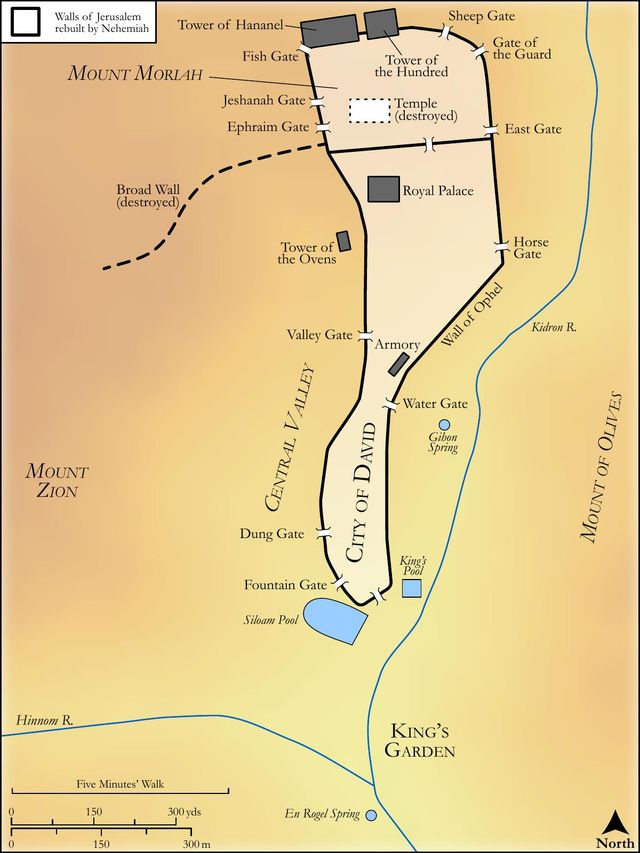
See on the biblical-era map
Study this verse
Public-domain commentary
Matthew Henry
From his Commentary on the Whole Bible. Henry comments on passages, not single verses — this entry covers Nehemiah 12:1–26.
We have here the names, and little more than the names, of a great many priests and Levites, that were eminent in their day among the returned Jews. Why this register should be here inserted by Nehemiah does not appear, perhaps to keep in remembrance those good men, that posterity might know to whom they were beholden, under God, for the happy revival and re-establishment of their religion among them. Thus must we contribute towards the performance of that promise, Psa 112:6, The righteous shall be in everlasting remembrance. Let the memory of the just be blessed, be perpetuated. It is a debt we still owe to faithful ministers to remember our guides, who have spoken to us the word of God, Heb 13:7. Perhaps it is intended to stir up their posterity, who succeeded them in the priest's office and inherited their dignities and preferments, to imitate their courage and fidelity. It is good to know what our godly ancestors and predecessors were, that we may learn thereby what we should be. We have here, 1. The names of the priests and Levites that came up with the first out of Babylon, when Jeshua was high priest. Jeremiah and Ezra are mentioned with the first (Neh 12:1), but, it is supposed, not Jeremiah the prophet nor Ezra the scribe; the fame of the one was long before and that of the other some time after, though both of them were priests. Of one of the Levites it is said (Neh 12:8) that he was over the thanksgiving, that is, he was entrusted to see that the psalms, the thanksgiving psalms, were constantly sung in the temple in due time and manner. The Levites kept their turns in their watches, reliving one another as becomes brethren, fellow-labourers, and fellow-soldiers. 2. The succession of high priests during the Persian monarchy, from Jeshua (or Jesus), who was high priest at the time of the restoration, to Jaddua (or Jaddus), who was high priest when Alexander the Great, after the conquest of Tyre, came to Jerusalem, and paid great respect to this Jaddus, who met him in his pontifical habit, and showed him the prophecy of Daniel, which foretold his conquests. 3. The next generation of priests, who were chief men, and active in the days of Joiakim, sons of the first set. Note, We have reason to acknowledge God's favour to his church, and care of it, in that, as one generation of ministers passes away, another comes. All those who are mentioned Neh 12:1, etc., as eminent in their generation, are again mentioned, though with some variation in several of the names, Neh 12:12, etc., except two, as having sons that were likewise eminent in their generation - a rare instance, that twenty good fathers should leave behind them twenty good sons (for so many here are) that filled up their places. 4. The next generation of Levites, or rather a latter generation; for those priests who are mentioned flourished in the days of Joiakim the high priest, these Levites in the days of Eliashib, Neh 12:22. Perhaps then the forementioned families of the priests began to degenerate, and the third generation of them came short of the first two; but the work of God shall never fail for want of instruments. Then a generation of Levites was raised up, who were recorded chief of the fathers (Neh 12:22), and were eminently serviceable to the interests of the church, and their service not the less acceptable either to God or to his people for their being Levites only, of the lower rank of ministers. Eliashib the high priest being allied to Tobiah (Neh 13:4), the other priests grew remiss; but then the Levites appeared the more zealous, as appears by this, that those who were now employed in expounding (Neh 8:7) and in praying (Neh 9:4, Neh 9:5) were all Levites, not priests, regard being had to their personal qualifications more than to their order. These Levites were some of them singers (Neh 12:24), to praise and give thanks, others of them porters (Neh 12:25), keeping the ward at the thresholds of the gates, and both according to the command of David.
Continue studying Nehemiah 12:8 across the web’s major study libraries — every link below opens this exact verse, chapter, or book on the destination site.
Read & Compare
 BibleGatewayThis verse in more than 200 translations and 70 languages.
 Bible.comThe YouVersion reader — hundreds of translations, reading plans, and highlights.
 ESV.orgCrossway's official English Standard Version reader.
 NET BibleThe NET translation with 60,000+ translators' notes on every rendering decision.
 STEP BibleTyndale House's free study tool — original text, vocabulary, and scholarly resources.
 BibliaLogos Bible Software's free web reader.
 USCCBThe New American Bible (Revised Edition) with the U.S. bishops' study notes.
Commentaries
 BibleHub CommentariesDozens of classic commentaries on this verse, gathered on one page.
 StudyLightMore than 100 commentary sets — the largest collection on the web.
 BibleRefPlain-English commentary on what this verse means, verse by verse.
 Enduring WordDavid Guzik's free commentary on this chapter, widely used by Bible teachers.
 Bible Study ToolsVerse commentary alongside Greek and Hebrew study aids.
Original Language & Research
- BibleHub InterlinearThe verse word by word — original language, transliteration, and English.
- BibleHub LexiconEvery word's original-language definition and Strong's entry.
 Blue Letter BibleDeep-study tools — Strong's numbers, concordance, and word studies.
 SefariaThe Hebrew text with Rashi and centuries of Jewish commentary.
Sermons, Hymns & Audio


TrulyRandomVerse is not affiliated with these sites and doesn’t control their content. They’re linked because they’re genuinely useful.
Summary
Nehemiah 12:8 meticulously lists several prominent Levites, specifically highlighting Mattaniah and his brethren as those "over the thanksgiving." This verse provides a glimpse into the highly organized and integral role of the Levites in the post-exilic worship life of Jerusalem, underscoring the centrality of gratitude and praise in the re-established temple service following the return from Babylonian captivity. It emphasizes the structured nature of their duties and the importance of dedicated leadership in communal expressions of worship, reflecting God's desire for an orderly and heartfelt response from His restored people.
Context
ShowHideLiterary Context
Nehemiah 12 serves as a vital historical and theological record, meticulously listing the priests and Levites who returned from Babylonian exile, first with Zerubbabel and Jeshua (as detailed in Nehemiah 12:1-7), and subsequently those who served during the time of Nehemiah and Ezra. This chapter is crucial for establishing the legitimacy, continuity, and divine order of the priestly and Levitical lines after the seventy-year exile, ensuring the proper functioning of the temple worship and the spiritual health of the community. The detailed enumeration of names, including those in Nehemiah 12:8, culminates in the grand dedication of the rebuilt walls of Jerusalem, an event marked by immense joy, musical celebration, and profound thanksgiving (vividly described in Nehemiah 12:27-43). The meticulous lists underscore the importance of order, accountability, and dedicated personnel in the spiritual and physical restoration of God's people and their worship.
Historical & Cultural Context
The setting of Nehemiah 12:8 is the post-exilic period, specifically around the mid-5th century BC, following the Jewish people's return from their captivity in Babylon. This era was characterized by the monumental task of rebuilding Jerusalem's walls and the re-establishment of the temple and its services under the formidable leadership of Nehemiah, who focused on physical restoration and social order, and Ezra, who championed spiritual and legal reform. The Levites, as a tribe divinely set apart for temple duties, were absolutely essential for the proper functioning of the cultic system. Their roles were diverse and vital, ranging from assisting priests, maintaining the temple, and, crucially, leading in music and praise. The specific emphasis on "thanksgiving" in this verse reflects a deep cultural and theological understanding that gratitude to God was not merely a private emotion but a public, communal act of worship, often expressed through song, instrumental music, and specific offerings, deeply rooted in Israel's covenant relationship with Yahweh.
Key Themes
ShowHideThis verse contributes significantly to several overarching themes within Nehemiah and the broader post-exilic narrative. The detailed enumeration of Levites and their specific duties, such as Mattaniah's role "over the thanksgiving," vividly illustrates the theme of Organized Worship. This highlights the structured, intentional, and divinely ordained nature of temple worship, ensuring that all aspects of sacred service were covered and executed with precision. Furthermore, the verse underscores the Indispensable Role of the Levites, a tribe divinely appointed for temple duties, demonstrating their diverse functions from assisting priests to maintaining the temple, and particularly, leading in musical praise and expressions of gratitude. This is consistent with their historical portrayal and specific instructions, as seen in passages like 1 Chronicles 23:4-5. Most notably, the specific mention of "over the thanksgiving" emphasizes the profound Importance of Gratitude in Worship. Thanksgiving was not merely an optional addition but a central component of Israelite worship, requiring dedicated leadership to facilitate communal expressions of praise and acknowledgment of God's faithfulness, especially after the challenging period of exile and the miraculous restoration, as powerfully demonstrated in the joyful dedication of the wall in Nehemiah 12:27.
Exposition and Analysis
ShowHideKey Word Analysis
ShowHideMembers of the tribe of Levi, designated by God for service in the tabernacle and later the temple. Unlike the priests (who were descendants of Aaron within the tribe of Levi), the general Levites performed a broader range of duties, including guarding the temple, preparing sacrifices, assisting the priests, and, significantly, leading in musical praise and instruction. Their inclusion in this list underscores the meticulous re-establishment of the divinely ordained order of worship after the exile, emphasizing the continuity of God's covenant with His people.
Meaning "gift of Jah" or "gift of Yahweh." This name is particularly poignant in the context of Nehemiah 12:8, as Mattaniah is specifically identified as being "over the thanksgiving." His very name, "gift of Yahweh," serves as a powerful reminder of God's providential care and the restoration He had granted His people after the exile. It subtly connects the act of thanksgiving to the Giver of all good gifts, reinforcing the idea that their praise was a response to divine generosity and faithfulness.
This multifaceted Hebrew term refers to an act of praise, a confession, a thank-offering, or a hymn of thanksgiving. It is derived from a root meaning "to praise" or "to confess." In the context of temple worship, huyᵉdâh often involved musical and vocal expressions of gratitude, typically accompanied by instruments. Mattaniah's role "over the thanksgiving" implies a significant leadership position in orchestrating and facilitating these communal expressions of praise and gratitude to God for His faithfulness, particularly in the context of their return and restoration. It signifies a dedicated ministry focused on fostering and leading the community's verbal and musical acknowledgment of God's goodness.
Verse Breakdown
ShowHide"Moreover the Levites: Jeshua, Binnui, Kadmiel, Sherebiah, Judah, [and] Mattaniah"
This opening clause introduces a specific list of six prominent Levites, highlighting their individual identities within the larger Levitical body. These individuals were likely heads of Levitical families or divisions, recognized for their leadership, spiritual maturity, and administrative capabilities in the re-established temple service. The inclusion of their names signifies their recognized authority and crucial contribution to the religious life of the post-exilic community, emphasizing the importance of specific individuals in the restoration efforts.
"[which was] over the thanksgiving"
This parenthetical phrase specifically identifies Mattaniah's unique and crucial role within this distinguished group. He was not merely a Levite among others, but the designated leader responsible for the "thanksgiving" aspect of worship. This role would have involved overseeing the musical and vocal praise, ensuring that expressions of gratitude were central, well-organized, and spiritually vibrant in the communal worship. It points to a specialized and highly valued ministry within the Levitical structure.
"he and his brethren"
This final phrase indicates that Mattaniah did not operate in isolation but led a group or a division of Levites who shared in this specific ministry of thanksgiving. This emphasizes the collaborative and communal nature of the Levitical service, where specific leaders guided and coordinated the efforts of their fellow Levites to ensure the proper execution of their duties. It highlights the principle of shared ministry and the collective effort required to facilitate comprehensive and meaningful worship.
Literary Devices
ShowHideThe primary literary device employed in Nehemiah 12:8, and indeed throughout much of Nehemiah 12, is Enumeration or Listing. This detailed cataloging of names and specific roles serves multiple purposes: it provides a precise historical record of those who participated in the post-exilic restoration, validates the legitimacy of their service by tracing their lineage, and emphasizes the highly organized and structured nature of the re-established Israelite worship. The specificity of Mattaniah's role "over the thanksgiving" also functions as a form of Emphasis through Detail, drawing particular attention to the importance of this specific aspect of worship and the specialized leadership required for it. Furthermore, "the thanksgiving" can be seen as a Metonymy, where the specific act of "giving thanks" stands for the broader category of musical praise and worship that Mattaniah and his brethren were responsible for leading, encompassing all the vocal and instrumental elements associated with communal adoration.
Theological and Thematic Connections
ShowHideNehemiah 12:8 profoundly illustrates God's desire for orderly, intentional, and heartfelt worship, particularly emphasizing the crucial role of thanksgiving within communal praise. The meticulous organization of the Levites and their specific duties, especially Mattaniah's leadership "over the thanksgiving," reflects a theological truth that worship is not chaotic but a structured, Spirit-led response to God's faithfulness and character. It highlights that gratitude is not merely a fleeting emotion but a foundational act of worship, a public acknowledgment of God's character and His redemptive work. This post-exilic emphasis on thanksgiving was a natural and necessary response to God's immense mercy in restoring His people from exile, reminding them to continually offer praise for His enduring covenant faithfulness, His miraculous provision, and His steadfast love. It underscores that true worship is always rooted in a grateful heart.
Reflection and Application
ShowHideNehemiah 12:8 serves as a powerful reminder for believers today about the enduring value of intentional and organized worship, with a particular emphasis on the centrality of gratitude. Just as Mattaniah was appointed "over the thanksgiving" in the temple, we are called to cultivate a spirit of profound gratitude and actively participate in expressing it within our individual lives and communal gatherings. This verse encourages us to value and support those who lead us in praise and worship, recognizing their vital role in facilitating our corporate expressions of thanks to God. It challenges us to ensure that our worship is not merely a routine or a performance but a heartfelt, deliberate response to God's goodness, marked by genuine appreciation for His boundless blessings, His unwavering faithfulness, and His redemptive work in our lives. Our thanksgiving should be a conscious offering, a "sacrifice of praise" that acknowledges His sovereignty, His grace, and His unwavering love in every circumstance, transforming our hearts and communities.
Questions for Reflection
ShowHideFAQ
ShowHideWhy are so many names of Levites and priests listed in Nehemiah and other historical books?
ShowHideThe extensive listing of names in books like Nehemiah serves several crucial purposes. Historically, it provides a meticulous record of those who returned from exile and participated in the rebuilding of Jerusalem and the re-establishment of temple worship, lending authenticity and historical accuracy to the narrative. Theologically, it underscores God's meticulous care for His people and His divine order; every individual, even those in supporting roles like the Levites, has a specific and valued place in His grand plan. It also validates the lineage and legitimacy of the priestly and Levitical families, ensuring that the temple service was conducted by those divinely appointed according to the Law of Moses. This emphasis on individual roles, such as Mattaniah being "over the thanksgiving" in Nehemiah 12:8, highlights the importance of faithful service by every member of the community, no matter how seemingly small their contribution.
What was the significance of "thanksgiving" in ancient Israelite worship, and how did Mattaniah's role contribute to it?
ShowHide"Thanksgiving" (todah or huyᵉdâh) was a profoundly significant element in ancient Israelite worship, encompassing not just a feeling but an active expression of gratitude, often through songs, offerings, and communal declarations. It was a recognition of God's covenant faithfulness, His provision, and His deliverance, particularly vital after the return from exile. Mattaniah's role as the one "over the thanksgiving" meant he was likely a chief musician or choir director, responsible for organizing, leading, and perhaps even composing the musical and vocal aspects of communal praise. His leadership ensured that expressions of gratitude were central, well-orchestrated, and heartfelt, encouraging the entire congregation to participate in acknowledging God's goodness. This highlights that thanksgiving was a deliberate, organized act of worship, not merely spontaneous emotion, as seen in the broader context of Psalm 100, which calls all the earth to make a joyful noise to the Lord.
How does the role of Levites like Mattaniah relate to worship leaders and musicians in the church today?
ShowHideThe role of Levites like Mattaniah, who were dedicated to leading "thanksgiving" through music and song, provides a compelling biblical precedent for the vital ministry of worship leaders and musicians in the church today. Just as the Levites were set apart for specific temple duties, including facilitating communal praise, contemporary worship leaders are called to guide congregations in expressing their gratitude and adoration to God. They serve to organize, lead, and inspire the body of Christ in corporate worship, helping to create an atmosphere where believers can offer heartfelt "sacrifices of praise" (as mentioned in Hebrews 13:15). This continuity underscores the enduring importance of music and intentional, Spirit-led leadership in fostering a vibrant spirit of thanksgiving and worship within God's people, connecting ancient practices to modern expressions of faith.
Christ-Centered Fulfillment
ShowHideNehemiah 12:8, with its focus on the Levites leading "thanksgiving" in the re-established temple, finds its ultimate fulfillment and transformation in Christ. The Old Testament system of worship, with its priests, Levites, and sacrifices, was a shadow pointing to the perfect reality found in Jesus. While Mattaniah and his brethren led the people in expressions of gratitude through music and song under the Old Covenant, Christ is the ultimate High Priest (as described in Hebrews 4:14) through whom all true worship and thanksgiving are now offered. He is the Lamb of God whose once-for-all sacrifice (highlighted in Hebrews 10:10) makes it possible for us to approach God with boldness and offer spiritual sacrifices of praise and thanksgiving, not merely through the Levites, but as a "royal priesthood" (as proclaimed in 1 Peter 2:9). Our "thanksgiving" is no longer confined to a physical temple or mediated by specific tribal leaders, but is a spiritual offering made continually through Jesus Christ, our mediator and the very object of our praise, enabling us to "offer to God a sacrifice of praise—the fruit of lips that openly profess his name" (Hebrews 13:15). In Christ, every believer is empowered by the Holy Spirit to participate directly in this eternal worship, making our lives a continuous offering of gratitude for His finished work on the cross and His glorious resurrection, which secures our access to the Father (Ephesians 2:18).