


Nehemiah 12:5
Bible text: King James Version (1769 Blayney text) · Public domain
Bible text: Berean Standard Bible · Public domain
Bible text: American Standard Version (1901) · Public domain
Bible text: World English Bible, Messianic edition · Public domain
Bible text: Young's Literal Translation · Public domain
- מִיָּמִיןmi·ya·MinMijaminH4326N-proper-mNoun Proper Masculine
- מַעַדְיָהma·'ad·YahMoadiahH4573N-proper-mNoun Proper Masculine
- בִּלְגָּהbil·GahBilgahH1083N-proper-mNoun Proper Masculine
English is a literal word-by-word gloss of the Hebrew, not the KJV's wording. Why?
This is the original text the KJV's translators worked from — each Hebrew word with its own literal English meaning in this verse, prepared by scholars at Tyndale House, Cambridge. The KJV translates whole sentences, not word by word, so its wording differs: one Hebrew word can become several English words, and the KJV may choose “the LORD” where the gloss reads “Yahweh”. Both are faithful — they answer different questions. For the KJV's own rendering, switch to the KJV text.
Details
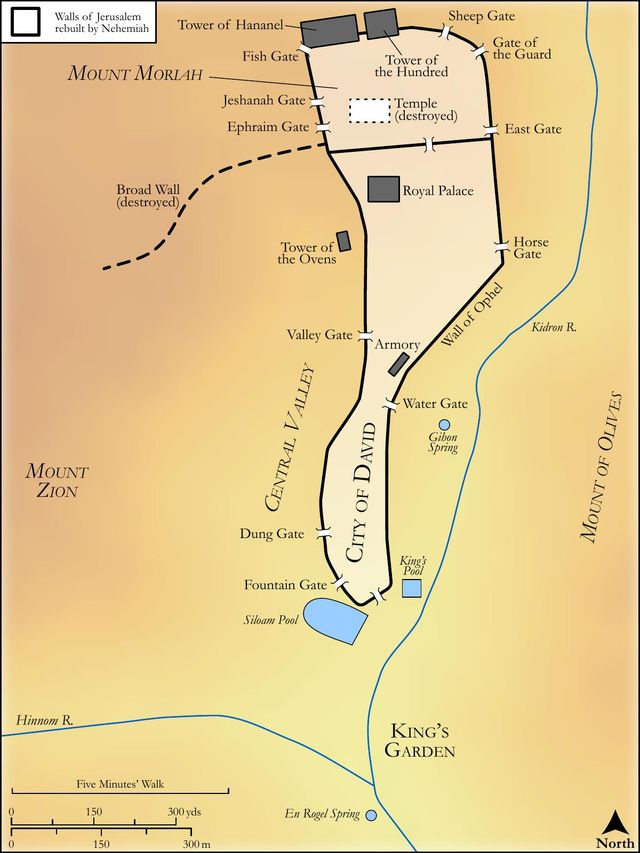
See on the biblical-era map
Study this verse
Public-domain commentary
Matthew Henry
From his Commentary on the Whole Bible. Henry comments on passages, not single verses — this entry covers Nehemiah 12:1–26.
We have here the names, and little more than the names, of a great many priests and Levites, that were eminent in their day among the returned Jews. Why this register should be here inserted by Nehemiah does not appear, perhaps to keep in remembrance those good men, that posterity might know to whom they were beholden, under God, for the happy revival and re-establishment of their religion among them. Thus must we contribute towards the performance of that promise, Psa 112:6, The righteous shall be in everlasting remembrance. Let the memory of the just be blessed, be perpetuated. It is a debt we still owe to faithful ministers to remember our guides, who have spoken to us the word of God, Heb 13:7. Perhaps it is intended to stir up their posterity, who succeeded them in the priest's office and inherited their dignities and preferments, to imitate their courage and fidelity. It is good to know what our godly ancestors and predecessors were, that we may learn thereby what we should be. We have here, 1. The names of the priests and Levites that came up with the first out of Babylon, when Jeshua was high priest. Jeremiah and Ezra are mentioned with the first (Neh 12:1), but, it is supposed, not Jeremiah the prophet nor Ezra the scribe; the fame of the one was long before and that of the other some time after, though both of them were priests. Of one of the Levites it is said (Neh 12:8) that he was over the thanksgiving, that is, he was entrusted to see that the psalms, the thanksgiving psalms, were constantly sung in the temple in due time and manner. The Levites kept their turns in their watches, reliving one another as becomes brethren, fellow-labourers, and fellow-soldiers. 2. The succession of high priests during the Persian monarchy, from Jeshua (or Jesus), who was high priest at the time of the restoration, to Jaddua (or Jaddus), who was high priest when Alexander the Great, after the conquest of Tyre, came to Jerusalem, and paid great respect to this Jaddus, who met him in his pontifical habit, and showed him the prophecy of Daniel, which foretold his conquests. 3. The next generation of priests, who were chief men, and active in the days of Joiakim, sons of the first set. Note, We have reason to acknowledge God's favour to his church, and care of it, in that, as one generation of ministers passes away, another comes. All those who are mentioned Neh 12:1, etc., as eminent in their generation, are again mentioned, though with some variation in several of the names, Neh 12:12, etc., except two, as having sons that were likewise eminent in their generation - a rare instance, that twenty good fathers should leave behind them twenty good sons (for so many here are) that filled up their places. 4. The next generation of Levites, or rather a latter generation; for those priests who are mentioned flourished in the days of Joiakim the high priest, these Levites in the days of Eliashib, Neh 12:22. Perhaps then the forementioned families of the priests began to degenerate, and the third generation of them came short of the first two; but the work of God shall never fail for want of instruments. Then a generation of Levites was raised up, who were recorded chief of the fathers (Neh 12:22), and were eminently serviceable to the interests of the church, and their service not the less acceptable either to God or to his people for their being Levites only, of the lower rank of ministers. Eliashib the high priest being allied to Tobiah (Neh 13:4), the other priests grew remiss; but then the Levites appeared the more zealous, as appears by this, that those who were now employed in expounding (Neh 8:7) and in praying (Neh 9:4, Neh 9:5) were all Levites, not priests, regard being had to their personal qualifications more than to their order. These Levites were some of them singers (Neh 12:24), to praise and give thanks, others of them porters (Neh 12:25), keeping the ward at the thresholds of the gates, and both according to the command of David.
Historical interpretation
Historical reception
1 surviving comment on this verse from the historical church.
So you say to me: Behold the Law prohibits the removal of a pledge, not its acceptance: but it commands that it be returned to the poor, not to everyone. But Ezra also taught us about the bodily pledges, that now, moneylenders, you are not able to come against the profession of your fathers. For when those who had lent money were commanded, and they had taken the pledges of others, to return them, they said: We return them, and we seek nothing from them. Good fathers, who established that the pledges of debtors should be returned: also good moneylenders who responded that they would both return the pledges and not require the money that they had given. And the judgment of your paternal position binds you to this, as well as the statement of the creditors.
Continue studying Nehemiah 12:5 across the web’s major study libraries — every link below opens this exact verse, chapter, or book on the destination site.
Read & Compare
 BibleGatewayThis verse in more than 200 translations and 70 languages.
 Bible.comThe YouVersion reader — hundreds of translations, reading plans, and highlights.
 ESV.orgCrossway's official English Standard Version reader.
 NET BibleThe NET translation with 60,000+ translators' notes on every rendering decision.
 STEP BibleTyndale House's free study tool — original text, vocabulary, and scholarly resources.
 BibliaLogos Bible Software's free web reader.
 USCCBThe New American Bible (Revised Edition) with the U.S. bishops' study notes.
Commentaries
 BibleHub CommentariesDozens of classic commentaries on this verse, gathered on one page.
 StudyLightMore than 100 commentary sets — the largest collection on the web.
 BibleRefPlain-English commentary on what this verse means, verse by verse.
 Enduring WordDavid Guzik's free commentary on this chapter, widely used by Bible teachers.
 Bible Study ToolsVerse commentary alongside Greek and Hebrew study aids.
Original Language & Research
- BibleHub InterlinearThe verse word by word — original language, transliteration, and English.
- BibleHub LexiconEvery word's original-language definition and Strong's entry.
 Blue Letter BibleDeep-study tools — Strong's numbers, concordance, and word studies.
 SefariaThe Hebrew text with Rashi and centuries of Jewish commentary.
Sermons, Hymns & Audio


TrulyRandomVerse is not affiliated with these sites and doesn’t control their content. They’re linked because they’re genuinely useful.
Summary
Nehemiah 12:5 meticulously lists "Miamin, Maadiah, Bilgah," identifying three distinct heads of priestly families who were among the initial wave of returnees from Babylonian exile with Zerubbabel and Jeshua. This verse, embedded within a comprehensive genealogical register, underscores the vital re-establishment of the Aaronic priestly lines in post-exilic Jerusalem, highlighting God's enduring faithfulness in preserving His covenant people and the essential structures required for legitimate worship after the seventy-year captivity. It serves as a foundational record for the spiritual and communal restoration of Judah.
Context
ShowHideLiterary Context
Nehemiah 12 commences with a detailed register of the priests and Levites who returned to Judah following the decree of Cyrus, accompanying Zerubbabel and Jeshua (Nehemiah 12:1-7). This meticulous list is not merely a historical record but serves a crucial theological and administrative purpose. It establishes the legitimate lineage of those responsible for temple service, laying the groundwork for the subsequent organization of worship, the dedication of the rebuilt wall (Nehemiah 12:27-43), and the re-establishment of proper religious practices in post-exilic Jerusalem. The enumeration of names, including those in Nehemiah 12:5, emphasizes the critical importance of lineage and qualification for sacred duties, linking the contemporary community to its historical and covenantal roots. This section acts as a bridge, connecting the physical rebuilding efforts detailed earlier in Nehemiah, such as the reconstruction of Jerusalem's walls, with the spiritual and communal restoration that was equally vital for the nation's identity.
Historical & Cultural Context
The setting for Nehemiah 12:5 is the post-exilic period, specifically after the first major return of exiles from Babylon, which occurred under the leadership of Zerubbabel and Jeshua, as comprehensively documented in Ezra 2. After decades of forced displacement and the devastation of their homeland, the returning community faced the monumental task of not only physically rebuilding Jerusalem and its temple but, more critically, spiritually reconstituting their national and religious identity. In ancient Israel, the priesthood was the cornerstone of national identity and the primary conduit for worship, serving as mediators between God and His people through sacrifices, intercession, and instruction in the Mosaic Law. The legitimacy of the priesthood was strictly contingent upon verifiable Aaronic lineage, making genealogical records, like the one presented in Nehemiah 12:5, absolutely essential for verifying qualifications, ensuring the purity of worship, and maintaining the divinely ordained order. Such meticulous record-keeping was a common administrative practice among the nations, particularly for religious and governmental institutions, but for Israel, it carried divine sanction, affirming the identity and roles of those responsible for upholding the covenant relationship with Yahweh.
Key Themes
ShowHideThe inclusion of Nehemiah 12:5 within this comprehensive register highlights several profound theological and narrative themes central to the post-exilic restoration. Firstly, it powerfully underscores the Continuity of Priesthood, demonstrating God's unwavering faithfulness in preserving the Aaronic line despite the devastation of exile, thereby ensuring that legitimate worship could resume in the rebuilt temple. Secondly, it emphasizes Historical Record and Accountability, reflecting the biblical emphasis on accurate documentation and the profound significance of every individual's role in God's unfolding redemptive plan, even those whose contributions might seem obscure in the grand narrative. Thirdly, these names represent the Faithfulness in Return, embodying the dedication and courage of those who answered the call to return to a desolate homeland, demonstrating profound faith in God's covenant promises amidst severe hardship and uncertainty. Finally, the presence of these priestly heads was crucial for establishing the Foundation for Future Worship, laying the indispensable groundwork for the spiritual life and proper observance of the Law within the restored community, much like the efforts to repopulate Jerusalem ensured the city's vitality and future.
Exposition and Analysis
ShowHideKey Word Analysis
ShowHideThis name, a form of Mijamin, refers to a specific priestly family or division. Its inclusion in this list confirms the presence and legitimacy of this particular priestly house among the returnees. The meticulous recording of such names was crucial for the re-establishment of the temple service, ensuring that all divinely appointed roles were filled by those of proper lineage.
Meaning "ornament of Jah," this name designates another distinct head of a priestly family. The etymological meaning itself carries theological resonance, suggesting a recognition of God's blessing or beautification upon this family, perhaps reflecting a hope or a statement of faith regarding their restored and dignified role in divine service within the rebuilt temple.
Deriving from a root meaning "desistance," Bilgah represents a third distinct priestly lineage. Like the others, the inclusion of this name serves to complete the meticulous record of priestly leaders, affirming the presence of all necessary components for the full and proper re-establishment of temple worship and the sacred rituals in post-exilic Jerusalem.
Verse Breakdown
ShowHide"Miamin"
This clause introduces the first of three priestly family heads mentioned in this verse. His inclusion signifies the continuity and re-establishment of a specific Aaronic priestly division, essential for the proper functioning of temple worship and the administration of sacred duties in the restored community.
"Maadiah"
This refers to another distinct head of a priestly house, whose presence further reinforces the comprehensive nature of the priestly restoration. The listing of Maadiah alongside Miamin indicates that multiple established priestly lines were represented among the returnees, prepared to resume their divinely appointed responsibilities in Jerusalem.
"Bilgah"
The final name in this concise enumeration, Bilgah represents a third priestly leader. Together with Miamin and Maadiah, Bilgah completes this specific segment of the broader list of priestly leaders, who collectively formed the spiritual backbone of the nascent post-exilic community, responsible for upholding sacred rituals, offering sacrifices, and providing instruction in the Law.
Literary Devices
ShowHideNehemiah 12:5, as an integral part of the broader section in Nehemiah 12:1-7, primarily employs the literary device of Catalog or List. This technique is characterized by the systematic enumeration of names, places, or items, serving to establish legitimacy, historical continuity, and meticulous record-keeping. In this context, the list of priestly heads is not merely a dry enumeration but a profound affirmation of order and divine structure within the community's spiritual life. Furthermore, there is a strong element of Genealogy at play, as these lists function to affirm the proper lineage for those serving in sacred roles, directly connecting the post-exilic community to the divinely ordained structures of the Mosaic Law and the covenant. The Repetition of such detailed names and lists across the books of Ezra and Nehemiah further emphasizes the reliability and authenticity of the historical accounts, assuring the reader of the careful preservation of vital information crucial for the community's identity, worship, and future.
Theological and Thematic Connections
ShowHideThe meticulous listing of priestly names in Nehemiah 12:5, though seemingly a simple record, carries profound theological weight. It speaks powerfully to God's unwavering faithfulness in preserving His covenant people and the divinely ordained structures necessary for their worship, even through the crucible of exile and the subsequent arduous restoration. The emphasis on legitimate lineage for temple service underscores the divine order and sanctity of worship, reminding us that God cares deeply about how He is approached and served. These names, representing entire priestly families, signify the re-establishment of a functional, legitimate priesthood, which was absolutely vital for the spiritual health, identity, and continuity of the restored community. It stands as a testament to God's enduring commitment to His promises, ensuring that the means of atonement, intercession, and fellowship remained accessible to His people.
Reflection and Application
ShowHideNehemiah 12:5, a seemingly small fragment within a larger list of names, offers profound and timeless lessons for contemporary believers. It serves as a powerful reminder that every individual, every family, and every seemingly small or obscure contribution plays a vital and recognized role in God's grand redemptive narrative. Just as God meticulously recorded the names of these priests who were essential for the spiritual restoration of Israel, He sees, values, and remembers our faithfulness in our own spheres of influence, no matter how humble, hidden, or mundane our tasks may appear. This verse encourages us to embrace our unique place within the larger story of God's people, recognizing that we are part of a spiritual lineage connected to those who have served Him throughout history. Our commitment to order, integrity, faithful service, and the diligent stewardship of our gifts, even in seemingly insignificant tasks, contributes profoundly to the ongoing work of God's kingdom and the spiritual well-being of the broader community. It calls us to consider how our personal faithfulness contributes to the collective spiritual health and continuity of the church today.
Questions for Reflection
ShowHideFAQ
ShowHideWhy are these names listed in Nehemiah?
ShowHideThese names are listed in Nehemiah primarily to document the legitimate priestly lines that returned from Babylonian exile. This meticulous record-keeping was crucial for several reasons: to ensure the proper and authorized resumption of temple service according to Mosaic Law, to establish the continuity of the Aaronic priesthood, and to demonstrate God's preservation of His covenant people and the structures necessary for their worship. It highlights the importance of order, lineage, and accountability in the post-exilic community's spiritual and communal life, serving as a foundational register for future generations and affirming the divine mandate for the priesthood.
Are these individuals mentioned elsewhere in the Bible?
ShowHideWhile Miamin, Maadiah, and Bilgah specifically as distinct heads of priestly families are primarily found in these detailed lists within Nehemiah and Ezra, the broader concept of priestly divisions and their vital importance is woven throughout the Old Testament. For instance, 1 Chronicles 24 details King David's organization of the priestly courses, providing the historical and administrative precedent for the very divisions that these men represented. Similarly, Ezra 2 provides a parallel list of returnees, including various priestly families, underscoring the consistent biblical emphasis on the legitimacy, continuity, and structured nature of the priesthood within Israel's worship and national identity.
Christ-Centered Fulfillment
ShowHideThe meticulous preservation and re-establishment of the Old Testament priesthood, as vividly exemplified by the listing of names like Miamin, Maadiah, and Bilgah in Nehemiah 12:5, ultimately serves as a profound pointer to the perfect, eternal, and superior priesthood of Jesus Christ. The Aaronic priesthood, though divinely ordained and absolutely essential for the Old Covenant, was inherently temporary and imperfect. It necessitated continuous sacrifices for sin and a succession of priests due to death and human frailty. This intricate system, with its emphasis on lineage, ritual purity, and repeated offerings, functioned as a shadow and a type, foreshadowing the ultimate need for a High Priest who could offer a perfect, once-for-all sacrifice and serve eternally without blemish or end. Jesus fulfills this perfectly as our great high priest, not from the lineage of Aaron, but after the order of Melchizedek, whose priesthood is eternal, unchangeable, and infinitely superior. His once-for-all sacrifice on the cross abrogates the need for daily animal sacrifices, providing perfect and complete atonement for sin, securing eternal redemption. Through Christ, believers are now made part of a kingdom of priests, able to draw near to God directly and confidently through Him, thereby fulfilling the ultimate purpose and promise of the Old Testament priesthood in a new and incomparably greater covenant.