


Matthew 28:7
Bible text: King James Version (1769 Blayney text) · Public domain
Bible text: King James Version with Strong's numbers · Public domain
Bible text: Berean Standard Bible · Public domain
Bible text: American Standard Version (1901) · Public domain
Bible text: World English Bible, Messianic edition · Public domain
Bible text: Geneva Bible (1599) · Public domain
Bible text: Young's Literal Translation · Public domain
- καὶkaiAndG2532CONJConjunction
- ταχὺtachuquicklyG5035ADVAdverb
- πορευθεῖσαιporeutheisaihaving goneG4198V-AOP-NPFVerb Aorist Passive Deponent Participle Nominative Plural Feminine
- εἴπατεeipatedo sayG2036V-2AAM-2PVerb 2nd Aorist Active Imperative 2nd Plural
- τοῖςtoisto theG3588T-DPMDefinite article Dative Plural Masculine
- μαθηταῖςmathētaisdisciplesG3101N-DPMNoun Dative Plural Masculine
- αὐτοῦautouof HimG846P-GSMPersonal pronoun Genitive Singular Masculine
- ὅτιhotithatG3754CONJConjunction
- ἠγέρθηēgerthēHe is risenG1453V-API-3SVerb Aorist Passive Indicative 3rd Singular
- ἀπὸapofromG575PREPPreposition
- τῶνtōntheG3588T-GPMDefinite article Genitive Plural Masculine
- νεκρῶνnekrōndeadG3498A-GPMAdjective Genitive Plural Masculine
- καὶkaiandG2532CONJConjunction
- ἰδοὺidoubeholdG2400INJInterjection
- προάγειproageiHe goes beforeG4254V-PAI-3SVerb Present Active Indicative 3rd Singular
- ὑμᾶςhumasyouG4771P-2APPersonal pronoun Accusative 2nd Plural
- εἰςeisintoG1519PREPPreposition
- τὴνtēn<the>G3588T-ASFDefinite article Accusative Singular Feminine
- Γαλιλαίαν·GalilaianGalileeG1056N-ASF-LNoun Accusative Singular Feminine Location
- ἐκεῖekeithereG1563ADVAdverb
- αὐτὸνautonHimG846P-ASMPersonal pronoun Accusative Singular Masculine
- ὄψεσθεopsestheyou will beholdG3700V-FDI-2PVerb Future Middle Deponent Indicative 2nd Plural
- ἰδοὺidouBeholdG2400INJInterjection
- εἶπονeiponI have toldG2036V-2AAI-1SVerb 2nd Aorist Active Indicative 1st Singular
- ὑμῖνhuminyouG4771P-2DPPersonal pronoun Dative 2nd Plural
English is a literal word-by-word gloss of the Greek, not the KJV's wording. Why?
This is the original text the KJV's translators worked from — each Greek word with its own literal English meaning in this verse, prepared by scholars at Tyndale House, Cambridge. The KJV translates whole sentences, not word by word, so its wording differs: one Greek word can become several English words, and the KJV may choose “charity” where the gloss reads “love”. Both are faithful — they answer different questions. For the KJV's own rendering, switch to the KJV text.
Details
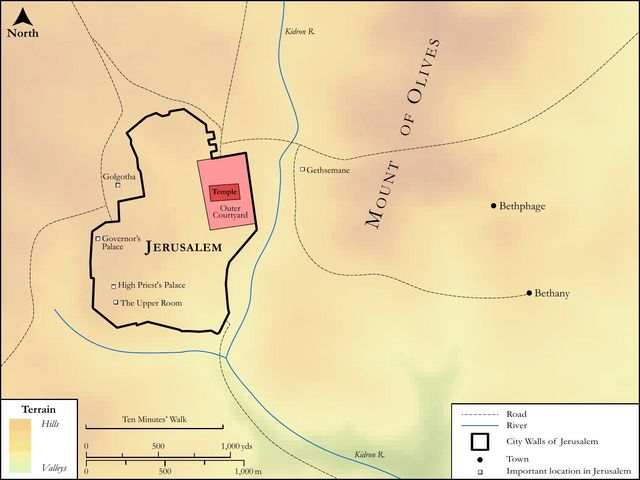
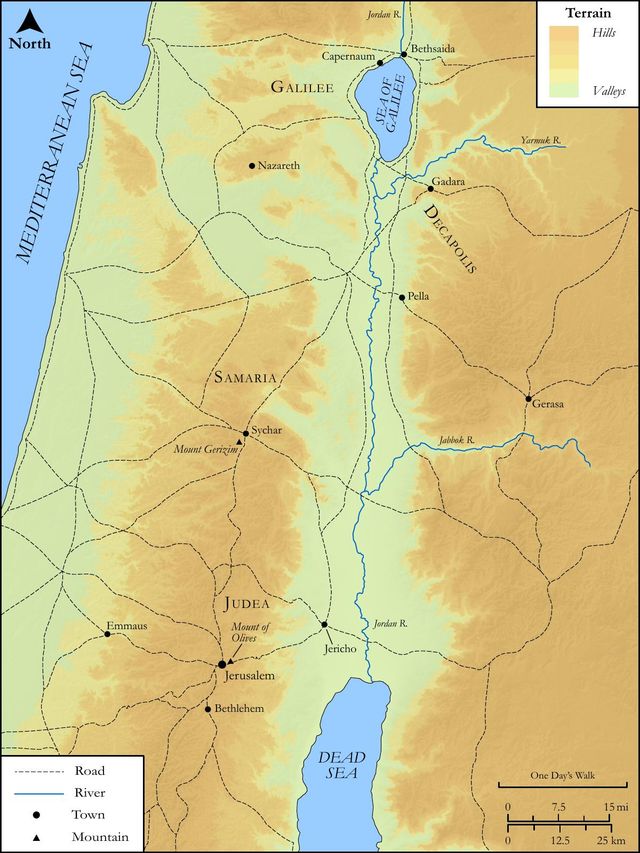
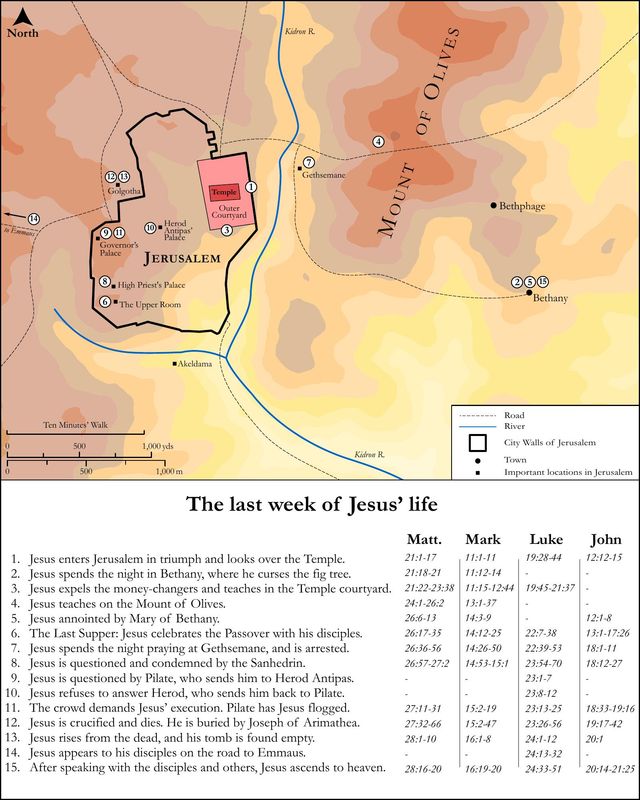
See on the biblical-era maps
Study this verse
Historical interpretation
Five Centuries of Reception
13 surviving comments on this verse. Each one is dated, so this reads as a timeline rather than a list.
Select a marker to jump to its quote. Markers stagger vertically where authors wrote within a few decades of each other.
The earthquake is the might of the resurrection, when the sting of death being blunted, and its darkness illuminated, there is stirred up a quaking of the powers beneath, as the Lord of the heavenly powers rises again.
This is an instance of the mercy of God the Father, to supply the ministry of heavenly power to the Son on His resurrection from the grave; and he is therefore the proclaimer of this first resurrection, that it may be heralded by some attendant token of the Father's good pleasure.
Or the earthquake was to rouse and waken the women, who had come to anoint the body; and as all these things were done in the night-time, it was probable that some of them had fallen asleep.
As much as to say, If ye believe me not, remember His own words. And then follows further proof, when he adds, Come, see the place where the Lord lay.
And, behold, he shall go before you, that is, to save you from danger, lest fear should prevail over faith.
"But in the end of the Sabbath, as it began to dawn towards the first day of the week, came Mary Magdalene and the other Mary to see the sepulchre. And behold there was a great earthquake. For an angel of the Lord descended from Heaven, and came and rolled back the stone from the door of the tomb, and sat upon it. His countenance was like lightning, and his raiment white as snow."
After the resurrection came the angel. Wherefore then came he, and took away the stone? Because of the women, for they themselves had seen Him then in the sepulchre. Therefore that they might believe that He was risen again, they see the sepulchre void of the body. For this cause he removed the stone, for this cause also an earthquake took place, that they might be thoroughly aroused and awakened. For they were come to pour oil on Him, and these things were done at night, and it is likely that some also had become drowsy. And for what intent and cause doth he say, "Fear not ye?" First he delivers them from the dread, and then tells them of the resurrection. And the ye is of one showing them great honor, and indicating, that extreme punishment awaits them that had dared to do, what the others had dared, except they repented. For to be afraid is not for you, he means, but for them that crucified Him.
Having delivered them then from the fear both by his words, and by his appearance (for his form he showed bright, as bearing such good tidings), he went on to say, "I know that ye seek Jesus the Crucified." And he is not ashamed to call Him "crucified;" for this is the chief of the blessings.
"He is risen." Whence is it evident? "As He said." So that if ye refuse to believe me, he would say, remember His words, and neither will ye disbelieve me. Then also another proof, "Come and see the place where He lay." For this he had lifted up the stone, in order that from this too they might receive the proof. "And tell His disciples, that ye shall see Him in Galilee." And he prepares them to bear good tidings to others, which thing most of all made them believe. And He said well "in Galilee," freeing them from troubles and dangers, so that fear should not hinder their faith.
Or, otherwise; This apparent discrepancy in the Evangelists as to the times of their visits is no mark of falsehood, as wicked men urge, but shows the sedulous duty and attention of the women, often going and coming, and not enduring to be long absent from the sepulchre of their Lord.
And, behold, there was a great earthquake. Our Lord, Son at once of God and man, according to His twofold nature of Godhead and of flesh, gives a sign one while of His greatness, another while of His lowliness. Thus, though now it was man who was crucified, and man who was buried, yet the things that were done around show the Son of God.
The Angel in white raiment signifies the glory of His triumph.
The guards lay like dead men in a trance of terror, but the Angel speaks comfort not to them, but to the women, saying, Fear not ye; as much as to say, Let them fear with whom unbelief abides; but do ye who seek the crucified Jesus hear that He has risen again, and has accomplished what He promised.
That if my words fail to convince you, the empty tomb may.
Mystically; He shall go before you into Galilee, that is, into the wallowing stye of the Gentiles, where before was wandering and stumbling, and the foot had no firm and steady resting-place.
(Vers. 6, 7.) Come and see the place where the Lord was laid. And quickly going, say to his disciples. That if you do not believe my words, you may believe in the empty tomb, and go with quick steps and announce to his disciples.
Because he has risen, and behold, he goes before you to Galilee: there you will see him: behold, I have told you.
(Serm. 75.)g. Because the sabbath is illuminated, not taken away, by Christ, Who said, I am not come to destroy the Law, but to fulfil it. (Matt. 5:17.) It is illuminated that it may lighten into the Lord's day, and shine forth in the Church, when it had hitherto burnt dim, and been obscured by the Jews in the Synagogue.
It follows, Came Mary Magdalen, and the other Mary, &c. Late runs woman for pardon, who had run early to sin; in paradise she had taken up unbelief, from the sepulchre she hastes to take up faith; she now hastens to snatch life from death, who had before snatched death from life. And it is not, They come, but came, (in the singular,) for in mystery and not by accident, the two came under one name. She came, but altered; a woman, changed in life, not in name; in virtue, not in sex. The women go before the Apostles, bearing to the Lord's sepulchre a type of the Churches; the two Marys, to wit. For Mary is the name of Christ's mother; and one name is twice repeated for two women, because herein is figured the Church coming out of the two nations, the Gentiles and the Jews, and being yet one. Mary came to the sepulchre, as to the womb of the resurrection, that Christ might be the second time born out of the sepulchre of faith, who after the flesh had been born of her womb; and that as a virgin had borne Him into this life present, so a sealed sepulchre might bring Him forth into life eternal. It is proof of Deity to have left a womb virgin after birth, and no less to have come forth in the body from a closed sepulchre.
(Serm. 77 et 74.) If the earth thus quaked when the Lord rose again to the pardon of the Saints, how will it quake when He shall rise again to the punishment of the wicked? As the Prophet speaks, The earth trembled when the Lord rose again to judgment. (Ps. 76:8.) And how will it endure the Lord's presence, when it was unable to endure the presence of His Angel? And the Angel of the Lord descended from heaven. For when Christ arose, death was destroyed, commerce with heaven is restored to things on the earth; and woman, who had of old held communication to death with the Devil, now holds communication to life with the Angel.
(Serm. 74.) He said not 'rolled,' but rolled back; because the rolling to of the stone was a proof of death; the rolling it back asserted the resurrection. The order of things is changed; The Tomb devours death, and not the dead; the house of death becomes the mansion of life; a new law is imposed upon it, it receives a dead, and renders up a living, man. It follows, And sat thereon. He sat down, who was incapable of weariness; but sat as a teacher of the faith, a master of the Resurrection; upon the stone, that the firmness of his seat might assure the sted fastness of the believers; the Angel rested the foundations of the Faith upon that rock, on which Christ was to found His Church. Or, by the stone of the sepulchre may be denoted death, under which we all lay; and by the Angel sitting thereon, is shown that Christ hath by His might subdued death.
(Serm. 75.) The splendour of his countenance is distinct from the shining of his raiment; his countenance is compared to lightning, his raiment to snow; for the lightning is in heaven, snow on the earth; as the Prophet saith, Praise the Lord from the earth; fire and hail, snow and vapours. (Ps. 148:7.) Thus in the Angel's countenance is preserved the splendour of his heavenly nature; in his raiment is shown the grace of human communion. For the appearance of the Angel that talked with them is so ordered, that eyes of flesh might endure the still splendour of his robes, and by reason of his shining countenance they might tremble before the messenger of their Maker.
(Serm. 77.) But what means this raiment where there is no need of a covering? The Angel figures our dress, our shape, our likeness in the Resurrection, when man is sufficiently clothed by the splendour of his own body.
(Serm. 75.) For they kept watch over Him with a purpose of cruelty, not with the solicitude of affection. And no man can stand who is forsaken by his own conscience, or troubled with a sense of guilt. Hence the Angel confounds the wicked, and comforts the good.
(Serm. 77.) For their faith had been bowed by the cruel storm of His Passion, so that they sought Him yet as crucified and dead; I know that ye seek Jesus which was crucified; the weight of the trial had bent them to look for the Lord of heaven in the tomb, but, He is not here.
(Serm. 76.) Thus the Angel first announces His name, declares His Cross, and confesses His Passion; but straightway proclaims Him risen and their Lord. An Angel after such sufferings, after the grave acknowledges Him Lord; how then shall man judge that the Godhead was diminished by the flesh, or that His Might failed in His Passion. He says, Which was crucified, and points out the place where the Lord was laid, that they should not think that it was another, and not the same, who had risen from the dead. And if the Lord reappears in the same flesh, and gives evidence of His resurrection, why should man suppose that he himself shall reappear in other flesh? Or why should a slave disdain his own flesh, seeing the Lord did not change ours?
(Serm. 77.) As much as to say, Woman, now thou art healed, return to the man, and persuade him! to faith, whom thou didst once persuade to treachery. Carry to man the proof of the Resurrection, to whom thou didst once carry counsel of destruction.
The angel goes on to say, “Go quickly and tell his disciples that he has risen; and behold, he goes before you into Galilee; you will see him there.” The angel here sends not merely the women but the church in the two women. He sends the one so that by sending her he may spread the news far and wide. Here the angel is sending the bride to the bridegroom.
(Hom. de Resur. iii.) After the mockings and scourgings, after the mingled draughts of vinegar and gall, the pains of the cross, and the wounds, and finally after death itself and Hades, there rose again from the grave a renewed flesh, there returned from obstruction a hidden life, health chained up in death broke forth, with fresh beauty from its ruin.
It is to be known that Matthew designs to hint to us a mystical meaning, of how great worthiness this most holy night drew from the noble conquest of death, and the Resurrection of Our Lord. With this purpose he says, On the evening of the Sabbath. For whereas according to the wonted succession of the hours of the day, evening does not dawn towards day, but on the contrary darkens towards night, these words show that the Lord shed, by the light of His resurrection joy and brilliance over the whole of this night.
The rolling back of the stone signifies the opening of Christ's sacraments, which were covered by the letter of the Law. For the Law having been writen on stones, is here denoted by the stone.
"But go, tell His disciples and Peter that He goes before you into Galilee." We must ask why, when the disciples are named, Peter is designated by name. But if the angel had not expressly named him who had denied his Master, he would not have dared to come among the disciples. Therefore he is called by name, lest he despair because of his denial. In this matter we must consider why Almighty God permitted him whom He had determined to place over the whole Church to fear the voice of a servant girl and to deny himself. This we recognize was done by a dispensation of great mercy, so that he who was to be the Pastor of the Church might learn through his own fault how he ought to show mercy to others. Therefore He first showed him to himself, and then set him over the rest, so that from his own weakness he might learn how mercifully he should bear with the weaknesses of others.
It is well said of our Redeemer: "He goes before you into Galilee; there you will see him, as he told you." For Galilee is interpreted as "migration accomplished." Indeed, our Redeemer had already migrated from passion to resurrection, from death to life, from punishment to glory, from corruption to incorruption. And he was first seen by the disciples in Galilee after the resurrection, because we will joyfully see the glory of his resurrection afterward, if we now migrate from vices to the heights of virtues. Therefore, he who is announced at the tomb is shown in the migration, because he who is recognized in the mortification of the flesh is seen in the migration of the mind.
(Hom. in Ev. xxi. 4.) Or otherwise; Lightning inspires terror; snow is an emblem of equity; and as the Almighty God is terrible to sinners and mild to the righteous, so this Angel is rightly a witness of His resurrection, and is exhibited with a countenance as lightning, and with raiment as snow, that by His presence He might terrify the wicked, and comfort the good; and so it follows, And for fear of him the keepers did shake.
(Hom. ubi sup.) The Lord is rightly seen by His disciples in Galilee, forasmuch as He had already passed from death to life, from corruption to incorruption; for such is the interpretation of Galilee, 'Transmigration.' Happy women! who merited to announce to the world the triumph of the Resurrection! More happy souls, who in the day of judgment, when the reprobate are smitten with terror, shall have merited to enter the joy of the blessed resurrection!
These who had not the faith of love were shaken with a panic fear; and they who would not believe the truth of the resurrection become themselves as dead men.
His fleshly presence, that is; for His spiritual presence is absent from no place. He is risen, as he said.
And this glad tiding is given not to you alone for the secret comfort of your own hearts, but ye must extend it to all who love Him; Go quickly, and tell his disciples.
Continue studying Matthew 28:7 across the web’s major study libraries — every link below opens this exact verse, chapter, or book on the destination site.
Read & Compare
 BibleGatewayThis verse in more than 200 translations and 70 languages.
 Bible.comThe YouVersion reader — hundreds of translations, reading plans, and highlights.
 ESV.orgCrossway's official English Standard Version reader.
 NET BibleThe NET translation with 60,000+ translators' notes on every rendering decision.
 STEP BibleTyndale House's free study tool — original text, vocabulary, and scholarly resources.
 BibliaLogos Bible Software's free web reader.
 USCCBThe New American Bible (Revised Edition) with the U.S. bishops' study notes.
Commentaries
 BibleHub CommentariesDozens of classic commentaries on this verse, gathered on one page.
 StudyLightMore than 100 commentary sets — the largest collection on the web.
 BibleRefPlain-English commentary on what this verse means, verse by verse.
 Enduring WordDavid Guzik's free commentary on this chapter, widely used by Bible teachers.
 Bible Study ToolsVerse commentary alongside Greek and Hebrew study aids.
Original Language & Research
- BibleHub InterlinearThe verse word by word — original language, transliteration, and English.
- BibleHub LexiconEvery word's original-language definition and Strong's entry.
 Blue Letter BibleDeep-study tools — Strong's numbers, concordance, and word studies.
 CNTR CollationThe earliest Greek manuscripts of this verse, collated letter by letter.
Sermons, Hymns & Audio


TrulyRandomVerse is not affiliated with these sites and doesn’t control their content. They’re linked because they’re genuinely useful.
Summary
Matthew 28:7 records the angel's urgent commission to Mary Magdalene and the "other Mary" at the empty tomb. They are instructed to swiftly inform Jesus' disciples of His resurrection from the dead and to direct them to Galilee, where Jesus promised to meet them. This verse serves as the initial proclamation of the triumphant resurrection and sets the stage for Christ's post-resurrection appearances and the subsequent Great Commission.
Context
ShowHideLiterary Context
Matthew 28:7 is nestled within the climactic narrative of Jesus' resurrection. Immediately preceding this verse, Mary Magdalene and the "other Mary" arrive at the tomb at dawn on the first day of the week. They witness a dramatic earthquake, the descent of an angel of the Lord, who rolls back the stone from the tomb's entrance and sits upon it. The angel's appearance is described as dazzling, terrifying the Roman guards, who become like dead men. This verse, therefore, delivers the angel's direct message to these women, who are the first human recipients of the news of the empty tomb and the glorious reality of Christ's triumph over death. It transitions from the awe-inspiring display of divine power to the urgent dissemination of the good news.
Historical & Cultural Context
In first-century Jewish culture, women were generally not considered reliable legal witnesses, yet God chose women to be the first witnesses and messengers of the resurrection. This choice underscores God's counter-cultural methods and elevates the status of these faithful women. The practice of visiting tombs to mourn and anoint bodies was a common Jewish custom, explaining why the women were at the tomb so early. Galilee, mentioned as the meeting place, was Jesus' primary area of ministry, contrasting with Jerusalem, the center of Jewish religious authority and the place of His crucifixion. This return to Galilee symbolizes a new beginning, a re-gathering of His dispersed followers in a familiar, less hostile environment, away from the immediate scrutiny of the Jerusalem authorities.
Key Themes
ShowHideThis verse is foundational to several key themes in Matthew and the broader New Testament. Foremost is the Reality of the Resurrection, unequivocally declared: "he is risen from the dead." This truth validates all of Jesus' claims and prophecies and forms the cornerstone of Christian faith, as profoundly articulated in 1 Corinthians 15:3-4. Another crucial theme is the Urgency of the Good News, conveyed by the command "go quickly." The resurrection message is not to be delayed but to be proclaimed with immediate zeal. This leads directly to the theme of Divine Commission and Evangelism, as the women are tasked with being the first evangelists, "tell his disciples." This initial instruction foreshadows the Great Commission given later in the chapter, establishing a pattern for spreading the gospel. Finally, the Promise of a Future Encounter in Galilee provides assurance and direction, fulfilling Jesus' earlier prophecies (Matthew 26:32) and setting the stage for His post-resurrection appearances and further instructions to His followers.
Exposition and Analysis
ShowHideKey Word Analysis
ShowHideThis verb signifies "to awaken," "to raise up," or "to rouse from death." Its use here emphasizes that Jesus was not merely resuscitated (brought back to a former state of life) but divinely raised to a new, glorified, and eternal life by God's power. It denotes a permanent triumph over death and the grave, a definitive act of God that inaugurates a new reality.
This adverb means "swiftly," "without delay," or "soon." The angel's instruction to "go quickly" underscores the immediate and vital nature of the resurrection announcement. It highlights the urgency required in proclaiming this life-altering good news, emphasizing that there should be no hesitation or procrastination in sharing such a momentous truth.
Derived from a word meaning "to learn," a disciple is a learner, a pupil, or a follower. The angel's directive to tell "his disciples" specifies the initial audience for this world-changing news. It indicates that the message was first for those who had been closely associated with Jesus, who had learned from Him, and who would be entrusted with carrying on His mission.
Verse Breakdown
ShowHide"And go quickly, and tell his disciples"
This is a direct, urgent command from the angel, initiating the first evangelistic mission of the Christian era. The "go quickly" emphasizes the immediate importance of the news, while "tell his disciples" designates the specific recipients of this foundational message. It's a divine commission to spread the truth of the resurrection.
"that he is risen from the dead"
This is the core message, the glorious truth that forms the bedrock of Christian faith. It is a declarative statement of Jesus' triumph over death, confirming His divine identity and validating all His claims. This phrase marks the fulfillment of Old Testament prophecies and Jesus' own predictions about His resurrection.
"and, behold, he goeth before you into Galilee; there shall ye see him"
This part provides specific instruction and a promise. "Behold" (ἰδού, idoú) draws attention to a significant upcoming event. Jesus is not merely risen but is actively leading the way to Galilee. This promise of a future encounter serves as both an assurance and a directive, giving the disciples a clear destination and the expectation of seeing their resurrected Lord.
"lo, I have told you."
The angel concludes with a strong affirmation, reiterating the certainty and divine authority of the message. "Lo" (ἰδού, idoú) again emphasizes the importance and reliability of what has been said. This concluding phrase underscores that the message is not a suggestion but a divinely ordained instruction and a guaranteed promise.
Literary Devices
ShowHideThe passage employs several potent literary devices. The Imperative Mood is prominent, with commands like "go quickly" and "tell" conveying the urgency and divine authority of the angel's message. This immediate call to action emphasizes the critical nature of the resurrection news. Repetition of the Greek word ἰδού (idoú), translated as "behold" and "lo," serves as a rhetorical marker, drawing the listener's attention to the momentous nature of the announcement and reinforcing the certainty and divine origin of the message. Furthermore, the angel's words create Anticipation and Foreshadowing by directing the disciples to Galilee, setting the stage for Jesus' post-resurrection appearances and further instructions, which would culminate in the Great Commission. This specific geographical directive provides both comfort and purpose, guiding the disciples toward their next encounter with the risen Christ.
Theological and Thematic Connections
ShowHideMatthew 28:7 stands as a pivotal moment in salvation history, marking the definitive victory of life over death and the inauguration of the new covenant. The resurrection of Jesus is not merely a historical event but a theological truth that underpins the entire Christian faith. It validates Christ's identity as the Son of God, His atoning work on the cross, and His power over sin and death. The angel's commission to the women highlights God's inclusive nature, choosing those often overlooked to be the first bearers of the gospel. This divine mandate to "go and tell" establishes the church's enduring mission: to proclaim the good news of the risen Christ to all nations, beginning with those closest to Him and extending to the ends of the earth. The promise of meeting in Galilee signifies a new beginning, a re-gathering of the scattered flock under the leadership of their resurrected Shepherd, preparing them for the global mission ahead.
Reflection and Application
ShowHideMatthew 28:7 is a powerful reminder of the urgency and privilege of sharing the Gospel. Just as the women were commissioned to "go quickly" and proclaim the resurrection, believers today are called to be active messengers of this life-transforming truth. The initial fear and astonishment of the women quickly gave way to obedience and joy, demonstrating that even in the face of overwhelming divine encounters, our response should be one of faithful action. This verse challenges us to consider how readily and enthusiastically we share the central message of our faith – that Jesus is risen! It also reinforces the reliability of God's promises; just as Jesus met His disciples in Galilee as promised, He continues to meet us in our lives, fulfilling His word and guiding us. Our task is to go where He leads, proclaim what He has done, and trust in His unfailing presence.
Questions for Reflection
ShowHideFAQ
ShowHideWhy was Galilee chosen as the meeting place for Jesus and His disciples?
ShowHideGalilee was Jesus' primary region of ministry, where He spent most of His earthly life and performed many miracles. It was a familiar and relatively safe territory for His disciples, away from the hostile religious authorities in Jerusalem. The choice of Galilee for the post-resurrection appearances symbolizes a new beginning for the disciples and the nascent church, a return to the roots of Jesus' public ministry before the global mission. It also fulfills Jesus' own prophecy in Matthew 26:32, demonstrating His faithfulness to His word.
What is the significance of the angel's command to "tell his disciples"?
ShowHideThe command to "tell his disciples" is profoundly significant because it initiates the spread of the Gospel message. It designates the disciples as the primary recipients of this foundational truth, who would then be commissioned to carry it further. This act establishes the pattern for evangelism: the good news is received, and then it is shared. It also highlights the importance of community and fellowship among believers, as the message is first given to those who are part of Jesus' inner circle, preparing them for their future roles as apostles and leaders of the church.
Christ-Centered Fulfillment
ShowHideMatthew 28:7, with its declaration that "he is risen from the dead," is the very heart of Christ-centered fulfillment. The resurrection of Jesus is the ultimate validation of His identity as the Son of God and the triumphant culmination of His redemptive work. It confirms that His death on the cross was not a defeat but a victorious sacrifice for the sins of humanity, leading to a new creation and a new covenant. Through His resurrection, Christ conquered sin, death, and the grave, offering eternal life and reconciliation with God to all who believe. This pivotal event ushers in the age of the Holy Spirit, empowering believers to live a new life in Christ, as described in Romans 6:4. The angel's instruction to "go quickly, and tell his disciples" directly foreshadows the Great Commission, where the risen Christ empowers His followers to make disciples of all nations. Thus, Matthew 28:7 is not just a historical report but a living testament to the power of God, revealing Jesus as the resurrected Lord who continues to lead His people, fulfill His promises, and commission them to share the life-giving truth of His victory, which is the very essence of the Gospel proclaimed in 1 Corinthians 15:20-22.