


Mark 4:3
Bible text: King James Version (1769 Blayney text) · Public domain
Bible text: Berean Standard Bible · Public domain
Bible text: American Standard Version (1901) · Public domain
Bible text: World English Bible, Messianic edition · Public domain
Bible text: Geneva Bible (1599) · Public domain
Bible text: Young's Literal Translation · Public domain
- ἈκούετεAkouetedo listen!G191V-PAM-2PVerb Present Active Imperative 2nd Plural
- ἸδοὺIdouBeholdG2400INJInterjection
- ἐξῆλθενexēlthenwent outG1831V-2AAI-3SVerb 2nd Aorist Active Indicative 3rd Singular
- ὁhothe [one]G3588T-NSMDefinite article Nominative Singular Masculine
- σπείρωνspeirōnsowingG4687V-PAP-NSMVerb Present Active Participle Nominative Singular Masculine
- τοῦtouof theG3588T-GSNDefinite article Genitive Singular Neuter
- σπεῖραι·speiraito sowG4687V-AANVerb Aorist Active Infinitive
English is a literal word-by-word gloss of the Greek, not the KJV's wording. Why?
This is the original text the KJV's translators worked from — each Greek word with its own literal English meaning in this verse, prepared by scholars at Tyndale House, Cambridge. The KJV translates whole sentences, not word by word, so its wording differs: one Greek word can become several English words, and the KJV may choose “charity” where the gloss reads “love”. Both are faithful — they answer different questions. For the KJV's own rendering, switch to the KJV text.
Details
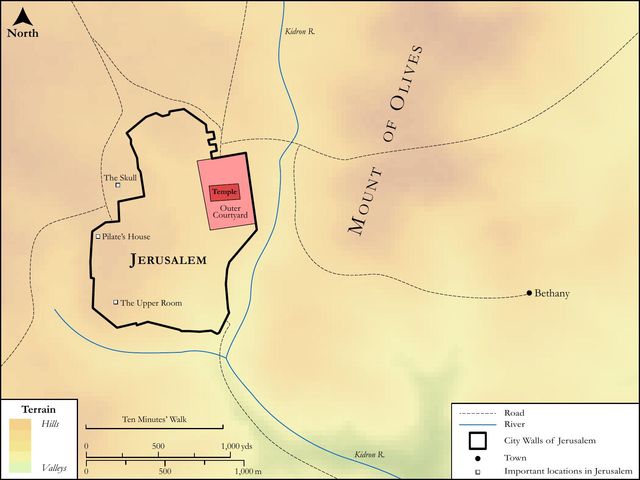
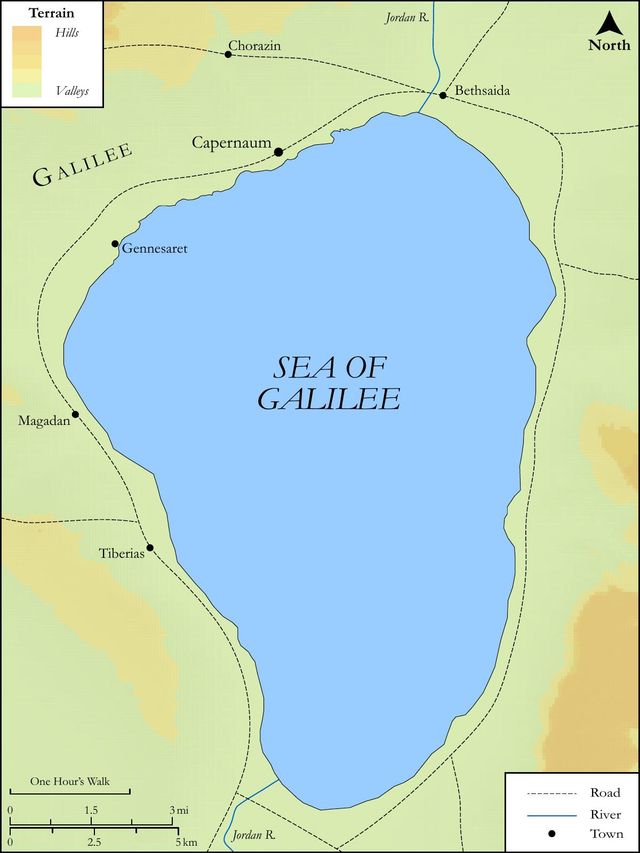
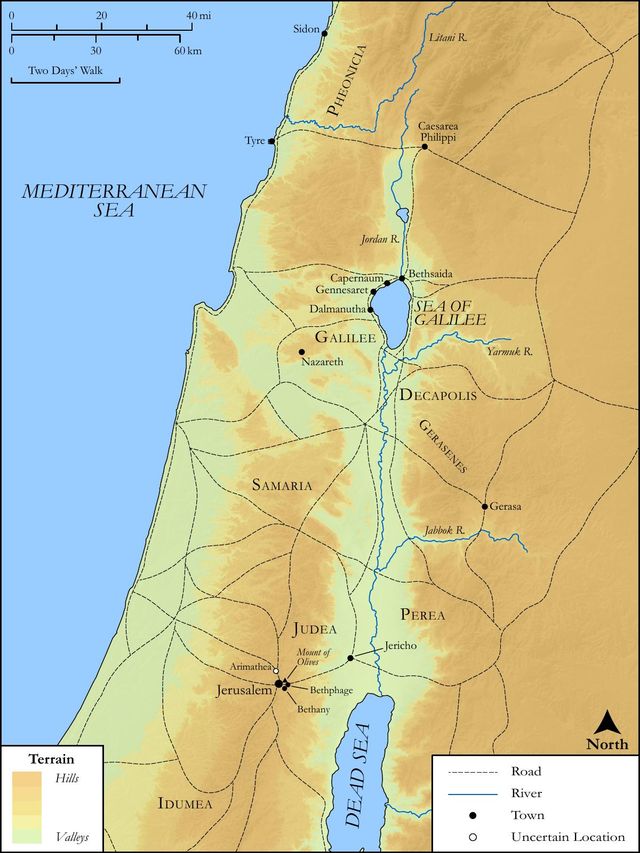
See on the biblical-era maps
Study this verse
Public-domain commentary
Matthew Henry
From his Commentary on the Whole Bible. Henry comments on passages, not single verses — this entry covers Mark 4:1–20. His two-level outline is real structure in the source text, so it is rendered as structure.
The foregoing chapter began with Christ's entering into the synagogue (Mar 4:1); this chapter begins with Christ's teaching again by the sea side. Thus he changed his method, that if possible all might be reached and wrought upon. To gratify the nice and more genteel sort of people that had seats, chief seats, in the synagogue, and did not care for hearing a sermon any where else, he did not preach always by the sea side, but, having liberty, went often into the synagogue, and taught there; yet, to gratify the poor, the mob, that could not get room in the synagogue, he did not always preach there, but began again to teach by the sea side, where they could come within hearing. Thus are we debtors both to the wise and to the unwise, Rom 1:14.
Here seems to be a new convenience found out, which had not been used before, though he had before preached by the sea side (Mar 2:13), and that was - his standing in a ship, while his hearers stood upon the land; and that inland sea of Tiberias having no tide, there was no ebbing and flowing of the waters to disturb them. Methinks Christ's carrying his doctrine into a ship, and preaching it thence, was a presage of his sending the gospel to the isles of the Gentiles, and the shipping off of the kingdom of God (that rich cargo) from the Jewish nation, to be sent to a people that would bring forth more of the fruits of it. Now observe here,
I.The way of teaching that Christ used with the multitude (Mar 4:2); He taught them many things, but it was by parables or similitudes, which would tempt them to hear; for people love to be spoken to in their own language, and careless hearers will catch at a plain comparison borrowed from common things, and will retain and repeat that, when they have lost, or perhaps never took, the truth which it was designed to explain and illustrate: but unless they would take pains to search into it, it would but amuse them; seeing they would see, and not perceive (Mar 4:12); and so, while it gratified their curiosity, it was the punishment of their stupidity; they wilfully shut their eyes against the light, and therefore justly did Christ put it into the dark lantern of a parable, which had a bright side toward those who applied it to themselves, and were willing to be guided by it; but to those who were only willing for a season to play with it, it only gave a flash of light now and then, but sent them away in the dark. It is just with God to say of those that will not see, that they shall not see, and to hide from their eyes, who only look about them with a great deal of carelessness, and never look before them with any concern upon the things that belong to their peace.
II.The way of expounding that he used with his disciples; When he was alone by himself, not only the twelve, but others that were about him with the twelve, took the opportunity to ask him the meaning of the parables, Mar 4:10. They found it good to be about Christ; the nearer him the better; good to be with the twelve, to be conversant with those that are intimate with him. And he told them what a distinguishing favour it was to them, that they were made acquainted with the mystery of the kingdom of God, Mar 4:11. The secret of the Lord was with them. That instructed them, which others were only amused with, and they were made to increase in knowledge by every parable, and understood more of the way and method in which Christ designed to set up his kingdom in the world, while others were dismissed, never the wiser. Note, Those who know the mystery of the kingdom of heaven, must acknowledge that it is given to them; they receive both the light and the sight from Jesus Christ, who, after his resurrection, both opened the scriptures, and opened the understanding, Luk 24:27, Luk 24:45.
In particular, we have here,
1.The parable of the sower, as we had it, Mat 13:3, etc. He begins (Mar 4:3), with, Hearken, and concludes (Mar 4:9) with, He that hath ears to hear, let him hear. Note, The words of Christ demand attention, and those who speak from him, may command it, and should stir it up; even that which as yet we do not thoroughly understand, or not rightly, we must carefully attend to, believing it to be both intelligible and weighty, that at length we may understand it; we shall find more in Christ's sayings than at first there seemed to be.
2.The exposition of it to the disciples. Here is a question Christ put to them before he expounded it, which we had not in Matthew (Mar 4:13); "Know ye not this parable? Know ye not the meaning of it? How then will ye know all parables?" (1.) "If ye know not this, which is so plain, how will ye understand other parables, which will be more dark and obscure? If ye are gravelled and run aground with this, which bespeaks so plainly the different success of the word preached upon those that hear it, which ye yourselves may see easily, how will ye understand the parables which hereafter will speak of the rejection of the Jews, and the calling of the Gentiles, which is a thing ye have no idea of?" Note, This should quicken us both to prayer and pains that we may get knowledge, that there are a great many things which we are concerned to know; and if we understand not the plain truths of the gospel, how shall we master those that are more difficult? Vita brevis, ars longa - Life is short, art is long. If we have run with the footmen, and they have wearied us, and run us down, then how shall we contend with horses? Jer 12:5. (2.) "If ye know not this, which is intended for your direction in hearing the word, that ye may profit by it; how shall ye profit by what ye are further to hear? This parable is to teach you to be attentive to the word, and affected with it, that you may understand it. If ye receive not this, ye will not know how to use the key by which ye must be let into all the rest." If we understand not the rules we are to observe in order to our profiting by the word, how shall we profit by any other rule? Observe, Before Christ expounds the parable, [1.] He shows them how sad their case was, who were not let into the meaning of the doctrine of Christ; To you it is given, but not to them. Note, It will help us to put a value upon the privileges we enjoy as disciples of Christ, to consider the deplorable state of those who want such privileges, especially that they are out of the ordinary way of conversion; lest they should be converted, and their sins should be forgiven them. Mar 4:12. Those only who are converted, have their sins forgiven them: and it is the misery of unconverted souls, that they lie under unpardoned guilt. [2.] He shows them what a shame it was, that they needed such particular explanations of the word they heard, and did not apprehend it at first. Those that would improve in knowledge, must be made sensible of their ignorance.
Having thus prepared them for it, he gives them the interpretation of the parable of the sower, as we had it before in Matthew. Let us only observe here,
First, That in the great field of the church, the word of God is dispensed to all promiscuously; The sower soweth the word (Mar 4:14), sows it at a venture, beside all waters, upon all sorts of ground (Isa 32:20), not knowing where it will light, or what fruit it will bring forth. He scatters it, in order to the increase of it. Christ was awhile sowing himself, when he went about teaching and preaching; now he sends his ministers, and sows by their hand. Ministers are sowers; they have need of the skill and discretion of the husbandman (Isa 28:24-26); they must not observe winds and clouds (Ecc 11:4, Ecc 11:6), and must look up to God, who gives seed to the sower, Co2 9:10.
Secondly, That of the many that hear the word of the gospel, and read it, and are conversant with it, there are, comparatively, but few that receive it, so as to bring forth the fruits of it; here is but one in four, that comes to good. It is sad to think, how much of the precious seed of the word of God is lost, and sown in vain; but there is a day coming when lost sermons must be accounted for. Many that have heard Christ himself preach in their streets, will hereafter be bidden to depart from him; those therefore who place all their religion in hearing, as if that alone would save them, do but deceive themselves, and build their hope upon the sand, Jam 1:22.
Thirdly, Many are much affected with the word for the present, who yet receive no abiding benefit by it. The motions of soul they have, answerable to what they hear, are but a mere flash, like the crackling of thorns under a pot. We read of hypocrites, that they delight to know God's ways (Isa 58:2); of Herod, that he heard John gladly (Mar 6:20); of others, that they rejoiced in his light (Joh 5:35); of those to whom Ezekiel was a lovely song (Eze 33:32); and those represented here by the stony ground, received the word with gladness, and yet came to nothing.
Fourthly, The reason why the word doth not leave commanding, abiding, impressions upon the minds of the people, is, because their hearts are not duly disposed and prepared to receive it; the fault is in themselves, not in the word; some are careless forgetful hearers, and these get no good at all by the word; it comes in at one ear, and goes out at the other; others have their convictions overpowered by their corruptions, and they lose the good impressions the word has made upon them, so that they get no abiding good by it.
Fifthly, The devil is very busy about loose, careless hearers, as the fowls of the air go about the seed that lies above ground; when the heart, like the highway, is unploughed, unhumbled, when it lies common, to be trodden on by every passenger, as theirs that are great company-keepers, then the devil is like the fowls; he comes swiftly, and carries away the word ere we are aware. When therefore these fowls come down upon the sacrifices, we should take care, as Abram did, to drive them away (Gen 15:11); that, though we cannot keep them from hovering over our heads, we may not let them nestle in our hearts.
Sixthly, Many that are not openly scandalized, so as to throw off their profession, as they on the stony ground did, yet have the efficacy of it secretly choked and stifled, so that it comes to nothing; they continue in a barren, hypocritical profession, which brings nothing to pass, and so go down as certainly, though more plausibly, to hell.
Seventhly, Impressions that are not keep, will not be durable, but will wear off in suffering, trying times; like footsteps on the sand of the sea, which are gone the next high tide of persecution; when that iniquity doth abound, the love of many to the ways of God waxeth cold; many that keep their profession in fair days, lose it in a storm; and do as those that go to sea only for pleasure, come back again when the wind arises. It is the ruin of hypocrites, that they have no root; they do not act from a living fixed principle; they do not mind heart-work, and without that religion is nothing; for he is the Christian, that is one inwardly.
Eighthly, Many are hindered from profiting by the word of God, by their abundance of the world. Many a good lesson of humility, charity, self-denial, and heavenly-mindedness, is choked and lost by that prevailing complacency in the world, which they are apt to have, on whom it smiles. Thus many professors, that otherwise might have come to something, prove like Pharaoh's lean kine and thin ears.
Ninthly, Those that are not encumbered with the cares of the world, and the deceitfulness of riches, may yet lose the benefit of their profession by the lusts of other things; this is added here in Mark; by the desires which are about other things (so Dr. Hammond), an inordinate appetite toward those things that are pleasing to sense or to the fancy. Those that have but little of the world, may yet be ruined by an indulgence of the body.
Tenthly, Fruit is the thing that God expects and requires from those that enjoy the gospel: fruit according to the seed; a temper of mind, and a course of life, agreeable to the gospel; Christian graces daily exercised, Christian duties duly performed. This is fruit, and it will abound to our account.
Lastly, No good fruit is to be expected but from good seed. If the seed be sown on good ground, if the heart be humble, and holy, and heavenly, there will be good fruit, and it will abound sometimes even to a hundred fold, such a crop as Isaac reaped, Gen 26:12.
Historical interpretation
Twelve Centuries of Reception
12 surviving comments on this verse. Each one is dated, so this reads as a timeline rather than a list.
Select a marker to jump to its quote. Markers stagger vertically where authors wrote within a few decades of each other.
But He began to teach at the sea, that the place of His teaching might point out the bitter feelings and instability of His hearers.
A parable is a comparison made between things discordant by nature, under some similitude. For parable is the Greek for a similitude, when we point out by some comparisons what we would have understood. In this way we say an iron man, when we desire that he should be understood to be hardy and strong; when to be swift, we compare him to winds and birds. But He speaks to the multitudes in parables, with His usual providence, that those who could not take in heavenly things, might conceive what they heard by an earthly similitude.
For it was necessary that they to whom He spoke in parables should ask for what they did not understand, and learn by the Apostle whom they despised, the mystery of the kingdom which they themselves had not.
Or else the fruits of the earth are contained in thirty, sixty, and a hundred-fold, that is, in the Law, the Prophets, and the Gospel.
Think of the various ways, dear friends, by which the master points us toward the coming resurrection, by which the Lord Jesus Christ was made the firstfruit when he raised him from the dead. Let us observe, dear friends, how something like resurrection is so often anticipated in the course of nature. Day and night, for example: the night falls asleep, and day arises; day departs, and night returns. Or consider the planting of crops: How and in what manner does the sowing take place? The sower goes forth and casts into the earth each of the seeds. They fall into the dry and bare ground and decay. Then out of their decay the majesty of God’s providence raises them up, and from being one seed, many grow up and bring forth fruit. Even more dramatically, recall that remarkable wonder which has been reported in eastern regions in the vicinity of Arabia, of a bird named Phoenix. This bird is said to be a unique species, living perhaps five hundred years. When the time of its dissolution and death arrives, it makes for itself a coffinlike nest of frankincense and myrrh and the other spices, into which, its time being completed, it enters and dies. But as the flesh decays, a certain worm is born, which is nourished by the juices of the dead bird and eventually grows wings. Then, when it has grown strong, it takes up that coffinlike nest containing the bones of its parent, and carrying them away, makes its way from the country of Arabia to Egypt, to the city of Heliopolis. There, in broad daylight in the sight of all, it flies to the altar of the sun and deposits them there, and then sets out on its return, which the priests who examine records think occurs at the end of the five hundredth year. With all these indications in nature, why should it surprise us that the creator of the universe might bring about the resurrection of those who have served him with holiness in the assurance of a good faith, seeing that he shows to us even by a bird the magnificence of his promise?
These are, he says, what are by all called the secret mysteries, "which (also we speak), not in words taught of human wisdom, but in those taught of the Spirit, comparing spiritual things with spiritual. But the natural man receiveth not the things of the Spirit of God, for they are foolishness unto him." And these are, he says, the ineffable mysteries of the Spirit, which we alone are acquainted with. Concerning these, he says, the Saviour has declared, "No one can come unto me, except my heavenly Father draw some one unto me." For it is very difficult, he says, to accept and receive this great and ineffable mystery. And again, it is said, the Saviour has declared, "Not every one that saith unto me, Lord, Lord, shall enter into the kingdom of heaven, but he that doeth the will of my Father which is in heaven." And it is necessary that they who perform this (will), not hear it merely, should enter into the kingdom of heaven. And again, he says, the Saviour has declared, "The publicans and the harlots go into the kingdom of heaven before you." For "the publicans," he says, are those who receive the revenues of all things; but we, he says, are the publicans, "unto whom the ends of the ages have come." For "the ends," he says, are the seeds scattered from the unportrayable one upon the world, through which the whole cosmical system is completed; for through these also it began to exist. And this, he says, is what has been declared: "The sower went forth to sow. And some fell by the wayside, and was trodden down; and some on the rocky places, and sprang up," he says, "and on account of its having no depth (of soil), it withered and died; and some," he says, "fell on fair and good ground, and brought forth fruit, some a hundred, some sixty, and some thirty fold. Who hath ears," he says, "to hear, let him hear." The meaning of this, he says, is as follows, that none becomes a hearer of these mysteries, unless only the perfect Gnostics. This, he says, is the fair and good land which Moses speaks of: "I will bring you into a fair and good land, into a land flowing with milk and honey." This, he says, is the honey and the milk, by tasting which those that are perfect become kingless, and share in the Pleroma. This, he says, is the Pleroma, through which all existent things that are produced have from the ingenerable one been both produced and completed.
And these (heretics) suppose that this is what is spoken by the Saviour: "A sower went forth to sow; and that which fell on the fair and good ground produced, some a hundred-fold, and some sixty-fold, and some thirty-fold." And for this reason, the (Docetic) says, (that the Saviour) has spoken the words, "He that hath ears to hear, let him hear," because these (truths)are not altogether rumours. All these Aeons, both the three and all those infinite (Aeons which proceed) from these indefinitely, are hermaphrodite Aeons. All these, then, after they had been increased and magnified, and had sprung from that one primary seed, (were actuated by a spirit) of concord and union, and they all coalesced into one Aeon. And in this manner they begot of a single virgin, Mary, a joint offspring, who is a Mediator, (that is,) the Saviour of all who are in the (covenant of) mediation. (And this Saviour is,) in every respect, coequal in power with the seed of the fig-tree, with the exception that he was generated. Whereas that primary seed, from whence the fig-tree sprung, is unbegotten. When, therefore, those three Aeons were adorned with all virtue and with all sanctity, so these teachers suppose, as well as that only begotten child-for he alone was begotten by those infinite Aeons from three immediately concerned in his birth, for three immeasurable Aeons being unanimous procreated him;-(after, I say, the Aeons and only Son were thus adorned,) the entire nature, which is cognised by intellect, was fashioned free from deficiency. Now, all those intelligible and eternal (entities) constituted light. Light, however, was not devoid of form, nor inoperative, nor in want, as it were, of the assistance of any (other power). But (light) proportionately with the multitude of those infinite (Aeons) indefinitely (generated) in conformity with the exemplar of the fig-tree, possesses in itself infinite species of various animals indigenous to that quarter of creation, and it shone down upon the underlying chaos. And when this (chaos) was simultaneously illuminated, and had form imparted to it by those diversified species from above, it derived (thereby) solidity, and acquired all those supernal species from the third Aeon, who had made himself threefold.
Then Peter said: "If I were asked to speak of these things only on your account, who come only for the purpose of contradicting, you should never hear a single discourse from me; but seeing it is necessary that the husbandman, wishing to sow good ground, should sow some seeds, either in stony places, or places that are to be trodden of men, or in places filled with brambles and briers (as our Master also set forth, indicating by these the diversities of the purposes of several souls), I shall not delay."
What is the meaning of this parable? He went out to sow his seed. From where could he “go out” who is present everywhere, and fills all places? He went out, not into a place, but into a life and into a historic dispensation wherein he saved us, being brought close to us by reason of assuming our flesh. Since we could not enter in, for our sins had shut the door to us, he came out to us.… He came to till and to take care of the earth: to sow the word of compassion. For here he calls his teaching seed, the souls of men a ploughed field, and himself the sower.
(Hom. in Matt. 44) Which we must understand was not done without a purpose, but that He might not leave any one behind Him, but have all His hearers before His face.
(ubi sup.) For He rouses the minds of His hearers by a parable, pointing out objects to the sight, to make His discourse more manifest.
(ubi sup.) Not that He went out in space, Who is present in all space, and fills all, but in the form and economy by which He is made more near to us through the clothing of flesh. For since we were not able to go to Him, because sins impeded our path, He went out to us. But He went out, preaching in order to sow the word of piety, which He spake abundantly. Now He does not needlessly repeat the same word, when He says, A sower went out to sow, for sometimes a sower goes out that he may break up land for tillage, or to pull up weeds, or for some other work. But this one went out to sow.
(ubi sup.) Further, as a sower does not make a distinction in the ground which is beneath him, but simply and without distinction puts in the seed, so also He Himself addresses all. And to signify this, He says, And as he sowed, some Jell by the way-side.
(ubi sup.) But further He mentions good ground, saying, And other fell on good ground. For the difference of the fruits follows the quality of the ground. But great is the love of the Sower for men, for the first He commends, and rejects not the second, and gives a place to the third.
(ubi sup.) This, however, the greater portion of the seed is not lost through the fault of the owner, but of the earth, which received it, that is, of the soul, which hears. And indeed the real husbandman, if he sowed in this way, would be rightly blamed; for he is not ignorant that rock, or the road, or thorny ground, cannot become fertile. But in spiritual things it is not so; for there it is possible that stony ground may become fertile; and that the road should not be trodden down, and that the thorns may be destroyed, for if this could not take place, he would not have sown there. By this therefore He gives to us hope of repentance. It goes on, And he said unto them, He that hath ears to hear, let him hear.
(in Matt. Hom. 44.) And indeed the prophet has compared the teaching of the people to the planting of a vine; (Isa. 5) in this place however it is compared to sowing, to show that obedience is now shorter and more easy, and will sooner yield fruit.
(Vict. Ant. c Cat. in Marc.) As if He said unto them, You that are worthy to be taught all things which are fitted for teaching, shall learn the manifestation of parables; but I use parables with them who are unworthy to learn, because of their wickedness. For it was right that they who did not hold fast their obedience to that law which they had received, should not have any share in a new teaching, but should be estranged from both; for He showed by the obedience of His disciples, that, on the other hand, the others were become unworthy of mystical doctrine. But afterwards, by bringing in a voice from prophecy, He confounds their wickedness, as having been long before reproved; wherefore it goes on, that seeing they might see, and not perceive, &c. (Isa. 6:9) as if He said, that the prophecy might be fulfilled which foretells these things.
(Vict. Ant. e Cat. in Marc.) Thus, therefore, they see and they do not see, they hear and do not understand, for their seeing and hearing comes to them from God's grace, but their seeing and not understanding comes to them from their unwillingness to receive grace, and closing their eyes, and pretending that they could not see; neither do they acquiesce in what was said, and so are not changed as to their sins by hearing and seeing, but rather are made worse.
(Vict. Ant. e Cat. in Marc.) But His speaking to them only in parables, and yet not leaving off speaking to them entirely, shows that to those who are placed near to what is good, though they may have no good in themselves, still good is shown disguised. But when a man approaches it with reverence and a right heart, he wins for himself an abundant revelation of mysteries; when on the contrary his thoughts are not sound, he will be neither made worthy of those things which are easy to many men, nor even of hearing them. There follows, And he said unto them, Know ye not this parable, how then shall ye know all parables?
And he said to them in his teaching: Listen; behold, a sower went out to sow. The Lord himself, in the following, explaining this parable, asserts that the seed is the word of God, and that the sower is himself. But when he says that a sower went out to sow, he left it for us to inquire. Therefore, the sower went out to sow because the Lord, coming forth from the bosom of the Father, came into the world, and the word of truth, which he saw with the Father, he sowed to the human race either by himself or by those he appointed, according to what Habakkuk says in his praises of him, You went out to save your people, to save your anointed ones (Habakkuk 3:13), that is, those whom you deign to consecrate with the anointing of your Spirit and make participants in your holy name. Or certainly he went out to sow when, after calling the chosen portion of the synagogue to faith, he also poured out the gifts of his grace to the gathering of the nations. He also signified this by his journey, when after preaching at home, he went out to the sea to teach. Finally, while preaching at home, he abandoned some for the unforgivable crime of their blasphemy; he called others his mother and brothers because of their devotion to piety. This clearly expresses the difference in the Jewish nation, in which many were rebellious to the Lord, yet some were worthy of divine adoption.
(in Marc. i. 18) For if we look into the Gospel of Matthew, it appears that this same teaching of the Lord at the sea, was delivered on the same day as the former. For after the conclusion of the first sermon, Matthew immediately subjoins, saying, The same day went Jesus out of the house, and sat by the sea-side.
(ubi sup.) After leaving the house also, He began to teach at the sea, because, quitting the synagogue, He came to gather together the multitude of the Gentile people by the Apostles. Wherefore it continues: And there was gathered unto him a great multitude, so that he entered into a ship, and sat in the sea.
Now this ship showed in a figure the Church, to be built in the midst of the nations, in which the Lord consecrates for Himself a beloved dwelling-place. It goes on: And he taught them many things by parables.
(in Marc. i. 19) Or else, He went out to sow, when after calling to His faith the elect portion of the synagogue, He poured out the gifts of His grace in order to call the Gentiles also.
(ubi sup.) Or else, the way is a mind which is a path for bad thoughts, preventing the seed of the word from growing in it. And therefore whatsoever good seed comes in contact with such a way, perishes, and is carried off by devils. Wherefore there follows, And the fowls of the air came and devoured it up. And well are the devils called fowls of the air, either because they are of a heavenly and spiritual origin, or because they dwell in the air. Or else, those who are about the way are negligent and slothful men. It goes on: And some fell on stony ground. He calls stone, the hardness of a wanton mind; He calls ground, the inconstancy of a soul in its obedience; and sun, the heat of a raging persecution. Therefore the depth of earth, which ought to have received the seed of God, is the honesty of a mind trained in heavenly discipline, and regularly brought up in obedience to the Divine words. But the stony places, which have no strength for fixing the root firmly, are those breasts which are delighted only with the sweetness of the word which they hear, and for a time with the heavenly promises, but in a season of temptation fall away, for there is too little of healthful desire in them to conceive the seed of life.
(ubi sup.) As often as this is inserted in the Gospel or in the Apocalypse of John, that which is spoken is mystical, and is pointed out as healthful to be heard and learnt. For the ears by which they are heard belong to the heart, and the ears by which men obey and do what is commanded, are those of an interior sense. There follows, And when he was alone, the twelve that were with him asked of him the parable; and he said unto them, Unto you it is given to know the mystery of the kingdom of God, but to them that are without all things are done in parables.
(ubi sup.) To those then who are without, all things are done in parables, that is, both the actions and the words of the Saviour, because neither in those miracles which He was working, nor in those mysteries which He preached, were they able to acknowledge Him as God. Therefore they are not able to attain to the remission of their sins.
(ubi Sup.) But in this exposition of the Lord there is embraced the whole range of those who might hear the words of truth, but are unable to attain to salvation. For there are some to whom no faith, no intellect, nay no opportunity of trying its usefulness, can give a perception of the word which they hear; of whom He says, And these are by the wayside. For unclean spirits take away at once the word committed to their hearts, as birds carry away the seed of the trodden way. There are some who both experience its usefulness and feel a desire for it, but some of them the calamities of this world frighten, and others its prosperity allures, so that they do not attain to that which they approve. Of the first of whom He says, And these are they who fell on stony ground; of the latter, And these are they which are sown among thorns. But riches are called thorns, because they tear the soul with the piercing of its own thoughts, and after bringing it to sin, they, as one may say, make it bleed by inflicting a wound. Again He says, And the toil of this world, and the deceitfulness of riches; for the man who is deceived by an empty desire of riches must soon be afflicted by the toils of continual cares. He adds, And the lusts of other things; because, whosoever despises the commandments of God, and wanders away lustfully seeking other things, is unable to attain to the joy of beatitude. And concupiscences of this sort choke the word, because they do not allow a good desire to enter into the heart, and, as it were, stifle the entrance of vital breath. There are, however, excepted from these different classes of men, the Gentiles who do not even have grace to hear the words of life.
(ubi sup.) Or he bears thirty-fold, who instills into the minds of the elect faith in the Holy Trinity; sixty-fold, who teaches the perfection of good works; a hundred-fold, who shows the rewards of the heavenly kingdom. For in counting a hundred, we pass on to the right hands; therefore that number is fitly made to signify everlasting happiness. But the good ground is the conscience of the elect, which does the contrary to all the former three, which both receives with willingness the seed of the word committed to it, and keeps it when received up to the season of fruit.
Although the Lord appears in the transactions mentioned above to neglect His mother, nevertheless He honours her; since on her account He goes forth about the borders of the sea: wherefore it is said, And Jesus began to teach again by the sea-side, &c.
And in order to rouse the attention of those who heard, the first parable that He proposes is concerning the seed, which is the word of God. Wherefore it goes on, And he said to them in his doctrine. Not in that of Moses, nor of the Prophets, because He preaches His own Gospel. Hearken: behold, there went out a sower to sow. Now the Sower is Christ.
Take notice, that He says not that He threw it in the way, but that it fell, for a sower, as far as he can, throws it into good ground, but if the ground be bad, it corrupts the seed. Now the way is Christ; but infidels are by the way-side, that is, out of Christ.
Or, the stony persons are those who adhering a little to the rock, that is, to Christ, up to a short time, receive the word, and afterwards, falling back, cast it away. It goes on: And some fell among thorns; by which are marked souls which care for many things. For thorns are cares.
See also how the bad are the greatest number, and the few are those who are saved, for the fourth part of the ground is found to be saved.
For it was God Who made them to see, that is, to understand what is good. But they themselves see not, of their own will making themselves not to see, lest they should be converted and correct themselves, as if they were displeased at their own salvation. It goes on, Lest at any time they should be converted, and their sins be forgiven them.
Or we may understand in a different way His speaking to the rest in parables, that seeing they might not perceive, and hearing, not understand. For God gives sight and understanding to men who seek for them, but the rest He blinds, lest it become a greater accusation against them, that though they understood, they did not choose to do what they ought. Wherefore it goes on, Lest at any time they should be, &c.
Further, of those who receive the seed as they ought there are three degrees. Wherefore it goes on, And these are they who are sown on good ground. Those who bear fruit an hundred-fold are those who lead a perfect and an obedient life, as virgins and hermits. Those who bear fruit sixty-fold are those who are in the mean as continent personsr and those who are living in convents. Those who bear thirty-fold are those who though weak indeed, bear fruit according to their own virtue, as laymen and married persons.
(non occ.) And for this reason, the Lord in saying these things, shows that they ought to understand both this first, and all following miracles. Wherefore explaining it, He goes on, The sower soweth the word.
Continue studying Mark 4:3 across the web’s major study libraries — every link below opens this exact verse, chapter, or book on the destination site.
Read & Compare
 BibleGatewayThis verse in more than 200 translations and 70 languages.
 Bible.comThe YouVersion reader — hundreds of translations, reading plans, and highlights.
 ESV.orgCrossway's official English Standard Version reader.
 NET BibleThe NET translation with 60,000+ translators' notes on every rendering decision.
 STEP BibleTyndale House's free study tool — original text, vocabulary, and scholarly resources.
 BibliaLogos Bible Software's free web reader.
 USCCBThe New American Bible (Revised Edition) with the U.S. bishops' study notes.
Commentaries
 BibleHub CommentariesDozens of classic commentaries on this verse, gathered on one page.
 StudyLightMore than 100 commentary sets — the largest collection on the web.
 BibleRefPlain-English commentary on what this verse means, verse by verse.
 Enduring WordDavid Guzik's free commentary on this chapter, widely used by Bible teachers.
 Bible Study ToolsVerse commentary alongside Greek and Hebrew study aids.
Original Language & Research
- BibleHub InterlinearThe verse word by word — original language, transliteration, and English.
- BibleHub LexiconEvery word's original-language definition and Strong's entry.
 Blue Letter BibleDeep-study tools — Strong's numbers, concordance, and word studies.
 CNTR CollationThe earliest Greek manuscripts of this verse, collated letter by letter.
Sermons, Hymns & Audio


TrulyRandomVerse is not affiliated with these sites and doesn’t control their content. They’re linked because they’re genuinely useful.
Summary
Mark 4:3 initiates Jesus' seminal Parable of the Sower, a profound teaching that immediately calls for attentive listening and introduces the central act of disseminating the divine message. Through the simple, relatable image of a sower casting seed, Jesus sets the stage for revealing crucial truths about the varying receptivity of human hearts to the Word of God, establishing a foundational metaphor for spiritual growth and fruitfulness.
Context
ShowHideLiterary Context
This verse serves as the direct opening of the Parable of the Sower, following Jesus' declaration in Mark 4:2 that He would teach in parables. The immediate preceding verses (Mark 4:1-2) describe Jesus teaching a vast crowd by the Sea of Galilee, a setting so large that He had to enter a boat and speak from the water's edge. This strategic positioning allowed His voice to carry over the multitude, emphasizing the public and significant nature of the teaching that was about to unfold. Mark 4:3, therefore, is not merely a narrative detail but the very first utterance of a parable that will be extensively explored and explained by Jesus later in the chapter (Mark 4:13-20).
Historical & Cultural Context
First-century Galilee was predominantly an agrarian society, making the imagery of sowing and farming deeply familiar and relatable to Jesus' audience. Farmers would typically broadcast seed by hand over various types of terrain, including paths, rocky ground, and thorny patches, before plowing it under. This method meant that not all seed would land on fertile soil. The Sea of Galilee region itself was known for its fertile plains (like the Plain of Gennesaret) and surrounding hills, providing a natural backdrop for such an agricultural parable. Jesus' use of this common, everyday activity allowed Him to bridge the gap between the mundane and the divine, making profound spiritual truths accessible to a populace whose lives revolved around the rhythms of the land.
Key Themes
ShowHideMark 4:3 introduces several key themes that resonate throughout the chapter and the broader Gospel. The immediate and most prominent theme is the call to attentive listening, underscored by the opening imperative "Hearken." This theme is crucial, as the parable itself is about how different "soils" (hearts) respond to the "seed" (the Word of God). The verse also establishes the role of the sower, representing anyone who proclaims the divine message, and implicitly introduces the nature of the Word of God as the seed, which, though not explicitly named in this verse, becomes clear in the subsequent explanation of the parable (see Mark 4:14). The varying outcomes of the seed in the parable foreshadow the diverse responses to Jesus' own ministry and the gospel message, a theme central to Mark's depiction of the Kingdom of God.
Exposition and Analysis
ShowHideKey Word Analysis
ShowHideA primary verb meaning "to hear" in various senses, including giving audience, coming to the ears, understanding, or being reported. In this context, it is an imperative, functioning as a forceful command to listen intently, not merely to perceive sound but to pay close attention and comprehend with a receptive heart. It sets a serious tone for the teaching that follows, demanding active engagement from the audience.
The second person singular imperative middle voice of "to see." Used as an imperative, it functions as an interjection meaning "lo!" or "see!" It serves to draw immediate and emphatic attention to what is about to be stated, signaling something significant or surprising. In conjunction with "Hearken," it doubles the call for the audience's full awareness and focus.
Probably strengthened from a root meaning "to extend," to scatter, i.e., sow (literally or figuratively). While the KJV translates it as "sower," the underlying Greek noun is a participle of the verb speírō (to sow), effectively meaning "the one sowing." This word immediately establishes the central figure and action of the parable, representing the one who disseminates the divine message.
Verse Breakdown
ShowHide"Hearken;"
This single word, an imperative command, immediately arrests the listener's attention. It is a call not just to hear sounds, but to listen with understanding, to be receptive and attentive to the profound spiritual truths Jesus is about to convey. It underscores the critical importance of the message.
"Behold, there went out a sower"
The interjection "Behold" further emphasizes the urgency and significance of the statement. It directs the audience's gaze (metaphorically) to the central figure of the parable: "a sower." The phrase "went out" implies a deliberate action, a purposeful movement from a place of origin to the field where the work is to be done. This sower is the agent of the action, the one who will disseminate the "seed."
"to sow:"
This infinitive clause specifies the sower's purpose and action. It clarifies that the sower's going out is for the express purpose of scattering seed. This simple, common agricultural act becomes the foundational metaphor for the entire parable, representing the proclamation and dissemination of God's Word.
Literary Devices
ShowHideMark 4:3 is rich in literary devices that enhance its impact and prepare the listener for the subsequent narrative. The most prominent device is Parable, as this verse introduces one of Jesus' most famous parables, a short allegorical story designed to teach a moral or spiritual lesson. Within this, Metaphor is central: the "sower" and the act of "sowing" are not literal but serve as symbolic representations of the one who proclaims the Word of God and the act of proclaiming it. The opening words, "Hearken" and "Behold," are powerful examples of Imperative Mood, direct commands that demand immediate and undivided attention from the audience, signaling the critical importance of the message to follow. This direct address creates a sense of urgency and personal engagement, drawing the listener into the narrative.
Theological and Thematic Connections
ShowHideMark 4:3 lays the groundwork for understanding the reception of God's Word, a theme that reverberates throughout Scripture. The initial call to "Hearken" and "Behold" is a divine summons to engage with truth, echoing the Old Testament's frequent appeals for Israel to listen to God's commands and prophecies. The sower's act of scattering seed, representing the dissemination of the Word, highlights the universal nature of God's message, which is offered to all, regardless of their initial receptivity. This verse sets the stage for the profound theological truth that while the Word is freely given, its effectiveness depends significantly on the condition of the heart that receives it, pointing to the responsibility of the hearer.
Reflection and Application
ShowHideMark 4:3, though brief, carries immense weight for contemporary believers. It serves as a perennial reminder of the posture we are to adopt when encountering the Word of God, whether through Scripture reading, preaching, or personal reflection. The double imperative, "Hearken; Behold," is not a suggestion but a command to listen with intentionality, to pay close attention, and to open our hearts to receive what God is communicating. This verse challenges us to move beyond passive hearing to active engagement, recognizing that the transformative power of God's Word is contingent on our receptivity. It prompts us to examine the "soil" of our own hearts, asking if we are truly prepared to allow the seed of truth to take root, flourish, and bear fruit, or if our hearts are hardened, shallow, or choked by the cares of the world. Our spiritual growth and effectiveness are directly tied to how we "hearken" to the divine Sower.
Questions for Reflection
ShowHideFAQ
ShowHideWhat is the significance of Jesus starting the parable with "Hearken; Behold"?
ShowHideThe opening words "Hearken; Behold" (Greek: Akouete; Idou) are powerful imperatives that serve to immediately capture and command the audience's undivided attention. "Hearken" (or "Listen!") is a direct call to listen with understanding and intention, emphasizing the importance of the spiritual truths about to be revealed. "Behold" (or "Look!") further intensifies this call, drawing the listener's focus to the specific scenario Jesus is about to describe. Together, they create a sense of urgency and significance, signaling that what follows is not mere storytelling but a vital teaching that requires deep engagement and reflection. This dual command highlights Jesus' desire for His listeners to not only hear the words but to grasp their profound meaning and apply them to their lives, setting the tone for the entire Parable of the Sower and its subsequent explanation (see Mark 4:13-20).
Christ-Centered Fulfillment
ShowHideMark 4:3, by introducing the sower and the act of sowing the Word, finds its ultimate Christ-centered fulfillment in Jesus Himself. He is the preeminent Sower, the one who perfectly embodies and proclaims the Word of God. As the Word made flesh, Jesus is not merely a messenger but the very message being sown. His entire ministry, from His initial proclamation of the Kingdom of God to His teaching in parables, is an act of divine sowing. Furthermore, the "seed" of the Word, which is sown, finds its most profound expression in the Gospel—the good news of salvation through Christ's death and resurrection. The varying responses to the seed in the parable foreshadow the diverse reactions to Jesus' own person and message, from those who embraced Him with fertile hearts to those who rejected Him. Ultimately, Jesus, through His life, death, and resurrection, ensures that the seed of the Gospel, once sown, has the power to transform even the hardest of hearts, producing an abundant harvest for the glory of God (compare John 12:24).