


Mark 4:26
Bible text: King James Version (1769 Blayney text) · Public domain
Bible text: Berean Standard Bible · Public domain
Bible text: American Standard Version (1901) · Public domain
Bible text: World English Bible, Messianic edition · Public domain
Bible text: Geneva Bible (1599) · Public domain
Bible text: Young's Literal Translation · Public domain
- ΚαὶKaiAndG2532CONJConjunction
- ἔλεγεν·elegenHe was sayingG3004V-IAI-3SVerb Imperfect Active Indicative 3rd Singular
- οὕτωςhoutōsThusG3779ADVAdverb
- ἐστὶνestinisG1510V-PAI-3SVerb Present Active Indicative 3rd Singular
- ἡhētheG3588T-NSFDefinite article Nominative Singular Feminine
- βασιλείαbasileiakingdomG932N-NSFNoun Nominative Singular Feminine
- τοῦtou<the>G3588T-GSMDefinite article Genitive Singular Masculine
- θεοῦtheouof GodG2316N-GSM-TNoun Genitive Singular Masculine Title
- ὡςhōsasG5613PRTParticle or Disjunctive
- ἐὰνeanifG1437CONDConjunction
- ἄνθρωποςanthrōposa manG444N-NSMNoun Nominative Singular Masculine
- βάλῃbalēshall castG906V-2AAS-3SVerb 2nd Aorist Active Subjunctive 3rd Singular
- τὸνtontheG3588T-ASMDefinite article Accusative Singular Masculine
- σπόρονsporonseedG4703N-ASMNoun Accusative Singular Masculine
- ἐπὶepiuponG1909PREPPreposition
- τῆςtēstheG3588T-GSFDefinite article Genitive Singular Feminine
- γῆςgēsearthG1093N-GSFNoun Genitive Singular Feminine
English is a literal word-by-word gloss of the Greek, not the KJV's wording. Why?
This is the original text the KJV's translators worked from — each Greek word with its own literal English meaning in this verse, prepared by scholars at Tyndale House, Cambridge. The KJV translates whole sentences, not word by word, so its wording differs: one Greek word can become several English words, and the KJV may choose “charity” where the gloss reads “love”. Both are faithful — they answer different questions. For the KJV's own rendering, switch to the KJV text.
Details
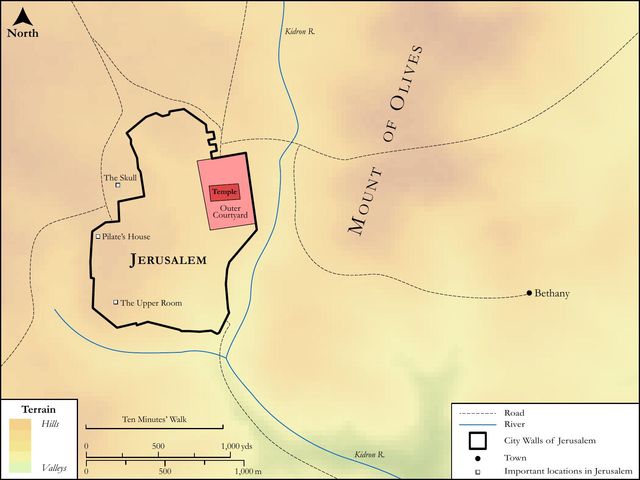
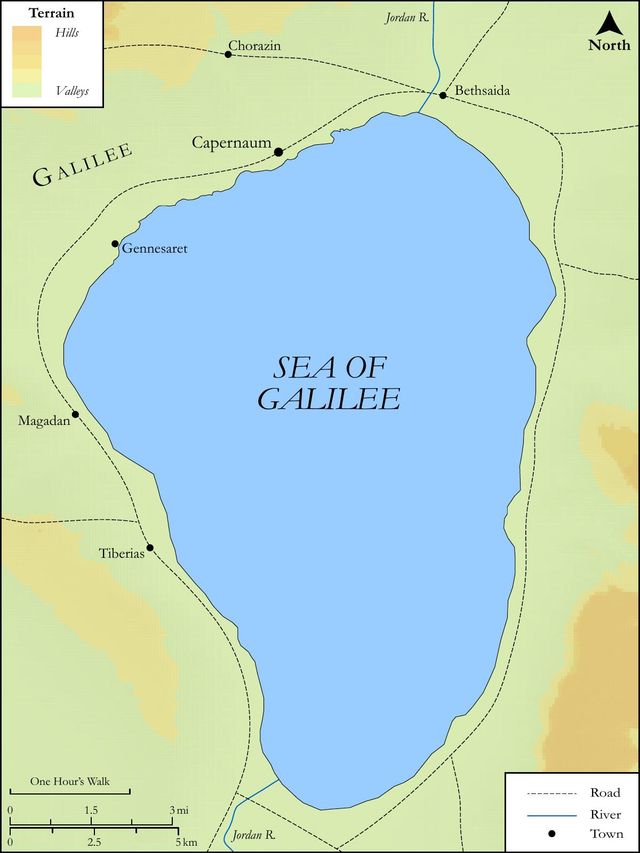
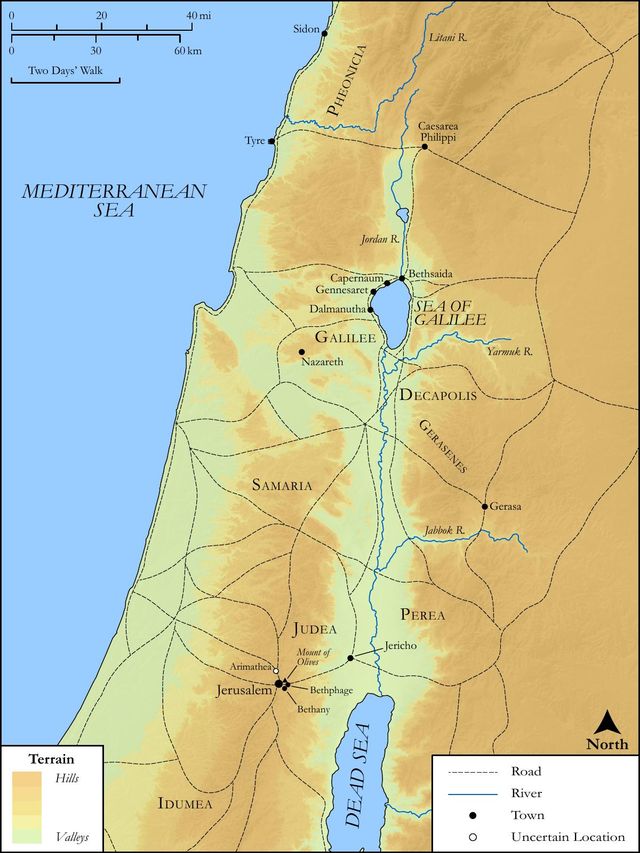
See on the biblical-era maps
Study this verse
Public-domain commentary
Matthew Henry
From his Commentary on the Whole Bible. Henry comments on passages, not single verses — this entry covers Mark 4:21–34. His three-level outline is real structure in the source text, so it is rendered as structure.
The lessons which our Saviour designs to teach us here by parables and figurative expressions are these: -
I.That those who are good ought to consider the obligations they are under to do good; that is, as in the parable before, to bring forth fruit. God expects a grateful return of his gifts to us, and a useful improvement of his gifts in us; for (Mar 4:21), Is a candle brought to be put under a bushel, or under a bed? No, but that it may be set on a candlestick. The apostles were ordained, to receive the gospel, not for themselves only, but for the good of others, to communicate it to them. All Christians, as they have received the gift, must minister the same. Note,
1.Gifts and graces make a man as a candle; the candle of the Lord (Pro 20:27), lighted by the Father of lights; the most eminent are but candles, poor lights, compared with the Sun of righteousness. A candle gives light but a little way, and but a little while, and is easily blown out, and continually burning down and wasting.
2.Many who are lighted as candles, put themselves under a bed, or under a bushel: they do not manifest grace themselves, nor minister grace to others; they have estates, and do no good with them; have their limbs and senses, wit and learning perhaps, but nobody is the better for them; they have spiritual gifts, but do not use them; like a taper in an urn, they burn to themselves.
3.Those who are lighted as candles, should set themselves on a candlestick; that is, should improve all opportunities of doing good, as those that were made for the glory of God, and the service of the communities they are members of; we are not born for ourselves.
The reason given for this, is, because there is nothing hid, which shall not be manifested, which should not be made manifest (so it might better be read), Mar 4:22. There is no treasure of gifts and graces lodged in any but with design to be communicated; nor was the gospel made a secret to the apostles, to be concealed, but that it should come abroad, and be divulged to all the world. Though Christ expounded the parables to his disciples privately, yet it was with design to make them the more publicly useful; they were taught, that they might teach; and it is a general rule, that the ministration of the Spirit is given to every man to profit withal, not himself only, but others also.
II.It concerns those who hear the word of the gospel, to mark what they hear, and to make a good use of it, because their weal or woe depends upon it; what he had said before he saith again, If any man have ears to hear, let him hear, Mar 4:23. Let him give the gospel of Christ a fair hearing; but that is not enough, it is added (Mar 4:24), Take heed what ye hear, and give a due regard to that which ye do hear; Consider what ye hear, so Dr. Hammond reads it. Note, What we hear, doth us no good, unless we consider it; those especially that are to teach others must themselves be very observant of the things of God; must take notice of the message they are to deliver, that they may be exact. We must likewise take heed what we hear, by proving all things, that we may hold fast that which is good. We must be cautious, and stand upon our guard, lest we be imposed upon. To enforce this caution, consider,
1.As we deal with God, God will deal with us, so Dr. Hammond explains these words, "With what measure ye mete, it shall be measured to you. If ye be faithful servants to him, he will be a faithful Master to you: with the upright he will show himself upright."
2.As we improve the talents we are entrusted with, we shall increase them; if we make use of the knowledge we have, for the glory of God and the benefit of others, it shall sensibly grow, as stock in trade doth by being turned; Unto you that hear, shall more be given; to you that have, it shall be given, Mar 4:25. If the disciples deliver that to the church, which they have received of the Lord, they shall be led more into the secret of the Lord. Gifts and graces multiply by being exercised; and God has promised to bless the hand of the diligent.
3.If we do not use, we lose, what we have; From him that hath not, that doeth no good with what he hath, and so hath it in vain, is as if he had it not, shall be taken even that which he hath. Burying a talent is the betraying of a trust, and amounts to a forfeiture; and gifts and graces rust for want of wearing.
III.The good seed of the gospel sown in the world, and sown in the heart, doth by degrees produce wonderful effects, but without noise (Mar 4:26, etc.); So is the kingdom of God; so is the gospel, when it is sown, and received, as seed in good ground.
1.It will come up; though it seem lost and buried under the clods, it will find or make its way through them. The seed cast into the ground will spring. Let but the word of Christ have the place it ought to have in a soul, and it will show itself, as the wisdom from above doth in a good conversation. After a field is sown with corn, how soon is the surface of it altered! How gay and pleasant doth it look, when it is covered with green!
2.The husbandman cannot describe how it comes up; it is one of the mysteries of nature; It springs and grows up, he knows not how, Mar 4:27. He sees it has grown, but he cannot tell in what manner it grew, or what was the cause and method of its growth. Thus we know not how the Spirit by the word makes a change in the heart, any more than we can account for the blowing of the wind, which we hear the sound of, but cannot tell whence it comes, or whither it goes. Without controversy, great is the mystery of godliness; how God manifested in the flesh came to be believed on in the world, Ti1 3:16.
3.The husbandman, when he hath sown the seed, doth nothing toward the springing of it up; He sleeps, and rises, night and day; goes to sleep at night, gets up in the morning, and perhaps never so much as thinks of the corn he hath sown, or ever looks upon it, but follows his pleasures or other business, and yet the earth brings forth fruit of itself, according to the ordinary course of nature, and by the concurring power of the God of nature. Thus the word of grace, when it is received in faith, is in the heart a work of grace, and the preachers contribute nothing to it. The Spirit of God is carrying it on when they sleep, and can do no business (Job 33:15, Job 33:16), or when they rise to go about other business. The prophets do not live for ever; but the word which they preached, is doing its work, when they are in their graves, Zac 1:5, Zac 1:6. The dew by which the seed is brought up tarrieth not for man, nor waiteth for the sons of men, Mic 5:7.
4.It grows gradually; first the blade, then the ear, after that the full corn in the ear, Mar 4:28. When it is sprung up, it will go forward; nature will have its course, and so will grace. Christ's interest, both in the world and in the heart, is, and will be, a growing interest; and though the beginning be small, the latter end will greatly increase. Though thou sowest not that body that shall be, but bare grain, yet God will give to every seed its own body; though at first it is but a tender blade, which the frost may nip, or the foot may crush, yet it will increase to the ear, to the full corn in the ear. Natura nil facit per saltum - Nature does nothing abruptly. God carries on his work insensibly and without noise, but insuperably and without fail.
5.It comes to perfection at last (Mar 4:29); When the fruit is brought forth, that is, when it is ripe, and ready to be delivered into the owner's hand; then he puts in the sickle. This intimates,
(1.)That Christ now accepts the services which are done to him by an honest heart from a good principle; from the fruit of the gospel taking place and working in the soul, Christ gathers in a harvest of honour to himself. See Joh 4:35.
(2.)That he will reward them in eternal life. When those that receive the gospel aright, have finished their course, the harvest comes, when they shall be gathered as wheat into God's barn (Mat 13:30), as a shock of corn in his season.
IV.The work of grace is small in its beginnings, but comes to be great and considerable at last (Mar 4:30-32); "Whereunto shall I liken the kingdom of God, as now to be set up by the Messiah? How shall I make you to understand the designed method of it?" Christ speaks as one considering and consulting with himself, how to illustrate it with an apt similitude; With what comparison shall we compare it? Shall we fetch it from the motions of the sun, or the revolutions of the moon? No, the comparison is borrowed from this earth, it is like a grain of mustard-seed; he had compared it before to seed sown, here to that seed, intending thereby to show,
1.That the beginnings of the gospel kingdom would be very small, like that which is one of the least of all seeds. When a Christian church was sown in the earth for God, it was all contained in one room, and the number of the names was but one hundred and twenty (Act 1:15), as the children of Israel, when they went down into Egypt, were but seventy souls. The work of grace in the soul, is, at first, but the day of small things; a cloud no bigger than a man's hand. Never were there such great things undertaken by such an inconsiderable handful, as that of the discipling of the nations by the ministry of the apostles; nor a work that was to end in such great glory, as the work of grace raised from such weak and unlikely beginnings. Who hath begotten me these?
2.That the perfection of it will be very great; When it grows up, it becomes greater than all herbs. The gospel kingdom in the world, shall increase and spread to the remotest nations of the earth, and shall continue to the latest ages of time. The church hath shot out great branches, strong ones, spreading far, and fruitful. The work of grace in the soul has mighty products, now while it is in its growth; but what will it be, when it is perfected in heaven? The difference between a grain of mustard seed and a great tree, is nothing to that between a young convert on earth and a glorified saint in heaven. See Joh 12:24.
After the parables thus specified the historian concludes with this general account of Christ's preaching - that with many such parables he spoke the word unto them (Mar 4:33); probably designing to refer us to the larger account of the parables of this kind, which we had before, Mt. 13. He spoke in parables, as they were able to hear them; he fetched his comparisons from those things that were familiar to them, and level to their capacity, and delivered them in plain expressions, in condescension to their capacity; though he did not let them into the mystery of the parables, yet his manner of expression was easy, and such as they might hereafter recollect to their edification. But, for the present, without a parable spoke he not unto them, Mar 4:34. The glory of the Lord was covered with a cloud, and God speaks to us in the language of the sons of men, that, though not at first, yet by degrees, we may understand his meaning; the disciples themselves understood those sayings of Christ afterward, which at first they did not rightly take the sense of. But these parables he expounded to them, when they were alone. We cannot but wish we had had that exposition, as we had of the parable of the sower; but it was not so needful; because, when the church should be enlarged, that would expound these parables to us, without any more ado.
Historical interpretation
Seven Centuries of Reception
6 surviving comments on this verse. Each one is dated, so this reads as a timeline rather than a list.
Select a marker to jump to its quote. Markers stagger vertically where authors wrote within a few decades of each other.
The kingdom of God is the Church, which is ruled by God, and herself rules over men, and treads down the powers which are contrary to her, and all wickedness.
For the seed is the word of life, the ground is the human heart, and the sleep of the man means the death of the Saviour. The seed springs up night and day, because after the sleep of Christ, the number of Christians, through calamity and prosperity, continued to flourish more and more in faith, and to wax greater in deed.
But when He says, He knoweth not how, He is speaking in a figure; that is, He does not make known to us, who amongst us will produce fruit unto the end.
That is, fear. For the fear of God is the beginning of wisdom. Then the full corn in the ear; (Ps. 111:10. Rom. 13:8) that is, charity, for charity is the fulfilling of the Law.
The sickle is death or the judgment, which cuts down all things; the harvest is the end of the world.
(non occ.) Again it may be said, that he hath not, who has not truth. But our Lord says that he hath, because he has a lie, for every one whose understanding believes a lie, thinks that he has something.
(Vict. Ant. e Cat. in Marc.) A parable occurred, a little above, about the three seeds which perished in various ways, and the one which was saved; in which last He also shows three differences, according to the proportion of faith and practice. Here, however, He puts forth a parable concerning those only who are saved. Wherefore it is said, And he said, So is the kingdom of God, as if a man should cast seed into the ground, &c.
(Vict. Ant. e Cat. in Marc.) Or else He calls by the name of kingdom of God, faith in Him, and in the economy of His Incarnation; which kingdom indeed is as if a man should throw seed. For He Himself being God and the Son of God, having without change been made man, has cast seed upon the earth, that is, He has enlightened the whole world by the word of divine knowledge.
(Vict. Ant. e Cat. in Marc.) Or Christ Himself is the man who rises, for He sat waiting with patience, that they who received seed should bear fruit. He rises, that is, by the word of His love, He makes us grow to the bringing forth fruit, by the armour of righteousness on the right hand, by which is meant the day, and on the left, by which is meant the night of persecution; for by these the seed springs up, and does not wither. (2 Cor. 6:7)
(Vict. Ant. e Cat. in Marc.) Or else He says, He knoweth not, that He may show the free-will of those who receive the word, for He commits a work to our will, and does not work the whole Himself alone, lest the good should seem involuntary. For the earth brings forth fruits of its own accord, that is, she is brought to bear fruit without being compelled by a necessity contrary to her will. First the blade.
(Vict. Ant. e Cat. in Marc.) Or, first it produces the blade, in the law of nature, by degrees growing up to advancement; afterwards it brings forth the ears, which are to be collected into a bundle, and to be offered on an altar to the Lord, that is, in the law of Moses; afterwards the full-fruit, in the Gospel. Or because we must not only put forth leaves by obedience, but also learn prudence, and, like the stalk of corn, remain upright without minding the winds which blow us about. We must also take heed to our soul by a diligent recollection, that, like the ears, we may bear fruit, that is, show forth the perfect operation of virtue.
(in Ezech. 2. Hom. 3) Or else; Man casts seed into the ground, when he places a good intention in his heart; and he sleeps, when he already rests in the hope which attends on a good work. But he rises night and day, because he advances amidst prosperity and adversity, though he knows it not, for he is as yet unable to measure his increase, and yet virtue, once conceived, goes on increasing. When therefore we conceive good desires, we put seed into the ground; when we begin to work rightly, we are the blade. When we increase to the perfection of good works, we arrive at the ear; when we are firmly fixed in the perfection of the same working, we already put forth the full corn in the ear.
And he said to them: Such is the kingdom of God, as if a man casts seed upon the earth and sleeps; and rises night and day, and the seed sprouts and grows while he does not know it. For the earth produces fruit by itself, first the blade, then the ear, then the full grain in the ear. And when the fruit has brought itself forth, he immediately wields the sickle, because the harvest is at hand. A man casts seed upon the earth, when he instills good intention into his heart. And after he has cast the seed, he sleeps, because he already rests in the hope of good work. But he rises at night and by day, because he progresses among adversities and prosperities. And the seed sprouts and grows while he does not know it; because even when he cannot yet measure his growth, the virtue once conceived leads to progress. And the earth produces fruit by itself, because with grace preceding itself, the human mind spontaneously rises to the fruit of good work. But this same earth first brings forth the blade, then the ear, then the full grain in the ear. To produce the blade, indeed, is to still have the tenderness of good initiation. But the blade reaches the ear when the virtue conceived in the mind draws itself to the progress of good work. And the full grain in the ear fructifies, when the virtue already progresses so as to be of robust and perfect work. And when the fruit has produced itself, he immediately wields the sickle, because the harvest time is at hand. For the Almighty God, with the fruit produced, wields the sickle and cuts off His harvest, because when He has led each one to perfect works, He cuts off their temporal life by His sent judgment, to bring His grain to the heavenly granaries. Therefore, when we conceive good desires, we cast seed into the earth. But when we begin to act rightly, we are the blade. However, when we grow to the perfect work of goodness, we reach the ear. When we are solidified in the perfection of the same operation, we already bring forth the full grain in the ear. Hence no one should be seen still in the tenderness of the mind for good purpose, because the grain of God begins from the blade to become grain.
Or else Christ sleeps, that is, ascends into heaven, where, though He seem to sleep, yet He rises by night, when through temptations He raises us up to the knowledge of Himself; and in the day time, when on account of our prayers, He sets in order our salvation.
For we put forth the blade, when we show a principle of good; then the ear, when we can resist temptations; then comes the fruit, when a man works something perfect. It goes on: and when it has brought forth the fruit, immediately he sendeth the sickle, because the harvest is come.
Continue studying Mark 4:26 across the web’s major study libraries — every link below opens this exact verse, chapter, or book on the destination site.
Read & Compare
 BibleGatewayThis verse in more than 200 translations and 70 languages.
 Bible.comThe YouVersion reader — hundreds of translations, reading plans, and highlights.
 ESV.orgCrossway's official English Standard Version reader.
 NET BibleThe NET translation with 60,000+ translators' notes on every rendering decision.
 STEP BibleTyndale House's free study tool — original text, vocabulary, and scholarly resources.
 BibliaLogos Bible Software's free web reader.
 USCCBThe New American Bible (Revised Edition) with the U.S. bishops' study notes.
Commentaries
 BibleHub CommentariesDozens of classic commentaries on this verse, gathered on one page.
 StudyLightMore than 100 commentary sets — the largest collection on the web.
 BibleRefPlain-English commentary on what this verse means, verse by verse.
 Enduring WordDavid Guzik's free commentary on this chapter, widely used by Bible teachers.
 Bible Study ToolsVerse commentary alongside Greek and Hebrew study aids.
Original Language & Research
- BibleHub InterlinearThe verse word by word — original language, transliteration, and English.
- BibleHub LexiconEvery word's original-language definition and Strong's entry.
 Blue Letter BibleDeep-study tools — Strong's numbers, concordance, and word studies.
 CNTR CollationThe earliest Greek manuscripts of this verse, collated letter by letter.
Sermons, Hymns & Audio


TrulyRandomVerse is not affiliated with these sites and doesn’t control their content. They’re linked because they’re genuinely useful.
Summary
Mark 4:26 introduces the unique Parable of the Growing Seed, which illustrates the mysterious and inherently powerful nature of the Kingdom of God. Jesus likens the Kingdom's advance to a farmer who casts seed into the ground; once sown, the seed grows by an unseen, internal process, independent of the farmer's continuous effort or understanding. This parable underscores God's sovereignty in the expansion of His reign, emphasizing that while human responsibility lies in sowing the "seed" of the Gospel, the increase and ultimate growth are divinely orchestrated.
Context
ShowHideLiterary Context
This verse serves as the opening of the "Parable of the Growing Seed," a teaching found exclusively in Mark's Gospel. It immediately follows the comprehensive Parable of the Sower and its detailed explanation, where Jesus describes how the "seed" (the Word of God) is received by various types of hearts. While the Parable of the Sower focuses on the reception and initial response to the Word, the Parable of the Growing Seed shifts the emphasis to the inherent power and independent growth of the Kingdom once the Word is sown. It is part of a broader discourse in Mark 4 where Jesus uses agricultural metaphors to reveal the nature of God's reign, preparing the disciples for the mysterious ways the Kingdom would unfold.
Historical & Cultural Context
Jesus taught in an agrarian society where farming was a central aspect of daily life. His audience, largely composed of farmers, fishermen, and laborers, would have intimately understood the rhythm of sowing, waiting, and harvesting. The imagery of seed, soil, and growth was universally relatable and provided a tangible framework for spiritual truths. The concept of the "Kingdom of God" (or "Kingdom of Heaven" in Matthew) was a deeply significant and often misunderstood expectation among Jews of the time, who frequently anticipated a visible, political, and immediate restoration of Israel's earthly dominion. Jesus' parables, including this one, subtly redefined the Kingdom, portraying it as a spiritual reality that grows organically and often imperceptibly, rather than through a sudden, overt display of power.
Key Themes
ShowHideMark 4:26 contributes significantly to several key themes within Mark's Gospel and Jesus' teaching. Foremost is the theme of The Kingdom of God, which is central to Jesus' entire ministry. This parable illustrates its distinctive characteristic as a divine work, not merely a human endeavor. It highlights Divine Initiative and Mysterious Growth, showing that the Kingdom's progress is ultimately God's work, proceeding independently of human comprehension or continuous effort once the initial "seed" is planted. This fosters Patience and Trust in God's timing and methods, encouraging believers to faithfully sow the Gospel while resting in God's sovereign power to bring about the increase. The "seed" here, consistent with the preceding parable, represents the message of the Kingdom, the truth of God's Word, or the new life that comes through faith in Christ, emphasizing its inherent power to grow once sown in a receptive heart, a concept echoed in 1 Corinthians 3:6-7.
Exposition and Analysis
ShowHideKey Word Analysis
ShowHideMeaning royalty, rule, or realm. In this context, it refers to God's sovereign reign and authority, both present in the person and work of Jesus and future in its full consummation. It denotes the sphere of God's active rule rather than merely a geographical territory.
Meaning a scattering (of seed) or concretely, seed as sown. In this parable, the "seed" metaphorically represents the Word of God, the Gospel message, or the spiritual life implanted in a believer. It carries the inherent potential for growth and multiplication.
Meaning soil or earth. This term signifies the environment or context into which the seed of the Kingdom is sown. While in the Parable of the Sower it represents different types of human hearts, here it broadly refers to the world or the conditions where the Gospel is proclaimed and takes root.
Verse Breakdown
ShowHide"And he said,"
This is a common introductory phrase in the Gospels, signaling that Jesus is about to deliver a significant teaching or parable. It sets the stage for a new revelation concerning the Kingdom of God.
"So is the kingdom of God,"
This phrase establishes a direct analogy. Jesus is not defining the Kingdom exhaustively but illustrating one of its fundamental characteristics by comparing it to a familiar agricultural process. It highlights a parallel between the natural world and the spiritual reality of God's reign.
"as if a man should cast seed into the ground;"
This clause describes the initial, human action of sowing. The emphasis is on the simple yet crucial act of planting the seed. Crucially, the parable then focuses on what happens after this initial act, implying that the sower's work is completed at this point, and the subsequent growth is beyond his direct control or comprehension.
Literary Devices
ShowHideMark 4:26, as the opening of the Parable of the Growing Seed, primarily employs the literary device of Parable. A parable is a short, illustrative story that uses familiar earthly scenarios to convey profound spiritual or moral truths. Here, the common act of farming serves as a relatable entry point for understanding the mysterious nature of God's Kingdom. The verse also utilizes Simile, explicitly stating "So is the kingdom of God, as if a man should cast seed into the ground," drawing a direct comparison between the Kingdom's operation and the process of sowing. Furthermore, Metaphor is at play, as the "seed" functions as a metaphor for the Word of God or the Gospel message, and its subsequent growth is a metaphor for the expansion and development of God's reign in the world and in individual lives. The simplicity of the imagery belies the profound theological truth it conveys about divine sovereignty and the organic, often unseen, progress of the Kingdom.
Theological and Thematic Connections
ShowHideThis parable profoundly shapes our understanding of God's Kingdom by emphasizing its inherent vitality and divine propulsion. Unlike human endeavors that require constant oversight and strenuous effort, the Kingdom of God possesses an intrinsic power to grow once the "seed" of the Gospel is sown. This does not diminish human responsibility in proclaiming the Word, but rather reorients our perspective: we are called to be faithful sowers, but the power for germination, growth, and harvest resides with God alone. It fosters a theology of trust and patience, releasing believers from the burden of manufacturing results and instead inviting them into co-labor with a sovereign God who ensures His purposes will be fulfilled, often in ways beyond human comprehension or control. The Kingdom's growth is organic, mysterious, and ultimately guaranteed by divine power, not human ingenuity.
Reflection and Application
ShowHideMark 4:26 offers profound encouragement and a vital corrective to our often results-driven approaches to faith and ministry. It calls us to faithfully engage in the initial act of "sowing the seed"—whether through sharing the Gospel, teaching God's Word, living out our faith authentically, or simply being a witness to Christ's love. Yet, it simultaneously liberates us from the anxiety of needing to control or fully understand the process of spiritual growth. Just as a farmer cannot make a seed grow, we cannot force spiritual transformation or the expansion of God's Kingdom. Our role is to plant and water, trusting that God Himself will give the increase, often in unseen and surprising ways. This fosters patience, resilience, and a deep reliance on the Holy Spirit, reminding us that the power lies not in our eloquence or strategies, but in the inherent life of God's Word and His sovereign work. It encourages us to persevere even when immediate results are not apparent, knowing that the Kingdom of God is a living, growing reality.
Questions for Reflection
ShowHideFAQ
ShowHideWhat is the primary difference between the Parable of the Sower and the Parable of the Growing Seed?
ShowHideWhile both parables use the imagery of seed and soil, their primary emphases differ. The Parable of the Sower focuses on the reception of the Word of God, illustrating how different "soils" (human hearts) respond to the message. It highlights the various obstacles to the Word taking root and bearing fruit. In contrast, the Parable of the Growing Seed (Mark 4:26-29) emphasizes the inherent power and mysterious, independent growth of the Kingdom of God once the seed (the Word) is sown. It shifts the focus from the sower's continuous effort or the listener's immediate response to the divine, organic process of growth that occurs by itself, beyond human comprehension or control.
Does this parable imply that human effort is unnecessary in spreading the Kingdom?
ShowHideNo, this parable does not negate human effort; rather, it defines its scope. The parable clearly states that "a man should cast seed into the ground," signifying the essential human action of proclaiming the Gospel and sharing the Word of God. Without the initial act of sowing, there would be no growth. However, the parable then highlights that after the sowing, the growth process is autonomous and divinely driven ("the earth brings forth fruit of herself"). Therefore, human effort is crucial for sowing the seed, but the growth and increase are ultimately God's work. Believers are called to be faithful in their responsibility to sow, but to trust God for the results, understanding that the power to transform lives and expand His Kingdom belongs to Him. This perspective encourages diligent evangelism while fostering humility and reliance on divine power, as articulated in 1 Corinthians 3:6-7.
Christ-Centered Fulfillment
ShowHideThe Parable of the Growing Seed, while seemingly simple, finds profound Christ-centered fulfillment in the person and work of Jesus. He is the ultimate "sower" of the Kingdom, who came proclaiming the good news of God's reign (Mark 1:14-15). More deeply, Jesus Himself is the "seed" that is "cast into the ground." His incarnation, death, and resurrection represent the ultimate act of sowing—a grain of wheat falling into the earth to bear much fruit (John 12:24). From this "sowing" of Christ's life, death, and resurrection, the Kingdom of God began its mysterious and unstoppable growth, initiated by the outpouring of the Holy Spirit at Pentecost (Acts 2). The growth of the Kingdom, then, is the expansion of Christ's reign and influence through the proclamation of His Gospel and the work of His Spirit in the hearts of believers and throughout the world. It is the unseen, organic spread of His redemptive power, culminating in His glorious return when "the kingdom of the world has become the kingdom of our Lord and of his Christ, and he shall reign forever and ever" (Revelation 11:15). Thus, the parable assures us that the Kingdom, established by Christ, will inevitably grow to its full, glorious harvest.