


Luke 22:6
Bible text: King James Version (1769 Blayney text) · Public domain
Bible text: Berean Standard Bible · Public domain
Bible text: American Standard Version (1901) · Public domain
Bible text: World English Bible, Messianic edition · Public domain
Bible text: Geneva Bible (1599) · Public domain
Bible text: Young's Literal Translation · Public domain
- καὶkaiAndG2532CONJConjunction
- ἐξωμολόγησενexōmologēsenhe promisedG1843V-AAI-3SVerb Aorist Active Indicative 3rd Singular
- καὶkaiandG2532CONJConjunction
- ἐζήτειezēteiwas seekingG2212V-IAI-3SVerb Imperfect Active Indicative 3rd Singular
- εὐκαιρίανeukairianopportunityG2120N-ASFNoun Accusative Singular Feminine
- τοῦtou<the>G3588T-GSNDefinite article Genitive Singular Neuter
- παραδοῦναιparadounaito betrayG3860V-2AANVerb 2nd Aorist Active Infinitive
- αὐτὸνautonHimG846P-ASMPersonal pronoun Accusative Singular Masculine
- ἄτερaterapart fromG817PREPPreposition
- ὄχλουochlou[a] crowdG3793N-GSMNoun Genitive Singular Masculine
- αὐτοῖςautoisto themG846P-DPMPersonal pronoun Dative Plural Masculine
English is a literal word-by-word gloss of the Greek, not the KJV's wording. Why?
This is the original text the KJV's translators worked from — each Greek word with its own literal English meaning in this verse, prepared by scholars at Tyndale House, Cambridge. The KJV translates whole sentences, not word by word, so its wording differs: one Greek word can become several English words, and the KJV may choose “charity” where the gloss reads “love”. Both are faithful — they answer different questions. For the KJV's own rendering, switch to the KJV text.
Details
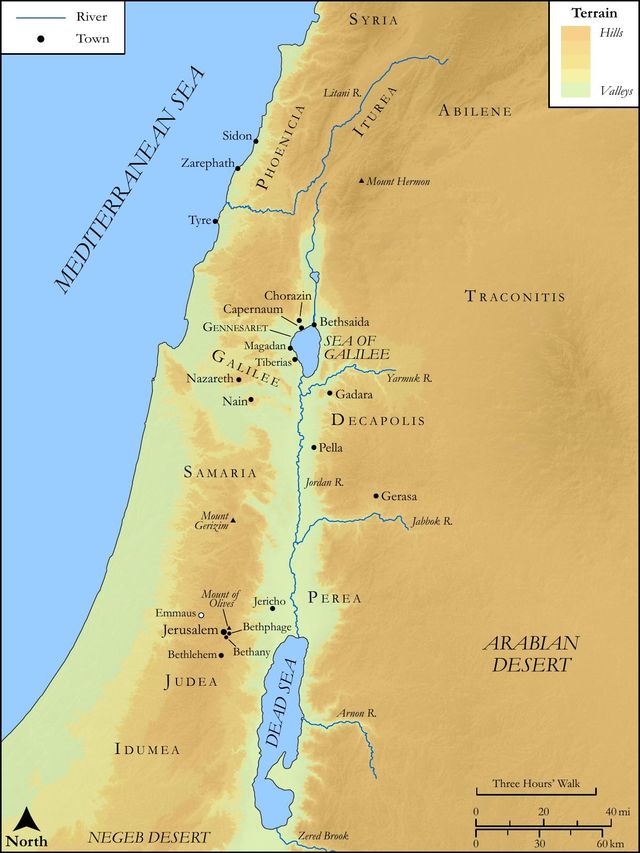
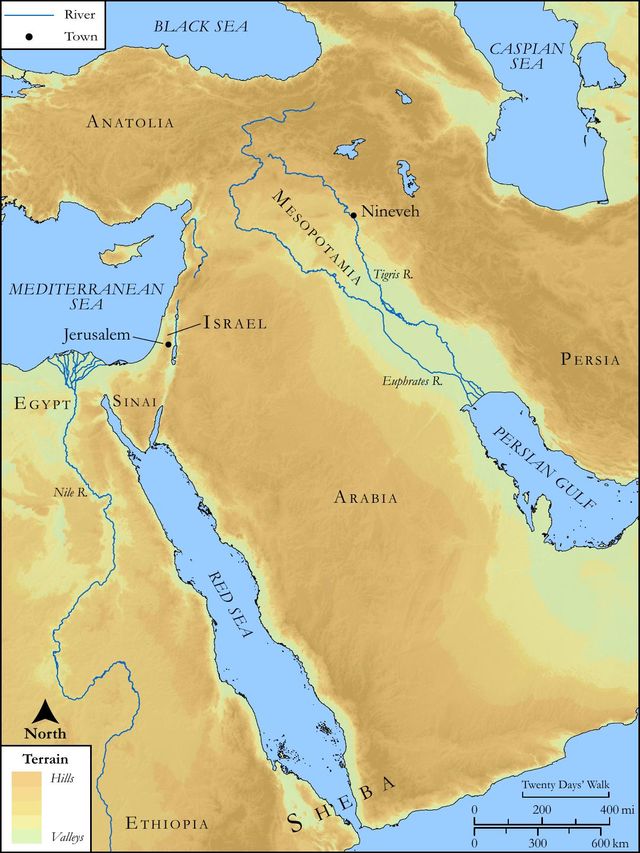
See on the biblical-era maps

Study this verse
Public-domain commentary
Matthew Henry
From his Commentary on the Whole Bible. Henry comments on passages, not single verses — this entry covers Luke 22:1–6. His two-level outline is real structure in the source text, so it is rendered as structure.
The year of the redeemed is now come, which had been from eternity fixed in the divine counsels, and long looked for by them that waited for the consolation of Israel. After the revolutions of many ages, it is at length come, Isa 63:4. And, it is observable, it is in the very first month of that year that the redemption is wrought out, so much in haste was the Redeemer to perform his undertaking, so was he straitened till it was accomplished. It was in the same month, and at the same time of the month (in the beginning of months, Exo 12:2), that God by Moses brought Israel out of Egypt, that the Antitype might answer the type. Christ is here delivered up, when the feast of unleavened bread drew nigh, Luk 22:1. About as long before that feast as they began to make preparation for it, here was preparation making for our Passover's being offered for us. Here we have,
I.His sworn enemies contriving it (Luk 22:2), the chief priests, men of sanctity, and the scribes, men of learning, seeking how they might kill him, either by force of fraud. Could they have had their will, it had been soon done, but they feared the people, and the more for what they now saw of their diligent attendance upon his preaching.
II.A treacherous disciple joining in with them, and coming to their assistance, Judas surnamed Iscariot.
He is here said to be of the number of the twelve, that dignified distinguished number. One would wonder that Christ, who knew all men, should take a traitor into that number, and that one of that number, who could not but know Christ, should be so base as to betray him; but Christ had wise and holy ends in taking Judas to be a disciple, and how he who knew Christ so well yet came to betray him we are here told: Satan entered into Judas, Luk 22:3. It was the devil's work, who thought hereby to ruin Christ's undertaking, to have broken his head; but it proved only the bruising of his heel. Whoever betrays Christ, or his truths or ways, it is Satan that puts them upon it. Judas knew how desirous the chief priests were to get Christ into their hands, and that they could not do it safely without the assistance of some that knew his retirements, as he did. He therefore went himself, and made the motion to them, Luk 22:4. Note, It is hard to say whether more mischief is done to Christ's kingdom by the power and policy of its open enemies, or by the treachery and self-seeking of its pretended friends: nay, without the latter its enemies could not gain their point as they do. When you see Judas communing with the chief priests, be sure some mischief is hatching; it is for no good that they are laying their heads together.
III.The issue of the treaty between them.
1.Judas must betray Christ to them, must bring them to a place where they might seize him without danger of tumult, and this they would be glad of.
2.They must give him a sum of money for doing it, and this he would be glad of (Luk 22:5): They covenanted to give him money. When the bargain was made, Judas sought opportunity to betray him. Probably, he slyly enquired of Peter and John, who were more intimate with their Master than he was, where he would be at such a time, and whither he would retire after the passover, and they were not sharp enough to suspect him. Somehow or other, in a little time he gained the advantage he sought, and fixed the time and place where it might be done, in the absence of the multitude, and without tumult.
Historical interpretation
Seven Centuries of Reception
4 surviving comments on this verse. Each one is dated, so this reads as a timeline rather than a list.
Select a marker to jump to its quote. Markers stagger vertically where authors wrote within a few decades of each other.
Satan entered into Judas not by force, but finding the door open. For forgetful of all that he had seen, Judas now turned his thoughts solely to covetousness.
And he adds, one of the twelve, since he made up the number, though he did not truly discharge the Apostolic office. Or the Evangelist adds this, as it were for contrast sake. As if he said, "He was of the first band of those who were especially chosen."
(Hom. 80. in Matt.) St. Luke gives his surname, because there was another Judas.
(ut sup.) Observe the exceeding iniquity of Judas, that he both sets out by himself, and that he does this for gain. It follows, And he went his way, and communed with the chief priests and captains.
(ut sup.) By covetousness then Judas became what he was, for it follows, And they covenanted to give him money. Such are the evil passions which covetousness engenders, it makes men irreligious, and compels them to lose all knowledge of God, though they have received a thousand benefits from Him, nay, even to injure Him, as it follows, And he contracted with them.
There is nothing contrary to this in what John says, that after the sop Satan entered into Judas; seeing he now entered into him as a stranger, but then as his own, whom he might lead after him to do whatsoever he willed.
Now many shudder at the wickedness of Judas, yet do not guard against it. For whosoever despises the laws of truth and love, betrays Christ who is truth and love. Above all, when he sins not from infirmity or ignorance, but after the likeness of Judas seeks opportunity, when no one is present, to change truth for a lie, virtue for crime.
Having already said that the Chief Priests sought means how they might slay Jesus without incurring any danger, he next goes on to relate the means which occurred to them, as it is said, Then entered Satan into Judas.
The magistrates here mentioned were those appointed to take care of the buildings of the temple, or it may be those whom the Romans had set over the people to keep them from breaking forth into tumult; for they were seditious.
That is, he bargained and promised. And sought opportunity to betray him unto them, without the crowds, that is, when he saw Him standing by Himself apart, in the absence of the multitude.
Continue studying Luke 22:6 across the web’s major study libraries — every link below opens this exact verse, chapter, or book on the destination site.
Read & Compare
 BibleGatewayThis verse in more than 200 translations and 70 languages.
 Bible.comThe YouVersion reader — hundreds of translations, reading plans, and highlights.
 ESV.orgCrossway's official English Standard Version reader.
 NET BibleThe NET translation with 60,000+ translators' notes on every rendering decision.
 STEP BibleTyndale House's free study tool — original text, vocabulary, and scholarly resources.
 BibliaLogos Bible Software's free web reader.
 USCCBThe New American Bible (Revised Edition) with the U.S. bishops' study notes.
Commentaries
 BibleHub CommentariesDozens of classic commentaries on this verse, gathered on one page.
 StudyLightMore than 100 commentary sets — the largest collection on the web.
 BibleRefPlain-English commentary on what this verse means, verse by verse.
 Enduring WordDavid Guzik's free commentary on this chapter, widely used by Bible teachers.
 Bible Study ToolsVerse commentary alongside Greek and Hebrew study aids.
Original Language & Research
- BibleHub InterlinearThe verse word by word — original language, transliteration, and English.
- BibleHub LexiconEvery word's original-language definition and Strong's entry.
 Blue Letter BibleDeep-study tools — Strong's numbers, concordance, and word studies.
 CNTR CollationThe earliest Greek manuscripts of this verse, collated letter by letter.
Sermons, Hymns & Audio


TrulyRandomVerse is not affiliated with these sites and doesn’t control their content. They’re linked because they’re genuinely useful.
Summary
Luke 22:6 details Judas Iscariot's active and deliberate pursuit of a suitable moment to hand Jesus over to the Jewish authorities. Having already agreed to their terms, this verse emphasizes his calculated efforts to find an opportune time for the betrayal, specifically when Jesus would be away from the protective presence of the large crowds who followed Him, thereby minimizing the risk of public unrest during the arrest.
Context
ShowHideLiterary Context
This verse immediately follows the account of Judas Iscariot's agreement with the chief priests and captains to betray Jesus for money (Luke 22:3-5). The preceding verses establish the Jewish leaders' desire to seize Jesus, but their fear of the people. Judas, identified as one of the twelve, is presented as being "possessed by Satan" (Luke 22:3) and then actively engaging with Jesus's enemies. Luke 22:6 thus serves as the direct consequence of that pact, highlighting Judas's transition from agreement to active planning. It sets the stage for the Passover preparations and the Last Supper, where the betrayal will be further alluded to by Jesus (Luke 22:21-23).
Historical & Cultural Context
The setting is Jerusalem during the Passover festival, a time when the city swelled with pilgrims, making public order a significant concern for both Roman and Jewish authorities. The chief priests and scribes, representatives of the Sanhedrin, held significant religious and political power, but they were wary of Jesus's popularity among the common people, many of whom regarded Him as a prophet or even the Messiah. A public arrest could easily spark a riot, which would draw the attention and potentially harsh intervention of the Roman governor, Pontius Pilate. Judas's search for an "absence of the multitude" reflects this critical concern for a discreet arrest, aligning with the Sanhedrin's strategy to avoid public outcry and maintain control.
Key Themes
ShowHideLuke 22:6 contributes significantly to several key themes within Luke's Gospel and the broader Passion narrative. It underscores the theme of Deliberate Betrayal, revealing Judas's premeditated and active role, contrasting sharply with the loyalty expected of a disciple. This verse also highlights the Calculated Opposition of the religious authorities, whose fear of the people dictated their strategy for Jesus's arrest. Furthermore, it subtly points to the theme of Divine Sovereignty Amidst Human Agency, as Judas's wicked actions, though freely chosen, ultimately align with God's foreordained plan for the Messiah's suffering and death, a truth reflected in passages like Acts 2:23 and Acts 4:27-28.
Exposition and Analysis
ShowHideKey Word Analysis
ShowHideThis word means "to acknowledge or (by implication, of assent) agree fully." In this context, it signifies Judas's full and deliberate agreement to the terms of betrayal with the chief priests and captains. It's not a casual promise but a firm commitment to a treacherous act.
Meaning "to seek (literally or figuratively)." While it can mean to worship or enquire, in a negative sense, as here, it implies to "plot against life." This highlights Judas's active, persistent, and malevolent intent. He wasn't passively waiting but actively pursuing the means to carry out his plan.
Meaning "a favorable occasion." This term underscores Judas's calculated approach. He was not just looking for any time, but the right time—one that would minimize risk for the authorities and ensure the success of the betrayal, specifically "in the absence of the multitude."
Meaning "to surrender, i.e., yield up, intrust, transmit." While it can be neutral ("hand over"), in this context, it carries the strong connotation of treachery and disloyalty, denoting the act of delivering Jesus into the hands of His enemies for malicious purposes.
Verse Breakdown
ShowHide"And he promised"
This refers to Judas Iscariot, confirming his prior agreement with the chief priests and captains to hand over Jesus. It signifies a firm commitment on his part, not a tentative or reluctant one.
"and sought opportunity"
This phrase reveals Judas's active and premeditated involvement in the conspiracy. He was not merely a passive participant but diligently searching for the most advantageous moment to carry out his treacherous plan. This implies careful observation and strategic thinking.
"to betray him unto them"
This specifies the object of the betrayal (Jesus) and the recipients (the chief priests and captains). It clearly states the ultimate goal of Judas's seeking: to deliver Jesus into the hands of those who wished Him harm.
"in the absence of the multitude"
This crucial condition highlights the strategic concern of the Jewish authorities and Judas. They feared a public disturbance or riot if Jesus were arrested openly, given His popularity. Therefore, Judas's task was to find a moment when Jesus was isolated from His followers, ensuring a discreet and uncontested apprehension.
Literary Devices
ShowHideLuke 22:6 employs several literary devices to convey its profound meaning. Irony is prominent, as a disciple, one of Jesus's closest followers, actively seeks to betray his Master. This stark contrast between expected loyalty and actual treachery deepens the sense of tragedy. The phrase "sought opportunity" also serves as Foreshadowing, building suspense and indicating the imminent arrest of Jesus. It implies a deliberate, calculated plot that will soon unfold. Furthermore, the emphasis on "in the absence of the multitude" highlights the Contrast between Jesus's public ministry, where He was surrounded by crowds, and the clandestine nature of His impending arrest, orchestrated by those who feared His popular appeal. This detail underscores the underhanded tactics of His adversaries.
Theological and Thematic Connections
ShowHideLuke 22:6 is a somber reminder of the reality of human sin and the profound mystery of divine sovereignty. Judas's actions, while undeniably a result of his own free will and corrupted heart, were paradoxically part of God's overarching plan for the redemption of humanity. This verse illustrates the depth of betrayal that Jesus, the Son of God, willingly endured for the sake of humanity. It also highlights the fear and strategic cunning of those who opposed Jesus, revealing their desire to maintain control and suppress the truth. Ultimately, this act of betrayal, though evil, became a necessary step in the unfolding of God's redemptive narrative, leading to the cross and resurrection.
Reflection and Application
ShowHideLuke 22:6 offers a stark mirror for self-examination, urging us to consider the state of our own hearts and the insidious nature of hidden motives. Just as Judas's outward discipleship masked a heart consumed by greed and perhaps disillusionment, we too can harbor desires or resentments that, if left unchecked, can lead to spiritual compromise and betrayal of our convictions or even of Christ Himself. This verse reminds us that true discipleship demands not just outward adherence but inward integrity and unwavering loyalty. It also prepares us for the painful reality that betrayal can come from unexpected sources, even those within our closest circles. In such moments, we are called to remember Jesus's response—not bitterness, but steadfast commitment to God's will, trusting that even the darkest acts of human sin can be woven into God's redemptive tapestry.
Questions for Reflection
ShowHideFAQ
ShowHideWhy was it important for Judas to betray Jesus "in the absence of the multitude"?
ShowHideIt was crucial for the Jewish religious leaders to arrest Jesus discreetly to avoid a public uprising. Jesus was very popular among the common people, many of whom saw Him as a prophet or even the Messiah. A public arrest during the crowded Passover festival could easily have sparked a riot, which would have drawn the immediate and severe attention of the Roman authorities. By arresting Jesus away from the crowds, the leaders hoped to maintain control, avoid public outcry, and execute their plan without interference, as seen in their initial discussions in Luke 22:2.
Did Judas have free will, or was he merely fulfilling prophecy?
ShowHideThe Scriptures present a complex interplay between divine sovereignty and human responsibility. While Judas's betrayal was foretold in prophecy (Psalm 41:9 and Zechariah 11:12-13), and God certainly knew it would happen, Judas still made a conscious choice to betray Jesus. The text emphasizes his active "seeking opportunity" and his agreement for money (Luke 22:3-5). God's foreknowledge does not negate human culpability. Judas was responsible for his actions, even as those actions ultimately served God's greater redemptive plan (Acts 2:23).
Christ-Centered Fulfillment
ShowHideThe betrayal of Jesus by Judas, as detailed in Luke 22:6, stands as a chilling testament to the depth of human depravity, yet it simultaneously serves as a profound and necessary step in God's redemptive plan, culminating in Christ's ultimate sacrifice. Jesus, the sinless Lamb of God, willingly entered into this betrayal, knowing full well the heart of Judas (John 6:70-71). His passive acceptance of this treachery, rather than resisting or exposing Judas publicly, underscores His commitment to fulfilling the Father's will and becoming the atoning sacrifice for humanity's sins. Just as the Old Testament prophets foretold a suffering servant who would be "cut off from the land of the living" (Isaiah 53:8), Judas's act of handing Jesus over was a dark, yet essential, component of Jesus's journey to the cross. Through this act of betrayal, Jesus was delivered up not merely to His enemies, but ultimately as a ransom for many (Mark 10:45), transforming the deepest human treachery into the means of divine salvation and demonstrating the boundless love of God who brings good even out of the most heinous evil (Romans 5:8).