


Luke 18:26
Bible text: King James Version (1769 Blayney text) · Public domain
Bible text: Berean Standard Bible · Public domain
Bible text: American Standard Version (1901) · Public domain
Bible text: World English Bible, Messianic edition · Public domain
Bible text: Geneva Bible (1599) · Public domain
Bible text: Young's Literal Translation · Public domain
- εἶπανeipanSaidG2036V-2AAI-3PVerb 2nd Aorist Active Indicative 3rd Plural
- δὲdethenG1161CONJConjunction
- οἱhoithoseG3588T-NPMDefinite article Nominative Plural Masculine
- ἀκούσαντες·akousanteshaving heardG191V-AAP-NPMVerb Aorist Active Participle Nominative Plural Masculine
- καὶkaiThenG2532CONJConjunction
- τίςtiswhoG5101I-NSMInterrogative pronoun Nominative Singular Masculine
- δύναταιdunataiis ableG1410V-PNI-3SVerb Present Middle Or Passive Deponent Indicative 3rd Singular
- σωθῆναι;sōthēnaito be saved?G4982V-APNVerb Aorist Passive Infinitive
English is a literal word-by-word gloss of the Greek, not the KJV's wording. Why?
This is the original text the KJV's translators worked from — each Greek word with its own literal English meaning in this verse, prepared by scholars at Tyndale House, Cambridge. The KJV translates whole sentences, not word by word, so its wording differs: one Greek word can become several English words, and the KJV may choose “charity” where the gloss reads “love”. Both are faithful — they answer different questions. For the KJV's own rendering, switch to the KJV text.
Details
See on the biblical-era maps
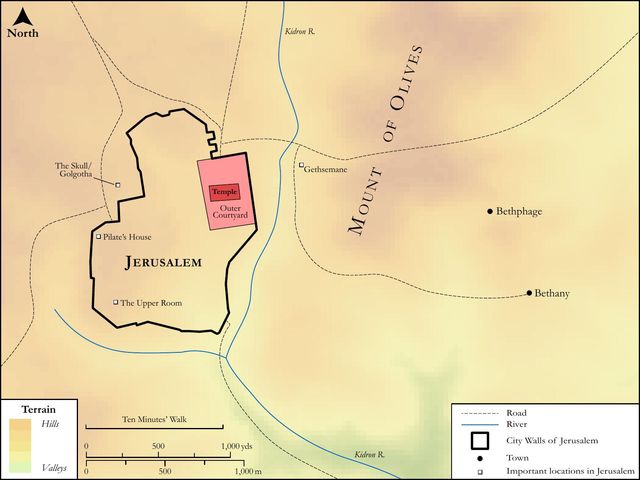
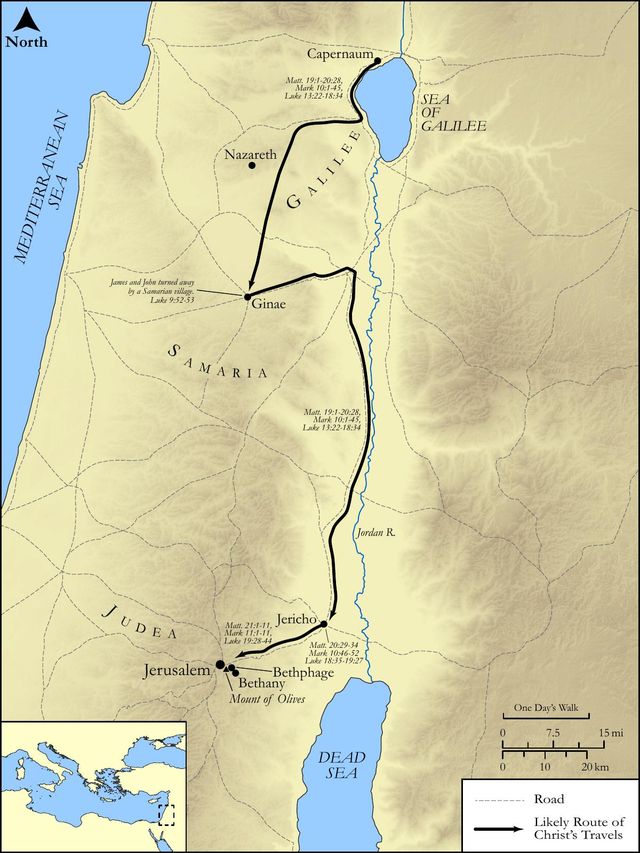
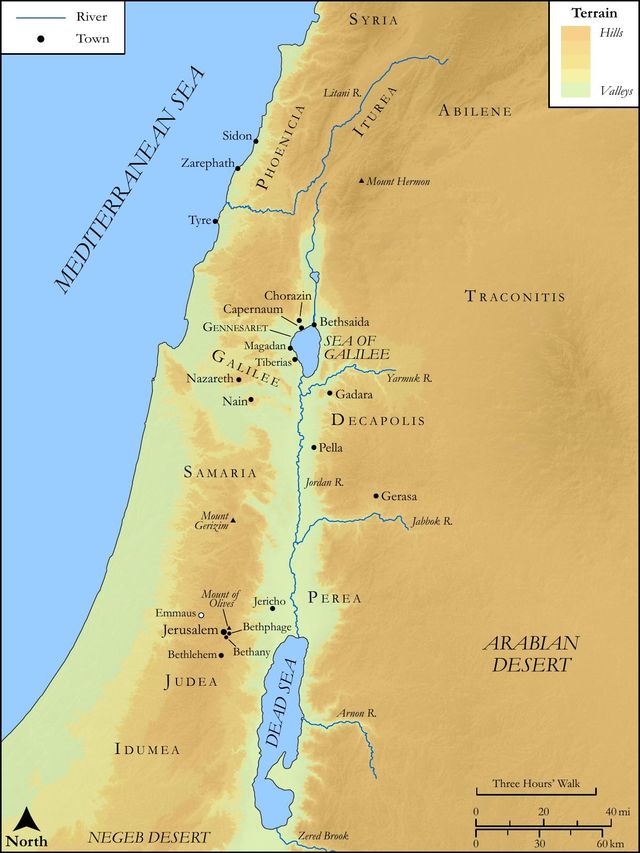
Study this verse
Public-domain commentary
Matthew Henry
From his Commentary on the Whole Bible. Henry comments on passages, not single verses — this entry covers Luke 18:18–30. His three-level outline is real structure in the source text, so it is rendered as structure.
In these verses we have,
I.Christ's discourse with a ruler, that had a good mind to be directed by him in the way to heaven. In which we may observe,
1.It is a blessed sight to see persons of distinction in the world distinguish themselves from others of their rank by their concern about their souls and another life. Luke takes notice of it that he was a ruler. Few of the rulers had any esteem for Christ, but here was one that had; whether a church or state ruler does not appear, but he was one in authority.
2.The great thing we are every one of us concerned to enquire after is what we shall do to get to heaven, what we shall do to inherit eternal life. This implies such a belief of an eternal life after this as atheists and infidels have not, such a concern to make it sure as a careless unthinking world have not, and such a willingness to comply with any terms that it may be made sure as those have not who are resolvedly devoted to the world and the flesh.
3.Those who would inherit eternal life must apply themselves to Jesus Christ as their Master, their teaching Master, so it signifies here (didaskale), and their ruling Master, and so they shall certainly find him. There is no learning the way to heaven but in the school of Christ, by those that enter themselves into it, and continue in it.
4.Those who come to Christ as their Master must believe him to have not only a divine mission, but a divine goodness. Christ would have this ruler know that if he understood himself aright in calling him good he did, in effect, call him God and indeed he was so (Luk 18:19): "Why callest thou me good? Thou knowest there is none good but one, that is, God; and dost thou then take me for God? If so, thou art in the right."
5.Our Master, Christ himself, has not altered the way to heaven from what it was before his coming, but has only made it more plain, and easy, and comfortable, and provided for our relief, in case we take any false step. Thou knowest the commandments. Christ came not to destroy the law and the prophets, but to establish them. Wouldest thou inherit eternal life? Govern thyself by the commandments.
6.The duties of the second table must be conscientiously observed, in order to our happiness, and we must not think that any acts of devotion, how plausible soever, will atone for the neglect of them. Nor is it enough to keep ourselves free from the gross violations of these commandments, but we must know these commandments, as Christ has explained them in his sermon upon the mount, in their extent and spiritual nature, and so observe them.
7.Men think themselves innocent because they are ignorant; so this ruler did. He said, All these have I kept from my youth up, Luk 18:21. He knows no more evil of himself than the Pharisee did, Luk 18:11. He boasts that he began early in a course of virtue, that he had continued in it to this day, and that he had not in any instance transgressed. Had he been acquainted with the extent and spiritual nature of the divine law, and with the workings of his own heart, - had he been but Christ's disciples awhile, and learned of him, he would have said quite the contrary: "All these have I broken from my youth up, in thought, word, and deed."
8.The great things by which we are to try our spiritual state are how we stand affected to Christ and to our brethren, to this world and to the other; by these this man was tried. For,
(1.)If we have a true affection to Christ, he will come and follow him, will attend to his doctrine, and submit to his discipline, whatever it cost him. None shall inherit eternal life who are not willing to take their lot with the Lord Jesus, to follow the Lamb whithersoever he goes.
(2.)If he have a true affection to his brethren, he will, as there is occasion, distribute to the poor, who are God's receivers of his dues out of our estates.
(3.)If he think meanly of this world, as he ought, he will not stick at selling what he has, if there be a necessity for it, for the relief of God's poor.
(4.)If he think highly of the other world, as he ought, he will desire no more than to have treasure in heaven, and will reckon that a sufficient abundant recompence for all that he has left, or lost, or laid out for God in this world.
9.There are many that have a great deal in them that is very commendable, and yet they perish for the lack of some one thing; so this ruler here; he broke with Christ upon this, he liked all his terms very well but this which would part between him and his estate: "In this, I pray thee, have me excused." If this be the bargain, it is no bargain.
10.Many that are loth to leave Christ, yet do leave him. After a long struggle between their convictions and their corruptions, their corruptions carry the day at last; they are very sorry that they cannot serve God and mammon both; but, if one must be quitted, it shall be their God, not their worldly gain.
II.Christ's discourse with his disciples upon this occasion, in which we may observe,
1.Riches are a great hindrance to many in the way to heaven. Christ took notice of the reluctancy and regret with which the rich man broke off from him. He saw that he was very sorrowful, and was sorry for him; but thence he infers, How hardly shall they that have riches enter into the kingdom of God! Luk 18:24. If this ruler had had but as little of the world as Peter, and James, and John had, in all probability he would have left it, to follow Christ, as they did; but, having a great estate, it had a great influence upon him, and he chose rather to take his leave of Christ than to lay himself under an obligation to dispose of his estate in charitable uses. Christ asserts the difficulty of the salvation of rich people very emphatically: It is easier for a camel to go through a needle's eye than for a rich man to enter into the kingdom of God, Luk 18:25. It is a proverbial expression, that denotes the thing to be extremely difficult.
2.There is in the hearts of all people such a general affection to this world, and the things of it, that, since Christ has required it as necessary to salvation that we should sit loose to this world, it is really very hard for any to get to heaven. If we must sell all, or break with Christ, who then can be saved? Luk 18:26. They do not find fault with what Christ required as hard and unreasonable. No, it is very fit that they who expect an eternal happiness in the other world should be willing to forego all that is dear to them in this world, in expectation of it. But they know how closely the hearts of most men cleave to this world, and are ready to despair of their being ever brought to this.
3.There are such difficulties in the way of our salvation: as could never be got over but by pure omnipotence, by that grace of God which is almighty, and to which that is possible which exceeds all created power and wisdom. The things which are impossible with men (and utterly impossible it is that men should work such a change upon their own spirits as to turn them from the world to God, it is like dividing the sea, and driving Jordan back), these things are possible with God. His grace can work upon the soul, so as to alter the bent and bias of it, and give it a contrary ply; and it is he that works in us both to will and to do.
4.There is an aptness in us to speak too much of what we have left and lost, of what we have done and suffered, for Christ. This appears in Peter: Lo, we have left all, and followed thee, Luk 18:28. When it came in his way, he could not forbear magnifying his own and his brethren's affection to Christ, in quitting all to follow him. But this we should be so far from boasting of, that we should rather acknowledge it not worth taking notice of, and be ashamed of ourselves that there should have been any regret and difficulty in the doing of it, and any hankerings towards those things afterwards.
5.Whatever we have left, or laid out, for Christ, it shall without fail be abundantly made up to us in this world and that to come, notwithstanding our weaknesses and infirmities (Luk 18:29, Luk 18:30): No man has left the comfort of his estate or relations for the kingdom of God's sake, rather than they should hinder either his services to that kingdom or his enjoyments of it, who shall not receive manifold more in this present time, in the graces and comforts of God's Spirit, in the pleasures of communion with God and of a good conscience, advantages which, to those that know how to value and improve them, will abundantly countervail all their loses. Yet that is not all; in the world to come they shall receive life everlasting, which is the thing that the ruler seemed to have his eye and heart upon.
Historical interpretation
Seven Centuries of Reception
8 surviving comments on this verse. Each one is dated, so this reads as a timeline rather than a list.
Select a marker to jump to its quote. Markers stagger vertically where authors wrote within a few decades of each other.
(Hom. de eleemos.) The merchant when he goes to the market, is not loth to, part with all that he has, in order to obtain what he requires, but thou art grieved at giving mere dust and ashes that thou mayest gain everlasting bliss.
“It is easier for a camel to pass through the eye of a needle than for a rich man to enter into the kingdom of God.” This is great power. It has great weight in words. With what other words would he more vehemently express that a rich person must not boast in his riches than these by which a compassionate person is defined as against nature?… You can also understand it morally, about every sinner and haughty rich person. When he did not dare to raise his eyes to God, the tax collector, burdened with the awareness of his own sins, was like a camel. Through the help of his confession, he will pass more easily through the eye of a needle than the Pharisee will enter the kingdom of heaven. The Pharisee was arrogant in prayer, boasting of innocence, and overconfident of glory. He rebuked mercy, proclaimed himself, and accused another. He would rather confront the Lord than beg him. If anyone trembles at the camel, let him shudder at him whose deeds are uglier than a camel.
(Hom. 24. in 1 ad Cor.) Abraham indeed possessed wealth for the poor. And all they who righteously possess it, spend it as receiving it from God, according to the divine command, while those who have acquired wealth in an ungodly way, are ungodly in their use of it; whether in squandering it on harlots or parasites, or hiding it in the ground, but sparing nothing for the poor. (Hom. 18. in Joan.). He does not then forbid men to be rich, but to be the slaves of their riches. He would have us use them as necessary, not keep guard over them. It is of a servant to guard, of a master to dispense. Had he wished to preserve them, He would never have given them to men, but left them to remain in the earth.
(Hom. 80. in Matt.) There is no profit in riches while the soul suffers poverty, no hurt in poverty, while the soul abounds in wealth. But if the sign of a man waxing rich is to be in need of nothing, and of becoming poor to be in want, it is plain that the poorer a man is, the richer he grows. For it is far easier for one in poverty to despise wealth, than for the rich. Nor again is avarice wont to be satisfied by having more, for thereby are men only the more inflamed, just as a fire spreads, the more it has to feed upon. Those which seem to be the evils of poverty, it has in common with riches, but the evils of riches are peculiar to them.
(Hom. 63. in Matt.) These weighty words so far exceeded the capacity of the disciples, that when they heard them, they asked, Who then can be saved? not that they feared for themselves, but for the whole world.
(de Quæst Evang. lib. ii. c. 42.) The name of "rich" he here gives to one who covets temporal things, and boasts himself in them. To such rich men are opposed the poor in spirit, of whom is the kingdom of heaven. Now mystically it is easier for Christ to suffer for the lovers of this world, than for the lovers of this world to be converted to Christ. For by the name of a camel He would represent Himself: for He voluntarily humbled Himself to bear the burdens of our infirmity. By the needle He signifies sharp piercings, and thereby the pangs received in His Passion, but by the form of the needle He describes the straitening of the Passion.
(ut sup.) Seeing that there is an incomparably greater number of poor which might be saved by forsaking their riches, they understood that all who love riches, even though they cannot obtain them, were to be counted among the number of the rich. It follows, And he said to them, The things which are impossible with men are possible with God, which must not be taken as if a rich man with covetousness and pride might enter into the kingdom of God, but that it is possible with God for a man to be converted from covetousness and pride, to charity and humility.
As if he says, We have done what Thou commandedst us, what reward then wilt Thou give us? And because it is not enough to have left all things, he adds that which made it perfect, saying, And have followed thee.
The sense then is this; He who in seeking the kingdom of God has despised all earthly affections, has trampled under foot all riches, pleasures, and smiles of the world, shall receive far greater in the present time. Upon the ground of this declaration, some of the Jews build up the fable of a millennium after the resurrection of the just, when all things which we have given up for God's sake shall be restored with manifold interest, and eternal life be granted. Nor do they from their ignorance seem to be aware, that even if in other things there might be a fit promise of restoration, yet in the matter of wives, who might be according to some Evangelists an hundred fold, it would be manifestly shocking, especially since our Lord declares that in the resurrection there will be no marrying. And according to Mark, those things which have been given up, He declares shall be received at this time with persecutions, which these Jews assert will be absent for a thousand years.
And those who heard it said, "And who can be saved?" What does this answer pertain to unless it is because the far greater multitude of the poor, who could be saved with the rich being lost, understood that all who love riches, even if they cannot obtain them, are reckoned among the rich?
“How hard it is for those who have riches to enter into the kingdom of God! It is easier for a camel to go through the eye of a needle than for a rich man to enter into the kingdom of God!” When all the saints heard this command, they thought they should withdraw from this hardness of riches. They parted with all their goods. By this distribution of their riches to the poor, they laid up for themselves eternal riches. They took up the cross and followed Christ. Some followed, being made perfect by martyrdom, even as I have already told you, while others by the practice of self-denial did not fall short of them in the life of the true philosophy. Know that this is a command of Christ our King and God that leads us from corruptible things and makes us partakers of everlasting things.
Our Lord, seeing that the rich man was sorrowful when it was told him to surrender his riches, marvelled, saying, How hardly shall they that have riches enter into the kingdom of God! He says not, It is impossible for them to enter, but it is difficult. For they might through their riches reap an heavenly reward, but it is a hard thing, seeing that riches are more tenacious than birdlime, and hardly is the soul ever plucked away, that is once seized by them. But he next speaks of it as impossible. It is easier for a camel to go through a needle's eye. The word in the Greek answers equally to the animal called the camel, and to a cable, or ship rope. However we may understand it, impossibility is implied. What must we say then? First of all that the thing is positively true, for we must remember that the rich man differs from the steward, or dispenser of riches. The rich man is he who reserves his riches to himself, the steward or dispenser one who holds them entrusted to his care for the benefit of others.
Again, observe that He says, a rich man can not possibly be saved, but one who possesses riches hardly; as if he said, The rich man who has been taken captive by his riches, and is a slave to them, shall not be saved; but he who possesses or is the master of them shall with difficulty be saved, because of human infirmity. For the devil is ever trying to make our foot slip as long as we possess riches, and it is a hard matter to escape his wiles. Poverty therefore is a blessing, and as it were free from temptation.
With men therefore whose thoughts creep earthward, salvation is impossible, but with God it is possible. For when man shall have God for his counsellor, and shall have received the righteousness of God and His teaching concerning poverty, as well as have invoked His aid, this shall be possible to him.
Continue studying Luke 18:26 across the web’s major study libraries — every link below opens this exact verse, chapter, or book on the destination site.
Read & Compare
 BibleGatewayThis verse in more than 200 translations and 70 languages.
 Bible.comThe YouVersion reader — hundreds of translations, reading plans, and highlights.
 ESV.orgCrossway's official English Standard Version reader.
 NET BibleThe NET translation with 60,000+ translators' notes on every rendering decision.
 STEP BibleTyndale House's free study tool — original text, vocabulary, and scholarly resources.
 BibliaLogos Bible Software's free web reader.
 USCCBThe New American Bible (Revised Edition) with the U.S. bishops' study notes.
Commentaries
 BibleHub CommentariesDozens of classic commentaries on this verse, gathered on one page.
 StudyLightMore than 100 commentary sets — the largest collection on the web.
 BibleRefPlain-English commentary on what this verse means, verse by verse.
 Enduring WordDavid Guzik's free commentary on this chapter, widely used by Bible teachers.
 Bible Study ToolsVerse commentary alongside Greek and Hebrew study aids.
Original Language & Research
- BibleHub InterlinearThe verse word by word — original language, transliteration, and English.
- BibleHub LexiconEvery word's original-language definition and Strong's entry.
 Blue Letter BibleDeep-study tools — Strong's numbers, concordance, and word studies.
 CNTR CollationThe earliest Greek manuscripts of this verse, collated letter by letter.
Sermons, Hymns & Audio


TrulyRandomVerse is not affiliated with these sites and doesn’t control their content. They’re linked because they’re genuinely useful.
Summary
Luke 18:26 records the astonished reaction of those who heard Jesus declare the extreme difficulty for a rich person to enter the Kingdom of God. This question, "Who then can be saved?", encapsulates the human perception of impossibility when confronted with God's radical standards, serving as a pivotal moment that underscores humanity's spiritual inadequacy and sets the stage for Jesus' subsequent revelation of God's sovereign power in salvation.
Context
ShowHideLiterary Context
This verse immediately follows Jesus' profound and challenging interaction with the rich young ruler, as detailed in Luke 18:18-25. The ruler, a man of great wealth and apparent righteousness, was unwilling to surrender his possessions to follow Jesus. Jesus then delivered the striking metaphor about a camel passing through the eye of a needle, illustrating the immense obstacle wealth presents to entering God's Kingdom. The disciples' question in Luke 18:26 is a direct, bewildered response to this teaching, highlighting their shock and the radical nature of Jesus' words in contrast to conventional wisdom. It functions as a narrative bridge, setting up Jesus' climactic statement in Luke 18:27 about God's ability to do the impossible.
Historical & Cultural Context
In ancient Jewish society, wealth was often perceived as a tangible sign of God's blessing and favor. It was commonly believed that prosperity indicated divine approval and that the wealthy, being blessed by God, would naturally find it easier to enter the Kingdom. This cultural assumption made Jesus' statement about the rich man's difficulty in entering the Kingdom profoundly counter-cultural and shocking. The disciples, steeped in this worldview, would have found Jesus' teaching deeply unsettling, as it overturned their understanding of who was "blessed" and therefore most likely to be saved. Their question reflects a genuine crisis of understanding, as the traditional markers of spiritual success were suddenly rendered liabilities.
Key Themes
ShowHideLuke 18:26 contributes to several overarching themes within Luke's Gospel and the broader biblical narrative. Firstly, it powerfully illustrates human inability to achieve salvation through merit or effort, especially when confronted with the radical demands of true discipleship. The disciples' despairing question underscores the limitations of human power and righteousness. Secondly, it highlights Jesus' consistent theme of challenging worldly assumptions and values, particularly regarding wealth and status. Jesus consistently flips conventional wisdom on its head, demonstrating that God's Kingdom operates on an entirely different set of principles (e.g., Luke 6:20-26). Finally, this verse serves as a crucial setup for the theme of divine possibility. By exposing the apparent impossibility from a human perspective, it prepares the audience for Jesus' subsequent declaration in Luke 18:27 that "The things which are impossible with men are possible with God," thereby emphasizing that salvation is ultimately a work of God's grace and power, not human achievement.
Exposition and Analysis
ShowHideKey Word Analysis
ShowHideThis word (G191) signifies not merely the act of perceiving sound, but also understanding or grasping the meaning of what is heard. The disciples didn't just hear Jesus' words; they comprehended the profound and unsettling implications of His statement about the rich man, leading to their astonished reaction.
This verb (G2036) denotes speaking or saying, often with a sense of declaration or pronouncement. Here, it conveys the disciples' immediate, vocalized response to Jesus' teaching, indicating their collective astonishment and the urgency of their question.
This term (G4982) carries the broad meaning of being delivered, preserved, healed, or made whole. In this context, it refers specifically to spiritual salvation – inheriting eternal life, entering the Kingdom of God, and being delivered from spiritual death and judgment. The disciples' question is about the very possibility of ultimate spiritual deliverance for anyone, given Jesus' radical pronouncement.
Verse Breakdown
ShowHide"And they that heard [it] said"
This clause establishes the immediate and collective reaction of Jesus' audience, specifically His disciples. Their hearing was not passive; it led to a vocalized response. The "it" refers to Jesus' teaching about the rich man and the camel, which had just been delivered and clearly landed with significant impact on their understanding. Their unified voice ("they... said") underscores the shared bewilderment among them.
"Who then can be saved?"
This is a rhetorical question born out of profound shock and despair. Given the traditional Jewish understanding that wealth was a sign of divine favor, and if even such a seemingly blessed individual as the rich young ruler could not meet the demands for salvation, then from a human perspective, the path to the Kingdom seemed utterly closed to everyone. The "then" (G2532, kaí) emphasizes the logical conclusion drawn from Jesus' preceding statement: if the 'best' among them cannot be saved, who possibly can? This question highlights the perceived impossibility of salvation through human effort or merit.
Literary Devices
ShowHideThe primary literary device at play in Luke 18:26 is the Rhetorical Question. The disciples' query, "Who then can be saved?", is not posed to elicit information they genuinely expect Jesus to provide through a simple answer. Instead, it serves to express their profound astonishment, bewilderment, and despair in the face of Jesus' radical teaching. It underscores the perceived impossibility of salvation from a human perspective, given the stringent conditions Jesus had just laid out. This rhetorical question effectively amplifies the dramatic tension and highlights the paradigm shift Jesus is introducing, preparing the audience for His subsequent declaration that what is impossible for humans is possible for God. The question also functions as a moment of Contrast, sharply juxtaposing human limitation and despair with the divine power that Jesus is about to reveal.
Theological and Thematic Connections
ShowHideLuke 18:26 serves as a critical theological pivot, exposing the futility of human effort in achieving salvation and setting the stage for the radical truth that salvation is entirely a work of God's grace. The disciples' question, born of their cultural assumptions about wealth and righteousness, reveals the universal human tendency to rely on self-merit or external markers of favor. Jesus' teaching, and their subsequent question, dismantle this self-reliance, forcing an acknowledgment that no human, regardless of status or perceived goodness, can earn their way into God's Kingdom. This profound sense of human inability is precisely what magnifies the necessity and glory of God's redemptive power, emphasizing that salvation is not a matter of human striving but divine intervention.
Reflection and Application
ShowHideLuke 18:26 confronts us with a fundamental truth about salvation: it is utterly beyond human capacity. The disciples' bewildered question should resonate deeply within us, prompting us to examine our own hearts for any lingering reliance on personal achievements, material possessions, or perceived righteousness as a basis for our standing before God. This verse challenges us to recognize that if even the "best" among us, like the rich young ruler, cannot meet God's radical demands through their own efforts, then none of us can. This realization should cultivate profound humility and lead us away from self-sufficiency towards a complete and humble dependence on God's boundless grace. It is a call to surrender our idols, whether they be wealth, status, intellect, or even our own good works, and to embrace the truth that salvation is a gift, not a reward.
Questions for Reflection
ShowHideFAQ
ShowHideWhy were the disciples so shocked by Jesus' statement about the rich man?
ShowHideThe disciples' shock stemmed from a deeply ingrained cultural and theological belief in ancient Judaism that wealth was a clear sign of God's blessing and favor. It was commonly understood that prosperity indicated righteousness and that those blessed with riches would find it easier to enter the Kingdom of God. Jesus' statement, comparing a rich man's entry into the Kingdom to a camel passing through a needle's eye (Luke 18:25), completely overturned this conventional wisdom. If even someone so apparently favored by God faced such an insurmountable obstacle, then from their human perspective, salvation seemed impossible for anyone, leading to their bewildered question in Luke 18:26.
Does this verse imply that no rich person can be saved?
ShowHideNo, this verse does not imply that no rich person can be saved. Instead, it highlights the immense difficulty and the human impossibility of salvation, especially when wealth becomes an idol or a source of self-reliance. Jesus' teaching in Luke 18:25 is a hyperbole, emphasizing that human effort, particularly when entangled with the allure of worldly riches, is insufficient for salvation. The very next verse, Luke 18:27, clarifies Jesus' point: "The things which are impossible with men are possible with God." This means that salvation, for the rich and poor alike, is not achieved through human merit or strength but through the miraculous power and grace of God. God can save anyone, regardless of their material status, if they humble themselves and trust in Him.
Christ-Centered Fulfillment
ShowHideLuke 18:26, with its desperate cry "Who then can be saved?", finds its profound Christ-centered fulfillment in Jesus Himself, who is the answer to humanity's impossible dilemma. The disciples' question underscores the utter inability of humanity to achieve salvation through its own efforts, merits, or possessions. It is precisely at this point of human despair and impossibility that Christ's redemptive work becomes gloriously manifest. Jesus, the Son of God, is the one who accomplishes what is impossible for humanity (Luke 18:27). He did not cling to His divine status but "emptied himself, by taking the form of a servant, being born in the likeness of men" (Philippians 2:6-7). Through His perfect obedience, His sacrificial death on the cross, and His glorious resurrection, Jesus provided the sole means by which salvation is made possible for all who believe (John 3:16). He is the "way, and the truth, and the life" through whom alone one can come to the Father (John 14:6). Thus, the question "Who then can be saved?" is answered by the person and work of Christ: salvation is possible for all who, recognizing their own inability, humble themselves and place their faith in the one who made the impossible, possible. He is the ultimate demonstration of God's power to save "to the uttermost" (Hebrews 7:25).