


Luke 1:60
- καὶkaiAndG2532CONJConjunction
- ἀποκριθεῖσαapokritheisaansweringG611V-AOP-NSFVerb Aorist Passive Deponent Participle Nominative Singular Feminine
- ἡhētheG3588T-NSFDefinite article Nominative Singular Feminine
- μήτηρmētērmotherG3384N-NSFNoun Nominative Singular Feminine
- αὐτοῦautouof himG846P-GSMPersonal pronoun Genitive Singular Masculine
- εἶπεν·eipensaidG2036V-2AAI-3SVerb 2nd Aorist Active Indicative 3rd Singular
- οὐχίouchiNoG3780PRT-NNegative Particle Negative
- ἀλλὰallabutG235CONJConjunction
- κληθήσεταιklēthēsetaihe will be calledG2564V-FPI-3SVerb Future Passive Indicative 3rd Singular
- ἸωάννηςIōannēsJohnG2491N-NSM-PNoun Nominative Singular Masculine Individual
English is a literal word-by-word gloss of the Greek, not the KJV's wording. Why?
This is the original text the KJV's translators worked from — each Greek word with its own literal English meaning in this verse, prepared by scholars at Tyndale House, Cambridge. The KJV translates whole sentences, not word by word, so its wording differs: one Greek word can become several English words, and the KJV may choose “charity” where the gloss reads “love”. Both are faithful — they answer different questions. For the KJV's own rendering, switch to the KJV text.
Details
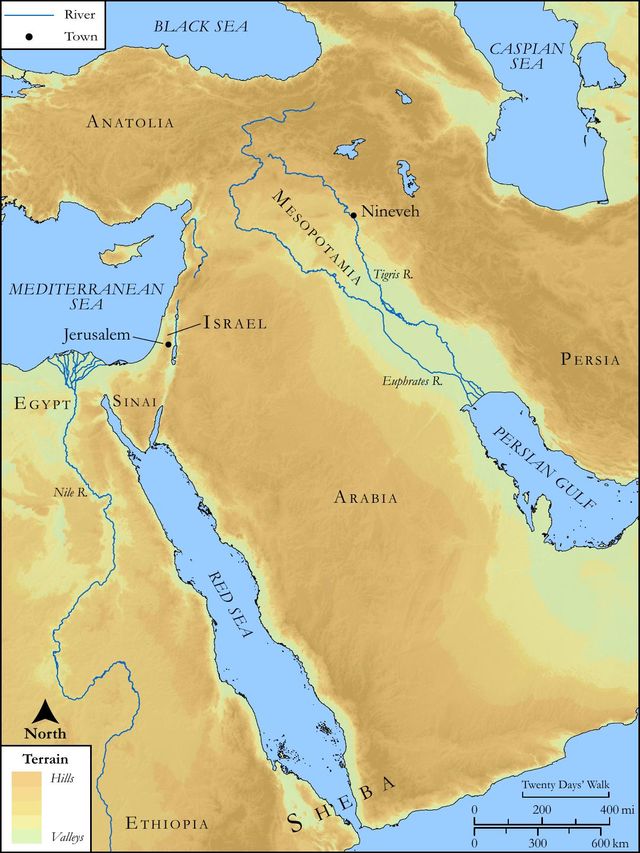
See on the biblical-era map


Study this verse
Public-domain commentary
Matthew Henry
From his Commentary on the Whole Bible. Henry comments on passages, not single verses — this entry covers Luke 1:57–66. His three-level outline is real structure in the source text, so it is rendered as structure.
In these verses, we have,
I.The birth of John Baptist, Luk 1:57.
Though he was conceived in the womb by miracle, he continued in the womb according to the ordinary course of nature (so did our Saviour): Elisabeth's full time came, that she should be delivered, and then she brought forth a son. Promised mercies are to be expected when the full time for them is come, and not before.
II.The great joy that was among all the relations of the family, upon this extraordinary occasion (Luk 1:58):
Her neighbours and her cousins heard of it; for it would be in every body's mouth, as next to miraculous. Dr. Lightfoot observes that Hebron was inhabited by priests of the family of Aaron, and that those were the cousins here spoken of; but the fields and villages about, by the children of Judah, and that those were the neighbours. Now these here discovered,
1.A pious regard to God. They acknowledged that the Lord had magnified his mercy to her, so the word is. It was a mercy to have her reproach taken away, a mercy to have her family built up, and the more being a family of priests, devoted to God, and employed for him. Many things concurred to make the mercy great - that she had been long barren, was now old, but especially that the child should be great in the sight of the Lord.
2.A friendly regard to Elisabeth. When she rejoiced, they rejoiced with her. We ought to take pleasure in the prosperity of our neighbours and friends, and to be thankful to God for their comforts as for our own.
III.The dispute that was among them concerning the naming him (Luk 1:59):
On the eighth day, as God has appointed, they came together, to circumcise the child; it was here, in Hebron, that circumcision was first instituted; and Isaac, who, like John Baptist, was born by promise, was one of the first that was submitted to it, at least the chief eyed in the institution of it. They that rejoiced in the birth of the child came together to the circumcising of him. Note, The greatest comfort we can take in our children is in giving them up to God, and recognizing their covenant-relation to him. The baptism of our children should be more our joy than their birth.
Now it was the custom, when they circumcised their children, to name them, because, when Abram was circumcised God gave him a new name, and called him Abraham; and it is not unfit that they should be left nameless till they are by name given up to God. Now,
1.Some proposed that he should be called by his father's name, Zacharias. We have not any instance in scripture that the child should bear the father's name; but perhaps it was of late come into use among the Jews, at it is with us, and they intended hereby to do honour to the father, who was not likely to have another child.
2.The mother opposed it, and would have called him John; having learned, either by inspiration of the Holy Ghost (as is most probable), or by information in writing from her husband, that God appointed this to be his name (Luk 1:60); He shall be called Johanan - Gracious, because he shall introduce the gospel of Christ, wherein God's grace shines more brightly than ever.
3.The relations objected against that (Luk 1:61): "There is none of thy kindred, none of the relations of thy family, that is called by that name; and therefore, if he may not have his father's name, yet let him have the name of some of his kindred, who will take it as a piece of respect to have such a child of wonders as this named from them." Note, As those that have friends must show themselves friendly, so those that have relations must be obliging to them in all the usual regards that are paid to kindred.
4.They appealed to the father, and would try if they could possibly get to know his mind; for it was his office to name the child, Luk 1:62. They made signs to him, by which it appears that he was deaf as well as dumb; nay, it should seem, mindless of any thing, else one would think they should at first have desired him to write down his child's name, if he had ever communicated any thing by writing since he was struck. However, they would carry the matter as far as they could, and therefore gave him to understand what the dispute was which he only could determine; whereupon he made signs to them to give him a table-book, such as they then used, and with the pencil he wrote these words, His name is John, Luk 1:63. Note, "It shall be so," or, "I would have it so," but "It is so." The matter is determined already; the angel had given him that name. Observe, When Zacharias could not speak, he wrote. When ministers have their mouths stopped, that they cannot preach, yet they may be doing good as long as they have not their hands tied, that they cannot write. Many of the martyrs in prison wrote letters to their friends, which were of great use; blessed Paul himself did so. Zacharias's pitching upon the same name that Elisabeth had chosen was a great surprise to the company: They marvelled all; for they knew not that, though by reason of his deafness and dumbness they could not converse together, yet they were both guided by one and the same Spirit: or perhaps they marvelled that he wrote so distinctly and intelligently, which (the stroke he was under being somewhat like that of a palsy) he had not done before.
5.He thereupon recovered the use of his speech (Luk 1:64): His mouth was opened immediately. The time prefixed for his being silenced was till the day that these blessed things shall be fulfilled (Luk 1:20); not all the things going before concerning John's ministry, but those which relate to his birth and name (Luk 1:13). That time was now expired, whereupon the restraint was taken off, and God gave him the opening of the mouth again, as he did to Ezekiel, Eze 3:27. Dr. Lightfoot compares this case of Zacharias with that of Moses, Exo 4:24-26. Moses, for distrust, is in danger of his life, as Zacharias, for the same fault, is struck dumb; but, upon the circumcision of his child, and recovery of his faith, there, as here, the danger is removed. Infidelity closed his mouth, and now believing opens it again; he believes, therefore he speaks. David lay under guilt from the conception of his child till a few days after its birth; then the Lord takes away his sin: upon his repentance, he shall not die. So here he shall be no longer dumb; his mouth was opened, and he spoke, and praised God. Note, When God opens our lips, our mouths must show forth his praise. As good be without our speech as not use it in praising God; for then our tongue is most our glory when it is employed for God's glory.
6.These things were told all the country over, to the great amazement of all that heard them, Luk 1:65, Luk 1:66. The sentiments of the people are not to be slighted, but taken notice of. We are here told,
(1.)That these sayings were discoursed of, and were the common talk all about the hill-country of Judea. It is a pity but a narrative of them had been drawn up, and published in the world, immediately.
(2.)That most people who heard of these things were put into consternation by them: Fear came on all them that dwell round about there. If we have not a good hope, as we ought to have, built upon the gospel, we may expect that the tidings of it will fill us with fear. They believed and trembled, whereas they should have believed and triumphed.
(3.)It raised the expectations of people concerning this child, and obliged them to have their eye upon him, to see what he would come to. They laid up these presages in their hearts, treasured them up in mind and memory, as foreseeing they should hereafter have occasion to recollect them. Note, What we hear, that may be of use to us, we should treasure up, that we may be able to bring forth, for the benefit of others, things new and old, and, when things come to perfection, may be able to look back upon the presages thereof, and to say, "It was what we might expect." They said within themselves, and said among themselves, "What manner of child shall this be? What will be the fruit when these are the buds, or rather when the root is out of such a dry ground?" Note, When children are born into the world, it is very uncertain what they will prove; yet sometimes there have been early indications of something great, as in the birth of Moses, Samson, Samuel, and here of John. And we have reason to think that there were some of those living at the time when John began his public ministry who could, and did, remember these things, and relate them to others, which contributed as much as any thing to the great flocking there was after him.
Lastly, It is said, The hand of the Lord was with him; that is, he was taken under the special protection of the Almighty, from his birth, as one designed for something great and considerable, and there were many instances of it. It appeared likewise that the Spirit was at work upon his soul very early. As soon as he began to speak or go, you might perceive something in him very extraordinary. Note, God has ways of operating upon children in their infancy, which we cannot account for. God never made a soul but he knew how to sanctify it.
Historical interpretation
Seven Centuries of Reception
7 surviving comments on this verse. Each one is dated, so this reads as a timeline rather than a list.
Select a marker to jump to its quote. Markers stagger vertically where authors wrote within a few decades of each other.
(Orat. vi.) The birth of John then broke the silence of Zacharias, as it follows, And his mouth was opened. For it were unreasonable when the voice of the Word had come forth, that his father should remain speechless.
For the bringing forth of saints causes the rejoicing of many; it is a common blessing; for justice is a public virtue, and therefore at the birth of a just man a sign of his future life is sent beforehand, and the grace of the virtue which is to follow is represented, being foreshadowed by the rejoicing of the neighbours.
The holy Evangelist has especially remarked, that many thought the child should be called after his father Zacharias, in order that we might understand, not that any name of his kinsfolk was displeasing to his mother, but that the same word had been communicated to her by the Holy Spirit, which had been foretold by the Angel to Zacharias. And in truth, being dumb, Zacharias was unable to mention his son's name to his wife, but Elisabeth obtained by prophecy what she had not learnt from her husband. Hence it follows, And she answered, &c. Marvel not that the woman pronounced the name which she had never heard, seeing the Holy Spirit who imparted it to the Angel revealed it to her; nor could she be ignorant of the forerunner of the Lord, who had prophesied of Christ. And it well follows, And they said unto her, &c. that you might consider that the name belongs not to the family, but to the Prophet. Zacharias also is questioned, and signs made to him, as it follows, And they made signs to the father, &c. But since unbelief had so bereft him of utterance and hearing, that he could not use his voice, he spoke by his hand-writing, as it follows, And he asked for a writing table, and wrote, saying, His name is John; that is, we give no name to him who has received his name from God.
Rightly also, from that moment was his tongue loosed, for that which unbelief had bound, faith set free. Let us then also believe, in order that our tongue, which has been bound by the chains of unbelief, may be loosed by the voice of reason. Let us write mysteries by the Spirit if we wish to speak. Let us write the forerunner of Christ, not on tables of stone, but on the fleshly tablets of the heart. For he who names John, prophesies Christ. For it follows, And he spake, giving thanks.
(in Gen. Hom. 39.) The rite of circumcision was first delivered to Abraham as a sign of distinction, that the race of the Patriarch might be preserved in unmixed purity, and so might be able to obtain the promises. But now that the promise of the covenant is fulfilled, the sign attached to it is removed. So then through Christ circumcision ceased, and baptism came in its place; but first it was right that John should be circumcised; as it is said, And it came to pass, that on the eighth day, &c. For the Lord had said, Let the child of eight days be circumcised among you. (Gen. 17:13.) But this measurement of time I conceive was ordered by Divine mercy for two reasons. First, because in its most tender years the child the more easily bears the cutting of the flesh. Secondly, that from the very operation itself we might be reminded that it was done for a sign; for the young child scarcely distinguishes any of the things that are around him. But after the circumcision, the name was conferred, as it follows, And they called him. But this was done because we must first receive the seal of the Lord, then the name of man. Or, because no man except he first cast aside his fleshly lusts, which circumcision signifies, is worthy to have his name written in the book of life.
But the name John is also interpreted the grace of God. Because then by the favour of Divine grace, not by nature, Elisabeth conceived this son, they engraved the memory of the benefit on the name of the child.
John means “the grace of God” or “in whom there is grace.” By this name are expressed the entire extent of the grace of the gospel dispensation which he was to proclaim, and especially the Lord himself, through whom this grace was to be granted to the world.…As to his subsequent declaration and confirmation of the name of John, and the opening of Zechariah’s mouth and his speaking, blessing God, it is surely evident that once the grace of the new covenant was manifested by the apostles, a large number of priests also became obedient to the faith.
Now in an allegory, the celebration of John's birth was the beginning of the grace of the New Covenant. His neighbours and kinsfolk had rather give him the name of his father than that of John. For the Jews, who by the observance of the Law were united to him as it were by ties of kindred, chose rather to follow the righteousness which is of the Law, than receive the grace of faith. But the name of John, (i. e. the grace of God,) his mother in word, his father in writing, suffice to announce, for both the Law itself as well as the Psalms and the Prophecies, in the plainest language foretel the grace of Christ; and that ancient priesthood, by the foreshadowing of its ceremonies and sacrifices, bears testimony to the same. And well doth Zacharias speak on the eighth day of the birth of his child, for by the resurrection of the Lord, which took place on the eighth day, i. e. the day after the sabbath, (septimam sabbati.) the hidden secrets of the legal priesthood were revealed.
John’s circumcision clearly set forth an image of the Lord’s resurrection because it too occurred on the eighth day, that is, on the day after the sabbath. And just as the former was wont to release people from the punishable state of everlasting death, so the latter displayed the perfect newness of immortal life in our Creator, and revealed that it is to be hoped for in us.
And because with the mother the dumb father also agreed as to the name of the child, it follows, And they all marvelled. For there was no one of this name among their kinsfolk that any one could say that they had both previously determined upon it.
Continue studying Luke 1:60 across the web’s major study libraries — every link below opens this exact verse, chapter, or book on the destination site.
Read & Compare
 BibleGatewayThis verse in more than 200 translations and 70 languages.
 Bible.comThe YouVersion reader — hundreds of translations, reading plans, and highlights.
 ESV.orgCrossway's official English Standard Version reader.
 NET BibleThe NET translation with 60,000+ translators' notes on every rendering decision.
 STEP BibleTyndale House's free study tool — original text, vocabulary, and scholarly resources.
 BibliaLogos Bible Software's free web reader.
 USCCBThe New American Bible (Revised Edition) with the U.S. bishops' study notes.
Commentaries
 BibleHub CommentariesDozens of classic commentaries on this verse, gathered on one page.
 StudyLightMore than 100 commentary sets — the largest collection on the web.
 BibleRefPlain-English commentary on what this verse means, verse by verse.
 Enduring WordDavid Guzik's free commentary on this chapter, widely used by Bible teachers.
 Bible Study ToolsVerse commentary alongside Greek and Hebrew study aids.
Original Language & Research
- BibleHub InterlinearThe verse word by word — original language, transliteration, and English.
- BibleHub LexiconEvery word's original-language definition and Strong's entry.
 Blue Letter BibleDeep-study tools — Strong's numbers, concordance, and word studies.
 CNTR CollationThe earliest Greek manuscripts of this verse, collated letter by letter.
Sermons, Hymns & Audio


TrulyRandomVerse is not affiliated with these sites and doesn’t control their content. They’re linked because they’re genuinely useful.
Summary
Luke 1:60 captures a pivotal moment in the narrative surrounding the birth of John the Baptist, illustrating Elizabeth's unwavering faith and obedience to divine instruction over deeply entrenched human tradition. Her firm declaration of her son's name, "John," directly challenges the community's expectation to name him after his father, Zechariah, and sets the stage for the miraculous restoration of Zechariah's speech, confirming God's sovereign plan for their child.
Context
ShowHideLiterary Context
This verse is situated within the broader narrative of John the Baptist's birth, immediately following the celebration of his circumcision on the eighth day (Luke 1:59). The community and relatives, adhering to Jewish custom, presume the child will be named Zechariah after his father. The preceding verses detail Zechariah's initial disbelief and subsequent muteness as a sign (Luke 1:20), and the angel Gabriel's explicit instruction to name the child "John" (Luke 1:13). Elizabeth's intervention in Luke 1:60 is a direct response to the community's attempt to impose their tradition, foreshadowing Zechariah's own confirmation of the name in Luke 1:63 and the immediate restoration of his speech in Luke 1:64, thereby validating the divine origin of the name and the child's special purpose.
Historical & Cultural Context
In ancient Jewish society, naming a child was a significant event, often occurring during the circumcision ceremony on the eighth day. It was a common and respected custom to name the firstborn son after his father or a prominent ancestor, ensuring continuity of lineage and honor within the family. This tradition is evident in the relatives' suggestion to name the child "Zechariah" (Luke 1:59). Elizabeth's counter-declaration, "Not so; but he shall be called John," was therefore a radical departure from established cultural norms and familial expectations, highlighting the extraordinary nature of this birth and the divine mandate overriding human custom. The community's surprise and subsequent appeal to Zechariah underscore the weight of this cultural expectation.
Key Themes
ShowHideLuke 1:60 powerfully contributes to several key themes in Luke's Gospel. Firstly, it emphasizes Divine Authority Over Tradition, showing that God's specific instructions take precedence over human customs, no matter how deeply ingrained. Elizabeth's firm stand, echoing the angelic pronouncement in Luke 1:13, demonstrates unwavering Faith and Obedience to God's revealed will, even in the face of familial and societal pressure. This act of obedience paves the way for the fulfillment of prophecy and the subsequent Restoration and Validation of Zechariah's faith and speech (as seen in Luke 1:63-64). Furthermore, the verse subtly introduces the Significance of the Name "John," which, meaning "Yahweh is gracious," perfectly encapsulates the divine grace manifest in his miraculous birth and his future role as the forerunner of the Messiah, preparing the way for God's ultimate act of grace in Christ.
Exposition and Analysis
ShowHideKey Word Analysis
ShowHideMeaning "to conclude for oneself, i.e. (by implication) to respond; by Hebraism (compare עָנָה) to begin to speak (where an address is expected)." This word signifies not merely a verbal reply but a decisive, authoritative response, often implying a prior deliberation or a divinely informed conviction. Elizabeth's answer is not a hesitant suggestion but a confident declaration, stemming from a clear understanding of God's will.
Meaning "properly, other things, i.e. (adverbially) contrariwise." This strong adversative conjunction introduces a direct and emphatic contradiction to the preceding statement. It highlights the sharp contrast between the human expectation ("Not so") and the divine command ("but he shall be called John"), underscoring the absolute nature of Elizabeth's conviction and the divine decree.
Of Hebrew origin (יוֹחָנָן, Yochanan'), meaning "Yahweh is gracious" or "God has shown favor." This name is not a human choice but a divinely ordained one, carrying profound theological significance that points to God's gracious intervention in human history through the ministry of John and, ultimately, through Jesus Christ.
Verse Breakdown
ShowHide"And his mother answered and said"
This opening phrase establishes Elizabeth as the speaker, highlighting her initiative and authority in this critical moment. Despite Zechariah's muteness, Elizabeth, empowered by divine knowledge (likely through Zechariah's written communication or direct revelation), steps forward to declare God's will. Her "answering" implies a direct response to the community's question about the child's name, demonstrating her readiness to challenge tradition.
"Not [so];"
This concise and emphatic negation directly refutes the community's assumption that the child would be named Zechariah. The Greek "ouchí" (G3780) is an intensive form of "not," conveying a strong and unequivocal rejection. It signifies Elizabeth's firm conviction that human tradition must yield to divine decree.
"but he shall be called John."
This declarative statement reveals the divinely appointed name. The use of the future passive "shall be called" (G2564, kaléō'), implies a divine imperative and certainty, not a human preference. It underscores that the naming is not subject to human deliberation or custom but is a fulfillment of God's prior command given through the angel Gabriel (Luke 1:13). The name "John" itself carries the weight of God's grace and purpose for this child.
Literary Devices
ShowHideLuke 1:60 effectively employs several literary devices to convey its profound message. Contrast is central, pitting human expectation and tradition against divine revelation and command. The community's assumption of naming the child Zechariah stands in stark opposition to Elizabeth's resolute declaration of "John," highlighting the tension between the earthly and the heavenly. There is also a subtle Irony in the scene: the father, struck mute for his disbelief, cannot speak the name, while the mother, whose faith is evident, boldly declares it. The name "John" itself functions as Symbolism, representing "Yahweh is gracious," thereby encapsulating the divine grace underlying the miraculous birth and the child's future role. Finally, Elizabeth's declaration serves as Foreshadowing for Zechariah's subsequent affirmation (Luke 1:63) and the restoration of his speech (Luke 1:64), signaling that God's word will ultimately be confirmed and prevail.
Theological and Thematic Connections
ShowHideLuke 1:60 is a powerful testament to God's sovereignty and the necessity of obedience to His divine will, even when it challenges deeply ingrained human traditions. Elizabeth's unwavering declaration underscores that God's plans are specific, purposeful, and take precedence over cultural norms or familial expectations. The theological significance of the name "John" ("Yahweh is gracious") points to the overarching theme of God's grace, which is central to the entire biblical narrative and culminates in the person and work of Jesus Christ. This verse reminds us that God often works in unexpected ways, calling His people to radical obedience that may seem counter-cultural but ultimately serves His greater redemptive purposes.
Reflection and Application
ShowHideLuke 1:60 offers a profound lesson on prioritizing God's revealed will above all else. Elizabeth's courageous stand, despite the pressure of tradition and the community's expectations, serves as a powerful example for believers today. In a world that often values conformity and adherence to established norms, this verse calls us to cultivate a radical obedience to God's Word, even when it means standing apart or challenging conventional wisdom. It encourages us to discern God's specific calling for our lives and to trust His purposes, knowing that His plans are perfect and will ultimately prevail. Our faith is not merely intellectual assent but a lived reality that demands action, conviction, and a willingness to step out in obedience, even when it feels counter-intuitive or uncomfortable.
Questions for Reflection
ShowHideFAQ
ShowHideWhy was Elizabeth so certain about the name "John" when the family expected "Zechariah"?
ShowHideElizabeth's certainty stemmed from divine revelation. While the text doesn't explicitly state how she knew, it's highly probable that Zechariah, though mute, communicated the angel Gabriel's instruction to her (perhaps through writing, as he later did in Luke 1:63). The angel had specifically told Zechariah, "You shall call his name John" (Luke 1:13). Elizabeth's declaration was an act of faith and obedience to this divine command, prioritizing God's will over the prevailing cultural custom of naming a son after his father or an ancestor.
What is the significance of the name "John"?
ShowHideThe name "John" comes from the Hebrew "Yochanan," meaning "Yahweh is gracious" or "God has shown favor." This meaning is profoundly significant for John the Baptist's role. His miraculous birth was an act of God's grace to his elderly parents, and his entire ministry was dedicated to preparing the way for Jesus, who is the ultimate embodiment of God's grace and salvation. Thus, his name perfectly encapsulates the message of divine favor that he would proclaim and the gracious work of God he would herald.
Christ-Centered Fulfillment
ShowHideLuke 1:60, through Elizabeth's resolute declaration of John's name, points powerfully to the Christ-centered fulfillment of God's redemptive plan. John, whose name means "Yahweh is gracious," was divinely appointed as the forerunner, the one sent to prepare the way for the Lord. His very existence and name signify God's gracious intervention into human history, setting the stage for the ultimate display of grace in Jesus Christ. John's ministry, as prophesied in Isaiah 40:3, was to "prepare the way of the Lord," calling people to repentance and pointing them to the "Lamb of God who takes away the sin of the world" (John 1:29). Thus, Elizabeth's obedience in naming her son "John" was a crucial step in the unfolding of God's gracious plan, culminating in the advent of Jesus, the one through whom God's grace and truth fully came (John 1:17). John's life and purpose, divinely orchestrated from his conception and sealed by his name, find their ultimate meaning and fulfillment in his role as the herald of Christ, the true embodiment of God's favor to humanity.