


Judges 19:29
Bible text: King James Version (1769 Blayney text) · Public domain
Bible text: King James Version with Strong's numbers · Public domain
Bible text: Berean Standard Bible · Public domain
Bible text: American Standard Version (1901) · Public domain
Bible text: World English Bible, Messianic edition · Public domain
Bible text: Geneva Bible (1599) · Public domain
Bible text: Young's Literal Translation · Public domain
- וַיָּבֹאvai·ya·Vo'and he cameH935Conj-w ¦ V-Qal-ConsecImperf-3msVerb Qal Consecutive Imperfect 3rd Singular Masculineוַandיָּבֹאhe came
- אֶל'eltoH413PrepPreposition
- בֵּיתוֹbei·Tohis houseH1004N-msc ¦ 3msNoun Singular Masculine Constructבֵּיתhouseוֹhis
- וַיִּקַּחvai·yi·Kachand he tookH3947Conj-w ¦ V-Qal-ConsecImperf-3msVerb Qal Consecutive Imperfect 3rd Singular Masculineוַandיִּקַּחhe took
- אֶת'et<obj.>H853DirObjMParticle Object Indicator
- הַמַּאֲכֶלֶתha·ma·'a·Khe·letthe knifeH3979Art ¦ N-fsNoun Singular Feminine Absoluteהַtheמַּאֲכֶלֶתknife
- וַיַּחֲזֵקvai·ya·cha·Zekand he took holdH2388Conj-w ¦ V-Hiphil-ConsecImperf-3msVerb Hiphil Consecutive Imperfect 3rd Singular Masculineוַandיַּחֲזֵקhe took hold
- בְּפִילַגְשׁוֹbe·fi·lag·Shoon his concubineH6370Prep-b ¦ N-fsc ¦ 3msNoun Singular Feminine Constructבְּonפִילַגְשׁconcubineוֹhis
- וַיְנַתְּחֶהָvay·na·te·Che·haand he cut in pieces herH5408Conj-w ¦ V-Piel-ConsecImperf-3ms ¦ 3fsVerb Piel Consecutive Imperfect 3rd Singular Masculineוַandיְנַתְּחֶhe cut in piecesהָher
- לַעֲצָמֶיהָla·'a·tza·Mei·hato her bonesH6106Prep-l ¦ N-mpc ¦ 3fsNoun Plural Masculine Constructלַtoעֲצָמֶיbonesהָher
- לִשְׁנֵיםlish·Neiminto two [plus]H8147Prep-l ¦ N-cdNoun Dual common gender Absoluteלִintoשְׁנֵיםtwo [plus]
- עָשָׂר'a·SartenH6240N-csNoun Singular common gender Absolute
- נְתָחִיםne·ta·ChimpiecesH5409N-mpNoun Plural Masculine Absolute
- וַיְשַׁלְּחֶהָvay·sha·le·Che·haand he sent out herH7971Conj-w ¦ V-Piel-ConsecImperf-3ms ¦ 3fsVerb Piel Consecutive Imperfect 3rd Singular Masculineוַandיְשַׁלְּחֶhe sent outהָher
- בְּכֹלbe·Kholin allH3605Prep-b ¦ N-mscNoun Singular Masculine Constructבְּinכֹלall
- גְּבוּלge·Vul[the] territory ofH1366N-mscNoun Singular Masculine Construct
- יִשְׂרָאֵלYis·ra·'ElIsraelH3478N-properNoun Proper Location
English is a literal word-by-word gloss of the Hebrew, not the KJV's wording. Why?
This is the original text the KJV's translators worked from — each Hebrew word with its own literal English meaning in this verse, prepared by scholars at Tyndale House, Cambridge. The KJV translates whole sentences, not word by word, so its wording differs: one Hebrew word can become several English words, and the KJV may choose “the LORD” where the gloss reads “Yahweh”. Both are faithful — they answer different questions. For the KJV's own rendering, switch to the KJV text.
Details
See on the biblical-era maps
Study this verse
Public-domain commentary
Matthew Henry
From his Commentary on the Whole Bible. Henry comments on passages, not single verses — this entry covers Judges 19:22–30. His three-level outline is real structure in the source text, so it is rendered as structure.
Here is, I. The great wickedness of the men of Gibeah. One could not imagine that ever it should enter into the heart of men that had the use of human reason, of Israelites that had the benefit of divine revelation, to be so very wicked. "Lord, what is man!" said David, "what a mean creature is he!" "Lord, what is man," may we say upon the reading of this story, "what a vile creature is he, when he is given up to his own heart's lusts!" The sinners are here called sons of Belial, that is, ungovernable men, men that would endure no yoke, children of the devil (for he is Belial), resembling him, and joining with him in rebellion against God and his government. Sons of Benjamin, of whom Moses had said, The beloved of the Lord shall dwell in safety by him (Deu 33:12), have become such sons of Belial that an honest man cannot lodge in safety among them. The sufferers were a Levite and his wife, and that kind man that gave them entertainment. We are strangers upon earth, and must expect strange usage. It is said they were making their hearts merry when this trouble came upon them, Jdg 19:22. If the mirth was innocent, it teaches us of what uncertain continuance all our creature comforts and enjoyments are; when we are ever so well pleased with our friends, we know not how near our enemies are; nor, if it be well with us this hour, can we be sure it will be so the next. If the mirth was sinful and excessive, let it be a warning to us to keep a strict guard upon ourselves, that we grow not intemperate in the use of lawful things, nor be transported into indecencies by our cheerfulness; for the end of that mirth is heaviness. God can soon change the note of those that are making their hearts merry, and turn their laughter into mourning and their joy into heaviness. Let us see what the wickedness of these Benjamites was.
1.They made a rude and insolent assault, in the night, upon the habitation of an honest man, that not only lived peaceably among them, but kept a good house and was a blessing and ornament to their city. They beset the house round, and, to the great terror of those within, beat as hard as they could at the door, Jdg 19:22. A man's house is his castle, in which he ought to be both safe and quiet, and, where there is law, it is taken under the special protection of it; but there was no king in Israel to keep the peace and secure honest men from the sons of violence.
2.They had a particular spite at the strangers that were within their gates, that only desired a night's lodging among them, contrary to the laws of hospitality, which all civilized nations have accounted sacred, and which the master of the house pleaded with them (Jdg 19:23): Seeing that this man has come into my house. Those are base and abject spirits indeed that will trample upon the helpless, and use a man the worse for his being a stranger, whom they know no ill of.
3.They designed in the most filthy and abominable manner (not to be thought of without horror and detestation) to abuse the Levite, whom perhaps they had observed to be young and comely: Bring him forth that we may know him. We should certainly have concluded they meant only to enquire whence he came, and to know his character, but that the good man of the house, who understood their meaning too well, by his answer lets us know that they designed the gratification of that most unnatural and worse than brutish lust which was expressly forbidden by the law of Moses, and called an abomination, Lev 18:22. Those that are guilty of it are ranked in the New Testament among the worst and vilest of sinners (Ti1 1:10), and such as shall not inherit the kingdom of God, Co1 6:9. Now,
(1.)This was the sin of Sodom, and is thence called Sodomy. The Dead Sea, which was the standing monument of God's vengeance upon Sodom, for its filthiness, was one of the boundaries of Canaan, and lay not many miles off from Gibeah. We may suppose the men of Gibeah had seen it many a time, and yet would not take warning by it, but did worse than Sodom (Eze 16:48), and sinned just after the similitude of their transgression. Who would have expected (says bishop Hall) such extreme abomination to come out of the loins of Jacob? Even the worst pagans were saints to them. What did it avail them that they had the ark of God in Shiloh when they had Sodom in their streets - God's law in their fringes, but the devil in their hearts? Nothing but hell itself can yield a worse creature than a depraved Israelite.
(2.)This was the punishment of their idolatry, that sin to which they were, above all others, most addicted. Because they liked not to retain God in their knowledge, therefore he gave them up to these vile affections, by which they dishonoured themselves as they had by their idolatry dishonoured him and turned his glory into shame, Rom 1:24, Rom 1:28. See and admire, in this instance, the patience of God. Why were not these sons of Belial struck blind, as the Sodomites were? Why were not fire and brimstone rained from heaven upon their city? It was because God would leave it to Israel to punish them by the sword, and would reserve his own punishment of them for the future state, in which those that go after strange flesh shall suffer the vengeance of eternal fire, Jde 1:7.
4.They were deaf to the reproofs and reasoning of the good man of the house, who, being well acquainted (we may suppose) with the story of Lot and the Sodomites, set himself to imitate Lot, Jdg 19:23, Jdg 19:24. Compare Gen 19:6-8. He went out to them as Lot did, spoke civilly to them, called them brethren, begged of them to desist, pleaded the protection of his house which his guests were under, and represented to them the great wickedness of their attempt: "Do not so wickedly, so very wickedly." He calls it folly and a vile thing. But in one thing he conformed too far to Lot's example (as we are apt in imitating good men to follow them even in their false steps), in offering them his daughter to do what they would with. He had not power thus to prostitute his daughter, nor ought he to have done this evil that good might come. But this wicked proposal of his may be in part excused from the great surprise and terror he was in, his concern for his guests, and his having too close a regard to what Lot did in the like case, especially not finding that the angels who were by reproved him for it. And perhaps he hoped that his mentioning this as a more natural gratification of their lust would have sent them back to their common harlots. But they would not hearken to him, Jdg 19:25. Headstrong lusts are like the deaf adder that stoppeth her ear; they sear the conscience and make it insensible.
5.They got the Levite's wife among them, and abused her to death, Jdg 19:25. They slighted the old man's offer of his daughter to their lust, either because she was not handsome or because they knew her to be one of great gravity and modesty: but, when the Levite brought them his concubine, they took her with them by force to the place appointed for their filthiness. Josephus, in his narrative of this story, makes her to be the person they had a design upon when they beset the house, and says nothing of their villainous design upon the Levite himself. They saw her (he says) in the street, when they came into the town, and were smitten with her beauty; and perhaps, though she was reconciled to her husband, her looks did not bespeak her to be one of the most modest. Many bring mischief of this kind upon themselves by their loose carriage and behaviour; a little spark may kindle a great fire. One would think the Levite should have followed them, to see what became of his wife, but it is probable he durst not, lest they should do him a mischief. In the miserable end of this woman, we may see the righteous hand of God punishing her for her former uncleanness, when she played the whore against her husband, Jdg 19:2. Though her father had countenanced her, her husband had forgiven her, and the fault was forgotten now that the quarrel was made up, yet God remembered it against her when he suffered these wicked men thus wretchedly to abuse her; how unrighteous soever they were in their treatment of her, in permitting it the Lord was righteous. Her punishment answered her sin, Culpa libido fuit, poena libido fuit - Lust was her sin, and lust was her punishment. By the law of Moses she was to have been put to death for her adultery. She escaped that punishment from men, yet vengeance pursued her; for, if there was no king in Israel, yet there was a God in Israel, a God that judgeth in the earth. We must not think it enough to make our peace with men, whom by our sins we have wronged, but are concerned, by repentance and faith, to make our peace with God, who sees not as men see, nor makes so light of sin as men often do. The justice of God in this matter does not at all extenuate the horrid wickedness of these men of Gibeah, than which nothing could be more barbarous and inhuman.
II.The notice that was sent of this wickedness to all the tribes of Israel.
The poor abused woman made towards her husband's lodgings as soon as ever the approach of the day-light obliged these sons of Belial to let her go (for these works of darkness hate and dread the light), Jdg 19:25. Down she fell at the door, with her hands on the threshold, begging pardon (as it were) for her former transgression, and in that posture of a penitent, with her mouth in the dust, she expired. There he found her (Jdg 19:26, Jdg 19:27), supposed her asleep, or overcome with shame and confusion for what had happened, but soon perceived she was dead (Jdg 19:28), took up her dead body, which, we may suppose, had all over it marks of the hands, the blows, and other abuses, she had received. On this sad occasion he waived his purpose of going to Shiloh, and went directly home. He that went out in hopes to return rejoicing came in again melancholy and disconsolate, sat down and considered, "Is this an injury fit to be passed by?" He cannot call for fire from heaven to consume the men of Gibeah, as those angels did who were, after the same manner, insulted by the Sodomites. There was no king in Israel, nor (for aught that appears) any sanhedrim, or great council, to appeal to, and demand justice from. Phinehas is high priest, but he attends closely to the business of the sanctuary, and will be no judge or divider. He has therefore no other way left him than to appeal to the people: let the community be judge. Though they had no general stated assembly of all the tribes, yet it is probable that each tribe had a meeting of their chiefs within itself. To each of the tribes, in their respective meetings, he sent by special messengers a remonstrance of the wrong that was done him, in all its aggravating circumstances, and with it a piece of his wife's dead body (Jdg 19:29), both to confirm the truth of the story and to affect them the more with it. He divided it into twelve pieces, according to the bones, so some read it, that is, by the joints, sending one to each tribe, even to Benjamin among the rest, with the hope that some among them would be moved to join in punishing so great a villany, and the more warmly because committed by some of their own tribe. It did indeed look very barbarous thus to mangle a dead body, which, having been so wretchedly dishonoured, ought to have been decently interred; but the Levite designed hereby, not only to represent their barbarous usage of his wife, whom they had better have cut in pieces thus than have used as they did, but also to express his own passionate concern and thereby to excite the like in them. And it had the desired effect. All that saw the pieces of the dead body, and were told how the matter was, expressed the same sentiments upon it.
1.That the men of Gibeah had been guilty of a very heinous piece of wickedness, the like to which had never been known before in Israel, Jdg 19:30. It was a complicated crime, loaded and blackened with all possible aggravations. They were not such fools as to make a mock at this sin, or turn the story off with a jest.
2.That a general assembly of all Israel should be called, to debate what was fit to be done for the punishment of this wickedness, that a stop might be put to this threatening inundation of debauchery, and the wrath of God might not be poured upon the whole nation for it. It is not a common case, and therefore they stir up one another to come together upon the occasion with this: Consider of it, take advice, and speak your minds. We have here the three great rules by which those that sit in council ought to go in every arduous affair.
(1.)Let every man retire into himself, and weigh the matter impartially and fully in his own thoughts, and seriously and calmly consider it, without prejudice on either side, before he speaks upon it.
(2.)Let them freely talk it over, and every man take advice of his friend, know his opinion and his reasons, and weigh them.
(3.)Then let every man speak his mind, and give his vote according to his conscience. In the multitude of such counsellors there is safety.
Historical interpretation
Historical reception
1 surviving comment on this verse from the historical church.
Our sufferings have been dreadful beyond endurance, and it is impossible to describe them in suitable terms; but in order that the dreadful nature of the events which have taken place may be more readily apprehended, I have thought it good to remind you of a history out of the Scriptures. It happened that a certain Levite was injured in the person of his wife; and, when he considered the exceeding greatness of the pollution (for the woman was a Hebrew, and of the tribe of Judah), being astounded at the outrage which had been committed against him, he divided his wife’s body, as the holy Scripture relates in the book of Judges, and sent a part of it to every tribe in Israel, in order that it might be understood that an injury like this pertained not to himself only, but extended to all alike; and that if the people sympathized with him in his sufferings, they might avenge him; or if they neglected to do so, might bear the disgrace of being considered thenceforth as themselves guilty of the wrong. The messengers whom he sent related what had happened; and they that heard and saw it, declared that such things had never been done from the day that the children of Israel came up out of Egypt. So every tribe of Israel was moved, and all came together against the offenders, as though they had themselves been the sufferers; and at last the perpetrators of this iniquity were destroyed in war and became a curse in the mouths of all: for the assembled people considered not their kindred blood but regarded only the crime they had committed.… For my object in reminding you of this history is this, that you may compare those ancient transactions with what has happened to us now, and perceiving how much these last exceed the other in cruelty, may be filled with greater indignation on account of them, than were the people of old against those offenders. For the treatment we have undergone surpasses the bitterness of any persecution; and the calamity of the Levite was but small when compared with the enormities which have now been committed against the church; or rather such deeds as these were never before heard of in the whole world or the like experienced by any one. For in that case it was but a single woman that was injured and one Levite who suffered wrong; now the whole church is injured, the priesthood insulted, and worst of all, piety is persecuted by impiety. On that occasion the tribes were astounded, each at the sight of part of the body of one woman; but now the members of the whole church are seen divided from one another and are sent abroad some to you, and some to others, bringing word of the insults and injustice which they have suffered. Be therefore also moved, I beseech you, considering that these wrongs are done to you no less than to us; and let every one lend his aid, as feeling that he is himself a sufferer, lest shortly ecclesiastical canons and the faith of the church be corrupted. For both are in danger, unless God shall speedily by your hands amend what has been done amiss and the church be avenged on its enemies. For our canons and our forms were not given to the churches at the present day but were wisely and safely transmitted to us from our forebears. Neither had our faith its beginning at this time, but it came down to us from the Lord through his disciples. That therefore the ordinances which have been preserved in the churches from old time until now, may not be lost in our days, and the trust which has been committed to us required at our hands; rouse yourselves, brothers, as being stewards of the mysteries of God, and seeing them now seized upon by others.
Continue studying Judges 19:29 across the web’s major study libraries — every link below opens this exact verse, chapter, or book on the destination site.
Read & Compare
 BibleGatewayThis verse in more than 200 translations and 70 languages.
 Bible.comThe YouVersion reader — hundreds of translations, reading plans, and highlights.
 ESV.orgCrossway's official English Standard Version reader.
 NET BibleThe NET translation with 60,000+ translators' notes on every rendering decision.
 STEP BibleTyndale House's free study tool — original text, vocabulary, and scholarly resources.
 BibliaLogos Bible Software's free web reader.
 USCCBThe New American Bible (Revised Edition) with the U.S. bishops' study notes.
Commentaries
 BibleHub CommentariesDozens of classic commentaries on this verse, gathered on one page.
 StudyLightMore than 100 commentary sets — the largest collection on the web.
 BibleRefPlain-English commentary on what this verse means, verse by verse.
 Enduring WordDavid Guzik's free commentary on this chapter, widely used by Bible teachers.
 Bible Study ToolsVerse commentary alongside Greek and Hebrew study aids.
Original Language & Research
- BibleHub InterlinearThe verse word by word — original language, transliteration, and English.
- BibleHub LexiconEvery word's original-language definition and Strong's entry.
 Blue Letter BibleDeep-study tools — Strong's numbers, concordance, and word studies.
 SefariaThe Hebrew text with Rashi and centuries of Jewish commentary.
Sermons, Hymns & Audio


TrulyRandomVerse is not affiliated with these sites and doesn’t control their content. They’re linked because they’re genuinely useful.
Summary
Judges 19:29 graphically portrays one of the most appalling and strategically shocking acts in the biblical narrative: the Levite's dismemberment of his deceased concubine into twelve pieces, which he then sends throughout the tribal territories of Israel. This extreme and desperate measure, undertaken after her brutal gang-rape and death in Gibeah, serves as a visceral and undeniable indictment of the profound moral decay and societal breakdown prevalent in Israel during the chaotic period of the Judges, acting as a desperate, symbolic appeal for national outrage and justice against the perpetrators.
Context
ShowHideLiterary Context
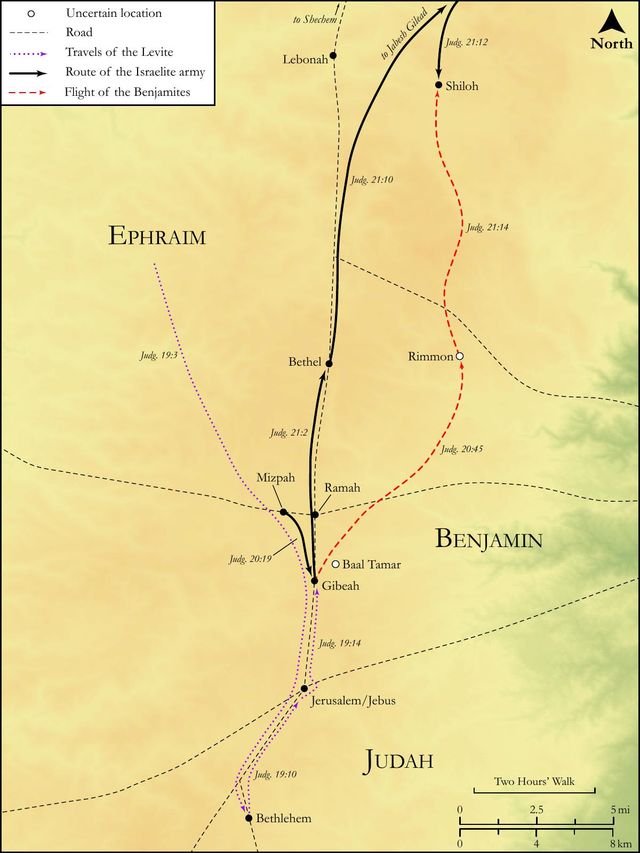
Judges 19:29 stands as the horrific culmination of a deeply disturbing narrative that begins with a Levite and his concubine journeying through the land, seeking lodging in the Benjamite city of Gibeah. Instead of receiving the expected hospitality, the Levite and his concubine are subjected to an attempted gang-rape, which culminates in the concubine being brutally raped and left for dead by the men of Gibeah, as recounted in Judges 19:22-28. The Levite's subsequent act of dismemberment is not merely an act of vengeance but a desperate, shocking, and culturally understood appeal for national attention and justice, immediately preceding the assembly of Israel and the subsequent civil war against the tribe of Benjamin detailed in Judges 20.
Historical & Cultural Context
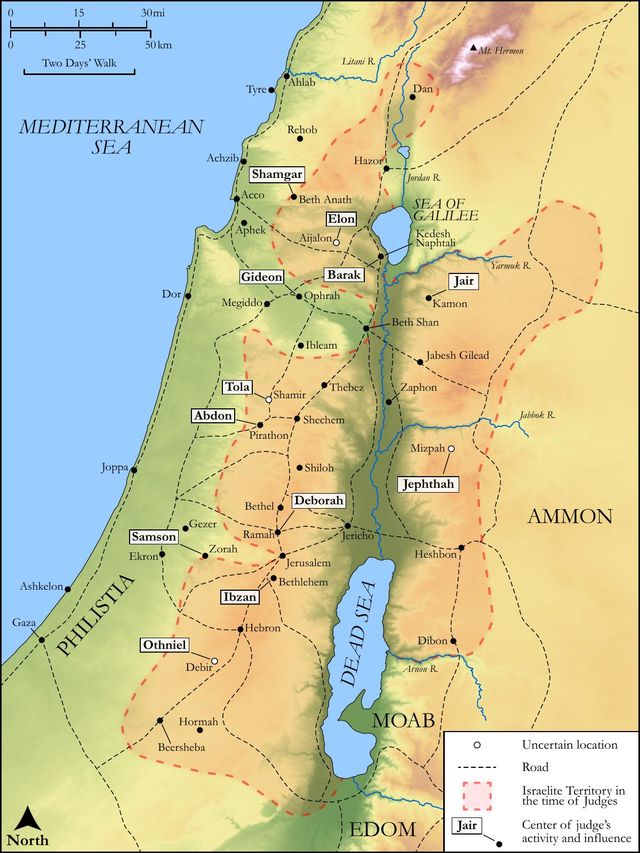
This event unfolds during the chaotic and morally bankrupt era of the Judges, a period famously characterized by the repeated refrain that "in those days there was no king in Israel; every man did what was right in his own eyes," as stated in Judges 17:6 and Judges 21:25. The act of dismembering a body and sending its parts was a rare but potent practice, serving as a solemn oath or a call to arms, demanding immediate and unified action from a dispersed populace. A notable parallel, though less gruesome, is Saul's dismemberment of oxen to rally the tribes against Nahash the Ammonite in 1 Samuel 11:7. The Levite's act leveraged this cultural understanding to communicate the unparalleled atrocity committed in Gibeah and to galvanize the tribes into a collective response.
Key Themes
ShowHideJudges 19:29 powerfully encapsulates several key themes prevalent throughout the book of Judges. It vividly portrays the depths of human depravity and the horrifying consequences when divine law and moral restraints are abandoned, underscoring the severity of the initial crime committed against the concubine. The Levite's extreme action highlights the complete breakdown of justice and order in Israel, where traditional legal mechanisms were evidently insufficient or ignored, necessitating such a barbaric appeal. Ultimately, this verse serves as a stark illustration of the societal chaos and spiritual decline that resulted from Israel's abandonment of God's covenant and the absence of righteous leadership, setting the stage for the desperate search for a king who could bring order and justice, as foreshadowed in the book's concluding verses.
Exposition and Analysis
ShowHideKey Word Analysis
ShowHideThis verb (H5408) signifies a forceful and complete severing or dismemberment, often used in the context of butchering animals for sacrifice or consumption, meaning "to dismember; cut (in pieces), divide, hew in pieces." Its application here to a human body underscores the extreme and brutal nature of the act, emphasizing the thoroughness with which the Levite carried out the dissection. It conveys a sense of deliberate, calculated violence, intended to produce maximum impact.
The inclusion of "bones" (H6106) highlights the utter completeness of the dismemberment. Derived from a root meaning "strong," this term refers to "a bone (as strong); by extension, the body; figuratively, the substance, i.e. (as pron.) selfsame." It implies that the body was not merely cut into pieces of flesh, but that the very skeletal structure was broken apart. This detail intensifies the horror and gruesomeness of the act, ensuring that the message conveyed by the scattered pieces was one of absolute destruction and desecration, leaving no doubt as to the severity of the outrage.
While translated "coasts," this Hebrew term (H1366) more broadly refers to the "borders," "territories," or "districts" of a land or people. It is properly "a cord (as twisted), i.e. (by implication) a boundary; by extension the territory inclosed." In this context, it emphasizes that the pieces were sent to the extremities of Israelite territory, ensuring that every tribe received a part and thus the message. It signifies a national, rather than merely local, appeal, demanding a collective response from all the scattered tribes.
Verse Breakdown
ShowHide"And when he was come into his house"
This phrase marks a transition from the public horror of the concubine's death at the city gate to the private, deliberate space of the Levite's dwelling. It highlights the calculated nature of his subsequent action, performed not in a moment of public rage but in the solitude of his home, allowing for the meticulous execution of his plan.
"he took a knife, and laid hold on his concubine"
This describes the Levite's direct and intentional engagement with the deceased body. The act of "laying hold" implies a firm grasp, indicating a purposeful and controlled action rather than a spontaneous outburst. The "knife" is the instrument of his horrifying deed, underscoring the premeditation involved.
"and divided her, [together] with her bones, into twelve pieces"
This is the core of the verse's shock. The dismemberment is explicitly stated to include "her bones," emphasizing the thoroughness and brutality. The number "twelve" is highly symbolic, representing the twelve tribes of Israel. Each piece was intended for a different tribal territory, transforming the concubine's desecrated body into a powerful, silent, yet screaming indictment of the national moral decay and a direct summons to action.
"and sent her into all the coasts of Israel"
This final clause reveals the Levite's strategic intent. The distribution of the pieces throughout the tribal territories was a desperate, ancient form of communication, a call to arms or a solemn appeal for justice that bypassed conventional means. It was designed to provoke maximum shock, outrage, and a unified response from a fragmented and morally compromised nation.
Literary Devices
ShowHideThe narrative of Judges 19:29 employs several potent Literary Devices to convey its horrifying message and evoke a strong response. The most striking is Symbolism, where the concubine's dismembered body, divided into twelve pieces, becomes a grotesque symbol of Israel itself—broken, defiled, and fragmented by its own moral depravity. Each piece sent to a tribe serves as a direct, visceral indictment of their collective abandonment of God's law and their failure to uphold justice. The extreme nature of the act can also be seen as Hyperbole, an intentional exaggeration designed to shock the reader and the ancient Israelite audience into recognizing the unparalleled depth of the wickedness committed in Gibeah and the desperate state of the nation. Furthermore, the passage utilizes Pathos, appealing powerfully to the emotions of horror, disgust, and outrage, forcing the audience to confront the grim reality of unchecked sin. Finally, the Levite's act serves as a chilling Foreshadowing, directly precipitating the civil war described in Judges 20, thus signaling the escalating violence and chaos that will engulf Israel as a direct consequence of their moral decline.
Theological and Thematic Connections
ShowHideJudges 19:29, in its shocking brutality, serves as a profound theological statement on the depths of human depravity when a society abandons divine law and moral accountability. It underscores the catastrophic consequences of the "every man did what was right in his own eyes" ethos that characterized the period of the Judges. The Levite's act, while horrifying, was a desperate attempt to appeal to a broken sense of justice, highlighting the absence of effective leadership and adherence to God's covenant. Theologically, it poses a stark question about the nature of justice, the horror of unchecked sin, and the desperate need for a righteous standard. It reveals how far Israel had fallen from its covenant obligations, demonstrating that the rejection of God's commands leads not merely to individual sin but to widespread societal corruption and unspeakable acts of violence.
Reflection and Application
ShowHideWhile the events of Judges 19:29 are undeniably horrific and difficult to reconcile with a loving God, they offer sobering and vital lessons for contemporary reflection and application. This passage serves as a stark warning against the dangers of moral relativism and the societal decay that inevitably ensues when a community abandons objective moral standards rooted in divine truth. The Levite's desperate act, born out of profound injustice, illustrates the terrifying ripple effect of unchecked sin: one act of depravity in Gibeah led to a national call to arms, a devastating civil war, and immense suffering. It compels us to consider the crucial role of righteous leadership, both spiritual and civic, in maintaining order, enforcing justice, and guiding a people towards God's ways. Ultimately, Judges 19:29 is a grim reminder of humanity's capacity for evil when separated from divine guidance and the devastating consequences of societal moral collapse, urging us to cling to God's unchanging standards of righteousness and justice.
Questions for Reflection
ShowHideFAQ
ShowHideWas the Levite's act of dismembering his concubine justified or commanded by God?
ShowHideNo, the Levite's act was neither justified nor commanded by God. Instead, it was a desperate, horrifying, and culturally extreme measure born out of the profound moral depravity and breakdown of justice in Israel during the period of the Judges. The text does not endorse his action but rather presents it as a symptom of the chaotic and lawless state where "every man did what was right in his own eyes" (Judges 21:25). His act, while shocking, was a last resort to communicate the unparalleled atrocity committed in Gibeah and to galvanize the fragmented tribes into a collective response, highlighting the absence of effective, righteous leadership or judicial systems.
What was the symbolic significance of dividing the body into twelve pieces and sending them throughout Israel?
ShowHideThe division of the concubine's body into twelve pieces was highly symbolic, representing the twelve tribes of Israel. By sending a piece to each tribal territory, the Levite was issuing a visceral, undeniable, and urgent summons to the entire nation. This act was a desperate call to arms, designed to shock the tribes into recognizing the horrific injustice committed against his concubine and, by extension, against the moral fabric of Israel itself. It was a powerful, ancient form of communication, demanding a unified response and accountability for the wickedness that had transpired in Gibeah, much like Saul's later act with the oxen to rally Israel against Nahash (1 Samuel 11:7).
Christ-Centered Fulfillment
ShowHideThe horrifying narrative of Judges 19:29, with its stark portrayal of moral anarchy and the desperate search for justice in a leaderless Israel, points profoundly to the ultimate need for a righteous King—a need perfectly fulfilled in Jesus Christ. The chaos and depravity of the Judges era, where "every man did what was right in his own eyes" (Judges 21:25), underscores humanity's inherent inability to govern itself righteously apart from divine rule. Jesus, as the true King of Israel and the world, brings the ultimate solution to the brokenness and injustice depicted in Judges. Unlike the dismembered concubine, whose body became a call for vengeance, Jesus, the Lamb of God, allowed His body to be broken and dismembered on the cross (Isaiah 53:5) not to incite war, but to bring about peace and reconciliation with God (Colossians 1:20). His sacrifice addresses the root cause of the depravity seen in Judges—human sin—offering forgiveness and the power to live righteously through the indwelling Holy Spirit, establishing a kingdom of true justice and everlasting peace (Romans 14:17). He is the one who gathers the scattered and broken, not through gruesome displays, but through the unifying power of His love and truth, bringing order where there was chaos and light where there was darkness.