


Joshua 24:31
- וַיַּעֲבֹדvai·ya·'a·Vodand it servedH5647Conj-w ¦ V-Qal-ConsecImperf-3msVerb Qal Consecutive Imperfect 3rd Singular Masculineוַandיַּעֲבֹדit served
- יִשְׂרָאֵלYis·ra·'ElIsraelH3478N-properNoun Proper Location
- אֶת'et<obj.>H853DirObjMParticle Object Indicator
- יְהוָהYah·wehYahwehH3068N-properNoun Proper Title
- כֹּלkolallH3605N-mscNoun Singular Masculine Construct
- יְמֵיye·Mei[the] days ofH3117N-mpcNoun Plural Masculine Construct
- יְהוֹשֻׁעַye·ho·Shu·a'JoshuaH3091N-proper-mNoun Proper Masculine
- וְכֹלve·Kholand allH3605Conj-w ¦ N-mscNoun Singular Masculine Constructוְandכֹלall
- יְמֵיye·Mei[the] days ofH3117N-mpcNoun Plural Masculine Construct
- הַזְּקֵנִיםha·ze·ke·Nimthe old [men]H2205Art ¦ Adj-mpAdjective Plural Masculine Absoluteהַtheזְּקֵנִיםold [men]
- אֲשֶׁר'a·SherwhoH834RelParticle Relative
- הֶאֱרִיכוּhe·'e·Ri·khuthey made longH748V-Hiphil-Perf-3cpVerb Hiphil Perfect 3rd Plural common gender
- יָמִיםya·MimdaysH3117N-mpNoun Plural Masculine Absolute
- אַחֲרֵי'a·cha·ReiafterH310Adj-mpcAdjective Numerical Plural Masculine Construct
- יְהוֹשֻׁעַye·ho·Shu·a'JoshuaH3091N-proper-mNoun Proper Masculine
- וַאֲשֶׁרva·'a·Sherand whoH834Conj-w ¦ RelParticle Relativeוַandאֲשֶׁרwho
- יָדְעוּya·de·'Uthey knewH3045V-Qal-Perf-3cpVerb Qal Perfect 3rd Plural common gender
- אֵת'et<obj.>H853DirObjMParticle Object Indicator
- כָּלkolallH3605N-mscNoun Singular Masculine Construct
- מַעֲשֵׂהma·'a·Seh[the] work ofH4639N-mscNoun Singular Masculine Construct
- יְהוָהYah·wehYahwehH3068N-properNoun Proper Title
- אֲשֶׁר'a·SherwhichH834RelParticle Relative
- עָשָׂה'a·Sahhe had doneH6213V-Qal-Perf-3msVerb Qal Perfect 3rd Singular Masculine
- לְיִשְׂרָאֵלle·Yis·ra·'Elfor IsraelH3478Prep-l ¦ N-properNoun Proper LocationלְforיִשְׂרָאֵלIsrael
English is a literal word-by-word gloss of the Hebrew, not the KJV's wording. Why?
This is the original text the KJV's translators worked from — each Hebrew word with its own literal English meaning in this verse, prepared by scholars at Tyndale House, Cambridge. The KJV translates whole sentences, not word by word, so its wording differs: one Hebrew word can become several English words, and the KJV may choose “the LORD” where the gloss reads “Yahweh”. Both are faithful — they answer different questions. For the KJV's own rendering, switch to the KJV text.
Details
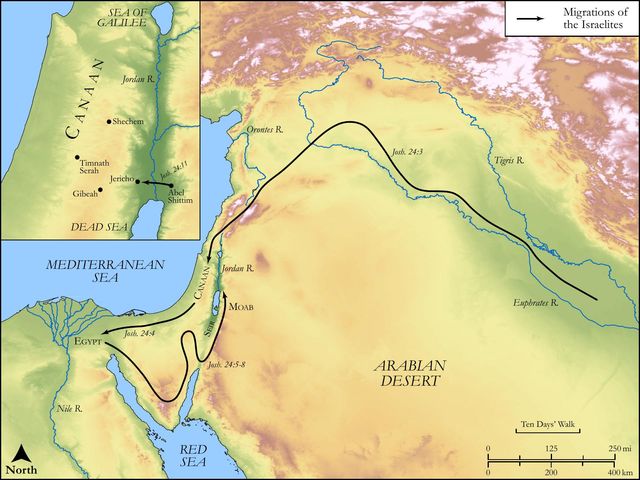
See on the biblical-era map
Study this verse
Public-domain commentary
Matthew Henry
From his Commentary on the Whole Bible. Henry comments on passages, not single verses — this entry covers Joshua 24:29–33.
This book, which began with triumphs, here ends with funerals, by which all the glory of man is stained. We have here 1. The burial of Joseph, Jos 24:32. He died about 200 years before in Egypt, but gave commandment concerning his bones, that they should not rest in their grave until Israel had rest in the land of promise; now therefore the children of Israel, who had brought this coffin full of bones with them out of Egypt, carried it along with them in all their marches through the wilderness (the two tribes of Ephraim and Manasseh, it is probable, taking particular care of it), and kept it in their camp till Canaan was perfectly reduced, now at last they deposited it in that piece of ground which his father gave him near Shechem, Gen 48:22. Probably it was upon this occasion that Joshua called for all Israel to meet him at Shechem (v. 1), to attend Joseph's coffin to the grave there, so that the sermon in this chapter served both for Joseph's funeral sermon and his own farewell sermon; and if it was, as is supposed, in the last year of his life, the occasion might very well remind him of his own death being at hand, for he was not just at the same age that his illustrious ancestor Joseph had arrived at when he died, 110 years old; compare Jos 24:29 with Gen 50:26. 2. The death and burial of Joshua, Jos 24:29, Jos 24:30. We are not told how long he lived after the coming of Israel into Canaan. Dr. Lightfoot thinks it was about seventeen years; but the Jewish chronologers generally say it was about twenty-seven or twenty-eight years. He is here called the servant of the Lord, the same title that was given to Moses (Jos 1:1) when mention was made of his death; for, though Joshua was in many respects inferior to Moses, yet in this he was equal to him, that, according as his work was, he approved himself a diligent and faithful servant of God. And he that traded with his two talents had the same approbation that he had who traded with his five. Well done, good and faithful servant. Joshua's burying-place is here said to be on the north side of the hill Gaash, or the quaking hill; the Jews say it was so called because it trembled at the burial of Joshua, to upbraid the people of Israel with their stupidity in that they did not lament the death of that great and good man as they ought to have done. Thus at the death of Christ, our Joshua, the earth quaked. The learned bishop Patrick observes that there is no mention of any days of mourning being observed for Joshua, as there were for Moses and Aaron, in which, he says, St. Hierom and others of the fathers think there is a mystery, namely, that under the law, when life and immortality were not brought to so clear a light as they are now, they had reason to mourn and weep for the death of their friends; but now that Jesus, our Joshua, has opened the kingdom of heaven, we may rather rejoice. 3. The death and burial of Eleazar the chief priest, who, it is probable, died about the same time that Joshua did, as Aaron in the same year with Moses, Jos 24:33. The Jews say that Eleazar, a little before he died, called the elders together, and gave them a charge as Joshua had done. He was buried in a hill that pertained to Phinehas his son, which came to him, not by descent, for then it would have pertained to his father first, nor had the priests any cities in Mount Ephraim, but either it fell to him by marriage, as the Jews conjecture, or it was freely bestowed upon him, to build a country seat on, by some pious Israelite that was well-affected to the priesthood, for it is here said to have been given him; and there he buried his dear father. 4. A general idea given us of the state of Israel at this time, Jos 24:31. While Joshua lived, religion was kept up among them under his care and influence; but soon after he and his contemporaries died it went to decay, so much oftentimes does one head hold up: how well is it for the gospel church that Christ, our Joshua, is still with it, by his Spirit, and will be always, even unto the end of the world!
Continue studying Joshua 24:31 across the web’s major study libraries — every link below opens this exact verse, chapter, or book on the destination site.
Read & Compare
 BibleGatewayThis verse in more than 200 translations and 70 languages.
 Bible.comThe YouVersion reader — hundreds of translations, reading plans, and highlights.
 ESV.orgCrossway's official English Standard Version reader.
 NET BibleThe NET translation with 60,000+ translators' notes on every rendering decision.
 STEP BibleTyndale House's free study tool — original text, vocabulary, and scholarly resources.
 BibliaLogos Bible Software's free web reader.
 USCCBThe New American Bible (Revised Edition) with the U.S. bishops' study notes.
Commentaries
 BibleHub CommentariesDozens of classic commentaries on this verse, gathered on one page.
 StudyLightMore than 100 commentary sets — the largest collection on the web.
 BibleRefPlain-English commentary on what this verse means, verse by verse.
 Enduring WordDavid Guzik's free commentary on this chapter, widely used by Bible teachers.
 Bible Study ToolsVerse commentary alongside Greek and Hebrew study aids.
Original Language & Research
- BibleHub InterlinearThe verse word by word — original language, transliteration, and English.
- BibleHub LexiconEvery word's original-language definition and Strong's entry.
 Blue Letter BibleDeep-study tools — Strong's numbers, concordance, and word studies.
 SefariaThe Hebrew text with Rashi and centuries of Jewish commentary.
Sermons, Hymns & Audio


TrulyRandomVerse is not affiliated with these sites and doesn’t control their content. They’re linked because they’re genuinely useful.
Summary
Joshua 24:31 serves as a profound concluding statement for the Book of Joshua, encapsulating a remarkable period of sustained national faithfulness to Yahweh. It highlights that Israel, under the direct leadership of Joshua and the subsequent generation of elders who had personally witnessed God's mighty acts on their behalf, remained committed to the covenant they had solemnly renewed at Shechem. This verse underscores the critical importance of godly leadership, the enduring impact of experiential knowledge of God's redemptive works, and the vital role of remembering divine interventions in fostering and maintaining a people's devotion to their covenant Lord.
Context
ShowHideLiterary Context
Joshua 24:31 functions as a pivotal epilogue, immediately following the accounts of Joshua's death and burial in Joshua 24:29-30. It provides a retrospective assessment of the spiritual state of Israel during the period directly succeeding the conquest and settlement of Canaan. The entire chapter, Joshua 24, meticulously details Joshua's final, impassioned address to the assembled tribes of Israel at Shechem. In this address, Joshua recounts God's unwavering faithfulness from the call of Abraham to their present day, challenges the people to "choose whom you will serve" (Joshua 24:15), and leads them in a solemn covenant renewal ceremony (Joshua 24:25). This verse confirms that, for a significant duration, Israel upheld this commitment, serving the Lord faithfully. Critically, it also serves as a crucial literary bridge to the Book of Judges, providing a stark and poignant contrast to the rapid spiritual decline described in Judges 2:6-10, thereby setting the stage for the cyclical pattern of apostasy and deliverance that characterizes the subsequent period.
Historical & Cultural Context
The period described in Joshua 24:31 immediately follows the tumultuous conquest of Canaan and the subsequent distribution of the land among the Israelite tribes. This was a critical transitional era, shifting Israel from a nomadic, wilderness existence to a settled, agrarian life, and from a unified military campaign under Moses and Joshua to a more decentralized tribal structure. The generation that "overlived Joshua" would have been those who personally experienced the miraculous events of the Exodus, the disciplined wilderness wanderings, and the decisive victories of the conquest firsthand. They had witnessed God's power and faithfulness in tangible, undeniable ways—from the parting of the Red Sea to the fall of Jericho and the defeat of various Canaanite kings. This shared, transformative experience formed the bedrock of their collective memory and national identity, profoundly reinforcing their covenant obligations to Yahweh. Culturally, "serving Yahweh" meant a radical departure from the pervasive polytheistic practices of the surrounding Canaanite nations, which often involved idolatry, fertility cults, and even child sacrifice. Instead, it demanded exclusive adherence to the monotheistic worship and rigorous ethical demands of the Mosaic Law, establishing Israel as a distinct and holy nation.
Key Themes
ShowHideThis verse powerfully reinforces several foundational themes prevalent throughout the Book of Joshua and indeed, the entire Pentateuch. Firstly, it highlights the theme of Covenant Faithfulness, demonstrating Israel's adherence to the solemn promises made at Shechem, a direct and positive response to God's unwavering covenant loyalty. Secondly, the verse underscores the profound Impact of Godly Leadership, showing how Joshua's unwavering devotion and the elders' experiential knowledge of God's mighty works were instrumental in guiding the nation. Joshua, like Moses before him, successfully passed on a vibrant spiritual legacy to a generation that continued to walk in obedience. Thirdly, it emphasizes the Importance of Remembrance and Experiential Knowledge of God's deeds. The elders' sustained faithfulness was rooted in their personal "knowledge" of "all the works of the LORD," implying a deep, intimate understanding born of direct encounter and consistent recollection. This theme is crucial, as it foreshadows the tragic consequences when a subsequent generation "knew not the LORD, nor yet the works which he had done for Israel" (Judges 2:10), leading to a precipitous decline in national devotion and the onset of the chaotic period of the Judges.
Exposition and Analysis
ShowHideKey Word Analysis
ShowHideThis verb (H5647) is rich in meaning, encompassing "to work," "to labor," "to cultivate," "to worship," and "to serve." In the context of serving the LORD, it denotes a holistic and active devotion that extends far beyond mere ritualistic worship. It implies diligent obedience to God's commands, a willing submission to His sovereignty in all aspects of life, and practical service in daily conduct. This "serving" stands in direct contrast to serving other gods, emphasizing an exclusive allegiance to Yahweh as Israel's true King and Deliverer. It signifies a comprehensive commitment, the tangible fruit of their covenant relationship.
This word (H3045) signifies more than intellectual apprehension or abstract understanding; it implies an intimate, experiential knowledge. The elders "had known" God's works not merely by hearing about them, but by personally witnessing, participating in, and being transformed by the events of the Exodus, the wilderness wanderings, and the conquest of Canaan. This deep, personal acquaintance with God's power, faithfulness, and character formed the unshakable foundation of their sustained obedience and trust. It speaks to a knowledge that is transformative, compelling action and fostering profound loyalty.
Verse Breakdown
ShowHide"And Israel served the LORD all the days of Joshua"
This initial clause establishes the foundational period of unwavering faithfulness under Joshua's direct, charismatic leadership. It unequivocally confirms that Joshua's diligent efforts to lead the people in covenant loyalty were successful throughout his entire lifetime. The phrase "served the LORD" (יְהוָה עָבְדוּ, ‘āḇaḏ Yahweh) indicates a consistent, exclusive, and active devotion to God, encompassing both their corporate worship and their individual and national obedience to His divine laws.
"and all the days of the elders that overlived Joshua"
This pivotal clause extends the period of national faithfulness beyond Joshua's death, attributing its continuation to the enduring influence and spiritual vitality of a specific generation of elders. These individuals were not merely contemporaries of Joshua but had shared deeply in the formative, miraculous experiences of the Exodus and the conquest. Their continued presence, wisdom, and leadership provided crucial spiritual continuity and stability for the nascent nation, bridging the gap between the era of unified conquest and the more decentralized tribal period.
"and which had known all the works of the LORD, that he had done for Israel"
This crucial explanatory phrase illuminates why Israel remained faithful during this extended period. The sustained faithfulness of these elders, and by extension the nation, was not based on blind adherence but was deeply rooted in their direct, experiential, and intimate knowledge of God's mighty acts. They had personally witnessed His miraculous deliverance, His unfailing provision, and His faithful fulfillment of promises, which profoundly solidified their trust and commitment to Him. This highlights the indispensable importance of remembering, recounting, and transmitting the testimony of God's historical interventions as the bedrock of ongoing faith.
Literary Devices
ShowHideJoshua 24:31 functions as a powerful Summary Statement or Epilogue, providing a concise yet definitive assessment of a specific, positive historical period within Israel's unfolding narrative. It offers a sense of closure and accomplishment for the Book of Joshua, affirming that the people, for a significant duration, lived up to the solemn covenant renewed in Joshua 24. The verse also employs Repetition and Emphasis through the recurring phrase "all the days," underscoring the sustained and comprehensive nature of Israel's faithfulness during this era. Furthermore, while seemingly positive, it subtly employs Foreshadowing by setting up a stark and poignant contrast with the subsequent narrative in the Book of Judges. There, a new generation arises that "knew not the LORD" (Judges 2:10), implying that the faithfulness described here was not perpetual and depended heavily on the living memory and transmission of God's mighty works. This contrast highlights the fragility of inherited faith without personal experience and diligent discipleship.
Theological and Thematic Connections
ShowHideJoshua 24:31 is a powerful theological statement, testifying to the principle that sustained faithfulness to God is inextricably linked to a vibrant, experiential knowledge of His character and His redemptive deeds. The elders' personal witness to God's "works"—His acts of deliverance, provision, and covenant fulfillment—served as the unshakable bedrock for their devotion and, through their influence, for the nation's. This verse underscores the critical role of remembering God's past faithfulness as a dynamic foundation for present obedience and future trust. It also emphasizes that true service to the LORD is not merely ritualistic or superficial but involves a holistic commitment rooted in a deep, transformative understanding of who He is and what He has accomplished. This historical snapshot provides a theological template for how a community can thrive spiritually, highlighting the indispensable importance of both godly leadership and the diligent transmission of divine truth and testimony across generations.
Reflection and Application
ShowHideJoshua 24:31 offers a profound challenge and enduring encouragement for believers today. It powerfully reminds us that our own faithfulness and spiritual vitality are often directly proportional to our active remembrance and deep engagement with God's past works, both as recorded in biblical history and as experienced in our personal lives. Just as the elders' eyewitness accounts and living memory sustained Israel's devotion, our faith is strengthened and deepened when we intentionally recall God's unwavering faithfulness, His specific answers to prayer, His miraculous provision, and His timely deliverance. This verse also highlights the indispensable role of spiritual leadership in nurturing and maintaining a faithful community. Leaders, whether in the church, within families, or in broader society, bear a sacred responsibility to model unwavering devotion and to diligently teach and transmit the knowledge of God's character and His mighty deeds to the next generation. The stark contrast with the subsequent decline detailed in Judges serves as a potent warning: neglecting to pass on this spiritual heritage inevitably leads to spiritual amnesia, moral compromise, and ultimately, apostasy. Therefore, we are called to be vigilant and diligent in discipleship, ensuring that the legacy of faith is not merely preserved intellectually but actively lived out, passionately proclaimed, and faithfully passed on to those who follow.
Questions for Reflection
ShowHideFAQ
ShowHideWhat does it mean that Israel "served the LORD" during this period?
ShowHideThe phrase "served the LORD" (Hebrew: ‘āḇaḏ Yahweh) signifies a comprehensive and exclusive devotion to God. It extends beyond mere ritualistic worship to encompass active obedience to His covenant commands, a willing submission to His sovereignty in all aspects of life, and practical service in daily conduct. This means that during the days of Joshua and the elders who outlived him, the Israelites largely adhered to the Mosaic Law, rejected the idolatry and pagan practices of the surrounding nations, and maintained their covenant relationship with Yahweh as their one true God, as they had solemnly pledged in Joshua 24:24. Their service was characterized by loyalty, obedience, and an exclusive allegiance to the God who had delivered them.
Why was the knowledge of "all the works of the LORD" so crucial for Israel's faithfulness?
ShowHideThe elders' "knowledge" (Hebrew: yāḏa‘) was not simply intellectual understanding but a deep, intimate, and experiential acquaintance with God's power and character. They had personally witnessed and participated in God's miraculous acts of deliverance, provision, and conquest—from the Exodus out of Egypt to the settlement of Canaan. This direct experience of God's faithfulness and His fulfillment of promises solidified their trust and commitment to Him. Remembering these foundational "works" served as a constant, tangible reminder of God's unique identity, His covenant loyalty, and His power, providing a powerful motivation for their sustained obedience and preventing them from turning to other gods, as explicitly warned in passages like Deuteronomy 6:10-12.
How does this verse relate to the Book of Judges?
ShowHideJoshua 24:31 serves as a crucial bridge and a poignant contrast to the opening chapters of the Book of Judges. While Joshua 24:31 describes a period of sustained national faithfulness, Judges 2:10 immediately follows with the stark and tragic declaration that "there arose another generation after them who did not know the LORD or the work that he had done for Israel." This stark juxtaposition highlights the critical importance of intergenerational discipleship and the intentional transmission of spiritual heritage. The faithfulness of the generation described in Joshua 24:31 was not self-perpetuating; without intentional effort to pass on the knowledge of God's works and the covenant relationship, subsequent generations would inevitably drift into spiritual amnesia, moral compromise, and idolatry, leading to the cycles of sin and judgment detailed throughout the Book of Judges.
Christ-Centered Fulfillment
ShowHideJoshua 24:31, while celebrating Israel's temporary faithfulness under the leadership of Joshua and the elders, ultimately points to the greater and enduring faithfulness found in Christ. The "works of the LORD" that the elders knew and remembered were powerful shadows of the ultimate work of redemption accomplished through Jesus. Their service to Yahweh, though commendable for its time, was imperfect and ultimately unsustainable without a perfect mediator and an indwelling Spirit. Christ, as the true and greater Joshua, leads His people into a spiritual inheritance far grander than Canaan, establishing a new covenant not written on stone but on hearts (Jeremiah 31:31-34). He is the perfect leader who not only commands obedience but empowers it through the indwelling Holy Spirit, enabling a true and lasting service to God (John 14:15-17). Unlike the elders whose influence was temporary and whose generation eventually passed away, Christ's leadership is eternal, ensuring that those who are truly His will "serve the LORD" not just for a season, but for all eternity, through His perfect and complete work on the cross (Hebrews 9:11-14) and His ongoing intercession as our High Priest (Hebrews 7:25). Our knowledge of God's "works" is now centered on the finished work of Christ, which secures our eternal faithfulness, reconciliation, and communion with God (Colossians 1:19-22). He is the one in whom all God's promises find their "Yes" and "Amen" (2 Corinthians 1:20).