


John 9:35
Bible text: King James Version (1769 Blayney text) · Public domain
Bible text: King James Version with Strong's numbers · Public domain
Bible text: Berean Standard Bible · Public domain
Bible text: American Standard Version (1901) · Public domain
Bible text: World English Bible, Messianic edition · Public domain
Bible text: Geneva Bible (1599) · Public domain
Bible text: Young's Literal Translation · Public domain
- ἤκουσενēkousenHeardG191V-AAI-3SVerb Aorist Active Indicative 3rd Singular
- ὁho<the>G3588T-NSMDefinite article Nominative Singular Masculine
- ἸησοῦςIēsousJesusG2424N-NSM-PNoun Nominative Singular Masculine Individual
- ὅτιhotithatG3754CONJConjunction
- ἐξέβαλονexebalonthey had castG1544V-2AAI-3PVerb 2nd Aorist Active Indicative 3rd Plural
- αὐτὸνautonhimG846P-ASMPersonal pronoun Accusative Singular Masculine
- ἔξωexōoutG1854PREPPreposition
- καὶkaiandG2532CONJConjunction
- εὑρὼνheurōnhaving foundG2147V-2AAP-NSMVerb 2nd Aorist Active Participle Nominative Singular Masculine
- αὐτὸνautonhimG846P-ASMPersonal pronoun Accusative Singular Masculine
- εἶπενeipenHe saidG2036V-2AAI-3SVerb 2nd Aorist Active Indicative 3rd Singular
- αὐτῷ·autōto himG846P-DSMPersonal pronoun Dative Singular Masculine
- σὺsuYou yourselfG4771P-2NSPersonal pronoun Nominative 2nd Singular
- πιστεύειςpisteueisbelieveG4100V-PAI-2SVerb Present Active Indicative 2nd Singular
- εἰςeisinG1519PREPPreposition
- τὸνtontheG3588T-ASMDefinite article Accusative Singular Masculine
- υἱὸνhuionSonG5207N-ASM-TNoun Accusative Singular Masculine Title
- τοῦtou<the>G3588T-GSMDefinite article Genitive Singular Masculine
- ἀνθρώπου;anthrōpouof Man?G444N-GSM-TNoun Genitive Singular Masculine Title
English is a literal word-by-word gloss of the Greek, not the KJV's wording. Why?
This is the original text the KJV's translators worked from — each Greek word with its own literal English meaning in this verse, prepared by scholars at Tyndale House, Cambridge. The KJV translates whole sentences, not word by word, so its wording differs: one Greek word can become several English words, and the KJV may choose “charity” where the gloss reads “love”. Both are faithful — they answer different questions. For the KJV's own rendering, switch to the KJV text.
Details
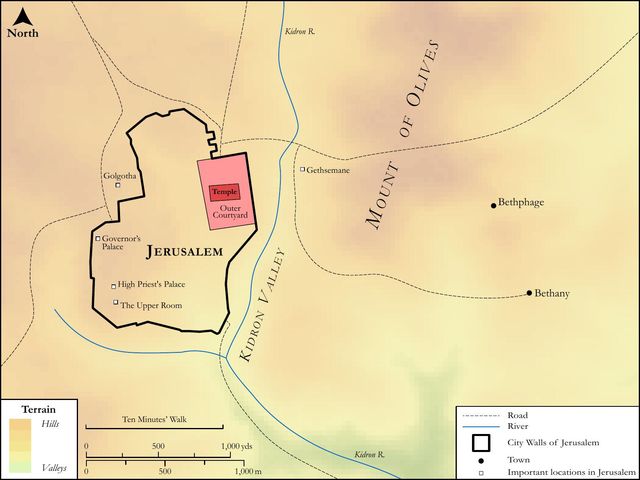
See on the biblical-era maps


Study this verse
Public-domain commentary
Matthew Henry
From his Commentary on the Whole Bible. Henry comments on passages, not single verses — this entry covers John 9:35–38. His three-level outline is real structure in the source text, so it is rendered as structure.
In these verses we may observe,
I.The tender care which our Lord Jesus took of this poor man (Joh 9:35):
When Jesus heard that they had cast him out (for it is likely the town rang of it, and everybody cried out shame upon them for it), then he found him, which implies his seeking him and looking after him, that he might encourage and comfort him,
1.Because he had, to the best of his knowledge, spoken so very well, so bravely, so boldly, in defence of the Lord Jesus. Note, Jesus Christ will be sure to stand by his witnesses, and own those that own him and his truth and ways. Earthly princes neither do, nor can, take cognizance of all that vindicate them and their government and administration; but our Lord Jesus knows and observes all the faithful testimonies we bear to him at any time, and a book of remembrance is written, and it shall redound not only to our credit hereafter, but our comfort now.
2.Because the Pharisees had cast him out and abused him. Besides the common regard which the righteous Judge of the world has to those who suffer wrongfully (Psa 103:6), there is a particular notice taken of those that suffer in the cause of Christ and for the testimony of a good conscience. Here was one poor man suffering for Christ, and he took care that as his afflictions abounded his consolations should much more abound. Note,
(1.)Though persecutors may exclude good men from their communion, yet they cannot exclude them from communion with Christ, nor put them out of the way of his visits. Happy are they who have a friend from whom men cannot debar them.
(2.)Jesus Christ will graciously find and receive those who for his sake are unjustly rejected and cast out by men. He will be a hiding place to his outcasts, and appear, to the joy of those whom their brethren hated and cast out.
II.The comfortable converse Christ had with him, wherein he brings him acquainted with the consolation of Israel.
He had well improved the knowledge he had, and now Christ gives him further instruction; for he that is faithful in a little shall be entrusted with more, Mat 13:12.
1.Our Lord Jesus examines his faith: "Dost thou believe on the Son of God? Dost thou give credit to the promises of the Messiah? Dost thou expect his coming, and art thou ready to receive and embrace him when he is manifested to thee?" This was that faith of the Son of God by which the saints lived before his manifestation. Observe,
(1.)The Messiah is here called the Son of God, and so the Jews had learned to call him from the prophecies, Psa 2:7; Psa 89:27. See Joh 1:49, Thou art the Son of God, that is, the true Messiah. Those that expected the temporal kingdom of the Messiah delighted rather in calling him the Son of David, which gave more countenance to that expectation, Mat 22:42. But Christ, that he might give us an idea of his kingdom, as purely spiritual and divine, calls himself the Son of God, and rather Son of man in general than of David in particular.
(2.)The desires and expectations of the Messiah, which the Old Testament saints had, guided by and grounded upon the promise, were graciously interpreted and accepted as their believing on the Son of God. This faith Christ here enquires after: Dost thou believe? Note, The great thing which is now required of us (Jo1 3:23), and which will shortly be enquired after concerning us, is our believing on the Son of God, and by this we must stand or fall for ever.
2.The poor man solicitously enquires concerning the Messiah he was to believe in, professing his readiness to embrace him and close with him (Joh 9:36): Who is he, Lord, that I may believe on him?
(1.)Some think he did know that Jesus, who cured him, was the Son of God, but did not know which was Jesus, and therefore, supposing this person that talked with him to be a follower of Jesus, desired him to do him the favour to direct him to his master; not that he might satisfy his curiosity with the sight of him, but that he might the more firmly believe in him, and profess his faith, and know whom he had believed. See Sol 5:6, Sol 5:7; Sol 3:2, Sol 3:3. It is Christ only that can direct us to himself.
(2.)Others think he did know that this person who talked with him was Jesus, the same that cured him, whom he believed a great and good man and a prophet, but did not yet know that he was the Son of God and the true Messiah. "Lord, I believe there is a Christ to come; thou who hast given me bodily sight, tell me, O tell me, who and where this Son of God is." Christ's question intimated that the Messiah was come, and was now among them, which he presently takes the hint of, and asks, Where is he, Lord? The question was rational and just: Who is he, Lord, that I may believe on him? For how could he believe in one of whom he had not heard; the work of ministers is to tell us who the Son of God is, that we may believe on him, Joh 20:31.
3.Our Lord Jesus graciously reveals himself to him as that Son of God on whom he must believe: Thou hast both seen him, and it is he that talketh with thee, Joh 9:37. Thou needest not go far to find out the Son of God, Behold the Word is nigh thee. We do not find that Christ did thus expressly, and in so many words, reveal himself to any other as to this man here and to the woman of Samaria: I that speak unto thee am he. He left others to find out by arguments who he was, but to these weak and foolish things of the world he chose to manifest himself, so as not to the wise and prudent. Christ here describes himself to this man by two things, which express his great favour to him: - (1.) Thou hast seen him; and he was much indebted to the Lord Jesus for opening his eyes, that he might see him. Now he was made sensible, more than ever, what an unspeakable mercy it was to be cured of his blindness, that he might see the Son of God, a sight which rejoiced his heart more than that of the light of this world. Note, The Greatest comfort of bodily eyesight is its serviceableness to our faith and the interests of our souls. How contentedly might this man have returned to his former blindness, like old Simeon, now that his eyes had seen God's salvation! If we apply this to the opening of the eyes of the mind, it intimates that spiritual sight is given principally for this end, that we may see Christ, Co2 4:6. Can we say that by faith we have seen Christ, seen him in his beauty and glory, in his ability and willingness to save, so seen him as to be satisfied concerning him, to be satisfied in him? Let us give him the praise, who opened our eyes. (2.) It is he that talketh with thee; and he was indebted to Christ for condescending to do this. He was not only favoured with a sight of Christ, but was admitted into fellowship and communion with him. Great princes are willing to be seen by those whom yet they will not vouchsafe to talk with. But Christ, by his word and Spirit, talks with those whose desires are towards him, and in talking with them manifests himself to them, as he did to the two disciples, when he talked their hearts warm, Luk 24:32. Observe, This poor man was solicitously enquiring after the Saviour, when at the same time he saw him, and was talking with him. Note, Jesus Christ is often nearer the souls that seek him than they themselves are aware of. Doubting Christians are sometimes saying, Where is the Lord? and fearing that they are cast out from his sight when at the same time it is he that talks with them, and puts strength into them.
4.The poor man readily entertains this surprising revelation, and, in a transport of joy and wonder, he said, Lord, I believe, and he worshipped him.
(1.)He professed his faith in Christ: Lord, I believe thee to be the Son of God. He would not dispute any thing that he said who had shown such mercy to him, and wrought such a miracle for him, nor doubt of the truth of a doctrine which was confirmed by such signs. Believing with the heart, he thus confesses with the mouth; and now the bruised reed was become a cedar.
(2.)He paid his homage to him: He worshipped him, not only gave him the civil respect due to a great man, and the acknowledgments owing to a kind benefactor, but herein gave him divine honour, and worshipped him as the Son of God manifested in the flesh. None but God is to be worshipped; so that in worshipping Jesus he owned him to be God. Note, True faith will show itself in a humble adoration of the Lord Jesus. Those who believe in him will see all the reason in the world to worship him. We never read any more of this man; but, it is very likely, from henceforth he became a constant follower of Christ.
Historical interpretation
Four Centuries of Reception
10 surviving comments on this verse. Each one is dated, so this reads as a timeline rather than a list.
Select a marker to jump to its quote. Markers stagger vertically where authors wrote within a few decades of each other.
When the man was already healed and had suffered ejection from the synagogue, the Lord put to him the question, “Do you believe on the Son of God?” This was to save him from the thought that he had lost everything by being excluded from the synagogue. It gave him the certainty that confession of the true faith had restored him to immortality. When the man, his soul still unenlightened, answered, “Who is he, Lord, that I may believe on him?” the Lord’s reply was, “You have both seen him, and it is he that speaks with you.” For his goal was to remove the ignorance of the man whose sight he had restored and whom he was now enriching with the knowledge of so glorious a faith. Does the Lord demand from this man, as from others who entreated him to heal them, a confession of faith as the price of their recovery? Emphatically not! For the blind man could already see when he was thus addressed. The Lord asked the question in order to receive the answer, “Lord, I believe.” The faith that spoke in that answer was to receive not sight but life.
If any mere confession whatsoever of Christ were the perfection of faith, it would have been said, Do you believe in Christ? But inasmuch as all heretics would have had this name in their mouths, confessing Christ, and yet denying the Son, that which is two of Christ alone, is required of our faith, viz. that we should believe in the Son of God. But what avails it to believe on the Son of God as being a creature, when we are required to have faith in Christ, not as a creature of God, but as the Son of God.
Now these things are recorded, that we too may imitate them. For if the blind man, the beggar, who had not even seen Him, straightway showed such boldness even before he was encouraged by Christ, standing opposed to a whole people, murderous, possessed, and raving, who desired by means of his voice to condemn Christ, if he neither yielded nor gave back, but most boldly stopped their mouths, and chose rather to be cast out than to betray the truth; how much more ought we, who have lived so long in the faith, who have seen ten thousand marvels wrought by faith, who have received greater benefits than he, have recovered the sight of the eyes within, have beheld the ineffable Mysteries, and have been called to such honor, how ought we, I say, to exhibit all boldness of speech towards those who attempt to accuse, and who say anything against the Christians, and to stop their mouths, and not to acquiesce without an effort.
They who for the sake of the truth and the confession of Christ suffer anything terrible and are insulted, these are especially honored. For as he who loseth his possessions for His sake, the same it is who most findeth them; as he who hateth his own life, the same it is who most loveth it; so too he who is insulted, is the same who is most honored. As fell out in the case of the blind man. The Jews cast him out from the Temple, and the Lord of the Temple found him; he was separated from that pestilent company, and met with the Fountain of salvation; he was dishonored by those who dishonored Christ, and was honored by the Lord of Angels. Such are the prizes of truth. And so we, if we leave our possessions in this world, find confidence in the next; if here we give to the afflicted, we shall have rest in heaven; if we be insulted for the sake of God, we are honored both here and there.
When they had cast him out from the Temple, Jesus found him. The Evangelist shows, that He came for the purpose of meeting him. And observe how He recompenseth him, by that which is the chiefest of blessings. For He made Himself known to him who before knew Him not, and enrolled him into the company of His own disciples. Observe also how the Evangelist describes the exact circumstances; for when Christ had said, "Dost thou believe on the Son of God?" the man replied, "Lord, who is He?" For as yet he knew Him not, although he had been healed; because he was blind before he came to his Benefactor, and after the cure, he was being worried by those dogs. Therefore, like some judge at the games, He receiveth the champion who had toiled much and gained the crown. And what saith He? "Dost thou believe on the Son of God?" What is this, after so much arguing against the Jews, after so many words, He asketh him, "Dost thou believe?" He spake it not from ignorance, but desiring to make Himself known, and showing that He gently valued the man's faith. "This great multitude," He saith, "hath insulted Me, but of them I make no account; for one thing I care, that thou shouldest believe. For better is one who doeth the will of God, than ten thousand transgressors." "Dost thou believe on the Son of God?" As having both been present, and as approving what had been said by him, He asketh this question; and first, He brought him to a state of longing for Himself. For He said not directly, "Believe," but in the way of an enquiry. What then said the man? "Lord, who is He, that I might believe on Him?" The expression is that of a longing and enquiring soul. He knoweth not Him in whose defense he had spoken so much, that thou mayest learn his love of truth. For he had not yet seen Him.
(Hom. lix. 1) Those who suffer for the truth's sake, and confession of Christ, come to greatest honour; as we see in the instance of the blind man. For the Jews cast him out of the temple, and the Lord of the temple found him; and received him as the judge doth the wrestler after his labours, and crowned him: Jesus heard that they had cast him out; and when He had found hint, He saith unto him, Dost thou believe on the Son of God? The Evangelist makes it plain that Jesus came in order to say this to him. He asks him, however, not in ignorance, but wishing to reveal Himself to him, and to show that He appreciated his faith; as if He said, The people have cast reproaches on Me, but I care not for them; one thing only I care for, that thou mayest believe. Better is he that doeth the will of God, than ten thousand of the wicked.
(Hom. lix. 1) But the blind man did not yet know Christ, for before he went to Christ he was blind, and after his cure, he was taken hold of by the Jews: He answered and said, Who is He, Lord, that I might believe on Him? The speech this of a longing and enquiring mind. He knows not who He is for whom he had contended so much; a proof to thee of his love of truth. The Lord however says not to him, I am He who healed thee; but uses a middle way of speaking, Thou hast both seen Him.
(Hom. lix. 1) He adds the deed to the word, as a clear acknowledgment of His divine power. The Lord replies in a way to confirm His faith, and at the same time stirs up the minds of His followers: And Jesus said, For judgment have I come into this world.
(Hom. lix. 1) Or, for judgment, He saith; i. e. for greater punishment, showing that they who condemned Him, were the very ones who were condemned. Respecting what He says, that they which see not might see, and that they which see might be made blind; it is the same which St. Paul says, The Gentiles which followed not after righteousness, have attained to righteousness, even the righteousness which is of faith. But Israel, which followed after the law of righteousness, hath not attained to the law of righteousness. (Rom. 9:30, 31)
(Hom. lix. 1) For there is a twofold vision, and a twofold blindness; viz. that of sense, and that of the understanding. But they were intent only on sensible things, and were ashamed only of sensible blindness: wherefore He shows them that it would be better for them to be blind, than seeing so: If ye were blind, ye should have no sin; your punishment would be easier; But now ye say, We see.
(Hom. lix. 1, 2) What then they thought their great praise, He shows would turn to their punishment; and at the same time consoles him who had been afflicted with bodily blindness from his birth. For it is not without reason that the Evangelist says, And some of the Pharisees which were with him, heard these words; but that he may remind us that those were the very persons who had first withstood Christ, and then wished to stone Him. For there were some who only followed in appearance, and were easily changed to the contrary side.
Of course God listens to sinners. But the man who said that had not yet washed the face of his heart in Siloam. The sacrament had already taken place in his eyes, but the benefit of grace had not yet been achieved in his heart. When did this blind man wash the face of his heart? When, after he had been thrown outside by the Jews, the Lord brought him inside into himself. You see, he found him and said to him, as we heard, “Do you believe in the Son of God?” And he answered, “Who is he, Lord, that I may believe in him?” He could already see him, certainly, with his eyes, but with his heart? Not yet. Wait for it; he will see in a moment. Jesus answered him, “I am, I who am talking to you.” Did he hesitate? He washed his face immediately. After all, Siloam was talking to him, “which is translated as ‘the One sent.’ ” Who is the one sent but Christ who frequently asserted, “I do the will of my Father, who sent me”? So he himself was Siloam. The man blind in heart approached, heard, believed, worshiped, washed his face and saw.
"Jesus heard that they had cast him out; and when He had found him, He said unto him, Dost thou believe on the Son of God?" Now He washes the face of the heart. "He answered and said, Who is he, Lord, that I might believe on him?" He had been enlightened, but knew not yet the Enlightener. Now in the cleansing of his heart he beholds Him whom in the cleansing of his eye he already sees. What of Christ? Let us hear Him saying, "And thou hast both seen Him, and it is He that talketh with thee." What sayest thou? What doest thou? Already thou hast washed his face by Thy precept; already thou hast sent him to the pool: he has been washed in Siloam. He is now able to recognize Thee; he says, "Lord, I believe." And would we know how he believes? "And he worshipped Him."
Jesus heard that they had cast him out.
The inspired Evangelist says that our Lord Jesus Christ heard, not implying certainly or of necessity that any one reported the fact to Him, but because, as one of the wise somewhere says: The Spirit of the Lord filleth the world, and the ear of hearing heareth all things. Surely He hears, as the Psalmist says: He that planted, the ear, doth He not hear? and He that formed the eye, doth He not perceive? When therefore we suffer insult on His account, or endure any grievous thing from those who are wont to fight against God, we are bound to believe that most assuredly God is a looker-on, and listens as it were to the trial that comes upon us: for the very nature of the occurrence, and the sincerity of those who are dishonoured on His account, cry aloud in His Divine Ears.
And finding him, He said unto him, Dost thou believe on the Son of God?
The man who had been blind has been cast out by the Pharisees, but after no long interval of time Christ seeks him, and finding him, initiates him. in mysteries. Therefore this also shall be a sign to us that God keeps in mind those who are willing to speak on His behalf and who do not shrink from peril through faith in Him. For thou hearest how, making Himself manifest as though to give a good recompense, He hastens to implant in him the highest perfection of the doctrines of the faith. And He proposes the question in order that He may receive the assent. For this is the way of showing faith. Wherefore also those who are going to Divine Baptism are previously as a preparation asked questions concerning their belief, and when they have assented and confessed, then at once we admit them as fit for the grace. Hence therefore arises the significance of the event to us, and we have learnt from Our Saviour Christ Himself how right it is that this profession of faith should be made. Wherefore also the inspired Paul asserted that [Timothy] confessed the confession of these things with many witnesses, meaning the holy angels: and if it is an aweful thing to falsify what is spoken before angels, how much more so before Christ Himself? So then He asks the man who had been blind not simply if he was willing to believe, but also mentions on Whom. For the faith [must be] on the Son of God, and not as on a man like ourselves, but as on God Incarnate. Surely this is the fulness of the mystery concerning Christ. And in saying: Dost thou believe? He all but says "Wilt thou show thyself superior to the madness of those men? Wilt thou bid farewell to their incredu-lousness and accept the faith?" For the emphatic Thou implies such a contradistinction from other persons in some way.
It is commonly the way with great persons to disdain learning any thing from their inferiors.
Continue studying John 9:35 across the web’s major study libraries — every link below opens this exact verse, chapter, or book on the destination site.
Read & Compare
 BibleGatewayThis verse in more than 200 translations and 70 languages.
 Bible.comThe YouVersion reader — hundreds of translations, reading plans, and highlights.
 ESV.orgCrossway's official English Standard Version reader.
 NET BibleThe NET translation with 60,000+ translators' notes on every rendering decision.
 STEP BibleTyndale House's free study tool — original text, vocabulary, and scholarly resources.
 BibliaLogos Bible Software's free web reader.
 USCCBThe New American Bible (Revised Edition) with the U.S. bishops' study notes.
Commentaries
 BibleHub CommentariesDozens of classic commentaries on this verse, gathered on one page.
 StudyLightMore than 100 commentary sets — the largest collection on the web.
 BibleRefPlain-English commentary on what this verse means, verse by verse.
 Enduring WordDavid Guzik's free commentary on this chapter, widely used by Bible teachers.
 Bible Study ToolsVerse commentary alongside Greek and Hebrew study aids.
Original Language & Research
- BibleHub InterlinearThe verse word by word — original language, transliteration, and English.
- BibleHub LexiconEvery word's original-language definition and Strong's entry.
 Blue Letter BibleDeep-study tools — Strong's numbers, concordance, and word studies.
 CNTR CollationThe earliest Greek manuscripts of this verse, collated letter by letter.
Sermons, Hymns & Audio


TrulyRandomVerse is not affiliated with these sites and doesn’t control their content. They’re linked because they’re genuinely useful.
Summary
This verse captures a tender and pivotal moment in the life of the man born blind, immediately following his dramatic healing and subsequent excommunication from the synagogue by the religious authorities. In this verse, Jesus actively seeks out the man who has been ostracized for his testimony, initiating a profound spiritual encounter by directly asking him about his belief in the Son of God, thereby elevating the man's physical healing to a deeper, saving faith.
Context
ShowHideLiterary Context
This verse serves as the theological climax of the narrative in John 9. The preceding verses detail Jesus' miraculous healing of a man born blind, an act that immediately provokes intense controversy among the Jewish religious leaders, particularly the Pharisees. They interrogate the healed man and his parents, seeking to discredit the miracle and Jesus' authority. The man, despite their threats, boldly testifies to Jesus' power and identity, leading to his expulsion from the synagogue. This excommunication sets the stage for Jesus' compassionate pursuit of the man, demonstrating His care for those overlooked for their faith. The narrative moves from physical sight to spiritual insight, culminating in the man's confession and worship in John 9:38.
Historical & Cultural Context
The act of being "cast out" (excommunicated) from the synagogue in first-century Judaism was a severe form of social and religious ostracization. It meant exclusion from community life, religious services, and often, economic livelihood. Such a decree, as mentioned in John 9:22, was a powerful tool used by the religious authorities to maintain control and suppress dissenting views, particularly those that affirmed Jesus as the Messiah. For the man born blind, who was already overlooked by his disability, this expulsion represented a profound loss of identity and community. Jesus' act of seeking him out directly counters this societal rejection, highlighting His radical inclusion of the outcast and His challenge to the established religious order.
Key Themes
ShowHideThis verse powerfully contributes to several overarching themes within the Gospel of John and the broader biblical narrative. Firstly, it underscores the theme of Divine Compassion and Pursuit. Jesus, the Good Shepherd, actively seeks out the one who has been scattered and rejected by the religious establishment, demonstrating His profound care for the lowly and persecuted, echoing the theme of Jesus seeking the lost. Secondly, the narrative illustrates the Progression from Physical to Spiritual Sight. The man's journey is an allegory for spiritual awakening: he first receives physical sight, then gradually gains spiritual insight, moving from acknowledging Jesus as a "prophet" (John 9:17) to one "from God" (John 9:33), culminating in his recognition of Jesus as the "Son of God" in this verse. Finally, the verse highlights the Centrality of Jesus' Identity. Jesus' direct question about belief in the "Son of God" is the narrative's climax, moving beyond His miraculous works to the fundamental question of His divine personhood. This belief is presented as essential for receiving eternal life.
Exposition and Analysis
ShowHideKey Word Analysis
ShowHideA primary verb meaning to hear in various senses, including to give audience, to understand, or to be reported. Here, it signifies that Jesus was fully aware of the man's expulsion, implying not just auditory reception but a knowing comprehension of the injustice inflicted upon him.
A prolonged form of a primary verb meaning to find, get, obtain, perceive, or see. This word emphasizes Jesus' active and intentional search for the man. It suggests a deliberate pursuit to reconnect with someone who had been cast out, highlighting Jesus' initiative in seeking out the lowly.
From pístis (faith), this verb means to have faith in, upon, or with respect to a person or thing; to credit; by implication, to entrust one's spiritual well-being. It denotes more than mere intellectual assent; it implies trust, commitment, and reliance, particularly in the context of entrusting oneself to Christ.
A primary preposition meaning "to" or "into," indicating the point reached or entered, often implying purpose or result. In the phrase "believe on," it signifies a commitment that moves "into" the person of the Son of God, emphasizing a deep, transformative union with Him through faith, rather than just believing facts about Him.
Apparently a primary word meaning "a son," used widely of kinship. In the context of "Son of God," it denotes a unique, divine relationship, signifying identity and essence rather than merely a familial role. This title unequivocally declares Jesus' divine nature and His unique relationship with God the Father.
Verse Breakdown
ShowHide"Jesus heard that they had cast him out;"
This clause reveals Jesus' omniscience and compassionate awareness. He did not need to be told directly; He knew the man's fate at the hands of the religious authorities. The phrase "cast him out" (Greek: ekbállō éxō) emphasizes the forceful and complete expulsion from the synagogue, underscoring the man's vulnerable and isolated state.
"and when he had found him, he said unto him,"
This demonstrates Jesus' active pursuit and personal care. Unlike the religious leaders who rejected the man, Jesus deliberately sought him out. The act of "finding" him signifies Jesus' unwavering commitment to those who suffer for His name, initiating a personal encounter that transcends physical healing to spiritual revelation.
"Dost thou believe on the Son of God?"
This is the pivotal question of the entire narrative, shifting the focus from the miracle itself to the identity of the Miracle-Worker. Jesus directly challenges the man to move beyond acknowledging Him as a prophet or a man from God, to a full confession of His divine personhood as the "Son of God." This question is not merely informational but volitional, inviting the man to a saving relationship of faith.
Literary Devices
ShowHideThe verse makes powerful use of several literary devices. Dramatic Irony is evident as the religious authorities, who claim to possess spiritual insight, are spiritually blind and cast out the one who has received both physical and spiritual sight. Conversely, Jesus, whom they reject, actively seeks out and embraces the outcast. The question "Dost thou believe on the Son of God?" serves as the Climax of the entire narrative, moving beyond the physical miracle to the profound theological truth of Jesus' identity, demanding a personal response of faith. Furthermore, the progression of the man's understanding from physical blindness to physical sight, and then to spiritual insight and belief in the Son of God, functions as powerful Symbolism for the journey of faith from spiritual darkness to light, and from mere intellectual assent to saving belief.
Theological and Thematic Connections
ShowHideThe question "Dost thou believe on the Son of God?" is foundational to Christian theology, encapsulating the core of saving faith. The title "Son of God" (Greek: huios tou Theou) is one of the most significant Christological declarations in the New Testament, unequivocally asserting Jesus' divine nature, His unique relationship with God the Father, and His authority as the Messiah. It is a claim to deity that sets Jesus apart from all others and forms the very basis of saving faith. The man's subsequent confession and worship in John 9:38 demonstrates his profound understanding and acceptance of this truth, leading to his spiritual salvation. This encounter underscores that true belief in Jesus involves recognizing and trusting in His divine personhood, not just His miraculous works.
Reflection and Application
ShowHideJohn 9:35 offers profound encouragement and a timeless challenge for believers today. In a world that often despises or rejects those who stand firm in their faith, this verse reminds us that Jesus actively seeks out and embraces those who are cast out for His name's sake. His compassion extends beyond physical needs to the deepest spiritual longing for belonging and truth. The question, "Dost thou believe on the Son of God?", remains profoundly relevant for every individual. It calls us to move beyond a superficial understanding of Jesus as merely a good teacher, a historical figure, or even a miracle worker, to a transformative, personal confession of Him as the divine Son of God, worthy of our complete trust, allegiance, and worship. Our journey of faith, like that of the man born blind, should be a progression towards deeper spiritual insight and unwavering commitment, even when it comes at a personal cost. This passage affirms that confessing Christ publicly, even in the face of rejection, is met with Jesus' personal affirmation and revelation, leading to true spiritual sight and eternal life.
Questions for Reflection
ShowHideFAQ
ShowHideWhy was it important for Jesus to find the man after he was cast out?
ShowHideIt was crucial for several reasons. First, it demonstrated Jesus' profound compassion and active pursuit of those who suffer for His name. The man had been ostracized by the religious establishment precisely because he testified to Jesus' power (John 9:22-34). Jesus, as the Good Shepherd, seeks out the one who has been scattered (Ezekiel 34:11-16). Second, it allowed Jesus to complete the man's healing journey, moving from physical sight to spiritual sight. The man's physical healing was a prelude to his spiritual transformation, culminating in his confession of Jesus as the Son of God and his worship (John 9:38). This encounter solidified his faith and provided him with a new community in Christ, replacing the one he lost.
What is the significance of the title "Son of God" in this context?
ShowHideThe title "Son of God" in John 9:35 is of paramount significance. In the Gospel of John, it is a direct claim to Jesus' divine nature and His unique, intimate relationship with God the Father. It signifies His pre-existence, His equality with God, and His authority as the Messiah and the divine revealer. Unlike other titles the man might have used (e.g., "prophet" in John 9:17), "Son of God" unequivocally declares Jesus' deity. For the man born blind, believing "on the Son of God" meant moving beyond a recognition of Jesus' miraculous power to a saving faith in His divine personhood, which is the cornerstone of Christian belief and the path to eternal life (John 3:16).
Christ-Centered Fulfillment
ShowHideJohn 9:35 profoundly illustrates Christ's redemptive mission and His identity as the promised Messiah. Jesus, the Light of the World (John 8:12), not only restores physical sight but, more importantly, reveals Himself as the source of spiritual sight and eternal life. His active pursuit of the man cast out by the religious establishment foreshadows His ultimate work of gathering a new people, a spiritual Israel, who believe in Him, irrespective of their social or religious standing. The question, "Dost thou believe on the Son of God?", is the ultimate Christ-centered question, moving the narrative from a display of power to a demand for faith in His divine person. This encounter prefigures the universal call to salvation, where all who confess Jesus as the Son of God are welcomed into His kingdom, fulfilling the prophecies of a compassionate Shepherd who seeks and saves the lost (Luke 19:10). The man's confession and worship in John 9:38 represent the perfect response to Christ's revelation, embodying the very purpose of the Gospel of John—that people "may believe that Jesus is the Christ, the Son of God, and that by believing you may have life in his name" (John 20:31).