


Job 41:10
Bible text: King James Version (1769 Blayney text) · Public domain
Bible text: Berean Standard Bible · Public domain
Bible text: American Standard Version (1901) · Public domain
Bible text: World English Bible, Messianic edition · Public domain
Bible text: Geneva Bible (1599) · Public domain
Bible text: Young's Literal Translation · Public domain
- לֹאlo'notH3808NegParticle Negative
- אַכְזָר'Akh·zorfierceH393Adj-msAdjective Singular Masculine Absolute
- כִּיkithatH3588PrtParticle Conditional
- יְעוּרֶנּוּye·'u·Re·nuhe will rouse itH5782V-Qal-Imperf-3ms ¦ 3msVerb Qal Imperfect 3rd Singular Masculineיְעוּרֶhe will rouseנּוּit
- וּמִיu·Miand who?H4310Conj-w ¦ InterrogPronoun Interrogativeוּandמִיwho?
- הוּאHu'thatH1931Pro-3msPronoun Personal 3rd Singular Masculine
- לְפָנַיle·fa·Nai<to> before meH6440Prep-l ¦ N-mpc ¦ 1csNoun Plural Masculine Constructלְ<to>פָנַbeforeיme
- יִתְיַצָּבyit·ya·Tzavwill he take his standH3320V-Hithpael-Imperf-3msVerb Hithpael Imperfect 3rd Singular Masculine
English is a literal word-by-word gloss of the Hebrew, not the KJV's wording. Why?
This is the original text the KJV's translators worked from — each Hebrew word with its own literal English meaning in this verse, prepared by scholars at Tyndale House, Cambridge. The KJV translates whole sentences, not word by word, so its wording differs: one Hebrew word can become several English words, and the KJV may choose “the LORD” where the gloss reads “Yahweh”. Both are faithful — they answer different questions. For the KJV's own rendering, switch to the KJV text.
Details
See on the biblical-era map
Study this verse
Public-domain commentary
Matthew Henry
From his Commentary on the Whole Bible. Henry comments on passages, not single verses — this entry covers Job 41:1–10. His two-level outline is real structure in the source text, so it is rendered as structure.
Whether this leviathan be a whale or a crocodile is a great dispute among the learned, which I will not undertake to determine; some of the particulars agree more easily to the one, others to the other; both are very strong and fierce, and the power of the Creator appears in them. The ingenious Sir Richard Blackmore, though he admits the more received opinion concerning the behemoth, that it must be meant of the elephant, yet agrees with the learned Bochart's notion of the leviathan, that it is the crocodile, which was so well known in the river of Egypt. I confess that that which inclines me rather to understand it of the whale is not only because it is much larger and a nobler animal, but because, in the history of the Creation, there is such an express notice taken of it as is not of any other species of animals whatsoever (Gen 1:21, God created great whales), by which it appears, not only that whales were well known in those parts in the time of Moses, who lived a little after Job, but that the creation of whales was generally looked upon as a most illustrious proof of the eternal power and godhead of the Creator; and we may conjecture that this was the reason (for otherwise it seems unaccountable) why Moses there so particularly mentions the creation of the whales, because God had so lately insisted upon the bulk and strength of that creature than of any other, as the proof of his power; and the leviathan is here spoken of as an inhabitant of the sea (Job 41:31), which the crocodile is not; and Psa 104:25, Psa 104:26, there in the great and wide sea, is that leviathan. Here in these verses,
I.He shows how unable Job was to master the leviathan.
1.That he could not catch him, as a little fish, with angling, Job 41:1, Job 41:2. He had no bait wherewith to deceive him, no hook wherewith to catch him, no fish-line wherewith to draw him out of the water, nor a thorn to run through his gills, on which to carry him home.
2.That he could not make him his prisoner, nor force him to cry for quarter, or surrender himself at discretion, Job 41:3, Job 41:4. "He knows his own strength too well to make many supplications to thee, and to make a covenant with thee to be thy servant on condition thou wilt save his life." 3. That he could not entice him into a cage, and keep him there as a bird for the children to play with, Job 41:5. There are creatures so little, so weak, as to be easily restrained thus, and triumphed over; but the leviathan is not one of these: he is made to be the terror, not the sport and diversion, of mankind. 4. That he could not have him served up to his table; he and his companions could not make a banquet of him; his flesh is too strong to be fit for food, and, if it were not, he is not easily caught. 5. That they could not enrich themselves with the spoil of him: Shall they part him among the merchants, the bones to one, the oil to another? If they can catch him, they will; but it is probable that the art of fishing for whales was not brought to perfection then, as it has been since. 6. That they could not destroy him, could not fill his head with fish-spears, Job 41:7. He kept out of the reach of their instruments of slaughter, or, if they touched him, they could not touch him to the quick. 7. That it was to no purpose to attempt it: The hope of taking him is in vain, Job 41:9. If men go about to seize him, so formidable is he that the very sight of him will appal them, and make a stout man ready to faint away: Shall not one be cast down even at the sight of him? and will not that deter the pursuers from their attempt? Job is told, at his peril, to lay his hand upon him, Job 41:8. "Touch him if thou dare; remember the battle, how unable thou art to encounter such a force, and what is therefore likely to be the issue of the battle, and do no more, but desist from the attempt." It is good to remember the battle before we engage in a war, and put off the harness in time if we foresee it will be to no purpose to gird it on. Job is hereby admonished not to proceed in his controversy with God, but to make his peace with him, remembering what the battle will certainly end in if he come to an engagement. See Isa 27:4, Isa 27:5.
II.Thence he infers how unable he was to contend with the Almighty.
None is so fierce, none so fool-hardy, that he dares to stir up the leviathan (Job 41:10), it being known that he will certainly be too hard for them; and who then is able to stand before God, either to impeach and arraign his proceedings or to out-face the power of his wrath? If the inferior creatures that are put under the feet of man, and over whom he has dominion, keep us in awe thus, how terrible must the majesty of our great Lord be, who has a sovereign dominion over us and against whom man has been so long in rebellion! Who can stand before him when once he is angry?
Historical interpretation
Two Centuries of Reception
2 surviving comments on this verse. Each one is dated, so this reads as a timeline rather than a list.
Select a marker to jump to its quote. Markers stagger vertically where authors wrote within a few decades of each other.
“All that is under heaven belongs to me. And I will not be silent.” These words indicate the devil, whose prodigious nature is described in these two beasts, who is destined to be conquered by the power of Christ when the fullness of time will come.
38. In which two verses He fully stated both the might of His own power, and the whole weight of the reason. For on account of His power He said, For who can resist My countenance? And on account of the reason He added; Who hath first given to Me, that I should repay him? As if He said, I do not rouse him up as one that is cruel, because I both rescue by My might My Elect from his power, and again, I condemn the reprobate not unjustly, but with good reason. That is, I am both able to rescue marvellously those whom I mercifully elect, and those whom I reject, I do not unjustly abandon. For no one has first given any thing to God, in order that the Divine Grace should follow him. For if we have prevented God by our good works, where is that which the Prophet says; His mercy shall prevent me? [Ps. 59, 10] If we have given any good works, in order to deserve His grace, where is that which the Apostle says, By grace are ye saved through faith, and that not of yourselves, but it is the gift of God, not of works? [Eph. 2, 8] If our love prevented God, where is that which John the Apostle says; Not that we loved God, but that He first loved us? [l John 4, 10] Where is that which the Lord says by Hosea; I will love thee of My own accord? [Hos. 14, 4] If without His gift, by our own strength we follow God, where is that which the Truth protests in the Gospel, saying, Without Me ye can do nothing? [John 15, 5] Where is that which He says; No man can come to Me, except the Father, Which hath sent Me, hath drawn him? [ib. 6, 44] Where is that which He says again; Ye have not chosen Me, but I have chosen you? [ib. 15, 16] If we only prevent the gifts of good works by thinking aright through our own strength, where is that which is again said so salutarily by Paul, that all self-confidence of the human mind might be cut away from the very root of the heart, when he says; Not that we are sufficient to think anything of ourselves as of ourselves, but our sufficiency is of God? [2 Cor. 3, 5] No one therefore prevents God by his merits, so as to be able to hold Him as his debtor. But the All-just Creator has in a wonderful manner both chosen some beforehand, and justly leaves some in their own wicked habits.
39. But yet He does not display to His Elect mercy without justice, because He here weighs them down with hard afflictions. Nor again does He exercise on the reprobate justice without mercy, because He here patiently endures those, whom He condemns hereafter for ever. If therefore both the Elect follow the grace which prevents them, and the reprobate receive according to that which they deserve; both the Elect find something to praise in His mercy, and the reprobate have nothing to blame in His justice. It is, therefore, well said; Who hath first given to Me, that I should repay him? As if it were plainly said; I am not compelled by any reason to spare the reprobate, because I am not bound to them as a debtor by any doings of theirs. For they therefore receive not the eternal rewards of the heavenly country, because now, when they could deserve, they have of their free will despised them. But this very free will is fashioned aright in the Elect, when their mind is raised above earthly desires, by the inspiration of grace.
40. For the good which we do belongs both to God, and to ourselves. It is God’s by preventing grace, our own by the free will which follows. For if it is not of God, why do we return Him thanks for ever? Again, if it is not our own, why do we hope for rewards to be conferred on us? Because then we do not give thanks undeservedly, we know that we are prevented by His grace. And again, because we do not seek for recompense undeservedly, we know that by the compliance of free will, we have chosen good deeds to perform. It follows; All things that are under heaven are Mine. It is clear to all persons, that not only those things that are under heaven, but that those very things, which from being created above the heavens, are called heavenly, subserve the will of Him by Whom they remember they were created. Why then does He speak only of things below and say,
All things that are under the heaven are Mine?
41. But because He is speaking of Leviathan, who no longer dwells in the abode of the ethereal heaven, He asserts that all things that are under the heaven are His, in order to teach that he also who has fallen from heaven, is subject to His power. As if He said, This Leviathan has lost indeed My blessedness, but he has not escaped My authority: because even those very powers, which oppose Me by their evil doings, are subservient to Me.
Continue studying Job 41:10 across the web’s major study libraries — every link below opens this exact verse, chapter, or book on the destination site.
Read & Compare
 BibleGatewayThis verse in more than 200 translations and 70 languages.
 Bible.comThe YouVersion reader — hundreds of translations, reading plans, and highlights.
 ESV.orgCrossway's official English Standard Version reader.
 NET BibleThe NET translation with 60,000+ translators' notes on every rendering decision.
 STEP BibleTyndale House's free study tool — original text, vocabulary, and scholarly resources.
 BibliaLogos Bible Software's free web reader.
 USCCBThe New American Bible (Revised Edition) with the U.S. bishops' study notes.
Commentaries
 BibleHub CommentariesDozens of classic commentaries on this verse, gathered on one page.
 StudyLightMore than 100 commentary sets — the largest collection on the web.
 BibleRefPlain-English commentary on what this verse means, verse by verse.
 Enduring WordDavid Guzik's free commentary on this chapter, widely used by Bible teachers.
 Bible Study ToolsVerse commentary alongside Greek and Hebrew study aids.
Original Language & Research
- BibleHub InterlinearThe verse word by word — original language, transliteration, and English.
- BibleHub LexiconEvery word's original-language definition and Strong's entry.
 Blue Letter BibleDeep-study tools — Strong's numbers, concordance, and word studies.
 SefariaThe Hebrew text with Rashi and centuries of Jewish commentary.
Sermons, Hymns & Audio


TrulyRandomVerse is not affiliated with these sites and doesn’t control their content. They’re linked because they’re genuinely useful.
Summary
Job 41:10 serves as the climactic rhetorical question in God's majestic discourse to Job, asserting His unparalleled power and sovereign dominion over all creation. Through the awe-inspiring description of Leviathan, a creature of immense and untamable might, God poses an unanswerable challenge: if no earthly being can confront this formidable creature, how much less can any stand in defiance before the Almighty Creator Himself? This verse encapsulates the core message of God's speeches, emphasizing His absolute supremacy and calling Job, and all humanity, to profound humility and reverence in the face of divine omnipotence.
Context
ShowHideLiterary Context
This verse is strategically placed at the very culmination of God's extensive and climactic speeches to Job, which span from Job 38 through Job 41. Having meticulously challenged Job's limited understanding of creation and divine providence through a myriad of examples from the natural world—from the order of the stars and weather to the untamed instincts of wild animals—God culminates His argument by describing two creatures of unparalleled earthly power: Behemoth in Job 40 and Leviathan in Job 41. Leviathan, depicted as a creature of terrifying strength, impenetrable scales, and fiery breath, serves as the ultimate illustration of creation's untamable might. Verse 10 acts as the ultimate rhetorical flourish, a logical conclusion to this detailed description, asserting that if such a creature is beyond human control or challenge, then its Creator is infinitely more so. It directly precedes Job's humble response and profound repentance in Job 42:1-6.
Historical & Cultural Context
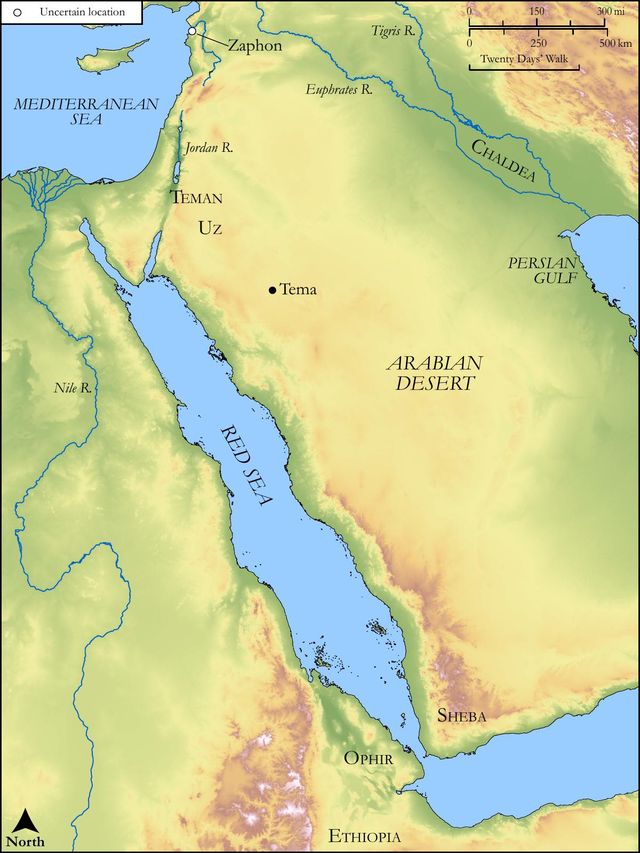
The book of Job grapples with the timeless question of suffering and divine justice, set in the land of Uz among the men of the east. While the exact historical period is debated, the book reflects a wisdom tradition common in the region, characterized by profound theological reflection on God's nature and humanity's place. The vivid descriptions of Behemoth and Leviathan stand over against the myths of the nations round about, which featured primordial chaos monsters (such as Tiamat in Babylonian myth or Yam among the Canaanites) that the gods had to subdue to establish their order. In the book of Job, however, these creatures are not divine adversaries but rather formidable creations of God, serving to demonstrate His absolute power and sovereignty over all forces, including those that appear chaotic or untamable to humanity. This context highlights God's unique position as the unchallenged Creator, distinct from the polytheistic deities who often struggled against such monsters. The setting is likely patriarchal, emphasizing a direct, personal encounter between God and an individual, Job, who is a righteous man from the land of Uz.
Key Themes
ShowHideJob 41:10 powerfully contributes to several overarching themes within the book of Job and broader biblical theology. Foremost is the theme of God's Incomparable Power and Sovereignty. The verse underscores that God's might is absolute and unchallenged, extending over every facet of creation, even its most formidable and terrifying elements, as vividly portrayed throughout Job 41. This leads directly to the theme of Human Insignificance and Humility. By contrasting humanity's weakness with Leviathan's power, and then Leviathan's power with God's, the verse profoundly illustrates humanity's limited understanding and capacity, calling for a posture of deep reverence and submission before the divine. Furthermore, the detailed, almost poetic description of Leviathan throughout Job 41 speaks to the Majesty and Mystery of Creation. Even the most fearsome creatures reflect the immense power and wisdom of their Maker, pointing to His even greater glory. Finally, the verse employs a potent form of Divine Rhetoric, specifically an argument a fortiori (from the stronger to the weaker, or lesser to greater), demonstrating that if a mere creature is so overwhelming, the Creator is infinitely more so, thus silencing Job's complaints and challenging his limited perspective on divine governance.
Exposition and Analysis
ShowHideKey Word Analysis
ShowHideThis adjective (H393) describes Leviathan's utterly savage, unapproachable, and terrifying nature. It conveys an inherent disposition of extreme power and danger, making any attempt to provoke or confront it an act of suicidal folly. The term emphasizes the creature's unyielding and unmerciful character, establishing it as a force beyond human subjugation, highlighting its violent and deadly attributes.
This verb (H5782) means "to wake," "to rouse," "to awaken," or "to provoke." It highlights the active and intentional nature of challenging Leviathan. It implies a deliberate attempt to engage in conflict or to awaken its dormant fury. The rhetorical question suggests that even the thought of such an action is absurd, given the creature's formidable reputation and power, indicating that no one dares to "stir up" such a master of its domain.
This primitive root (H3320) means "to place (anything so as to stay)," or reflexively, "to station," "to offer," "to continue," or "to present oneself." In the context of "stand before me" (which includes the Hebrew word pânîym H6440, meaning "face" or "presence"), it signifies more than merely being physically present. It implies standing in opposition, to withstand, to challenge in a legal or military confrontation, or to endure judgment. When applied to God, it underscores the utter impossibility of any created being successfully resisting, defying, or challenging His authority, power, or judgment. It signifies God's unassailable position as the supreme sovereign before whom no one can maintain a defiant posture.
Verse Breakdown
ShowHide"None [is so] fierce that dare stir him up:"
This clause focuses on the terrifying and untamable nature of Leviathan, serving as the premise for God's ultimate rhetorical question. It asserts that among all creatures, or even among all human endeavors, there is no one so courageous, so powerful, or so foolish as to intentionally provoke or engage Leviathan in battle. The preceding description of Leviathan in Job 41:1-9 has already established its impenetrable scales, fearsome teeth, and indomitable spirit, making this statement a logical conclusion about its invincibility from a human perspective. It sets the stage for the subsequent, more profound, rhetorical question by establishing a creature that is beyond human mastery.
"who then is able to stand before me?"
This is the ultimate rhetorical climax and the core theological assertion of the verse. Building upon the premise that no one can challenge Leviathan, God applies an a fortiori argument: if a mere creature, albeit a formidable one, is unchallengeable by human might, how much more unchallengeable is the Creator of that creature? The question implies that any attempt to stand in opposition to God, to question His wisdom, power, or justice (as Job had implicitly done through his lamentations), is utterly futile and presumptuous. It reasserts God's absolute sovereignty and unassailable authority over all creation and all beings, including Job himself, demanding humble submission rather than defiant questioning.
Literary Devices
ShowHideJob 41:10 masterfully employs several literary devices to convey God's overwhelming power and to humble Job. The most prominent is the Rhetorical Question, "who then is able to stand before me?" This question is not posed to elicit an answer but to emphasize the obvious truth: no one can. It serves to underscore God's unchallenged supremacy and the futility of human defiance. Closely related and foundational to the verse's impact is the Argument a fortiori (from the stronger to the weaker, or lesser to greater), where God reasons that if no one can contend with Leviathan, a creature of His making, then certainly no one can contend with Him, the Creator. This logical progression powerfully diminishes human pride and elevates divine authority. Additionally, the entire description of Leviathan throughout Job 41 leading up to this verse utilizes Hyperbole to portray the creature's immense power, making its untamable nature seem almost mythical, thereby magnifying the Creator's power even more by contrast. Finally, God's direct address to Job, using personal pronouns like "me," demonstrates Anthropomorphism, as the divine is presented in a way that allows for direct communication and engagement, making God's power more immediately impactful and personal to Job, drawing him into a direct confrontation with divine majesty.
Theological and Thematic Connections
ShowHideJob 41:10 encapsulates a fundamental theological truth about God's absolute sovereignty and unchallengeable power. It serves as a stark reminder that the Creator is infinitely greater than His creation, and no force, whether natural or human, can stand in defiance against Him. This declaration is not merely about raw power but about the divine wisdom and order that undergirds the universe, which Job, in his limited human perspective, had failed to fully grasp. The verse calls for a profound reorientation of perspective, moving from human-centered questioning to God-centered awe and submission, recognizing that true wisdom begins with acknowledging God's ultimate authority and inscrutable ways. It is a powerful assertion of divine transcendence, emphasizing that God operates on a plane far beyond human comprehension or control, and that His ways are past finding out.
This verse powerfully echoes themes found throughout Scripture regarding God's omnipotence and unchallenged rule:
Reflection and Application
ShowHideJob 41:10 offers profound insights for contemporary life, particularly in an age that often exalts human capability and seeks control over all aspects of existence. This verse serves as a powerful antidote to human hubris, reminding us that there are limits to our understanding and power, and that ultimate control rests solely with God. In a world often characterized by chaos, uncertainty, and overwhelming challenges, the declaration of God's unassailable power provides immense comfort and security. It encourages us to release our anxieties and trust in the One who effortlessly manages even the most fearsome aspects of creation. Furthermore, it calls for a profound sense of humility and reverence before the Creator. Our human wisdom, strength, and achievements are infinitely small compared to God's. This recognition should foster a spirit of worship, awe, and a willingness to submit to His divine will, rather than questioning or demanding answers from Him. When faced with seemingly insurmountable problems, remembering that God can manage Leviathan puts our difficulties into perspective, fostering faith that He can certainly handle our trials, no matter how daunting they may appear.
Questions for Reflection
ShowHideFAQ
ShowHideIs Leviathan a literal creature or symbolic?
ShowHideThe interpretation of Leviathan (and Behemoth) has been a subject of ongoing debate among scholars. While the descriptions in Job 41 are highly poetic and hyperbolic, they also contain concrete physical attributes (scales, teeth, breath) that suggest a real, albeit exceptionally powerful and fearsome, creature known in that day, often identified as a large crocodile or a mythical sea serpent. However, its primary function in the narrative is undoubtedly symbolic: it represents the ultimate untamed, chaotic, and terrifying power within creation that is utterly beyond human control. By demonstrating His absolute mastery over such a creature, God powerfully illustrates His sovereignty over all forces, both natural and chaotic, thereby humbling Job and asserting His divine order. Whether strictly literal or a highly stylized depiction of a real creature, its theological purpose is clear: to magnify God's unchallengeable might and to underscore humanity's limited capacity in comparison to the Creator.
Christ-Centered Fulfillment
ShowHideJob 41:10, with its declaration of God's unchallengeable power, finds its ultimate and most profound fulfillment in the person and work of Jesus Christ. While the Old Testament reveals God's sovereignty through His creation and mighty acts, the New Testament reveals this same power embodied in the Son. Jesus demonstrated divine authority over all creation, not merely by describing it, but by directly commanding it. He calmed the raging storm with a word, silencing the wind and waves, causing His disciples to marvel, "Who then is this, that even the wind and the sea obey him?" (Mark 4:39). He exercised absolute dominion over spiritual forces, casting out demons with a mere command, leading people to exclaim, "With authority and power he commands the unclean spirits, and they come out!" (Luke 4:36). More significantly, Christ's power extends beyond the natural and spiritual realms to conquer the ultimate "Leviathans" of sin and death. As the Lamb of God, who takes away the sin of the world, Jesus faced the fiercest adversaries—Satan, sin, and death—and emerged victorious through His crucifixion and resurrection. His triumph ensures that "Death is swallowed up in victory," and "the sting of death is sin, and the power of sin is the law. But thanks be to God, who gives us the victory through our Lord Jesus Christ" (1 Corinthians 15:54-57). Thus, the rhetorical question "who then is able to stand before me?" is answered in Christ: no one can stand against the God who, in Jesus, has conquered all things, making Him the ultimate object of our worship, trust, and submission.