


Job 40:13
Bible text: King James Version (1769 Blayney text) · Public domain
Bible text: Berean Standard Bible · Public domain
Bible text: American Standard Version (1901) · Public domain
Bible text: World English Bible, Messianic edition · Public domain
Bible text: Geneva Bible (1599) · Public domain
Bible text: Young's Literal Translation · Public domain
- טָמְנֵםta·me·Nemhide themH2934V-Qal-Imp-2ms ¦ 3mpVerb Qal Imperative 2nd Singular Masculineטָמְנֵhideםthem
- בֶּעָפָרbe·'a·Farin the dustH6083Prep-b ¦ N-msNoun Singular Masculine Absoluteבֶּin theעָפָרdust
- יָחַדYa·chadtogetherH3162N-msNoun Singular Masculine Absolute
- פְּנֵיהֶםpe·nei·Hemtheir facesH6440N-mpc ¦ 3mpNoun Plural Masculine Constructפְּנֵיfacesהֶםtheir
- חֲבֹשׁcha·Voshbind upH2280V-Qal-Imp-2msVerb Qal Imperative 2nd Singular Masculine
- בַּטָּמוּןba·ta·Munin the hidden [place]H2934Prep-b ¦ V-Qal-PassPrtcpl-msVerb Qal Participle Passive Singular Masculine Absoluteבַּin theטָּמוּןhidden [place]
English is a literal word-by-word gloss of the Hebrew, not the KJV's wording. Why?
This is the original text the KJV's translators worked from — each Hebrew word with its own literal English meaning in this verse, prepared by scholars at Tyndale House, Cambridge. The KJV translates whole sentences, not word by word, so its wording differs: one Hebrew word can become several English words, and the KJV may choose “the LORD” where the gloss reads “Yahweh”. Both are faithful — they answer different questions. For the KJV's own rendering, switch to the KJV text.
Details
See on the biblical-era map
Study this verse
Public-domain commentary
Matthew Henry
From his Commentary on the Whole Bible. Henry comments on passages, not single verses — this entry covers Job 40:6–14. His four-level outline is real structure in the source text, so it is rendered as structure.
Job was greatly humbled for what God had already said, but not sufficiently; he was brought low, but not low enough; and therefore God here proceeds to reason with him in the same manner and to the same purport as before, Job 40:6. Observe, 1. Those who duly receive what they have heard from God, and profit by it, shall hear more from him. 2. Those who are truly convinced of sin, and penitent for it, yet have need to be more thoroughly convinced and to be made more deeply penitent. Those who are under convictions, who have their sins set in order before their eyes and their hearts broken for them, must learn from this instance not to catch at comfort too soon; it will be everlasting when it comes, and therefore it is necessary that we be prepared for it by deep humiliation, that the wound be searched to the bottom and not skinned over, and that we do not make more haste out of our convictions than good speed. When our hearts begin to melt and relent within us, let those considerations be dwelt upon and pursued which will help to make a thorough effectual thaw of it.
God begins with a challenge (Job 40:7), as before (Job 38:3): "Gird up thy loins now like a man; if thou hast the courage and confidence thou hast pretended to, show them now; but thou wilt soon be made to see and own thyself no match for me." This is that which every proud heart must be brought to at last, either by its repentance or by its ruin; and thus low must every mountain and hill be, sooner or later, brought. We must acknowledge,
I.That we cannot vie with God for justice, that the Lord is righteous and holy in his dealings with us, but that we are unrighteous and unholy in our conduct towards him; we have a great deal to blame ourselves for, but nothing to blame him for (Job 40:8): "Wilt thou disannul my judgment? Wilt thou take exceptions to what I say and do, and bring a writ of error, to reverse the judgment I have given as erroneous and unjust?" Many of Job's complaints had too much of a tendency this way: I cry out of wrong, says he, but I am not heard; but such language as this is by no means to be suffered. God's judgment cannot, must not, be disannulled, for we are sure it is according to truth, and therefore it is a great piece of impudence and iniquity in us to call in question. "Wilt thou," says God, "condemn me, that thou mayest be righteous? Must my honour suffer for the support of thy reputation? Must I be charged as dealing unjustly with thee because thou canst not otherwise clear thyself from the censures thou liest under?" Our duty is to condemn ourselves, that God may be righteous. David is therefore ready to own the evil he has done in God's sight, that God may be justified when he speaks and clear when he judges, Psa 51:4. See Neh 9:33; Dan 9:7. But those are very proud, and very ignorant both of God and themselves, who, to clear themselves, will condemn God; and the day is coming when, if the mistake be not rectified in time by repentance, the eternal judgment will be both the confutation of the plea and the confusion of the prisoner, for the heavens shall declare God's righteousness and all the world shall become guilty before him.
II.That we cannot vie with God for power; and therefore, as it is great impiety, so it is great impudence to contest with him, and is as much against our interest as it is against reason and justice (Job 40:9): "Hast thou an arm like God, equal to his in length and strength? Or canst thou thunder with a voice like him, as he did (Job 37:1, Job 37:2), or does now out of the whirlwind?" To convince Job that he was not so able as he thought himself to contest with God, he shows him,
1.That he could never fight it out with him, nor carry his cause by force of arms. Sometimes, among men, controversies have been decided by battle, and the victorious champion is adjudged to have justice on his side; but, if the controversy were put upon that issue between God and man, man would certainly go by the worse, for all the forces he could raise against the Almighty would be but like briers and thorns before a consuming fire, Isa 27:4. "Hast thou, a poor weak worm of the earth, an arm comparable to his who upholds all things?" The power of creatures, even of angels themselves, is derived from God, limited by him, and dependent on him; but the power of God is original, independent, and unlimited. He can do every thing without us; we can do nothing without him; and therefore we have not an arm like God.
2.That he could never talk it out with him, nor carry his cause by noise and big words, which sometimes among men go a great way towards the gaining of a point: "Canst thou thunder with a voice like him? No; his voice will soon drown thine and one of his thunders will overpower and overrule all thy whispers." Man cannot speak so convincingly, so powerfully, nor with such a commanding conquering force as God can, who speaks, and it is done. his creating voice is called his thunder (Psa 104:7), so is that voice of his with which he terrifies and discomfits his enemies, Sa1 2:10. The wrath of a king may sometimes be like the roaring of a lion, but can never pretend to imitate God's thunder.
III.That we cannot vie with God for beauty and majesty, Job 40:10.
"If thou wilt enter into a comparison with him, and appear more amiable, put on thy best attire: Deck thyself now with majesty and excellency. Appear in all the martial pomp, in all the royal pageantry that thou hast; make the best of every thing that will set thee off: Array thyself with glory and beauty, such as may awe thy enemies and charm thy friends; but what is it all to the divine majesty and beauty? No more than the light of a glow-worm to that of the sun when he goes forth in his strength." God decks himself with such majesty and glory as are the terror of devils and all the powers of darkness and make them tremble; he arrays himself with such glory and beauty as are the wonder of angels and all the saints in light and make them rejoice. David could dwell all his days in God's house, to behold the beauty of the Lord. But, in comparison with this, what is all the majesty and excellency by which princes think to make themselves feared, and all the glory and beauty by which lovers think to make themselves beloved? If Job think, in contending with God, to carry the day by looking great and making a figure, he is quite mistaken. The sun shall be ashamed, and the moon confounded, when God shines forth.
IV.That we cannot vie with God for dominion over the proud, Job 40:11-14.
here the cause is put upon this short issue: if Job can humble and abase proud tyrants and oppressors as easily and effectually as God can, it shall be acknowledged that he has some colour to compete with God. Observe here,
1.The justice Job is here challenged to do, and that is to bring the proud low with a look. If Job will pretend to be a rival with God, especially if he pretend to be a judge of his actions, he must be able to do this.
(1.)It is here supposed that God can do it and will do it himself, else he would not have put it thus upon Job. By this God proves himself to be God, that he resists the proud, sits Judge upon them, and is able to bring them to ruin. Observe here,
[1.]That proud people are wicked people, and pride is at the bottom of a great deal of the wickedness that is in this world both towards God and man.
[2.]Proud people will certainly be abased and brought low; for pride goes before destruction. If they bend not, they will break; if they humble not themselves by true repentance, God will humble them, to their everlasting confusion. The wicked will be trodden down in their place, that is, Wherever they are found, though they pretend to have a place of their own, and to have taken root in it, yet even there they shall be trodden down, and all the wealth, and power, and interest, to which their place entitles them, will not be their security.
[3.]The wrath of God, scattered among the proud, will humble them, and break them, and bring them down. If he casts abroad the rage of his wrath, as he will do at the great day and sometimes does in this life, the stoutest heart cannot hold out against him. Who knows the power of his anger?
[4.]God can and does easily abase proud tyrants; he can look upon them, and bring them low, can overwhelm them with shame, and fear, and utter ruin, by one angry look, as he can, by a gracious look, revive the hearts of the contrite ones.
[5.]He can and will at last do it effectually (Job 40:13), not only bring them to the dust, from which they might hope to arise, but hide them in the dust, like the proud Egyptian whom Moses slew and hid in the sand (Exo 2:12), that is, they shall be brought not only to death, but to the grave, that pit out of which there is no return. They were proud of the figure they made, but they shall be buried in oblivion and be no more remembered than those that are hidden in the dust, out of sight and out of mind. They were linked in leagues and confederacies to do mischief, and are now bound in bundles. They are hidden together; not their rest, but their shame together is in the dust, Job 17:16. Nay, they are treated as malefactors (who, when condemned, had their faces covered, as Haman's was: He binds their faces in secret) or as dead men: Lazarus, in the grave, had his face bound about. Thus complete will be the victory that God will gain, at last, over proud sinners that set themselves in opposition to him. Now by this he proves himself to be God. Does he thus hate proud men? Then he is holy. Will he thus punish them? Then he is the just Judge of the world. Can he thus humble them? Then he is the Lord Almighty. When he had abased proud Pharaoh, and hidden him in the sand of the Red Sea, Jethro thence inferred that doubtless the Lord is greater than all gods, for wherein the proud enemies of his Israel dealt proudly he was above them, he was too hard for them, Exo 18:11. See Rev 19:1, Rev 19:2.
(2.)It is here proposed to Job to do it. He had been passionately quarrelling with God and his providence, casting abroad the rage of his wrath towards heaven, as if he thought thereby to bring God himself to his mind. "Come," says God, "try thy hand first upon proud men, and thou wilt soon see how little they value the rage of thy wrath; and shall I then regard it, or be moved by it?" Job had complained of the prosperity and power of tyrants and oppressors, and was ready to charge God with mal-administration for suffering it; but he ought not to find fault, except he could mend. If God, and he only, has power enough to humble and bring down proud men, no doubt he has wisdom enough to know when and how to do it, and it is not for us to prescribe to him or to teach him how to prescribe to him or to teach him how to govern the world. Unless we had an arm like God we must not think to take his work out of his hands.
2.The justice which is here promised to be done him if he can perform such mighty works as these (Job 40:14): "They will I also confess unto thee that thy right hand is sufficient to save thee, though, after all, it would be too weak to contend with me." It is the innate pride and ambition of man that he would be his own saviour (would have his own hands sufficient for him and be independent), but it is presumption to pretend that he is. Our own hands cannot save us by recommending us to God's grace, much less by rescuing us from his justice. Unless we could by our own power humble our enemies, we cannot pretend by our own power to save ourselves; but, if we could, God himself would confess it. He never did nor ever will defraud any man of his just praise, nor deny him the honour he has merited. But, since we cannot do this, we must confess unto him that our own hands cannot save us, and therefore into his hand we must commit ourselves.
Historical interpretation
Historical reception
2 surviving comments on this verse. Each one is dated, so this reads as a timeline rather than a list.
Select a marker to jump to its quote. Markers stagger vertically where authors wrote within a few decades of each other.
These words are not spoken with an offended mind but with zealous affection, so that they may be useful in consoling and instructing him and that he may understand that to perform such a great judgment is beyond human strength. “Then I will also acknowledge you that your own right hand can give you victory.” If you could play the role of such a judge, as I described it in my speech, evidently you would not need any further help.
12. As if He said, As I. For God by a just judgment hides the proud and impious in the dust, because He permits their hearts to be overwhelmed with those earthly employments, which they choose, having scorned the love of their Creator. Whence also when He enquires into their conduct, He acknowledges it not, as though it were hid from Him saying; I know not who ye are. [Luke 13, 27] The life of the wicked is hidden under the dust, because it is weighed down by mean and grovelling desires. For whoever still desires these things that are of the world, appears not, as it were, before the face of the true light, because he is in truth concealed under the dust of earthly thought. The burdened mind endures this dust of wicked thoughts, which the wind of most evil temptation brings with it. For hence it is that it is said by the Prophet, of every soul which is weighed down by earthly desires, under the character of Ephraim, Ephraim has become as bread under the ashes, which is not turned. [Hos. 7, 8] For by nature our intention is well fashioned, to rise towards God; but from an evil habit of conversation pleasure arises, to weigh us down towards the present world. But bread under the ashes, is cleaner on that side, which it conceals beneath, and dirtier on that, on which it bears the ashes from above. Whoever therefore neglects the effort with which he ought to seek God, presses down the cleaner side, like bread under the ashes, and when he willingly endures the cares of the world, he bears, as it were, above him a heap of ashes. But the bread under the ashes would be reversed, if he were to throw off the ash of carnal desires, and display above that good intention, which he had, by neglecting it, kept under in himself. But he refuses to be turned, when a mind, weighed down with the love of secular cares, neglects to throw off the mass of ashes which lies upon it; and when it seeks not to rise up to a good intention, it presses under the cleaner surface.
13. But it is fitly subjoined; And at the same time plunge their faces into the pit. As if He said, As I. For by a just judgment the Lord plunges the faces of the proud into the pit; because He casts down the intention of their heart, when it raises itself above men. For he whose face turns to the pit, looks towards things below. And it is well said of the proud, that their faces are plunged into the pit; because they are sinking lower, when through pride they are seeking higher things; and the more they raise themselves in their exaltation, the lower do they tend in their fall. For they seek earthly glory, and the things to which they look forward are of the basest kind, whilst they follow after high things in their pride. Whence it comes to pass in a wonderful and contrary manner, that the humble seek after heaven, whilst they cast themselves down the lower, and that the proud pursue the lowest objects, while by despising others they are raised, as it were, higher. The one, while they despise themselves, are united to heavenly things, the latter, while they exalt themselves, are separated from higher things. And, so to speak, the one, by elevating, depress, the other, by depressing, elevate themselves. And it is well said of the proud by the Psalmist; But He humbleth the sinners even to the earth; because by seeking after those things that are below, while they raise and extol themselves, what else do they, but, having lost heaven, fall to the earth? For their having already fallen to the bottom is their having sought after things below, having forsaken things above. Their faces are therefore rightly said to be plunged into the pit, because by following after things below, they tend to the pit of hell. For it comes to pass by a just judgment, that those whom wilful aversion benightens here, the well-deserved pit of punishment there excludes from the view of the true light. Because therefore the holy man is questioned with so great a dread of Divine Power, as to have it said to him, Hast thou an arm like God, or dost thou thunder with a voice like Him? Scatter the proud in thy wrath, and behold every one that is arrogant, and abase him, and other things which God is able to do, but man is hardly able to hear; the Lord shows with what intention He first spoke of all these things.
Continue studying Job 40:13 across the web’s major study libraries — every link below opens this exact verse, chapter, or book on the destination site.
Read & Compare
 BibleGatewayThis verse in more than 200 translations and 70 languages.
 Bible.comThe YouVersion reader — hundreds of translations, reading plans, and highlights.
 ESV.orgCrossway's official English Standard Version reader.
 NET BibleThe NET translation with 60,000+ translators' notes on every rendering decision.
 STEP BibleTyndale House's free study tool — original text, vocabulary, and scholarly resources.
 BibliaLogos Bible Software's free web reader.
 USCCBThe New American Bible (Revised Edition) with the U.S. bishops' study notes.
Commentaries
 BibleHub CommentariesDozens of classic commentaries on this verse, gathered on one page.
 StudyLightMore than 100 commentary sets — the largest collection on the web.
 BibleRefPlain-English commentary on what this verse means, verse by verse.
 Enduring WordDavid Guzik's free commentary on this chapter, widely used by Bible teachers.
 Bible Study ToolsVerse commentary alongside Greek and Hebrew study aids.
Original Language & Research
- BibleHub InterlinearThe verse word by word — original language, transliteration, and English.
- BibleHub LexiconEvery word's original-language definition and Strong's entry.
 Blue Letter BibleDeep-study tools — Strong's numbers, concordance, and word studies.
 SefariaThe Hebrew text with Rashi and centuries of Jewish commentary.
Sermons, Hymns & Audio


TrulyRandomVerse is not affiliated with these sites and doesn’t control their content. They’re linked because they’re genuinely useful.
Summary
Job 40:13 presents a profound rhetorical challenge from God to Job, serving as a climactic point in the Almighty's second discourse designed to humble Job and underscore the infinite chasm between human and divine power. Within this verse, God dares Job to exercise ultimate authority over the proud and wicked, specifically to "hide them in the dust together" and "bind their faces in secret." This imagery powerfully conveys the complete subjugation, disgrace, and obliteration of those who stand in defiant pride, asserting that such absolute control and perfect justice belong to God alone, not to any human, no matter how righteous or afflicted.
Context
ShowHideLiterary Context
Job 40:13 is intricately woven into God's second major speech to Job, which commences in Job 38:1 and extends through Job 41:34. Following Job's brief, humbled response in Job 40:3-5, God intensifies His interrogation. The immediate preceding verses, Job 40:9-12, explicitly challenge Job to assume divine attributes—majesty, glory, and splendor—and then to unleash his wrath, humble the proud, and cast down the wicked. Verse 13 serves as the culminating dare, challenging Job to perform an act of ultimate divine judgment before God introduces the formidable creatures Behemoth and Leviathan, further illustrating His unchallengeable power over creation and chaos.
Historical & Cultural Context
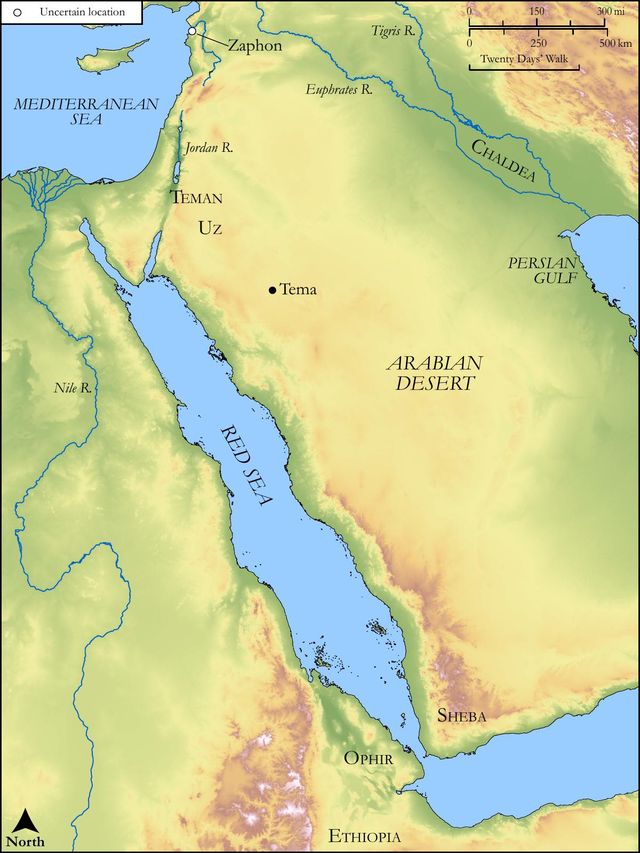
The narrative of Job is set in the land of Uz, a region likely situated in Edom or northern Arabia, during a patriarchal period, possibly predating the Mosaic Law, given its absence from the text. The cultural milieu emphasized the paramount importance of honor, reputation, and public standing. To be "hidden in the dust" or to have one's "face bound in secret" would signify the ultimate disgrace, loss of honor, and complete removal from society or even existence. Burial in dust or earth was a common practice, making the imagery of being "hidden in the dust" powerfully evocative of death, oblivion, and utter defeat. The concept of divine justice, where the wicked are ultimately brought low and the righteous vindicated, was a central tenet of Hebrew thought, though Job's experience profoundly challenged simplistic interpretations of this principle.
Key Themes
ShowHideThis verse profoundly contributes to several overarching themes in the book of Job. Firstly, it underscores Divine Sovereignty and Omnipotence, asserting God's absolute and unrivaled power over all creation, including the most arrogant and formidable human beings. Only God possesses the authority and might to execute perfect justice and humble the proud. Secondly, it highlights Human Limitation and Humility, revealing the vast, unbridgeable gap between Job's (and humanity's) finite capabilities and God's infinite power. Job's inability to perform the actions God challenges him with forces him to acknowledge his own weakness and dependence. Finally, the verse speaks to God's Ultimate Justice and the Humiliation of the Wicked. Despite the apparent prosperity of the wicked in this life, the imagery assures that God will indeed bring them to utter disgrace and oblivion, a theme echoed throughout Scripture, such as in Psalm 73:18-20.
Exposition and Analysis
ShowHideKey Word Analysis
ShowHideThis primitive root signifies "to hide (by covering over); hide, lay privily, in secret." In this context, it carries the strong connotation of putting someone out of sight, out of mind, and out of existence. It implies not just concealment, but an act of complete removal and obliteration, often associated with burial or destruction, leading to a state of oblivion.
A primitive root meaning "to wrap firmly (especially a turban, compress, or saddle); figuratively, to stop, to rule; bind (up), gird about, govern, healer, put, saddle, wrap about." Here, it suggests a complete subjugation and incapacitation, implying a loss of freedom, movement, and agency, akin to binding a prisoner or a corpse.
This plural noun, always used as singular, literally means "the face (as the part that turns)." It is used in a great variety of applications, both literally and figuratively, often representing presence, honor, and public visibility. To "bind their faces" could imply covering them in shame, shrouding them like the dead, or preventing them from being seen or recognized, signifying a profound loss of honor, identity, and public standing, leading to disgrace and anonymity.
Verse Breakdown
ShowHide"Hide them in the dust together"
This clause presents a direct challenge to Job, daring him to exercise divine power over the proud. The command to "hide them in the dust" vividly portrays the ultimate defeat and disgrace of the arrogant. It evokes imagery of burial, consigning them to oblivion, stripping them of all their earthly power, status, and pride. The "together" emphasizes a collective, decisive act of judgment against all who embody such arrogance, implying a comprehensive and inescapable fate.
"and bind their faces in secret"
This second clause reinforces and amplifies the first. To "bind their faces" suggests a complete loss of honor, identity, and public visibility. It implies a state of utter shame, perhaps like a condemned person whose face is covered, or a corpse shrouded for burial. The addition of "in secret" highlights that God's judgments, though absolute and thorough, are not always immediately visible or fully comprehensible to human observers. It underscores the hidden, sovereign nature of divine justice, which operates beyond human sight and understanding, ensuring that no one escapes God's ultimate reckoning.
Literary Devices
ShowHideJob 40:13 is rich in Imagery, painting vivid pictures of the ultimate downfall of the proud. The phrases "hide them in the dust" and "bind their faces in secret" evoke powerful visual and emotional responses, suggesting burial, shame, and complete obliteration. The verse employs Rhetorical Question implicitly, as it is part of God's larger challenge to Job, asking if he possesses the power to do these things. The answer, clearly, is no, thereby emphasizing God's unique omnipotence. There is also a strong sense of Parallelism between the two clauses, where the second clause ("bind their faces in secret") amplifies and reinforces the meaning of the first ("hide them in the dust together"), both pointing to the comprehensive and inescapable nature of divine judgment against the arrogant. The challenge itself is a form of Hyperbole, as God asks Job to perform acts that are clearly beyond any human capability, serving to underscore the infinite chasm between human and divine power.
Theological and Thematic Connections
ShowHideJob 40:13 serves as a profound theological statement on God's exclusive prerogative to execute ultimate justice and humble the proud. It asserts that while humans may perceive injustice or the temporary triumph of the wicked, God alone possesses the power, wisdom, and authority to bring all arrogance to nothingness. This verse reminds us that God's justice is not always immediate or visible according to human timelines, but it is absolute and certain. It calls believers to trust in God's sovereign control, even when circumstances seem chaotic or unjust, and to recognize that true power belongs solely to Him, who can reduce the mightiest to dust and bind the faces of the most defiant in secret.
Reflection and Application
ShowHideJob 40:13 offers a sobering yet comforting truth for believers today. It compels us to cultivate a profound humility, recognizing that our own power, wisdom, and ability to control circumstances or exact justice are utterly insignificant compared to God's. When we observe the apparent prosperity of the wicked or feel overwhelmed by injustice in the world, this verse reminds us that God's ultimate justice is assured. We are not called to take vengeance into our own hands or to despair, but to trust that the Almighty will, in His perfect timing and manner, "hide them in the dust together" and "bind their faces in secret." This truth should liberate us from the burden of trying to right every wrong ourselves, enabling us to rest in God's sovereign control and perfect righteousness. It encourages us to align our hearts with His, embracing humility and seeking His will, knowing that He is the one who truly brings down the proud and lifts up the humble.
Questions for Reflection
ShowHideFAQ
ShowHideDoes Job 40:13 imply that God will literally bury people in dust or bind their faces?
ShowHideWhile the imagery in Job 40:13 is vivid and draws on physical actions, it is primarily metaphorical for God's absolute power to bring about the complete humiliation, defeat, and obliteration of the proud and wicked. To "hide them in the dust" signifies consigning them to oblivion, stripping them of all power and prominence, much like a burial reduces a body to dust. To "bind their faces in secret" implies a complete loss of honor, identity, and public visibility, a state of utter disgrace and anonymity. It underscores that God's judgment is comprehensive and inescapable, even if not always outwardly visible to human eyes. The verse is a rhetorical challenge to Job, demonstrating that only God possesses such ultimate authority and power over all creation and humanity, particularly those who defy Him in arrogance, as seen in God's preceding challenge in Job 40:11-12.
Christ-Centered Fulfillment
ShowHideJob 40:13, with its stark portrayal of God's power to humble the proud and bring low the arrogant, finds its ultimate fulfillment in the person and work of Jesus Christ. While the Old Testament often speaks of God's direct judgment, the New Testament reveals how God's justice and humility are perfectly embodied in Christ. Jesus, though God, did not cling to His divine prerogatives but "emptied himself, by taking the form of a servant, being born in the likeness of men" (Philippians 2:7). He was "hidden in the dust" of humanity, experiencing the ultimate humiliation of the cross, where He was "bound" and "secretly" judged by the world. Yet, through this very act, He conquered sin, death, and the pride of humanity. The ultimate "binding" of faces in shame will be for those who reject Christ, as every knee will eventually bow and every tongue confess that Jesus Christ is Lord (Philippians 2:10-11). Conversely, for those who humble themselves and believe in Him, Christ's resurrection is the ultimate vindication, demonstrating God's power not to merely hide in the dust, but to raise from it, granting eternal life and honor to the humble, as promised in Matthew 23:12.