


Job 10:11
Bible text: King James Version (1769 Blayney text) · Public domain
Bible text: Berean Standard Bible · Public domain
Bible text: American Standard Version (1901) · Public domain
Bible text: World English Bible, Messianic edition · Public domain
Bible text: Geneva Bible (1599) · Public domain
Bible text: Young's Literal Translation · Public domain
- עוֹרorskinH5785N-msNoun Singular Masculine Absolute
- וּבָשָׂרU·va·sorand fleshH1320Conj-w ¦ N-msNoun Singular Masculine Absoluteוּandבָשָׂרflesh
- תַּלְבִּישֵׁנִיtal·bi·She·nidid you clothe? meH3847V-Hiphil-Imperf-2ms ¦ 1csVerb Hiphil Imperfect 2nd Singular Masculineתַּלְבִּישֵׁdid you clothe?נִיme
- וּבַעֲצָמוֹתu·va·'a·tza·Motand with bonesH6106Conj-w ¦ Prep-b ¦ N-fpNoun Plural Feminine Absoluteוּandבַwithעֲצָמוֹתbones
- וְגִידִיםve·gi·Dimand sinewsH1517Conj-w ¦ N-mpNoun Plural Masculine Absoluteוְandגִידִיםsinews
- תְּסֹכְכֵנִיte·so·khe·Khe·nidid you weave together? meH5526V-Piel-Imperf-2ms ¦ 1csVerb Piel Imperfect 2nd Singular Masculineתְּסֹכְכֵdid you weave together?נִיme
English is a literal word-by-word gloss of the Hebrew, not the KJV's wording. Why?
This is the original text the KJV's translators worked from — each Hebrew word with its own literal English meaning in this verse, prepared by scholars at Tyndale House, Cambridge. The KJV translates whole sentences, not word by word, so its wording differs: one Hebrew word can become several English words, and the KJV may choose “the LORD” where the gloss reads “Yahweh”. Both are faithful — they answer different questions. For the KJV's own rendering, switch to the KJV text.
Details
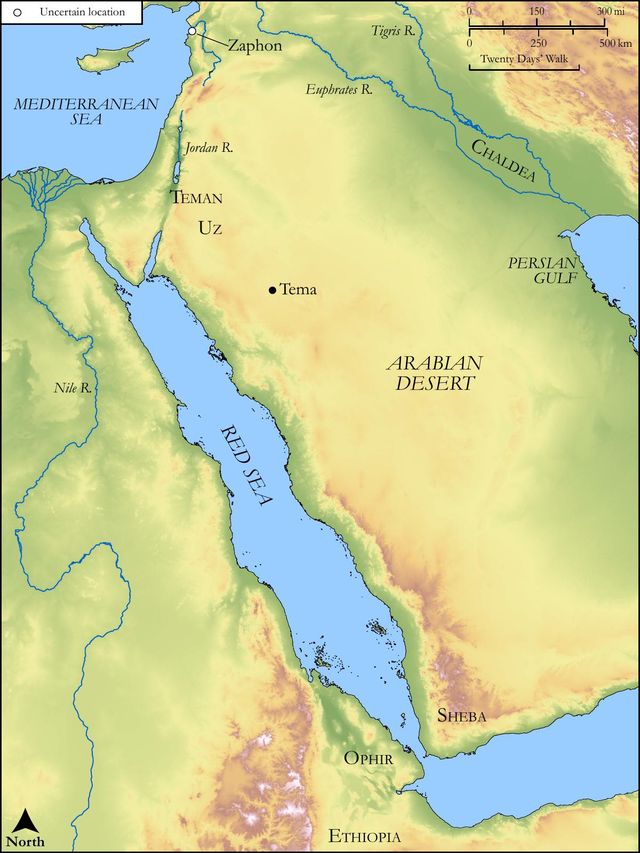
See on the biblical-era map
Study this verse
Public-domain commentary
Matthew Henry
From his Commentary on the Whole Bible. Henry comments on passages, not single verses — this entry covers Job 10:8–13. His three-level outline is real structure in the source text, so it is rendered as structure.
In these verses we may observe,
I.How Job eyes God as his Creator and preserver, and describes his dependence upon him as the author and upholder of his being. This is one of the first things we are all concerned to know and consider.
1.That God made us, he, and not our parents, who were only the instruments of his power and providence in our production. He made us, and not we ourselves. His hands have made and fashioned these bodies of ours and every part of them (Job 10:8), and they are fearfully and wonderfully made. The soul also, which animates the body, is his gift. Job takes notice of both here.
(1.)The body is made as the clay (v. 9), cast into shape, into this shape, as the clay is formed into a vessel, according to the skill and will of the potter. We are earthen vessels, mean in our original, and soon broken in pieces, made as the clay. Let not therefore the thing formed say unto him that formed it, Why hast thou made me thus? We must not be proud of our bodies, because the matter is from the earth, yet not dishonour our bodies, because the mould and shape are from the divine wisdom. The formation of human bodies in the womb is described by an elegant similitude (v. 10, Thou hast poured me out like milk, which is coagulated into cheese), and by an induction of some particulars, v. 11. Though we come into the world naked, yet the body is itself both clothed and armed. The skin and flesh are its clothing; the bones and sinews are its armour, not offensive, but defensive. The vital parts, the heart and lungs, are thus clothed, not to be seen - thus fenced, not to be hurt. The admirable structure of human bodies is an illustrious instance of the wisdom, power, and goodness of the Creator. What a pity is it that these bodies should be instruments of unrighteousness which are capable of being temples of the Holy Ghost!
(2.)The soul is the life, the soul is the man, and this is the gift of God: Thou hast granted me life, breathed into me the breath of life, without which the body would be but a worthless carcase. God is the Father of spirits: he made us living souls, and endued us with the power of reason; he gave us life and favour, and life is a favour - a great favour, more than meat, more than raiment - a distinguishing favour, a favour that puts us into a capacity of receiving other favours. Now Job was in a better mind than he was when he quarrelled with life as a burden, and asked, Why died I not from the womb? Or by life and favour may be meant life and all the comforts of life, referring to his former prosperity. Time was when he walked in the light of the divine favour, and thought, as David, that through that favour his mountain stood strong.
2.That God maintains us. Having lighted the lamp of life, he does not leave it to burn upon its own stock, but continually supplies it with fresh oil: "Thy visitation has preserved my spirit, kept me alive, protected me from the adversaries of life, the death we are in the midst of and the dangers we are continually exposed to, and blessed me with all the necessary supports of life and the daily supplies it needs and craves."
II.How he pleads this with God, and what use he makes of it.
He reminds God of it (Job 10:9): Remember, I beseech thee, that thou hast made me. What then? Why, 1"Thou hast made me, and therefore thou hast a perfect knowledge of me (Psa 139:1-13), and needest not to examine me by scourging, nor to put me upon the rack for the discovery of what is within me." 2. "Thou hast made me, as the clay, by an act of sovereignty; and wilt thou by a like act of sovereignty unmake me again? If so, I must submit." 3. "Wilt thou destroy the work of thy own hands?" It is a plea the saints have often used in prayer, We are the clay and thou our potter, Isa 64:8. Thy hands have made me and fashioned me, Psa 119:73. So here, Thou madest me; and wilt thou destroy me (Job 10:8), wilt thou bring me into dust again? Job 10:9. "Wilt thou not pity me? Wilt thou not spare and help me, and stand by the work of thy own hands? Psa 138:8. Thou madest me, and knowest my strength; wilt thou then suffer me to be pressed above measure? Was I made to be made miserable? Was I preserved only to be reserved for these calamities?" If we plead this with ourselves as an inducement to duty, "God made me and maintains me, and therefore I will serve him and submit to him," we may plead it with God as an argument for mercy: Thou hast made me, new - make me; I am thine, save me. Job knew not how to reconcile God's former favours and his present frowns, but concludes (Job 10:13), "These things hast thou hidden in thy heart. Both are according to the counsel of thy own will, and therefore undoubtedly consistent, however they seem." When God thus strangely changes his way, though we cannot account for it, we are bound to believe there are good reasons for it hidden in his heart, which will be manifested shortly. It is not with us, or in our reach, to assign the cause, but I know that this is with thee. Known unto God are all his works.
Historical interpretation
Historical reception
2 surviving comments on this verse. Each one is dated, so this reads as a timeline rather than a list.
Select a marker to jump to its quote. Markers stagger vertically where authors wrote within a few decades of each other.
Here [Job] foreshadows the incarnation of the divine Word through the assumption of human nature. These words, in fact, appear to be addressed to the Father, as if they were said by the person [the Son] of the Lord.
The seed from which life emerges he calls “milked milk,” for as milk curdles and becomes cheese, so the seed becomes “nature” when it curdles. This is a condition before the embryo. For the seed that sinks into the channels of the vagina becomes “nature” when it curdles like cheese. This formation is further developed or, as Scripture says, “formed out of an image” and takes on shapes … when the limbs are formed and every part emerges and finally moves. Just as the hand or foot of a living being, the delivery of the embryo brings the creature to the light of day. It is clear that “skin and flesh” here signify the body, for he adds in what follows with what holds it together and says, “knit me together with bones and sinews.” The whole procedure and the harmony of the formation of the body he proclaims in the previous [section] and in what is quoted here. It is remarkable that these seem to be words from his soul; for it is [the soul] that is “clothed with skin and flesh” and “knit together with bones and sinews.” That makes it clear that [the soul] is before the clothing and dressing, for it is clothed (already) as that which is the basis. Since skin and flesh, bones and sinews do not live by themselves but move due to the presence of the soul—if it leaves, they do not have life anymore—he says, “You have not only formed me, made flesh, skin, bones and sinews for me and clothed me with them, but you have also given me life and love.”
Continue studying Job 10:11 across the web’s major study libraries — every link below opens this exact verse, chapter, or book on the destination site.
Read & Compare
 BibleGatewayThis verse in more than 200 translations and 70 languages.
 Bible.comThe YouVersion reader — hundreds of translations, reading plans, and highlights.
 ESV.orgCrossway's official English Standard Version reader.
 NET BibleThe NET translation with 60,000+ translators' notes on every rendering decision.
 STEP BibleTyndale House's free study tool — original text, vocabulary, and scholarly resources.
 BibliaLogos Bible Software's free web reader.
 USCCBThe New American Bible (Revised Edition) with the U.S. bishops' study notes.
Commentaries
 BibleHub CommentariesDozens of classic commentaries on this verse, gathered on one page.
 StudyLightMore than 100 commentary sets — the largest collection on the web.
 BibleRefPlain-English commentary on what this verse means, verse by verse.
 Enduring WordDavid Guzik's free commentary on this chapter, widely used by Bible teachers.
 Bible Study ToolsVerse commentary alongside Greek and Hebrew study aids.
Original Language & Research
- BibleHub InterlinearThe verse word by word — original language, transliteration, and English.
- BibleHub LexiconEvery word's original-language definition and Strong's entry.
 Blue Letter BibleDeep-study tools — Strong's numbers, concordance, and word studies.
 SefariaThe Hebrew text with Rashi and centuries of Jewish commentary.
Sermons, Hymns & Audio


TrulyRandomVerse is not affiliated with these sites and doesn’t control their content. They’re linked because they’re genuinely useful.
Summary
Job 10:11 encapsulates Job's profound reflection on God's meticulous and intimate involvement in his physical creation, a poignant acknowledgment amidst his intense suffering and lament. In this verse, Job describes how God intricately fashioned his body, "clothing" him with skin and flesh and "fencing" him with bones and sinews, thereby highlighting the divine craftsmanship evident in human anatomy. This recognition serves as a stark backdrop to his desperate plea for understanding, questioning why the Creator who so carefully formed him now seems to be relentlessly pursuing and afflicting him.
Context
ShowHideLiterary Context
Job 10:11 is situated within Job's extended lament (chapters 9-10), which follows the second cycle of dialogue with his friends. Specifically, it forms part of Job's direct address to God, where he pours out his anguish and confusion. Having been accused and misunderstood by his friends, Job turns to the ultimate source of his suffering, challenging God's justice and wisdom. Chapter 10 is characterized by Job's deep bewilderment: he acknowledges God's omnipotence and creative power (as seen in verses like Job 9:4-10), yet he cannot reconcile this with his inexplicable pain. The verse immediately preceding (Job 10:10) speaks of God pouring him out like milk and curdling him like cheese, a vivid image of his formation in the womb, which Job 10:11 continues by detailing the physical structure God provided. This personal appeal emphasizes Job's desperate search for answers from the very One he believes is afflicting him.
Historical & Cultural Context
The book of Job is set in the land of Uz, a region likely east of Palestine, and reflects a patriarchal society. The cultural understanding of creation, while not detailed in a systematic theology as later developed, inherently recognized a divine hand in the formation of life. Scripture attributes the creation of humanity to God, who "formed man of the dust of the ground," and Job's articulation here is particularly intimate and personal, focusing on the individual's formation rather than the creation of the first man. The emphasis on "skin and flesh" and "bones and sinews" reflects a common ancient understanding of the body's fundamental components, essential for life and movement. Furthermore, the concept of God "fencing" or "hedging" (as also seen in Job 1:10) would have resonated with a people familiar with agricultural practices and the need for protective barriers around their property or livestock. Job's lament, while deeply personal, also taps into universal human experiences of suffering and questioning divine justice, themes common to every generation.
Key Themes
ShowHideJob 10:11 powerfully contributes to several overarching themes within the book of Job and broader biblical theology. Firstly, it underscores the theme of Divine Craftsmanship and Intricate Design, portraying God as the meticulous architect of human life, fashioning every detail from the innermost structure to the outermost covering. This resonates with the broader biblical affirmation of God as Creator, as seen in Psalm 139:13-16 which speaks of God knitting one together in the womb. Secondly, the verse highlights the Paradox of Creation and Suffering. Job marvels at the care God took in his formation, creating a stark contrast with his current state of inexplicable agony. This tension is central to Job's theological struggle: how can a God of such intricate design and care allow such profound and seemingly unjust suffering? This paradox drives Job's relentless questioning of divine justice and the problem of evil. Lastly, it implicitly affirms God's Sovereignty over Life and Death. Despite his lament, Job acknowledges that his very physical being is a testament to God's power and active involvement, from his genesis (as hinted in Job 10:8-9) to his present existence, even if that sovereignty now manifests in ways he cannot comprehend.
Exposition and Analysis
ShowHideKey Word Analysis
ShowHideThe Hebrew verb לָבַשׁ (lâbash) means "to put on," "to clothe oneself," or "to be clothed." In this context, it signifies a deliberate and intentional act of covering or adorning. It suggests that God did not merely assemble Job's body but meticulously "dressed" his internal structure with skin and flesh, implying a careful, purposeful, and aesthetic dimension to the divine creative act. It emphasizes the outer covering as an integral and designed part of the whole, reflecting God's comprehensive involvement in human formation.
The Hebrew verb סוּךְ (sûwk) carries the primary meaning "to entwine," "to shut in," or "to hedge." This word evokes an image of a protective barrier or enclosure. When applied to bones and sinews, it portrays them not just as structural components but as a robust, protective framework that encloses and safeguards the vital organs and softer tissues of the body. It highlights the strength, resilience, and defensive function of the skeletal and muscular systems, divinely designed to provide support, stability, and security.
Verse Breakdown
ShowHide"Thou hast clothed me with skin and flesh"
This clause emphasizes God's direct and personal involvement in the formation of Job's physical body. The imagery of "clothing" suggests a deliberate and intricate process, where the outer layers of the body (skin and flesh) are meticulously applied over the underlying structure. It speaks to the beauty, sensitivity, and protective nature of these external coverings, which are essential for life and interaction with the world. Job acknowledges God's artistry in creating his external form, recognizing the divine hand in every detail of his physical being.
"and hast fenced me with bones and sinews"
This second clause describes the internal, foundational structure of the human body. The term "fenced" (or "hedged") vividly portrays the bones as a strong, protective framework, like a wall or enclosure, providing support, rigidity, and defense for the softer tissues and vital organs within. "Sinews" (tendons and ligaments) are the connective tissues that bind bones and muscles, enabling movement and stability. Together, they represent the robust, resilient, and dynamic internal architecture, also intricately designed and provided by God, ensuring the body's integrity and function and allowing for purposeful movement.
Literary Devices
ShowHideJob 10:11 employs powerful literary devices to convey its profound meaning. The most prominent is Metaphor, where God is implicitly compared to a tailor or artisan who "clothes" Job with skin and flesh, and a builder or gardener who "fences" him with bones and sinews. This anthropomorphic language makes the abstract concept of divine creation tangible and relatable, emphasizing the deliberate, hands-on nature of God's work in forming the human body. The use of Parallelism is also evident, with the two clauses mirroring each other in structure and reinforcing the same core idea: God's intricate creation of the human body, from its outer layers to its inner framework. This repetition enhances the emphasis on God's comprehensive creative power and the completeness of His design. Furthermore, the verse uses Concrete Imagery ("skin," "flesh," "bones," "sinews") to make the abstract theological point about divine craftsmanship vivid and immediate, allowing the reader to visualize the detailed and miraculous construction of the human form.
Theological and Thematic Connections
ShowHideJob 10:11 stands as a profound testament to the biblical doctrine of God as the ultimate Creator, intimately involved in the formation of every human being. It underscores the concept of the imago Dei, the idea that humanity bears the divine imprint, not just spiritually but also in the marvelous complexity and design of our physical bodies. This verse highlights God's sovereign power, wisdom, and meticulous care in creation, even when His actions seem inscrutable in the face of suffering. Job's lament, therefore, is not a denial of God's creative power, but rather a desperate plea to reconcile this undeniable truth with the reality of his profound pain. The verse challenges us to consider the inherent value and sacredness of human life, rooted in its divine origin and the intricate care with which God fashioned each individual.
Reflection and Application
ShowHideJob 10:11 invites us to pause and marvel at the astonishing miracle of the human body, recognizing it not as a product of chance, but as a masterpiece of divine design. In a world that often objectifies, devalues, or disregards the body, this verse calls us to a profound appreciation for our physical selves as sacred vessels, intricately fashioned by God's own hand. This understanding can foster a deep sense of gratitude for our health, our senses, and our ability to move and interact with the world, encouraging us to steward our bodies as temples of the Holy Spirit. Furthermore, Job's lament reminds us that even when we are overwhelmed by suffering, confusion, or the inexplicable hardships of life, we can still affirm God's foundational role as our Creator. Like Job, we are permitted to bring our honest questions and raw emotions before God, trusting that the One who so carefully formed us also cares for us in our pain, even when His purposes remain veiled. This verse encourages us to hold onto the truth of God's creative wisdom, even amidst the paradoxes of suffering, allowing it to anchor our faith when understanding eludes us.
Questions for Reflection
ShowHideFAQ
ShowHideWhy does Job emphasize his physical creation in the midst of his suffering?
ShowHideJob emphasizes his physical creation to highlight the profound paradox of his situation. He acknowledges God's meticulous care and power in forming his body, "clothing" him with skin and flesh and "fencing" him with bones and sinews. This detailed craftsmanship stands in stark contrast to his current, inexplicable suffering. Job is essentially asking, "How can the God who so carefully and lovingly constructed me now seemingly dismantle me or allow me to suffer so intensely?" It underscores his bewilderment and his desperate plea for God to explain the apparent contradiction between His creative goodness and His present dealings with Job. This emphasis serves to deepen his lament and underscore the mystery of divine justice, as seen throughout Job chapter 10.
Christ-Centered Fulfillment
ShowHideJob 10:11, with its profound declaration of God's intricate creation of the human body, finds its ultimate fulfillment and deepest meaning in the person and work of Jesus Christ. The very God who "clothed" Job with skin and flesh and "fenced" him with bones and sinews is the same God who, in the fullness of time, "became flesh and dwelt among us" (John 1:14). In the Incarnation, the divine Creator took on the very human form He had so meticulously designed, experiencing the fragility and limitations of the physical body, yet without sin (Hebrews 4:15). Christ's perfect human body, formed by the Holy Spirit (Luke 1:35), was offered as the ultimate sacrifice, demonstrating God's profound love and commitment to redeeming not only our spirits but also our physical selves. His resurrection from the dead (1 Corinthians 15:20-23) is the ultimate vindication of the body, foreshadowing the promise of our own bodily resurrection and the transformation of our "lowly body to be like his glorious body" (Philippians 3:21). Thus, the divine craftsmanship celebrated by Job is fully realized and redeemed in Christ, who elevates the human body to a new dignity and eternal hope, ultimately bringing about a new creation where both spirit and body are perfectly restored (Revelation 21:1-5).