


Jeremiah 22:19
- קְבוּרַתke·vu·Rat[the] burial ofH6900N-fscNoun Singular Feminine Construct
- חֲמוֹרcha·Mora donkeyH2543N-csNoun Singular common gender Absolute
- יִקָּבֵרyi·ka·Verhe will be buriedH6912V-Niphal-Imperf-3msVerb Niphal Imperfect 3rd Singular Masculine
- סָחוֹבsa·Chovpeople will dragH5498V-Qal-InfAbsVerb Qal Infinitive Absolute
- וְהַשְׁלֵךְve·hash·Lekhand people will throw outH7993Conj-w ¦ V-Hiphil-InfAbsVerb Hiphil Infinitive Absoluteוְandהַשְׁלֵךְpeople will throw out
- מֵהָלְאָהme·Hal·'ahfrom beyondH1973Prep-m ¦ AdvAdverbמֵfromהָלְאָהbeyond
- לְשַׁעֲרֵיle·sha·'a·Rei<to> [the] gates ofH8179Prep-l ¦ N-mpcNoun Plural Masculine Constructלְ<to>שַׁעֲרֵי[the] gates of
- יְרוּשָׁלִָםye·ru·sha·LimJerusalemH3389N-properNoun Proper Location
English is a literal word-by-word gloss of the Hebrew, not the KJV's wording. Why?
This is the original text the KJV's translators worked from — each Hebrew word with its own literal English meaning in this verse, prepared by scholars at Tyndale House, Cambridge. The KJV translates whole sentences, not word by word, so its wording differs: one Hebrew word can become several English words, and the KJV may choose “the LORD” where the gloss reads “Yahweh”. Both are faithful — they answer different questions. For the KJV's own rendering, switch to the KJV text.
Details
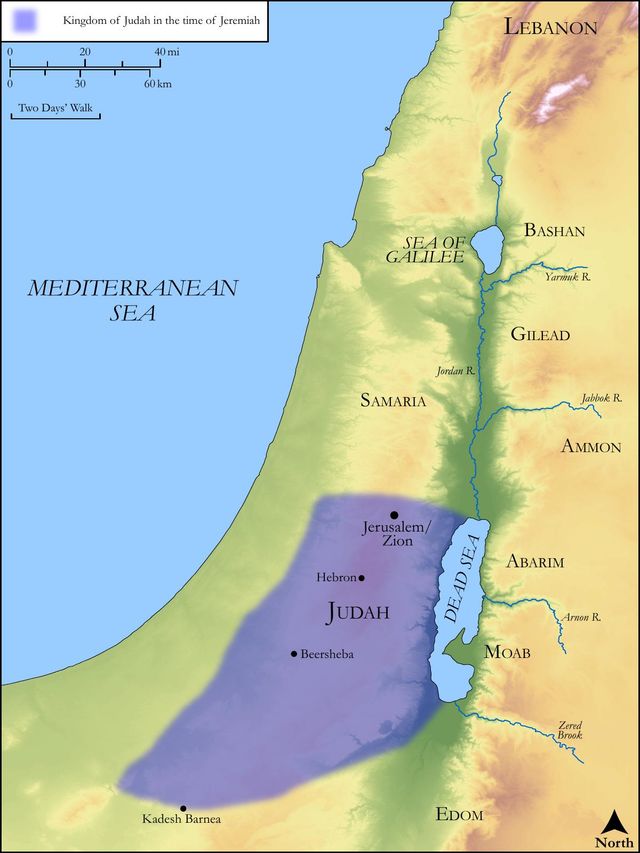
See on the biblical-era map
Study this verse
Public-domain commentary
Matthew Henry
From his Commentary on the Whole Bible. Henry comments on passages, not single verses — this entry covers Jeremiah 22:10–19. His four-level outline is real structure in the source text, so it is rendered as structure.
Kings, though they are gods to us, are men to God, and shall die like men; so it appears in these verses, where we have a sentence of death passed upon two kings who reigned successively in Jerusalem, two brothers, and both the ungracious sons of a very pious father.
I.Here is the doom of Shallum, who doubtless is the same with Jehoahaz, for he is that son of Josiah king of Judah who reigned in the stead of Josiah his father (Jer 22:11), which Jehoahaz did by the act of the people, who made him king though he was not the eldest son, Kg2 23:30; Ch2 36:1. Among the sons of Josiah (Ch1 3:15) there is one Shallum mentioned, and not Jehoahaz. Perhaps the people preferred him before his elder brother because they thought him a more active daring young man, and fitter to rule; but God soon showed them the folly of their injustice, and that it could not prosper, for within three months the king of Egypt came upon him, deposed him, and carried him away prisoner into Egypt, as God had threatened, Deu 28:68. It does not appear that any of the people were taken into captivity with him. We have the story Kg2 23:34; Ch2 36:4. Now here,
1.The people are directed to lament him rather than his father Josiah: "Weep not for the dead, weep not any more for Josiah." Jeremiah had been himself a true mourner for hm, and had stirred up the people to mourn for him (Ch2 35:25): yet now he will have them go out of mourning for him, though it was but three months after his death, and to turn their tears into another channel. They must weep sorely for Jehoahaz, who had gone into Egypt; not that there was any great loss of him to the public, as there was of his father, but that his case was much more deplorable. Josiah went to the grave in peace and honour, was prevented from seeing the evil to come in this world and removed to see the good to come in the other world; and therefore, Weep not for him, but for his unhappy son, who is likely to live and die in disgrace and misery, a wretched captive. Note, Dying saints may be justly envied, while living sinners are justly pitied. And so dismal perhaps the prospect of the times may be that tears even for a Josiah, even for a Jesus, must be restrained, that they may be reserved for ourselves and for our children, Luk 23:28.
2.The reason given is because he shall never return out of captivity, as he and his people expected, but shall die there. They were loth to believe this, therefore it is repeated here again and again, He shall return no more, Jer 22:10. He shall never have the pleasure of seeing his native country, but shall have the continual grief of hearing of the desolations of it. He has gone forth out of this place, and shall never return, Jer 22:11. He shall die in the place whither they have led him captive, Jer 22:12. This came of his forsaking the good example of his father, and usurping the right of his elder brother. In Ezekiel's lamentation for the princes of Israel this Jehoahaz is represented as a young lion, that soon learned to catch the prey, but was taken, and brought in chains to Egypt, and was long expected to return, but in vain. See Eze 19:3-5.
II.Here is the doom of Jehoiakim, who succeeded him.
Whether he had any better right to the crown than Shallum we know not; for, though he was older than his predecessor, there seems to be another son of Josiah, older than he, called Johanan, Ch1 3:15. But this we know he ruled no better, and fared no better at last. Here we have,
1.His sins faithfully reproved. It is not fit for a private person to say to a king, Thou art wicked; but a prophet, who has a message from God, betrays his trust if he does not deliver it, be it ever so unpleasing, even to kings themselves. Jehoiakim is not here charged with idolatry, and probably he had not yet put Urijah the prophet to death (as we find afterwards he did, Jer 26:22, Jer 26:23), for then he would have been told of it here; but the crimes for which he is here reproved are,
(1.)Pride and affection of pomp and splendour; as if all the business of a king were to look great, and to do good were to be the least of his care. He must build himself a stately palace, a wide house, and large chambers, Jer 22:14. He must have windows cut out after the newest fashion, perhaps like sash-windows with us. The rooms must be ceiled with cedar, the richest sort of wood. His house must be as well-roofed and wainscoted as the temple itself, or else it will not please him, Kg1 6:15, Kg1 6:16. Nay, it must exceed that, for it must be painted with minium, or vermilion, which dyes red, or, as some read it, with indigo, which dyes blue. No doubt it is lawful for princes and great men to build, and beautify, and furnish their houses so as is agreeable to their dignity; but he that knows what is in man knew that Jehoiakim did this in the pride of his heart, which makes that to be sinful, exceedingly sinful, which is in itself lawful. Those therefore that are enlarging their houses, and making them more sumptuous, have need to look well to the frame of their own spirits in the doing of it, and carefully to watch against all the workings of vain-glory. But that which was particularly amiss in Jehoiakim's case was that he did this when he could not but perceive, both by the word of God and by his providence, that divine judgments were breaking in upon him. He reigned his first three years by the permission and allowance of the king of Egypt, and all the rest by the permission and allowance of the king of Babylon; and yet he that was no better than a viceroy will covet to vie with the greatest monarchs in building and furniture. Observe how peremptory he is in this resolution: "I will build myself a wide house; I am resolved I will, whoever advises me to the contrary." Note, It is the common folly of those that are sinking in their estates to covet to make a fair show. Many have unhumbled hearts under humbling providences, and look most haughty when God is bringing them down. This is striving with our Maker.
(2.)Carnal security and confidence in his wealth, depending upon the continuance of his prosperity, as if his mountain now stood so strong that it could never be moved. He thought he must reign without any disturbance or interruption because he had enclosed himself in cedar (Jer 22:15), as if that were too fine to be assaulted and too strong to be broken through, and as if God himself could not, for pity, give up such a stately house as that to be burned. Thus when Christ spoke of the destruction of the temple his disciples came to him, to show him what a magnificent structure it was, Mat 23:38; Mat 24:1. Note, Those wretchedly deceive themselves who think their present prosperity is a lasting security, and dream of reigning because they are enclosed in cedar. It is but in his own conceit that the rich man's wealth is his strong city.
(3.)Some think he is here charged with sacrilege, and robbing the house of God to beautify and adorn his own house. He cuts him out my windows (so it is in the margin), which some understand as if he had taken windows out of the temple to put into his own palace and then painted them (as it follows) with vermilion, that it might not be discovered, but might look of a piece with his own buildings. Note, Those cheat themselves, and ruin themselves at last, who think to enrich themselves by robbing God and his house; and, however they may disguise it, God discovers it.
(4.)He is here charged with extortion and oppression, violence and injustice. He built his house by unrighteousness, with money unjustly got and materials which were not honestly come by, and perhaps upon ground obtained as Ahab obtained Naboth's vineyard. And, because he went beyond what he could afford, he defrauded his workmen of their wages, which is one of the sins that cries in the ears of the Lord of hosts, Jam 5:4. God takes notice of the wrong done by the greatest of men to their poor servants and labourers, and will repay those, in justice, that will not in justice pay those whom they employ, but use their neighbour's service without wages. Observe, The greatest of men must look upon the meanest as their neighbours, and be just to them accordingly, and love them as themselves. Jehoiakim was oppressive, not only in his buildings, but in the administration of his government. He did not do justice, made no conscience of shedding innocent blood, when it was to serve the purposes of his ambition, avarice, and revenge. He was all for oppression and violence, not to threaten it only, but to do it; and, when he was set upon any act of injustice, nothing should stop him, but he would go through with it. And that which was at the bottom of all was covetousness, that love of money which is the root of all evil. Thy eyes and thy heart are not but for covetousness; they were for that, and nothing else. Observe, In covetousness the heart walks after the eyes: it is therefore called the lust of the eye, Jo1 2:16; Job 31:7. It is setting the eyes upon that which is not, Pro 23:5. The eyes and the heart are then for covetousness when the aims and affections are wholly set upon the wealth of this world; and, where they are so, the temptation is strong to murder, oppression, and all manner of violence and villany.
(5.)That which aggravated all his sins was that he was the son of a good father, who had left him a good example, if he would but have followed it (Jer 22:15, Jer 22:16): Did not thy father eat and drink? When Jehoiakim enlarged and enlightened his house it is probable that he spoke scornfully of his father for contenting himself with such a mean and inconvenient dwelling, below the grandeur of a sovereign prince, and ridiculed him as one that had a dull fancy, a low spirit, and could not find in his heart to lay out his money, nor cared for what was fashionable; that should not serve him which served his father: but God, by the prophet, tells him that his father, though he had not the spirit of building, was a man of an excellent spirit, a better man than he, and did better for himself and his family. Those children that despise their parents' old fashions commonly come short of their real excellences. Jeremiah tells him,
[1.]That he was directed to do his duty by his father's practice: He did judgment and justice; he never did wrong to any of his subjects, never oppressed them, nor put any hardship upon them, but was careful to preserve all their just rights and properties. Nay, he not only did not abuse his power for the support of wrong, but he used it for the maintaining of right. He judged the cause of the poor and needy, was ready to hear the cause of the meanest of his subjects and do them justice. Note, The care of magistrates must be, not to support their grandeur and take their ease, but to do good, not only not to oppress the poor themselves, but to defend those that are oppressed.
[2.]That he was encouraged to do his duty by his father's prosperity. First, God accepted him: "Was not this to know me, saith the Lord? Did he not hereby make it to appear that he rightly knew his God, and worshipped him, and consequently was known and owned of him?" Note, The right knowledge of God consists in doing our duty, particularly that which is the duty of our place and station in the world. Secondly, He himself had the comfort of it: Did he not eat and drink soberly and cheerfully, so as to fit himself for his business, for strength and not for drunkenness? Ecc 10:17. He did eat, and drink, and do judgment; he did not (as perhaps Jehoiakim and his princes did) drink, and forget the law, and pervert the judgment of the afflicted, Pro 31:5. He did eat and drink; that is, God blessed him with great plenty, and he had the comfortable enjoyment of it himself and gave handsome entertainments to his friends, was very hospitable and very charitable. It was Jehoiakim's pride that he had built a fine house, but Josiah's true praise that he kept a good house. Many times those have least in them of true generosity that have the greatest affection for pomp and grandeur; for, to support the extravagant expense of that, hospitality, bounty to the poor, yea, and justice itself, will be pinched. It is better to live with Josiah in an old-fashioned house, and do good, than live with Jehoiakim in a stately house, and leave debts unpaid. Josiah did justice and judgment, and then it was well with him, Jer 22:15, and it is repeated again, Jer 22:16. He lived very comfortably; his own subjects, and all his neighbours, respected him; and whatever he put his hand to prospered. Note, While we do well we may expect it will be well with us. This Jehoiakim knew, that his father found the way of duty to be the way of comfort, and yet he would not tread in his steps. Note, It should engage us to keep up religion in our day that our godly parents kept it up in theirs and recommended it to us from their own experience of the benefit of it. They told us that they had found the promises which godliness has of the life that now is made good to them, and that religion and piety are friendly to outward prosperity. So that we are inexcusable if we turn aside from that good way.
2.Here we have Jehoiakim's doom faithfully read, Jer 22:18, Jer 22:19. We may suppose that it was in the utmost peril of his own life that Jeremiah here foretold the shameful death of Jehoiakim; but thus saith the Lord concerning him, and therefore thus saith he.
(1.)He shall die unlamented; he shall make himself so odious by his oppression and cruelty that all about him shall be glad to part with him, and none shall do him the honour of dropping one tear for him, whereas his father, who did judgment and justice, was universally lamented; and it is promised to Zedekiah that he should be lamented at his death, for he conducted himself better than Jehoiakim had done, Jer 34:5. His relations shall not lament him, no, not with the common expressions of grief used at the funeral of the meanest, where they cried, Ah, my brother! or, Ah, sister! His subjects shall not lament him, nor cry out, as they used to do at the graves of their princes, Ah, lord! or Ah his glory! It is sad for any to live so that, when they die, none will be sorry to part with them. Nay,
(2.)He shall lie unburied. This is worse than the former. Even those that have no tears to grace the funerals of the dead with would willingly have them buried out of their sight; but Jehoiakim shall be buried with the burial of an ass, that is, he shall have no burial at all, but his dead body shall be cast into a ditch or upon a dunghill; it shall be drawn, or dragged, ignominiously, and cast forth beyond the gates of Jerusalem. It is said, in the story of Jehoiakim (Ch2 36:6), that Nebuchadnezzar bound him in fetters, to carry him to Babylon, and (Eze 19:9) that he was brought in chains to the king of Babylon. But it is probable that he died a prisoner, before he was carried away to Babylon as was intended; perhaps he died for grief, or, in the pride of his heart, hastened his own end, and, for that reason, was denied a decent burial, as self-murderers usually are with us. Josephus says that Nebuchadnezzar slew him at Jerusalem, and left his body thus exposed, somewhere at a grat distance from the gates of Jerusalem. And it is said (Kg2 24:6) he slept with his fathers. When he built himself a stately house, no doubt he designed himself a stately sepulchre; but see how he was disappointed. Note, Those that are lifted up with great pride are commonly reserved for some great disgrace in life or death.
Historical interpretation
Historical reception
1 surviving comment on this verse from the historical church.
(Verse 18, 19.) Therefore, thus says the Lord to Joachim, the son of Josiah, king of Judah: They shall not mourn for him, woe to the brother and woe to the sister, they shall not lament for him, woe to the Lord and woe to the illustrious one. He shall be buried like a donkey, decomposed and thrown outside the gates of Jerusalem. This, which we have put from Hebrew: they shall not mourn for him, woe to the brother and woe to the sister, is not found in the Septuagint. And it is specifically said against Joachim, king of Judah, and the riddle is opened, which before seemed hidden and ambiguous among the three brothers, so that it is not about Joachaz or Zedekiah, but specifically about Joachim, whom the Hebrew history narrates was killed by the bandits of the Chaldeans, Syrians, Ammonites, and Moabites. And in Malachi it is written that he died and was buried in silence (2 Kings 24). In the book of Chronicles we read that he was bound with chains and taken to Babylon (2 Chronicles 36): and nothing more is mentioned about him. It is said in a beautiful burial of an ass that he should be buried, which means in other words that he should be left unburied, that is, torn apart by beasts and birds. For this is the burial of an ass.
Continue studying Jeremiah 22:19 across the web’s major study libraries — every link below opens this exact verse, chapter, or book on the destination site.
Read & Compare
 BibleGatewayThis verse in more than 200 translations and 70 languages.
 Bible.comThe YouVersion reader — hundreds of translations, reading plans, and highlights.
 ESV.orgCrossway's official English Standard Version reader.
 NET BibleThe NET translation with 60,000+ translators' notes on every rendering decision.
 STEP BibleTyndale House's free study tool — original text, vocabulary, and scholarly resources.
 BibliaLogos Bible Software's free web reader.
 USCCBThe New American Bible (Revised Edition) with the U.S. bishops' study notes.
Commentaries
 BibleHub CommentariesDozens of classic commentaries on this verse, gathered on one page.
 StudyLightMore than 100 commentary sets — the largest collection on the web.
 BibleRefPlain-English commentary on what this verse means, verse by verse.
 Enduring WordDavid Guzik's free commentary on this chapter, widely used by Bible teachers.
 Bible Study ToolsVerse commentary alongside Greek and Hebrew study aids.
Original Language & Research
- BibleHub InterlinearThe verse word by word — original language, transliteration, and English.
- BibleHub LexiconEvery word's original-language definition and Strong's entry.
 Blue Letter BibleDeep-study tools — Strong's numbers, concordance, and word studies.
 SefariaThe Hebrew text with Rashi and centuries of Jewish commentary.
Sermons, Hymns & Audio


TrulyRandomVerse is not affiliated with these sites and doesn’t control their content. They’re linked because they’re genuinely useful.
Summary
Jeremiah 22:19 delivers a chilling prophecy concerning the ignominious end of King Jehoiakim of Judah, foretelling a burial devoid of honor, akin to the unceremonious disposal of an animal carcass. This stark pronouncement serves as a powerful testament to divine judgment against a monarch who, despite his high office, embraced wickedness, oppression, and self-indulgence, thereby incurring God's severe condemnation for his unrighteous rule.
Context
ShowHideLiterary Context
This verse is situated within a series of prophetic oracles in Jeremiah 22, primarily directed against the kings of Judah. Specifically, Jeremiah 22:1-19 focuses on King Jehoiakim, son of the righteous King Josiah. The preceding verses (Jeremiah 22:13-17) issue a scathing condemnation of Jehoiakim's reign, detailing his injustices: building lavish palaces through forced labor, shedding innocent blood, and neglecting the plight of the poor and needy. This prophecy of a dishonorable burial (Jeremiah 22:19) serves as the climactic judgment for his blatant disregard for God's covenant and the principles of righteous leadership, standing in stark contrast to the divine blessing promised to a king who rules justly (Jeremiah 22:3-5). The subsequent verses (Jeremiah 22:20-30) shift to a similar judgment against Jehoiakim's son, Coniah (Jehoiachin), reinforcing the theme of divine accountability for Judah's corrupt monarchy.
Historical & Cultural Context
King Jehoiakim (originally Eliakim) was placed on the throne by Pharaoh Neco of Egypt after the death of his father, Josiah, in 609 BC (2 Kings 23:34). His reign (609-598 BC) was marked by political instability, subservience to foreign powers (first Egypt, then Babylon), and internal corruption. Culturally, proper burial rites were profoundly significant in the ancient Near East, symbolizing honor, respect, and a peaceful transition to the afterlife. Kings, in particular, were afforded elaborate tombs and mourning rituals. To be denied a proper burial, or to be buried like an animal, was the ultimate disgrace, a fate considered worse than death itself. Donkeys were common beasts of burden, and their carcasses were typically discarded unceremoniously outside city limits, often in refuse heaps. The "gates of Jerusalem" were not merely entry points but significant public spaces, symbolic of the city's identity and boundaries. To be cast "beyond the gates" signified utter rejection and public humiliation, denying the deceased a place even within the city's sacred or honored ground.
Key Themes
ShowHideJeremiah 22:19 vividly contributes to several major themes within the book of Jeremiah and broader biblical theology. Foremost is the theme of Divine Judgment on Unrighteous Leadership, underscoring God's unwavering justice against rulers who abuse their power, oppress the vulnerable, and disregard His law. This verse highlights that no one, regardless of status or perceived immunity, is exempt from divine accountability. It also powerfully illustrates the Consequences of Disobedience, demonstrating that persistent rebellion against God's commands and moral corruption inevitably lead to severe degradation and judgment, as seen in Jehoiakim's fate compared to his righteous father, Josiah (2 Kings 23:25). Furthermore, the prophecy emphasizes the Extreme Dishonor and Humiliation that awaits those who defy God, portraying a public disgrace designed to strip away all vestiges of royal dignity. Finally, it reinforces the Prophetic Authority and Fulfillment of God's word, asserting that Jeremiah's pronouncements, however shocking, would inevitably come to pass, even if the exact historical record of Jehoiakim's end is somewhat ambiguous in the biblical text (2 Kings 24:6).
Exposition and Analysis
ShowHideKey Word Analysis
ShowHideThis word (H2543) refers to a male donkey, as indicated by its root suggesting a dun-red color. In this context, the use of "ass" is highly symbolic, representing the lowest form of dignity. Unlike horses, which were associated with warfare and royalty, donkeys were humble beasts of burden. To be buried "with the burial of an ass" means to be treated as refuse, unworthy of any respectful interment, equating a king's final disposition to that of a despised animal carcass, typically discarded unceremoniously.
The verb (H5498) means "to trail along" or "to tear." Here, it implies a violent, undignified dragging. This is not a respectful carrying of a body but a forceful, contemptuous pulling, likely through the streets or out of the city, emphasizing the public and humiliating nature of Jehoiakim's treatment. It suggests a complete lack of care or reverence for the deceased king's body, as if tearing it away from any dignity.
This primitive root (H7993) means "to throw out, down or away" (literally or figuratively). Its use here reinforces the idea of violent expulsion and utter rejection. The body is not merely taken out but contemptuously "thrown" away, further cementing the image of Jehoiakim being treated as something utterly worthless and despised, discarded like rubbish.
Verse Breakdown
ShowHide"He shall be buried with the burial of an ass"
This opening clause immediately establishes the profound indignity awaiting King Jehoiakim. Instead of the elaborate and honorable burial rites customary for monarchs, his interment will be equivalent to that of a common, despised animal. This signifies a complete stripping away of his royal status and personal dignity, a public declaration of his worthlessness in God's eyes.
"drawn"
This participle describes the manner of his removal. It implies a violent, disrespectful dragging of his body. This is not a solemn procession but a crude, perhaps public, act of hauling his corpse, emphasizing the utter lack of reverence and the contempt with which he would be treated, even in death.
"and cast forth"
Following the dragging, his body will be violently thrown away. This verb suggests a forceful, contemptuous disposal, as one would discard refuse. It underscores the complete rejection of Jehoiakim, not only from his throne but also from any semblance of dignified remembrance or resting place.
"beyond the gates of Jerusalem"
This final phrase specifies the location of his ignominious disposal. To be cast outside the city walls, particularly "beyond the gates" (a public and symbolic boundary), meant exclusion from the city's sacred spaces, its burial grounds, and any connection to the community's honor. It implies his body would be left exposed, perhaps in a refuse heap or a desolate place, a public spectacle of divine judgment and ultimate disgrace.
Literary Devices
ShowHideJeremiah 22:19 employs several powerful literary devices to convey its message of severe judgment. The most prominent is Metaphor, specifically the comparison of a king's burial to "the burial of an ass." This vivid image functions as a scathing indictment, equating the powerful monarch with a common, unceremoniously discarded animal carcass, thereby stripping him of all royal dignity and honor. The prophecy also utilizes Hyperbole to emphasize the extreme nature of the disgrace; while a literal animal burial might not have occurred, the description conveys the most profound level of humiliation imaginable for a king. The phrases "drawn and cast forth" create a strong sense of Visual Imagery, painting a grim picture of a body being violently dragged and discarded, evoking revulsion and shock. Furthermore, there is an element of Irony, as a king who built lavish palaces through oppression is denied even the most basic human dignity in death. The "gates of Jerusalem" serve as a potent Symbolism, representing the city's identity, its sacred space, and its communal honor, from which the unrighteous king is utterly and publicly excluded.
Theological and Thematic Connections
ShowHideJeremiah 22:19 stands as a stark reminder of God's unwavering commitment to justice and His absolute sovereignty over human affairs, especially the actions of those in power. It underscores the biblical principle that worldly status and privilege offer no immunity from divine judgment when one's life is marked by oppression, injustice, and rebellion against God's commands. This prophecy reveals that true honor and a lasting legacy are not derived from material wealth or political might, but from a life lived in righteousness and obedience to God. It serves as a prophetic warning that God will not tolerate wickedness, particularly when it emanates from leadership, and that He will ultimately bring all deeds, both good and evil, into account, ensuring that justice, though sometimes delayed, will ultimately prevail.
Reflection and Application
ShowHideThe prophecy against Jehoiakim in Jeremiah 22:19 offers profound lessons for believers today, extending far beyond the ancient context of kingship. It serves as a powerful reminder that our actions, particularly those taken from positions of influence, carry eternal weight and are subject to divine scrutiny. For those in leadership, whether in the church, community, or workplace, this verse is a sobering call to integrity, justice, and compassion, urging us to use our authority not for personal gain or oppression, but for the welfare of others and the glory of God. It challenges us to examine our own lives: are we building a legacy of righteousness and service, or are we, like Jehoiakim, prioritizing self-indulgence and worldly accolades over God's commands? Ultimately, this passage encourages a deep introspection into what truly constitutes "honor" in God's eyes, contrasting fleeting earthly prestige with the enduring value of a life lived in humble obedience and justice. It assures us that God sees all, and His justice will ultimately prevail, calling us to align our lives with His righteous standards.
Questions for Reflection
ShowHideFAQ
ShowHideWhy was this specific type of burial considered so dishonorable in ancient times?
ShowHideIn the ancient Near East, burial was a profoundly significant ritual, integral to one's identity, honor, and perceived fate in the afterlife. To be denied a proper burial was considered one of the greatest misfortunes, a curse worse than death itself. Kings and nobles typically received elaborate tombs and extensive mourning rituals, signifying their status and the community's respect. The image of being "buried with the burial of an ass" implies being treated as refuse, like an animal carcass that would be unceremoniously discarded in a ditch or a refuse heap outside the city walls. This was the ultimate public disgrace, denying the individual any dignified remembrance, a connection to their ancestors, or a peaceful resting place. It was a complete stripping away of honor, a visual declaration of divine judgment and utter contempt, designed to shock and horrify those who heard the prophecy, as it was a fate reserved for the most despised and condemned individuals, not for a reigning monarch.
Did King Jehoiakim's burial actually happen as prophesied in Jeremiah 22:19?
ShowHideThe biblical account in 2 Kings 24:6 states that Jehoiakim "slept with his fathers," a common euphemism for dying and being buried. This phrase, however, does not necessarily imply an honorable burial in the royal tombs. Historical accounts outside the biblical narrative suggest a fulfillment that aligns with the spirit of Jeremiah's prophecy. The Jewish historian Josephus (Antiquities 10.97) records that Jehoiakim was indeed killed by the Babylonians and his body "cast out before the walls, unburied." Other traditions suggest he was thrown into the Kidron Valley, a common dumping ground for refuse outside Jerusalem's gates. While the exact details of his final disposition are not explicitly confirmed in the canonical biblical text as a literal "burial of an ass," the general consensus among scholars is that Jehoiakim suffered a highly dishonorable end, consistent with the severe judgment pronounced by Jeremiah, emphasizing his public disgrace and rejection rather than a dignified royal interment. The prophecy's primary intent was to convey extreme humiliation and divine judgment, which was undoubtedly fulfilled.
Christ-Centered Fulfillment
ShowHideJeremiah 22:19, with its vivid portrayal of an unrighteous king's ignominious end, stands in stark contrast to the ultimate King, Jesus Christ, and finds its profound Christ-centered fulfillment not in a literal parallel but in a glorious reversal and theological antithesis. Jehoiakim's "burial of an ass" symbolizes divine judgment against human sin and rebellion, a fate of utter rejection and dishonor. Yet, Jesus, the perfectly righteous King, willingly embraced a death that appeared to be one of ultimate dishonor, hanging on a cross, cursed by the law (Galatians 3:13). His crucifixion, viewed by the world as a shameful execution, was in God's plan the very means of salvation, transforming an act of public disgrace into the most glorious act of redemptive love. Unlike Jehoiakim, whose body was "drawn and cast forth beyond the gates of Jerusalem" in utter contempt, Jesus, though dying "outside the gate" (Hebrews 13:12), was laid in a new, honorable tomb provided by Joseph of Arimathea (Matthew 27:57-60; John 19:38-42). His burial was not one of permanent disgrace but a temporary rest before His triumphant resurrection, which utterly conquered death and the grave. Thus, while Jehoiakim's fate serves as a warning of judgment for unrighteousness, Christ's death and resurrection offer the hope of eternal life and true honor to all who believe, demonstrating that true kingship is marked by humble sacrifice, not oppressive power, and that God's ultimate justice culminates in the glorification of His Son, who alone is worthy of all honor and praise (Philippians 2:8-11).