


Genesis 50:22
Bible text: King James Version (1769 Blayney text) · Public domain
Bible text: Berean Standard Bible · Public domain
Bible text: American Standard Version (1901) · Public domain
Bible text: World English Bible, Messianic edition · Public domain
Bible text: Geneva Bible (1599) · Public domain
Bible text: Young's Literal Translation · Public domain
- וַיֵּשֶׁבvai·Ye·shevand he remainedH3427Conj-w ¦ V-Qal-ConsecImperf-3msVerb Qal Consecutive Imperfect 3rd Singular Masculineוַandיֵּשֶׁבhe remained
- יוֹסֵףyo·SefJosephH3130N-proper-mNoun Proper Masculine
- בְּמִצְרַיִםbe·mitz·Ra·yimin EgyptH4714Prep-b ¦ N-properNoun Proper LocationבְּinמִצְרַיִםEgypt
- הוּאhu'heH1931Pro-3msPronoun Personal 3rd Singular Masculine
- וּבֵיתu·Veitand [the] household ofH1004Conj-w ¦ N-mscNoun Singular Masculine Constructוּandבֵית[the] household of
- אָבִיו'a·Vivhis fatherH1N-msc ¦ 3msNoun Singular Masculine Constructאָבִיfatherוhis
- וַיְחִיvay·Chiand he livedH2421Conj-w ¦ V-Qal-ConsecImperf-3msVerb Qal Consecutive Imperfect 3rd Singular Masculineוַandיְחִיhe lived
- יוֹסֵףyo·SefJosephH3130N-proper-mNoun Proper Masculine
- מֵאָהme·'Ahone hundredH3967Adj-fsAdjective Numerical Singular Feminine Absolute
- וָעֶשֶׂרva·'E·serand tenH6235Conj-w ¦ N-mscNoun Singular Masculine Constructוָandעֶשֶׂרten
- שָׁנִיםsha·NimyearsH8141N-mpNoun Plural Masculine Absolute
English is a literal word-by-word gloss of the Hebrew, not the KJV's wording. Why?
This is the original text the KJV's translators worked from — each Hebrew word with its own literal English meaning in this verse, prepared by scholars at Tyndale House, Cambridge. The KJV translates whole sentences, not word by word, so its wording differs: one Hebrew word can become several English words, and the KJV may choose “the LORD” where the gloss reads “Yahweh”. Both are faithful — they answer different questions. For the KJV's own rendering, switch to the KJV text.
Details
See on the biblical-era maps


Study this verse
Public-domain commentary
Matthew Henry
From his Commentary on the Whole Bible. Henry comments on passages, not single verses — this entry covers Genesis 50:22–26. His three-level outline is real structure in the source text, so it is rendered as structure.
Here is, I. The prolonging of Joseph's life in Egypt: he lived to be a hundred and ten years old, Gen 50:22. Having honoured his father, his days were long in the land which, for the present, God had given him; and it was a great mercy to his relations that God continued him so long, a support and comfort to them.
II.The building up of Joseph's family:
he lived to see his great-grand-children by both his sons (Gen 50:23), and probably he saw his two sons solemnly owned as heads of distinct tribes, equal to any of his brethren. It contributes much to the comfort of aged parents if they see their posterity in a flourishing condition, especially if with it they see peace upon Israel, Psa 128:6.
III.The last will and testament of Joseph published in the presence of his brethren, when he saw his death approaching.
Those that were properly his brethren perhaps were some of them dead before him, as several of them were older than he; but to those of them who yet survived, and to the sons of those who were gone, who stood up in their fathers' stead, he said this.
1.He comforted them with the assurance of their return to Canaan in due time: I die, but God will surely visit you, Gen 50:24. To this purport Jacob had spoken to him, Gen 48:21. Thus must we comfort others with the same comforts with which we ourselves have been comforted of God, and encourage them to rest on those promises which have been our support. Joseph was, under God, both the protector and the benefactor of his brethren; and what would become of them now that he was dying? Why, let this be their comfort, God will surely visit you. Note, God's gracious visits will serve to make up the loss of our best friends. They die; but we may live, and live comfortably, if we have the favour and presence of God with us. He bids them be confident: God will bring you out of this land, and therefore,
(1.)They must not hope to settle there, nor look upon it as their rest for ever; they must set their hearts upon the land of promise, and call that their home.
(2.)They must not fear sinking, and being ruined there; probably he foresaw the ill usage they would meet with there after his death, and therefore gives them this word of encouragement: "God will bring you in triumph out of this land at last." Herein he has an eye to the promise, Gen 15:13, Gen 15:14, and, in God's name, assures them of the performance of it.
2.For a confession of his own faith, and a confirmation of theirs, he charges them to keep him unburied till that day, that glorious day, should come, when they should be settled in the land of promise, v. 25. He makes them promise him with an oath that they would bury him in Canaan. In Egypt they buried their great men very honourably and with abundance of pomp; but Joseph prefers a significant burial in Canaan, and that deferred too almost 200 years, before a magnificent one in Egypt. Thus Joseph, by faith in the doctrine of the resurrection and the promise of Canaan, gave commandment concerning his bones, Heb 11:22. He dies in Egypt; but lays his bones at stake that God will surely visit Israel, and bring them to Canaan.
IV.The death of Joseph, and the reservation of his body for a burial in Canaan, Gen 50:26.
He was put in a coffin in Egypt, but not buried till his children had received their inheritance in Canaan, Jos 24:32. Note,
1.If the separate soul, at death, do but return to its rest with God, the matter is not great though the deserted body find not at all, or not quickly, its rest in the grave.
2.Yet care ought to be taken of the dead bodies of the saints, in the belief of their resurrection; for there is a covenant with the dust, which shall be remembered, and a commandment is given concerning the bones.
Continue studying Genesis 50:22 across the web’s major study libraries — every link below opens this exact verse, chapter, or book on the destination site.
Read & Compare
 BibleGatewayThis verse in more than 200 translations and 70 languages.
 Bible.comThe YouVersion reader — hundreds of translations, reading plans, and highlights.
 ESV.orgCrossway's official English Standard Version reader.
 NET BibleThe NET translation with 60,000+ translators' notes on every rendering decision.
 STEP BibleTyndale House's free study tool — original text, vocabulary, and scholarly resources.
 BibliaLogos Bible Software's free web reader.
 USCCBThe New American Bible (Revised Edition) with the U.S. bishops' study notes.
Commentaries
 BibleHub CommentariesDozens of classic commentaries on this verse, gathered on one page.
 StudyLightMore than 100 commentary sets — the largest collection on the web.
 BibleRefPlain-English commentary on what this verse means, verse by verse.
 Enduring WordDavid Guzik's free commentary on this chapter, widely used by Bible teachers.
 Bible Study ToolsVerse commentary alongside Greek and Hebrew study aids.
Original Language & Research
- BibleHub InterlinearThe verse word by word — original language, transliteration, and English.
- BibleHub LexiconEvery word's original-language definition and Strong's entry.
 Blue Letter BibleDeep-study tools — Strong's numbers, concordance, and word studies.
 SefariaThe Hebrew text with Rashi and centuries of Jewish commentary.
Sermons, Hymns & Audio


TrulyRandomVerse is not affiliated with these sites and doesn’t control their content. They’re linked because they’re genuinely useful.
Summary
Genesis 50:22 provides a succinct yet profound conclusion to the life of Joseph and the patriarchal era, affirming his continued residence in Egypt alongside his entire family and noting his impressive lifespan of 110 years. This verse serves as a pivotal narrative bridge, decisively closing the foundational stories of Genesis while simultaneously setting the crucial stage for the burgeoning growth of the nascent nation of Israel within Egypt, thereby anticipating the dramatic events that will unfold in the subsequent book of Exodus.
Context
ShowHideLiterary Context
This verse stands as the penultimate statement in the Book of Genesis, immediately following the deeply emotional accounts of Jacob's death, burial, and Joseph's subsequent reassurance to his brothers that he would not seek retribution. Joseph has already demonstrated profound wisdom and forgiveness, having reconciled with his family and ensured their survival during a severe famine. The preceding verses detail Joseph's final instructions regarding his own burial, requesting that his bones be carried out of Egypt when God brings his people back to the Promised Land. Genesis 50:22 therefore functions as a final summary of Joseph's earthly life and legacy, solidifying the family's presence in Egypt before the narrative shifts dramatically to their oppression and exodus.
Historical & Cultural Context
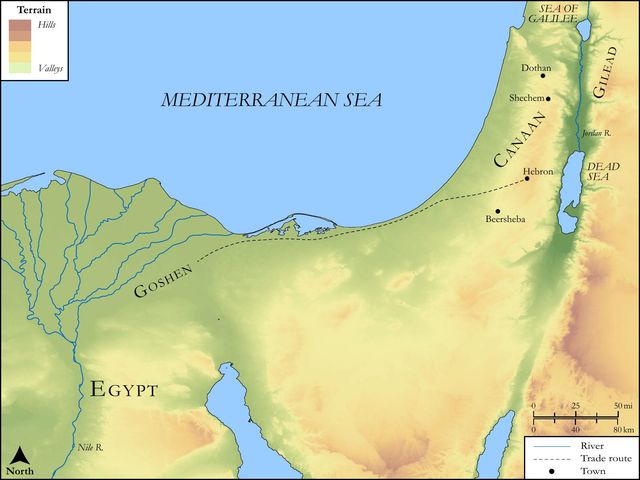
The detail of Joseph living 110 years is highly significant within the ancient Egyptian cultural milieu. In Egyptian wisdom literature and tomb inscriptions, 110 years was considered the ideal lifespan, a revered symbol of a life fully lived, blessed with wisdom, prosperity, and completeness. It was a common wish for pharaohs and noblemen, signifying a highly favored and successful existence in the eyes of the gods. For Joseph, a high-ranking official in Egypt, this detail underscores the profound respect and honor he commanded in the land, reflecting a complete and divinely blessed life marked by integrity and purpose. Furthermore, the secure "dwelling" of Jacob's "house" in Egypt highlights the geopolitical reality of a foreign people being granted land (Goshen) and protection, a status that would drastically change in the generations to come, as hinted in Exodus 1:8.
Key Themes
ShowHideGenesis 50:22 contributes to several overarching themes in Genesis and the broader Pentateuch. It powerfully underscores Divine Providence, demonstrating God's meticulous and overarching plan to preserve His chosen family, even in a foreign land, laying the groundwork for their growth into a nation. Joseph's life, from his youthful dreams in Genesis 37 to his position as a powerful ruler in Genesis 41, culminates in this peaceful end, highlighting Joseph's Enduring Legacy of faith, wisdom, and forgiveness. Most crucially, the verse serves as a Transitional Significance, definitively closing the patriarchal narratives of Genesis, which focused on individual family heads, and setting the immediate stage for the national story of Israel's formation and eventual exodus from bondage, which becomes the central theme of the subsequent book of Exodus. The secure settlement of "his father's house" in Egypt was a divinely orchestrated period of incubation, allowing the family to multiply greatly, preparing them to become the numerous nation of Israel, as promised in Genesis 46:3.
Exposition and Analysis
ShowHideKey Word Analysis
ShowHideA primitive root meaning "to sit down; by implication, to dwell, to remain; causatively, to settle, to marry." This word signifies not merely a temporary stay but a settled, established residence. For Joseph and his family, it indicates a period of stability and security in Egypt, a strategic placement by divine providence that allowed for their unhindered growth. It implies a sense of permanence, albeit one that would eventually be challenged.
('âb) and H1004 (bayith). H1, 'âb, means "father, in a literal and immediate, or figurative and remote application." H1004, bayith, means "a house (in the greatest variation of applications, especially family, etc.)." The phrase "father's house" (Hebrew: bêth 'âb) here refers to the entire extended family, the clan, and all descendants of Jacob. It emphasizes the collective nature of their settlement and growth, not just Joseph as an individual, but the nascent nation of Israel. This term underscores the continuity of the covenant line and the preservation of the family unit that would eventually become God's chosen people.
A primitive root meaning "to live, whether literally or figuratively; causatively, to revive." This word emphasizes Joseph's vitality and the blessed duration of his life. In the context of the patriarchal narratives, a long life was often seen as a sign of divine favor and blessing for faithfulness. Joseph's "living" for 110 years signifies a complete, full, and divinely sanctioned existence, marked by prosperity and purpose.
Verse Breakdown
ShowHide"And Joseph dwelt in Egypt"
This clause confirms Joseph's continued presence and authority in Egypt after the death of his father, Jacob. It signifies that he remained in his high position, maintaining the stability and security he had established for his family. His dwelling was not merely physical occupation but a state of settled existence, where he continued to exercise his influence and stewardship.
"he, and his father's house"
This phrase expands the scope beyond Joseph himself, highlighting that his entire extended family—the seventy souls who came down to Egypt—also remained settled and secure. This collective dwelling was crucial, as it allowed the family of Jacob to grow from a small clan into a numerous people, fulfilling God's promise to Abraham, Isaac, and Jacob regarding their multiplication. It underscores Joseph's role as the protector and provider for his entire lineage.
"and Joseph lived an hundred and ten years"
This final clause provides the precise duration of Joseph's life. As noted in the historical context, 110 years was considered the ideal lifespan in ancient Egypt, symbolizing a life of completeness, wisdom, and divine favor. For Joseph, it signifies a life fully lived, marked by extraordinary experiences, unwavering faith, and ultimate vindication and blessing from God. It serves as a concluding statement on the prosperity and fulfillment of his remarkable journey.
Literary Devices
ShowHideThe verse employs several literary devices to convey its profound message. Conciseness is evident in the brief, factual statement that summarizes a significant period and outcome. This brevity, however, belies the deep theological and narrative implications. The verse functions as a powerful Summary, encapsulating the peaceful and prosperous end of Joseph's life and the secure establishment of his family. Crucially, it acts as a narrative Transition, definitively closing the Book of Genesis and preparing the reader for the dramatic shift to the national story of Israel in Exodus. The number "an hundred and ten years" carries Symbolism, representing the ideal lifespan in Egyptian culture, which, when applied to Joseph, underscores divine blessing and a life fully accomplished according to God's purpose. This symbolic detail reinforces Joseph's status as a highly favored individual, both by God and by the Egyptians.
Theological and Thematic Connections
ShowHideGenesis 50:22 stands as a powerful testament to God's unwavering faithfulness to His covenant promises, particularly His commitment to preserve and multiply Abraham's descendants. Even in a foreign land, God meticulously guided circumstances through Joseph's life to ensure the survival and prosperity of His chosen family, laying the groundwork for their growth into a mighty nation. This verse underscores God's sovereign control over all human affairs, demonstrating how He uses both the good and the difficult experiences of individuals to fulfill His ultimate redemptive purposes, ultimately preparing a people through whom the Messiah would come.
Reflection and Application
ShowHideGenesis 50:22 offers a profound encouragement for believers today, reminding us that God's faithfulness endures through generations, even when circumstances seem to settle into long periods of waiting or foreign dwelling. Joseph's life, culminating in this peaceful end, exemplifies how unwavering faith, integrity, and radical forgiveness, even in the face of immense hardship and betrayal, can lead to a divinely blessed and purposeful existence. It encourages us to trust in God's perfect timing and His often hidden purposes, recognizing that even in periods of comfort or apparent stagnation, God may be orchestrating a larger, long-term plan for His people and for the world. Our lives, like Joseph's, have the potential to leave a lasting impact not just on our immediate families but on future generations, as we faithfully participate in God's unfolding redemptive narrative. We are called to live lives of integrity, to forgive those who wrong us, and to trust that God is always working for our good and for His glory, even when we cannot see the full picture.
Questions for Reflection
ShowHideFAQ
ShowHideWhy is Joseph's age of 110 years significant?
ShowHideIn ancient Egyptian culture, 110 years was considered the ideal lifespan, a symbol of a life fully lived, blessed with wisdom, prosperity, and completeness. It was a common wish for pharaohs and noblemen, signifying a highly favored and successful existence. For Joseph, this detail emphasizes the profound respect and honor he commanded in Egypt, reflecting the completeness of his divinely blessed life, marked by integrity and purpose. It signifies that he achieved a full and prosperous life, a testament to God's favor and the fulfillment of His promises, much like Moses, who also lived to a ripe old age, as recorded in Deuteronomy 34:7.
Christ-Centered Fulfillment
ShowHideJoseph's life, culminating in his preservation of his family in Egypt, powerfully prefigures the redemptive work of Christ. Like Joseph, who was rejected by his own brothers and suffered unjustly, Jesus was despised and rejected by His own people, enduring immense suffering and crucifixion (Isaiah 53:3). Yet, just as Joseph was exalted to a position of ultimate power in Egypt, becoming the savior of his family and many nations, Christ was exalted by God to the highest place, given a name above every name, and became the ultimate deliverer, not just for a single family or nation, but for all humanity (Philippians 2:9-11). Joseph's role in sustaining his family in Egypt, enabling them to grow into the nation from whom the Messiah would ultimately come, points to Christ as the true sustainer and preserver of God's people, ensuring the fulfillment of God's redemptive plan through His own sacrificial life, death, and resurrection (John 1:29). Through Christ, God's "house" – the church – is preserved and multiplied, dwelling securely in Him, awaiting the ultimate return to the promised eternal inheritance (Ephesians 2:19-22).