


Genesis 36:26
Bible text: King James Version (1769 Blayney text) · Public domain
Bible text: Berean Standard Bible · Public domain
Bible text: American Standard Version (1901) · Public domain
Bible text: World English Bible, Messianic edition · Public domain
Bible text: Geneva Bible (1599) · Public domain
Bible text: Young's Literal Translation · Public domain
- וְאֵלֶּהve·'E·lehand theseH428Conj-w ¦ PrtParticle Demonstrativeוְandאֵלֶּהthese
- בְּנֵיbe·Nei[were] [the] sons ofH1121N-mpcNoun Plural Masculine Construct
- דִישָׁןdi·ShanDishanH1789N-proper-mNoun Proper Masculine
- חֶמְדָּןchem·DanHemdanH2533N-proper-mNoun Proper Masculine
- וְאֶשְׁבָּןve·'esh·Banand EshbanH790Conj-w ¦ N-proper-mNoun Proper MasculineוְandאֶשְׁבָּןEshban
- וְיִתְרָןve·yit·Ranand IthranH3506Conj-w ¦ N-proper-mNoun Proper MasculineוְandיִתְרָןIthran
- וּכְרָןu·khe·Ranand KeranH3763Conj-w ¦ N-proper-mNoun Proper MasculineוּandכְרָןKeran
English is a literal word-by-word gloss of the Hebrew, not the KJV's wording. Why?
This is the original text the KJV's translators worked from — each Hebrew word with its own literal English meaning in this verse, prepared by scholars at Tyndale House, Cambridge. The KJV translates whole sentences, not word by word, so its wording differs: one Hebrew word can become several English words, and the KJV may choose “the LORD” where the gloss reads “Yahweh”. Both are faithful — they answer different questions. For the KJV's own rendering, switch to the KJV text.
Details
See on the biblical-era maps


Study this verse
Public-domain commentary
Matthew Henry
From his Commentary on the Whole Bible. Henry comments on passages, not single verses — this entry covers Genesis 36:20–30.
In the midst of this genealogy of the Edomites here is inserted the genealogy of the Horites, those Canaanites, or Hittites (compare Gen 26:34), that were the natives of Mount Seir. Mention is made of them, Gen 14:6, and of their interest in Mount Seir, before the Edomites took possession of it, Deu 2:12, Deu 2:22. This comes in here, not only to give light to the story, but to be a standing reflection upon the Edomites for intermarrying with them, by which, it is probable, they learned their way, and corrupted themselves. Esau having sold his birthright, and lost his blessing, and entered into alliance with the Hittites, his posterity and the sons of Seir are here reckoned together. Note, Those that treacherously desert God's church are justly numbered with those that were never in it; apostate Edomites stand on the same ground with accursed Horites. Particular notice is taken of one Anah who fed the asses of Zibeon his father (Gen 36:24), and yet is called duke Anah, Gen 36:29. Note, Those that expect to rise high should begin low. An honourable descent should not keep men from an honest employment, nor a mean employment hinder any man's preferment. This Anah was not only industrious in his business, but ingenious too, and successful; for he found mules, or (as some read it) waters, hot-baths, in the wilderness. Those that are diligent in their business sometimes find more advantages than they expected.
Continue studying Genesis 36:26 across the web’s major study libraries — every link below opens this exact verse, chapter, or book on the destination site.
Read & Compare
 BibleGatewayThis verse in more than 200 translations and 70 languages.
 Bible.comThe YouVersion reader — hundreds of translations, reading plans, and highlights.
 ESV.orgCrossway's official English Standard Version reader.
 NET BibleThe NET translation with 60,000+ translators' notes on every rendering decision.
 STEP BibleTyndale House's free study tool — original text, vocabulary, and scholarly resources.
 BibliaLogos Bible Software's free web reader.
 USCCBThe New American Bible (Revised Edition) with the U.S. bishops' study notes.
Commentaries
 BibleHub CommentariesDozens of classic commentaries on this verse, gathered on one page.
 StudyLightMore than 100 commentary sets — the largest collection on the web.
 BibleRefPlain-English commentary on what this verse means, verse by verse.
 Enduring WordDavid Guzik's free commentary on this chapter, widely used by Bible teachers.
 Bible Study ToolsVerse commentary alongside Greek and Hebrew study aids.
Original Language & Research
- BibleHub InterlinearThe verse word by word — original language, transliteration, and English.
- BibleHub LexiconEvery word's original-language definition and Strong's entry.
 Blue Letter BibleDeep-study tools — Strong's numbers, concordance, and word studies.
 SefariaThe Hebrew text with Rashi and centuries of Jewish commentary.
Sermons, Hymns & Audio


TrulyRandomVerse is not affiliated with these sites and doesn’t control their content. They’re linked because they’re genuinely useful.
Summary
Genesis 36:26 is a specific entry within the extensive genealogical records of Esau, also known as Edom, meticulously listing the four sons of Dishon: Hemdan, Eshban, Ithran, and Cheran. This verse, like others in Genesis 36, serves to delineate the emerging nation of Edom, highlighting the intricate intermarriage between Esau's descendants and the indigenous Horite peoples, thereby establishing the historical and geographical context for future interactions with Israel. It underscores the biblical emphasis on lineage as a foundational element for understanding national identity, land claims, and the unfolding of God's redemptive plan through distinct peoples.
Context
ShowHideLiterary Context
Genesis 36 is an expansive genealogical chapter dedicated entirely to the generations of Esau, the twin brother of Jacob. Following the detailed narratives of Jacob's family and his reconciliation with Esau in Genesis 32-35, this chapter provides a comprehensive account of Esau's descendants, their wives, and the chiefs of Edom. It serves as a literary interlude before the narrative shifts back to Jacob's lineage, specifically the story of Joseph, which begins in Genesis 37. Within this chapter, Genesis 36:20-30 specifically details the Horite inhabitants of Seir, whose daughters Esau's sons married. Verse 26 is nestled within this Horite genealogy, identifying the children of Dishon, a son of Anah, who was a Horite chief. This detailed listing emphasizes the intermingling of Esau's descendants with the indigenous population, forming the Edomite nation.
Historical & Cultural Context
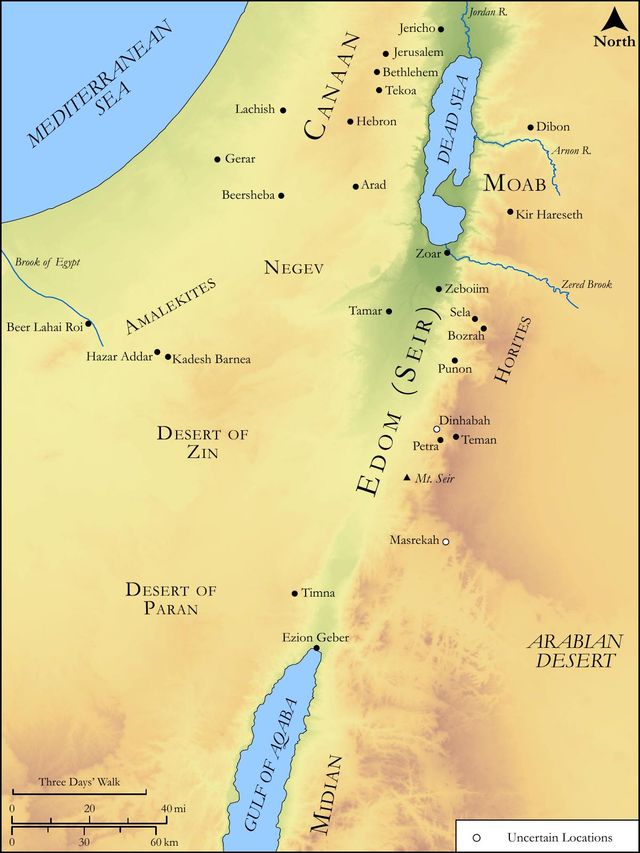
For the tribes of Israel and Edom alike, genealogies were not merely dry lists of names but vital documents that served multiple critical functions. They established tribal and national identity, validated claims to land and inheritance, recorded alliances, and preserved the historical and relational tapestry between families and nations. The Edomites, as descendants of Esau, occupied the mountainous region of Seir, south and east of the Dead Sea, a territory previously inhabited by the Horites (Deuteronomy 2:12). The detailed inclusion of Horite genealogies alongside Esau's descendants in Genesis 36 highlights the cultural and genetic integration that occurred, forming the distinct Edomite people. This intermarriage was a common practice among the nations, solidifying political and economic ties and integrating new populations into existing structures. The mention of specific names like Hemdan, Eshban, Ithran, and Cheran would have been significant for the original audience, providing concrete links to the foundational families and clans of Edom.
Key Themes
ShowHideGenesis 36 contributes to several key themes within the broader book of Genesis and the Pentateuch. Firstly, it underscores the theme of God's faithfulness to His promises, even to those outside the direct covenant line of Abraham through Jacob. While Esau did not receive the covenant blessing, God still blessed him with numerous descendants and a land, fulfilling the promise made to Abraham that he would be the father of many nations (Genesis 17:4-6). Secondly, it highlights the theme of national identity and distinctiveness, showing how the Edomite nation formed separately from Israel, yet both originated from Isaac. This distinction would become crucial in later biblical history as Edom frequently stood in opposition to Israel. Thirdly, the chapter emphasizes God's sovereign control over history and nations, demonstrating how even the seemingly mundane details of lineage play a role in His grand plan. The meticulous record-keeping of these genealogies serves to authenticate the historical narrative and provide a backdrop for future interactions between Israel and its neighbors, as seen in books like Numbers and Obadiah.
Exposition and Analysis
ShowHideKey Word Analysis
ShowHideFrom the root meaning "to build," this word signifies a son or descendant, emphasizing their role in building or continuing the family name. In this context, it specifically refers to the male offspring of Dishon, who would perpetuate his lineage and contribute to the growing Edomite nation. The term carries a broad sense, encompassing literal and figurative relationships, but here it is clearly about direct progeny.
This is a proper noun, the name of a specific individual, identified as a Horite chief and son of Seir in Genesis 36:21. His name is linked to the Edomite lineage through his daughter Anah, who was the mother of Oholibamah, one of Esau's wives. Here, Dishon is presented as a father, whose sons are listed, further integrating the Horite and Edomite genealogies.
Derived from a root meaning "pleasant" or "desirable," Hemdan is one of the four sons of Dishon listed in this verse. While the meaning of the name itself doesn't directly inform the narrative, its inclusion underscores the meticulous nature of the genealogical record, preserving the individual identities within the broader family and tribal structure of the emerging Edomite nation.
Verse Breakdown
ShowHide"And these are the children of Dishon;"
This introductory clause identifies the subject of the verse: the offspring of Dishon. The term "children" (Hebrew: bên) here specifically refers to sons, as the subsequent list comprises male names. Dishon is a significant figure in the Horite lineage, whose family intermarried with Esau's descendants, contributing to the formation of the Edomite people. This clause sets the stage for the enumeration of his direct male heirs.
"Hemdan, and Eshban, and Ithran, and Cheran."
This is the exhaustive list of Dishon's four sons. Each name represents an individual who would have contributed to the family lines and clans within the Horite-Edomite confederation. The simple listing format is characteristic of biblical genealogies, providing a concise yet comprehensive record. The inclusion of these specific names emphasizes the historical reality and particularity of the Edomite nation's formation, demonstrating the meticulous detail with which the biblical author records the lineage of various peoples.
Literary Devices
ShowHideThe primary literary device employed in Genesis 36:26, and indeed throughout much of Genesis 36, is Genealogy itself. This involves the systematic listing of ancestors and descendants, serving not only as a historical record but also as a theological statement about identity, inheritance, and the unfolding of God's plan through generations. Within this genealogical framework, Listing is prominently used, as seen in the enumeration of Dishon's four sons. This straightforward presentation of names provides clarity and precision to the lineage. Furthermore, the chapter demonstrates Repetition of genealogical formulas (e.g., "these are the generations of...") and the consistent use of "son of" or "children of" phrases, which lends a sense of order and authority to the record. While not a narrative verse, its function within the larger genealogical context is crucial for establishing the Historical Foundation for later interactions between Israel and Edom.
Theological and Thematic Connections
ShowHideGenesis 36:26, though a seemingly minor detail in a long genealogy, contributes significantly to the biblical understanding of God's sovereign plan and the formation of nations. It underscores the meticulous nature of divine providence, where even the lineages of peoples outside the direct covenant line of Israel are recorded, demonstrating God's oversight of all humanity. The inclusion of Horite names like Dishon and his sons highlights the complex ethnic origins of the Edomite nation, formed through the intermarriage of Esau's descendants with the indigenous inhabitants of Seir. This detail reinforces the idea that God works through diverse peoples and circumstances to bring about His purposes, even as He maintains a distinct covenant relationship with Israel. The existence of Edom, a powerful nation descended from Esau, serves as a testament to God's blessing even upon those who did not inherit the primary covenant promises, fulfilling the earlier blessing given to Esau that he would be a "prosperous" nation (Genesis 27:39-40).
Reflection and Application
ShowHideThe detailed genealogies in Scripture, including seemingly obscure verses like Genesis 36:26, serve as profound reminders of God's meticulous nature and His involvement in the grand sweep of human history. They teach us that every individual, every family, and every nation has a place within God's overarching plan, even if their role is not directly tied to the covenant promises given to Israel. This verse encourages us to appreciate the significance of what might appear to be "small" details in our own lives and in the biblical narrative, recognizing that God works through the specific and the particular. It also prompts us to consider our own lineage—not just biologically, but spiritually—and how we fit into God's ongoing story of redemption. Just as these names were important enough for God to preserve, so too are our lives and the lives of those around us significant in His eyes. This passage fosters a deeper appreciation for the historical grounding of our faith and the faithfulness of God across generations and nations.
Questions for Reflection
ShowHideFAQ
ShowHideWhy are these genealogies, especially of non-Israelite peoples, so detailed in the Bible?
ShowHideGenealogies in the Bible, including those of non-Israelite peoples like the Edomites in Genesis 36, serve multiple crucial purposes. Firstly, they provide a historical and geographical anchor for the narrative, authenticating the biblical account by linking it to real people and places. Secondly, they establish national and tribal identities, explaining the origins and relationships between various groups, which is vital for understanding later interactions (e.g., between Israel and Edom). Thirdly, they demonstrate God's sovereignty over all nations, not just Israel. Even the lineages of those outside the direct covenant line are part of His grand design, showing how He fulfills promises (like blessing Esau with a numerous progeny, as seen in Genesis 27:39-40) and orchestrates the course of human history. These detailed lists also underscore the meticulous nature of God's plan, where every individual and family plays a part.
Christ-Centered Fulfillment
ShowHideWhile Genesis 36:26 directly details the lineage of Edom, a nation distinct from and often opposed to Israel, it indirectly points to Christ by emphasizing the meticulous nature of God's historical plan and the importance of lineage in salvation history. The very concept of genealogy in Scripture ultimately culminates in the lineage of Jesus Christ, demonstrating His rightful claim as the Messiah, the Son of David, and the Son of Abraham (Matthew 1:1-17 and Luke 3:23-38). Even the detailed records of nations outside the covenant line, like Edom, underscore God's sovereign control over all humanity and His preparation of the world for the coming of the Savior. Christ's redemptive work transcends national and ethnic boundaries, as He is the "Lamb of God who takes away the sin of the world" (John 1:29), making it possible for people from "every tribe and language and people and nation" to become children of God through faith in Him (Revelation 5:9). Thus, even a verse listing the sons of Dishon, a Horite chief, implicitly reminds us that God's detailed plan encompasses all of history and all peoples, ultimately leading to the universal reign of Christ, who gathers all His children into one family.