


Genesis 21:20
Bible text: King James Version (1769 Blayney text) · Public domain
Bible text: Berean Standard Bible · Public domain
Bible text: American Standard Version (1901) · Public domain
Bible text: World English Bible, Messianic edition · Public domain
Bible text: Geneva Bible (1599) · Public domain
Bible text: Young's Literal Translation · Public domain
- וַיְהִיvay·Hiand he wasH1961Conj-w ¦ V-Qal-ConsecImperf-3msVerb Qal Consecutive Imperfect 3rd Singular Masculineוַandיְהִיhe was
- אֱלֹהִים'E·lo·HimGodH430N-mpNoun Plural Masculine Absolute
- אֶת'etwithH854PrepPreposition
- הַנַּעַרha·Na·'arthe ladH5288Art ¦ N-msNoun Singular Masculine Absoluteהַtheנַּעַרlad
- וַיִּגְדָּלvai·yig·Daland he grew upH1431Conj-w ¦ V-Qal-ConsecImperf-3msVerb Qal Consecutive Imperfect 3rd Singular Masculineוַandיִּגְדָּלhe grew up
- וַיֵּשֶׁבvai·Ye·shevand he dweltH3427Conj-w ¦ V-Qal-ConsecImperf-3msVerb Qal Consecutive Imperfect 3rd Singular Masculineוַandיֵּשֶׁבhe dwelt
- בַּמִּדְבָּרba·mid·Barin the wildernessH4057Prep-b ¦ N-msNoun Singular Masculine Absoluteבַּin theמִּדְבָּרwilderness
- וַיְהִיvay·Hiand he wasH1961Conj-w ¦ V-Qal-ConsecImperf-3msVerb Qal Consecutive Imperfect 3rd Singular Masculineוַandיְהִיhe was
- רֹבֶהro·Veha shooterH7235V-Qal-Prtcpl-msVerb Qal Participle Singular Masculine Absolute
- קַשָּׁתka·Shata bowmanH7199N-msNoun Singular Masculine Absolute
English is a literal word-by-word gloss of the Hebrew, not the KJV's wording. Why?
This is the original text the KJV's translators worked from — each Hebrew word with its own literal English meaning in this verse, prepared by scholars at Tyndale House, Cambridge. The KJV translates whole sentences, not word by word, so its wording differs: one Hebrew word can become several English words, and the KJV may choose “the LORD” where the gloss reads “Yahweh”. Both are faithful — they answer different questions. For the KJV's own rendering, switch to the KJV text.
Details
See on the biblical-era maps


Study this verse
Public-domain commentary
Matthew Henry
From his Commentary on the Whole Bible. Henry comments on passages, not single verses — this entry covers Genesis 21:14–21. His four-level outline is real structure in the source text, so it is rendered as structure.
Here is, I. The casting out of the bond-woman, and her son from the family of Abraham, Gen 21:14. Abraham's obedience to the divine command in this matter was speedy - early in the morning, we may suppose immediately after he had, in the night's visions, received orders to do this. It was also submissive; it was contrary to his judgment, at least to his own inclination, to do it; yet as soon as he perceives that it is the mind of God he makes no objections, but silently does as he is bidden, as one trained up to an implicit obedience. In sending them away without any attendants, on foot, and slenderly provided for, it is probable that he observed the directions given him. If Hagar and Ishmael had conducted themselves well in Abraham's family, they might have continued there; but they threw themselves out by their own pride and insolence, which were thus justly chastised. Note, By abusing our privileges we forfeit them. Those that know not when they are well off, in such a desirable place as Abraham's family, deserve to be cashiered, and to be made to know the worth of mercies by the want of them.
II.Their wandering in the wilderness, missing their way to the place Abraham designed them for a settlement.
1.They were reduced to great distress there. Their provisions were spent, and Ishmael was sick. He that used to be full fed in Abraham's house, where he waxed fat and kicked, now fainted and sunk, when he was brought to short allowance. Hagar is in tears, and sufficiently mortified. Now she wishes for the crumbs she had wasted and made light of at her master's table. Like one under the power of the spirit of bondage, she despairs of relief, counts upon nothing but the death of the child (Gen 21:15, Gen 21:16), though God had told her, before he was born, that he should live to be a man, a great man. We are apt to forget former promises, when present providences seem to contradict them; for we live by sense.
2.In this distress, God graciously appeared for their relief: he heard the voice of the lad, Gen 21:17. We read not of a word he said; but his sighs, and groans, and calamitous state, cried aloud in the ears of mercy. An angel was sent to comfort Hagar, and it was not the first time that she had met with God's comforts in a wilderness; she had thankfully acknowledged the former kind visit which God made his in such a case (Gen 16:13), and therefore God now visited her again with seasonable succours.
(1.)The angel assures her of the cognizance God took of her distress: God has heard the voice of the lad where he is, though he is in a wilderness (for, wherever we are, there is a way open heaven-ward); therefore lift up the lad, and hold him in thy hand, Gen 21:18. Note, God's readiness to help us when we are in trouble must not slacken, but quicken, our endeavours to help ourselves.
(2.)He repeats the promise concerning her son, that he should be a great nation, as a reason why she should bestir herself to help him. Note, It should engage our care and pains about children and young people to consider that we know not what God has designed them for, nor what great use Providence may make of them.
(3.)He directs her to a present supply (Gen 21:19): He opened her eyes (which were swollen and almost blinded with weeping), and then she saw a well of water. Note, Many that have reason enough to be comforted go mourning from day to day, because they do not see the reason they have for comfort. There is a well of water by them in the covenant of grace, but they are not aware of it; they have not the benefit of it, till the same God that opened their eyes to see their wound opens them to see their remedy, Joh 16:6, Joh 16:7. Now the apostle tells us that those things concerning Hagar and Ishmael are allegoroumena (Gal 4:24), they are to be allegorized; this then will serve to illustrate the folly,
[1.]Of those who, like the unbelieving Jews, seek for righteousness by the law and the carnal ordinances of it, and not by the promise made in Christ, thereby running themselves into a wilderness of want and despair. Their comforts are soon exhausted, and if God save them not by his special prerogative, and by a miracle of mercy open their eyes and undeceive them, they are undone.
[2.]Of those who seek for satisfaction and happiness in the world and the things of it. Those that forsake the comforts of the covenant and communion with God, and choose their portion in this earth, take up with a bottle of water, poor and slender provision, and that soon spent; they wander endlessly in pursuit of satisfaction, and, at length, sit down short of it.
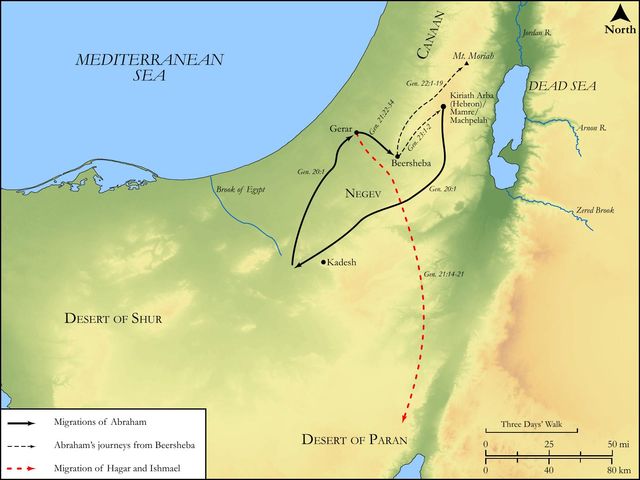
III.The settlement of Ishmael, at last, in the wilderness of Paran (Gen 21:20, Gen 21:21), a wild place, fittest for a wild man; and such a one he was, ch. 16. 12. Those that are born after the flesh take up with the wilderness of this world, while the children of the promise aim at the heavenly Canaan, and cannot be at rest till they are there. Observe, 1. He had some tokens of God's presence: God was with the lad; his outward prosperity was owing to this. 2. By trade he was an archer, which intimates that craft was his excellency and sport his business: rejected Esau was a cunning hunter. 3. He matched among his mother's relations; she took him a wife out of Egypt: as great an archer as he was, he did not think he could take his aim well, in the business of marriage, if he proceeded without his mother's advice and consent.
Continue studying Genesis 21:20 across the web’s major study libraries — every link below opens this exact verse, chapter, or book on the destination site.
Read & Compare
 BibleGatewayThis verse in more than 200 translations and 70 languages.
 Bible.comThe YouVersion reader — hundreds of translations, reading plans, and highlights.
 ESV.orgCrossway's official English Standard Version reader.
 NET BibleThe NET translation with 60,000+ translators' notes on every rendering decision.
 STEP BibleTyndale House's free study tool — original text, vocabulary, and scholarly resources.
 BibliaLogos Bible Software's free web reader.
 USCCBThe New American Bible (Revised Edition) with the U.S. bishops' study notes.
Commentaries
 BibleHub CommentariesDozens of classic commentaries on this verse, gathered on one page.
 StudyLightMore than 100 commentary sets — the largest collection on the web.
 BibleRefPlain-English commentary on what this verse means, verse by verse.
 Enduring WordDavid Guzik's free commentary on this chapter, widely used by Bible teachers.
 Bible Study ToolsVerse commentary alongside Greek and Hebrew study aids.
Original Language & Research
- BibleHub InterlinearThe verse word by word — original language, transliteration, and English.
- BibleHub LexiconEvery word's original-language definition and Strong's entry.
 Blue Letter BibleDeep-study tools — Strong's numbers, concordance, and word studies.
 SefariaThe Hebrew text with Rashi and centuries of Jewish commentary.
Sermons, Hymns & Audio


TrulyRandomVerse is not affiliated with these sites and doesn’t control their content. They’re linked because they’re genuinely useful.
Summary
Genesis 21:20 profoundly illustrates God's unwavering faithfulness and active providence over Ishmael following his separation from Abraham's household. Despite the harsh realities of the wilderness, God's intimate presence enabled Ishmael's robust growth and successful adaptation, equipping him with the essential skills, specifically as an archer, necessary to thrive and fulfill the divine promises made to Hagar concerning her son's future and the establishment of his lineage.
Context
ShowHideLiterary Context
This verse immediately follows the emotionally charged narrative of Hagar and Ishmael's expulsion from Abraham's camp at Sarah's insistent demand. The preceding verses detail their desperate plight in the wilderness of Beersheba, where Ishmael, on the verge of death from thirst, cries out. God hears his distress, and an angel intervenes, miraculously revealing a well of water and reaffirming God's solemn promise to Hagar that He would make Ishmael into a great nation (Genesis 21:17-18). Genesis 21:20 then serves as the direct fulfillment and outcome of this divine intervention, demonstrating God's consistent care and provision for Ishmael's life, even though he was not the designated heir through whom the primary covenant promises to Abraham would be realized. It marks a transition from the crisis to the establishment of Ishmael's independent life.
Historical & Cultural Context
The wilderness (Hebrew: midbar) in Scripture was not necessarily a barren wasteland but often a semi-arid region used for pasturage, requiring resilience and specific survival skills. Life in such an environment was nomadic and challenging, demanding self-sufficiency. The skill of archery was highly prized and essential for both hunting wild game for sustenance and for defense against hostile tribes or wild animals. It signified strength, independence, and a formidable nature. The mention of Ishmael becoming an archer is culturally significant, aligning with the nomadic and often warlike reputation of the desert peoples, foreshadowing the character of his future descendants. This lifestyle was distinct from the settled, agricultural life often associated with Abraham's lineage in Canaan.
Key Themes
ShowHideGenesis 21:20 contributes significantly to several overarching themes within the book of Genesis. Foremost is the theme of Divine Providence and Faithfulness, demonstrating that God's care extends even to those outside the primary covenant line, fulfilling His promises to Hagar in Genesis 16:10-12. It highlights God's Sovereignty in directing the lives of individuals and nations, ensuring that His plans unfold despite human failings or challenging circumstances. The verse also subtly introduces the theme of Distinction and Separation, as Ishmael's life in the wilderness, marked by his skill as an archer, sets him apart from Isaac's lineage, establishing a separate destiny for his descendants as prophesied. This illustrates God's comprehensive concern for all humanity, even as He works through a specific covenant people.
Exposition and Analysis
ShowHideGenesis 21:20 succinctly encapsulates God's enduring faithfulness and provision for Ishmael, even in the most challenging circumstances. The verse states, "And God was with the lad; and he grew, and dwelt in the wilderness, and became an archer." Each phrase carries significant theological and practical weight:
Key Word Analysis
ShowHideThis plural noun, used here with a singular verb, refers to the supreme God, the Creator and Sovereign. Its use emphasizes God's immense power, authority, and active involvement in the affairs of humanity. In this context, it highlights the divine, supernatural agency behind Ishmael's survival and thriving, underscoring that his well-being was not accidental but divinely ordained and sustained.
This verb signifies not merely physical maturation but also an increase in stature, strength, and perhaps even influence or prosperity. It conveys the idea of flourishing and advancing, directly counteracting the expectation of perishing in the desert. This growth is a direct testament to God's life-sustaining power and His commitment to His promises, enabling Ishmael to develop fully despite his harsh environment.
Derived from the word for "bow," this term denotes a skilled bowman. This specific skill was crucial for survival in the wilderness, enabling hunting for food and providing a means of defense. Its inclusion is highly significant, indicating that God not only sustained Ishmael's life but also equipped him with the specific abilities and characteristics necessary to fulfill his destiny as the progenitor of a nomadic, independent, and formidable people, consistent with the earlier prophecy in Genesis 16:12.
Verse Breakdown
ShowHide"And God was with the lad"
This opening declaration is the foundational truth of the verse, establishing the source of Ishmael's survival and success. The Hebrew phrase "וַיְהִי אֱלֹהִים אֶת־הַנַּעַר" (vayhi Elohim et-hanna'ar) literally means "And God was with the youth." The preposition et ("with") denotes a close, active, and supportive companionship, signifying God's direct and protective presence. Despite Ishmael's outcast status and the harsh environment, God actively ensured his well-being, growth, and guidance. This statement highlights God's compassion and faithfulness, extending His care even to those outside the direct lineage of the Abrahamic covenant, demonstrating His overarching concern for all humanity.
"and he grew"
This phrase indicates a period of natural maturation and thriving, directly contrary to the initial desperation of being abandoned and near death in the desert. This physical and developmental growth underscores God's active provision for life, sustenance, and the flourishing of Ishmael, confirming the divine promise made to Hagar that her son would live and become a great nation. It signifies a divinely enabled progression from infancy to adolescence and beyond.
"and dwelt in the wilderness"
This detail reveals Ishmael's successful adaptation and establishment of a life in a challenging nomadic environment. "Dwelt" (Hebrew: yâshab) implies a settled existence, not merely transient survival. It signifies that Ishmael made the wilderness his home, adapting to its demands and finding a place of habitation within it, thereby fulfilling the prophecy that he would "dwell in defiance of all his kinsmen" (Genesis 16:12). This was not merely survival but a settled, albeit nomadic, existence.
"and became an archer"
This final clause provides a crucial detail about Ishmael's developed identity and skill set. Becoming an archer was a vital survival skill in the wilderness, essential for hunting, sustenance, and protection. This detail not only speaks to his physical prowess and adaptability but also foreshadows the character of his descendants, a people known for their independence, resilience, and formidable nature, consistent with the earlier prophecy. This development was not accidental but part of God's providential plan for Ishmael's future nation.
Literary Devices
ShowHideThe verse employs several significant literary devices. Divine Presence is immediately established with "And God was with the lad," setting the tone for God's active role in Ishmael's life, echoing similar declarations of God's favor with figures like Joseph or Moses. Foreshadowing is evident in Ishmael's development as an archer and his dwelling in the wilderness, which directly anticipates the nomadic, independent, and often confrontational nature of his descendants, as prophesied in Genesis 16:12. The Symbolism of the "wilderness" shifts from a place of desperate abandonment to a realm of divine provision and the forging of a distinct identity, representing a crucible where God's promises are brought to fruition. The concise, declarative nature of the verse also lends it a sense of Authoritative Statement, emphasizing the certainty and directness of God's ongoing work in Ishmael's life.
Theological and Thematic Connections
ShowHideGenesis 21:20 offers profound theological insights into the character of God and the scope of His redemptive plan. It powerfully affirms God's unwavering faithfulness, demonstrating that His promises are not contingent on human merit or inclusion in a specific covenant lineage, but on His own divine decree. Even when human actions lead to separation or hardship, God remains committed to His word, actively sustaining and equipping individuals for the destiny He has ordained. This verse beautifully illustrates God's expansive providence, extending His care beyond the immediate focus of the Abrahamic covenant through Isaac to encompass all humanity, including those who might be considered overlooked or "outsiders." It underscores that God's sovereign plan is multifaceted, encompassing diverse destinies and purposes for different peoples, all working towards His ultimate glory.
Reflection and Application
ShowHideGenesis 21:20 serves as a powerful source of encouragement and a profound reminder of God's omnipresent and active care. In our own lives, we often face "wilderness" experiences—periods of isolation, hardship, rejection, or uncertainty where we might feel abandoned or overlooked. Ishmael's story assures us that even in these desolate seasons, God's presence is not withdrawn. He is "with the lad," actively sustaining, guiding, and equipping us. This verse calls us to trust implicitly in God's vast and encompassing providence, recognizing that He not only preserves us through difficulties but also enables us to grow, adapt, and develop the very skills and resilience needed to thrive in our circumstances. It challenges us to see God's hand at work even in the unexpected turns of life, reminding us that His plans are far-reaching and extend to every individual, regardless of their perceived status or the judgments of others. We are encouraged to lean into His presence, knowing that He is always working for our good and the fulfillment of His purposes.
Questions for Reflection
ShowHideFAQ
ShowHideWhy was Ishmael expelled if God still cared for him?
ShowHideIshmael's expulsion was primarily initiated by Sarah's jealousy and her desire for Isaac to be the sole heir to Abraham's covenant promises, as detailed in Genesis 21:9-10. While this was a human action driven by complex emotions, God permitted it and even affirmed it to Abraham (Genesis 21:12), using it to fulfill His separate, distinct promises concerning Ishmael's destiny as a great nation dwelling in the wilderness. God's continued care for Ishmael, despite his separation from Abraham's household, demonstrates His faithfulness to His word given to Hagar in Genesis 16:10, even as He established the primary covenant through Isaac.
What does "God was with the lad" signify?
ShowHideThis phrase signifies God's active, personal, and sustaining presence with Ishmael. It means God was not merely observing from a distance but was intimately involved in protecting him, providing for his needs, and guiding his development. It highlights divine favor, protection, and provision, ensuring Ishmael's survival and growth despite his vulnerable position in the wilderness. This divine companionship is a recurring theme throughout Scripture, indicating God's active blessing and enablement, as seen with figures like Joseph and Joshua.
How does Ishmael becoming an archer relate to his future?
ShowHideIshmael becoming an archer was a practical skill vital for survival and sustenance in the wilderness, providing food through hunting and defense. Theologically, it aligns with and fulfills the earlier prophecy in Genesis 16:12, which described Ishmael as a "wild ass of a man," whose hand would be against everyone and everyone's hand against him, dwelling in defiance of all his kinsmen. This skill set foreshadows the nomadic, independent, and formidable nature of his descendants, the Arab peoples, known for their prowess in the desert and their distinct way of life, fulfilling God's specific plan for his lineage.
Christ-Centered Fulfillment
ShowHideWhile Ishmael's lineage is distinct from the covenant line leading to Christ through Isaac, his story in Genesis 21:20 offers a profound Christ-centered fulfillment by demonstrating the expansive breadth of God's redemptive heart and His universal concern. God's unwavering care for Ishmael, an "outsider" to the immediate covenant promise, powerfully foreshadows Christ's ultimate mission to gather all peoples and nations into God's family, transcending ethnic and social boundaries. Just as God provided for Ishmael in the desolate wilderness, Christ, the true Bread of Life and Living Water, provides spiritual sustenance and eternal life for all who are spiritually lost and thirsty, regardless of their background or previous alienation from God. His death and resurrection establish a new covenant that extends salvation to "every tribe and language and people and nation" (Revelation 5:9), fulfilling God's ancient promise to Abraham to bless "all families of the earth" (Genesis 12:3) through Abraham's greater Seed, Jesus Christ, who breaks down all dividing walls (Ephesians 2:14) and welcomes all into His glorious presence.