


Exodus 39:39
Bible text: King James Version (1769 Blayney text) · Public domain
Bible text: Berean Standard Bible · Public domain
Bible text: American Standard Version (1901) · Public domain
Bible text: World English Bible, Messianic edition · Public domain
Bible text: Geneva Bible (1599) · Public domain
Bible text: Young's Literal Translation · Public domain
- אֵת'et<obj.>H853DirObjMParticle Object Indicator
- מִזְבַּחmiz·Bach[the] altar ofH4196N-mscNoun Singular Masculine Construct
- הַנְּחֹשֶׁתha·ne·Cho·shet<the> bronzeH5178Art ¦ N-fsNoun Singular Feminine Absoluteהַ<the>נְּחֹשֶׁתbronze
- וְאֶתve·'Etand <obj.>H853Conj-w ¦ DirObjMParticle Object Indicatorוְandאֶת<obj.>
- מִכְבַּרmikh·Bar[the] grating ofH4345N-mscNoun Singular Masculine Construct
- הַנְּחֹשֶׁתha·ne·Cho·shet<the> bronzeH5178Art ¦ N-fsNoun Singular Feminine Absoluteהַ<the>נְּחֹשֶׁתbronze
- אֲשֶׁר'a·SherwhichH834RelParticle Relative
- לוֹlo[belonged] to <the> itPrep-l ¦ 3msSuffix Personal 3rd Singular Masculineל[belonged] to <the>וֹit
- אֶת'et<obj.>H853DirObjMParticle Object Indicator
- בַּדָּיוba·Davits polesH905N-mpc ¦ 3msNoun Plural Masculine Constructבַּדָּיpolesוits
- וְאֶתve·'Etand <obj.>H853Conj-w ¦ DirObjMParticle Object Indicatorוְandאֶת<obj.>
- כָּלkolallH3605N-mscNoun Singular Masculine Construct
- כֵּלָיוke·Lavits articlesH3627N-mpc ¦ 3msNoun Plural Masculine Constructכֵּלָיarticlesוits
- אֶת'et<obj.>H853DirObjMParticle Object Indicator
- הַכִּיֹּרha·ki·Yorthe laverH3595Art ¦ N-msNoun Singular Masculine Absoluteהַtheכִּיֹּרlaver
- וְאֶתve·'Etand <obj.>H853Conj-w ¦ DirObjMParticle Object Indicatorוְandאֶת<obj.>
- כַּנּוֹka·Noits baseH3653N-msc ¦ 3msNoun Singular Masculine Constructכַּנּbaseוֹits
English is a literal word-by-word gloss of the Hebrew, not the KJV's wording. Why?
This is the original text the KJV's translators worked from — each Hebrew word with its own literal English meaning in this verse, prepared by scholars at Tyndale House, Cambridge. The KJV translates whole sentences, not word by word, so its wording differs: one Hebrew word can become several English words, and the KJV may choose “the LORD” where the gloss reads “Yahweh”. Both are faithful — they answer different questions. For the KJV's own rendering, switch to the KJV text.
Details
See on the biblical-era maps

Study this verse
Public-domain commentary
Matthew Henry
From his Commentary on the Whole Bible. Henry comments on passages, not single verses — this entry covers Exodus 39:32–43. His two-level outline is real structure in the source text, so it is rendered as structure.
Observe here, I. The builders of the tabernacle made very good despatch. It was not much more than five months from the beginning to the finishing of it. Though there was a great deal of fine work about it, such as is usually the work of time, embroidering and engraving, not only in gold, but in precious stones, yet they went through with it in a little time. Church-work is usually slow work, but they made quick work of this, and yet did it with the greatest exactness imaginable. For, 1. Many hands were employed, all unanimous, and not striving with each other. This expedited the business, and made it easy. 2. The workmen were taught of God, and so were kept from making blunders, which would have retarded them. 3. The people were hearty and zealous in the work, and impatient till it was finished. God had prepared their hearts, and then the thing was done suddenly, Ch2 29:36. Resolution and industry, and a cheerful application of mind, will, by the grace of God, bring a great deal of good work to pass in a little time, in less than one would expect.
II.They punctually observed their orders, and did not in the least vary from them.
They did it according to all that the Lord commanded Moses, Exo 39:32, Exo 39:42. Note, God's work must be done, in every thing, according to his own will. His institutions neither need nor admit men's inventions to make them either more beautiful or more likely to answer the intention of them. Add thou not unto his words. God is pleased with willing worship, but not with will-worship.
III.They brought all their work to Moses, and submitted it to his inspection and censure, Exo 39:33.
He knew what he had ordered them to make; and now the particulars were called over, and all produced, that Moses might see both that they had made all, omitting nothing, and that they had made all according to the instructions given them, and that, if they had made a mistake in any thing, it might be forthwith rectified. Thus they showed respect to Moses, who was set over them in the Lord; not objecting that Moses did not understand such work, and therefore that there was no reason for submitting it to his judgment. No, that God who gave them so much knowledge as to do the work gave them also so much humility as to be willing to have it examined and compared with the model. Moses was in authority, and they would pay a deference to his place. The spirit of the prophets is subject to the prophets. And besides, though they knew how to do the work better than Moses, Moses had a better and more exact idea of the model than they had, and therefore they could not be well pleased with their own work, unless they had his approbation. Thus in all the services of religion we should labour to be accepted of the Lord.
IV.Moses, upon search, found all done according to the rule, Exo 39:43.
Moses, both for their satisfaction and for his own, did look upon all the work, piece by piece, and behold they had done it according to the pattern shown him, for the same Being that showed him the pattern guided their hand in the work. All the copies of God's grace exactly agree with the original of his counsels: what God works in us, and by us, is the fulfilling of the good pleasure of his own goodness; and when the mystery of God shall be finished, and all his performances come to be compared with his purposes, it will appear that behold all is done according to the counsel of his own will, not one iota or tittle of which shall fall to the ground, or be varied from.
V.Moses blessed them.
1.He commended them, and signified his approbation of all they had done. He did not find fault where there was none, as some do, who think they disparage their own judgment if they do not find something amiss in the best and most accomplished performance. In all this work it is probable there might have been found here and there a stitch amiss, and a stroke awry, which would have served for an over-curious and censorious critic to animadvert upon; but Moses was too candid to notice small faults where there were no great ones. Note, All governors must be a praise to those that do well, as well as a terror to evil-doers. Why should any take a pride in being hard to be pleased?
2.He not only praised them, but prayed for them. He blessed them as one having authority, for the less is blessed of the better. We read not of any wages that Moses paid them for their work, but this blessing he gave them. For, though ordinarily the labourer be worthy of his hire, yet in this case, 1. They wrought for themselves. The honour and comfort of God's tabernacle among them would be recompence enough. If thou be wise, thou shalt be wise for thyself. 2. They had their meat from heaven on free-cost, for themselves and their families, and their raiment waxed not old upon them; so that they neither needed wages nor had reason to expect any. Freely you have received, freely give. The obligations we lie under, both in duty and interest, to serve God, should be sufficient to quicken us to our work, though we had not a reward in prospect. But, 3. This blessing, in the name of the Lord, was wages enough for all their work. Those whom God employs he will bless, and those whom he blesses are blessed indeed. The blessing he commands is life for evermore.
Continue studying Exodus 39:39 across the web’s major study libraries — every link below opens this exact verse, chapter, or book on the destination site.
Read & Compare
 BibleGatewayThis verse in more than 200 translations and 70 languages.
 Bible.comThe YouVersion reader — hundreds of translations, reading plans, and highlights.
 ESV.orgCrossway's official English Standard Version reader.
 NET BibleThe NET translation with 60,000+ translators' notes on every rendering decision.
 STEP BibleTyndale House's free study tool — original text, vocabulary, and scholarly resources.
 BibliaLogos Bible Software's free web reader.
 USCCBThe New American Bible (Revised Edition) with the U.S. bishops' study notes.
Commentaries
 BibleHub CommentariesDozens of classic commentaries on this verse, gathered on one page.
 StudyLightMore than 100 commentary sets — the largest collection on the web.
 BibleRefPlain-English commentary on what this verse means, verse by verse.
 Enduring WordDavid Guzik's free commentary on this chapter, widely used by Bible teachers.
 Bible Study ToolsVerse commentary alongside Greek and Hebrew study aids.
Original Language & Research
- BibleHub InterlinearThe verse word by word — original language, transliteration, and English.
- BibleHub LexiconEvery word's original-language definition and Strong's entry.
 Blue Letter BibleDeep-study tools — Strong's numbers, concordance, and word studies.
 SefariaThe Hebrew text with Rashi and centuries of Jewish commentary.
Sermons, Hymns & Audio


TrulyRandomVerse is not affiliated with these sites and doesn’t control their content. They’re linked because they’re genuinely useful.
Summary
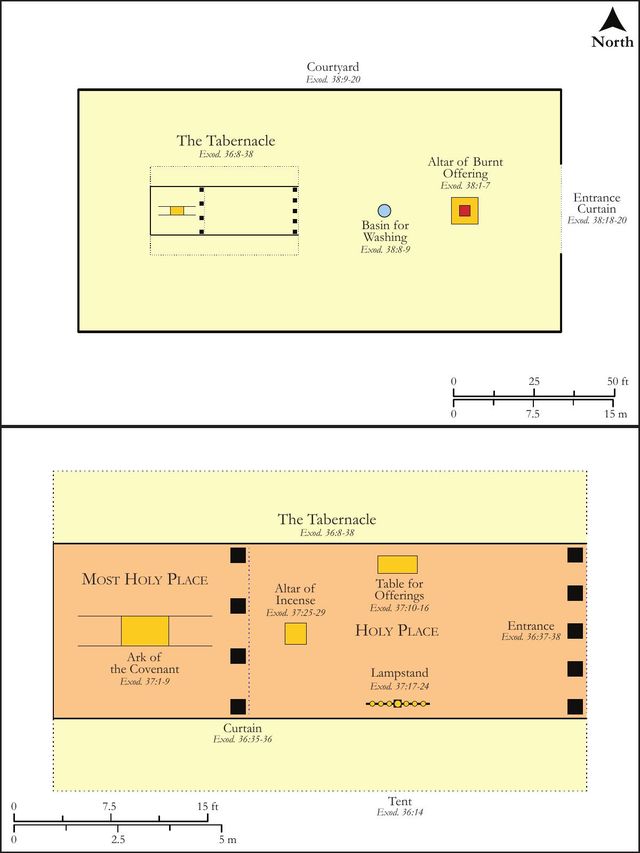
Exodus 39:39 meticulously details the completion of critical components for the Tabernacle's Outer Court: the brazen altar, its grate, staves, and all its vessels, along with the laver and its foot. This verse is part of the concluding narrative of Exodus, which emphasizes the Israelites' faithful and precise adherence to God's intricate divine blueprint for the sanctuary. These items were indispensable for the sacrificial system and priestly purification, thereby underscoring profound themes of atonement, holiness, and the preparation for God's holy presence to dwell among His people in the wilderness.
Context
ShowHideLiterary Context
Exodus 39:39 is strategically placed within the final section of the book of Exodus, specifically chapters 35-40, which chronicle the construction and erection of the Tabernacle and its sacred furnishings. This segment serves as the grand fulfillment of the detailed divine commands previously given to Moses on Mount Sinai in Exodus 25-31. While earlier chapters provided the divine blueprint, chapters 35-39 meticulously recount how the skilled artisans, notably Bezaleel and Aholiab, executed every instruction with unwavering precision. Verse 39, appearing immediately after the completion of the priestly garments, focuses on the final, essential pieces of the Outer Court, thereby setting the stage for the Tabernacle's climactic assembly and anointing in Exodus 40. This deliberate literary progression from divine mandate to human obedience powerfully underscores the absolute importance of adhering to God's revealed will for worship and life.
Historical & Cultural Context
The construction of the Tabernacle transpired during Israel's formative forty-year sojourn in the Sinai wilderness, a pivotal period of national and theological identity formation. As a nomadic people, the Israelites required a portable sanctuary that could accompany them on their journeys, tangibly symbolizing God's constant presence in their midst. While the concept of a deity dwelling among its people was not unique to the nations round about, the nature of Yahweh's dwelling and the profound holiness required for His presence were distinctively Israelite. The materials, craftsmanship, and specific functions of the Tabernacle items, including the brazen altar and laver, reflect the highest available technology and artistic skill of the era, often incorporating techniques and materials reminiscent of Egyptian artistry. The extraordinary detail in both the divine instructions and their meticulous execution underscores the gravity with which Israel was to approach their holy God, establishing a cultic system that not only prefigured future divine revelations but also provided a tangible, divinely ordained means for a sinful people to interact with a perfectly holy God.
Key Themes
ShowHideExodus 39:39 contributes significantly to several overarching themes within the book of Exodus and the broader Pentateuch. Foremost is the theme of divine instruction and human obedience. The meticulous enumeration of completed items highlights Israel's faithful execution of God's precise commands, reinforcing the principle that true worship and service must align perfectly with divine revelation. Secondly, the verse emphasizes holiness and purification. The brazen altar and laver are central to the sacrificial and cleansing rituals, underscoring the absolute necessity of atonement for sin and ceremonial purity for those who would draw near to God. This points to God's inherent holiness and His demand for separation from sin. Lastly, the verse contributes to the theme of God's dwelling among His people. The completion of these essential furnishings signifies the readiness of God's portable sanctuary, fulfilling His promise to dwell in the midst of Israel, as seen in the broader narrative leading to Exodus 40:34-38. The Tabernacle, with its specific components, provided a tangible representation of God's covenant presence and the means by which a sinful people could maintain fellowship with a holy God.
Exposition and Analysis
ShowHideKey Word Analysis
ShowHideThis term (H5178) refers to copper or, more commonly in biblical contexts, bronze (an alloy of copper and tin). Its consistent use for the altar and laver in the Outer Court is highly symbolic. Bronze, while durable and resistant to fire, was less precious than the gold and silver designated for items within the Holy Place and Most Holy Place. This material distinction subtly indicates a progression in holiness, from the more common and accessible elements of worship to the increasingly sacred and exclusive inner sanctuary. The durability of bronze also made it eminently suitable for items exposed to the intense heat of sacrifices and constant use, emphasizing the enduring nature and necessity of the sacrificial and cleansing rituals.
Derived from the root meaning "to slaughter" or "to sacrifice," the mizbêach (H4196) denotes a place of sacrifice. In this context, it specifically refers to the Altar of Burnt Offering, strategically positioned just inside the Tabernacle's entrance. This was the primary site where animal sacrifices were offered, symbolizing the foundational truth that the shedding of blood is necessary for the atonement of sins. Its completion, as noted in this verse, underscores its central and indispensable role in Israel's divinely ordained system of worship, highlighting the perpetual need for reconciliation with a holy God.
This word (H3595) signifies a large basin or bowl. The laver was placed between the brazen altar and the entrance to the Holy Place. Its explicit purpose, as detailed in Exodus 30:18-21, was for the priests to ritually wash their hands and feet before ministering. This act of washing was a crucial ceremonial purification, symbolizing the required holiness and cleanliness for those who would serve in God's immediate presence. The "foot" (H3653, kên) refers to its sturdy stand, ensuring stability and proper height for the priests' use.
Verse Breakdown
ShowHide"The brasen altar"
This phrase identifies the Altar of Burnt Offering, which served as the central location for sacrifices in the Tabernacle's Outer Court. Its completion signifies that the primary means for atonement for the sins of both the people and the priests was now ready for use. Positioned as the first point of contact for an Israelite approaching the Tabernacle, it symbolized that access to God was fundamentally predicated upon the necessity of sacrifice and the shedding of blood for forgiveness.
"and his grate of brass, his staves, and all his vessels"
These elements represent the essential accessories for the brazen altar, all crafted from bronze. The "grate of brass" was a network designed to hold the burning sacrifices, allowing ashes to fall through for proper disposal. The "staves" were long poles inserted into rings on the altar's sides, enabling it to be carried during the Israelites' nomadic journeys, emphasizing the Tabernacle's portability and God's accompanying presence. "All his vessels" refers to the comprehensive array of utensils used in the sacrificial rituals, such as pans for collecting ashes, shovels for their removal, basins for blood, and flesh hooks, ensuring every detail necessary for the sacrificial system was meticulously completed and ready for use.
"the laver and his foot"
This refers to the large bronze basin, the laver, and its supporting stand, the "foot." Positioned between the brazen altar and the entrance to the Holy Place, the laver was critical for the ritual purification of the priests. They were commanded to wash their hands and feet here before performing any sacred duty at the altar or entering the Holy Place. This act profoundly underscored the absolute necessity of ceremonial and spiritual cleansing for anyone who would serve in the presence of a holy God, representing the purity and consecration required for divine service.
Literary Devices
ShowHideExodus 39:39, while a concise enumeration, employs several subtle yet profound literary devices that enhance its theological impact. Merism is evident in the comprehensive listing of specific components (altar, grate, staves, vessels, laver, foot) to represent the complete and fully equipped set of items for the Tabernacle's Outer Court. This detailed cataloging emphasizes the exhaustive and precise fulfillment of God's divine instructions. The deliberate repetition of "brass" or "brazen" throughout this verse and the surrounding passages (e.g., Exodus 38:2) serves to highlight the material's significance, not only for its practical durability and suitability for fiery rituals but also for its symbolic contrast with the more precious metals used in the inner sanctuary, subtly indicating a progression in holiness and access. Symbolism is paramount, as each item carries profound theological weight: the altar symbolizes atonement, the necessity of sacrifice, and the means of reconciliation, while the laver symbolizes purification, the need for holiness, and preparation for divine service. Finally, the very act of listing these completed items, following chapters of divine command and detailed construction, functions as a powerful literary device of affirmation and completion, signaling that God's intricate blueprint has been perfectly executed, thereby preparing the way for His promised dwelling among His people.
Theological and Thematic Connections
ShowHideExodus 39:39, by listing the completed brazen altar and laver, powerfully encapsulates core theological themes foundational to the Old Covenant. It underscores the divine insistence on a specific, divinely ordained means of approaching God, emphasizing both atonement for sin and purification for service. The meticulous adherence to God's "blueprint" for these items highlights the principle of obedience as fundamental to true worship and the sanctity of God's presence. These physical objects were not merely functional; they were tangible representations of profound spiritual realities: the constant, indispensable need for blood sacrifice to cover sin and the absolute necessity of ceremonial and moral purity for those who would draw near to a holy God. Their readiness signified the imminent establishment of God's dwelling place among Israel, confirming His faithfulness to His covenant promises and providing a structured, divinely sanctioned system for maintaining fellowship with Him.
Reflection and Application
ShowHideThe detailed construction of the Tabernacle, culminating in verses like Exodus 39:39, serves as a powerful and enduring reminder of God's meticulous nature, His unwavering demand for holiness, and the specific means He provides for humanity to approach Him. While the physical Tabernacle no longer stands as a central place of worship, its underlying principles remain profoundly relevant for believers today. The brazen altar points us to the foundational truth that sin requires a blood sacrifice for atonement—a truth ultimately and perfectly fulfilled in Jesus Christ. The laver reminds us that before we can truly serve or worship a holy God, we must be cleansed and purified. For believers today, this purification comes not through ritual washing but through the regenerating work of the Holy Spirit and the sanctifying power of God's Word, which continually cleanses and transforms us. Our worship, whether corporate or individual, should always be marked by profound reverence, recognizing the infinite holiness of God and the immeasurable cost of our access to Him. We are called to live lives of purity, obedience, and meticulous care in our spiritual walk, reflecting the same dedication and precision the Israelites demonstrated in building God's dwelling place.
Questions for Reflection
ShowHideFAQ
ShowHideWhy was brass (bronze) used for these specific items in the Tabernacle's Outer Court?
ShowHideBronze was chosen primarily for its exceptional durability, resistance to corrosion, and high tolerance to heat, making it an ideal material for items like the altar of burnt offering and its associated vessels, which would be constantly exposed to fire and demanding use. Furthermore, bronze was a common and readily available metal among the nations of that day. Symbolically, the use of bronze for the Outer Court items stood in deliberate contrast to the more precious gold and silver used for elements within the Holy Place and Most Holy Place. This material distinction subtly conveyed a progression from the common or accessible to the increasingly sacred and exclusive, emphasizing the profound holiness of God's inner sanctuary and the escalating reverence required to approach Him.
What was the primary function and theological significance of the brazen altar?
ShowHideThe brazen altar, also known as the Altar of Burnt Offering, was the central and most prominent fixture in the Tabernacle's Outer Court, serving as the designated place where animal sacrifices were offered daily. Its primary function was to provide the divinely ordained means for the atonement of sins, both for the priests and for the entire congregation of Israel. Theologically, it profoundly underscored the absolute necessity of blood sacrifice for forgiveness, symbolizing that sin incurs a penalty that only a substitute's death can adequately pay. It was the very first point of access for any Israelite approaching God's dwelling, signifying that reconciliation with a holy God was only possible through a divinely appointed and accepted sacrifice.
What was the significance of the laver and its "foot" in the Tabernacle's design?
ShowHideThe laver was a large bronze basin, positioned strategically between the brazen altar and the entrance to the Holy Place. Its profound significance lay in its purpose for the ritual washing of the priests' hands and feet before they ministered at the altar or entered the Holy Place. This act of washing was a crucial ceremonial purification, symbolizing the required holiness, moral purity, and spiritual cleanliness for those who would serve in God's immediate presence. It served as a constant, tangible reminder that only those who were ceremonially clean and consecrated could appropriately approach and serve a holy God. The "foot" (Hebrew, kên) simply refers to the sturdy stand upon which the basin rested, ensuring its stability and proper elevation for priestly use, highlighting the practical and precise nature of all elements within the Tabernacle's divine design.
Christ-Centered Fulfillment
ShowHideExodus 39:39, with its focus on the completed brazen altar and the laver, finds its profound and ultimate Christ-centered fulfillment in the person and redemptive work of Jesus Christ. The brazen altar, where sacrifices were perpetually offered for the atonement of sins, perfectly foreshadows the ultimate, once-for-all sacrifice of Jesus Christ, the Lamb of God, whose precious blood provides complete and eternal forgiveness for sin (Hebrews 10:10). He is our perfect, sinless sacrifice, rendering all subsequent animal sacrifices obsolete and establishing a new covenant. Similarly, the laver, which required priests to wash for ceremonial purification before ministering, points to Christ as the sole source of our spiritual cleansing. We are not purified by ritual washings or external acts but by the "washing of regeneration" through the Holy Spirit and the sanctifying power of God's Word, which Christ uses to cleanse and purify His church (Ephesians 5:26; Titus 3:5). Through Christ, the need for a physical altar and laver is superseded, as He has opened a new and living way for us to boldly approach the throne of grace with hearts cleansed by His atoning blood and lives purified by His indwelling Spirit, enabling us to offer spiritual sacrifices of praise and devoted service to God.