


Exodus 38:27
Bible text: King James Version (1769 Blayney text) · Public domain
Bible text: King James Version with Strong's numbers · Public domain
Bible text: Berean Standard Bible · Public domain
Bible text: American Standard Version (1901) · Public domain
Bible text: World English Bible, Messianic edition · Public domain
Bible text: Geneva Bible (1599) · Public domain
Bible text: Young's Literal Translation · Public domain
- וַיְהִיvay·Hiand it wasH1961Conj-w ¦ V-Qal-ConsecImperf-3msVerb Qal Consecutive Imperfect 3rd Singular Masculineוַandיְהִיit was
- מְאַתme·'At[the] one hundredH3967Adj-fscAdjective Numerical Singular Feminine Construct
- כִּכַּרki·Kar[the] talent[s] ofH3603N-fscNoun Singular Feminine Construct
- הַכֶּסֶףha·Ke·sef<the> silverH3701Art ¦ N-msNoun Singular Masculine Absoluteהַ<the>כֶּסֶףsilver
- לָצֶקֶתla·Tze·ketto castH3332Prep-l ¦ V-Qal-InfVerb Qal Infinitive Constructלָtoצֶקֶתcast
- אֵת'et<obj.>H853DirObjMParticle Object Indicator
- אַדְנֵי'ad·Nei[the] bases ofH134N-mpcNoun Plural Masculine Construct
- הַקֹּדֶשׁha·Ko·deshthe holy placeH6944Art ¦ N-msNoun Singular Masculine Absoluteהַtheקֹּדֶשׁholy place
- וְאֵתve·'Etand <obj.>H853Conj-w ¦ DirObjMParticle Object Indicatorוְandאֵת<obj.>
- אַדְנֵי'ad·Nei[the] bases ofH134N-mpcNoun Plural Masculine Construct
- הַפָּרֹכֶתha·pa·Ro·khetthe curtainH6532Art ¦ N-fsNoun Singular Feminine Absoluteהַtheפָּרֹכֶתcurtain
- מְאַתme·'Ata hundredH3967Adj-fscAdjective Numerical Singular Feminine Construct
- אֲדָנִים'a·da·NimbasesH134N-mpNoun Plural Masculine Absolute
- לִמְאַתlim·'Atfor [the] one hundredH3967Prep-l ¦ Adj-fscAdjective Numerical Singular Feminine Constructלִforמְאַת[the] one hundred
- הַכִּכָּרha·ki·Karthe talent[s]H3603Art ¦ N-fsNoun Singular Feminine Absoluteהַtheכִּכָּרtalent[s]
- כִּכָּרki·Kara talentH3603N-fsNoun Singular Feminine Absolute
- לָאָדֶןla·'A·denfor <the> baseH134Prep-l ¦ N-msNoun Singular Masculine Absoluteלָfor <the>אָדֶןbase
English is a literal word-by-word gloss of the Hebrew, not the KJV's wording. Why?
This is the original text the KJV's translators worked from — each Hebrew word with its own literal English meaning in this verse, prepared by scholars at Tyndale House, Cambridge. The KJV translates whole sentences, not word by word, so its wording differs: one Hebrew word can become several English words, and the KJV may choose “the LORD” where the gloss reads “Yahweh”. Both are faithful — they answer different questions. For the KJV's own rendering, switch to the KJV text.
Details
See on the biblical-era maps

Study this verse
Public-domain commentary
Matthew Henry
From his Commentary on the Whole Bible. Henry comments on passages, not single verses — this entry covers Exodus 38:21–31.
Here we have a breviat of the account which, by Moses's appointment, the Levites took and kept of the gold, silver, and brass, that was brought in for the tabernacle's use, and how it was employed. Ithamar the son of Aaron was appointed to draw up this account, and was thus by less services trained up and fitted for greater, Exo 38:21. Bezaleel and Aholiab must bring in the account (Exo 38:22, Exo 38:23), and Ithamar must audit it, and give it in to Moses. And it was thus: - 1. All the gold was a free-will offering; every man brought as he could and would, and it amounted to twenty-nine talents, and 730 shekels over, which some compute to be about 150,000l. worth of gold, according to the present value of it. Of this were made all the golden furniture and vessels. 2. The silver was levied by way of tax; every man was assessed half a shekel, a kind of poll-money, which amounted in the whole to 100 talents, and 1775 shekels over, Exo 38:25, Exo 38:26. Of this they made the sockets into which the boards of the tabernacle were let, and on which they rested; so that they were as the foundation of the tabernacle, Exo 38:27. The silver amounted to about 34,000l. of our money. The raising of the gold by voluntary contribution, and of the silver by way of tribute, shows that either way may be taken for the defraying of public expenses, provided that nothing be done with partiality. 3. The brass, though less valuable, was of use not only for the brazen altar, but for the sockets of the court, which probably in other tents were of wood: but it is promised (Isa 60:17), For wood I will bring brass. See how liberal the people were and how faithful the workmen were, in both which respects their good example ought to be followed.
Continue studying Exodus 38:27 across the web’s major study libraries — every link below opens this exact verse, chapter, or book on the destination site.
Read & Compare
 BibleGatewayThis verse in more than 200 translations and 70 languages.
 Bible.comThe YouVersion reader — hundreds of translations, reading plans, and highlights.
 ESV.orgCrossway's official English Standard Version reader.
 NET BibleThe NET translation with 60,000+ translators' notes on every rendering decision.
 STEP BibleTyndale House's free study tool — original text, vocabulary, and scholarly resources.
 BibliaLogos Bible Software's free web reader.
 USCCBThe New American Bible (Revised Edition) with the U.S. bishops' study notes.
Commentaries
 BibleHub CommentariesDozens of classic commentaries on this verse, gathered on one page.
 StudyLightMore than 100 commentary sets — the largest collection on the web.
 BibleRefPlain-English commentary on what this verse means, verse by verse.
 Enduring WordDavid Guzik's free commentary on this chapter, widely used by Bible teachers.
 Bible Study ToolsVerse commentary alongside Greek and Hebrew study aids.
Original Language & Research
- BibleHub InterlinearThe verse word by word — original language, transliteration, and English.
- BibleHub LexiconEvery word's original-language definition and Strong's entry.
 Blue Letter BibleDeep-study tools — Strong's numbers, concordance, and word studies.
 SefariaThe Hebrew text with Rashi and centuries of Jewish commentary.
Sermons, Hymns & Audio


TrulyRandomVerse is not affiliated with these sites and doesn’t control their content. They’re linked because they’re genuinely useful.
Summary
Exodus 38:27 meticulously details the precise allocation of one hundred talents of silver, collected from the atonement money, for casting the foundational sockets of the Tabernacle's structure and the pillars supporting the sacred veil. This exact accounting underscores the divine demand for order, stability, and holiness in God's dwelling place, demonstrating how the collective, atoning contributions of the Israelites formed the very bedrock of their corporate worship and access to the divine presence.
Context
ShowHideLiterary Context
This verse is deeply embedded within the concluding section of the book of Exodus, specifically Exodus 35-40, which chronicles the meticulous construction and erection of the Tabernacle. This phase directly follows the detailed divine blueprint given to Moses on Mount Sinai in Exodus 25-31. More immediately, Exodus 38:21-31 provides a comprehensive inventory and accounting of the precious materials—gold, silver, and bronze—contributed by the Israelites for the Tabernacle's construction. Verse 27 follows the summary of the total silver collected in Exodus 38:25-26, focusing on the largest and most foundational application of this specific metal. It precedes the final assembly of the Tabernacle, emphasizing that the critical foundational elements were precisely prepared according to God's command before the sacred structure could be raised.
Historical & Cultural Context
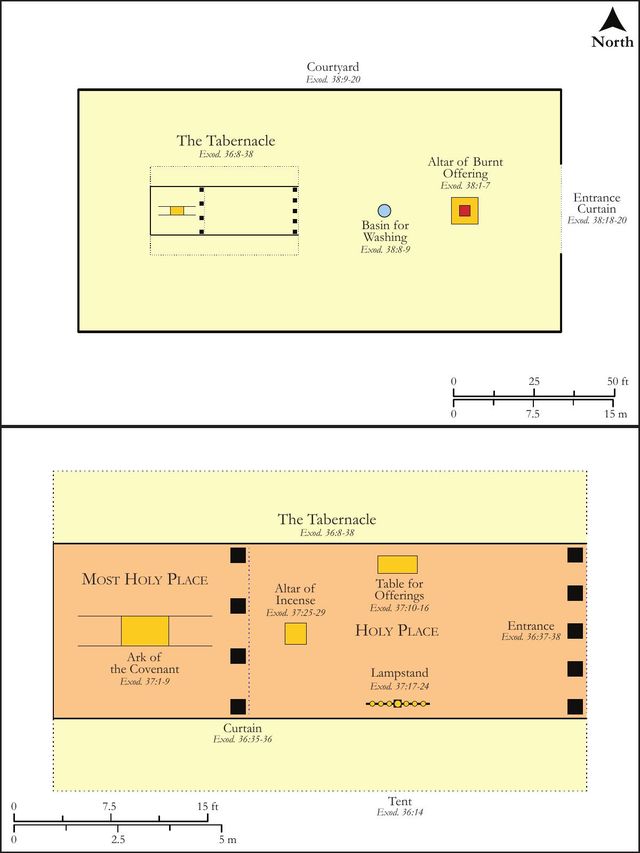
The Tabernacle served as Israel's portable sanctuary during their wilderness wanderings, a tangible symbol of God's covenantal presence dwelling intimately among His people. The silver specified in this verse was not a general freewill offering but originated from the mandatory "atonement money" (Hebrew: keseph hakkippurim), a half-shekel tax required of every Israelite male aged twenty years and older, as commanded in Exodus 30:11-16. This mandatory contribution for atonement meant that the very physical foundation of the Tabernacle was literally built upon the collective, redeemed resources of the community, symbolizing their reconciliation with God. The "sockets" (Hebrew: ʾădānîm) were heavy, solid bases, typically made of metal, into which the upright wooden frames (Exodus 26:15-19) and the pillars supporting the veil (Exodus 26:31-32) were inserted. Their substantial weight and precise fit were essential for providing structural stability and anchoring the entire portable sanctuary in the often-unstable wilderness terrain. This detail underscores the critical importance of a firm, precious, and consecrated foundation for the sacred space where God's holiness met humanity.
Key Themes
ShowHideThis verse contributes significantly to several overarching themes in Exodus and the Pentateuch. Firstly, it highlights the theme of Divine Order and Precision, demonstrating God's meticulous attention to detail in the construction of His dwelling place, where every measurement and material had a specific purpose and quantity. Secondly, it reinforces the theme of Holiness and Consecration, as the materials, particularly the silver from atonement money, were set apart for sacred use, emphasizing that God's presence demands purity and separation. Thirdly, the collective contribution of the atonement money for these foundational elements underscores the theme of Corporate Responsibility and Community Participation in worship and maintaining God's presence among them. Finally, the role of the sockets in providing stability points to the broader theme of Divine Stability and Steadfastness, indicating that God's dwelling and His covenant promises are built on an unshakeable foundation, ultimately foreshadowing the enduring nature of His redemptive plan.
Exposition and Analysis
ShowHideKey Word Analysis
ShowHideDerived from a root implying strength, this term refers to a basis or foundation, specifically heavy pedestals or bases into which the wooden boards and pillars of the Tabernacle were inserted. Their primary function was to provide stability and support, anchoring the entire structure. The use of "sockets" here emphasizes the foundational and stabilizing elements of God's dwelling place.
This primitive root means "to pour out," and by implication, "to melt or cast as metal." It signifies a process of shaping molten material into a solid form. The act of "casting" the sockets from silver highlights the deliberate, skilled craftsmanship involved in forming these heavy, foundational pieces according to divine specifications.
This term denotes a significant unit of weight, approximately 75 pounds (or about 34 kilograms). The mention of "hundred talents" for the sockets underscores the immense quantity and substantial value of silver dedicated to the Tabernacle's foundation. It emphasizes the physical solidity and preciousness of these bases, reflecting the magnitude of the Israelite's collective contribution and the divine requirement for a weighty foundation.
Verse Breakdown
ShowHide"And of the hundred talents of silver were cast the sockets of the sanctuary"
This clause precisely states the quantity of silver—one hundred talents—that was melted and formed into the heavy, foundational bases for the main structural boards of the Tabernacle, referred to as the "sanctuary." This detail highlights the significant material investment and meticulous craftsmanship involved in preparing the very groundwork for God's dwelling.
"and the sockets of the vail"
In addition to supporting the main walls, this same substantial quantity of silver was also used to create the sockets for the pillars that held the sacred veil. This emphasizes the critical foundational importance of the veil, which served as the physical and symbolic barrier separating the Holy Place from the Most Holy Place, where God's manifest presence resided.
"an hundred sockets of the hundred talents, a talent for a socket"
This concluding phrase provides a remarkable accounting detail, underscoring the divine precision and perfect ratio in the Tabernacle's construction. It explicitly states that there were exactly one hundred sockets, and each individual socket weighed precisely one talent, summing up to the total of one hundred talents of silver. This meticulous accuracy reinforces the theme of divine order and the exact fulfillment of God's detailed specifications.
Literary Devices
ShowHideExodus 38:27 prominently employs Precision and Repetition to underscore its core message. The numerical exactness—"hundred talents," "hundred sockets," "a talent for a socket"—is repeated, highlighting the meticulousness of the divine blueprint and its flawless execution by the craftsmen. This Repetition serves to emphasize the immense weight, value, and stability of the silver, reinforcing the idea of a precious and unshakeable foundation. Furthermore, there is profound Symbolism in the heavy silver sockets. Made from the atonement money, they symbolize that the very stability and sacredness of God's dwelling place, and thus the means of worship and access to Him, are rooted in the atoning work and the collective, redeemed contributions of His people. The sockets of the veil also powerfully symbolize the foundational nature of the barrier between a holy God and sinful humanity, a barrier that would later be removed through a greater act of atonement.
Theological and Thematic Connections
ShowHideExodus 38:27 reveals profound theological truths about God's nature and His relationship with His people. It underscores God's demand for precision, order, and holiness in worship, demonstrating that even the foundational elements of His dwelling place were to be crafted with exactness and from materials consecrated through atonement. The fact that the silver came from the communal atonement money highlights that the stability and sacredness of God's presence among Israel were collectively sustained by the redeemed resources of His people. This teaches us that true corporate worship and spiritual stability are built not on human ingenuity or fleeting trends, but on a foundation rooted in divine instruction and the recognition of humanity's profound need for atonement. The Tabernacle's foundation, built from the very substance of their redemption, served as a constant reminder that their relationship with God was predicated on His grace and their response of faith and obedience.
Reflection and Application
ShowHideThe detailed accounting of the silver sockets in Exodus 38:27 serves as a powerful reminder for believers today about the nature of our spiritual foundations, both individually and corporately. Just as the Tabernacle's stability depended on these heavy, precisely cast silver bases, our individual faith and the corporate life of the church require a solid, unshakeable foundation. This foundation is not built on fleeting trends, human philosophies, or personal preferences, but on the enduring truths of God's Word and the atoning work of Jesus Christ. The fact that the silver came from atonement money challenges us to consider how our contributions—whether financial, time, or talent—are rooted in our understanding and acceptance of Christ's sacrifice. Are we giving from a place of gratitude for redemption, thereby strengthening the spiritual "sockets" of God's work in the world? The meticulous detail in the Tabernacle's construction also calls us to diligence, integrity, and intentionality in our spiritual lives and service, recognizing that God cares about the "how" as much as the "what." Our worship, our service, and our very lives should be built on a foundation of truth and consecrated purpose, reflecting the divine order and holiness that God desires for His people.
Questions for Reflection
ShowHideFAQ
ShowHideWhat was the significance of the silver coming from "atonement money"?
ShowHideThe silver used for the Tabernacle's sockets originated from the half-shekel census tax (Exodus 30:11-16), which was explicitly called "atonement money" (Hebrew: keseph hakkippurim). This designation is profoundly significant because it meant that the very foundation of God's dwelling place among His people was literally built upon the collective act of atonement by every adult male Israelite. This underscored that access to God's presence and the stability of His sanctuary were predicated on a recognition of sin and the need for redemption. It symbolized that the community's standing before God and the sacred space for His presence were secured through a divinely mandated act of propitiation, in which every individual participated, highlighting the communal nature of their redemption and responsibility.
Why were the sockets so heavy and made of silver?
ShowHideThe sockets were made of silver and were incredibly heavy (each weighing a talent, approximately 75 pounds or 34 kg) for both practical and symbolic reasons. Practically, their immense weight provided crucial stability for the Tabernacle's wooden boards and the pillars of the veil, anchoring the structure firmly against wind and movement in the wilderness. This was essential for a portable sanctuary. Symbolically, silver was a precious metal, signifying the value, purity, and holiness of the Tabernacle's foundation. The fact that this precious, heavy foundation came from atonement money further emphasized that the stability and sacredness of God's dwelling were rooted in the redeemed resources of His people, highlighting the preciousness of atonement itself and the enduring nature of God's covenant. The weight also conveyed permanence and an unshakeable quality for God's sacred space.
Christ-Centered Fulfillment
ShowHideExodus 38:27, with its emphasis on the heavy silver sockets forming the Tabernacle's foundation from atonement money, powerfully foreshadows the person and work of Jesus Christ as the ultimate and eternal foundation of God's dwelling among humanity. The Tabernacle, a temporary dwelling for God among His people, finds its ultimate fulfillment in Jesus, who is the true temple of God (John 2:19-21) and the embodiment of God's presence, for in Him "all the fullness of God was pleased to dwell" (Colossians 1:19). The silver, derived from the half-shekel atonement tax, points to the infinitely more precious blood of Christ, which provides the true and eternal atonement for humanity (1 Peter 1:18-19). He is the chief cornerstone upon whom the entire spiritual temple, the Church, is built (Ephesians 2:19-22). Unlike the temporary Tabernacle, which required physical sockets for stability, Christ Himself is the unshakeable foundation upon which all true faith and worship rest, and "no one can lay a foundation other than that which is laid, which is Jesus Christ." His perfect sacrifice removed the veil that separated humanity from God's presence (Hebrews 10:19-20), granting direct access to the Father, making Him the ultimate "socket" or stable foundation for our reconciliation and eternal communion with God.