


Exodus 38:24
Bible text: King James Version (1769 Blayney text) · Public domain
Bible text: King James Version with Strong's numbers · Public domain
Bible text: Berean Standard Bible · Public domain
Bible text: American Standard Version (1901) · Public domain
Bible text: World English Bible, Messianic edition · Public domain
Bible text: Geneva Bible (1599) · Public domain
Bible text: Young's Literal Translation · Public domain
- כָּלkolallH3605N-mscNoun Singular Masculine Construct
- הַזָּהָבha·za·Havthe goldH2091Art ¦ N-msNoun Singular Masculine Absoluteהַtheזָּהָבgold
- הֶעָשׂוּיhe·'a·Suithat was usedH6213Art ¦ V-Qal-PassPrtcpl-msVerb Qal Participle Passive Singular Masculine Absoluteהֶthatעָשׂוּיwas used
- לַמְּלָאכָהla·me·la·Khahfor the workH4399Prep-l ¦ N-fsNoun Singular Feminine Absoluteלַfor theמְּלָאכָהwork
- בְּכֹלbe·Kholin allH3605Prep-b ¦ N-mscNoun Singular Masculine Constructבְּinכֹלall
- מְלֶאכֶתme·Le·khet[the] work ofH4399N-fscNoun Singular Feminine Construct
- הַקֹּדֶשׁha·Ko·deshthe holy placeH6944Art ¦ N-msNoun Singular Masculine Absoluteהַtheקֹּדֶשׁholy place
- וַיְהִיvay·Hiand it wasH1961Conj-w ¦ V-Qal-ConsecImperf-3msVerb Qal Consecutive Imperfect 3rd Singular Masculineוַandיְהִיit was
- זְהַבze·Hav[the] gold ofH2091N-mscNoun Singular Masculine Construct
- הַתְּנוּפָהha·te·nu·Fahthe wave-offeringH8573Art ¦ N-fsNoun Singular Feminine Absoluteהַtheתְּנוּפָהwave-offering
- תֵּשַׁעTe·sha'nineH8672Adj-csAdjective Numerical Singular common gender Absolute
- וְעֶשְׂרִיםve·'es·Rimand twentyH6242Conj-w ¦ Adj-mpAdjective Numerical Plural Masculine Absoluteוְandעֶשְׂרִיםtwenty
- כִּכָּרki·Kartalent[s]H3603N-fsNoun Singular Feminine Absolute
- וּשְׁבַעu·she·Va'and sevenH7651Conj-w ¦ Adj-cscAdjective Numerical Singular common gender Constructוּandשְׁבַעseven
- מֵאוֹתme·'othundred<s>H3967Adj-fpcAdjective Numerical Plural Feminine Construct
- וּשְׁלֹשִׁיםu·she·lo·Shimand thirtyH7970Conj-w ¦ Adj-mpAdjective Numerical Plural Masculine Absoluteוּandשְׁלֹשִׁיםthirty
- שֶׁקֶלShe·kelshekel[s]H8255N-msNoun Singular Masculine Absolute
- בְּשֶׁקֶלbe·She·kelby [the] shekel ofH8255Prep-b ¦ N-mscNoun Singular Masculine Constructבְּbyשֶׁקֶל[the] shekel of
- הַקֹּדֶשׁha·Ko·deshthe holy placeH6944Art ¦ N-msNoun Singular Masculine Absoluteהַtheקֹּדֶשׁholy place
English is a literal word-by-word gloss of the Hebrew, not the KJV's wording. Why?
This is the original text the KJV's translators worked from — each Hebrew word with its own literal English meaning in this verse, prepared by scholars at Tyndale House, Cambridge. The KJV translates whole sentences, not word by word, so its wording differs: one Hebrew word can become several English words, and the KJV may choose “the LORD” where the gloss reads “Yahweh”. Both are faithful — they answer different questions. For the KJV's own rendering, switch to the KJV text.
Details
See on the biblical-era maps

Study this verse
Public-domain commentary
Matthew Henry
From his Commentary on the Whole Bible. Henry comments on passages, not single verses — this entry covers Exodus 38:21–31.
Here we have a breviat of the account which, by Moses's appointment, the Levites took and kept of the gold, silver, and brass, that was brought in for the tabernacle's use, and how it was employed. Ithamar the son of Aaron was appointed to draw up this account, and was thus by less services trained up and fitted for greater, Exo 38:21. Bezaleel and Aholiab must bring in the account (Exo 38:22, Exo 38:23), and Ithamar must audit it, and give it in to Moses. And it was thus: - 1. All the gold was a free-will offering; every man brought as he could and would, and it amounted to twenty-nine talents, and 730 shekels over, which some compute to be about 150,000l. worth of gold, according to the present value of it. Of this were made all the golden furniture and vessels. 2. The silver was levied by way of tax; every man was assessed half a shekel, a kind of poll-money, which amounted in the whole to 100 talents, and 1775 shekels over, Exo 38:25, Exo 38:26. Of this they made the sockets into which the boards of the tabernacle were let, and on which they rested; so that they were as the foundation of the tabernacle, Exo 38:27. The silver amounted to about 34,000l. of our money. The raising of the gold by voluntary contribution, and of the silver by way of tribute, shows that either way may be taken for the defraying of public expenses, provided that nothing be done with partiality. 3. The brass, though less valuable, was of use not only for the brazen altar, but for the sockets of the court, which probably in other tents were of wood: but it is promised (Isa 60:17), For wood I will bring brass. See how liberal the people were and how faithful the workmen were, in both which respects their good example ought to be followed.
Continue studying Exodus 38:24 across the web’s major study libraries — every link below opens this exact verse, chapter, or book on the destination site.
Read & Compare
 BibleGatewayThis verse in more than 200 translations and 70 languages.
 Bible.comThe YouVersion reader — hundreds of translations, reading plans, and highlights.
 ESV.orgCrossway's official English Standard Version reader.
 NET BibleThe NET translation with 60,000+ translators' notes on every rendering decision.
 STEP BibleTyndale House's free study tool — original text, vocabulary, and scholarly resources.
 BibliaLogos Bible Software's free web reader.
 USCCBThe New American Bible (Revised Edition) with the U.S. bishops' study notes.
Commentaries
 BibleHub CommentariesDozens of classic commentaries on this verse, gathered on one page.
 StudyLightMore than 100 commentary sets — the largest collection on the web.
 BibleRefPlain-English commentary on what this verse means, verse by verse.
 Enduring WordDavid Guzik's free commentary on this chapter, widely used by Bible teachers.
 Bible Study ToolsVerse commentary alongside Greek and Hebrew study aids.
Original Language & Research
- BibleHub InterlinearThe verse word by word — original language, transliteration, and English.
- BibleHub LexiconEvery word's original-language definition and Strong's entry.
 Blue Letter BibleDeep-study tools — Strong's numbers, concordance, and word studies.
 SefariaThe Hebrew text with Rashi and centuries of Jewish commentary.
Sermons, Hymns & Audio


TrulyRandomVerse is not affiliated with these sites and doesn’t control their content. They’re linked because they’re genuinely useful.
Summary
Exodus 38:24 provides a precise accounting of the gold consecrated by the Israelite community for the construction of the Tabernacle, detailing the exact quantity—twenty-nine talents and seven hundred thirty shekels—used for the sacred work. This verse is a crucial part of the final inventory, underscoring the extraordinary generosity of the people, the meticulous stewardship of the leaders, and the divine precision required in building God's dwelling place in the wilderness.
Context
ShowHideLiterary Context
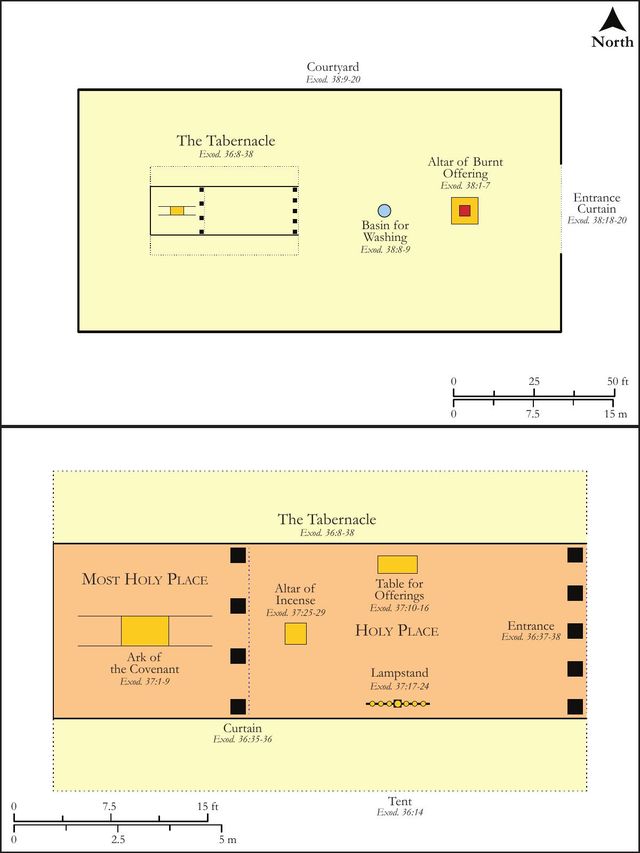
This verse is situated within the concluding section of the Book of Exodus (chapters 35-40), which meticulously chronicles the actual construction and erection of the Tabernacle. Following the detailed divine blueprint revealed on Mount Sinai (Exodus 25-31) and the subsequent call for freewill offerings from the people (Exodus 35:4-9), the narrative systematically records the materials collected and their specific application to various components of the holy place. Chapters 36-38 provide a granular account of the skilled craftsmanship performed by Bezalel, Oholiab, and their assistants. Exodus 38:21-31 serves as a comprehensive summary of the total materials used for the Tabernacle, emphasizing the meticulous accountability and the faithful fulfillment of God's commands down to the last shekel, culminating in the glory of God filling the completed sanctuary in Exodus 40.
Historical & Cultural Context
The Israelites, recently delivered from bondage in Egypt, were a nascent nation journeying through the wilderness. Their liberation included the acquisition of significant wealth from the Egyptians (as described in Exodus 12:35-36), which subsequently became the primary source for their contributions to the Tabernacle. Among the nations, the construction of temples for their gods was a common practice, typically involving immense resources and skilled labor. However, the Israelite Tabernacle was unique in its divine origin, its portability, and its purpose as a dwelling place for the one true God among His people. The detailed inventory, particularly the use of the "shekel of the sanctuary," highlights a commitment to sacred standards of measurement and accountability, distinguishing it from potentially variable commercial weights. This emphasis on precision and transparency was vital for a community learning to live under God's covenant, fostering trust and integrity in their collective worship and stewardship.
Key Themes
ShowHideExodus 38:24 contributes to several overarching themes in the book of Exodus and beyond. It highlights the theme of Divine Presence, as the Tabernacle was God's chosen dwelling place among His people, a tangible sign of His covenant faithfulness. It underscores Generous Giving and Freewill Offering, demonstrating the people's willing and abundant response to God's call for materials. The meticulous accounting emphasizes Divine Order and Accountability, showcasing God's demand for precision and integrity in matters pertaining to His worship and the handling of sacred resources. Furthermore, it speaks to Human Skill and Divine Empowerment, as the vast amount of material required skilled craftsmen, empowered by God's Spirit, to transform it into a sacred structure (as seen in Exodus 31:1-6).
Exposition and Analysis
ShowHideKey Word Analysis
ShowHideFrom an unused root meaning "to shimmer," this term refers to the precious metal, often figuratively denoting something gold-colored. In the context of the Tabernacle, gold symbolizes purity, divinity, and glory. Its abundant use, especially in the most sacred components, underscores the immense value and reverence due to God's presence and the holiness of His dwelling.
While translated as "occupied" or "used," this Hebrew verb is a broad term meaning "to do," "to make," "to perform," or "to accomplish." Here, it emphasizes the active engagement and diligent labor involved in transforming the raw gold into the intricate objects and structures of the Tabernacle. It speaks not merely of passive consumption but of purposeful, skilled craftsmanship dedicated to God's work, highlighting the diligent execution of the divine blueprint.
This term refers to a substantial unit of weight in Israel, typically equivalent to around 75 pounds (approximately 34 kilograms). The word literally means "a circle" or "a round thing," perhaps alluding to the shape of ingots or weights. The mention of 29 talents signifies an enormous quantity of gold, far exceeding what would be easily carried, underscoring the collective wealth and extraordinary generosity of the entire Israelite community in contributing to the Tabernacle's construction.
Verse Breakdown
ShowHide"All the gold that was occupied for the work in all the work of the holy [place]"
This opening phrase underscores the totality of the gold contribution and its exclusive dedication to the sacred purpose of the Tabernacle. The repetition of "work" (מְלָאכָה, melaʾḵāh) highlights the extensive labor and craftsmanship involved in transforming the raw material into the intricate components of God's dwelling. "Holy [place]" (הַקֹּדֶשׁ, haqqodesh) specifies that this gold was used for the most sacred elements, such as the Ark of the Covenant, the Mercy Seat, the lampstand, and the altars, all within the consecrated space of the Tabernacle.
"even the gold of the offering"
This clause clarifies the source of the gold: it was not acquired through taxation or forced labor, but came from the voluntary "offering" (תְּרוּמָה, tᵉnûwphâh or tᵉrûmâ) or "contribution" of the Israelite people. This underscores the freewill nature of their giving, a response of devotion and obedience to God's call for materials for His sanctuary, as detailed in Exodus 35:5.
"was twenty and nine talents, and seven hundred and thirty shekels"
This provides the precise quantitative measurement of the gold. Given that a talent was approximately 75 pounds (34 kg) and a shekel approximately 0.4 ounces (11 grams), this amounted to roughly 2,175 pounds (987 kg) of gold from the talents, plus an additional 16.5 pounds (7.5 kg) from the shekels, totaling over a metric ton of gold. This staggering figure demonstrates the immense wealth and extraordinary generosity of the Israelites, reflecting their deep commitment to God's dwelling.
"after the shekel of the sanctuary"
This final phrase serves as a crucial qualifier for the measurement. It indicates that the gold was weighed according to a specific, sacred standard, ensuring accuracy and integrity. This "shekel of the sanctuary" was a fixed, reliable weight, preventing any deviation or fraud in the handling of materials dedicated to God. It reinforces the principle of divine order and the necessity of absolute honesty and precision in all matters pertaining to His worship and the handling of consecrated items.
Literary Devices
ShowHideThe verse prominently employs Precision and Enumeration, providing exact figures for the gold contributed. This meticulous detailing serves to emphasize the thoroughness of the inventory and the accountability of those managing the sacred resources. It reflects God's own orderly nature and His demand for exactness in the execution of His commands. Furthermore, the use of Symbolism is evident, as gold, a precious, incorruptible, and radiant metal, is consistently associated with divine glory, purity, and holiness throughout the Tabernacle's design. Its abundance in the holiest parts of the sanctuary underscores the immense value and reverence due to God's presence. The Repetition of "work" (e.g., "occupied for the work in all the work") subtly highlights the extensive labor and dedication involved in the construction, reinforcing the theme of diligent service to God.
Theological and Thematic Connections
ShowHideExodus 38:24 powerfully illustrates several profound theological principles. It highlights the divine call for a dwelling place, the human response of generous and freewill giving, and the absolute necessity of integrity and meticulous accountability in sacred service. The vast quantity of gold, freely given, demonstrates the Israelites' devotion and willingness to sacrifice their most valuable possessions for God's glory, reflecting the principle that true worship involves costly dedication. This detailed inventory also underscores God's demand for order and transparency in handling resources dedicated to Him, setting a precedent for stewardship within the community of faith. Ultimately, the gold served to create a tangible representation of God's holy presence among His people, a place where atonement could be made and communion fostered.
Reflection and Application
ShowHideThis verse, though seemingly a dry accounting, holds profound lessons for believers today. It challenges us to examine the depth of our own commitment and generosity towards God's work. Just as the Israelites willingly contributed their most valuable possessions for the Tabernacle, we are called to offer our resources—financial, time, talents—with a cheerful and sacrificial heart for the advancement of God's kingdom and the flourishing of His church. Moreover, the meticulous record-keeping serves as a timeless reminder of the importance of integrity, transparency, and accountability in all matters of stewardship, particularly within religious organizations. We are entrusted with God's resources, and we are called to manage them with utmost care and honesty, reflecting His own character of order and righteousness. Finally, the immense value placed on God's dwelling place should inspire us to approach worship and service with reverence and excellence, recognizing the profound privilege of participating in His divine purposes.
Questions for Reflection
ShowHideFAQ
ShowHideWhy was such a large quantity of gold needed for the Tabernacle, and where did the Israelites get it?
ShowHideThe Tabernacle was designed by God to be a magnificent and holy dwelling place, reflecting His glory and majesty. Gold, being a precious and incorruptible metal, symbolized purity, divinity, and enduring value, making it fitting for the most sacred components like the Ark of the Covenant, the Mercy Seat, the lampstand, and the altars. The sheer quantity (over a metric ton) underscored the immense value God placed on His presence among His people and the excellence required in His service. The Israelites acquired much of this wealth from the Egyptians during the Exodus, as God instructed them to ask for articles of silver and gold (see Exodus 12:35-36). This act of divine provision ensured that the people had the means to contribute generously to the Tabernacle's construction, demonstrating God's ability to provide for His own work.
What is the significance of the "shekel of the sanctuary" mentioned in this verse?
ShowHideThe "shekel of the sanctuary" (שֶׁקֶל הַקֹּדֶשׁ, sheqel haqqodesh) refers to a standardized, fixed weight used exclusively for religious purposes, distinct from common commercial weights that could vary. Its mention in Exodus 38:24 and other passages (e.g., Exodus 30:13) highlights the importance of accuracy, fairness, and integrity in all offerings and transactions related to the Tabernacle. This sacred standard ensured that every contribution was measured precisely according to God's divine requirements, preventing any deviation or fraud. It underscores the principle that God demands absolute honesty, transparency, and precision in all matters pertaining to His worship and the handling of consecrated items, reflecting His own character of order and righteousness.
Christ-Centered Fulfillment
ShowHideThe meticulous accounting of gold for the Tabernacle, a physical dwelling for God among His people, finds its ultimate fulfillment in Jesus Christ. The Tabernacle, with its costly materials and precise construction, was a shadow of a greater reality—God's desire to dwell with humanity. In Christ, God's presence is no longer confined to a tent of gold and fabrics, but becomes incarnate in the person of the Lamb of God, who is "God with us" (Matthew 1:23). Just as the gold was a costly offering for the Tabernacle, Christ's life and sacrificial death on the cross represent the ultimate, immeasurable "gold" of God's love, a perfect and complete offering that far surpasses any earthly treasure (see 1 Peter 1:18-19). He is the true and perfect sanctuary, the place where God's glory dwells in its fullness (John 1:14), and through His finished work, believers are made into a spiritual temple, a dwelling place for God's Spirit (Ephesians 2:21-22). The precision and holiness demanded for the Tabernacle's construction are perfectly met in Christ, who flawlessly fulfilled all righteousness and established a new covenant, making it possible for us to approach God with confidence through His perfect sacrifice (Hebrews 9:11-14).