


Exodus 13:11
Bible text: King James Version (1769 Blayney text) · Public domain
Bible text: Berean Standard Bible · Public domain
Bible text: American Standard Version (1901) · Public domain
Bible text: World English Bible, Messianic edition · Public domain
Bible text: Geneva Bible (1599) · Public domain
Bible text: Young's Literal Translation · Public domain
- וְהָיָהve·ha·Yahand it will beH1961Conj-w ¦ V-Qal-ConsecPerf-3msVerb Qal Consecutive Perfect 3rd Singular Masculineוְandהָיָהit will be
- כִּיkithatH3588PrtParticle Conditional
- יְבִאֲךָye·vi·'a·Khahe will bring youH935V-Hiphil-Imperf-3ms ¦ 2msVerb Hiphil Imperfect 3rd Singular Masculineיְבִאֲhe will bringךָyou
- יְהוָהYah·wehYahwehH3068N-properNoun Proper Title
- אֶל'elintoH413PrepPreposition
- אֶרֶץ'E·retz[the] land ofH776N-fscNoun Singular Feminine Construct
- הַכְּנַעֲנִיha·ke·na·'a·Nithe Canaanite[s]H3669Art ¦ N-msNoun Gentilic Singular Masculine AbsoluteהַtheכְּנַעֲנִיCanaanite[s]
- כַּאֲשֶׁרka·'a·Sherjust asH834Prep-k ¦ RelParticle Relativeכַּjustאֲשֶׁרas
- נִשְׁבַּעnish·Ba'he sworeH7650V-Niphal-Perf-3msVerb Niphal Perfect 3rd Singular Masculine
- לְךָle·Khato youPrep-l ¦ 2msSuffix Personal 2nd Singular Masculineלְtoךָyou
- וְלַאֲבֹתֶיךָve·la·'a·vo·Tei·khaand to your ancestorsH1Conj-w ¦ Prep-l ¦ N-fpc ¦ 2msNoun Plural Feminine Constructוְandלַtoאֲבֹתֶיancestorsךָyour
- וּנְתָנָהּu·ne·ta·Nahand he will give itH5414Conj-w ¦ V-Qal-ConsecPerf-3ms ¦ 3fsVerb Qal Consecutive Perfect 3rd Singular Masculineוּandנְתָנָhe will giveהּit
- לָךְLakhto youPrep-l ¦ 2msSuffix Personal 2nd Singular Masculineלָtoךְyou
English is a literal word-by-word gloss of the Hebrew, not the KJV's wording. Why?
This is the original text the KJV's translators worked from — each Hebrew word with its own literal English meaning in this verse, prepared by scholars at Tyndale House, Cambridge. The KJV translates whole sentences, not word by word, so its wording differs: one Hebrew word can become several English words, and the KJV may choose “the LORD” where the gloss reads “Yahweh”. Both are faithful — they answer different questions. For the KJV's own rendering, switch to the KJV text.
Details
See on the biblical-era maps

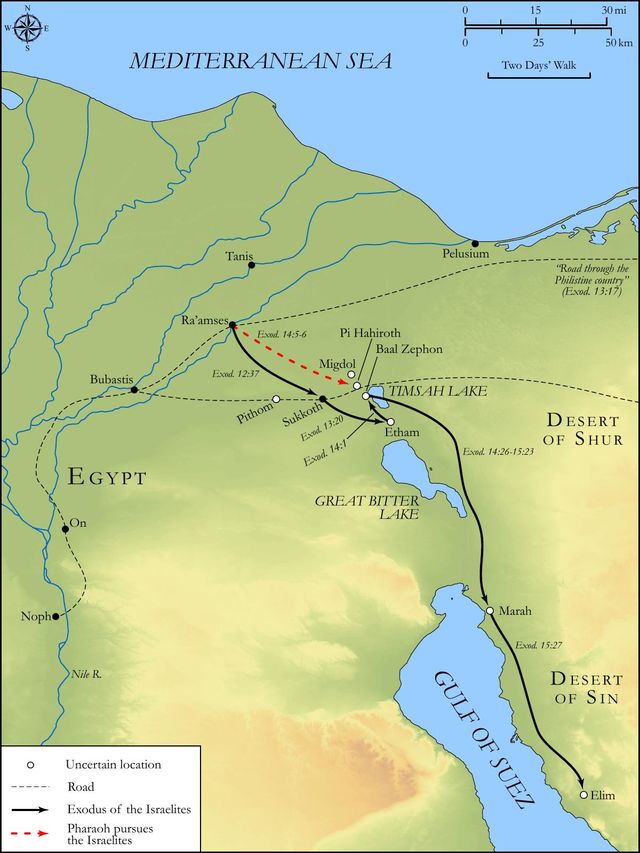
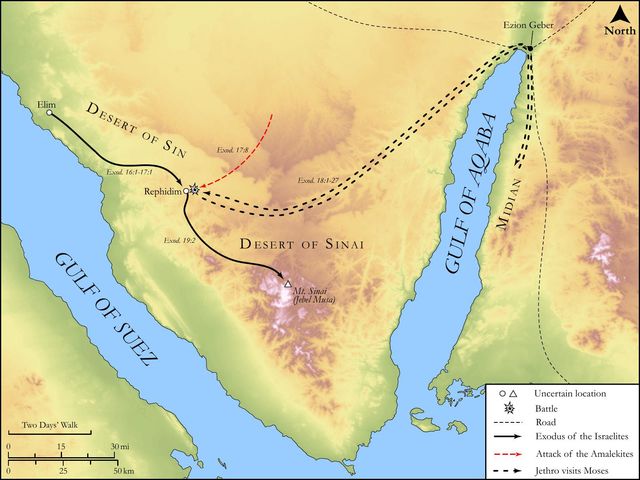
Study this verse
Public-domain commentary
Matthew Henry
From his Commentary on the Whole Bible. Henry comments on passages, not single verses — this entry covers Exodus 13:11–16. His two-level outline is real structure in the source text, so it is rendered as structure.
Here we have,
I.Further directions concerning the dedicating of their firstborn to God.
1.The firstlings of their cattle were to be dedicated to God, as part of their possessions. Those of clean beasts - calves, lambs, and kids - if males, were to be sacrificed, Exo 22:30; Num 18:17, Num 18:18. Those of unclean beasts, as colts, were to be redeemed with a lamb, or knocked on the head. For whatsoever is unclean (as we all are by nature), if it be not redeemed, will be destroyed, Exo 13:11, Exo 13:13.
2.The firstborn of their children were to be redeemed, and by no means sacrificed, as the Gentiles sacrificed their children to Moloch. The price of the redemption of the firstborn was fixed by the law (Num 18:16) at five sheckles. We were all obnoxious to the wrath and curse of God; by the blood of Christ we are redeemed, that we may be joined to the church of the firstborn. They were to redeem their children, as well as the firstlings of the unclean beasts, for our children are by nature polluted. Who can bring a clean thing out of an unclean?
II.Further directions concerning the catechising of their children, and all those of the rising generation, from time to time, in this matter.
It is supposed that, when they saw all the firstlings thus devoted, they would ask the meaning of it, and their parents and teachers must tell them (Exo 13:14-16) that God's special propriety in their firstborn, and all their firstlings, was founded in his special preservation of them from the sword of the destroying angel. Being thus delivered, they must serve him. Note,
1.Children should be directed and encouraged to ask their parents questions concerning the things of God, a practice which would be perhaps of all others the most profitable way of catechising; and parents must furnish themselves with useful knowledge, that they may be ready always to give an answer to their enquiries. If ever the knowledge of God cover the earth, as the waters do the sea, the fountains of family-instruction must first be broken up.
2.We should all be able to show cause for what we do in religion. As sacraments are sanctified by the word, so they must be explained and understood by it. God's service is reasonable, and it is then acceptable when we perform it intelligently, knowing what we do and why we do it.
3.It must be observed how often it is said in this chapter that by strength of hand (Exo 13:3, Exo 13:14, Exo 13:16), with a strong hand (Exo 13:9), the Lord brought them out of Egypt. The more opposition is given to the accomplishment of God's purposes the more is his power magnified therein. It is a strong hand that conquers hard hearts. Sometimes God is said to work deliverance not by might nor power (Zac 4:6), not by such visible displays of his power as that recorded here.
4.Their posterity that should be born in Canaan are directed to say, The Lord brought us out of Egypt, Exo 13:14, Exo 13:16. Mercies to our fathers are mercies to us; we reap the benefit of them, and therefore must keep up a grateful remembrance of them. We stand upon the bottom of former deliverances, and were in the loins of our ancestors when they were delivered. Much more reason have we to say that in the death and resurrection of Jesus Christ we were redeemed.
Continue studying Exodus 13:11 across the web’s major study libraries — every link below opens this exact verse, chapter, or book on the destination site.
Read & Compare
 BibleGatewayThis verse in more than 200 translations and 70 languages.
 Bible.comThe YouVersion reader — hundreds of translations, reading plans, and highlights.
 ESV.orgCrossway's official English Standard Version reader.
 NET BibleThe NET translation with 60,000+ translators' notes on every rendering decision.
 STEP BibleTyndale House's free study tool — original text, vocabulary, and scholarly resources.
 BibliaLogos Bible Software's free web reader.
 USCCBThe New American Bible (Revised Edition) with the U.S. bishops' study notes.
Commentaries
 BibleHub CommentariesDozens of classic commentaries on this verse, gathered on one page.
 StudyLightMore than 100 commentary sets — the largest collection on the web.
 BibleRefPlain-English commentary on what this verse means, verse by verse.
 Enduring WordDavid Guzik's free commentary on this chapter, widely used by Bible teachers.
 Bible Study ToolsVerse commentary alongside Greek and Hebrew study aids.
Original Language & Research
- BibleHub InterlinearThe verse word by word — original language, transliteration, and English.
- BibleHub LexiconEvery word's original-language definition and Strong's entry.
 Blue Letter BibleDeep-study tools — Strong's numbers, concordance, and word studies.
 SefariaThe Hebrew text with Rashi and centuries of Jewish commentary.
Sermons, Hymns & Audio


TrulyRandomVerse is not affiliated with these sites and doesn’t control their content. They’re linked because they’re genuinely useful.
Summary
Exodus 13:11 serves as a pivotal forward-looking declaration, assuring the newly liberated Israelites that Yahweh, their covenant God, will faithfully fulfill His ancient oath to their patriarchs by personally bringing them into the promised "land of the Canaanites" and graciously bestowing it upon them as a divine inheritance, thereby underscoring His unwavering commitment to His people and His sovereign control over history.
Context
ShowHideLiterary Context
This verse appears at a crucial juncture in the book of Exodus, immediately following God's detailed instructions regarding the consecration of the firstborn and the perpetual observance of the Feast of Unleavened Bread (Exodus 13:1-10). While the preceding passages are retrospective, commemorating Israel's miraculous deliverance from Egyptian bondage and establishing foundational religious practices, Exodus 13:11 pivots the narrative gaze to the future. It provides the ultimate rationale and motivation for their journey through the wilderness: the fulfillment of God's ancient covenantal promise of a land. This verse thus acts as a bridge, connecting the present acts of worship and remembrance to God's long-term redemptive plan, assuring the Israelites of the certain destination of their pilgrimage.
Historical & Cultural Context
The designation "the land of the Canaanites" refers to the geographical region of Canaan, which, at the time of the Exodus, was already inhabited by a diverse array of peoples, including the Canaanites, Hittites, Amorites, Perizzites, Hivites, and Jebusites, as detailed in other biblical texts (e.g., Genesis 15:18-21). For God to "give it thee" (Israel) implied a divinely orchestrated displacement of these existing inhabitants, a concept rooted in God's sovereign right over all nations and lands. The phrase "as he sware unto thee and to thy fathers" directly invokes the solemn Abrahamic Covenant, initially articulated to Abram in Genesis 12:7 and subsequently reaffirmed to Isaac (Genesis 26:3) and Jacob (Genesis 35:12). In Scripture, a solemn oath or covenant was the most binding legal and religious commitment, often involving severe consequences for its breach, as Israel was held to its oath to the Gibeonites. God's oath, therefore, highlights the absolute certainty, immutability, and unbreakable nature of His promise to Israel, providing an unshakeable foundation for their hope, obedience, and endurance through the wilderness.
Key Themes
ShowHideThis verse powerfully contributes to several overarching themes within Exodus and the broader Pentateuch. Foremost among these is the theme of Divine Faithfulness and Covenant Keeping. God's repeated emphasis on His oath to the patriarchs underscores His unchanging character and His unwavering commitment to His promises, even across generations and in the face of human doubt or disobedience. Another significant theme is Divine Sovereignty and Provision. The land is presented not as something Israel will earn or conquer by their own might, but as a direct "giving" from the LORD, emphasizing God's ultimate ownership and control over all creation and His benevolent provision for His chosen people. Furthermore, the verse reinforces the theme of Inheritance and Promised Rest, looking forward to a time when Israel will dwell securely in the land, a concept that will be further developed throughout the Deuteronomic history and beyond, culminating in the ultimate spiritual rest found in Christ.
Exposition and Analysis
ShowHideKey Word Analysis
ShowHideThis is the sacred, personal covenant name of God, often rendered as Yahweh. It signifies "the self-Existent or Eternal One," emphasizing God's absolute being, faithfulness, and unchanging nature. In this context, the use of "LORD" underscores that it is the very God who entered into covenant with Abraham, Isaac, and Jacob, the God who has just delivered Israel from Egypt, who is now making this solemn promise regarding the land. His character as the eternal and faithful covenant-keeper guarantees the fulfillment of the promise.
This verb signifies a solemn, binding oath or vow, often implying a seven-fold declaration or a deep, unchangeable commitment. When God "swears," it is the highest form of divine assurance, indicating the absolute certainty and immutability of His promise. It is not a casual agreement but a divinely guaranteed commitment that cannot be revoked, highlighting His unshakeable faithfulness and the complete reliability of His word. This oath forms the immutable foundation of the covenant with Israel.
This primitive root is highly versatile, meaning "to give, put, set, allow," among many other applications. In this specific context, it emphasizes the land as a divine gift, freely bestowed by God's grace and power, rather than something Israel would earn through merit or conquer solely by their own strength. It reinforces God's sovereignty as the ultimate provider and owner of the land, highlighting that their possession of it is an act of His benevolent provision and covenant faithfulness.
Verse Breakdown
ShowHide"And it shall be when the LORD shall bring thee into the land of the Canaanites,"
This opening clause sets the stage for a future, divinely orchestrated event, emphasizing God's active and personal agency ("the LORD shall bring thee"). The destination is explicitly named "the land of the Canaanites," which highlights the existing reality of its occupation by other nations. This immediately underscores the miraculous and sovereign nature of God's promise: He will dispossess its current inhabitants and personally lead Israel into this occupied territory.
"as he sware unto thee and to thy fathers,"
This crucial phrase provides the divine basis, historical continuity, and absolute assurance for the promise. It directly links the future entry into the land to God's ancient, solemn, and unchangeable covenant oath made to Abraham, Isaac, and Jacob. This continuity across generations reinforces God's unchanging character and His unwavering commitment to His covenant people, assuring them that the present journey is part of a long-established, divine plan.
"and shall give it thee,"
This final clause reiterates and confirms the nature of the inheritance: it is a gracious gift from the Lord. It underscores divine grace and sovereignty, indicating that the possession of the land is not a result of Israel's strength, military prowess, or inherent merit, but solely due to God's benevolent provision and His faithfulness to His covenant oath. This emphasizes Israel's dependent relationship on God for their very existence and inheritance.
Literary Devices
ShowHideExodus 13:11 masterfully employs several literary techniques to convey its profound message. Foreshadowing is prominent, as the verse points directly to a future, pivotal event—the entry into the Promised Land—which is central to Israel's national identity and destiny. The structure of the verse also demonstrates Divine Emphasis, with God consistently presented as the primary actor ("the LORD shall bring," "he sware," "shall give"), underscoring His absolute sovereignty and faithfulness in fulfilling His purposes. Furthermore, the concise yet powerful language, particularly the repetition of the idea of God's promise and giving, creates a sense of Certainty and Assurance, reinforcing the immutability of God's word. The phrase "land of the Canaanites" functions as a form of Contrast, highlighting the current reality of occupation against the future reality of Israel's inheritance, thereby magnifying the miraculous nature of God's intervention.
Theological and Thematic Connections
ShowHideThis verse powerfully teaches about God's unwavering faithfulness to His covenant promises, a foundational truth throughout Scripture. The phrase "as he sware unto thee and to thy fathers" highlights that God's word is utterly reliable, and His commitments span generations, demonstrating His eternal nature and trustworthiness, for God is not a man that He should lie, nor a son of man that He should change His mind (Numbers 23:19). The land itself is presented as a divine gift, emphasizing God's grace and sovereignty in providing for His people, rather than their earning it through merit or conquest; indeed, Moses would later remind Israel that it was not by their righteousness or the uprightness of their heart that they would possess the land (Deuteronomy 9:4-6). This theme of divine provision and inheritance is central to the biblical narrative, from the Garden of Eden to the New Heavens and New Earth, culminating in the ultimate inheritance promised to believers in Christ. Ultimately, this verse serves as a powerful reminder that God is the controller of history, orchestrating events to fulfill His predetermined purposes and promises, for the counsel of the LORD stands forever, the plans of His heart to all generations (Psalm 33:11).
Reflection and Application
ShowHideExodus 13:11 offers profound reassurance for believers today, echoing through the centuries with a message of divine constancy. Just as God faithfully led Israel to their promised inheritance, He continues to be faithful to His promises to His people in every generation. This verse encourages us to cultivate a deep and abiding trust in God's sovereign plan, even when our personal journeys are difficult, our spiritual destinations seem distant, or the obstacles in our path appear insurmountable. It serves as a powerful reminder that God's word is absolutely reliable, and His ultimate purposes will be fulfilled, not because of our strength, wisdom, or merit, but solely because of His unwavering commitment to His covenant and His boundless grace. We are called to live our lives in light of God's profound faithfulness, resting in the spiritual inheritance promised through Christ, knowing with certainty that He who promised is faithful and will bring it to pass.
Questions for Reflection
ShowHideFAQ
ShowHideWhy is the land called "the land of the Canaanites" if it's Israel's promised inheritance?
ShowHideCalling it "the land of the Canaanites" serves a crucial purpose: it emphasizes the existing reality of its inhabitants while simultaneously highlighting God's sovereign power and absolute right to dispossess those nations and give the land to Israel. It underscores that this inheritance is not a simple occupation of empty land, but a miraculous act of divine judgment against the wickedness of the Canaanites and a profound act of divine provision and faithfulness to His covenant with Abraham, Isaac, and Jacob, fulfilling a promise made centuries prior. This designation heightens the theological significance of God's intervention.
Does this verse imply that Israel would be entirely passive in taking the land?
ShowHideNo, this verse does not imply Israel's complete passivity. While the emphasis here is unequivocally on God's initiative and sovereign power ("the LORD shall bring," "shall give"), it does not negate Israel's future role in the conquest. The divine promise provides the assurance, the mandate, and the supernatural power for the task, but subsequent books like Joshua vividly detail Israel's active, though divinely empowered, participation in taking possession of the land through military campaigns and obedience to God's commands. God's promise provides the foundation and the means, but human obedience and action are still required in partnership with His divine will.
Christ-Centered Fulfillment
ShowHideExodus 13:11, with its profound focus on a promised land and a divine inheritance, finds its ultimate fulfillment and spiritual amplification in the person and redemptive work of Jesus Christ. The physical land of Canaan, a place of earthly rest, blessing, and covenant fulfillment for Israel, serves as a powerful type or shadow pointing to the greater, eternal spiritual inheritance that believers receive through Christ (Ephesians 1:11). Jesus is the faithful one through whom all of God's promises, including the promise of an inheritance, find their definitive "Yes" and "Amen" (2 Corinthians 1:20). The "rest" that Israel was to find in the Promised Land foreshadows the true spiritual rest from sin and striving, and the eternal dwelling with God that is available to all who believe in Jesus (Hebrews 4:9-11). God's unwavering faithfulness in bringing Israel into their earthly inheritance is a powerful testament to His even greater faithfulness in bringing His people, through Christ's atoning work and resurrection power, into His eternal kingdom and the glorious inheritance of salvation, new creation, and everlasting communion with Him. The ultimate "land" is the new heavens and new earth, where righteousness dwells, secured by the Lamb of God (Revelation 21:1-4).