


2 Chronicles 4:14
Bible text: King James Version (1769 Blayney text) · Public domain
Bible text: Berean Standard Bible · Public domain
Bible text: American Standard Version (1901) · Public domain
Bible text: World English Bible, Messianic edition · Public domain
Bible text: Geneva Bible (1599) · Public domain
Bible text: Young's Literal Translation · Public domain
- וְאֶתve·'Etand <obj.>H853Conj-w ¦ DirObjMParticle Object Indicatorוְandאֶת<obj.>
- הַמְּכֹנוֹתha·me·kho·Notthe standsH4350Art ¦ N-fpNoun Plural Feminine Absoluteהַtheמְּכֹנוֹתstands
- עָשָׂה'a·Sahhe madeH6213V-Qal-Perf-3msVerb Qal Perfect 3rd Singular Masculine
- וְאֶתve·'Etand <obj.>H853Conj-w ¦ DirObjMParticle Object Indicatorוְandאֶת<obj.>
- הַכִּיֹּרוֹתha·ki·yo·Rotthe laversH3595Art ¦ N-fpNoun Plural Feminine Absoluteהַtheכִּיֹּרוֹתlavers
- עָשָׂה'a·Sahhe madeH6213V-Qal-Perf-3msVerb Qal Perfect 3rd Singular Masculine
- עַל'alonH5921PrepPreposition
- הַמְּכֹנוֹתha·me·kho·Notthe standsH4350Art ¦ N-fpNoun Plural Feminine Absoluteהַtheמְּכֹנוֹתstands
English is a literal word-by-word gloss of the Hebrew, not the KJV's wording. Why?
This is the original text the KJV's translators worked from — each Hebrew word with its own literal English meaning in this verse, prepared by scholars at Tyndale House, Cambridge. The KJV translates whole sentences, not word by word, so its wording differs: one Hebrew word can become several English words, and the KJV may choose “the LORD” where the gloss reads “Yahweh”. Both are faithful — they answer different questions. For the KJV's own rendering, switch to the KJV text.
Details
See on the biblical-era maps
Study this verse
Public-domain commentary
Matthew Henry
From his Commentary on the Whole Bible. Henry comments on passages, not single verses — this entry covers 2 Chronicles 4:11–22.
We have here such a summary both of the brass-work and the gold-work of the temple as we had before (Kg1 7:13, etc.), in which we have nothing more to observe than, 1. That Huram the workman was very punctual: He finished all that he was to make (Ch2 4:11), and left no part of his work undone. Huram, his father, he is called, Ch2 4:16. Probably it was a sort of nickname by which he was commonly known, Father Huram; for the king of Tyre called him Huram Abi, my father, in compliance with whom Solomon called him his, he being a great artist and father of the artificers in brass and iron. He acquitted himself well both for ingenuity and industry. 2. Solomon was very generous. He made all the vessels in great abundance (Ch2 4:18), many of a sort, that many hands might be employed, and so the work might go on with expedition, or that some might be laid up for use when others were worn out. Freely he has received, and he will freely give. When he had made vessels enough for the present he could not convert the remainder of the brass to his own use; it is devoted to God, and it shall be used for him.
Continue studying 2 Chronicles 4:14 across the web’s major study libraries — every link below opens this exact verse, chapter, or book on the destination site.
Read & Compare
 BibleGatewayThis verse in more than 200 translations and 70 languages.
 Bible.comThe YouVersion reader — hundreds of translations, reading plans, and highlights.
 ESV.orgCrossway's official English Standard Version reader.
 NET BibleThe NET translation with 60,000+ translators' notes on every rendering decision.
 STEP BibleTyndale House's free study tool — original text, vocabulary, and scholarly resources.
 BibliaLogos Bible Software's free web reader.
 USCCBThe New American Bible (Revised Edition) with the U.S. bishops' study notes.
Commentaries
 BibleHub CommentariesDozens of classic commentaries on this verse, gathered on one page.
 StudyLightMore than 100 commentary sets — the largest collection on the web.
 BibleRefPlain-English commentary on what this verse means, verse by verse.
 Enduring WordDavid Guzik's free commentary on this chapter, widely used by Bible teachers.
 Bible Study ToolsVerse commentary alongside Greek and Hebrew study aids.
Original Language & Research
- BibleHub InterlinearThe verse word by word — original language, transliteration, and English.
- BibleHub LexiconEvery word's original-language definition and Strong's entry.
 Blue Letter BibleDeep-study tools — Strong's numbers, concordance, and word studies.
 SefariaThe Hebrew text with Rashi and centuries of Jewish commentary.
Sermons, Hymns & Audio


TrulyRandomVerse is not affiliated with these sites and doesn’t control their content. They’re linked because they’re genuinely useful.
Summary
2 Chronicles 4:14 meticulously details the construction of ten bronze bases and their corresponding lavers for Solomon's Temple. These elaborate furnishings, crafted by Huram-abi, were integral to the Temple's ritual functions, specifically designed for the priests to wash the burnt offerings, thereby underscoring the paramount importance of purity and meticulous preparation in the worship of God.
Context
ShowHideLiterary Context
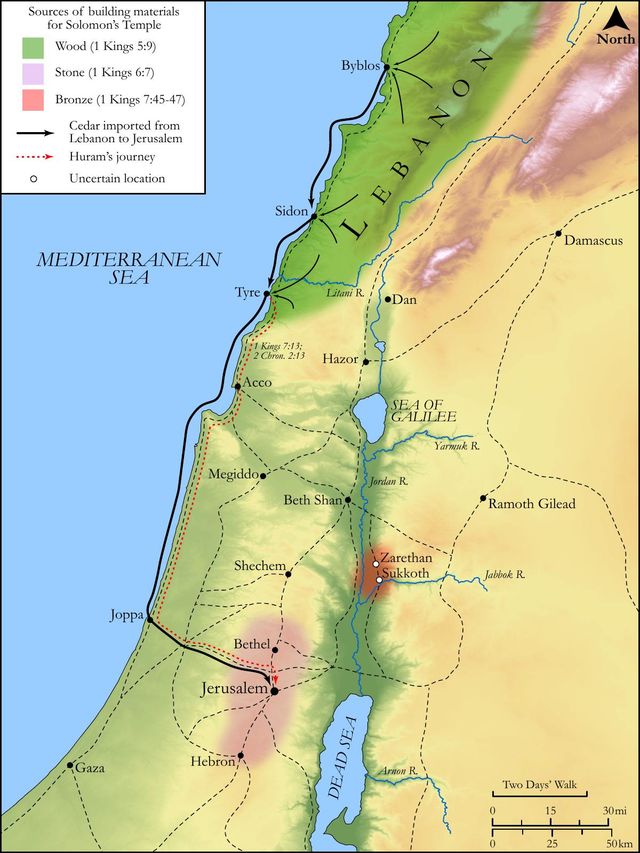
This verse is situated within a comprehensive account of the construction and furnishing of Solomon's magnificent Temple in Jerusalem, specifically within 2 Chronicles chapter 4. Preceding this verse, the text describes the grand "Molten Sea" (or bronze laver) in 2 Chronicles 4:2-6, a massive basin for priestly ablutions. Following that, 2 Chronicles 4:14 shifts focus to the ten smaller, mobile lavers and their intricate bases, which served a distinct purpose. The Chronicler's detailed enumeration of these items, emphasizing their material (bronze) and the unparalleled craftsmanship of Huram-abi (a master artisan from Tyre, commissioned by Solomon as noted in 2 Chronicles 2:13-14), highlights the scale and splendor of God's dwelling place. This section, along with the architectural details in 2 Chronicles chapter 3, meticulously outlines the physical manifestation of God's presence among His people, leading up to the Temple's dedication in 2 Chronicles chapter 5.
Historical & Cultural Context
The construction of Solomon's Temple marked a pivotal moment in Israelite history, establishing a permanent, central sanctuary after centuries of the portable Tabernacle. This era, during Solomon's reign, was characterized by unprecedented wealth, peace, and international standing for Israel, enabling the commissioning of such an elaborate and costly edifice. The extensive use of bronze, a durable and valuable metal, and the engagement of skilled Phoenician artisans like Huram-abi, reflect the advanced metallurgical techniques of that day. Ritual purity was an absolute prerequisite in Israelite worship, a concept deeply rooted in the Mosaic Law, which mandated specific cleansing rituals for priests and the meticulous preparation of sacrifices. The Temple's furnishings, therefore, were not merely decorative but profoundly functional, designed to facilitate strict adherence to divine commands regarding holiness and separation, ensuring that all aspects of worship were conducted in a manner pleasing to God.
Key Themes
ShowHideThe meticulous description of the bases and lavers significantly contributes to several overarching themes in 2 Chronicles. Firstly, it powerfully underscores the theme of Purity and Sanctification, as these vessels were indispensable for the ritual cleansing required of both priests and offerings before they could approach God or be presented on the altar. This echoes the Tabernacle's laver, whose purpose is outlined in Exodus 30:18-21. Secondly, the detailed craftsmanship and extensive inventory emphasize the theme of Divine Order and Meticulous Detail in worship. God's instructions for His sanctuary were precise, demonstrating His demand for excellence and reverence in all aspects of service, reflecting His own holiness and majesty. Finally, the sheer scale and opulence of these bronze items, requiring vast resources and skilled labor, testify to Solomon's Wisdom and Wealth, divinely granted as seen in 1 Kings 4:29. The Temple itself, and its furnishings, stood as a testament to Israel's prosperity under God's blessing and their unwavering devotion to the Lord.
Exposition and Analysis
ShowHideKey Word Analysis
ShowHideThis primitive root signifies to "do" or "make" in its broadest sense, encompassing accomplishment, fashioning, and execution. In this context, it highlights the active creation and skilled craftsmanship of Huram-abi in constructing these complex Temple furnishings, emphasizing the deliberate and intentional nature of their production.
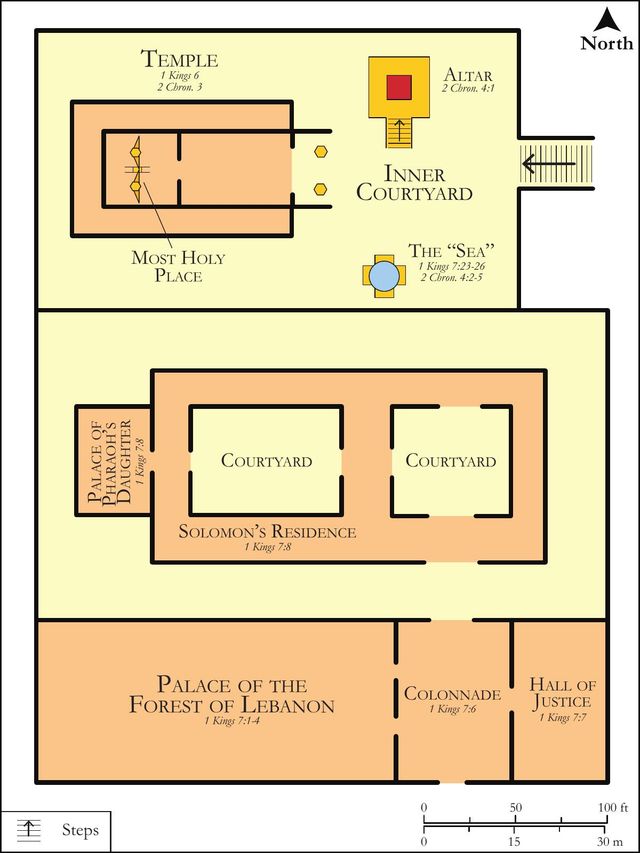
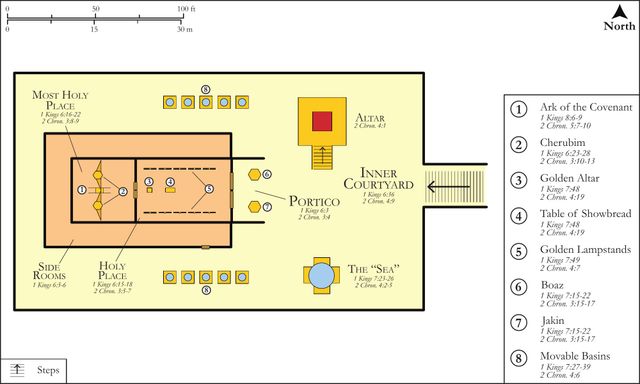
Derived from a word meaning "spot" or "place," this term refers to a "pedestal" or "base." As described in 1 Kings 7:27-39, these were not simple stands but highly elaborate, often wheeled structures designed to support the lavers. Their intricate design, featuring carved lions, oxen, cherubim, and complex wheel mechanisms, speaks to their functional utility (potential mobility) and their aesthetic grandeur, befitting the sacred space of the Temple.
This word, related to a root meaning "something round" or "excavated," denotes a "washbowl" or "caldron." In the context of the Temple, these were large bronze basins, ten in number, that rested upon the aforementioned bases. Unlike the massive "Molten Sea" (mentioned in 2 Chronicles 4:2-6), these ten smaller lavers were specifically designated for washing the burnt offerings, ensuring the ritual purity of the sacrifices before their presentation on the altar.
Verse Breakdown
ShowHide"He made also bases"
This clause identifies the subject as Huram-abi, the master craftsman, and the object of his creation: the "bases." These were the ornate, wheeled stands, meticulously designed not only for their functional purpose of supporting the lavers but also to contribute to the overall splendor and sanctity of the Temple. Their construction reflects the highest level of craftsmanship available at the time.
"and lavers made he upon the bases;"
This second clause specifies the placement and relationship of the "lavers" (bronze basins) to the "bases." The lavers were positioned directly atop these intricate stands, indicating a complete and integrated system for ritual washing. This arrangement facilitated their primary use for cleansing the sacrificial animals, underscoring the meticulous preparation and ritual purity required for acceptable worship and offerings within the Temple precincts.
Literary Devices
ShowHideThough concise, 2 Chronicles 4:14 effectively employs several literary techniques. Enumeration is implicitly used by referencing these specific items, which are part of a larger list of Temple furnishings detailed throughout 2 Chronicles chapter 4, conveying the comprehensive nature of the Temple's outfitting. The verse also utilizes Metonymy, where "bases" and "lavers" stand in for the broader system of ritual purification they enabled. Furthermore, the objects themselves carry significant Symbolism: the lavers, containing water for washing, symbolize purification and cleansing, which were absolutely essential for approaching a holy God. The bronze material, often associated with strength, durability, and even judgment in biblical contexts, adds another layer of symbolic weight to these functional elements within the sacred space.
Theological and Thematic Connections
ShowHideThe bases and lavers, though physical components of the Temple, carried profound theological significance. Their primary function was to facilitate ritual purity, ensuring that both priests and offerings were ceremonially clean before entering God's presence or being presented on the altar. This pervasive emphasis on external cleansing pointed to a deeper spiritual truth: God is utterly holy, and those who approach Him must do so with reverence and purity of heart. The meticulous detail in their construction reflects God's demand for excellence and order in worship, indicating that our service to Him should be offered with the utmost care, intentionality, and devotion. This Old Testament emphasis on external purification foreshadows the New Testament's focus on inner transformation and the spiritual cleansing necessary for true worship, which is made possible through Christ.
Reflection and Application
ShowHideThe detailed account of the Temple's furnishings, including the bases and lavers, serves as a powerful reminder that our approach to God is not to be taken lightly. Just as the priests of old needed to undergo ritual cleansing to perform their duties, believers today are called to approach God with a prepared heart, continually seeking spiritual purification. This involves a conscious turning away from sin, repentance, and a reliance on the cleansing power of Christ's sacrifice. The meticulous craftsmanship of these items also challenges us to consider the quality of our own worship and service; God deserves our very best, offered with intentionality and excellence, not out of obligation but out of profound love and reverence for His holiness. Our "worship" extends beyond formal gatherings to every aspect of our lives, calling us to live in a manner that reflects His purity, glory, and the transformative power of His grace.
Questions for Reflection
ShowHideFAQ
ShowHideWhat was the difference between the "Molten Sea" and these "lavers"?
ShowHideThe "Molten Sea" (also known as the Bronze Sea), described in 2 Chronicles 4:2-6, was a single, massive bronze basin primarily used by the priests for washing themselves. In contrast, the "lavers" mentioned in 2 Chronicles 4:14 were ten smaller, mobile basins, each placed on an elaborate wheeled base. These ten lavers were specifically used for washing the burnt offerings before they were presented on the altar, ensuring the ritual purity of the sacrifices.
Why were the "bases" so elaborate and wheeled?
ShowHideThe "bases" were indeed highly elaborate, as detailed in 1 Kings 7:27-39, featuring intricate carvings of lions, oxen, cherubim, and complex wheel mechanisms. Their elaborate design reflected the immense wealth and artistic skill dedicated to the Temple, emphasizing the glory and majesty of God. The wheels likely allowed the lavers to be moved to various locations within the Temple courts as needed for the priests' duties, providing flexibility in handling the numerous sacrifices and maintaining ritual order.
Does 2 Chronicles 4:14 have relevance for Christians today?
ShowHideAbsolutely. While the physical Temple and its rituals are no longer central to Christian worship, the principles behind the lavers remain profoundly relevant. They symbolize the necessity of purity for approaching God, which for Christians is found not in ritual washing but in the spiritual cleansing provided by Jesus Christ. They also highlight the importance of preparation for worship and offering our best to God in all areas of life, reflecting His demand for excellence and reverence in our service. The physical cleansing foreshadows the ultimate spiritual purification available through faith in Christ, making us fit to stand in His holy presence.
Christ-Centered Fulfillment
ShowHideThe bases and lavers of Solomon's Temple, with their profound emphasis on ritual cleansing and meticulous preparation for worship, find their ultimate and complete fulfillment in Jesus Christ. The physical washing with water, which was necessary for the Old Covenant priests and offerings, perfectly prefigured the complete and eternal purification accomplished by the shedding of Christ's precious blood. He is the true and perfect sacrifice, whose one offering has forever perfected those who are being sanctified (Hebrews 10:14). Through faith in Him, believers are cleansed from all sin (1 John 1:7) and are granted direct, confident access to God's holy presence, no longer needing ceremonial washings or a mediating earthly priesthood (Hebrews 4:16). Christ Himself is the new and living way (Hebrews 10:20), making every believer a "royal priesthood" (1 Peter 2:9) called to offer spiritual sacrifices acceptable to God through Him. Thus, the lavers point beyond their earthly function to the Lamb of God who truly takes away the sin of the world (John 1:29), providing ultimate and eternal cleansing.