


1 Samuel 8:6
Bible text: King James Version (1769 Blayney text) · Public domain
Bible text: Berean Standard Bible · Public domain
Bible text: American Standard Version (1901) · Public domain
Bible text: World English Bible, Messianic edition · Public domain
Bible text: Geneva Bible (1599) · Public domain
Bible text: Young's Literal Translation · Public domain
- וַיֵּרַעvai·Ye·ra'and it was displeasingH7489Conj-w ¦ V-Qal-ConsecImperf-3msVerb Qal Consecutive Imperfect 3rd Singular Masculineוַandיֵּרַעit was displeasing
- הַדָּבָרha·da·Varthe matterH1697Art ¦ N-msNoun Singular Masculine Absoluteהַtheדָּבָרmatter
- בְּעֵינֵיbe·'ei·Neiin [the] eyes ofH5869Prep-b ¦ N-fdcNoun Dual Feminine Constructבְּinעֵינֵי[the] eyes of
- שְׁמוּאֵלshe·mu·'ElSamuelH8050N-proper-mNoun Proper Masculine
- כַּאֲשֶׁרka·'a·Sherjust whenH834Prep-k ¦ RelParticle Relativeכַּjustאֲשֶׁרwhen
- אָמְרוּ'a·me·Ruthey saidH559V-Qal-Perf-3cpVerb Qal Perfect 3rd Plural common gender
- תְּנָהte·nahgive !H5414V-Qal-Imp-2ms ¦ SfxVerb Qal Imperative 2nd Singular Masculineתְּנָgiveה!
- לָּנוּLa·nuto <the> usPrep-l ¦ 1cpSuffix Personal 1st Plural common genderלָּto <the>נוּus
- מֶלֶךְMe·lekha kingH4428N-msNoun Singular Masculine Absolute
- לְשָׁפְטֵנוּle·sha·fe·Te·nuto judge usH8199Prep-l ¦ V-Qal-Inf ¦ 1cpVerb Qal Infinitive Constructלְtoשָׁפְטֵjudgeנוּus
- וַיִּתְפַּלֵּלvai·yit·pa·Leland he prayedH6419Conj-w ¦ V-Hithpael-ConsecImperf-3msVerb Hithpael Consecutive Imperfect 3rd Singular Masculineוַandיִּתְפַּלֵּלhe prayed
- שְׁמוּאֵלshe·mu·'ElSamuelH8050N-proper-mNoun Proper Masculine
- אֶל'eltoH413PrepPreposition
- יְהוָהYah·wehYahwehH3068N-properNoun Proper Title
English is a literal word-by-word gloss of the Hebrew, not the KJV's wording. Why?
This is the original text the KJV's translators worked from — each Hebrew word with its own literal English meaning in this verse, prepared by scholars at Tyndale House, Cambridge. The KJV translates whole sentences, not word by word, so its wording differs: one Hebrew word can become several English words, and the KJV may choose “the LORD” where the gloss reads “Yahweh”. Both are faithful — they answer different questions. For the KJV's own rendering, switch to the KJV text.
Details
See on the biblical-era map
Study this verse
Public-domain commentary
Matthew Henry
From his Commentary on the Whole Bible. Henry comments on passages, not single verses — this entry covers 1 Samuel 8:4–22. His four-level outline is real structure in the source text, so it is rendered as structure.
We have here the starting of a matter perfectly new and surprising, which was the setting up of kingly government in Israel. Perhaps the thing had been often talked of among them by those that were given to change and affected that which looked great. But we do not find that it was ever till now publicly proposed and debated. Abimelech was little better than a titular king, though he is said to reign over Israel (Jdg 9:22), and perhaps his fall had for a great while rendered the title of king odious in Israel, as that of Tarquinius did among the Romans; but, if it had, by this time the odium was worn off, and some bold steps are here taken towards so great a revolution as that amounted to. Here is,
I.The address of the elders to Samuel in this matter (Sa1 8:4, Sa1 8:5):
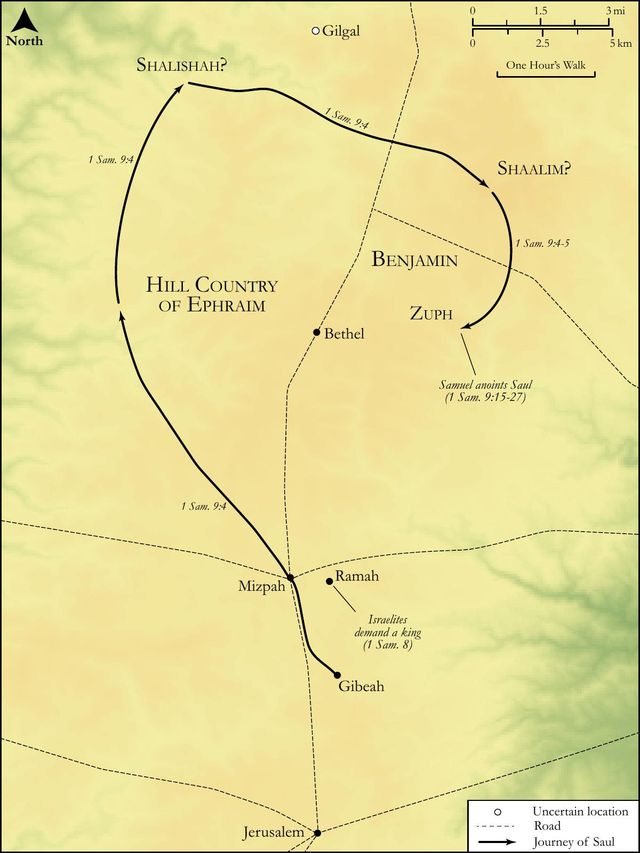
They gathered themselves together, by common consent; and not in a riotous tumultuous manner, but with the respect due to his character, they came to him to his house as Ramah with their address, which contained,
1.A remonstrance of their grievances: in short, Thou art old, and thy sons walk not in thy ways. Many a fairer occasion that people had had to ask a king, when they were oppressed by their neighbours or embroiled at home for want of a king in Israel, but a small thing will serve factious spirits for a colour to desire a change.
(1.)It was true that Samuel was old; but if that made him less able to ride the circuit, and sit long on the bench, yet it made him the more wise and experienced, and, upon that account, the fitter to rule. If he was old, had he not grown old in their service? And it was very unkind, ungrateful, nay, and unjust, to cast him off when he was old, who had spent his days in doing them good. God had saved his youth from being despicable (Sa1 3:20), yet they make his old age so, which should have been counted worthy of double honour. If old people be upbraided with their infirmities, and laid aside for them, let them not think it strange; Samuel himself was so.
(2.)It was true that his sons did not walk in his ways; the more was his grief, but they could not say it was his fault: he had not, like Eli, indulged them in their badness, but was ready to receive complaints against them. And, if that had been the thing desired, we may well suppose, upon the making out of the charge of bribery against them he would have superseded their commissions and punished them. But this would not content the elders of Israel; they had another project in their head.
2.A petition for the redress of these grievances, by setting a king over them: Make us a king to judge us like all the nations. Thus far it was well, that they did not rise up in rebellion against Samuel and set up a king for themselves, vi et armis - by force; but they applied to Samuel, God's prophet, and humbly begged of him to do it. But it appears by what follows that it was an evil proposal and ill made, and was displeasing to God. God designed them a king, a man after his own heart, when Samuel was dead; but they would anticipate God's counsel, and would have one now that Samuel was old. They had a prophet to judge them, that had immediate correspondence with heaven, and therein they were great and happy above any nation, none having God so nigh unto them as they had, Deu 4:7. But this would not serve; they must have a king to judge them with external pomp and power, like all the nations. A poor prophet in a mantle, though conversant in the visions of the Almighty, looked mean in the eyes of those who judged by outward appearance; but a king in a purple robe, with his guards and officers of state, would look great: and such a one they must have. They knew it was in vain to court Samuel to take upon him the title and dignity of a king, but he must appoint them one. They do not say, "Give us a king that is wise and good, and will judge better than thy sons do," but, "Give us a king," any body that will but make a figure. Thus foolishly did they forsake their own mercies, and, under pretence of advancing the dignity of their nation to that of their neighbours, did really thrust themselves down from their own excellency, and profane their crown by casting it to the ground.
II.Samuel's resentment of this address, Sa1 8:6. Let us see how he took it.
1.It cut him to the heart. Probably it was a surprise to him, and he had not any intimation before of their design, which made it the more grievous. The thing displeased Samuel; not when they upbraided him with his own infirmities and his children's irregularities (he could patiently bear what reflected on himself and his own family), but it displeased him when they said, Give us a king to judge us, because that reflected upon God and his honour.
2.It drove him to his knees; he gave them no answer for the present, but took time to consider of what they proposed, and prayed unto the Lord for direction what to do, spreading the case before him and leaving it with him, and so making himself easy. Samuel was a man much in prayer, and we are encouraged in every thing to make our requests known to God, Phi 4:6. When any thing disturbs us, it is our interest, as well as our duty, to show before God our trouble, and he gives us leave to be humbly free with him.
III.The instruction God gave him concerning this matter.
Those that in straits seek to God shall find him nigh unto them, and ready to direct them. He tells him,
1.That which would be an allay to his displeasure. Samuel was much disturbed at the proposal: it troubled him greatly to see his prophetic office thus slighted, and all the good turns he had done to Israel thus ungratefully returned; but God tells him he must not think it either hard or strange.
(1.)He must not think it hard that they had put this slight upon him, for they had herein put a slight upon God himself: "They have not rejected thee only, but they have rejected me. I share with thee in the affront," Sa1 8:7. Note, If God interest himself in the indignities that are done us, and the contempts that are put upon us, we may well afford to bear them patiently; nor need we think the worse of ourselves if for his sake we bear reproach (Psa 69:7), but rather rejoice and count it an honour, Col 1:24. Samuel must not complain that they were weary of his government, though just and gentle, for really they were weary of God's government; this was what they disliked: They have rejected me, that I should not reign over them. God reigns over the heathen (Psa 47:8), over all the world, but the government of Israel had hitherto been, in a more peculiar manner than ever any government was, a Theocracy, a divine government; their judges had their call and commission immediately from God; the affairs of their nation were under his peculiar direction. As the constitution, so the administration of their government, was by Thus saith the Lord; this method they were weary of, though it was their honour and safety, above any thing, so long as they kept in with God. They were indeed so much the more exposed to calamities if they provoked God to anger by sin, and found they could not transgress at so cheap a rate as other nations could, which perhaps was the true reason why they desired to stand upon the same terms with God that other nations did.
(2.)He must not think it strange, nor marvel at the matter, for they do as they always have done: According to all the works which they have done, since the day that I brought them out of Egypt, so do they unto thee, Sa1 8:8; They had at first been so very respectful and obsequious to Samuel that he began to hope they were cured of their old stubborn disposition; but now he found himself deceived in them, and must not be surprised at it. They had always been rude to their governors, witness Moses and Aaron; nay, They have forsaken me and served other gods; the greatness of their crime, in affecting new gods, may make this crime of affecting new governors seem little. Samuel might expect they would deal treacherously, for they were called transgressors from the womb, Isa 48:8. This had been their manner from their youth up, Jer 22:21.
2.He tells him that which would be an answer to their demand. Samuel would not have known what to say if God had not instructed him. Should he oppose the motion, it would bespeak a greater fondness of power and dominion than did become a prophet, and an indulgence of his sons. Should he yield to the motion, it would look like the betraying of his trust, and he would become accessory to all the bad consequences of a change. Aaron sinned in gratifying the people when they said, Make us gods; Samuel dares not therefore comply with them when they say, Make us a king, but he gives them, with assurance, the answer God sent them.
(1.)He must tell them that they shall have a king. Hearken to the voice of the people, Sa1 8:7, and again, Sa1 8:9. Not that God was pleased with their request, but, as sometimes he crosses us in love, so at other times he gratifies us in wrath; he did so here. When they said, Give us a king and princes he gave them a king in his anger (see Hos 13:10, Hos 13:11), as he gave them quails, Psa 106:15; Psa 78:29. God bade Samuel humour them in this matter,
[1.]That they might be beaten with their own rod, and might feel, to their cost, the difference between his government and the government of a king; see Ch2 12:8. It soon appeared how much worse their condition was, in all respects, under Saul, than it had been under Samuel.
[2.]To prevent something worse. If they were not gratified, they would either rise in rebellion against Samuel or universally revolt from their religion and admit the gods of the nations, that they might have kings like them. Rather than so, let them have a king.
[3.]God knows how to bring glory to himself out of it, and to serve his own wise purposes even by their foolish counsels.
(2.)But he must tell them, withal, that when they have a king they will soon have enough of him, and will, when it is too late, repent of their choice. This he must protest solemnly to them (Sa1 8:9), that, if they would have a king to rule them, as the eastern kings ruled their subjects, they would find the yoke exceedingly heavy. They looked only at the pomp or magnificence of a king, and thought that would make their nation great and considerable among its neighbours, and would strike a terror upon their enemies; but he must bid them consider how they would like to bear the charges of that pomp, and how they would endure that arbitrary power which the neighbouring kings assumed. Note, Those that set their hearts inordinately upon any thing in this world ought, for the moderating of their desires, to consider the inconveniences as well as the conveniences that will attend it, and to set the one over against the other in their thoughts. Those that submit to the government of the world and the flesh are told plainly what hard masters they are, and what a tyranny the dominion of sin is; and yet they will exchange God's government for it.
IV.Samuel's faithful delivery of God's mind to them, Sa1 8:10.
He told them all the words of the Lord, how ill he resented it, that he construed it a rejecting of him, and compared it with their serving other gods, - that he would grant their request if they insisted on it, but withal had ordered him to represent to them the certain consequences of their choice, that they would be such that if they had any reason left them, and would allow themselves to consult their own interest, they would withdraw their petition, and beg to continue as they were. Accordingly he lays before them, very particularly, what would be, not the right of a king in general, but the manner of the king that should reign over them, according to the pattern of the nations, Sa1 8:11. Samuel does not speak (as bishop Patrick expounds it) of a just and honest right of a king to do these things, for his right is quite otherwise described in that part of Moses's law which concerns the king's duty, but such a right as the kings of the nations had then acquired. This shall be the manner of the king, that is, "thus he must support his dignity at the expense of that which is dearest to you, and thus he will abuse his power, as those that have power are apt to do; and, having the militia in his hand, you will be under a necessity of submitting to him."
1.If they will have such a king as the nations have, let them consider,
(1.)That king must have a great retinue, abundance of servants to wait on him, grooms to look after his chariots and horses, gentlemen to ride about with him, and footmen to run before his chariots. This is the chief grandeur of princes, and the imaginary glory of great men, to have a multitude of attendants. And whence must he have these? "Why, he will take your sons, who are free-born, have a liberal education, and whom you now have at your own disposal, and will appoint them for himself," Sa1 8:11. They must wait upon him, and be at his beck; those that used to work for their parents and themselves must work for him, ear his ground, and reap his harvest (Sa1 8:12), and count it their preferment too, Sa1 8:16. This would be a great change.
(2.)He must keep a great table; he will not be content to dine with his neighbours upon a sacrifice, as Samuel used to do (Sa1 9:13); but he must have a variety of dainty dishes, forced meats, and sweet-meats, and delicate sauces; and who must prepare him these? "Why, he will take your daughters, the most ingenious and handy of them, whom you hoped to prefer to houses and tables of their own; and, whether you be willing or no, they must be his confectioners, and cooks, and bakers, and the like." (3.) "He must needs have a standing army, for guards and garrisons; and your sons, instead of being elders of your cities, and living in quiet and honour at home, must be captains over thousands and captains over fifties, and must be disposed of at the pleasure of the sovereign." (4.) "You may expect that he will have great favourites, whom, having dignified and ennobled, he must enrich, and give them estates suitable to their honour; and which way can he do that, but out of your inheritances? Sa1 8:14. He will take your fields and vineyards, which descended to you from your ancestors, and which you hoped to leave to your posterity after you, even the best of them; and will not only take them to himself (you could bear that better), but he will give them to his servants, who will be your masters, and bear rule over that for which you have laboured, How will you like that?" (5.) "He must have great revenues to maintain his grandeur and power with; and whence must he have them but from you? He will take the tenth of the fruits of your ground (Sa1 8:15), and your cattle, Sa1 8:17. You think the tenths, the double tenths, which the law of God has appointed for the support of the church, grievous enough, and grudge the payment of them; but, if you have a king, there must issue another tenth out of your estates, which will be levied with more rigour, for the support of the royal dignity. Consider the expense with the magnificence, and whether it will quit cost."
2.These would be their grievances, and,
(1.)They would have none but God to complain to. Once they complained to the prince himself, and were answered, according to the manner of the king, Your yoke is heavy, and I will add to it, Kg1 12:11.
(2.)When they complained to God he would not hear them, Sa1 8:18. Nor could they expect that he should, both because they had been deaf to his calls and admonitions, and this trouble, in particular, they had brought upon themselves by rejecting him, and would not believe when he told them what would come of it. Note, When we bring ourselves into distress by our own irregular desires and projects we justly forfeit the comfort of prayer and the benefit of divine aids, and, if God be not better to us than we deserve, must have our relief in our own hands, and then it is bad with us.
V.The people's obstinacy in their demand, Sa1 8:19, Sa1 8:20.
One would think such a representation of the consequences as this was, coming from God himself, who can neither deceive by his word nor be deceived in his knowledge, should have prevailed with them to waive their request: but their hearts were upon it, right or wrong, good or evil: "We will have a king over us, whatever God or Samuel say to the contrary; we will have a king, whatever it cost us, and whatever inconvenience we bring upon ourselves or our posterity by it." See their folly.
1.They were quite deaf to reason and blind to their own interest. They could not answer Samuel's arguments against it, nor deny the force of them, and yet they grow more violent in their request, and more insolent. Before it was, "Pray, make us a king;" now it is, "Nay, but we will have a king; yea, that we will, because we will; nor will we bear to have any thing said against it." See the absurdity of inordinate desires, and how they rob men of their reason.
2.They could not stay God's time. God had intimated to them in the law that, in due time, Israel should have a king (Deu 17:14, Deu 17:15), and perhaps they had some intimation that the time was at hand; but they are all in haste: "We, in our day, will have this king over us." Could they but have waited ten or twelve years longer they would have had David, a king of God's giving in mercy, and all the calamities that attended the setting up of Saul would have been prevented. Sudden resolves and hasty desires make work for a long and leisurely repentance.
3.That which they aimed at in desiring a king was not only, as before, that they might be like the nations, and levelled with the one above whom God had so far advanced them, but that they might have one to judge them, and to go out before them when they took the field, and to fight their battles. Foolish people and unwise! Could they ever desire a battle better fought for them that the last was, by Samuel's prayer and God's thunder? Sa1 7:10. Was victory hereby too sure to them? And were they fond of trying the chance of war at the same uncertainty that others did? So sick, it seems, were they of their privileges: and what was the issue? Their first king was slain in a battle, which none of their judges ever were; so was Josiah, one of the last and best.
VI.The dismissing of them with an intimation that very shortly they should have what they asked.
1. Samuel rehearsed all their words in the ears of the Lord, v. 21. Not but that God perfectly knew it, without Samuel's report; but thus he dealt faithfully between God and Israel, as a prophet, returning the answer to him that sent him; and thus he waited on God for further direction. God is fully acquainted with the state of the case we are in care and doubt about, but he will know it from us. His rehearsing it in the ears of the Lord intimates that it was done in private; for the people were not disposed to join with him in prayer to God for direction in this matter; also it bespeaks a holy familiarity, to which God graciously admits his people: they speak in the ears of the Lord, as one friend whispers with another; their communion with God is meat they have to eat which the world knows not of, Joh 4:32. 2. God gave direction that they should have a king, since they were so inordinately set upon it (Sa1 8:22): "Make them a king, and let them make their best of him, and thank themselves if that very pomp and power which they are so eager to see their sovereign in be their plague and burden." So he gave them up to their own hearts' lusts. Samuel told them this, but sent them home for the present, every man to his city; for the designation of the person must be left to God; they had now no more to do. When God saw fit to notify the choice to Samuel they should hear further from him; in the mean time let them keep the peace and expect the issue.
Historical interpretation
Five Centuries of Reception
3 surviving comments on this verse. Each one is dated, so this reads as a timeline rather than a list.
Select a marker to jump to its quote. Markers stagger vertically where authors wrote within a few decades of each other.
And that we may know that this voice of God came forth with His true and highest majesty to honour and avenge His priests; when three of the ministers -Korah, Dathan, and Abiram-dared to deal proudly, and to exalt their neck against Aaron the priest, and to equal themselves with the priest set over them; they were swallowed up and devoured by the opening of the earth, and so immediately suffered the penalty of their sacrilegious audacity. Nor they alone, but also two hundred and fifty others, who were their companions in boldness, were consumed by a fire breaking forth from the Lord, that it might be proved that God's priests are avenged by Him who makes priests. In the book of Kings also, when Samuel the priest was despised by the Jewish people on account of his age, as you are now, the Lord in wrath exclaimed, and said, "They have not rejected thee, but they have rejected me." And that He might avenge this, He set over them Saul as a king, who afflicted them with grievous injuries, and trod on the people, and pressed down their pride with all insults and penalties, that the despised priest might he avenged by divine vengeance on a proud people.
It is becoming, therefore, that you also should be obedient to your bishop and contradict him in nothing; for it is a fearful thing to contradict any such person. For no one does [by such conduct] deceive him that is visible but does [in reality] seek to mock him that is invisible, who, however, cannot be mocked by anyone. And every such act has respect not to man but to God. For God says to Samuel, “They have not mocked you, but me.”
The speech was displeasing to the eyes of Samuel, etc. The infidelity of the Jews was displeasing before the wise in Christ, who are the eyes of the Church, because in choosing the lowest for the highest, although ignorant, they said to the Lord, "Give us an earthly kingdom that will perpetually damn us." For of the heavenly kingdom, which you promise to the poor in spirit, we have no care, for whose salvation the Savior prayed either by himself while he was in the world, or through his members even after the ascension. This is specially narrated in the ecclesiastical history concerning James, the brother of the Lord (Matthew V), because he prayed for the people attending the temple with such insistence and diligence that his knees were believed to have taken on the hardness of camels'.
Continue studying 1 Samuel 8:6 across the web’s major study libraries — every link below opens this exact verse, chapter, or book on the destination site.
Read & Compare
 BibleGatewayThis verse in more than 200 translations and 70 languages.
 Bible.comThe YouVersion reader — hundreds of translations, reading plans, and highlights.
 ESV.orgCrossway's official English Standard Version reader.
 NET BibleThe NET translation with 60,000+ translators' notes on every rendering decision.
 STEP BibleTyndale House's free study tool — original text, vocabulary, and scholarly resources.
 BibliaLogos Bible Software's free web reader.
 USCCBThe New American Bible (Revised Edition) with the U.S. bishops' study notes.
Commentaries
 BibleHub CommentariesDozens of classic commentaries on this verse, gathered on one page.
 StudyLightMore than 100 commentary sets — the largest collection on the web.
 BibleRefPlain-English commentary on what this verse means, verse by verse.
 Enduring WordDavid Guzik's free commentary on this chapter, widely used by Bible teachers.
 Bible Study ToolsVerse commentary alongside Greek and Hebrew study aids.
Original Language & Research
- BibleHub InterlinearThe verse word by word — original language, transliteration, and English.
- BibleHub LexiconEvery word's original-language definition and Strong's entry.
 Blue Letter BibleDeep-study tools — Strong's numbers, concordance, and word studies.
 SefariaThe Hebrew text with Rashi and centuries of Jewish commentary.
Sermons, Hymns & Audio


TrulyRandomVerse is not affiliated with these sites and doesn’t control their content. They’re linked because they’re genuinely useful.
Summary
1 Samuel 8:6 captures a deeply significant and distressing moment in Israel's history, as the prophet Samuel is profoundly displeased by the elders' demand for a human king to "judge" them, a desire rooted in their wish to be "like all the nations." This request, which Samuel rightly perceives as a rejection of God's unique direct rule over His people, immediately prompts his characteristic response: he turns to the LORD in earnest prayer, seeking divine wisdom and counsel in the face of this unprecedented national crisis. The verse powerfully encapsulates the tension between human desires for conformity and security, and God's sovereign intention for His people's distinct identity, setting the stage for Israel's pivotal transition from a theocracy led by judges to a monarchy.
Context
ShowHideLiterary Context
This verse immediately follows the explicit demand of Israel's elders for a king in 1 Samuel 8:5. Samuel, having grown old, and with his sons having proven corrupt as judges, represented the culmination of a centuries-long era where God ruled Israel through divinely appointed judges. The people's request was not merely for a new leader, but for a fundamental paradigm shift in their national identity and governance, driven by a desire to conform to the surrounding nations. This demand deeply troubled Samuel, who had faithfully served the LORD throughout his life, even though God had previously spoken about the possibility of a king in Deuteronomy 17:14-15, setting specific conditions for such a ruler. Samuel's distress and subsequent prayer are crucial, as they directly lead to God's profound response in 1 Samuel 8:7, clarifying that the people's rejection was ultimately of God Himself, not merely of Samuel.
Historical & Cultural Context
For centuries, Israel had functioned as a unique theocracy, with Yahweh as their invisible King, whose rule was mediated through judges and prophets. In stark contrast, the nations surrounding them were typically governed by visible, powerful monarchs who commanded armies, administered justice, and often embodied the national identity. The Philistines, a formidable and persistent enemy, posed a constant military threat, and Israel's yearning for a strong, centralized military leader, akin to those of their neighbors, was a pragmatic, albeit faithless, response to this geopolitical reality. Their desire to be "like all the nations" reflected a profound cultural conformity, prioritizing perceived earthly security and status over their distinct covenant relationship with Yahweh. This collective longing for an earthly king, rather than trusting in God's providential care and leadership, marked a significant departure from their foundational identity as a people set apart.
Key Themes
ShowHideThe verse profoundly contributes to several overarching themes within 1 Samuel and the broader Old Testament narrative. Firstly, it highlights the Rejection of God's Rule: While on the surface it appeared to be a rejection of Samuel's leadership or his corrupt sons, the underlying issue was a deeper spiritual rebellion. By demanding a human king "like all the nations," Israel was implicitly rejecting their unique covenant relationship with God, who had been their invisible King and ultimate ruler since the Exodus. This theme is explicitly confirmed by God in the subsequent verse, where He tells Samuel, "they have not rejected thee, but they have rejected me, that I should not reign over them" (1 Samuel 8:7). This stands in stark contrast to earlier periods, such as when Gideon refused kingship, declaring, "The LORD shall rule over you" (Judges 8:23). Secondly, Samuel's immediate and instinctive reaction was to turn to the LORD in prayer, underscoring Samuel's Righteous Response and his consistent character as a faithful prophet and intercessor, always seeking divine counsel rather than acting on his own emotions or human wisdom. Finally, the people's desire to be "like all the nations" reveals The Perils of Conformity, demonstrating a fundamental misunderstanding of their chosen status and divine purpose. God intended Israel to be a distinct, holy nation, set apart by His direct rule. Their yearning for a human king, driven by a desire for earthly security and status, foreshadowed many future struggles and deviations from God's path, as seen in the subsequent history of the Israelite monarchy, often leading to spiritual decline.
Exposition and Analysis
ShowHideKey Word Analysis
ShowHideThis root (H3415) primarily means "to be broken up" or "to be grievous." In the context of Samuel's reaction, it conveys the profound emotional and spiritual distress he experienced, indicating that the people's demand was deeply offensive and painful to him, not merely a minor annoyance. It suggests the breaking of a relationship or the grievous nature of their request from a divine perspective.
This word (H5869), meaning "eye," is part of the Hebrew idiom "evil in his eyes" (ra'ah be'eynav), which the KJV translates as "displeased." When something is "evil in one's eyes," it signifies strong disapproval, moral offense, or deep sorrow. Samuel's "eye" discerned the people's request as fundamentally wrong and grievous, reflecting his spiritual insight into its profound implications.
The verb (H6419) means "to judge (officially or mentally); by extension, to intercede, pray." This highlights Samuel's characteristic role as an intercessor and prophet. His immediate turning to the LORD in prayer demonstrates his reliance on divine counsel and his commitment to mediating between God and His people, even when they are in rebellion. It signifies a humble and earnest seeking of God's will in a moment of national crisis.
Verse Breakdown
ShowHide"But the thing displeased Samuel"
This clause immediately highlights Samuel's profound emotional and spiritual reaction to the elders' demand. His displeasure was not merely personal offense at being rejected, but a deep grief stemming from his understanding of the covenant implications. He recognized that this request for a human king was a fundamental turning away from God's unique design for Israel as a theocracy.
"when they said, Give us a king to judge us"
This specifies the exact nature of the "thing" that displeased Samuel. The people's demand for a king was driven by a desire for a visible, earthly ruler "like all the nations," rather than trusting in God's invisible, divine rule. The phrase "to judge us" indicates their desire for both judicial and military leadership, a comprehensive transfer of authority from God and His appointed judges to a human monarch, seeking tangible security over divine providence.
"And Samuel prayed unto the LORD"
This final clause reveals Samuel's immediate and faithful response to his distress. Rather than reacting in anger or despair, he turns directly to God in prayer. This act underscores his role as a prophet and intercessor, always seeking divine wisdom and guidance, and placing the nation's crisis squarely before the ultimate authority of the LORD. It demonstrates his reliance on God's sovereignty even when faced with profound human rebellion.
Literary Devices
ShowHideThe verse effectively employs Contrast and Irony. The most striking Contrast is between Samuel's faithful, prayerful response and the people's faithless, demanding request. Samuel, the last of the judges, embodies the ideal of a leader who consistently seeks God's will, while the people, by demanding a king "like all the nations," demonstrate a profound lack of trust in their unique divine covenant. Furthermore, there is Irony in the people's demand. They seek a king for security and stability, believing a human monarch will provide better leadership than God's direct rule or Samuel's appointed judges. However, the subsequent history of Israel's monarchy, marked by corruption, idolatry, division, and eventual exile, reveals that this pursuit of earthly security often led to greater instability and spiritual decline, ultimately failing to deliver the peace and prosperity they envisioned.
Theological and Thematic Connections
ShowHide1 Samuel 8:6 serves as a critical juncture, illustrating the perennial tension between humanity's desire for visible, tangible leadership and God's design for a relationship of faith and dependence. The people's demand for a king, while seemingly pragmatic, was fundamentally a rejection of God's unique covenant with Israel, where He alone was their King. This episode highlights the dangers of conformity to worldly patterns and the profound implications of choosing human wisdom over divine guidance. Samuel's response, turning to prayer, exemplifies the proper posture of a believer in times of crisis: seeking God's will above all else, even when it contradicts popular opinion or personal preference. This narrative underscores God's sovereignty, His patience even in the face of human rebellion, and His ultimate ability to work His purposes through flawed human choices, even when those choices are rooted in faithlessness.
Reflection and Application
ShowHide1 Samuel 8:6 offers a profound mirror for contemporary believers, challenging us to examine the motivations behind our desires and decisions. Just as Israel yearned to be "like all the nations," we often face the temptation to conform to worldly standards, seeking security, success, or acceptance through means that deviate from God's unique call on our lives. This verse reminds us that true security and fulfillment are found not in mimicking the world, but in embracing our distinct identity as God's people, trusting in His invisible yet sovereign rule. When faced with difficult choices, personal crises, or societal pressures, Samuel's immediate and instinctive response—to pray unto the LORD—serves as a powerful model. Our first recourse should always be to seek divine counsel, laying our burdens and questions before God, confident that He hears and will guide us according to His perfect will. This act of prayer is not a last resort, but a foundational expression of faith, acknowledging God's ultimate authority and wisdom in every circumstance, inviting His transformative presence into our challenges.
Questions for Reflection
ShowHideFAQ
ShowHideWhy was Samuel so displeased by the request for a king?
ShowHideSamuel's displeasure stemmed from multiple layers of understanding. Firstly, it was a personal grief, as the request for a king was implicitly a rejection of his own faithful leadership and that of his family, despite the corruption of his sons. More profoundly, Samuel understood that the people's demand was a theological rejection of God Himself. As God explicitly states in 1 Samuel 8:7, "they have not rejected thee, but they have rejected me, that I should not reign over them." Samuel, as God's prophet, grasped the profound implications for Israel's unique covenant relationship with Yahweh, who had been their invisible King and deliverer since the Exodus. He foresaw the spiritual dangers and moral compromises that a human monarchy, especially one desired out of a worldly desire to "be like all the nations," would inevitably bring upon the people.
Did God always intend for Israel to have a king?
ShowHideThe question of God's intention regarding a king for Israel is nuanced. While God did make provisions for a king in the Mosaic Law (Deuteronomy 17:14-15), outlining the characteristics and limitations of such a ruler, this provision was for a future time when the people would "say, 'I will set a king over me like all the nations that are around me.'" This suggests that while a king was foreseen, it was not necessarily God's ideal or immediate plan for their governance, particularly not one motivated by a desire to conform to pagan nations. The issue in 1 Samuel 8 was not the concept of kingship itself, but the timing and, crucially, the motivation behind the people's demand. They sought a king out of a lack of faith in God's direct rule and a desire for earthly security and conformity, rather than waiting for God's perfect timing and choosing a king who would truly rule under God's authority. God ultimately granted their request, but as Hosea 13:11 later states, "I gave you a king in My anger, and took him away in My wrath," indicating His displeasure with the spirit of their demand.
Christ-Centered Fulfillment
ShowHideThe narrative of Israel's demand for a king in 1 Samuel 8:6, and Samuel's distress, finds profound Christ-centered fulfillment in the New Testament. Just as Israel rejected God's invisible rule, preferring a visible, earthly king "like all the nations," humanity, in its fallen state, consistently rejects the true King, Jesus Christ. He came to His own, yet "His own people did not receive Him" (John 1:11), and His citizens "hated Him and sent a delegation after Him, saying, 'We do not want this man to reign over us'" (Luke 19:14). The people's desire for a king to "judge" them foreshadows the ultimate Judge and King, Jesus, who is the promised ruler from Bethlehem, the one who will "shepherd My people Israel" (Matthew 2:6). Furthermore, Samuel's immediate act of prayer and intercession for a rebellious people points forward to Christ, the Great High Priest, who ever lives to "make intercession for them" (Hebrews 7:25). While Israel sought an earthly king to protect them, Christ is the eternal "King of Kings and Lord of Lords" (Revelation 19:16), whose kingdom is not of this world, yet offers true security, justice, and eternal reign to all who willingly submit to His perfect and loving rule.