


1 Kings 7:11
Bible text: King James Version (1769 Blayney text) · Public domain
Bible text: Berean Standard Bible · Public domain
Bible text: American Standard Version (1901) · Public domain
Bible text: World English Bible, Messianic edition · Public domain
Bible text: Geneva Bible (1599) · Public domain
Bible text: Young's Literal Translation · Public domain
- וּמִלְמַעְלָהu·mil·Ma'·lahand [were] from to above <towards>H4605Conj-w ¦ Prep-m ¦ Prep-l ¦ Adj-cs ¦ SfxAdjective Numerical Singular common gender Absoluteוּandמִ[were] fromלְtoמַעְלָaboveה<towards>
- אֲבָנִים'a·va·NimstonesH68N-fpNoun Plural Feminine Absolute
- יְקָרוֹתye·ka·RotcostlyH3368Adj-fpAdjective Plural Feminine Absolute
- כְּמִדּוֹתke·mi·Dotaccording to measurements ofH4060Prep-k ¦ N-fpcNoun Plural Feminine Constructכְּaccording toמִדּוֹתmeasurements of
- גָּזִיתga·Zithewn [stone]H1496N-fsNoun Singular Feminine Absolute
- וָאָרֶזva·'A·rezand cedarH730Conj-w ¦ N-msNoun Singular Masculine Absoluteוָandאָרֶזcedar
English is a literal word-by-word gloss of the Hebrew, not the KJV's wording. Why?
This is the original text the KJV's translators worked from — each Hebrew word with its own literal English meaning in this verse, prepared by scholars at Tyndale House, Cambridge. The KJV translates whole sentences, not word by word, so its wording differs: one Hebrew word can become several English words, and the KJV may choose “the LORD” where the gloss reads “Yahweh”. Both are faithful — they answer different questions. For the KJV's own rendering, switch to the KJV text.
Details
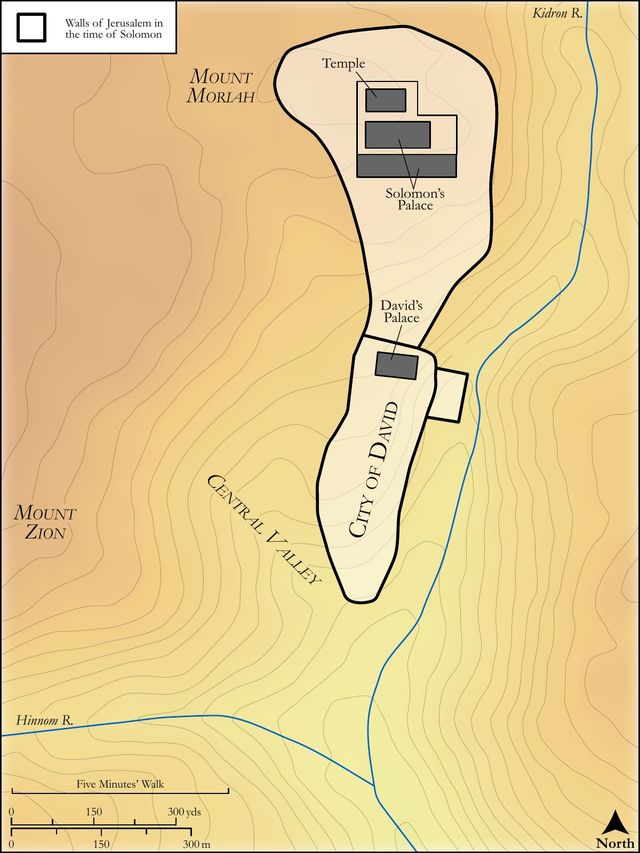
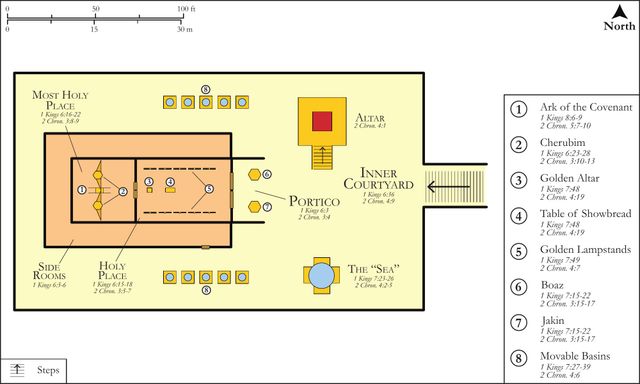
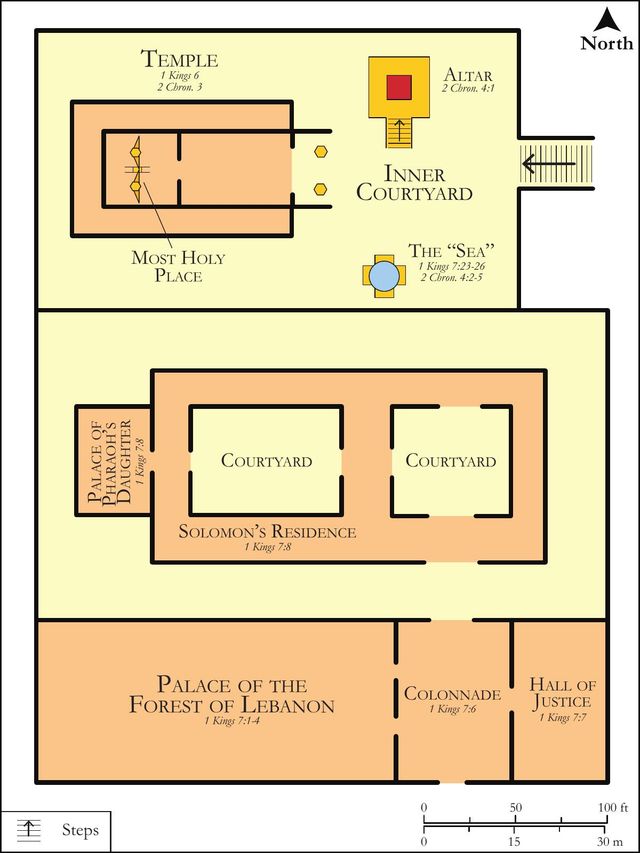
See on the biblical-era maps
Study this verse
Public-domain commentary
Matthew Henry
From his Commentary on the Whole Bible. Henry comments on passages, not single verses — this entry covers 1 Kings 7:1–12.
Never had any man so much of the spirit of building as Solomon had, nor to better purpose; he began with the temple, built for God first, and then all his other buildings were comfortable. The surest foundations of lasting prosperity are those which are laid in an early piety, Mat 6:33. 1. He built a house for himself (Kg1 7:1), where he dwelt, Kg1 7:8. His father had built a good house; but it was no reflection upon his father for him to build a better, in proportion to the estate wherewith God had blessed him. Much of the comfort of this life is connected with an agreeable house. He was thirteen years building this house, whereas he built the temple in little more than seven years; not that he was more exact, but less eager and intent, in building his own house than in building God's. He was in no haste for his own palace, but impatient till the temple was finished and fit for use. Thus we ought to prefer God's honour before our own ease and satisfaction. 2. He built the house of the forest at Lebanon (Kg1 7:2), supposed to be a country seat near Jerusalem, so called from the pleasantness of its situation and the trees that encompassed it. I rather incline to think that it was a house built in the forest of Lebanon itself, whither (though far distant from Jerusalem) Solomon (having so many chariots and horses, and those dispersed into chariot-cities, which probably were his stages) might frequently retire with ease. It does not appear that his throne (mentioned Kg1 7:7) was at the house of the forest of Lebanon, and it was not at all improper to put his shields there as in a magazine. Express notice is taken of his buildings, not only in Jerusalem, but in Lebanon (Kg1 9:19), and we read of the tower of Lebanon, which looks towards Damascus (Sol 7:4), which probably was part of this house. A particular account is given of this house, that being built in Lebanon, a place famed for cedars, the pillars, and beams, and roof, were all cedar (Kg1 7:2, Kg1 7:3), and, being designed for pleasant prospects, there were three tiers of windows on each side, light against light (Kg1 7:4, Kg1 7:5), or, as it may be read, prospect against prospect. Those whose lost i cast in the country may be well reconciled to a country life by this, that some of the greatest princes have thought those the most pleasant of their days which they have spent in their country retirements. 3. He built piazzas before one of his houses, either that at Jerusalem or that in Lebanon, which were very famous - a porch of pillars (Kg1 7:6), perhaps for an exchange or a guard-house, or for those to walk in that attended him about business till they could have audience, or for state and magnificence. He himself speaks of Wisdom's building her house, and hewing out her seven pillars (Pro 9:1), for the shelter of those that, three verses before (Kg1 8:34), are said to watch daily at her gates and to wait at the posts of her doors. 4. At his house where he dwelt in Jerusalem he built a great hall, or porch of judgment, where was set the throne, or king's bench, for the trial of causes, in which he himself was appealed to (placita coram ipso rege tenenda - causes were to be adjusted in the king's presence), and this was richly wainscoted with cedar, from the floor to the roof, Kg1 7:7. He had there also another court within the porch, nearer his house, of similar work, for his attendants to walk in, Kg1 7:8. 5. He built a house for his wife, where she kept her court, Kg1 7:8. It is said to be like the porch, because built of cedar like it, though not in the same form; this, no doubt, was nearer adjoining to his own palace, yet perhaps if it had been as near as it ought to have been Solomon would not have multiplied wives as he did.
The wonderful magnificence of all these buildings is taken notice of, Kg1 7:9, etc. All the materials were the best of their kind. The foundation-stones were costly for their size, four or five yards square, or at least so many yards long (Kg1 7:10), and the stones of the building were costly for the workmanship, hewn and sawn, and in all respects finely wrought, Kg1 7:9, Kg1 7:11. The court of his own house was like that of the temple (Kg1 7:12, compare Kg1 6:36); so well did he like the model of God's courts that he made his own by it.
Continue studying 1 Kings 7:11 across the web’s major study libraries — every link below opens this exact verse, chapter, or book on the destination site.
Read & Compare
 BibleGatewayThis verse in more than 200 translations and 70 languages.
 Bible.comThe YouVersion reader — hundreds of translations, reading plans, and highlights.
 ESV.orgCrossway's official English Standard Version reader.
 NET BibleThe NET translation with 60,000+ translators' notes on every rendering decision.
 STEP BibleTyndale House's free study tool — original text, vocabulary, and scholarly resources.
 BibliaLogos Bible Software's free web reader.
 USCCBThe New American Bible (Revised Edition) with the U.S. bishops' study notes.
Commentaries
 BibleHub CommentariesDozens of classic commentaries on this verse, gathered on one page.
 StudyLightMore than 100 commentary sets — the largest collection on the web.
 BibleRefPlain-English commentary on what this verse means, verse by verse.
 Enduring WordDavid Guzik's free commentary on this chapter, widely used by Bible teachers.
 Bible Study ToolsVerse commentary alongside Greek and Hebrew study aids.
Original Language & Research
- BibleHub InterlinearThe verse word by word — original language, transliteration, and English.
- BibleHub LexiconEvery word's original-language definition and Strong's entry.
 Blue Letter BibleDeep-study tools — Strong's numbers, concordance, and word studies.
 SefariaThe Hebrew text with Rashi and centuries of Jewish commentary.
Sermons, Hymns & Audio


TrulyRandomVerse is not affiliated with these sites and doesn’t control their content. They’re linked because they’re genuinely useful.
Summary
1 Kings 7:11 offers a precise glimpse into the extraordinary quality and meticulous craftsmanship that characterized King Solomon's extensive royal building projects in Jerusalem, particularly his grand palace complex. This verse, embedded within a detailed architectural account, highlights the use of "costly stones" and precisely "hewed stones" alongside "cedars," signifying not only the immense wealth and resources available to Solomon but also the enduring grandeur and symbolic authority of his reign, reflecting a period of divinely blessed prosperity and peace for Israel.
Context
ShowHideLiterary Context
This verse is strategically placed within 1 Kings chapter 7, which provides an exhaustive description of Solomon's royal palace complex, including the House of the Forest of Lebanon, the Hall of Pillars, and the Hall of the Throne. This detailed account immediately follows the comprehensive narrative of the construction of the Lord's Temple in 1 Kings chapter 6. The narrative progression from the sacred Temple to the royal palace underscores the dual focus of Solomon's reign: devotion to God and the establishment of a powerful, opulent kingdom. The explicit mention that Solomon's palace took thirteen years to build (1 Kings 7:1) compared to the seven years for the Temple (1 Kings 6:38) highlights the sheer scale and complexity of the royal residences. Verse 11 specifically describes the high-grade materials used in the upper sections or perhaps the upper stories of these grand structures, serving as a testament to their luxurious nature and the advanced building techniques employed.
Historical & Cultural Context
Solomon's monumental building projects were typical of powerful monarchs of that day who sought to solidify their rule and display their might through impressive architecture. Jerusalem, as the newly established capital, was transformed into a city befitting a king of Solomon's stature. The "costly stones" were likely quarried locally or imported, while the "cedars" were famously sourced from Lebanon, a testament to Solomon's extensive trade networks and diplomatic relations, particularly with Hiram, King of Tyre (1 Kings 5:1-12). The term "hewed stones" points to sophisticated masonry techniques, involving precise cutting and shaping, often attributed to skilled Phoenician artisans who collaborated with Israelite builders. This level of precision and the use of such durable, high-quality materials ensured the longevity and impressive appearance of these structures, projecting an image of stability and divine favor to both internal subjects and foreign dignitaries.
Key Themes
ShowHideThe meticulous description in 1 Kings 7, and specifically in verse 11, contributes to several overarching themes. Firstly, it emphasizes Exquisite Materials and Craftsmanship, showcasing the pinnacle of ancient architectural and engineering skill. The careful preparation of "hewed stones" and the use of rare "cedars" from Lebanon reflect a commitment to excellence and beauty, not merely functionality. Secondly, these grand structures underscore Solomon's Grandeur and Wealth, illustrating the unparalleled prosperity and power he enjoyed, a direct fulfillment of God's promise to him (1 Kings 3:13). This wealth enabled him to commission projects that rivaled, and perhaps surpassed, those of contemporary empires. Finally, these buildings served as a Symbol of Royal Authority and Stability. The durable and beautiful construction projected an image of a secure, divinely sanctioned kingdom, a physical manifestation of the peace and prosperity that characterized the early part of Solomon's reign, as described in 1 Kings 4:20-25.
Exposition and Analysis
ShowHideKey Word Analysis
ShowHideThis adjective (H3368) denotes something valuable, precious, or honorable. In the context of building materials, it signifies stones of significant worth, rarity, and aesthetic appeal, likely chosen for their color, durability, or ability to be polished. Their inclusion underscores the opulent nature of Solomon's palace, designed to convey immense wealth and prestige.
Derived from the root meaning "to cut" (H1496), this term refers to stones that have been meticulously cut, shaped, and smoothed with precision tools. This distinguishes them from rough, unworked fieldstones. The process of hewing involved skilled masons who would quarry the stone and then meticulously dress it to exact dimensions, ensuring a tight, stable fit without the need for excessive mortar. This detail highlights the advanced masonry techniques employed, demonstrating a commitment to structural integrity and aesthetic perfection.
This noun (H730) specifically refers to cedar trees, primarily from Lebanon. Cedarwood was highly prized in Israel and in Tyre for its strength, durability, aromatic qualities, and resistance to decay and insects. It was considered a luxury building material, often used for royal palaces and temples due to its prestige and longevity. Its inclusion alongside costly stones further emphasizes the lavishness and enduring quality of Solomon's construction, indicating the highest possible standard of materials.
Verse Breakdown
ShowHide"And above [were] costly stones"
This initial phrase suggests that the "costly stones" were utilized in the upper sections of the structures, possibly referring to the upper courses of the walls, the upper stories, or even decorative elements positioned at a higher elevation. The emphasis here is on the superior quality of the materials, indicating that even the less visible or higher parts of the building were constructed with the finest available resources, not merely for structural support but for aesthetic grandeur and lasting impression.
"after the measures of hewed stones"
This clause clarifies the precise preparation of these valuable stones. They were not merely valuable but also meticulously cut and shaped according to specific dimensions and standards. The phrase "after the measures" implies a detailed architectural plan and a highly precise execution, where each stone was carefully fitted. This detail highlights the advanced engineering and craftsmanship involved, ensuring both the structural integrity and the visual perfection of the construction.
"and cedars"
The addition of "and cedars" indicates that these prestigious wooden beams and panels were used in conjunction with the stone elements. This could refer to cedar beams supporting upper floors or roofs, cedar paneling for interior walls, or other decorative elements made from this prized timber. The combination of high-quality stone and cedar created a truly magnificent and enduring edifice, characteristic of the most impressive royal residences of the era.
Literary Devices
ShowHideThe verse, though concise, effectively employs several literary devices to convey its profound message. Emphasis is achieved through the specific, deliberate mention of "costly stones," "hewed stones," and "cedars." This selective detail draws the reader's attention directly to the unparalleled opulence and meticulousness of Solomon's building projects, underscoring the extraordinary nature of the materials used. There is also an element of Synecdoche, where the mention of these specific, high-end materials (stones and cedars) serves to represent the entirety of the luxurious and durable construction, standing in for the overall quality and grandeur of the palace. Furthermore, the description functions as Symbolism, where the physical magnificence of the palace, built with such precious and well-crafted materials, symbolizes Solomon's immense wealth, his divinely blessed reign, and the stability and prestige of his kingdom. The enduring nature of these materials also subtly foreshadows the intended longevity and lasting legacy of Solomon's rule.
Theological and Thematic Connections
ShowHideThe lavishness and meticulous craftsmanship evident in Solomon's palace, as described in 1 Kings 7:11, serve as a profound theological statement about the nature of earthly kingdoms under divine blessing. While the Temple's construction showcased Israel's devotion to God, the palace's grandeur reflected God's abundant provision and favor upon Solomon, demonstrating that true wisdom and obedience could lead to unparalleled earthly prosperity. However, this earthly glory, built with "costly stones" and "cedars," also serves as a subtle reminder of the temporary nature of all human achievements and the transient beauty of this world. The ultimate, enduring building is not made with human hands, but is spiritual and eternal, pointing towards a greater reality that transcends temporal splendor.
Reflection and Application
ShowHideThe detailed description of Solomon's palace, built with such "costly stones" and "cedars," challenges us to consider the quality and intentionality we bring to our own "building projects," whether they are our personal character, our relationships, our work, or our contributions to the community and the church. Just as Solomon used the finest materials for his earthly dwelling, and even more so for God's Temple, we are called to offer our "costly stones"—our best efforts, our unique talents, our most precious resources, and our unwavering dedication—in service to God and for His glory. This isn't about accumulating material wealth, but about cultivating a spirit of excellence and stewardship in all endeavors. It encourages us to build with integrity, precision, and a long-term perspective, recognizing that what we build, both spiritually and practically, should reflect the worthiness of the God we serve, aiming for lasting impact and beauty that honors Him. Our commitment to quality in our daily lives can be a profound act of worship, demonstrating our reverence for the Creator who himself crafted the world with infinite precision and beauty.
Questions for Reflection
ShowHideFAQ
ShowHideWhat is the significance of the detailed description of Solomon's palace after the Temple?
ShowHideThe detailed description of Solomon's palace complex, including the House of the Forest of Lebanon, immediately following the Temple's construction, serves several significant purposes. Firstly, it highlights the immense wealth and power of Solomon's reign, demonstrating the fulfillment of God's promise to grant him riches and honor (1 Kings 3:13). Secondly, it underscores the scale of his building program, which was not limited to sacred structures but encompassed the entire infrastructure of his kingdom, reflecting his status as a major regional power. Thirdly, it provides a contrast and comparison between the sacred and the secular. While the Temple was built for God's dwelling, the palace was for the king, yet both employed the finest materials and craftsmanship, illustrating the king's dedication to both divine and earthly authority. Finally, the lengthy description of the palace (thirteen years of construction, 1 Kings 7:1) compared to the Temple (seven years, 1 Kings 6:38) subtly foreshadows the eventual shift in Solomon's priorities and the potential for human glory to overshadow divine focus, a theme that becomes more prominent later in his reign.
Christ-Centered Fulfillment
ShowHideWhile 1 Kings 7:11 describes the physical grandeur of an earthly king's dwelling, it implicitly points to the ultimate and eternal King, Jesus Christ. Solomon's palace, built with "costly stones" and "cedars," represented the pinnacle of human architectural achievement and the temporary glory of an earthly kingdom. Yet, in Christ, we see the true and everlasting dwelling of God among humanity. Jesus himself declared, "Destroy this temple, and in three days I will raise it up," speaking of the temple of his body (John 2:19-21). He is the foundation and the cornerstone, the most "costly stone" upon which God's eternal spiritual house is built (Ephesians 2:20; 1 Peter 2:6). Believers, through faith in Christ, become "living stones" built into this spiritual house, a holy priesthood offering spiritual sacrifices (1 Peter 2:5). The meticulous craftsmanship and precious materials of Solomon's palace foreshadow the perfect, divine design and the invaluable worth of the Church, the body of Christ, which is being built up by God Himself. Ultimately, the glory of Solomon's palace, however magnificent, pales in comparison to the New Jerusalem, the eternal city, whose foundations are adorned with every kind of "costly stone" and whose gates are single pearls, where God and the Lamb are its temple (Revelation 21:18-21), revealing the ultimate, Christ-centered fulfillment of God's dwelling with His people in perfect and eternal glory.