


1 Kings 4:28
Bible text: King James Version (1769 Blayney text) · Public domain
Bible text: Berean Standard Bible · Public domain
Bible text: American Standard Version (1901) · Public domain
Bible text: World English Bible, Messianic edition · Public domain
Bible text: Geneva Bible (1599) · Public domain
Bible text: Young's Literal Translation · Public domain
- וְהַשְּׂעֹרִיםve·ha·se·'o·Rimand the barley<s>H8184Conj-w ¦ Art ¦ N-mpNoun Plural Masculine Absoluteוְandהַtheשְּׂעֹרִיםbarley<s>
- וְהַתֶּבֶןve·ha·Te·venand the strawH8401Conj-w ¦ Art ¦ N-msNoun Singular Masculine Absoluteוְandהַtheתֶּבֶןstraw
- לַסּוּסִיםla·su·Simfor the horsesH5483Prep-l ¦ N-mpNoun Plural Masculine Absoluteלַfor theסּוּסִיםhorses
- וְלָרָכֶשׁve·la·Ra·kheshand for the steed[s]H7409Conj-w ¦ Prep-l ¦ N-msNoun Singular Masculine Absoluteוְandלָfor theרָכֶשׁsteed[s]
- יָבִאוּya·Vi·'uthey broughtH935V-Hiphil-Imperf-3mpVerb Hiphil Imperfect 3rd Plural Masculine
- אֶל'eltoH413PrepPreposition
- הַמָּקוֹםha·ma·kOmthe placeH4725Art ¦ N-msNoun Singular Masculine Absoluteהַtheמָּקוֹםplace
- אֲשֶׁר'a·SherwhereH834RelParticle Relative
- יִהְיֶהyih·yehit wasH1961V-Qal-Imperf-3msVerb Qal Imperfect 3rd Singular Masculine
- שָּׁםShamthereH8033AdvAdverb
- אִישׁ'isheachH376N-msNoun Singular Masculine Absolute
- כְּמִשְׁפָּטוֹke·mish·pa·Toaccording to his measureH4941Prep-k ¦ N-msc ¦ 3msNoun Singular Masculine Constructכְּaccording toמִשְׁפָּטmeasureוֹhis
English is a literal word-by-word gloss of the Hebrew, not the KJV's wording. Why?
This is the original text the KJV's translators worked from — each Hebrew word with its own literal English meaning in this verse, prepared by scholars at Tyndale House, Cambridge. The KJV translates whole sentences, not word by word, so its wording differs: one Hebrew word can become several English words, and the KJV may choose “the LORD” where the gloss reads “Yahweh”. Both are faithful — they answer different questions. For the KJV's own rendering, switch to the KJV text.
Details
See on the biblical-era maps

Study this verse
Public-domain commentary
Matthew Henry
From his Commentary on the Whole Bible. Henry comments on passages, not single verses — this entry covers 1 Kings 4:20–28. His three-level outline is real structure in the source text, so it is rendered as structure.
Such a kingdom, and such a court, surely never any prince had, as Solomon's are here described to be.
I.Such a kingdom.
Never did the crown of Israel shine so brightly as it did when Solomon wore it, never in his father's days, never in the days of any of his successors; nor was that kingdom ever so glorious a type of the kingdom of the Messiah as it was then. The account here given of it is such as fully answers the prophecies which we have concerning it in Ps. 72, which is a psalm for Solomon, but with reference to Christ.
1.The territories of his kingdom were large and its tributaries many; so it was foretold that he should have dominion from sea to sea, Psa 72:8-11. Solomon reigned not only over all Israel, who were his subjects by choice, but over all the neighbouring kingdoms, who were his subjects by constraint. All the princes from the river Euphrates, north-east to the border of Egypt south-west, not only added to his honour by doing him homage and holding their crowns from him, but added to his wealth by serving him, and bringing him presents, Kg1 4:21. David, by his successful wars, compelled them to this subjection, and Solomon, by his admirable wisdom, made it easy and reasonable; for it is fit that the fool should be servant to the wise in heart. If they gave him presents, he gave them instructions, and still taught the people knowledge, not only his own people, but those of other nations: and wisdom is better than gold. He had peace on all sides, Kg1 4:24. None of all the nations that were subject to him offered to shake off his yoke, or to give him any disturbance, but rather thought themselves happy in their dependence upon him. Herein his kingdom typified the Messiah's; for to him it is promised that he shall have the heathen for his inheritance and that princes shall worship him, Isa 49:6, Isa 49:7; Isa 53:12.
2.The subjects of his kingdom and its inhabitants, were many and cheerful.
(1.)They were numerous and country was exceedingly populous (Kg1 4:20): Judah and Israel were many, and that good land was sufficient to maintain them all. They were as the sand of the sea in multitude. Now was fulfilled the promise made to Abraham concerning the increase of his seed (Gen 22:17), as well as that concerning the extent of their dominion, Gen 15:18. This was their strength and beauty, the honour of their prince, the terror of their enemies, and an advancement of the wealth of the nation. If they grew so numerous that the place was any where too strait for them, they might remove with advantage into the countries that were subject to them. God's spiritual Israel are many, at least they will be so when they come all together, Rev 7:9.
(2.)They were easy, they dwelt safely, or with confidence and assurance (Kg1 4:25), not jealous of their king or of his officers, not disaffected either to him or one to another, nor under any apprehension or danger from enemies foreign or domestic. They were happy and knew it, safe and willing to think themselves so. They dwelt every man under his vine and fig-tree. Solomon invaded no man's property, took not to himself their vineyards and olive-yards, as sometimes was the manner of the king (Sa1 8:14), but what they had they could call their own: he protected every man in the possession and enjoyment of his property. Those that had vines and fig-trees ate the fruit of them themselves; and so great was the peace of the country that they might, if they pleased, dwell as safely under the shadow of them as within the walls of a city. Or, because it was usual to have vines by the sides of their houses (Psa 128:3), they are said to dwell under their vines.
(3.)They were cheerful in the use of their plenty, eating and drinking, and making merry, Kg1 4:20. Solomon did not only keep a good table himself, but enabled all his subjects, according to their rank, to do so too, and taught them that God gave them their abundance that they might use it soberly and pleasantly, not that they might hoard it up. There is nothing better than for a man to eat the labour of his hands (Ecc 2:24), and that with a merry heart, Ecc 9:7. His father, in the Psalms, had led his people into the comforts of communion with God, and now he led them into the comfortable use of the good things of this life. This pleasant posture of Israel's affairs extended, in place, from Dan to Beer-sheba - no part of the country was exposed nor upon any account uneasy; and it continued a long time, all the days of Solomon, without any material interruption. Go where you would, you might see all the marks of plenty, peace, and satisfaction. The spiritual peace, and joy, and holy security, of all the faithful subjects of the Lord Jesus were typified by this. The kingdom of God is not, as Solomon's was, meat and drink, but, what is infinitely better, righteousness, and peace, and joy in the Holy Ghost.
II.Such a court Solomon kept as can scarcely be paralleled.
We may guess at the vast number of his attendants, and the great resort there was to him, by the provision that was made daily for his table. Of bread there were so many measures of flour and meal as, it is computed, would richly serve 3000 men (Carellus computes above 4800 men), and the provision of flesh (Kg1 4:23) was rather more in proportion. What vast quantities were here of beef, mutton, and venison, and the choicest of all fatted things, as some read that which we translate fatted fowl! Ahasuerus, once in his reign, made a great feast, to show the riches of his kingdom, Est 1:3, Est 1:4. But it was much more the honour of Solomon that he kept a constant table and a very noble one, not of dainties or deceitful meats (he himself witnessed against them, Pro 23:3), but substantial food, for the entertainment of those who came to hear his wisdom. Thus Christ fed those whom he taught, 5000 at a time, more than ever Solomon's table would entertain at once: and all believers have in him a continual feast. Herein he far outdoes Solomon, that he feeds all his subjects, not with the bread that perishes, but with that which endures to eternal life. It added much both to the strength and glory of Solomon's kingdom that he had such abundance of horses, 40,000 for chariots and 12,000 for his troops, 1000 horse, perhaps, in every tribe, for the preserving of the public peace, Kg1 4:26. God had commanded that their king should not multiply horses (Deu 17:16), nor, according to the account here given, considering the extent and wealth of Solomon's kingdom, did he multiply horses in proportion to his neighbours; for we find even the Philistines bringing into the field 30,000 chariots (Sa1 13:5) and the Syrians at least 40,000 horse, Sa2 10:18. The same officers that provided for his house provided also for his stable, Kg1 4:27, Kg1 4:28. Every one knew his place, and work, and time; and so this great court was kept without confusion. Solomon, that had vast incomes, lived at a vast expense, and perhaps wrote that with application to himself, Ecc 5:11. When goods increase those are increased that eat them; and what good is there to the owners thereof, saving the beholding of them with their eyes, unless withal they have the satisfaction of doing good with them?
Continue studying 1 Kings 4:28 across the web’s major study libraries — every link below opens this exact verse, chapter, or book on the destination site.
Read & Compare
 BibleGatewayThis verse in more than 200 translations and 70 languages.
 Bible.comThe YouVersion reader — hundreds of translations, reading plans, and highlights.
 ESV.orgCrossway's official English Standard Version reader.
 NET BibleThe NET translation with 60,000+ translators' notes on every rendering decision.
 STEP BibleTyndale House's free study tool — original text, vocabulary, and scholarly resources.
 BibliaLogos Bible Software's free web reader.
 USCCBThe New American Bible (Revised Edition) with the U.S. bishops' study notes.
Commentaries
 BibleHub CommentariesDozens of classic commentaries on this verse, gathered on one page.
 StudyLightMore than 100 commentary sets — the largest collection on the web.
 BibleRefPlain-English commentary on what this verse means, verse by verse.
 Enduring WordDavid Guzik's free commentary on this chapter, widely used by Bible teachers.
 Bible Study ToolsVerse commentary alongside Greek and Hebrew study aids.
Original Language & Research
- BibleHub InterlinearThe verse word by word — original language, transliteration, and English.
- BibleHub LexiconEvery word's original-language definition and Strong's entry.
 Blue Letter BibleDeep-study tools — Strong's numbers, concordance, and word studies.
 SefariaThe Hebrew text with Rashi and centuries of Jewish commentary.
Sermons, Hymns & Audio


TrulyRandomVerse is not affiliated with these sites and doesn’t control their content. They’re linked because they’re genuinely useful.
Summary
1 Kings 4:28 provides a precise and illuminating glimpse into the sophisticated logistical infrastructure that underpinned King Solomon's glorious reign. It meticulously details the provision of essential feed—barley and straw—for the royal horses and dromedaries, underscoring the kingdom's immense resources, unparalleled prosperity, and the remarkable administrative efficiency that characterized this golden age for Israel. This verse highlights the meticulous planning and delegated responsibility crucial for maintaining such a vast and thriving empire, reflecting the practical outworking of divine blessing.
Context
ShowHideLiterary Context
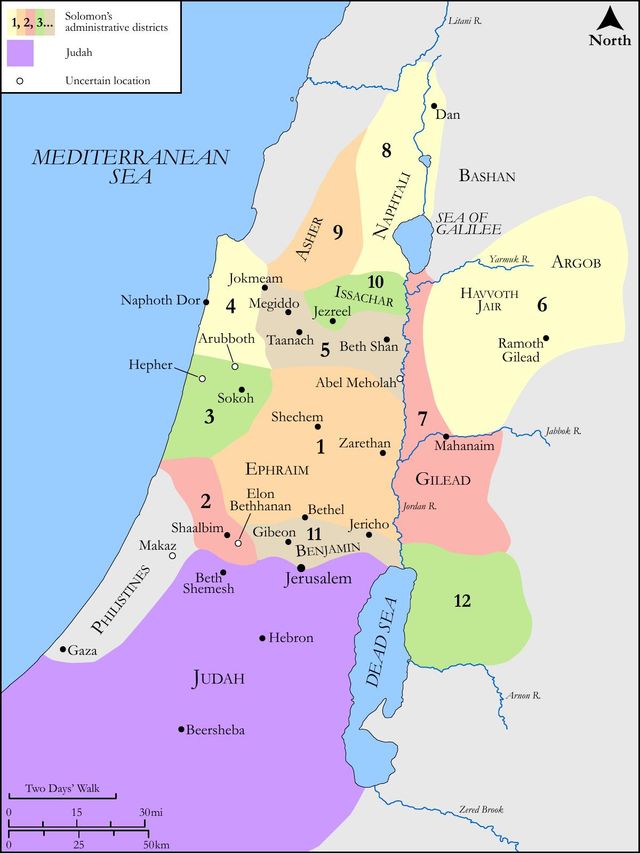
This verse is intricately woven into the broader narrative of King Solomon's unparalleled wisdom, peace, and prosperity, particularly as detailed within 1 Kings 4. Following the comprehensive enumeration of Solomon's twelve provincial officers and their respective territories in 1 Kings 4:7-19, verses 27 and 28 specifically illustrate the practical execution of their assigned duties. While 1 Kings 4:27 broadly describes the daily provisions for the king and his household, verse 28 zeroes in on the specific, large-scale provision for the royal animals. This particular focus serves as a concrete example of the "charge" mentioned, demonstrating the comprehensive and meticulous nature of Solomon's administrative system before the chapter concludes with a summary of his unparalleled wisdom and the widespread peace enjoyed during his reign.
Historical & Cultural Context
Solomon's reign, typically dated from 970-931 BC, represented the zenith of Israel's power and influence among the nations. His kingdom's extensive reach, stretching "from the River to the land of the Philistines, and to the border of Egypt" (1 Kings 4:21), necessitated an exceptionally well-organized logistical system. Horses and dromedaries were not merely transport animals but vital strategic assets, symbolizing military strength, enabling rapid communication, and facilitating trade. The biblical text explicitly states Solomon amassed "forty thousand stalls of horses for his chariots, and twelve thousand horsemen" (1 Kings 4:26). Barley and straw were economical, widely available, and standard provisions for sustaining large animal forces in the region. The ingenious system of twelve rotating officers, each responsible for one month's supply, was a sophisticated administrative solution designed to ensure continuous provision without unduly burdening any single district, reflecting the advanced infrastructure characteristic of a great kingdom of that day.
Key Themes
ShowHideThis verse powerfully underscores several key themes central to the portrayal of Solomon's reign. Firstly, it highlights Order and Efficiency in governance, demonstrating the meticulous planning and clear delegation that characterized his administration. The phrase "every man according to his charge" emphasizes precision, accountability, and the seamless functioning of the kingdom's complex machinery. Secondly, it speaks volumes about the Abundance and Prosperity enjoyed during this era. The sheer quantity of feed required for such a multitude of animals, alongside provisions for the royal household, attests to the extraordinary wealth and material blessings that marked Solomon's rule, fulfilling long-standing promises of peace and prosperity found in earlier biblical narratives, such as the blessings promised in Deuteronomy 28. This prosperity is further detailed in passages describing Solomon's unparalleled wealth and wisdom, like 1 Kings 10:23-27. Finally, the verse subtly points to the importance of Responsibility and Stewardship. The diligent fulfillment of duties by the officers, even in seemingly mundane tasks like providing animal feed, was foundational to the kingdom's stability and success, illustrating how faithfulness in specific roles contributes to the well-being of the whole.
Exposition and Analysis
ShowHideKey Word Analysis
ShowHideA common cereal grain, barley was a staple crop in ancient Israel. It was less expensive than wheat and primarily used as animal feed, especially for horses, and as food for the poor. Its mention here signifies the practical, large-scale, and economical provisioning for the royal animals, reflecting a systematic approach to resource management.
This refers to the refuse haum or stalks of grain, typically chopped during threshing and used for fodder. Its inclusion alongside barley indicates a complete and balanced provision for the animals, serving as essential roughage and bedding, reflecting meticulous care and planning for their sustenance and comfort.
From a root meaning "to skip," this term refers to a relay of animals on a post-route, implying a courser or swift beast. While sometimes translated broadly as "swift steeds" or "mules," rekesh most accurately refers to a specific type of fast, single-humped camel or a swift horse used for riding. Unlike heavier pack camels, dromedaries were prized for their speed and endurance, making them ideal for rapid transport, communication, and possibly light cavalry. Their presence alongside horses highlights Solomon's diverse and strategically optimized animal forces for various purposes across his vast kingdom.
This word, derived from a root meaning "to judge," signifies a verdict, sentence, formal decree, or judgment. In this context, it refers to a prescribed duty, a customary right, or an assigned responsibility. "According to his charge" indicates that each officer was fulfilling a specific, well-defined obligation within the established administrative and legal framework of Solomon's government, underscoring the order and accountability inherent in the system.
Verse Breakdown
ShowHide"Barley also and straw"
This initial phrase specifies the exact provisions, emphasizing their basic, yet crucial, nature. It highlights the practical, daily needs of a large animal contingent and the meticulous attention to detail in meeting those needs, demonstrating a comprehensive logistical plan.
"for the horses and dromedaries"
This clause identifies the recipients of the provisions, pointing to the significant scale and strategic composition of Solomon's animal forces. "Horses" primarily refers to chariot horses and cavalry, while "dromedaries" indicates swift transport animals, showcasing the diverse and strategically optimized royal animal inventory.
"brought they unto the place where [the officers] were"
This phrase describes the logistical process, suggesting a centralized collection or distribution point within each officer's district or a designated royal depot. It underscores the systematic approach to supply chain management and the coordination required across the kingdom, indicating a well-oiled administrative machine.
"every man according to his charge"
This concluding phrase is crucial, defining the administrative principle at play. It refers to the twelve district officers, each responsible for providing provisions for one month of the year. It signifies clear delegation, accountability, and the efficient, rotational system that ensured a continuous and uninterrupted supply for the king's household and animals, reflecting the highly organized nature of Solomon's reign.
Literary Devices
ShowHideThe verse, though seemingly a simple administrative detail, employs several Literary Devices to convey deeper meaning and reinforce the narrative of Solomon's unparalleled reign. Detailing is prominently used, as the specific mention of "barley," "straw," "horses," and "dromedaries" grounds the narrative in concrete reality, making the scale and meticulousness of Solomon's administration tangible. This specificity also contributes to Verisimilitude, lending credibility to the description of his kingdom's opulence and organization. The phrase "every man according to his charge" acts as a form of Synecdoche, where a part (the specific duty of each officer) represents the whole (the entire, highly organized, and efficient governmental structure of Solomon's kingdom). Furthermore, the simple, factual presentation of such a massive logistical operation can be seen as a subtle form of Understatement, as the immense effort and resources required to sustain such a system are conveyed through a concise statement, allowing the reader to infer the grandeur and complexity of the kingdom.
Theological and Thematic Connections
ShowHideThis seemingly mundane administrative detail in 1 Kings 4:28 carries significant theological weight, illustrating a kingdom operating with remarkable order, efficiency, and abundance. The biblical narrative consistently attributes this prosperity to God's blessing upon Solomon's wisdom and his reign of peace. The meticulous provision for the royal animals, facilitated by diligent human stewardship and a well-structured administration, serves as a tangible manifestation of divine favor. It suggests that God's blessings often flow through, and are sustained by, human diligence, responsible governance, and a commitment to order. The picture is one of a divinely enabled prosperity, where every part of the kingdom, down to the provision of animal feed, operates with a sense of purpose and accountability, reflecting God's own orderly nature and His desire for His people to flourish under wise leadership.
Reflection and Application
ShowHide1 Kings 4:28, though a historical detail about ancient logistics, offers profound principles for contemporary life and faith. It reminds us that great achievements, whether in a kingdom, a business, a family, or a ministry, are often built upon the diligent and faithful execution of seemingly small, routine tasks. The officers' "charge" to provide feed, while not glamorous, was absolutely essential for the kingdom's stability and the king's ability to govern effectively. This underscores the dignity and importance of all work done with excellence and responsibility, no matter how humble or hidden. It challenges us to consider how our own faithfulness in our "charge"—be it in our vocations, our families, our studies, or our service to God—contributes to the well-being of the larger whole, and how even mundane tasks can be acts of worship when done unto the Lord. Furthermore, the verse highlights the enduring value of good administration, planning, and stewardship. Just as Solomon's kingdom thrived on order and delegation, our lives, churches, and organizations benefit immensely from clear responsibilities, efficient systems, and a commitment to stewarding resources, whether material, spiritual, or relational, for God's glory.
Questions for Reflection
ShowHideFAQ
ShowHideWhy are "dromedaries" specifically mentioned alongside horses?
ShowHideDromedaries (Hebrew rekesh) were swift, single-humped camels, highly valued for rapid transport and communication over long distances, particularly in arid or sandy regions where horses might struggle. Horses, conversely, were primarily used for chariots and cavalry in more open, less sandy terrains. Their specific mention signifies Solomon's comprehensive and strategically diverse animal forces, optimizing for different terrains and purposes. This reflects advanced logistical planning and the strategic importance of various animal types for maintaining control and communication across his vast empire, as also seen in 1 Kings 10:26.
What does "every man according to his charge" imply about Solomon's administration?
ShowHideThis phrase highlights the highly organized, decentralized, yet accountable administrative system that underpinned Solomon's prosperity. Each of the twelve district officers (mentioned in 1 Kings 4:7-19) was responsible for providing provisions for one month of the year. This rotational system ensured a continuous, reliable supply chain for the royal court and its extensive animal forces. It demonstrates efficient delegation, clear responsibilities, and effective oversight, all crucial for maintaining the stability and prosperity of such a large and complex kingdom. It speaks to a well-structured bureaucracy capable of managing vast resources.
Christ-Centered Fulfillment
ShowHideThe meticulous provision and unparalleled prosperity of Solomon's kingdom, as exemplified in 1 Kings 4:28, serve as a profound type and shadow of the far greater and eternal provision found in the reign of Jesus Christ. Solomon, in all his earthly glory, was a human king whose reign, though magnificent and blessed by God, was temporary and ultimately flawed by his own sins and those of his successors. His ability to provide for his vast kingdom, down to the barley and straw for his animals, points to the ultimate King, Jesus, who perfectly and eternally provides for His people. Christ is the true "Bread of Life" who satisfies every spiritual hunger and thirst (John 6:35), providing not just physical sustenance but eternal life and spiritual nourishment. The order, peace, and abundance under Solomon's administration foreshadow the perfect order, everlasting peace, and unfathomable spiritual riches of God's kingdom under Christ's eternal rule (Ephesians 1:7-8). Just as Solomon's officers were faithful in their "charge," believers are called to be faithful stewards in the service of the true King, knowing that Christ's kingdom is not of this world (John 18:36) and promises eternal rewards for those who are diligent in their service (Matthew 25:21). Thus, Solomon's temporal reign of provision anticipates Christ's everlasting reign of grace, truth, and abundant life, where every need is met in Him.