


Numbers 4:29
Bible text: King James Version (1769 Blayney text) · Public domain
Bible text: Berean Standard Bible · Public domain
Bible text: American Standard Version (1901) · Public domain
Bible text: World English Bible, Messianic edition · Public domain
Bible text: Geneva Bible (1599) · Public domain
Bible text: Young's Literal Translation · Public domain
- בְּנֵיbe·Nei[the] descendants ofH1121N-mpcNoun Plural Masculine Construct
- מְרָרִיme·ra·RiMerariH4847N-proper-mNoun Proper Masculine
- לְמִשְׁפְּחֹתָםle·mish·pe·cho·Tamto their clansH4940Prep-l ¦ N-fpc ¦ 3mpNoun Plural Feminine Constructלְtoמִשְׁפְּחֹתָclansםtheir
- לְבֵיתle·veitto [the] house ofH1004Prep-l ¦ N-mscNoun Singular Masculine Constructלְtoבֵית[the] house of
- אֲבֹתָם'a·vo·Tamtheir ancestorsH1N-fpc ¦ 3mpNoun Plural Feminine Constructאֲבֹתָancestorsםtheir
- תִּפְקֹדtif·Kodyou will enrollH6485V-Qal-Imperf-2msVerb Qal Imperfect 2nd Singular Masculine
- אֹתָם'o·Tam<obj.> themH853DirObjM ¦ 3mpParticle Object Indicatorאֹתָ<obj.>םthem
English is a literal word-by-word gloss of the Hebrew, not the KJV's wording. Why?
This is the original text the KJV's translators worked from — each Hebrew word with its own literal English meaning in this verse, prepared by scholars at Tyndale House, Cambridge. The KJV translates whole sentences, not word by word, so its wording differs: one Hebrew word can become several English words, and the KJV may choose “the LORD” where the gloss reads “Yahweh”. Both are faithful — they answer different questions. For the KJV's own rendering, switch to the KJV text.
Details
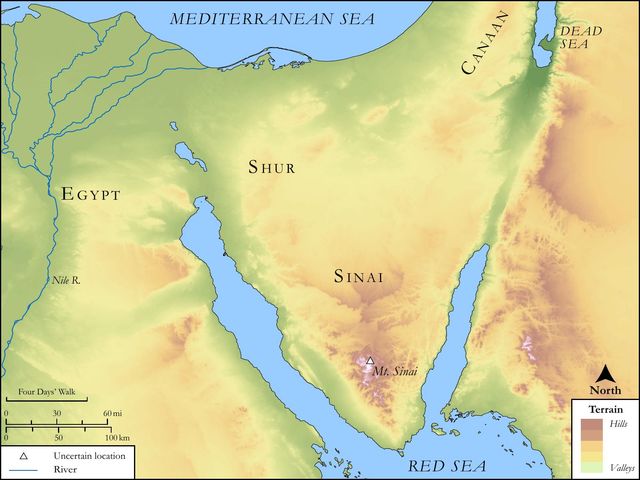
See on the biblical-era map
Study this verse
Public-domain commentary
Matthew Henry
From his Commentary on the Whole Bible. Henry comments on passages, not single verses — this entry covers Numbers 4:21–33.
We have here the charge of the other two families of the Levites, which, though not so honourable as the first, yet was necessary, and was to be done regularly. 1. The Gershonites were charged with all the drapery of the tabernacle, the curtains, and hangings, and the coverings of badgers' skins, Num 4:22-26. These they were to take down when the cloud removed, and the ark and the rest of the holy things were carried away, to pack up and bring with them, and then to set up again, where the cloud rested. Aaron and his sons allotted to them their respective charge: "You shall take care of such a curtain, and you of such a hanging, that every one may know his work, and there may be no confusion," Num 4:27. Ithamar particularly was to take the oversight of them, Num 4:28. 2. The Merarites were charged with the heavy carriage, the boards and bars, the pillars and sockets, the pins and cords, and these were delivered to them by name, Num 4:31, Num 4:32. An inventory was given them of every particular, that it might be forthcoming, and nothing to seek, when the tabernacle was to be set up again. Though these seemed of less importance than the other things pertaining to the sanctuary, yet there was this care taken of them, to teach us with the greatest exactness to preserve pure and entire all divine institutions, and to take care that nothing be lost. It also intimates the care God takes of his church, and every member of it; the good Shepherd calls his own sheep by name, Joh 10:3. Here were thousands of men employed about these services, though a much less number would have served for the bearing of those burdens; but it was requisite that the tabernacle should be taken down, and set up, with great expedition, and many hands would make quick work, especially when every one knew his work. They had tents of their own to take care of, and to take along with them, but the young men under thirty, and the old men above fifty, might serve for them; nor is there any mention of them, for God's house must always be preferred before our own. Their care was preposterous who built and ceiled their own houses while God's house lay waste, Hag 1:4, Hag 1:9. The death of the saints is represented as the taking down of the tabernacle (Co2 5:1), and the putting of it off, Pe2 1:14. The immortal soul, like the most holy things, is first covered and taken away, carried by angels, unseen, under the inspection of the Lord Jesus, our Eleazar. Care is also taken of the body - the skin and flesh, which are as the curtains, the bones and sinews which are as the bars and pillars; none of these shall be lost; commandment is given concerning the bones, a covenant made with the dust; these are in safe custody, and shall all be produced in the great day, when this tabernacle shall be set up again, and these vile bodies made like the glorious body of Jesus Christ.
Continue studying Numbers 4:29 across the web’s major study libraries — every link below opens this exact verse, chapter, or book on the destination site.
Read & Compare
 BibleGatewayThis verse in more than 200 translations and 70 languages.
 Bible.comThe YouVersion reader — hundreds of translations, reading plans, and highlights.
 ESV.orgCrossway's official English Standard Version reader.
 NET BibleThe NET translation with 60,000+ translators' notes on every rendering decision.
 STEP BibleTyndale House's free study tool — original text, vocabulary, and scholarly resources.
 BibliaLogos Bible Software's free web reader.
 USCCBThe New American Bible (Revised Edition) with the U.S. bishops' study notes.
Commentaries
 BibleHub CommentariesDozens of classic commentaries on this verse, gathered on one page.
 StudyLightMore than 100 commentary sets — the largest collection on the web.
 BibleRefPlain-English commentary on what this verse means, verse by verse.
 Enduring WordDavid Guzik's free commentary on this chapter, widely used by Bible teachers.
 Bible Study ToolsVerse commentary alongside Greek and Hebrew study aids.
Original Language & Research
- BibleHub InterlinearThe verse word by word — original language, transliteration, and English.
- BibleHub LexiconEvery word's original-language definition and Strong's entry.
 Blue Letter BibleDeep-study tools — Strong's numbers, concordance, and word studies.
 SefariaThe Hebrew text with Rashi and centuries of Jewish commentary.
Sermons, Hymns & Audio


TrulyRandomVerse is not affiliated with these sites and doesn’t control their content. They’re linked because they’re genuinely useful.
Summary
Numbers 4:29 presents a precise divine instruction for the census of the Merarite clan, one of the three major Levitical families. This verse mandates their registration "after their families, by the house of their fathers," specifically for their assigned duties in the Tabernacle service. It underscores God's meticulous attention to order, lineage, and the specific roles required for the proper dismantling, transport, and reassembly of His sacred dwelling during Israel's wilderness journey, ensuring every aspect of His worship was handled with divine precision.
Context
ShowHideLiterary Context
Numbers 4:29 is situated within a highly structured section of the book of Numbers (chapters 1-4) that details the organization of the Israelite camp and the specific responsibilities of the Levites. Following the general census of fighting men in Numbers 1 and the setting apart of the Levites in Numbers 3, chapter 4 meticulously outlines the duties of the three Levitical clans—the Kohathites, Gershonites, and Merarites—in relation to the Tabernacle. While the Kohathites were responsible for the sacred vessels and furniture, and the Gershonites for the coverings and curtains, the Merarites were tasked with the heavier structural components. This verse, therefore, is a specific command for the enrollment of Merarite men, aged thirty to fifty years old as stipulated in Numbers 4:3, for their arduous but essential service in transporting the Tabernacle's framework. The subsequent verses, Numbers 4:31-32, elaborate on the precise items they were to carry, highlighting the importance of this initial census for assigning those duties.
Historical & Cultural Context
The historical setting is Israel's wilderness journey, a period of nomadic existence where the Tabernacle served as the central point of worship and God's presence among His people. The Tabernacle was not merely a static structure but a portable sanctuary, designed by God (as detailed in Exodus 25) to accompany Israel. Its transport required immense organization and labor. In ancient Israelite society, lineage and tribal identity were paramount, determining inheritance, social standing, and, critically, religious duties. The Levites, as a tribe, were set apart for sacred service, and within that tribe, specific families had distinct roles. The command to number the Merarites "after their families, by the house of their fathers" reflects this deeply ingrained patrilineal system. It ensured accountability, maintained genealogical purity for sacred service, and provided a clear, divinely ordained structure for the immense logistical challenge of moving the Tabernacle, emphasizing that even the most physically demanding tasks were sacred and divinely appointed.
Key Themes
ShowHideNumbers 4:29 prominently contributes to the overarching theme of God's divine order and meticulousness. The precise instructions for the Merarite census, detailing their enrollment "after their families, by the house of their fathers," underscore God's inherently orderly character and His demand for exactness in all matters pertaining to His worship and the Tabernacle. This verse also highlights the importance of designated service and corporate responsibility. Each Levitical clan, and indeed each individual within it, had a specific, divinely appointed role that was crucial for the functioning of the portable sanctuary. The emphasis on lineage further reinforces the theme of identity and inherited calling, demonstrating that service was not merely individual but deeply interwoven with familial and ancestral lines, ensuring continuity and accountability within the community. These themes collectively illustrate that God's presence among His people requires disciplined organization and dedicated service from every part of the community, reflecting His holy and orderly character throughout the wilderness journey, as seen in the overall structure of the book of Numbers.
Exposition and Analysis
ShowHideKey Word Analysis
ShowHideThe Hebrew verb פָּקַד (H6485, pâqad) is far more than a simple numerical count. According to its root meaning, it implies "to visit (with friendly or hostile intent); by analogy, to oversee, muster, charge, care for, miss, deposit, etc." In the context of Numbers 4:29, it signifies a formal divine visitation for the purpose of a "muster" or "enrollment," specifically appointing the Merarites for their sacred duties. This word carries the weight of divine oversight and the assignment of specific responsibility.
The Hebrew word מִשְׁפָּחָה (H4940, mishpâchâh) refers to "a family, i.e. circle of relatives; figuratively, a class (of persons), a species (of animals) or sort (of things); by extension a tribe or people." In this verse, it emphasizes that the census was not merely of individuals but of established, divinely recognized social and genealogical units. This highlights the corporate nature of their service and the importance of their familial identity in their sacred calling, ensuring order and accountability within the tribal structure.
The Hebrew word בַּיִת (H1004, bayith) primarily means "a house (in the greatest variation of applications, especially family, etc.)." When paired with "fathers" (H1, ʼâb), as in "house of their fathers," it refers to the ancestral household or patrilineal lineage. This phrase further specifies the organizational principle of the census, emphasizing the deep-rooted identity and inherited nature of their service. It underscores that their duties were tied to their specific ancestral line, ensuring continuity and accountability within the divinely ordered structure of Israel.
Verse Breakdown
ShowHide"As for the sons of Merari"
This clause specifically identifies the third major clan of the Levites, descended from Merari, one of Levi's three sons. It immediately narrows the focus to this particular group, indicating their distinct role within the broader Levitical service and setting them apart for their unique responsibilities concerning the Tabernacle's structure.
"thou shalt number them"
This is a direct divine command, likely given to Moses and Aaron, to conduct a precise census of the Merarites. The act of "numbering" here is not merely for statistical purposes but for the explicit purpose of identifying, organizing, and commissioning those eligible for sacred service. It implies a divine mandate behind the enrollment, making it an act of sacred appointment.
"after their families"
This specifies the primary unit of organization for the census. The Merarites were to be counted according to their established clan divisions, ensuring an orderly and systematic approach to their enrollment and subsequent assignment of duties. This emphasizes the communal and corporate aspect of their service.
"by the house of their fathers;"
This further refines the organizational principle, emphasizing the patrilineal lineage. It means the census was to be conducted according to their ancestral households, reinforcing the importance of their inherited identity and the specific responsibilities passed down through their patriarchal lines. This ensured that service was deeply embedded within the social and genealogical fabric of the community, maintaining order and accountability across generations.
Literary Devices
ShowHideNumbers 4:29 employs several literary devices that underscore its theological and practical significance. The most prominent is Precision and Detail, which is characteristic of the Pentateuch's legal and cultic sections. The verse's meticulous instruction for the census—specifying not just "number them" but "after their families, by the house of their fathers"—highlights God's demand for exactness and order in all matters pertaining to His worship and the Tabernacle. This precision reflects a divine insistence on proper procedure and the sacredness of the tasks. Additionally, there is an element of Emphasis through Redundancy or Parallelism in the phrases "after their families" and "by the house of their fathers." While seemingly similar, they reinforce the comprehensive nature of the genealogical organization, ensuring that every individual was accounted for within their specific, divinely ordained lineage. This also serves as a form of Categorization, clearly defining the parameters for the census. The overall tone is one of Instructional Language, typical of divine commands, conveying authority and the non-negotiable nature of the requirements.
Theological and Thematic Connections
ShowHideNumbers 4:29 profoundly illustrates God's character as a God of order, precision, and purpose. It reveals that even the most physically demanding and seemingly mundane tasks within His service are meticulously planned and divinely ordained. The emphasis on numbering "by families" and "by the house of their fathers" underscores the importance of lineage, identity, and corporate responsibility in God's economy. Every member, every clan, had a specific, indispensable role in facilitating God's presence among His people. This principle extends beyond the Old Covenant, teaching us that God values every contribution to His kingdom, and that our service is not haphazard but part of a grand, divinely orchestrated design. It reminds us that our identity in Christ also comes with a calling to serve within the larger "household of God."
Reflection and Application
ShowHideNumbers 4:29, though rooted in ancient Israel's wilderness journey, offers timeless principles for contemporary believers. It challenges us to consider the meticulous nature of God and His desire for ordered, purposeful service from His people. Just as the Merarites were specifically identified and tasked with the physically demanding "heavy lifting" of the Tabernacle's framework, every believer today is called and equipped for unique contributions within the body of Christ. This verse encourages us to embrace our specific roles, no matter how seemingly grand or humble, recognizing that each is vital for the flourishing of God's kingdom. It calls us to serve with diligence, attention to detail, and a deep appreciation for the divine order that undergirds all true ministry. Our service is not merely a human endeavor but a sacred participation in God's ongoing work, requiring both spiritual fervor and practical excellence, all rooted in our identity as children of God.
Questions for Reflection
ShowHideFAQ
ShowHideWhy were the Merarites specifically tasked with carrying the heavier parts of the Tabernacle?
ShowHideThe division of labor among the Levitical clans was a divine assignment, meticulously detailed in Numbers 4. While the Kohathites carried the most sacred articles (ark, table, lampstand, altars), and the Gershonites handled the lighter, more textile-based components (curtains, coverings), the Merarites were specifically assigned the responsibility for the Tabernacle's structural framework. This included the boards, bars, pillars, sockets, and cords, as explicitly stated in Numbers 4:31-32. This was the most physically demanding task, requiring strength and endurance. The assignment was not arbitrary but part of God's perfect design to ensure every component of His dwelling place was transported safely and efficiently, highlighting that all roles, even the most arduous, were essential and sacred.
What is the significance of "families" and "house of their fathers" in this census?
ShowHideThe repeated emphasis on "families" (mishpachâh) and "house of their fathers" underscores the deeply ingrained patriarchal and genealogical structure of ancient Israelite society. For the Levites, this was particularly crucial as their service was hereditary and highly organized. Counting them by these units ensured several things: precise accountability for duties, maintenance of tribal and clan identity, continuity of service across generations, and the preservation of order within the larger Israelite camp. It meant that service to God was not just an individual responsibility but a corporate, familial inheritance and obligation, ensuring that the sacred tasks were passed down and performed by those specifically designated by divine decree.
How does this ancient census relate to the concept of spiritual gifts in the New Testament?
ShowHideWhile the immediate context is different (physical tasks of Tabernacle transport vs. spiritual ministries in the church), the underlying theological principle remains consistent: God is a God of order who equips and assigns specific roles to His people for the building up of His dwelling place. Just as the Merarites had a distinct, indispensable function in the Old Covenant Tabernacle, so too does every believer in the New Covenant possess unique spiritual gifts and callings for the edification of the Church, which is now the spiritual temple of God (1 Corinthians 3:16). The detailed census of the Merarites foreshadows the New Testament teaching that every member of the body of Christ is vital, with divinely appointed functions that contribute to the whole (Romans 12:4-8).
Christ-Centered Fulfillment
ShowHideNumbers 4:29, with its meticulous instructions for the Merarites' service to the Tabernacle, finds its ultimate fulfillment in Jesus Christ and His New Covenant work. The Tabernacle itself was a temporary dwelling place for God, a shadow of the perfect, permanent reality to come. Jesus is the true and ultimate Tabernacle, the very place where God dwells among humanity, as John 1:14 declares, "the Word became flesh and tabernacled among us." He is also the true Temple, as He Himself proclaimed when speaking of His body's destruction and resurrection in John 2:19-21. The "heavy lifting" of the Merarites, involving the physical burdens of the Tabernacle's framework, foreshadows the infinitely greater burden that Christ bore. He carried the weight of humanity's sin and the curse of the law, performing the ultimate, perfect service through His crucifixion and resurrection (Isaiah 53:4-6, 1 Peter 2:24). Furthermore, the "numbering" of God's people for service is no longer based on earthly lineage or physical strength but on spiritual birth and divine calling through Christ. Believers, united in Christ, are now living stones being built into a spiritual house, a holy priesthood, with Christ as the Chief Cornerstone (1 Peter 2:4-5, Ephesians 2:19-22). Thus, the precise order and dedicated service seen in Numbers 4:29 point to the perfect order and complete service rendered by Christ, which now empowers and defines the service of His Church.