


Matthew 26:20
- ὈψίαςOpsiasAs eveningG3798A-GSFAdjective Genitive Singular Feminine
- δὲdenowG1161CONJConjunction
- γενομένηςgenomenēshaving arrivedG1096V-2ADP-GSFVerb 2nd Aorist Middle Deponent Participle Genitive Singular Feminine
- ἀνέκειτοanekeitoHe was recliningG345V-INI-3SVerb Imperfect Middle Or Passive Deponent Indicative 3rd Singular
- μετὰmetawithG3326PREPPreposition
- τῶνtōntheG3588T-GPMDefinite article Genitive Plural Masculine
- δώδεκαdōdekatwelveG1427A-NUIAdjective
English is a literal word-by-word gloss of the Greek, not the KJV's wording. Why?
This is the original text the KJV's translators worked from — each Greek word with its own literal English meaning in this verse, prepared by scholars at Tyndale House, Cambridge. The KJV translates whole sentences, not word by word, so its wording differs: one Greek word can become several English words, and the KJV may choose “charity” where the gloss reads “love”. Both are faithful — they answer different questions. For the KJV's own rendering, switch to the KJV text.
Details
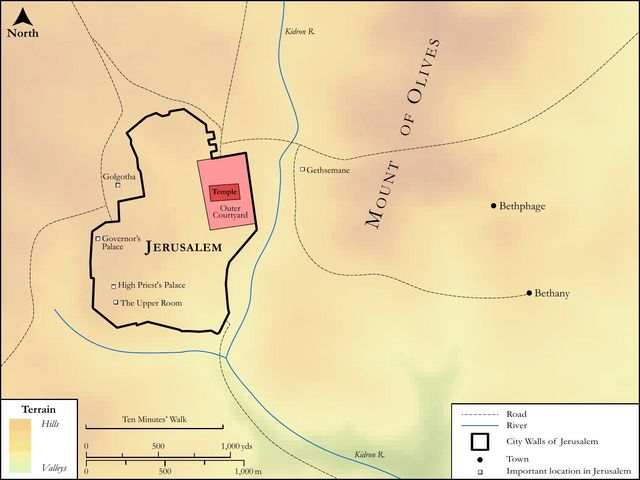
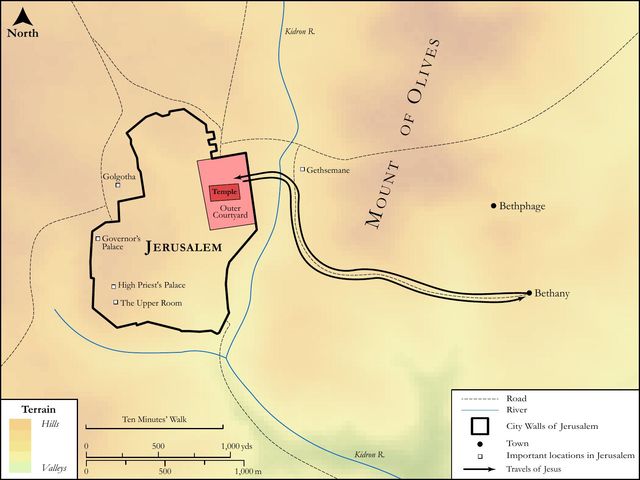
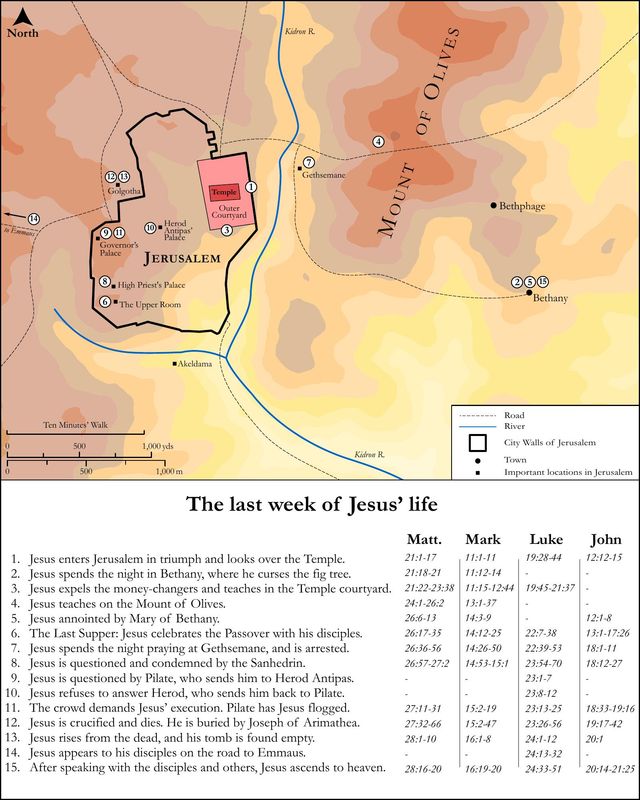
See on the biblical-era map
Study this verse
Historical interpretation
Four Centuries of Reception
8 surviving comments on this verse. Each one is dated, so this reads as a timeline rather than a list.
Select a marker to jump to its quote. Markers stagger vertically where authors wrote within a few decades of each other.
"Now when the even was come, He sat down with the twelve disciples." Oh the shamelessness of Judas! For he too was present there, and came to partake both of the mysteries, and of the meal, and is convicted at the very table, when although he had been a wild beast, he would have become tame.
For this cause the evangelist also signifies, that while they are eating, Christ speaks of His betrayal, that both by the time and by the table he might show the wickedness of the traitor.
"Now when the even was come, He sat down with the twelve disciples." Oh the shamelessness of Judas! For he too was present there, and came to partake both of the mysteries, and of the meal, and is convicted at the very table, when although he had been a wild beast, he would have become tame.
For this cause the evangelist also signifies, that while they are eating, Christ speaks of His betrayal, that both by the time and by the table he might show the wickedness of the traitor.
For when the disciples had done, as Jesus had appointed them, "when the even was come, He sat down with the twelve. And as they did eat, He said," we are told, "Verily, I say unto you, that one of you shall betray me." And before the supper, He had even washed his feet. And see how He spares the traitor. For He said not, such a one shall betray me; but, "one of you," so as again to give him power of repentance by concealment. And He chooseth to alarm all, for the sake of saving this man. Of you, the twelve, saith He, that are everywhere present with me, whose feet I washed, to whom I promised so many things.
Intolerable sorrow thereupon seized that holy company. And John indeed saith, they "were in doubt, and looked one upon another," and each of them asked in fear concerning himself, although conscious to themselves of no such thing. But this evangelist saith, that "being exceeding sorrowful, they began every one of them to say unto Him, Is it I, Lord?"
Mark at what time He discovered him. It was when it was His will to deliver the rest from this trouble, for they were even dead with the fear, wherefore also they were instant with their questions. But not only as desiring to deliver them from their distress He did this, but also as willing to amend the traitor. For since after having often heard it generally, he continued incorrigible, being past feeling, He being minded to make him feel more, takes off his mask.
For when being sorrowful they began to say, "Is it I, Lord?" He answered and said, "He that dippeth with me in the dish, the same shall betray me. The Son of Man goeth, as it is written of Him, but woe to the man by whom the Son of Man is betrayed. It had been good for that man if he had not been born."
Now some say that he was so bold as not to honor his Master, but to dip with Him: but to me Christ seems to have done this too, to shame him the more, and bring him over to a better disposition. For this act again has something more in it.
But these things we ought not to pass by at random, but they should be infixed in our minds, and wrath would find no place at any time.
For who, bearing in mind that supper, and the traitor sitting at meat with the Saviour of all, and Him who was to be betrayed thus meekly reasoning, would not put away all venom of wrath and anger? See at any rate how meekly He conducts Himself towards him, "The Son of Man goeth, as it is written of Him."
And these things again He said, both to restore the disciples, that they might not think the thing was a sign of weakness, and to amend the traitor.
"But woe unto that man by whom the Son of Man is betrayed! it had been good for that man if he had not been born." See again in His rebukes His unspeakable meekness. For not even here with invective, but more in the way of compassion, doth He apply what He saith, but in a disguised way again; and yet not his former senselessness only, but his subsequent shamelessness was deserving of the utmost indignation. For after this conviction he saith, "Is it I, Lord?" Oh insensibility! He inquires, when conscious to himself of such things. For the evangelist too, marvelling at his boldness, saith this. What then saith the most mild and gentle Jesus? "Thou sayest." And yet He might have said, O thou unholy, thou all unholy one; accursed, and profane; so long a time in travail with mischief, who hast gone thy way, and made satanical compacts, and hast agreed to receive money, and hast been convicted by me too, dost thou yet dare to ask? But none of these things did He say; but how? "Thou sayest?" fixing for us bounds and rules of long suffering.
But some one will say, Yet if it was written that He was to suffer these things, wherefore is Judas blamed, for he did the things that were written? But not with this intent, but from wickedness. For if thou inquire not concerning the motive, thou wilt deliver even the devil from the charges against him. But these things are not, they are not so. For both the one and the other are deserving of countless punishments, although the world was saved. For neither did the treason of Judas work out salvation for us, but the wisdom of Christ, and the good contrivance of His fair skill, using the wickednesses of others for our advantage.
The Evangelist relates how as they sat at meat, Jesus declares Judas' treachery, that the wickedness of the betrayer may be more apparent from the season and the circumstances.
I rather think that Christ did this out of regard for him, and to bring him to a better mind.
This He said to comfort His disciples, that they might not think that it was through weakness that He suffered; and at the same time for the correction of His betrayer. And notwithstanding His Passion had been foretold, Judas is still guilty; and not his betrayal wrought our salvation, but God's providence, which used the sins of others to our profit.
Though the Lord could have said, Hast thou covenanted to receive silver, and darest to ask Me this? But Jesus, most merciful, said nothing of all this, therein laying down for us rules and landmarks of endurance of evil. He saith unto him, Thou hast said.
The Lord had above foretold His Passion, He now foretels who is to be the traitor; thus giving him place of repentance, when he should see that his thoughts and the secret designs of his heart were known.
Judas acts in every thing to remove all suspicion of his treachery.
O wonderful endurance of the Lord, He had said before, One of you shall betray me. The traitor perseveres in his wickedness; He designates him more particularly, yet not by name. For Judas, while the rest were sorrowful, and withdrew their hands, and bid away the food from their mouths, with the same hardihood and recklessness which led him to betray Him, reached forth his hand into the dish with his Master, passing off his audacity as a good conscience.
Judas, not withheld by either the first or second warning, perseveres in his treachery; the Lord's long-suffering nourishes his audacity. Now then his punishment is foretold, that denunciations of wrath may correct where good feeling has no power.
We are not to infer from this that man has a being before birth; for it cannot be well with any man till he has a being; it simply implies that it is better not to be, than to be in evil.
His question feigns either great respect, or a hypocritical incredulousness. The rest who were not to betray Him, said only Lord; the actual traitor addresses Him as Master, as though it were some excuse that he denied Him as Lord, and betrayed a Master only.
(Verse 20.) And when evening came, he was reclining at table with the twelve disciples. Judas acts in such a way that suspicion of being a traitor is removed.
(Serm. 58.3.) He shows that the conscience of His betrayer was known to Him, not meeting his wickedness with a harsh and open rebuke, that penitence might find a readier way to one who had not been disgraced by public dismissal.
With the twelve, it is said, for Judas was personally among them, though he had ceased to be so in merit.
And it is beautifully said, When even was come, because it was in the evening that the Lamb was wont to be slain.
It belongs to human nature to come and go, Divine nature remains ever the same. So because His human nature could suffer and die, therefore of the Son of Man it is well said that he goeth. He says plainly, As it is written of him, for all that He suffered had been foretold by the Prophets.
Woe also to all who draw near to Christ's table with an evil and defiled conscience! who though they do not deliver Christ to the Jews to be crucified, deliver Him to their own sinful members to be taken. He adds, to give more emphasis, Good were it for that man if he had never been born.
Which may be understood thus; Thou sayest it, and thou sayest what is true; or, Thou hast said this, not I; leaving him room for repentance so long as his villainy was not publicly exposed.
For this reason also, because in Christ's Passion, wherein the true sun hasted to his setting, eternal refreshment was made ready for all believers.
What Matthew calls 'paropsis,' Mark calls 'catinus.' The 'paropsis' is a square dish for meat, 'catinus,' an earthen vessel for containing fluids; this then might be a square earthen vessel.
This might have been so said by Judas, and answered by the Lord as not to be overheard by the rest.
Continue studying Matthew 26:20 across the web’s major study libraries — every link below opens this exact verse, chapter, or book on the destination site.
Read & Compare
 BibleGatewayThis verse in more than 200 translations and 70 languages.
 Bible.comThe YouVersion reader — hundreds of translations, reading plans, and highlights.
 ESV.orgCrossway's official English Standard Version reader.
 NET BibleThe NET translation with 60,000+ translators' notes on every rendering decision.
 STEP BibleTyndale House's free study tool — original text, vocabulary, and scholarly resources.
 BibliaLogos Bible Software's free web reader.
 USCCBThe New American Bible (Revised Edition) with the U.S. bishops' study notes.
Commentaries
 BibleHub CommentariesDozens of classic commentaries on this verse, gathered on one page.
 StudyLightMore than 100 commentary sets — the largest collection on the web.
 BibleRefPlain-English commentary on what this verse means, verse by verse.
 Enduring WordDavid Guzik's free commentary on this chapter, widely used by Bible teachers.
 Bible Study ToolsVerse commentary alongside Greek and Hebrew study aids.
Original Language & Research
- BibleHub InterlinearThe verse word by word — original language, transliteration, and English.
- BibleHub LexiconEvery word's original-language definition and Strong's entry.
 Blue Letter BibleDeep-study tools — Strong's numbers, concordance, and word studies.
 CNTR CollationThe earliest Greek manuscripts of this verse, collated letter by letter.
Sermons, Hymns & Audio


TrulyRandomVerse is not affiliated with these sites and doesn’t control their content. They’re linked because they’re genuinely useful.
Summary
Matthew 26:20 marks the solemn commencement of the Last Supper, depicting Jesus and His twelve disciples gathering in the upper room as evening descends. This pivotal moment, occurring on the eve of Passover, sets the stage for the institution of the New Covenant, the revelation of Judas's betrayal, and Jesus' final teachings before His passion. It is a scene imbued with profound theological significance, embodying both intimate fellowship and the looming shadow of sacrifice, as the divine plan for redemption moves inexorably towards its climax.
Context
ShowHideLiterary Context
This verse immediately follows the meticulous preparations for the Passover meal, as instructed by Jesus Himself in Matthew 26:17-19. The preceding narrative in Matthew 26:1-16 details the chief priests and elders conspiring to arrest Jesus, Judas Iscariot's agreement to betray Him, and Mary's anointing of Jesus at Bethany, which Jesus interprets as preparation for His burial. Thus, Matthew 26:20 serves as the dramatic entry point into the Passion narrative proper, transitioning from the plotting and anointing to the sacred, final meal that prefigures His crucifixion and resurrection.
Historical & Cultural Context
The phrase "when the even was come" precisely situates the event within the Jewish observance of Passover. The Passover Seder traditionally commenced at twilight on the 14th day of Nisan, marking the beginning of the 15th day, which was a high holy day. This ancient feast commemorated God's miraculous deliverance of Israel from slavery in Egypt, as detailed in Exodus 12. The custom of reclining at the table (implied by "sat down") was a significant departure from the usual upright sitting posture and symbolized freedom and rest, a hallmark of the Passover celebration. This cultural practice underscored the liberation theme, which Jesus would soon reinterpret through His own redemptive work.
Key Themes
ShowHideMatthew 26:20 contributes to several overarching themes within Matthew's Gospel and the broader biblical narrative. Firstly, it highlights Divine Timing and Sovereignty, demonstrating that Jesus's actions are not random but part of God's meticulously orchestrated plan, unfolding precisely "when the even was come" for the Passover. Secondly, it emphasizes Fellowship and Intimacy, as Jesus shares this profound, final meal with His chosen disciples, even knowing the impending betrayal by one of them, underscoring His unwavering commitment to His followers. Thirdly, this verse serves as a crucial bridge between the Old Covenant and the New Covenant, as Jesus, while observing the traditional Passover, is about to transform its meaning, pointing to His own body and blood as the true sacrifice that inaugurates a new covenant, a theme fully developed in Matthew 26:26-29.
Exposition and Analysis
ShowHideKey Word Analysis
ShowHideThis term refers to the late afternoon or early evening, specifically the period after sunset when the Passover meal would traditionally begin. Its use here underscores the precise timing of the event, aligning it with the Jewish calendar and the ancient customs surrounding the Passover Seder. This was the moment when the Passover lamb would have been slaughtered and prepared for the meal, setting a profound stage for Jesus, the ultimate Lamb of God.
This verb signifies "to come into being," "to happen," or "to become." In this context, it denotes the arrival of the evening as a divinely appointed moment. It's not merely a passive occurrence but an active unfolding of God's sovereign will, emphasizing that this specific time was ordained for the events that were about to transpire, including the institution of the Lord's Supper and the revelation of betrayal.
This word literally means "to recline" or "to lie back," rather than simply "to sit upright." It describes the customary posture for eating festive meals in the ancient Near East, particularly the Passover Seder. Reclining symbolized a state of freedom and rest, contrasting with the posture of slaves who ate standing. Jesus adopting this posture with His disciples highlights the celebratory, intimate, and free nature of this final meal, even in the face of impending suffering.
Verse Breakdown
ShowHide"Now when the even was come"
This phrase establishes the precise temporal setting, indicating the arrival of twilight, the traditional time for the commencement of the Passover meal. The "Now" (G1161, dé) serves as a continuative particle, linking this event directly to the preceding preparations and the broader narrative of Jesus's final days. The emphasis on "the even" highlights the sacred timing of the Passover, a feast deeply embedded in Jewish history and prophecy, now about to be fulfilled and transformed by Christ.
"he sat down"
This describes Jesus's action of taking His place at the table, specifically reclining as was customary for a Passover Seder. This posture signifies intimacy, fellowship, and the celebratory nature of the meal, even as it precedes the gravest events of Jesus's life. It underscores His role as the host and leader, gathering His chosen ones for this momentous occasion.
"with the twelve"
This simple phrase carries immense weight. It signifies the presence of the full apostolic company, the foundation of the nascent church. The inclusion of "the twelve" emphasizes the continuity of God's covenant people (linking to the twelve tribes of Israel) and highlights the profound, yet tragic, reality that one of these chosen twelve, Judas Iscariot, was present and would soon betray Jesus. This detail sets up the dramatic tension and sorrow that permeates the subsequent narrative of the Last Supper.
Literary Devices
ShowHideMatthew 26:20 employs several literary devices to enhance its significance. Foreshadowing is prominent, as the peaceful setting of the meal with "the twelve" subtly hints at the impending betrayal by one of them, which will be explicitly revealed shortly thereafter. The very act of observing the Passover feast, a commemoration of deliverance from bondage, serves as Symbolism, pointing to Jesus's ultimate act of deliverance from sin and death, which He will accomplish through His sacrifice. The scene also utilizes Dramatic Irony, as the disciples are likely unaware of the full gravity and transformative nature of this particular Passover meal, while the reader, knowing the outcome, understands its profound significance as the prelude to the crucifixion and the institution of the New Covenant.
Theological and Thematic Connections
ShowHideMatthew 26:20 is far more than a simple chronological marker; it is a profound theological statement on divine intentionality, human fellowship, and the culmination of redemptive history. The precise timing of "the even" for the Passover meal underscores God's meticulous orchestration of salvation, demonstrating that Jesus's passion was not an accident but the fulfillment of ancient prophecies and a divinely appointed sacrifice. The intimate act of "sitting down with the twelve" highlights Jesus's unwavering commitment to His disciples, even in the face of impending betrayal, embodying His pastoral heart and the deep bond He shared with His chosen ones. This meal serves as the sacred bridge between the Old Covenant, celebrated through the Passover, and the New Covenant, which Jesus would institute through His body and blood, transforming the ancient feast into a forward-looking remembrance of His ultimate act of love and redemption.
Reflection and Application
ShowHideMatthew 26:20 invites us into the sacred space of Jesus's final meal with His disciples, a moment pregnant with both profound intimacy and looming sorrow. For believers today, this verse serves as a powerful reminder of the significance of communal fellowship, particularly around the Lord's Table. Just as Jesus gathered His disciples, we are called to gather, remembering His sacrifice and anticipating His return. This scene also highlights Jesus's incredible grace and steadfastness; He willingly entered into this intimate setting, fully aware of the impending betrayal by Judas and the suffering that awaited Him. His presence with "the twelve," even the betrayer, demonstrates a love that extends even to those who would deny or abandon Him. This encourages us to approach our own gatherings, especially communion, with reverence, gratitude, and a spirit of reconciliation, reflecting on the profound love and unwavering commitment demonstrated by Christ in His final hours. It challenges us to consider our own fellowship: are we present, engaged, and loving, even when facing difficulties or betrayals within our community?
Questions for Reflection
ShowHideFAQ
ShowHideWhy is it significant that Jesus "sat down" rather than just stood or sat upright?
ShowHideThe Greek word translated "sat down" (G345, anakeîmai) specifically means "to recline" or "to lie back," which was the customary posture for eating festive meals in the ancient world, particularly the Passover Seder. This posture symbolized freedom and rest, contrasting with the posture of slaves who ate standing. By reclining, Jesus and His disciples were participating in a cultural practice that emphasized the liberation theme of Passover. Theologically, it underscores the intimacy and relaxed fellowship of this final meal, even as it foreshadowed the ultimate freedom from sin that Jesus would secure through His sacrifice. It highlights the celebratory and communal nature of the event, despite the impending sorrow.
Christ-Centered Fulfillment
ShowHideMatthew 26:20, depicting Jesus reclining with His disciples for the Passover meal, finds its ultimate Christ-centered fulfillment in the transformation of this ancient feast into the New Covenant meal, the Lord's Supper. The Passover, which commemorated Israel's liberation from Egyptian bondage through the blood of a lamb, is here superseded and redefined by the very presence of the Lamb of God who takes away the sin of the world. Jesus, the true Passover Lamb, is about to offer His own body and blood as the ultimate sacrifice, establishing a new and eternal covenant. This meal, therefore, is not merely a historical re-enactment but a prophetic act, where Jesus Himself becomes the fulfillment of all that the Passover prefigured. His reclining with "the twelve" symbolizes the intimate fellowship of the new covenant community, a fellowship secured by His sacrificial love. The very act of sharing bread and wine, as instituted by Jesus later in this same meal (see Matthew 26:26-28), becomes the enduring sign of this new covenant, pointing back to His death and forward to His return, a promise echoed in 1 Corinthians 11:26. Thus, the scene in Matthew 26:20 is the sacred threshold where the shadows of the Old Covenant give way to the glorious reality of Christ's redemptive work.