


Matthew 21:16
- καὶkaiandG2532CONJConjunction
- εἶπανeipansaidG2036V-2AAI-3PVerb 2nd Aorist Active Indicative 3rd Plural
- αὐτῷ·autōto HimG846P-DSMPersonal pronoun Dative Singular Masculine
- ἀκούειςakoueisHear youG191V-PAI-2SVerb Present Active Indicative 2nd Singular
- τίtiwhatG5101I-ASNInterrogative pronoun Accusative Singular Neuter
- οὗτοιhoutoitheseG3778D-NPMDemonstrative pronoun Nominative Plural Masculine
- λέγουσιν;legousinsay?G3004V-PAI-3PVerb Present Active Indicative 3rd Plural
- ὁho<the>G3588T-NSMDefinite article Nominative Singular Masculine
- δὲdeAndG1161CONJConjunction
- ἸησοῦςIēsousJesusG2424N-NSM-PNoun Nominative Singular Masculine Individual
- λέγειlegeisaysG3004V-PAI-3SVerb Present Active Indicative 3rd Singular
- αὐτοῖς·autoisto themG846P-DPMPersonal pronoun Dative Plural Masculine
- ναίnaiYesG3483PRTParticle or Disjunctive
- οὐδέποτεoudepotesurely sometimeG3763ADV-NAdverb or adverb and particle combined Negative
- ἀνέγνωτεanegnōteyou did readG314V-2AAI-2PVerb 2nd Aorist Active Indicative 2nd Plural
- ὅτιhotithatG3754CONJConjunction
- ἐκekOut of [the]G1537PREPPreposition
- στόματοςstomatosmouthG4750N-GSNNoun Genitive Singular Neuter
- νηπίωνnēpiōnof babesG3516A-GPMAdjective Genitive Plural Masculine
- καὶkaiandG2532CONJConjunction
- θηλαζόντωνthēlazontōnsucklingsG2337V-PAP-GPMVerb Present Active Participle Genitive Plural Masculine
- κατηρτίσωkatērtisōYou have prepared for yourselfG2675V-AMI-2SVerb Aorist Middle Indicative 2nd Singular
- αἶνον;ainonpraise’?G136N-ASMNoun Accusative Singular Masculine
English is a literal word-by-word gloss of the Greek, not the KJV's wording. Why?
This is the original text the KJV's translators worked from — each Greek word with its own literal English meaning in this verse, prepared by scholars at Tyndale House, Cambridge. The KJV translates whole sentences, not word by word, so its wording differs: one Greek word can become several English words, and the KJV may choose “charity” where the gloss reads “love”. Both are faithful — they answer different questions. For the KJV's own rendering, switch to the KJV text.
Details
See on the biblical-era maps

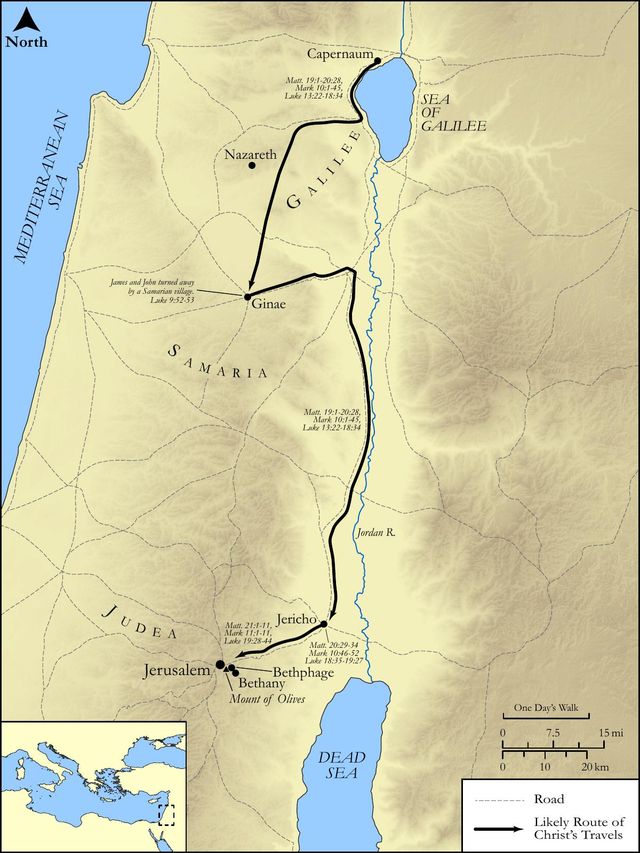
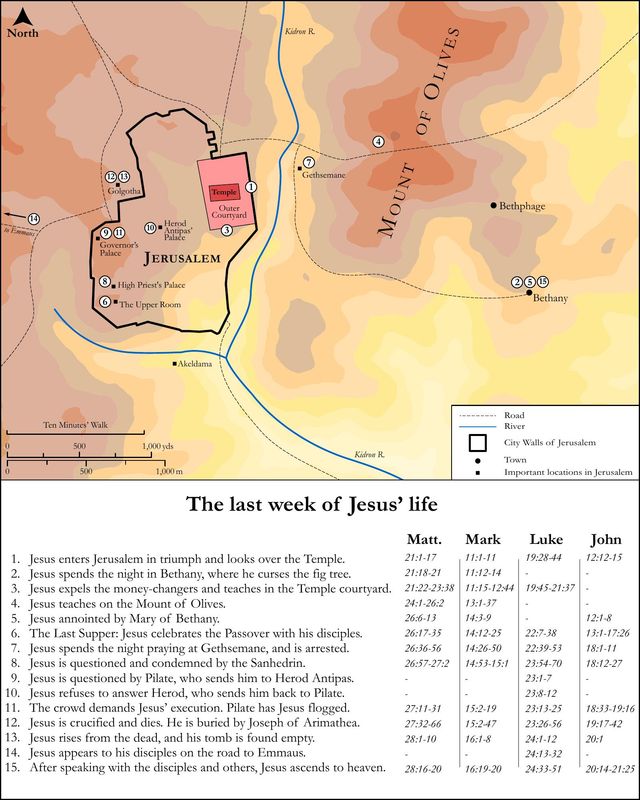
Study this verse
Historical interpretation
Nine Centuries of Reception
10 surviving comments on this verse. Each one is dated, so this reads as a timeline rather than a list.
Select a marker to jump to its quote. Markers stagger vertically where authors wrote within a few decades of each other.
But (we hold the contrary): for Christ, by "accepting praise out of the mouth of babes and sucklings," has declared that neither childhood nor infancy is without sensibility, -the former of which states, when meeting Him with approving shouts, proved its ability to offer Him testimony; while the other, by being slaughtered, for His sake of course, knew what violence meant.
But they not even so would be persuaded, but together with the rest of the miracles hearing even the children proclaiming, were ready to choke, and say, "Hearest thou not what these say?" And yet it was Christ's part to have said this to them, "Hear ye not what these say?" for the children were singing to Him as to God.
What then saith He? Since they were speaking against things manifest, He applies His correction more in the way of reproof, saying, "Have ye never read, Out of the mouths of babes and sucklings Thou hast perfected praise?" And well did He say, "Out of the mouth." For what was said was not of their understanding, but of His power giving articulation to their tongue yet immature.
And this was also a type of the Gentiles lisping, and sounding forth at once great things with understanding and faith.
And for the apostles also there was from hence no small consolation. For that they might not be perplexed, how being unlearned they should be able to publish the gospel, the children anticipate them, and remove all their anxiety, teaching them, that He would grant them utterance, who made even these to sing praises.
And not so only, but the miracle showed that He is Creator even of nature. The children then, although of age immature, uttered things that had a clear meaning, and were in accordance with those above, but the men things teeming with frenzy and madness. For such is the nature of wickedness.
But see the baseness of the Jews. He had wrought so many miracles, and never were they thus amazed at Him; but when they saw a multitude running together, then they marvel. "For all the city was moved, saying, Who is this? But the multitudes said, This is Jesus the prophet of Nazareth of Galilee." And when they thought they were saying something great, even then were their thoughts earthly, and low, and dragging on the ground.
(Hom. lxvii.) Which aggravates the fault of the Jews, who after He had done the same thing twice, yet persisted in their hardness.
But not even thus were the Chief Priests convinced, but at His miracles and the shouts of the children they had indignation.
This was at once a type of the Gentiles, and no small comfort to the Apostles; for that they might not be perplexed, contriving how having no education for the purpose they should preach the Gospel, these children going before them did away that fear; for He who made these to sing His praises, shall give speech to those. This miracle also shows that Christ was the Framer of nature; seeing the children spoke things full of meaning, and agreeing with the Prophets, whereas the men uttered things meaningless, and full of frenzy.
(Verse 16.) But Jesus said to them: Of course. Have you never read that from the mouths of infants and nursing babies you have perfected praise? How moderate is this statement, and how balanced is the response, not giving in to slander? He did not say what the Scribes wanted to hear, that children do good, to testify to me, nor did he say they are mistaken: they are children, you should forgive their age; but he brings forward an example from the eighth psalm, to strengthen the testimony of the Scriptures through the words of children, when the Lord is silent.
When Jesus entered with the multitudes, the whole city of Jerusalem was moved, wondering at the crowds, and not knowing the power.
While others were in doubt or enquiring, the worthless multitude confessed Him; But the people said, This is Jesus the Prophet from Nazareth in Galilee. (Ps. 24:8.) They begin with the lesser that they may come to the greater. They hail Him as that Prophet whom Moses had said should come like to himself, (Deut. 15:18.) which is rightly written in Greek with the testimony of the article, (ὁ προφήτες.) From Nazareth of Galilee, for there He had been brought up, that the flower of the field might be nourished with the flower of all excellencies.
And he cast out all them that sold and bought. It should be known that in obedience to the Law, in the Temple of the Lord venerated throughout the whole world, and resorted to by Jews out of every quarter, innumerable victims were sacrificed, especially on festival days, bulls, rams, goats; the poor offering young pigeons and turtle-doves, that they might not omit all sacrifice. But it would happen that those who came from a distance would have no victim. The Priests therefore contrived a plan for making a gain out of the people, selling to such as had no victim the animals which they had need of for sacrifice, and themselves receiving them back again as soon as sold. But this fraudulent practice was often defeated by the poverty of the visitors, who lacking means had neither victims, nor whence to purchase them. They therefore appointed bankers who might lend to them under a bond. But because the Law forbade usury, and money lent without interest was profitless, besides sometimes a loss of the principal, they bethought themselves of another scheme; instead of bankers they appointed 'collybistæa,' a word for which the Latin has no equivalent. Sweetmeats and other trifling presents they called 'collyba,' such, for example, as parched pulse, raisins, and apples of divers sorts. As then they could not take usury, they accepted, the value in kind, taking things that ore bought with money, as if this was not what Ezekiel preached of, saying, Ye shall not receive usury nor increase. (Ezek. 18:17.) This kind of traffic, or cheating rather, the Lord seeing in His Father's house, and moved thereat with spiritual zeal, cast out of the Temple this great multitude of men.
For he is indeed a thief, and turns the temple of God into a den of thieves, who makes a gain of his religion. Among all the miracles wrought by our Lord, this seems to me the most wonderful, that one man, and He at that time mean to such a degree that He was afterwards crucified, and while the Scribes and Pharisees were exasperated against Him seeing their gains thus cut off, was able by the blows of one scourge to cast out so great a multitude. Surely a flame and starry ray darted from his eyes, and the majesty of the Godhead was radiant in his countenance.
But, according to the plain sense; the doves were not in seats, but in cages; unless indeed the sellers of the doves were sitting in seats, but that were absurd, for the seat denotes the dignity of the teacher, which is brought down to nothing when it is mixed with covetousness. Mark also, that through the avarice of the Priests, the altars of God are called tables of money-changers. What we have spoken of Churches let each man understand of himself, for the Apostle says, Ye are the temple of God (2 Cor. 6:16.) Let there not be therefore in the abode of your breast the spirit of bargaining, nor the desire of gifts, lest Jesus, entering in anger and sternness, should purify His temple not without scourging, that from a den of thieves He should make it a house of prayers.
For had He not overthrown the tables of the money-changers and the seats of them that sold doves, the blind and the lame would not have deserved that their wonted sight and power of motion should be restored to them in the temple.
For, not daring to lay hands on Him, the Priests defame his works, and the testimony of the children who cried, Hosanna to the Son of David, blessed is he that cometh in the name of the Lord, as though this might be said to none but to the Son of God only. Let then Bishops and all holy men take heed how they suffer these things to be said to them, if this is charged as a fault in Him who is truly Lord to whom this was said, because the faith of the believers was not yet confirmed.
But the answer of Christ was cautions. He spake not what the Scribes would fain have heard, The children do well that they bear witness to me; nor on the other hand, They do what is wrong, they are but children, you ought to be indulgent to their tender years. But He brings a quotation from the eighth Psalm, that though the Lord were silent, the testimony of Scripture might defend the words of the children (Ps. 8:2) as it follows, But Jesus said unto them, Yea, have ye never read, &c.
Those prophesying spoke of Christ who was to come; these speak in praise of the coming of Christ already fulfilled.
With good reason were they moved at sight of a thing so to be wondered at. Man was praised as God, but it was the God that was praised in the man. But, I suppose, that neither they who praised knew what they praised, but the Spirit that suddenly inspired them poured forth the words of truth.
And Jesus entered into the temple of God. This was the part of a good Son to haste to His Father's house, and do Him honour; so you then becoming an imitator of Christ as soon as you enter into any city, first run to the Church. Further, it was the part of a good physician, that having entered to heal the sick city, he should first apply himself to the source of the sickness; for as every thing good cometh out of the temple, so also doth every evil. For when the priesthood is sound, the whole Church flourishes, but if it is corrupt, faith is impaired; and as when you see a tree whose leaves are pale-coloured you know that it is diseased at its root, so when you see an undisciplined people conclude without hesitation that their priesthood is unsound.
For this reason also He overturns the tables of the money-changers, to signify that in the temple of God ought to be no coin save spiritual, such as bears the image of God, not an earthly image. He overturns the seats of those that sold doves, saying by that deed, What make in My temple so many doves for sale, since that one Dove descended of free gift upon the temple of My Body? What the multitude had proclaimed by their shouts, the Lord shows in deeds; whence it follows, And the blind and the lame came to him in the temple, and he healed them.
For as a pillar a little out of the perpendicular, if more weight be laid upon it, is driven to lean still more to one side; so also the heart of man when once turned aside, is only stirred the more with jealousy by seeing or hearing deeds of some righteous man. In this way the Priests were stirred up against Christ, and said, Hearest thou what these say?
As though He had said, Be it so, it is My fault that these cry thus. But is it My fault that so many thousand years before the Prophet foretold that so it should be? But babes and sucklings cannot know or praise any one. Therefore they are called babes, not in age, but in guilelessness of heart; sucklings, because they cried out being moved by their joy at the wonderful things they beheld, as by the sweetness of milk. Miraculous works are called milk, because the beholding of miracles is no toil, but rather excites wonder, and gently invites to the faith. Bread is the doctrine of perfect righteousness, which none can receive but they who have their senses exercised about spiritual things.
That they are healed in the Temple signifies, that men cannot be healed but in the Church, to which is given the power of binding and loosing.
But it is to be noted, that this entry of His into Jerusalem was five days before the passover. For John relates, that six days before the Passover He came to Bethany, and on the morrow sitting on the ass entered Jerusalem. (John 12:1.) In this observe the correspondence between the Old and New Testaments, not only in things but in seasons. For on the tenth day of the first month, the lamb that was to be sacrificed for the passover was to be taken into the house, (Exod. 12:3.) because on the same day of the same month, that is, five days before the passover, the Lord was to enter the city in which He was to suffer.
When the Pharisees saw the children offering to Christ the hymn of David which the prophet seems to offer to God (Ps. 117:26), they exploded with spite and reviled Him for allowing things of God to be said of Him. But He confirmed this by saying "Yea." For, He says, I am so disinclined to stop the mouths of those who are saying these things to Me, that I will even bring forward the prophet as a witness, and show you up as either ignorant or spiteful. For have you not read, "Out of the mouth of babes and sucklings Thou hast perfected praise?" (Ps. 8:2). "Thou hast perfected" means "Thou hast shown a perfect and fitting hymn" even if "the babes and sucklings" seem imperfect, or immature, in age. For it was not they who were speaking what they spoke, but they only gave their mouth to the Spirit and became His instruments. This is why He says, "Out of the mouth of babes," implying that the words were not of their own intellect, but only of their mouth which was moved by divine grace. He also showed that He would be blessed by the childish and foolish Gentiles. This was also a consolation to the apostles, that speech would be granted to them as well though they were simple. And you also, O reader, if you are as a babe innocent of any guile and sucking the milk of the Spirit, the divine words, then you will become worthy to hymn God’s praise.
Continue studying Matthew 21:16 across the web’s major study libraries — every link below opens this exact verse, chapter, or book on the destination site.
Read & Compare
 BibleGatewayThis verse in more than 200 translations and 70 languages.
 Bible.comThe YouVersion reader — hundreds of translations, reading plans, and highlights.
 ESV.orgCrossway's official English Standard Version reader.
 NET BibleThe NET translation with 60,000+ translators' notes on every rendering decision.
 STEP BibleTyndale House's free study tool — original text, vocabulary, and scholarly resources.
 BibliaLogos Bible Software's free web reader.
 USCCBThe New American Bible (Revised Edition) with the U.S. bishops' study notes.
Commentaries
 BibleHub CommentariesDozens of classic commentaries on this verse, gathered on one page.
 StudyLightMore than 100 commentary sets — the largest collection on the web.
 BibleRefPlain-English commentary on what this verse means, verse by verse.
 Enduring WordDavid Guzik's free commentary on this chapter, widely used by Bible teachers.
 Bible Study ToolsVerse commentary alongside Greek and Hebrew study aids.
Original Language & Research
- BibleHub InterlinearThe verse word by word — original language, transliteration, and English.
- BibleHub LexiconEvery word's original-language definition and Strong's entry.
 Blue Letter BibleDeep-study tools — Strong's numbers, concordance, and word studies.
 CNTR CollationThe earliest Greek manuscripts of this verse, collated letter by letter.
Sermons, Hymns & Audio


TrulyRandomVerse is not affiliated with these sites and doesn’t control their content. They’re linked because they’re genuinely useful.
Summary
Matthew 21:16 captures a pivotal exchange in the Jerusalem temple, where Jesus confronts the spiritual blindness of the religious elite by validating the spontaneous, pure praise offered by children. This verse, occurring immediately after Jesus' cleansing of the temple and His miraculous healings, highlights the profound irony that those considered least significant by society possess the clearest spiritual discernment, echoing ancient prophecy and exposing the hypocrisy of those who should have recognized their Messiah.
Context
ShowHideLiterary Context
This verse is situated within the dramatic events of Jesus' final week in Jerusalem, often referred to as Passion Week. It immediately follows Jesus' Triumphal Entry, where He was publicly acclaimed as Messiah, and His subsequent cleansing of the temple. After driving out merchants and money-changers, Jesus continued to minister in the temple courts, healing the blind and the lame. It is in this context of divine authority and compassionate action that children begin to shout "Hosanna to the Son of David!" (as recorded in Matthew 21:15), leading to the indignant challenge from the chief priests and scribes that Jesus addresses in Matthew 21:16. The narrative then proceeds to the parable of the two sons and other confrontations with the religious leaders, intensifying the conflict that will lead to Jesus' crucifixion.
Historical & Cultural Context
The temple in Jerusalem was the spiritual and economic heart of Jewish life, particularly during Passover, a time when thousands of pilgrims converged on the city. The chief priests and scribes represented the established religious authority, guardians of the Law and tradition. Their indignation stemmed from several factors: the children's acclamation of Jesus as "Son of David" was a messianic title, a direct challenge to their authority and a potential incitement to Roman intervention; the temple, in their view, was a sacred space not for such "unruly" demonstrations; and Jesus' actions (cleansing the temple, healing, accepting praise) directly usurped their perceived control. The quote Jesus employs from Psalm 8:2 would have been known to them, yet their spiritual pride and vested interests prevented them from understanding its contemporary fulfillment. The cultural expectation was that wisdom and spiritual insight resided with the learned and the elders, not with "babes and sucklings."
Key Themes
ShowHideMatthew 21:16 contributes significantly to several overarching themes in Matthew's Gospel. Firstly, it underscores the theme of Messianic Identity and Authority, as Jesus implicitly affirms His role as the prophesied "Son of David" through His acceptance of the children's praise and His authoritative use of Scripture. Secondly, it highlights the stark contrast between Spiritual Blindness and Spiritual Discernment. The religious leaders, despite their extensive scriptural knowledge, are spiritually incapable of recognizing God's work, while the humble and innocent instinctively perceive and declare it. This theme is powerfully echoed in Matthew 11:25, where Jesus praises the Father for revealing truths to "babes" rather than to the wise and understanding. Thirdly, the verse emphasizes True Worship vs. Religious Hypocrisy, demonstrating that genuine praise, born of simple faith, is infinitely more valuable to God than the ritualistic, self-serving actions of the religious elite. This aligns with Jesus' consistent critique of outward piety without inward transformation, a theme prevalent throughout Matthew's Gospel.
Exposition and Analysis
ShowHideKey Word Analysis
ShowHideThis term refers literally to an infant or a child who has not yet learned to speak. Figuratively, as used here and elsewhere in the New Testament (e.g., 1 Corinthians 3:1), it can denote someone who is immature, simple-minded, or lacking in understanding, often in a spiritual sense. In this context, it emphasizes the innocence and uncorrupted nature of the children, contrasting sharply with the "wise and understanding" who are spiritually dull.
Derived from the word for "nipple," this term specifically refers to infants who are still nursing. It further emphasizes the extreme youth and vulnerability of the children, making their spontaneous praise even more remarkable and divinely orchestrated. It highlights their complete dependence and lack of worldly sophistication or theological training.
This verb means "to complete thoroughly," "to repair," "to adjust," or "to prepare." It implies bringing something to its proper state or making it fully ready for its intended purpose. In the context of "perfected praise," it suggests that the children's worship is not merely adequate or acceptable, but divinely prepared, fully formed, and entirely fitting for God. It implies a divine act of equipping or arranging their mouths to utter such praise, silencing the adversaries.
Verse Breakdown
ShowHide"And said unto him, Hearest thou what these say?"
This is the indignant challenge from the chief priests and scribes, directed at Jesus. Their question is rhetorical, expressing their outrage and demanding that Jesus silence the children. They perceive the children's shouts of "Hosanna to the Son of David" as blasphemous or at least highly inappropriate for the temple precincts, and a direct affront to their authority.
"And Jesus saith unto them, Yea;"
Jesus' immediate and unequivocal affirmation ("Yea," or "Yes") directly confronts their indignation. He acknowledges that He hears the children's praise, and far from being offended or seeking to silence them, He fully validates it. This "Yea" sets the stage for His profound theological retort.
"have ye never read, Out of the mouth of babes and sucklings thou hast perfected praise?"
This is Jesus' powerful counter-question and direct quotation from Psalm 8:2 (specifically from the Septuagint version). By asking "have ye never read," Jesus exposes their spiritual ignorance despite their presumed expertise in Scripture. He implies that the very Scriptures they claim to uphold prophesied such a moment, where the most humble would offer perfect praise to God, silencing His adversaries. The children's spontaneous worship is thus presented not as a random outburst, but as a divinely ordained fulfillment of prophecy, a "perfected praise" that God Himself has prepared.
Literary Devices
ShowHideMatthew 21:16 employs several potent literary devices. Irony is central, as the learned religious leaders, who should have been the first to recognize the Messiah and His divine authority, are spiritually deaf, while innocent children spontaneously offer Him perfect praise. This highlights the paradox of divine revelation often being hidden from the "wise" and revealed to the "simple" (Matthew 11:25). Allusion to Psalm 8:2 is critical, as Jesus uses Scripture to validate His actions and the children's worship, simultaneously rebuking His accusers for their lack of understanding. The contrast between "babes and sucklings" and the "chief priests and scribes" functions as a powerful juxtaposition, emphasizing the purity of heart versus the hardened hearts of the religious elite. Finally, the children's "Hosanna" (meaning "save now" but evolving into a cry of praise) serves as symbolism for the authentic worship that God desires, a worship that is unburdened by self-interest or religious pretense.
Theological and Thematic Connections
ShowHideMatthew 21:16 profoundly illustrates God's paradoxical methods of revelation and His valuing of pure, humble faith over religious status or intellectual prowess. It reveals that genuine spiritual insight is not contingent upon age, social standing, or theological training, but upon a receptive heart. The children's spontaneous praise, divinely "perfected," serves as a powerful testament to Jesus' messianic identity and authority, silencing the objections of His adversaries. This moment underscores that God often chooses the weak and foolish things of the world to shame the wise, demonstrating His power and wisdom through unexpected vessels. It is a timeless reminder that authentic worship flows from a heart attuned to God's presence, regardless of the worshiper's perceived significance.
Reflection and Application
ShowHideMatthew 21:16 challenges believers to cultivate a heart of childlike faith and genuine praise, unburdened by the complexities and prejudices that often hinder spiritual receptivity. It calls us to examine our own attitudes towards worship: Is our praise truly from the heart, or is it merely a performance? Are we open to God working in unexpected ways, through unexpected people, or do we, like the religious leaders, allow our traditions, expectations, or pride to blind us to His presence and power? This verse encourages us to embrace humility, recognizing that true wisdom often lies in simplicity and that God delights in the unadulterated adoration of His children. It reminds us that our worship, no matter how simple, when offered with a pure heart, is perfected in His sight and can powerfully bear witness to His truth, even silencing the voices of opposition.
Questions for Reflection
ShowHideFAQ
ShowHideWhy did Jesus quote from Psalm 8:2, and how does it relate to the children's praise?
ShowHideJesus quoted Psalm 8:2 (specifically the Septuagint version) to validate the children's spontaneous praise. While the Hebrew text of Psalm 8:2 speaks of God establishing "strength" or "might" from the mouths of infants to silence the enemy, the Septuagint translates this as "praise" (αἶνος, ainos) or "perfected praise." This rendering perfectly aligns with the children's cries of "Hosanna to the Son of David!" (Matthew 21:15), which had become a cry of adoration. By quoting this verse, Jesus demonstrated that the children's worship was not mere childish enthusiasm but a divinely ordained fulfillment of prophecy, a "perfected praise" that God Himself had prepared to silence His adversaries—in this case, the indignant chief priests and scribes. It served as a powerful rebuke to their spiritual blindness, showing them that even infants could recognize what they, with all their learning, failed to see.
Christ-Centered Fulfillment
ShowHideMatthew 21:16 finds its ultimate Christ-centered fulfillment in the person and work of Jesus as the incarnate Son of God, the very object of the children's "perfected praise." The children's spontaneous acclamation of "Hosanna to the Son of David!" (Matthew 21:15) is a direct recognition of Jesus' messianic identity, a truth that the religious leaders were blind to. Jesus, by accepting this praise and validating it with Scripture, reveals Himself as the one through whom God's praise is indeed perfected, even from the most unlikely sources. This echoes the broader New Testament theme that God chooses the humble and the weak to confound the wise (1 Corinthians 1:27-29). The "babes and sucklings" foreshadow the countless simple, humble believers throughout history who, by faith, recognize Jesus as Lord and offer Him genuine worship, a worship that is pleasing to God because it is directed towards His Son, the "Lamb of God who takes away the sin of the world!" (John 1:29). Jesus' validation of their praise anticipates the universal worship He will receive from "every tribe and language and people and nation" (Revelation 5:9), a worship made possible by His atoning sacrifice and resurrection, which truly perfected the way for all to offer praise to God.