


Luke 22:47
- ἜτιEtiWhile stillG2089ADVAdverb
- δέdenowG1161CONJConjunction
- αὐτοῦautouwhen heG846P-GSMPersonal pronoun Genitive Singular Masculine
- λαλοῦντοςlalountosis speakingG2980V-PAP-GSMVerb Present Active Participle Genitive Singular Masculine
- ἰδοὺidoubeholdG2400INJInterjection
- ὄχλοςochlosa crowdG3793N-NSMNoun Nominative Singular Masculine
- καὶkaiandG2532CONJConjunction
- ὁhothe [one]G3588T-NSMDefinite article Nominative Singular Masculine
- λεγόμενοςlegomenosnamedG3004V-PPP-NSMVerb Present Passive Participle Nominative Singular Masculine
- ἸούδαςIoudasJudasG2455N-NSM-PNoun Nominative Singular Masculine Individual
- εἷςheisoneG1520A-NSMAdjective Nominative Singular Masculine
- τῶνtōnof theG3588T-GPMDefinite article Genitive Plural Masculine
- δώδεκαdōdekaTwelveG1427A-NUIAdjective
- προήρχετοproērchetowas going beforeG4281V-INI-3SVerb Imperfect Middle Or Passive Deponent Indicative 3rd Singular
- αὐτοὺςautousthemG846P-APMPersonal pronoun Accusative Plural Masculine
- καὶkaiandG2532CONJConjunction
- ἤγγισενēngisenhe drew nearG1448V-AAI-3SVerb Aorist Active Indicative 3rd Singular
- τῷtō<the>G3588T-DSMDefinite article Dative Singular Masculine
- ἸησοῦIēsouto JesusG2424N-DSM-PNoun Dative Singular Masculine Individual
- φιλῆσαιphilēsaito kissG5368V-AANVerb Aorist Active Infinitive
- αὐτόνautonHimG846P-ASMPersonal pronoun Accusative Singular Masculine
English is a literal word-by-word gloss of the Greek, not the KJV's wording. Why?
This is the original text the KJV's translators worked from — each Greek word with its own literal English meaning in this verse, prepared by scholars at Tyndale House, Cambridge. The KJV translates whole sentences, not word by word, so its wording differs: one Greek word can become several English words, and the KJV may choose “charity” where the gloss reads “love”. Both are faithful — they answer different questions. For the KJV's own rendering, switch to the KJV text.
Details
See on the biblical-era map

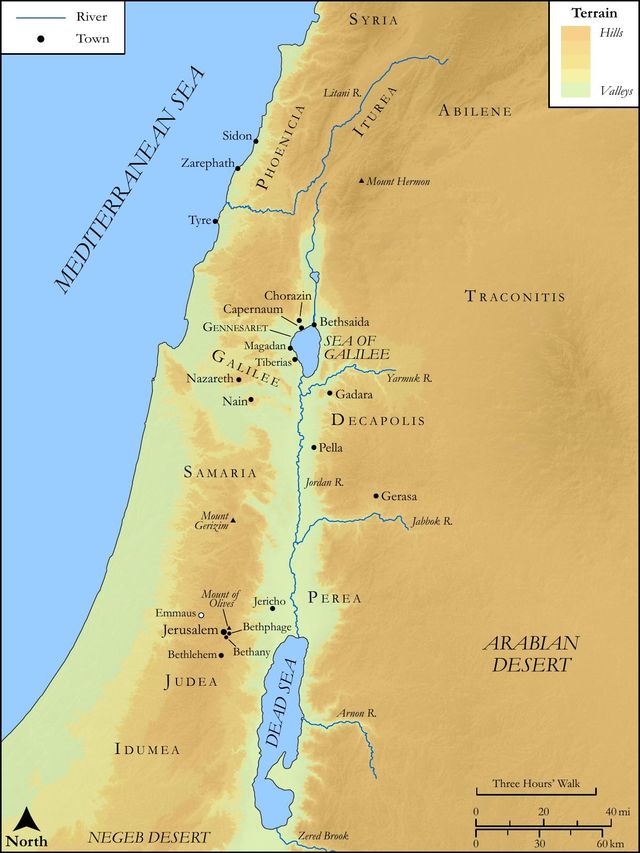
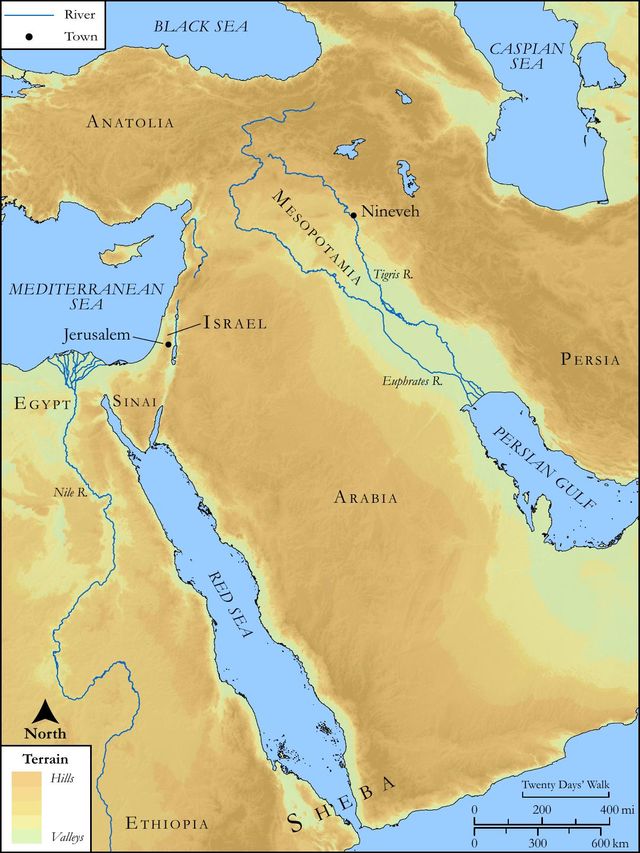
Study this verse
Public-domain commentary
Matthew Henry
From his Commentary on the Whole Bible. Henry comments on passages, not single verses — this entry covers Luke 22:47–53. His three-level outline is real structure in the source text, so it is rendered as structure.
Satan, finding himself baffled in his attempts to terrify our Lord Jesus, and so to put him out of the possession of his own soul, betakes himself (according to his usual method) to force and arms, and brings a party into the field to seize him, and Satan was in them. Here is,
I.The marking of him by Judas.
Here a numerous party appears, and Judas at the head of them, for he was guide to them that took Jesus; they knew not where to find him, but he brought them to the place: when they were there, they knew not which was he, but Judas told them that whomsoever he should kiss, that same was he; so he drew near to him to kiss him, according to the wonted freedom and familiarity to which our Lord Jesus admitted his disciples. Luke takes notice of the question Christ asked him, which we have not in the other evangelists: Judas, betrayest thou the Son of man with a kiss? What! Is this the signal? Luk 22:48. Must the Son of man be betrayed, as if any thing could be concealed from him, and a plot carried on against him unknown to him? Must one of his own disciples betray him, as if he had been a hard Master to them, or deserved ill at their hands? Must he be betrayed with a kiss? Must the badge of friendship be the instrument of treachery? Was ever a love-token so desecrated and abused? Note, Nothing can be a greater affront or grief to the Lord Jesus than to be betrayed, and betrayed with a kiss, by those that profess relation to him and an affection for him. Those do so who, under pretence of zeal for his honour, persecute his servants, who, under the cloak of a seeming affection for the honour of free grace, give a blow to the root of holiness and strictness of conversation. Many instances there are of Christ's being betrayed with a kiss, by those who, under the form of godliness, fight against the power of it. It were well if their own consciences would put this question to them, which Christ here puts to Judas, Betrayest thou the Son of man with a kiss? And will he not resent it? Will he not revenge it?
II.The effort which his disciples made for his protection (Luk 22:49):
When they saw what would follow, that those armed men were come to seize him, they said, "Lord, shall we smite with the sword? Thou didst allow us to have two swords, shall we now make use of them? Never was there more occasion; and to what purpose should we have them if we do not use them?" They asked the question as if they would not have drawn the sword without commission from their Master, but they were in too much haste and too much heat to stay for an answer. But Peter, aiming at the head of one of the servants of the high priest, missed his blow, and cut off his right ear. As Christ, by throwing them to the ground that came to take him, showed what he could have done, so Peter, by this exploit, showed what he could have done too in so good a cause if he had had leave. The other evangelists tell us what was the check Christ gave to Peter for it. Luke here tells us, 1. How Christ excused the blow: Suffer ye thus far, v. 51. Dr. Whitby thinks he said this to his enemies who came to take him, to pacify them, that they might not be provoked by it to fall upon the disciples, whom he had undertaken the preservation of: "Pass by this injury and affront; it was without warrant from me, and there shall not be another blow struck." Though Christ had power to have struck them down, and struck them dead, yet he speaks them fair, and, as it were, begs their pardon for an assault made upon them by one of his followers, to teach us to give good words even to our enemies. 2. How he cured the wound, which was more than amends sufficient for the injury: He touched his ear, and healed him; fastened his ear on again, that he might not so much as go away stigmatized, though he well deserved it. Christ hereby gave them a proof, (1.) Of his power. He that could heal could destroy if he pleased, which should have obliged them in interest to submit to him. Had they returned the blow upon Peter, he would immediately have healed him; and what could not a small regiment do that had such a surgeon to it, immediately to help the sick and wounded? (2.) Of his mercy and goodness. Christ here gave an illustrious example to his own rule of doing good to them that hate us, as afterwards he did of praying for them that despitefully use us. Those who render good for evil do as Christ did. One would have thought that this generous piece of kindness should have overcome them, that such coals, heaped on their heads, should have melted them, that they could not have bound him as a malefactor who had approved himself such a benefactor; but their hearts were hardened.
III.Christ's expostulation with the officers of the detachment that came to apprehend him, to show what an absurd thing it was for them to make all this rout and noise, v. 52, 53. Matthew relates it as said to the multitude. Luke tells us that it was said to the chief priests and captains of the temple the latter commanded the several orders of the priests, and therefore are here put between the chief priests and the elders, so that they were all ecclesiastics, retainers to the temple, who were employed in this odious piece of service; and some of the first rank too disparaged themselves so far as to be seen in it. Now see here,
1.How Christ reasons with them concerning their proceedings. What occasion was there for them to come out in the dead of the night, and with swords and staves?
(1.)They knew that he was one that would not resist, nor raise the mob against them; he never had done any thing like this. Why then are ye come out as against a thief?
(2.)They knew he was one that would not abscond, for he was daily with them in the temple, in the midst of them, and never sought to conceal himself, nor did they offer to lay hands on him. Before his hour was come, it was folly for them to think to take him; and when his hour was come it was folly for them to make all this ado to take him.
2.How he reconciles himself to their proceedings; and this we had not before: "But this is your hour, and the power of darkness. How hard soever it may seem that I should be thus exposed, I submit, for so it is determined. This is the hour allowed you to have your will against me. There is an hour appointed me to reckon for it. Now the power of darkness, Satan, the ruler of the darkness of this world, is permitted to do his worst, to bruise the heel of the seed of the woman, and I resolve to acquiesce; let him do his worst. The Lord shall laugh at him, for he sees that his day, his hour, is coming." Psa 37:13. Let this quiet us under the prevalency of the church's enemies; let it quiet us in a dying hour, that,
(1.)It is but an hour that is permitted for the triumph of our adversary, a short time, a limited time.
(2.)It is their hour, which is appointed them, and in which they are permitted to try their strength, that omnipotence may be the more glorified in their fall.
(3.)It is the power of darkness that rides master, and darkness must give way to light, and the power of darkness be made to truckle to the prince of light. Christ was willing to wait for his triumphs till his warfare was accomplished, and we must be so too.
Historical interpretation
Eleven Centuries of Reception
11 surviving comments on this verse. Each one is dated, so this reads as a timeline rather than a list.
Select a marker to jump to its quote. Markers stagger vertically where authors wrote within a few decades of each other.
The Christ of the prophets was destined, moreover, to be betrayed with a kiss, for He was the Son indeed of Him who was "honoured with the lips" by the people.
The tribe of Judah marked the beginning of the kingdom, and the apostle Judas marked its extinction. In deceitfully handing him over to the Romans with a kiss, he handed over to them the responsibility of avenging Jesus so that they would one day exact it from Judah. The wicked one came to dig his deep abyss, and our God explained it gently to him. He showed that he was helpful, a fountain of mercy. He said, “Judas, would you betray the Son of man with a kiss?” He showed that Judas did not have the power to hand over the Son of God. “Well then, why have you come, my friend?” The Lord called animosity friendship, and he turned toward Judas. The deceitful disciple approached the true Master to kiss him. The Lord withdrew from him the Spirit that he had breathed into him. He removed it from him, not wanting the corrupting wolf to be among his sheep. He said, “That which he had has been taken away from him.”
And when He had done this thrice, while we out of despondency of mind were fallen asleep, He came and said: "The hour is come, and the Son of man is betrayed into the hands of sinners. And behold Judas, and with him a multitude of ungodly men"
The great significance of divine power, the great discipline of virtue. And the plan of betrayal is revealed, and yet patience is not denied. You have shown, Lord, who would betray, while you reveal hidden things. You have also shown whom he would deliver, while you say: Son of man; because flesh, not divinity, can be understood. However, the fact that he handed him over contradicts even more the ungrateful, that he, although being the Son of God, yet wanted to be the Son of man for our sake. As if to say: Because of my kindness, ungrateful one, you betray me. Behold the hypocrisy. Therefore, I think it should be pronounced as a question, as if a loving person rebukes a traitor: Judas, do you hand over the Son of Man with a kiss? This means, you inflict a wound as a pledge of love, and you shed blood in the duty of charity, and you inflict death with an instrument of peace? The servant betrays the master, the disciple betrays the teacher, the chosen one betrays the author? This is that which is said: The wounds of a friend are more valuable than the kisses of an enemy. What does this traitor say? Let him kiss me with the kisses of his mouth.
And he kissed him, he said. Not that he teaches us to pretend, but so that he does not seem to avoid betrayal and to affect the traitor more, to whom he would not deny acts of love; for it is written: I was peaceful with those who hated peace.
For just as incurable wounds yield neither to severe nor soothing remedies, so the soul when once it is taken captive, and has sold itself to any particular sin, will reap no benefit from admonition. And so it was with Judas, who desisted not from His betrayal, though deterred by Christ by every manner of warning. Hence it follows, And drew near unto Jesus to kiss him.
(Conc. 1. de Laz.) Now we must not depart from admonishing our brethren, albeit nothing comes of our words. For even the streams though no one drink therefrom still flow on, and him whom thou hast not persuaded to-day, peradventure thou mayest to-morrow. For the fisherman after drawing empty nets the whole day, when it was now late takes a fish. And thus our Lord, though He knew that Judas was not to be converted, yet ceased not to do such things as had reference to him. It follows, But Jesus said unto him, Judas, betrayest thou the Son of man with a kiss?
And He gives him his proper name, which was rather like one lamenting and recalling him, than one provoked to anger.
But He said not, "Betrayest thou thy Master, thy Lord, thy Benefactor," but the Son of man, that is, the humble and meek, who though He were not thy Master and Lord, forasmuch as He has borne himself so gently toward thee, should have never been betrayed by thee.
For they had come at night fearing an outbreak of the multitude, therefore He says, "What need was there of these arms against one who was always with you?" as it follows, When I was daily with you.
He adds that he was one of the Twelve. This also is a matter of great importance to demonstrate more fully the guilt of the traitor's crime. The Lord equally honored him with the rest and decorated him with apostolic dignities. Christ admitted him, chosen and beloved, to the holy table and the highest honors, but this became the pathway and the means for the murderers of Christ. What dirge can be sufficient for him, or what floods of tears must not each shed from his eyes when he considers from what happiness that wretched being fell into such total misery! For a worthless cent, he stopped being with Christ and lost his hope toward God. He lost the honor, crowns, life and glory prepared for Christ's true followers, and the right of reigning with the Lord.
He says, he that was called Judas, holding his name as it were in abhorrence; but adds, one of the twelve, to signify the enormity of the traitor. For he who had been honoured as an apostle became the cause of the murder of Christ.
For the Lord is never forgetful of His lovingkindness. While they are bringing death upon the righteous, He heals the wounds of His persecutors.
Or that servant is the Jewish people sold by the High Priests to an unlawful obligation, who, by the Passion of our Lord, lost their right ear; that is, the spiritual understanding of the law. And this ear indeed is cut off by Peter's sword, not that he takes away the sense of understanding from those that hear, but manifests it withdrawn by the judgment of God from the careless. But the same right ear in those who among the same people have believed, is restored by the Divine condescension to its former office.
It follows, Then said Jesus unto them, Are ye come out as against a thief with swords and slaves? &c.
As if He says, Therefore are ye assembled against Me in darkness, because your power, wherewith ye are thus armed against the light of the world, is in darkness. But it is asked, how Jesus is said to be addressing the chief priests, the officers of the temple, and the elders, who came to Him, whereas they are reported not to have gone of themselves, but to have sent their servants while they waited in the hall of Caiaphas? The answer then to this contradiction is, that they came not by themselves, but by those whom they sent to take Christ in the power of their command.
While he was still speaking, behold, a crowd, and he who was called Judas, one of the twelve, was leading them, and he drew near to Jesus to kiss him. Why he kissed him, the other evangelists make clear; that is, so that by this sign they might recognize that it was he who would betray him. However, the Lord accepted the kiss of the betrayer, not to teach us dissimulation but so as not to seem to flee betrayal, and at the same time fulfilling what is in the Psalm of David: "With those who hate peace, I was peaceful" (Psalm 119).
That is, that they should not be overcome by temptation, for not to be led into temptation is not to be overwhelmed by it. Or He simply bids us pray that our life may be quiet, and we be not cast into trouble of any kind. For it is of the devil and presumptuous, for a man to throw himself into temptation. Therefore James said not, "Cast yourselves into temptation," but, When ye are fallen, count it all joy, (Jam. 1:2.) making a voluntary act out of an involuntary.
The disciples are inflamed with zeal, and unsheath their swords. But whence have they swords? Because they had slain the lamb, and had departed from the feast. Now the other disciples ask whether they should strike; but Peter, always fervent in defence of his Master, waits not for permission, but straightway strikes the servant of the High Priest; as it follows, And one of them smote, &c.
(non occ.) After first mentioning the prayer of Christ, St. Luke goes on to speak of His betrayal wherein He is betrayed by His disciple, saying, And while he yet spake, behold a multitude, and he that was called Judas.
Continue studying Luke 22:47 across the web’s major study libraries — every link below opens this exact verse, chapter, or book on the destination site.
Read & Compare
 BibleGatewayThis verse in more than 200 translations and 70 languages.
 Bible.comThe YouVersion reader — hundreds of translations, reading plans, and highlights.
 ESV.orgCrossway's official English Standard Version reader.
 NET BibleThe NET translation with 60,000+ translators' notes on every rendering decision.
 STEP BibleTyndale House's free study tool — original text, vocabulary, and scholarly resources.
 BibliaLogos Bible Software's free web reader.
 USCCBThe New American Bible (Revised Edition) with the U.S. bishops' study notes.
Commentaries
 BibleHub CommentariesDozens of classic commentaries on this verse, gathered on one page.
 StudyLightMore than 100 commentary sets — the largest collection on the web.
 BibleRefPlain-English commentary on what this verse means, verse by verse.
 Enduring WordDavid Guzik's free commentary on this chapter, widely used by Bible teachers.
 Bible Study ToolsVerse commentary alongside Greek and Hebrew study aids.
Original Language & Research
- BibleHub InterlinearThe verse word by word — original language, transliteration, and English.
- BibleHub LexiconEvery word's original-language definition and Strong's entry.
 Blue Letter BibleDeep-study tools — Strong's numbers, concordance, and word studies.
 CNTR CollationThe earliest Greek manuscripts of this verse, collated letter by letter.
Sermons, Hymns & Audio


TrulyRandomVerse is not affiliated with these sites and doesn’t control their content. They’re linked because they’re genuinely useful.
Summary
Luke 22:47 vividly portrays the pivotal moment of Jesus' betrayal and arrest in the Garden of Gethsemane, marking the transition from His agonizing prayer to the direct confrontation with His captors. This verse, laden with dramatic irony, details Judas Iscariot, one of Jesus' own twelve disciples, leading a multitude to identify and apprehend Jesus with a treacherous kiss, setting in motion the final events of the passion narrative.
Context
ShowHideLiterary Context
This verse immediately follows Jesus' intense and solitary prayer in Gethsemane, where He wrestled with the Father's will concerning His impending suffering and death, as described in Luke 22:39-46. While Jesus had just admonished His disciples to "pray that you may not enter into temptation" (Luke 22:40), they had fallen asleep, highlighting their spiritual unpreparedness. The sudden appearance of the multitude, led by Judas, abruptly shifts the narrative from the quiet, internal struggle of Jesus to the external, violent unfolding of His arrest. This scene is paralleled in Matthew 26:47-50, Mark 14:43-45, and John 18:3-5, each offering unique details that collectively paint a comprehensive picture of this crucial event in the passion week.
Historical & Cultural Context
The setting is the Mount of Olives, specifically the Garden of Gethsemane, a familiar place where Jesus and His disciples often gathered (Luke 22:39). This familiarity allowed Judas to know where to find Jesus, even under the cover of night. The "multitude" likely consisted of temple guards, Roman soldiers, and possibly some Jewish leaders or their servants, armed with swords and clubs, indicating an intent to secure Jesus by force (Luke 22:52). The "kiss" was a common and accepted form of greeting among friends, disciples, and teachers in ancient Jewish culture, signifying respect, affection, and loyalty. Judas's use of this intimate gesture as a signal for betrayal was a profound act of desecration, turning a symbol of peace and fellowship into an instrument of treachery. This act occurred during the Passover festival, a time of heightened religious and political tension in Jerusalem, making the arrest particularly sensitive.
Key Themes
ShowHideLuke 22:47 contributes significantly to several overarching themes within Luke's Gospel and the broader passion narrative. Firstly, it underscores the theme of betrayal from within, as Judas, "one of the twelve," turns against his master, fulfilling Jesus' earlier prophecies about His betrayer (Luke 22:21-22). Secondly, it highlights the deceitfulness and hypocrisy of sin, as Judas employs a sacred sign of affection for a wicked purpose. This act serves as a stark warning against spiritual duplicity. Thirdly, the verse, read in conjunction with the preceding narrative, subtly reinforces Jesus' divine sovereignty and foreknowledge. Despite the suddenness of the crowd's appearance, Jesus was fully aware of the impending events, demonstrating His deliberate submission to the Father's will, even unto death, a theme echoed throughout His journey to Jerusalem (Luke 9:51). Finally, it marks a critical turning point in the passion narrative, initiating the sequence of events that lead directly to Jesus' trial, crucifixion, and ultimate resurrection.
Exposition and Analysis
ShowHideKey Word Analysis
ShowHideThis word signifies to "talk" or "utter words." In the context of Luke 22:47, "while he yet spake" emphasizes the immediate transition from Jesus' verbal instruction and prayer to His disciples to the abrupt arrival of the multitude. It highlights that Jesus was still actively engaged in communication, perhaps even finishing His warning about temptation, when the betrayal unfolded. This immediacy underscores the suddenness and calculated nature of Judas's arrival.
Derived from a word meaning "a vehicle," this term refers to "a throng (as borne along)," implying a large, moving crowd or rabble. The presence of a "multitude" rather than a small, discreet group suggests a deliberate show of force and an intent to prevent any resistance or escape. It conveys the overwhelming numerical advantage of those coming to arrest Jesus, contrasting sharply with the small, sleeping band of disciples.
While this word can mean "to be a friend to" or "to have affection for," in this specific context, it signifies "to kiss (as a mark of tenderness)." The choice of this particular Greek word, philéō, for the act of kissing, rather than a more general term, underscores the personal attachment and affection that a kiss typically conveyed. Its use by Judas, therefore, transforms a gesture of intimate friendship into one of profound betrayal, making the act particularly chilling and morally repugnant.
Verse Breakdown
ShowHide"And while he yet spake"
This phrase establishes the immediate temporal context, indicating that Jesus was still in the midst of speaking to His disciples, likely concluding His instructions or prayers in Gethsemane. It highlights the abrupt interruption of a sacred, intimate moment by the forces of betrayal.
"behold a multitude"
The interjection "behold" (Greek, idoú) draws immediate attention to the sudden and dramatic appearance of a large crowd. This multitude represents the official and unofficial forces gathered to apprehend Jesus, signaling the end of His period of private prayer and the beginning of His public suffering.
"and he that was called Judas, one of the twelve"
This clause explicitly identifies the betrayer as Judas Iscariot, emphasizing his identity as "one of the twelve" disciples. This detail is crucial, highlighting the profound irony and tragedy of the betrayal coming from within Jesus' inner circle, a trusted companion.
"went before them"
Judas's action of leading the multitude signifies his active role in orchestrating the arrest. He is not merely present but is the guide and instigator, demonstrating his deliberate and calculated involvement in the betrayal.
"and drew near unto Jesus to kiss him"
This final clause describes the specific, intimate, and ultimately treacherous act of identification. Judas approaches Jesus with a kiss, a customary sign of greeting and affection, which he perverts into the prearranged signal for Jesus' captors. This act encapsulates the depth of his perfidy and the deceptive nature of his betrayal.
Literary Devices
ShowHideLuke 22:47 is rich with Irony, particularly in Judas's use of a kiss—a universal symbol of affection, loyalty, and peace—as the very signal for betrayal and arrest. This profound inversion of meaning transforms a gesture of intimacy into an instrument of death, highlighting the moral depravity of Judas's act. The verse also employs Foreshadowing, as the arrival of the multitude and the pre-arranged signal immediately precede Jesus' arrest, trials, and crucifixion, setting the stage for the fulfillment of His prophecies regarding His suffering. Furthermore, the character of Judas functions as Symbolism, representing not only the archetype of betrayal but also the human capacity for spiritual blindness and the perversion of sacred trust. The stark contrast between Jesus' recent agony in prayer and the sudden, calculated appearance of His betrayer creates a dramatic and emotionally charged scene.
Theological and Thematic Connections
ShowHideLuke 22:47 serves as a profound theological statement on the nature of human sin, divine sovereignty, and the cost of discipleship. Judas's betrayal, coming from within the intimate circle of the twelve, underscores the pervasive reality of sin and its capacity to corrupt even those closest to God. Yet, this act of treachery does not catch Jesus by surprise; it is part of a divinely orchestrated plan for redemption, demonstrating God's sovereign control even over the darkest human actions. Jesus' calm demeanor in the face of such betrayal highlights His willingness to submit to the Father's will, fulfilling ancient prophecies and laying down His life as the ultimate sacrifice. The verse, therefore, challenges believers to examine their own hearts for hypocrisy and to remain vigilant in their commitment to Christ, even when facing opposition or betrayal from unexpected sources.
Reflection and Application
ShowHideLuke 22:47 is a sobering reminder that betrayal can come from the most unexpected places, even from within our closest circles. It calls us to a deeper discernment and spiritual vigilance, recognizing that the enemy often works through subtle deceptions and seemingly familiar gestures. Judas's act of using a kiss for betrayal highlights the insidious nature of sin, which can twist what is good and sacred into a tool for evil. For believers, this passage underscores the reality that following Christ may involve facing misunderstanding, opposition, and even profound betrayal, just as He did. It challenges us to cultivate a steadfast faith that sustains us through adversity, trusting in God's sovereign plan even when circumstances seem chaotic or unjust. Ultimately, it invites us to examine our own hearts, ensuring our allegiance to Christ is genuine and unwavering, free from hypocrisy or self-serving motives.
Questions for Reflection
ShowHideFAQ
ShowHideWhy did Judas use a kiss to identify Jesus?
ShowHideJudas used a kiss because it was a common and culturally accepted sign of greeting, respect, and affection among friends and disciples in ancient Jewish society. By using this intimate gesture, Judas could identify Jesus clearly to the multitude, especially in the darkness of the Garden of Gethsemane, without causing immediate alarm or suspicion among the disciples present. The act was a pre-arranged signal, as indicated in Matthew 26:48, making the betrayal all the more poignant and insidious due to its perversion of a symbol of love and loyalty.
Was Jesus surprised by Judas's betrayal?
ShowHideNo, Jesus was not surprised by Judas's betrayal. The Gospels repeatedly show Jesus' divine foreknowledge of this event. He had previously predicted that one of His disciples would betray Him, as seen in John 6:70-71 and Luke 22:21-22. Even at the Last Supper, Jesus explicitly identified Judas as His betrayer (John 13:21-30). His calm demeanor and willingness to submit to the arrest, despite His agony in prayer, underscore His sovereignty and His deliberate embrace of the Father's redemptive plan.
Christ-Centered Fulfillment
ShowHideLuke 22:47, while detailing a moment of profound human treachery, ultimately points to the Christ-centered fulfillment of God's redemptive plan. Jesus, the sovereign Son of God, was not a victim caught off guard, but the divine Lamb willingly going to the slaughter. His foreknowledge of Judas's betrayal (John 13:18) and His calm submission to the kiss of death underscore His complete control and purposeful surrender to the Father's will. This moment fulfills Old Testament prophecies concerning the suffering servant (Isaiah 53:7), demonstrating that even the darkest human sin serves to accomplish God's righteous purposes. Jesus' acceptance of the betrayal, leading to His crucifixion, is the very means by which He became the ultimate sacrifice, bearing the sin of the world (John 1:29). Through this act of profound self-giving, Christ conquers sin and death, offering salvation and reconciliation to all who believe, transforming the kiss of betrayal into the gateway to eternal life.